New Jersey Small Business Insurance: What the Law Requires and What Is Worth Asking About
Riskado
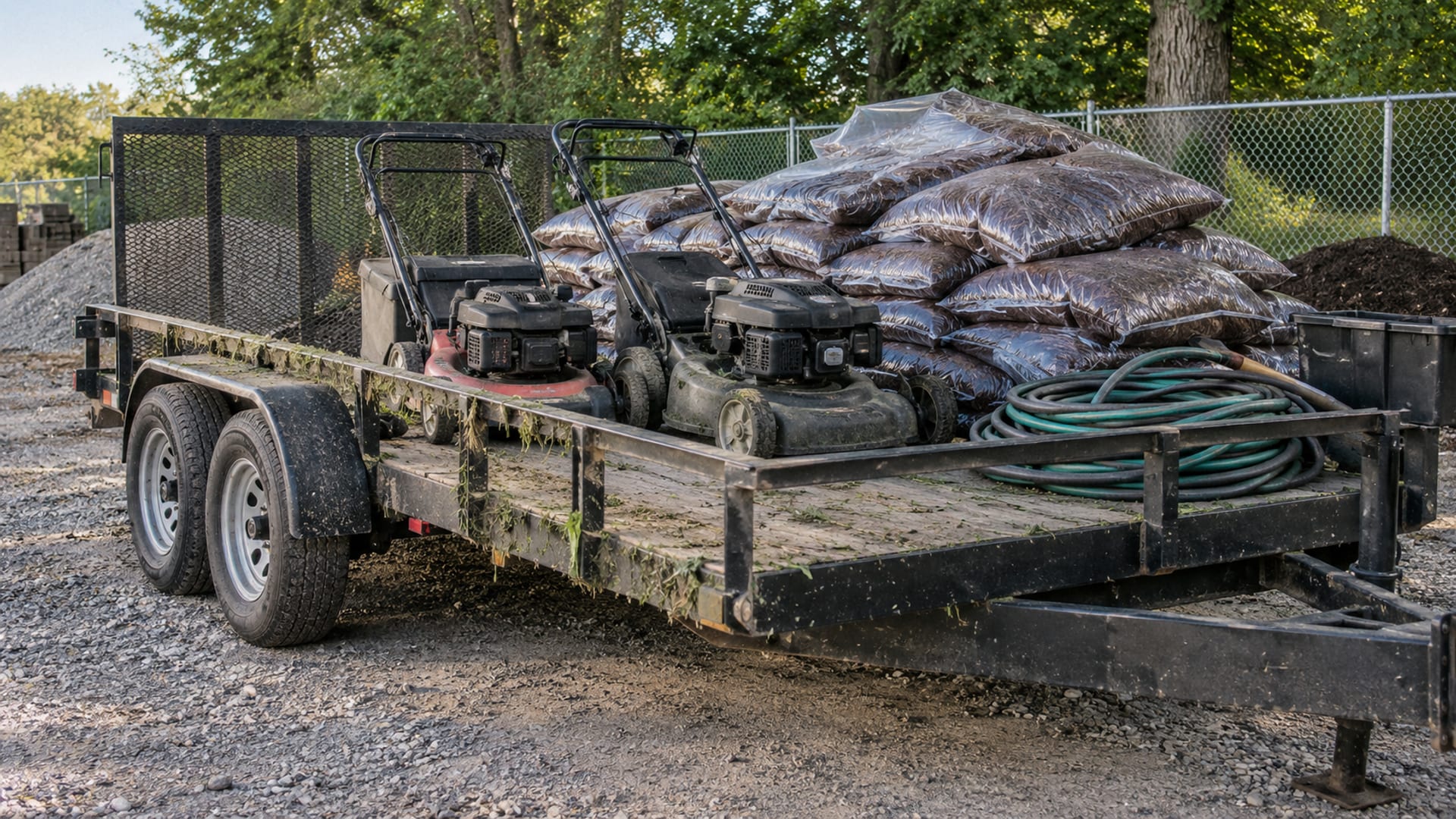
New Jersey's statewide insurance requirements for small businesses center on two things: workers' compensation for covered employers, and automobile liability for commercial vehicles registered or principally garaged in the state. Covered employers must carry workers' compensation or approved self-insurance, according to the New Jersey Division of Workers' Compensation (opens in a new tab), and commercial vehicles must carry liability insurance, according to NJDOBI (opens in a new tab). Employers also handle Temporary Disability and Family Leave Insurance payroll contributions. General liability, professional liability, property and business interruption coverage usually come from a license, lease, lender or client contract rather than a statewide rule.
Key takeaways
- Workers' compensationCovered employers must carry workers' compensation or approved self-insurance.
- Commercial vehiclesCommercial vehicles registered or principally garaged in New Jersey must carry automobile liability insurance.
- Payroll programsEmployers also handle Temporary Disability and Family Leave Insurance payroll contributions.
- Contract-driven coverageGeneral liability, professional liability, property and business interruption coverage usually come from a license, lease, lender or client contract rather than a statewide rule.
Start by sorting the requirements
The quickest way to get the right coverage is to separate three questions. What does New Jersey law require of every business like yours? What do your license, lease, lender or client contracts require? And which risks are worth insuring even when nobody requires it?
The first list is short. The second depends on your paperwork. The third depends on what you do, where you do it, and what could go wrong. An agent or broker can only compare options meaningfully once you know your business structure, who works for you, what vehicles you use, what services you offer, where you operate, and what your contracts say.
Do you need workers' compensation before you hire?
Yes, in most cases. All New Jersey employers not covered by a federal program must have workers' compensation coverage or approved self-insurance, according to the Division of Workers' Compensation (opens in a new tab). An out-of-state employer may also need New Jersey coverage when the employment contract is made in New Jersey or the work is done here.
When the requirement starts depends on how the business is organized:
Hover or tap a row to highlight it.
| Business structure | Coverage is required when |
|---|---|
| Corporation | One or more people, including corporate officers, perform services for financial consideration |
| Partnership or LLC | One or more people, not counting the partners or LLC members, perform services for financial consideration |
| Sole proprietorship | One or more people, not counting the principal owner, perform services for financial consideration |
Financial consideration is broader than a paycheck. It includes cash and noncash pay such as products, services, stock or stock options, meals or lodging. The employer obligation itself comes from N.J.S.A. 34:15-71 (opens in a new tab).
New Jersey has more than 400 private licensed insurers authorized to sell workers' compensation, according to the Division, and it directs employers who need help finding coverage to the New Jersey Compensation Rating and Inspection Bureau (NJCRIB), which sets the rules and premium rates for workers' compensation and employers' liability insurance, according to NJDOBI (opens in a new tab). Businesses that meet state requirements can apply for approved self-insurance through NJDOBI (opens in a new tab). If the voluntary market will not write your business, ask NJCRIB or a licensed producer how the risk can be placed.
Who counts: part-time workers, family, owners and subcontractors
Labels do not settle these questions. Each category works a little differently under the Division's employer guidance (opens in a new tab).
Part-time workers. New Jersey's employer requirements contain no general part-time exemption. A part-time worker who is an employee under New Jersey law counts, so classify the worker before work begins rather than assuming hours change the answer.
Family members. The structure rules above do not set family members aside, so a relative who performs services for financial consideration should be classified like anyone else. Ask your agent how your family members are treated.
Corporate officers. Officers who perform services for the corporation for financial consideration are included in the corporate coverage requirement.
Partners and LLC members. Partners and LLC members are not counted when deciding whether a partnership or LLC must carry coverage. Once anyone else performs services for pay, the requirement applies.
Sole proprietors. The principal owner is not counted, but a sole proprietorship with other covered workers must carry coverage or qualify as self-insured.
Subcontractors. A contractor that places work with a subcontractor can become liable for compensation owed to the subcontractor's employee if the subcontractor did not carry required coverage. Collect current certificates of insurance from every subcontractor before work starts.
Independent contractors. Calling someone an independent contractor does not end the analysis. N.J.S.A. 34:15-79 (opens in a new tab) specifically addresses misrepresenting employees as independent contractors.

What happens if you operate without workers' compensation?
The consequences are serious. Failure to insure is a disorderly persons offense, and a knowing or willful failure is a crime of the fourth degree, according to the Division of Workers' Compensation (opens in a new tab). Civil penalties can reach $5,000 for the first 10 days and up to $5,000 for each additional 10-day period. N.J.S.A. 34:15-79 (opens in a new tab) also authorizes a stop-work order and penalizes false or misleading employee information.
If a worker is hurt or killed, the uninsured employer, and in some cases its officers, partners or LLC members, can be directly liable for medical expenses, temporary and permanent disability, dependency benefits, penalties and related liens. Corporate officers may be individually liable, and the penalties are not dischargeable in bankruptcy, according to the Division and its fraud and penalties page (opens in a new tab).
Hover or tap a row to highlight it.
| Consequence | Rule | Source |
|---|---|---|
| Failure to insure | Disorderly persons offense | Division of Workers' Compensation (opens in a new tab) |
| Knowing or willful failure | Crime of the fourth degree | Division of Workers' Compensation (opens in a new tab) |
| Civil penalty | Up to $5,000 for the first 10 days and up to $5,000 for each additional 10-day period | Division of Workers' Compensation (opens in a new tab) |
| Stop-work order | Authorized | N.J.S.A. 34:15-79 (opens in a new tab) |
| Injured worker | Direct liability for medical expenses, disability, dependency benefits, penalties and related liens | Division of Workers' Compensation (opens in a new tab) |
What payroll programs apply when you hire?
Most New Jersey employers take part in the state Temporary Disability Insurance (TDI) and Family Leave Insurance (FLI) programs or provide an approved private plan. The 2026 figures from New Jersey Labor (opens in a new tab) are:
Hover or tap a row to highlight it.
| Program | Employer contribution | Employee contribution |
|---|---|---|
| TDI | 0.10% to 0.75% on the first $44,800 per employee ($44.80 to $336.00) | 0.19% on the first $171,100 in covered wages, up to $325.09 |
| FLI | None under the state plan | 0.23% on the first $171,100 in covered wages, up to $393.53 |
For comparison, the 2025 employer TDI range was $43.30 to $324.75 on the first $43,300 per employee, and the 2025 FLI employee rate was 0.33% on the first $165,400, up to $545.82.
Employers also report quarterly earnings, display the required posters, and give written TDI notice when an employee is hired, asks for information, or reports a need for leave. The state employer guide (opens in a new tab) has the details.
Do your business vehicles need commercial auto insurance?
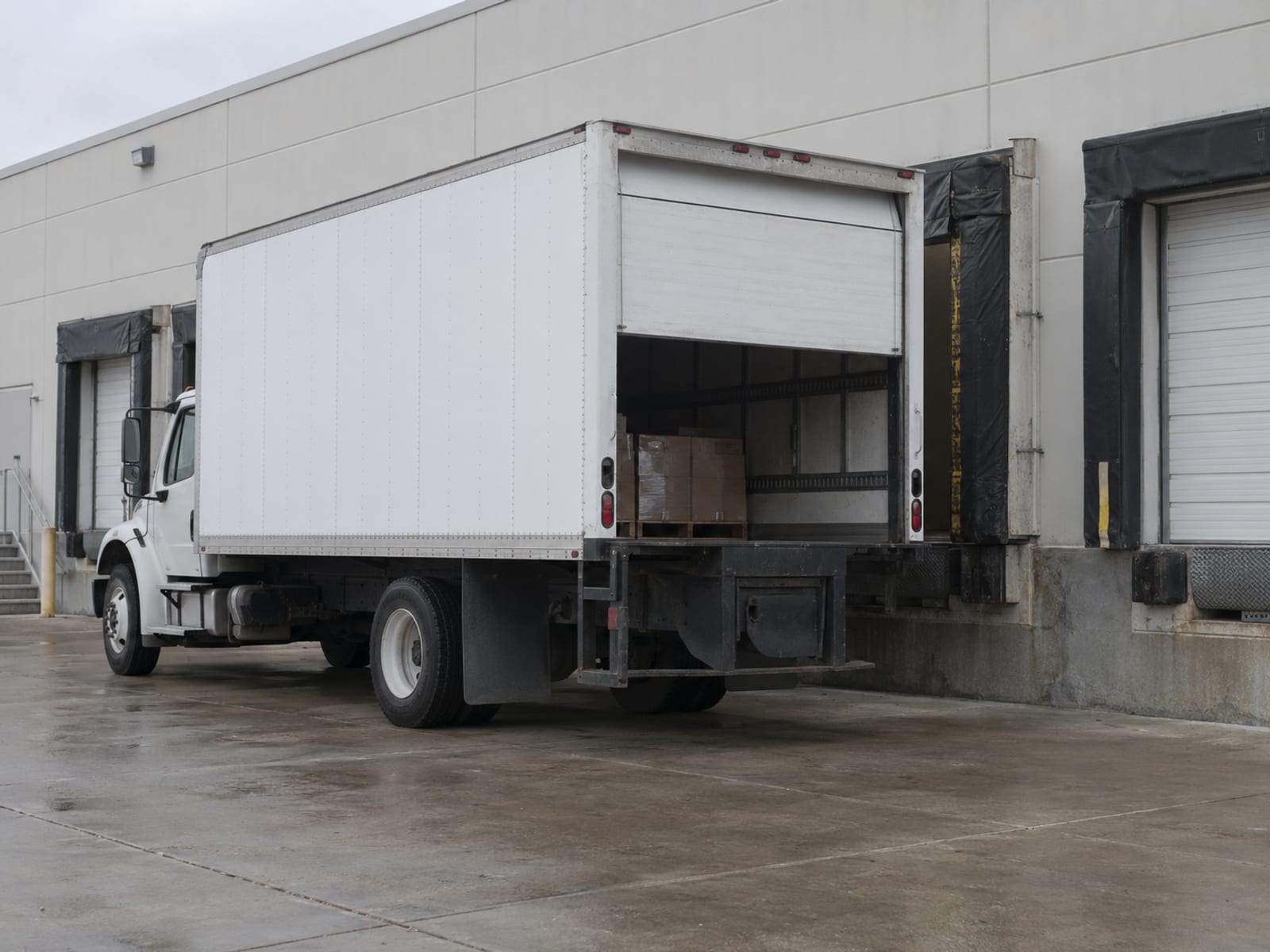
Commercial motor vehicles registered or principally garaged in New Jersey are required by law to carry automobile liability insurance under N.J.S.A. 39:6B, according to NJDOBI's Office of Property and Casualty (opens in a new tab). The exact requirement depends on the vehicle's registration class, weight and use.
For commercial motor vehicles in intrastate commerce, minimum limits rose for policies issued or renewed on or after July 1, 2024, under NJDOBI Bulletin 24-07 (opens in a new tab):
Hover or tap a row to highlight it.
| Gross vehicle weight rating | Minimum combined single limit |
|---|---|
| 26,001 pounds or more | $1,500,000 |
| 10,001 pounds up to the 26,001-pound class | $300,000 |
Special MVC classes have their own limits. For example, light-medium tow trucks need $750,000 and heavy-duty tow trucks need $1,000,000, according to the NJ MVC commercial vehicle page (opens in a new tab). Every registered vehicle also needs an insurance identification card with the information the MVC (opens in a new tab) specifies.
Business use of a personal vehicle is a separate question. Business use may call for commercial vehicle coverage, especially when the business owns or leases the vehicle or employees drive it, according to the NAIC small business page (opens in a new tab). If employees run errands in their own cars, ask about hired and non-owned auto coverage.
Does your license require insurance or a bond?
Some do, and the rules vary by trade and licensing agency. Home improvement contractor registration is a clear example. A home improvement contractor business must file proof of commercial general liability insurance of at least $500,000 per occurrence, maintain workers' compensation unless exempt by law, maintain additional security, and pay the registration fee, according to the Division of Consumer Affairs (opens in a new tab).
The additional security can be a compliance bond, an irrevocable letter of credit, securities, money or other security the Division accepts. Minimum amounts are tied to contract value:
Hover or tap a row to highlight it.
| Contract value | Minimum additional security |
|---|---|
| A contract over $120,000, or $750,000 or more in contracts during the prior 12 months | $50,000 |
| A contract from $10,000 to $120,000, or $150,000 to $750,000 during the prior 12 months | $25,000 |
| A contract under $10,000, or under $150,000 during the prior 12 months | $10,000 |
Other trades follow their own licensing agency's rules, so confirm insurance and bond requirements with the agency that licenses yours.

General liability, professional liability and the BOP
General liability, or commercial general liability, responds to third-party claims for bodily injury, damage to someone else's property, personal injury such as libel or slander, and false or misleading advertising. It can also pay certain medical expenses, defense costs, settlements or judgments, subject to the policy, according to the NAIC (opens in a new tab). It does not cover injuries to your own employees; that is workers' compensation.
Professional liability, also called errors and omissions coverage, responds to claims about your professional services: errors, omissions, negligence or failure to meet professional standards. It is a separate policy, not a substitute for general liability.
A business owners policy (BOP) typically packages commercial property, business interruption or business income, and general liability. It typically does not include workers' compensation, commercial auto, health insurance, disability insurance or professional practice liability, according to the NAIC (opens in a new tab) and its business interruption overview (opens in a new tab). A BOP is not available to every business and may not fit operations with specialized or high-severity risks.
Certificates of insurance document coverage; they do not create it. When a landlord, client or lender asks for a certificate, additional insured status or a specific endorsement, the policy itself has to include that endorsement. Ask the requesting party exactly what wording they need.

What does small business insurance cost?
For national context, Insureon (opens in a new tab) reports these median monthly costs from policies bought by 100,000 of its small business customers, updated February 6, 2026:
Hover or tap a row to highlight it.
| Policy | National median per month |
|---|---|
| General liability | $45 |
| Business owners policy | $83 |
| Professional liability or E&O | $88 |
| Workers' compensation | $54 |
| Commercial umbrella | $86 |
| Cyber insurance | $129 |
| Commercial property | $108 |
Those are national medians from one platform whose customers generally have fewer than five employees and five years or less in business. They are not New Jersey averages and not quotes. Workers' compensation in New Jersey is priced by job classification and experience: classification rates reflect average work injury experience, and an employer's own claims experience can modify the premium, according to New Jersey Labor (opens in a new tab). Industry, location, payroll, revenue, vehicles, claims history and coverage terms all move the price.
How to verify an agent, broker or carrier
Confirm that the producer and the insurer are licensed through the New Jersey insurance license lookup (opens in a new tab) and NJDOBI's Division of Insurance (opens in a new tab), and ask for the producer's license information and the insurer's legal name. Company licensing and complaint information is also available through the NAIC Consumer Information Source, according to the NAIC guide to choosing an agent (opens in a new tab). Confirm the carrier is authorized for the specific line of insurance, and get declarations, endorsements and certificates directly from the producer or carrier.
If a problem comes up, contact the NJDOBI Consumer Inquiry and Response Center (opens in a new tab) at 1-800-446-7467 or 609-292-7272. Complaints are assigned for investigation, the insurer or producer may be required to respond, and appropriate matters can be referred to enforcement, according to NJDOBI Consumer Protection Services (opens in a new tab).
What to bring to an agent or broker
- Your legal business structure, and a list of everyone who performs services and how each is paid.
- Payroll, revenue, services, locations and the states where you work.
- Every owned, leased or employee-used vehicle, with weight rating, use, registration class and drivers.
- Leases, client contracts, lender conditions, licenses, certificate requests and bond requirements.
- Buildings, inventory, equipment, tools and computers.
- Prior policies, declarations, endorsements, audits and claims history.
Then ask: How is each person working for me classified for workers' compensation? Does the policy cover every state where work happens? Does my commercial auto match each vehicle's weight and use? What does the BOP leave out? Is the liability policy occurrence-based or claims-made? Which insurers are you quoting, and is the agent captive, independent or acting as a broker? Riskado's directory lists insurance agencies across New Jersey and every other state, by city and by business insurance category, so you can find a commercial agency near you.
Check what you know about New Jersey small business insurance
Frequently asked questions
Is workers' compensation required for just one employee?
Yes, in most cases. There is no general one-employee exemption; coverage is triggered when one or more people covered under your business structure perform services for financial consideration, according to the Division of Workers' Compensation (opens in a new tab).
Who pays New Jersey Family Leave Insurance?
Employees do, through payroll deductions under the state plan. Employers do not contribute to FLI, but they handle reporting and administration, according to New Jersey Labor (opens in a new tab).
Does every New Jersey business need general liability insurance?
No single statewide rule requires it of every business. It is often required by a license, such as home improvement contractor registration, or by a lease, lender or client contract, so check those documents for the required limit.
Does a BOP include workers' compensation?
Typically not. A BOP usually packages property, business interruption and general liability, and workers' compensation and commercial auto are bought separately, according to the NAIC (opens in a new tab).
Next steps
List everyone who works for you and every vehicle the business uses, then pull your lease, contracts and any license requirements. With that in hand, ask a licensed agency to quote workers' compensation and any required auto coverage first, and then the liability and property coverage your contracts and risks call for.
Terms used in this guide
Tap a term to see what it means.
Financial consideration. Cash or noncash pay, such as products, services, stock or stock options, meals or lodging.
Self-insurance. Approval from NJDOBI for a business that meets state requirements to cover its own workers' compensation obligations.
NJCRIB. The New Jersey Compensation Rating and Inspection Bureau, which sets the rules and premium rates for workers' compensation and employers' liability insurance.
TDI. Temporary Disability Insurance, a state program funded by employer and employee payroll contributions.
FLI. Family Leave Insurance, a state payroll program funded by employee contributions.
Combined single limit. One liability limit that applies to injury and property damage together in an accident.
Business owners policy (BOP). A package that typically combines commercial property, business interruption and general liability.
Certificate of insurance. A document showing coverage; it does not create coverage.