New Hampshire Small Business Insurance: What Is Required, What Is Worth Having, and What It Costs
Riskado

If you hire even one employee in New Hampshire, full-time or part-time, you need workers' compensation coverage in place first, according to the NH Department of Labor employer checklist (opens in a new tab), subject to a few statutory exclusions for owners and officers. Vehicles work differently: New Hampshire does not require every business vehicle to carry a policy, but RSA 264:20 (opens in a new tab) can require proof of financial responsibility after certain accidents, convictions or other events. General liability, professional liability, property, business interruption, cyber and a business owner's policy each cover a different risk, and a lease, customer, lender, licensing body or contract may require them. Published cost averages are benchmarks, not quotes.
Key takeaways
- Workers' compensationRequired once you hire one employee, full-time or part-time, subject to a few statutory exclusions for owners and officers.
- Business vehiclesNew Hampshire does not require every business vehicle to carry a policy, but the state can require proof of financial responsibility after certain accidents, convictions or other events.
- Other policiesGeneral liability, professional liability, property, business interruption, cyber and a business owner's policy each cover a different risk.
- Who else can require coverageA lease, customer, lender, licensing body or contract.
- CostPublished averages are benchmarks, not quotes.
That gives you three layers to sort out: what the law requires, what your contracts and licenses require, and what protects the business even when nobody demands it. We'll take them in that order.
When does a New Hampshire employer need workers' compensation?
The trigger is one employee. The NH Department of Labor checklist (opens in a new tab) says coverage is required with one or more employees, full-time or part-time, and the department's Employer Guide (opens in a new tab) puts the responsibility on the employer to get coverage before hiring that first person. Once coverage starts, the carrier provides a Notice of Compliance for you to post.
Family members who work for you as employees are not outside the rule just because they are related to you. What matters is whether they are employees, how they are paid and whether a statutory exclusion applies, so look at all three together. The same goes for anyone you treat as an independent contractor: the label you use is less important than whether the person actually qualifies as independent under RSA chapter 281-A.
Owners have more room. The Employer Guide (opens in a new tab) lists limited exemptions for sole proprietorships, LLCs, and corporations that have only three corporate officers and no other employees. Under RSA 281-A:18-a (opens in a new tab), a corporation or LLC may elect to exclude up to three executive officers or members, but the exclusion is valid only when it is properly filed. Excluding yourself does not excuse coverage for the people who work for you.

What happens if a business skips workers' compensation?
The penalties add up quickly. Under RSA 281-A:7 (opens in a new tab), an employer that fails to secure coverage may be assessed a civil penalty of up to $2,500, plus up to $100 per employee for each day of noncompliance. Those penalties run from the first day of the violation for up to one year.
The same statute reaches beyond the business itself. A person who controls or is responsible for paying funds and salaries, and who knowingly failed to secure coverage, can be held personally liable. The commissioner may also go to court to stop the business from operating while it is out of compliance. An injured employee or a dependent can still apply to the commissioner for compensation, and the employer must pay an award within the statutory period after notice.
How do you get workers' compensation coverage?
Most employers buy it from a private insurance carrier. If an agency or carrier refuses you voluntary coverage, the Employer Guide (opens in a new tab) says it must tell you about the Assigned Risk Plan of the National Council on Compensation Insurance and give you the application form. That route matters for new businesses and businesses in higher-risk trades that struggle to find a carrier. Self-insurance is a third path, where permitted under RSA chapter 281-A (opens in a new tab) and the state's requirements.
Does New Hampshire require commercial auto insurance?
Not as a blanket rule. New Hampshire generally lets drivers show financial responsibility in ways other than buying a policy, but the state can require proof after a reported accident under RSA 264:3 (opens in a new tab) and after other triggering events. The financial-responsibility amounts in RSA 264:20 (opens in a new tab) are:
- $25,000 for bodily injury or death to one person
- $50,000 for bodily injury or death to two or more people in one accident
- $25,000 for injury to or destruction of property in one accident
RSA 264:21 (opens in a new tab) allows proof through a certificate from an insurance company or surety company, with rules for continuous certificates, notice periods and certain newly acquired vehicles. The definition of a motor-vehicle liability policy sits in RSA 259:61 (opens in a new tab).
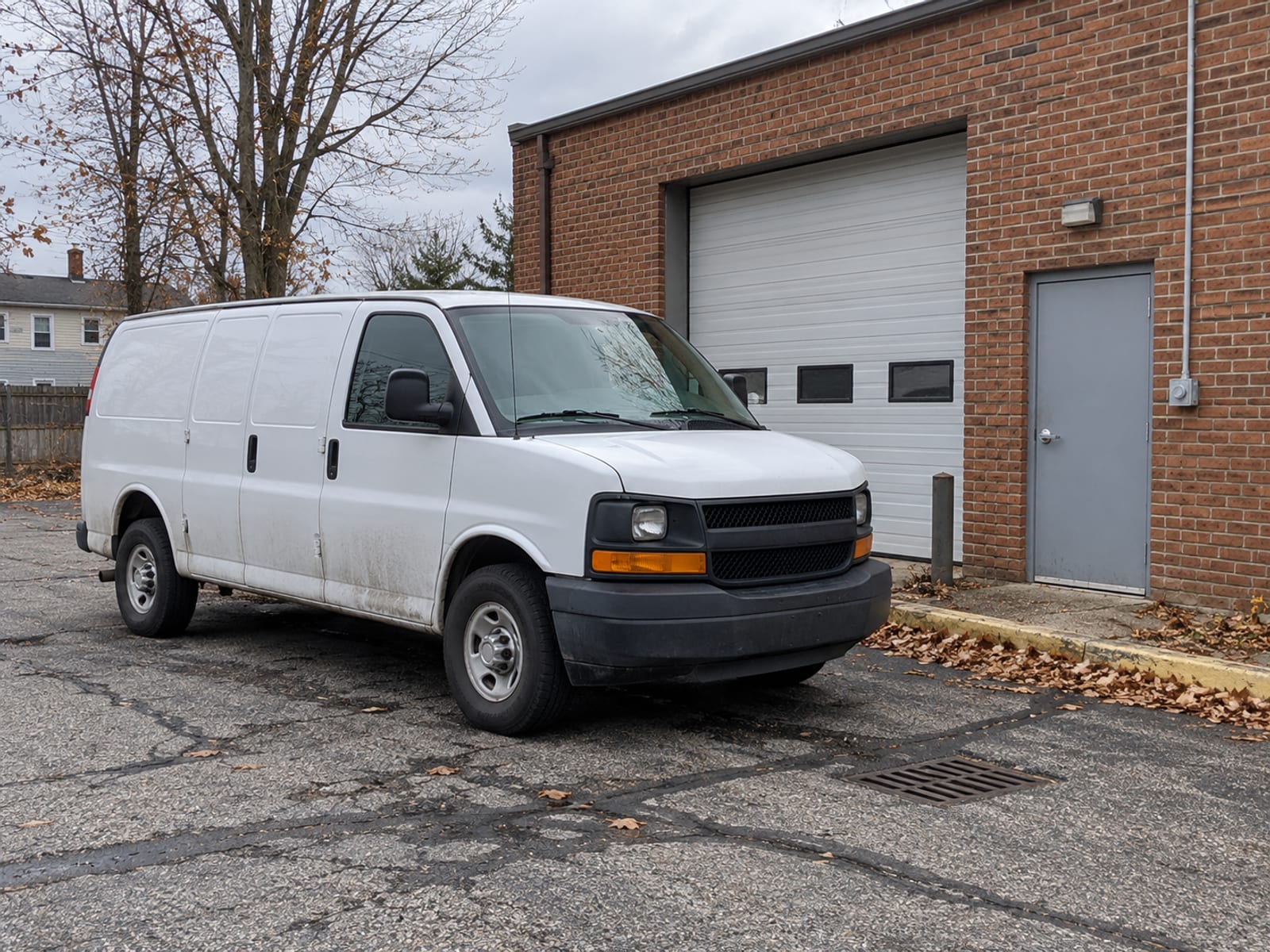
Those numbers are the legal floor for financial responsibility, not a recommendation for a business. Business-owned vehicles, employees driving their own cars on errands or deliveries, rented or hired vehicles, interstate work and contract terms all raise separate questions. A personal auto policy does not automatically cover business use, so ask your agent how each vehicle and driver is actually used and whether you need commercial auto or hired and non-owned auto coverage.
What coverage do contracts, leases and licenses require?
A lot of business insurance is required by someone other than the state. Landlords, customers, lenders and general contractors commonly ask for general liability, specific limits, additional-insured wording or a waiver of subrogation before they sign. Those requirements come from the contract, so read the insurance section of each lease or agreement and bring it to your agent.
Liquor licensing is one state license with a written insurance condition. Under RSA 178:5 (opens in a new tab), if the Liquor Commission finds that a licensee or applicant has twice violated RSA 179:5 within 24 months, it may require liquor-liability security as a condition of issuing, renewing or reinstating the license. The security can be insurance or a deposit, up to $100,000 for one person and $300,000 for all persons per incident. The Liquor Commission rules (opens in a new tab) say the requirement can be met with liquor-liability insurance or a cash or securities deposit, and it can stay in effect while the holder controls the license or for at least one calendar year.
Contractors and other trades may face insurance requirements through contracts, public bids or their own licensing rules. Confirm insurance and certificate requirements with the agency that issues your specific license or the party offering the contract.
Hover or tap a row to highlight it.
| Rule | Figure | Source |
|---|---|---|
| Workers' compensation threshold | One or more employees, full-time or part-time | NH Department of Labor checklist (opens in a new tab) |
| Owner or officer exclusion | Up to three executive officers or LLC members, properly filed | RSA 281-A:18-a (opens in a new tab) |
| Penalty for no workers' compensation | Up to $2,500, plus up to $100 per employee per day for up to one year | RSA 281-A:7 (opens in a new tab) |
| Financial responsibility, bodily injury | $25,000 one person, $50,000 two or more people | RSA 264:20 (opens in a new tab) |
| Financial responsibility, property damage | $25,000 per accident | RSA 264:20 (opens in a new tab) |
| Liquor-liability security | Up to $100,000 one person, $300,000 all persons per incident | RSA 178:5 (opens in a new tab) |
Certificates of insurance
A certificate of insurance summarizes your coverage: the named insured, the insurer, policy number, coverage type, policy period and sometimes limits. It is evidence of insurance, not the insurance itself. A certificate does not create coverage, change exclusions, add an additional insured or extend a policy period, according to the NH Insurance Department checklist (opens in a new tab). When a customer asks for specific wording, compare the request with your actual policy and endorsements, and ask the requesting party for its exact certificate and endorsement requirements in writing.

What does each common business policy do?
Each policy below answers a different question about what could go wrong. The descriptions draw on the NH Insurance Department checklist (opens in a new tab) and the NAIC small business insurance guide (opens in a new tab), and the wording of your own policy always controls.
General liability commonly covers third-party claims for bodily injury, property damage, personal injury, advertising injury, medical expenses and defense costs. It commonly excludes employee workplace injuries, vehicle liability and professional errors.
Professional liability, also called errors and omissions, covers claims that you made an error, left something out, were negligent or failed to meet professional standards in the services you provided. Consultants, designers, accountants and technology firms are typical buyers. Ask whether the policy is claims-made or occurrence-based, since that changes when a claim must be reported.
Commercial property covers your building, if you own it, plus inventory, equipment and furnishings.
Business interruption, or business income, helps replace lost income when covered damage stops operations.
A business owner's policy (BOP) typically packages property, business interruption and liability in one policy, according to the NAIC (opens in a new tab). A BOP generally does not include workers' compensation, commercial auto, health or disability coverage, or professional liability, and not every business qualifies for one.
Commercial auto covers vehicles the business owns or uses for business purposes.
Cyber liability addresses data breaches and other data exposures, which matter more as sales and records move online. Ask whether any cyber protection is in your BOP or needs a separate policy.
Inland marine covers tools, equipment and property that move between job sites or are in transit.
Umbrella coverage adds liability limits above your other policies.
Liquor liability applies to businesses that serve or sell alcohol, and it can become a license condition under RSA 178:5.
How much does New Hampshire business insurance cost?
Published New Hampshire averages come from insurers and marketplaces describing their own customers, so treat them as dated, publisher-specific benchmarks.
Hover or tap a row to highlight it.
| Coverage | Average | Publisher and basis |
|---|---|---|
| General liability | $51 per month | Insureon (opens in a new tab) New Hampshire customers |
| Workers' compensation | $67 per month ($803 per year) | Insureon (opens in a new tab) New Hampshire customer policy data |
| Professional liability (E&O) | $70 per month | Insureon (opens in a new tab) New Hampshire customers |
| Workers' compensation | About $86 per month ($1,029 per year) | The Hartford (opens in a new tab) New Hampshire small-business customers, page updated July 10, 2026 |
Insureon says its figures come from customers who mostly have fewer than five employees, revenue from under $50,000 to over $200,000, and five years or less in business. All four figures were checked October 1, 2026.
The two workers' compensation averages differ by about $19 a month, which shows why an average cannot stand in for a quote. Business type, payroll, revenue, number of employees, location, vehicles, property, claims history, policy terms, exclusions, deductibles and the limits you request all affect what you pay. The Hartford names payroll, industry, business experience and claims history as the main workers' compensation factors.

What should you gather before calling an agent?
An agent can give you a more accurate proposal when you arrive with the facts. Pull together:
- Legal business name, entity type and Employer Identification Number
- Business and mailing addresses
- Employee count, including full-time, part-time, seasonal and family employees
- Payroll and job classifications
- Owner, officer, partner and LLC-member information
- Current and expected revenue
- A description of your products and services
- Insurance requirements from leases, lenders, customers, contractors and licensing bodies
- A vehicle list with ownership, garaging, drivers and business use
- Building, inventory, equipment and tool information
- Prior policies and claims history
- Subcontractor certificates and contracts
- Any certificate-of-insurance wording you have been asked to provide
Then ask the questions that tend to change the answer. What does this policy exclude? Is business interruption included in the BOP or separate? Does general liability exclude professional errors, employee injuries, vehicles, cyber events or liquor claims? Is professional liability claims-made, and what are the retroactive date and extended-reporting terms? How will the workers' compensation payroll audit work? If voluntary workers' compensation coverage is unavailable, how do you apply to the assigned-risk plan? And when should you review the policy again after hiring, moving, adding vehicles, changing services or signing a major contract?
Programs that sit alongside insurance
Some employer obligations look like insurance but are separate programs. New Hampshire unemployment compensation is an employer-funded tax and benefit program, and the NH Department of Labor checklist (opens in a new tab) points employers to register with NH Employment Security (opens in a new tab) within 30 days of first providing employment. New Hampshire Paid Family and Medical Leave is a paid-leave program, not workers' compensation or liability insurance; confirm current participation rules and employer obligations directly with the program. New-hire reporting, wage withholding, eligibility documents, posters and safety programs are compliance duties rather than insurance products.
How to check an agent and where to complain
Anyone selling insurance in New Hampshire needs a producer license under RSA 402-J:3 (opens in a new tab). Ask for the agent's legal name, agency name, license information and lines of authority, then confirm the license through the New Hampshire Insurance Department (opens in a new tab) or the National Insurance Producer Registry, according to the department's producer clearance material (opens in a new tab). Confirm that the carrier is authorized in New Hampshire and that the proposal names the correct entity, locations, vehicles, operations, policy period and certificate details.
If a problem can't be resolved with the agent or carrier, the NH Insurance Department Consumer Services Division (opens in a new tab) takes calls at 800-852-3416 and email at consumerservices@ins.nh.gov. Its mailing address is 21 South Fruit Street, Suite 14, Concord, NH 03301.
Check what you know about New Hampshire small business insurance
Frequently asked questions
Do I need workers' compensation for one part-time employee in New Hampshire?
Yes. The NH Department of Labor (opens in a new tab) requires coverage with one or more employees, full-time or part-time, subject to statutory exceptions. Coverage should start before that person's first day.
Is a sole proprietor required to cover himself or herself?
A sole proprietor is generally exempt from compulsory coverage for the owner, according to the Employer Guide (opens in a new tab). Once you hire an employee, the requirement applies to that employee, and a customer contract may still ask for proof of coverage.
Does a BOP cover my employees' injuries or my work truck?
No. A BOP typically packages property, business interruption and liability, and the NAIC (opens in a new tab) says it generally does not include workers' compensation or commercial auto. Those need separate policies.
Does a New Hampshire liquor license require liquor liability insurance?
It can. Under RSA 178:5 (opens in a new tab), the Liquor Commission may require security after two violations of RSA 179:5 within 24 months, up to $100,000 per person and $300,000 per incident. The security can be insurance or a deposit.
Can the state shut down a business without workers' compensation?
It can try. RSA 281-A:7 (opens in a new tab) lets the commissioner seek a court order restraining the business from operating while it is noncompliant, in addition to civil penalties.
Where to go from here
Start with the legal layer: if you have or plan to have an employee, get workers' compensation in place, and file any owner or officer exclusion properly. Next, pull the insurance clauses from your lease, customer contracts and license, since those often set the general liability limits and certificate wording you need. Then bring your payroll, vehicle, property and claims details to a licensed agent and ask how each policy fits the way your business actually runs.
Terms used in this guide
Tap a term to see what it means.
Workers' compensation. Coverage for employee work injuries that New Hampshire requires once a business has one or more employees.
Notice of Compliance. The notice the workers' compensation carrier provides for the employer to post once coverage starts.
Assigned Risk Plan. The National Council on Compensation Insurance plan for employers refused voluntary workers' compensation coverage.
Financial responsibility. Proof that a driver can pay for an accident, at $25,000, $50,000 and $25,000 in New Hampshire.
Certificate of insurance. A summary of coverage that is evidence of insurance, not the insurance itself.
Business owner's policy (BOP). A package of property, business interruption and liability coverage in one policy.
Professional liability. Also called errors and omissions, coverage for claims that a service was done wrongly or left incomplete.
Additional insured. A party added to a policy by endorsement, often at a landlord's or customer's request.