Maine Small Business Insurance: What the Law Requires, Workers' Compensation, and What to Ask an Agent
Riskado

If you run a small business in Maine, start with workers' compensation. Every private employer is subject to Maine's workers' compensation law and must secure payment for its employees through an insurance policy or approved self-insurance, unless a statutory exemption applies, under 39-A M.R.S. § 401 (opens in a new tab). Owners can be treated differently from employees, and calling a worker an independent contractor does not settle their status. Property and liability insurance are not generally required by Maine law, according to the Maine Bureau of Insurance guide Insuring Your Business (opens in a new tab), but a client, landlord, lender, license or contract may require them. Commercial property, liability, auto, professional, product and home-based exposures are each worth a separate conversation with a licensed agent.
Key takeaways
- Workers' compensationEvery private employer must secure payment for its employees through insurance or approved self-insurance, unless a statutory exemption applies.
- Owners and contractorsOwners can be treated differently from employees, and calling a worker an independent contractor does not settle their status.
- Property and liabilityNot generally required by Maine law, but a client, landlord, lender, license or contract may require them.
- Other exposuresCommercial property, liability, auto, professional, product and home-based exposures each deserve a separate conversation with a licensed agent.
Legal requirements, contract requirements and optional coverage
Business insurance in Maine sorts into three groups, and knowing which group a policy belongs to tells you how urgent it is.
Required by law. Workers' compensation is the main statewide legal requirement for employers. Maine Paid Family and Medical Leave is a separate employer obligation that runs alongside it, covered further down.
Required by someone you do business with. A lease, a lender, a client contract, a public contract or a specific license can require liability coverage, property coverage or a certificate of insurance with particular wording. These requirements come from that document or that licensing body, not from a general state rule.
Optional protection. Commercial property, general liability, commercial auto, professional liability, product liability, business interruption and similar coverages protect the business against losses it would otherwise pay for itself. A business can choose a commercial package policy or a businessowners policy, depending on its circumstances, according to the Insuring Your Business guide (opens in a new tab).

Who counts as an employee under Maine workers' compensation law?
Maine has no broad "three employees" or "five employees" threshold. The rule applies to employees, subject to the exemptions listed in the statute. A private employer, including an independent contractor that hires and pays its own workers, must secure coverage for all employees under 39-A M.R.S. § 401 (opens in a new tab). A few narrow exceptions exist, including domestic service and certain agricultural or aquacultural laborers when the required employer-liability and medical-payment coverage is in place.
Who counts as an employee is defined in 39-A M.R.S. § 102 (opens in a new tab). A person paid for services is presumed to be an employee unless the business proves independent-contractor status under the statutory test. A 1099 form does not decide that question, according to the Maine Workers' Compensation Board Independent Contractor FAQ (opens in a new tab). The test looks at the actual working relationship, including control over the work, whether the worker runs an independent business, opportunity for profit or loss, use of assistants, other customers, investment, exclusivity, contractual responsibility and how payment is structured.
An independent-contractor statement filed with the Board creates a rebuttable presumption. It is not binding if the real relationship is employment. Misclassifying employees as independent contractors can count as failing to secure coverage, which carries its own penalties.

Exemptions, waivers and owner elections
Owners and family members have their own rules under 39-A M.R.S. § 102 (opens in a new tab) and the Workers' Compensation Board waiver page (opens in a new tab):
- Sole proprietors are not required to carry workers' compensation on themselves but may elect personal coverage through a policy that clearly shows the election.
- Partners do not have to cover themselves personally and may also elect coverage.
- LLC members who work in the business may elect personal coverage.
- Corporate executive officers are employees under the Act. A bona fide owner of at least 20% of the corporation's outstanding voting stock may waive benefits in a written statement if the Board approves that status and the waiver was not a condition of employment. Specifically including an executive officer in the policy makes that officer an employee.
- Family members who are the parent, spouse, domestic partner or child of a sole proprietor, partner or LLC member may submit a written waiver if the Board finds the waiver was not a prerequisite to employment.
Waivers are not valid until the Board approves them, and a person can revoke a waiver with written notice, according to the Board's waiver instructions (opens in a new tab). If you are a one-person business thinking about hiring, or you have family helping out, this is where to start your questions.
Hover or tap a row to highlight it.
| Who | Rule under Maine law |
|---|---|
| Sole proprietors | Not required to carry coverage on themselves; may elect personal coverage |
| Partners | Not required to cover themselves personally; may elect coverage |
| LLC members who work in the business | May elect personal coverage |
| Corporate executive officers | Employees under the Act; an owner of at least 20% of voting stock may waive benefits with Board approval |
| Family members of a sole proprietor, partner or LLC member | May submit a written waiver if the Board finds it was not a prerequisite to employment |
How a Maine business secures workers' compensation
Four routes appear in Maine's guidance:
- Buy a policy through a licensed property and casualty producer.
- Ask about the residual market if voluntary-market coverage is unavailable.
- Apply for individual self-insurance authority through the Maine Bureau of Insurance (opens in a new tab).
- Join an approved group self-insurance arrangement.
Licensed producers and self-insured groups are both identified in the Bureau's Workers' Compensation FAQs (opens in a new tab), and employer resources are collected by the Workers' Compensation Board (opens in a new tab). Ask your producer or the Bureau which market fits your situation.
Penalties for going without required coverage
An employer that knowingly fails to secure required workers' compensation faces serious consequences under 39-A M.R.S. § 324 (opens in a new tab):
- A Class D crime.
- A civil penalty of up to $10,000 or up to 108% of the premium that should have been paid during the uninsured period, whichever is larger.
- Administrative dissolution of a corporation or LLC in qualifying circumstances.
- Suspension or revocation of a license, certification or registration in qualifying circumstances.
- Loss of certain common-law defenses if an employee sues.
- Liability for the compensation owed to injured employees.
The knowing-violation condition applies to the criminal charge and the listed administrative consequences.
How Maine workers' compensation rates are set
Your workers' compensation cost starts with the hazards tied to your business classification, according to the Bureau's Workers' Compensation FAQs (opens in a new tab). A governing classification identifies the type of business. The premium for each class of work is the rate per $100 of payroll multiplied by the payroll in that class, and your loss history usually affects the final cost.
Insurers and self-insurers must use a uniform classification system and a uniform experience-rating plan filed by a designated advisory organization under 24-A M.R.S. § 2382-B (opens in a new tab). Insurers must file rates and supplementary rating information at least 30 days before the effective date, and policy forms must be filed and approved, under 24-A M.R.S. § 2382-C (opens in a new tab).
For new and renewing policies effective April 1, 2025, approved NCCI loss costs dropped by an average of 9.6%, according to a March 26, 2025 Maine Bureau of Insurance announcement (opens in a new tab). Insurers may modify those loss costs and set their own expense and profit factors, subject to Bureau review. The 9.6% figure is a statewide average change in loss costs, not a prediction of any one business's premium.

Property, liability, auto and other business coverage
Commercial coverage in Maine falls into three main categories: property, liability and auto, according to the Bureau's commercial property and liability page (opens in a new tab). Beyond those, the Bureau's guide describes business interruption, extra expense, flood, earthquake, equipment breakdown and other optional coverages. Every policy has exclusions and limitations, and property policies may include coinsurance requirements, so the full wording matters.
General liability can cover certain bodily injury, property damage, medical expenses, personal injury, lawsuit defense, settlements and judgments, according to the SBA's guide to business insurance (opens in a new tab). The SBA also describes professional liability for service businesses, product liability for businesses that make or sell products, and commercial property for businesses with significant buildings, equipment or inventory.
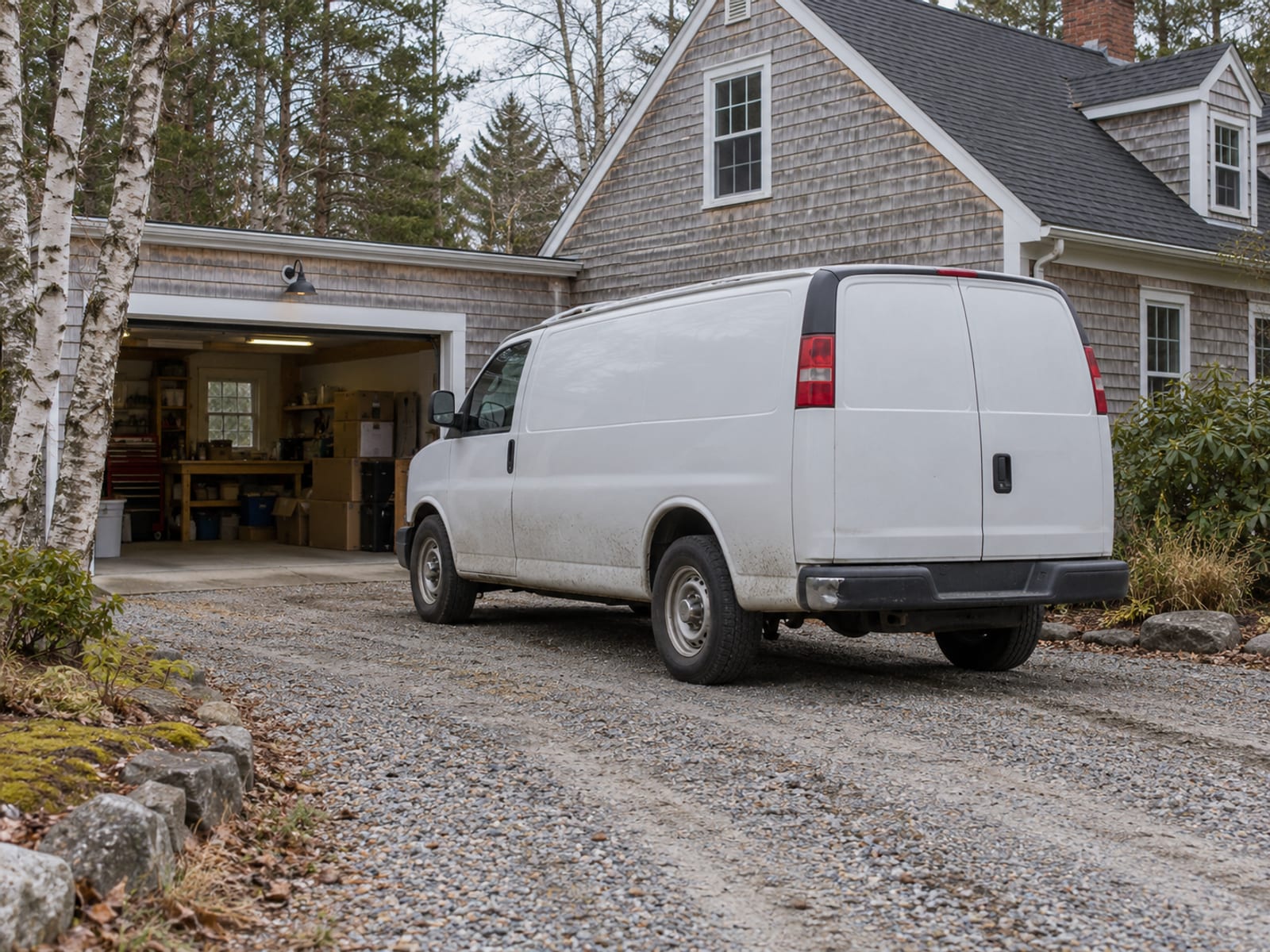
Vehicles. Most personal auto policies exclude business use, and a personal policy is unlikely to cover an accident during deliveries, according to the Bureau's page on business use of a personal auto (opens in a new tab). If you or your employees drive for deliveries, carry customers or rent out a vehicle, talk that arrangement through with a licensed agent.
Home-based businesses. Home-based business coverage is a separate issue from your homeowners policy, according to the SBA (opens in a new tab), and the Bureau's child-care liability guide (opens in a new tab) says homeowners policies probably exclude business conducted in the home. Ask your home insurer how your business activity affects your current policy.
Maine licenses and contracts that require coverage
Specific requirements come from a specific licensing body or contract. Two Maine examples show how that works.
Child care. A child-care center or nursery school must carry liability insurance to be licensed by the Maine Department of Health and Human Services, according to the Bureau's child-care liability guide (opens in a new tab). DHHS does not require liability insurance for a family child-care provider working in their own home to become licensed. Separately, 24-A M.R.S. § 3060 (opens in a new tab) requires satisfactory evidence of separate business liability coverage in the circumstances the statute describes, so home providers should read it alongside their homeowners policy.
Public contracts. A Maine Department of Transportation bid book (opens in a new tab) required workers' compensation and commercial general liability coverage for the contractor and subcontractors on that project. Requirements like these apply to the contract in question, so read each bid document for its own terms.
For trade licenses, check with the specific licensing agency for any insurance rule that applies to your trade.
Maine Paid Family and Medical Leave is a separate obligation
Paid Family and Medical Leave is a state employment program, not workers' compensation and not a liability policy. Key employer points from the Maine Department of Labor (opens in a new tab):
- Employer contributions began in January 2025, and benefits for qualifying leave began May 1, 2026.
- Eligible employees may receive up to 12 weeks of paid leave in a benefit year.
- Employers must register in the Paid Leave Portal, report wage data quarterly and remit contributions unless using an approved private plan.
- Employers must give employees notice within 30 days of hire and display the PFML poster.
- Employers with 15 or more Maine employees generally pay a 1.0% contribution rate, and smaller employers 0.5%, according to the Department of Labor's employer overview (opens in a new tab). Employers may withhold only the permitted employee share.
Hover or tap a row to highlight it.
| Topic | Figure or rule | Source |
|---|---|---|
| Penalty for failing to secure workers' compensation | Up to $10,000 or up to 108% of the premium that should have been paid, whichever is larger | 39-A M.R.S. § 324 (opens in a new tab) |
| Knowing failure to secure coverage | Class D crime | 39-A M.R.S. § 324 (opens in a new tab) |
| Owner waiver threshold for executive officers | At least 20% of outstanding voting stock, with Board approval | 39-A M.R.S. § 102 (opens in a new tab) |
| NCCI loss-cost change, policies effective April 1, 2025 | 9.6% average decrease | Maine Bureau of Insurance (opens in a new tab) |
| PFML benefits | Began May 1, 2026; up to 12 weeks in a benefit year | Maine Department of Labor (opens in a new tab) |
| PFML employee notice | Within 30 days of hire | Maine Department of Labor (opens in a new tab) |
| PFML contribution rate | 1.0% with 15 or more Maine employees; 0.5% for smaller employers | Maine Department of Labor (opens in a new tab) |
How to verify an agent and where to file a complaint
You can look up an insurance producer or company by name, license number or identification number through the Maine Bureau of Insurance Licensee Search (opens in a new tab). The search is offered as a public service, so contact the Bureau if you need formal confirmation.
Insurance complaints go through the Bureau, reachable from its Contact Us page (opens in a new tab) or the Maine PFR complaint page (opens in a new tab), at 207-624-8475 or 800-300-5000. Disputes over workers' compensation claim payments go to the Maine Workers' Compensation Board (opens in a new tab), not the Bureau of Insurance.
What to bring to an agent
A meeting with a producer goes faster when you arrive with:
- Your business entity type and ownership structure.
- A list of every worker, with job title, work location, pay method and relationship (employee, owner, officer, member, partner, family worker or contractor).
- Current payroll records and an estimate of next year's payroll.
- A description of each business activity.
- Vehicles, drivers and any delivery or customer transportation.
- Buildings, rented space, equipment, inventory, tools and property kept off-site.
- Current policies and declarations pages, leases, lender requirements, client contracts, licenses and any required certificate wording.
- Prior claims information.
Questions to ask a Maine insurance agent
- Based on my actual workers, who must be included for workers' compensation?
- Should I elect personal coverage as an owner, or does a Board-approved waiver apply?
- What facts support or weaken independent-contractor status for the people I pay?
- Which classification codes apply to each type of work, and how will the payroll audit work?
- How does my loss history or experience rating affect the price?
- If voluntary coverage is unavailable, what residual-market option applies?
- Does my personal auto policy exclude business driving or deliveries?
- Does my homeowners policy exclude my business activity?
- What exclusions apply to the coverage you are proposing?
- What professional, product, cyber, inland marine or other exposures fit my operations?
- Is the insurer authorized in Maine, and how can I confirm your license?
Check what you know about Maine small business insurance
Quick answers for Maine business owners
Does a part-time or seasonal worker count for workers' compensation? The statute applies to employees without a general headcount threshold, so ask your producer how part-time, seasonal, family or casual workers are treated for your business. The answer depends on the definitions in 39-A M.R.S. § 102 (opens in a new tab) and the listed exemptions.
Can an executive officer be added to a Maine workers' compensation policy? Yes. Specifically including an executive officer in the policy makes that officer an employee under the Act, according to 39-A M.R.S. § 102 (opens in a new tab).
Does a Board independent-contractor statement protect the business? It creates a rebuttable presumption only. If the real working relationship is employment, the statement is not binding, according to the Workers' Compensation Board (opens in a new tab).
Is PFML part of my workers' compensation policy? No. Paid Family and Medical Leave involves payroll contributions, notices, wage reporting and leave benefits through the Maine Department of Labor (opens in a new tab), separate from any insurance policy.
Where to start this week
Make a list of everyone you pay and how you pay them, then sort it into employees, owners and contractors. That list answers the workers' compensation question first and gives a licensed Maine producer what they need to discuss the rest: your vehicles, your property, the contracts you have signed and the work you do.
Terms used in this guide
Tap a term to see what it means.
Workers' compensation. Coverage an employer secures for employees' work-related injuries, through an insurance policy or approved self-insurance.
Independent contractor. A person paid for services whom the business proves is not an employee under Maine's statutory test.
Rebuttable presumption. A starting assumption that holds unless the facts show otherwise, such as the effect of an independent-contractor statement filed with the Board.
Waiver. A Board-approved written statement by an eligible owner or family member giving up workers' compensation benefits.
Governing classification. The classification that identifies the type of business for workers' compensation rating.
Experience rating. A uniform plan that adjusts workers' compensation cost based on the business's loss history.
Residual market. The source of workers' compensation coverage when voluntary-market coverage is unavailable.
Businessowners policy. A package policy for a business that combines property and liability coverage.