REIT Insurance: What a Real Estate Investment Trust Needs to Insure
Riskado

REIT insurance is not one standard policy. It is the insurance program a real estate investment trust builds around the risks its properties, tenants, employees, executives, lenders and corporate structure create. Listed REITs commonly report commercial property, general liability, business interruption or rental-income coverage, umbrella or excess liability, catastrophe coverage, and management and cyber risks in their annual filings, but each filing describes one company's program. The requirements themselves come from several places: law, loan documents, leases, contracts and management decisions. Start with the portfolio, the property locations, the tenant and lender obligations, the risks you keep, and the licensing rules in each state, and work through them with the responsible insurance professional.
Key takeaways
- Not one policyREIT insurance is the program a real estate investment trust builds around the risks of its properties, tenants, employees, executives, lenders and corporate structure.
- Common linesListed REITs commonly report commercial property, general liability, business interruption or rental income, umbrella or excess liability, catastrophe coverage, and management and cyber risks.
- One company per filingEach Form 10-K describes one company's program, not an industry standard.
- Where requirements come fromLaw, loan documents, leases, contracts and management decisions.
- Where to startThe portfolio, property locations, tenant and lender obligations, retained risks and each state's licensing rules.
What does REIT insurance cover?
A REIT's program usually spans owned buildings, the rent those buildings produce, liability to visitors and tenants, the people who run the company, and the way losses are financed. The mix depends on the portfolio, the property sector, the geography, the lease terms, the financing documents, the workforce and the risks the company decides to retain.
Two filings show how the same idea looks in practice. Digital Realty Trust, a data center REIT, carries "commercial general liability, property and business interruption insurance, and other insurance coverage on all of the properties in our portfolio," along with earthquake insurance, through a combination of commercial insurance, self-insurance and a wholly owned captive insurance entity, according to its 2025 Form 10-K (opens in a new tab). Brandywine Realty Trust, an office REIT, carries "commercial general liability insurance, and all-risk property insurance, including business interruption and loss of rental income coverage," according to its 2025 Form 10-K (opens in a new tab). Both are useful reference points, and neither sets a rule for any other REIT.
The question behind the search also varies. A CFO preparing a renewal wants the exposure map. General counsel answering a lender wants to know which requirements are contractual. An investor reading a prospectus may want to know how a REIT handles uninsured losses. Each starts from the same place: what is insured, what is retained, and where each requirement comes from.

What does REIT status require, and what does it leave open?
REIT status is a tax classification. Under 26 U.S.C. § 856 (opens in a new tab), a REIT is a corporation, trust or association managed by trustees or directors, with transferable shares or certificates of beneficial interest, that would otherwise be taxed as a domestic corporation and that meets the statutory tests. Those tests deal with ownership, assets, income and distributions.
Hover or tap a row to highlight it.
| Test | What it requires | Code section |
|---|---|---|
| Ownership | At least 100 persons, generally beginning with the second taxable year | 26 U.S.C. § 856(a)(5) (opens in a new tab) |
| Not closely held | Five or fewer individuals cannot own more than 50 percent in value during the last half of the taxable year | 26 U.S.C. § 856(a)(6) and (h) (opens in a new tab) |
| Assets | At least 75 percent of total assets in qualifying real estate assets, cash, cash items and government securities | 26 U.S.C. § 856(c)(4) (opens in a new tab) |
| 75 percent income | At least 75 percent of gross income from qualifying real estate sources, such as rents from real property and interest on mortgage-secured obligations | 26 U.S.C. § 856(c)(3) (opens in a new tab) |
| 95 percent income | At least 95 percent of gross income from qualifying real estate sources, dividends, interest and certain other permitted income | 26 U.S.C. § 856(c)(2) (opens in a new tab) |
| Distribution | At least 90 percent of REIT taxable income, excluding net capital gain, plus certain adjustments | 26 U.S.C. § 857(a) (opens in a new tab) |
Section 858 (opens in a new tab) covers dividends paid after year-end that may count toward the prior year, and sections 859 (opens in a new tab) and 860 (opens in a new tab) deal with dividend rules tied to disqualification, termination and deficiency corrections. The IRS instructions for Form 1120-REIT (opens in a new tab) walk through the 100-shareholder and closely held rules.
None of these sections prescribes a commercial insurance package. REIT status tells you how the entity is taxed; the insurance program comes from the properties, the contracts and management's choices.
Insurance money can still raise a tax question. Insurance proceeds, rental-income replacement payments and income from an insurance subsidiary each have to fit a statutory category under the section 856(c) (opens in a new tab) income tests, and no blanket rule makes all of them qualify. An IRS private letter ruling (opens in a new tab) discusses D&O insurance proceeds and the section 856 tests, but a private letter ruling binds only the taxpayer that received it. Questions about a specific payment, policy, recipient or subsidiary belong with a tax adviser who can review the facts.
The SEC sorts REITs by what they hold and how they trade. Equity REITs mainly own and operate income-producing real estate, mortgage REITs provide money through mortgages or real estate loans or invest in mortgage-backed securities, and hybrid REITs combine the two, according to the SEC's investor bulletin on REITs (opens in a new tab). Publicly traded REITs list on a national exchange, non-traded public REITs file with the SEC without listing, and private REITs are not publicly traded. A mortgage REIT's insurance questions center on lending, collateral and operations, while an equity REIT's start with buildings.
Which risks come from the properties?
Property risks fall into a few groups, and each one has its own coverage question.
Physical damage. Commercial property insurance protects the business location and physical property, including equipment, inventory and furniture, and may help with repair or replacement after a covered peril, according to the NAIC (opens in a new tab). REIT filings add detail on valuation. Artis Real Estate Investment Trust insures against direct physical damage on a replacement basis, according to its 2025 Form 10-K (opens in a new tab).
Lost income. Business interruption coverage pays lost net income while repairs are underway after covered physical damage, and it may include rent or lease payments, relocation costs, employee wages, taxes and loan payments, per the NAIC. REIT filings often name loss of rental income separately. A property policy does not protect rent automatically; the business interruption or rental-income terms in the policy decide that, so ask how each one is written, along with its waiting period, limit and deductible.
Equipment breakdown. Building systems such as boilers, electrical gear and cooling equipment can fail without any outside peril. Confirm how equipment breakdown is described, and what it excludes, in the actual policy form or insurer document for the placement.
Catastrophe perils. Flood, earthquake, windstorm, wildfire and terrorism often carry separate terms, deductibles or sublimits.
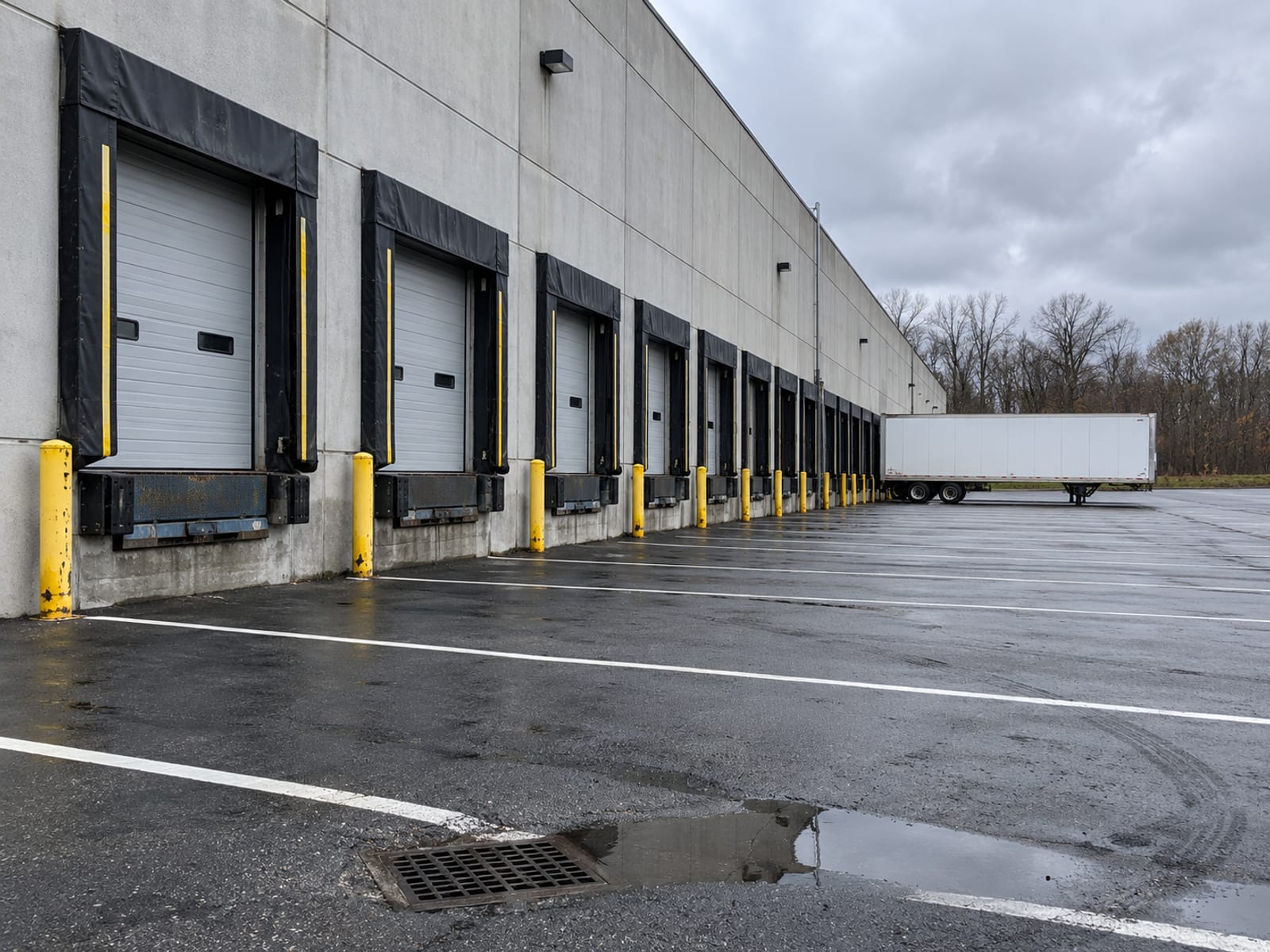
Sector matters here. A data center, a hotel, an apartment community, a warehouse and a shopping center each concentrate value and income differently, so the same peril can mean very different exposure across a portfolio.
Which risks come from people and operations?
The second half of the program covers people: visitors, tenants, contractors, employees, executives and investors.
General liability protects against claims alleging bodily injury, property damage, libel or slander, including legal fees and certain medical expenses, according to the NAIC (opens in a new tab). Umbrella or excess liability sits above the underlying liability program or above retained amounts; Brandywine's filing discusses general liability and umbrella policies, and InvenTrust Properties, a retail REIT, reports umbrella liability coverage in its 2025 Form 10-K (opens in a new tab). Exactly how an umbrella responds depends on its wording.
Employee risks bring in workers' compensation, health benefits and employment practices. Artis carries workers' compensation and health insurance through a large-deductible program and maintains excess loss coverage above established reserves, according to its 2025 Form 10-K. Employment practices liability covers claims of wrongful termination, discrimination or sexual harassment by current or former employees, according to the NAIC glossary (opens in a new tab). Fiduciary liability concerns the duties attached to employee benefit plans, and crime insurance addresses theft, fraud and dishonest acts; confirm the exact scope of each in the policy itself.
Management and corporate risks round out the list. Directors and officers exposure appears in Brandywine's 2025 filing as a liability addressed through insurance. Cyber risk shows up across listed property companies, and Brandywine warns that its cyber insurance may be insufficient for a major incident. The board-level question for each of these lines is the same: what is the limit, what does it exclude, and what happens above it.
What do lenders, tenants and contracts require?
Requirements arrive from different sources, and they carry different weight. A statute applies by law. A loan agreement binds the borrower that signed it. A lease, a property-management agreement or a vendor contract binds its parties. A board policy is a management decision.
That distinction matters when someone says coverage is "required." Lender insurance requirements come from the specific financing documents, not from a rule that applies to every REIT. InvenTrust notes that lenders may require insurance, and hotel REIT disclosures note that lenders may require terrorism insurance. Easterly Government Properties bases its coverage and limits on the risks of owning and operating in specific markets, according to its 2024 Form 10-K (opens in a new tab).
Tenants, contractors and third-party managers often have insurance obligations of their own under leases and service contracts. InvenTrust reports that it or its third-party managers carry its coverage. A tenant's policy does not replace the REIT's; it sits beside it, and the lease spells out who insures what, who must be named on whose policy, and which certificates have to be delivered.
How do deductibles, self-insured retentions and captives work in disclosed programs?
Every program keeps some risk. Deductibles and self-insured retentions are the portion the company pays before insurance responds, and a captive is an insurance entity the company owns and uses inside its own risk-financing structure.
Brandywine's property and casualty programs include deductibles and self-insured retention amounts, and it estimates retained liabilities using historical claims experience and actuarial assumptions, according to its 2025 Form 10-K. Digital Realty and Easterly each maintain insurance through commercial insurance, self-insurance and a wholly owned captive insurance entity. Artis uses a large-deductible program for workers' compensation and health insurance.
A captive does not eliminate risk. These filings describe captives as one piece alongside commercial insurance, self-insurance and retained losses, and they do not establish that every REIT should form one. A captive can also sit inside a taxable REIT subsidiary. Under 26 U.S.C. § 856(l) (opens in a new tab), a taxable REIT subsidiary is a corporation, other than a REIT, in which the REIT owns stock directly or indirectly, where both jointly elect that treatment. The Code defines the entity and the election; it does not make a taxable REIT subsidiary an insurance company. Whether an affiliated arrangement counts as insurance for federal tax purposes turns on risk shifting and risk distribution, as discussed in Internal Revenue Bulletin 2008-5 (opens in a new tab).
The practical questions are funding questions: how retained losses would be paid, how the retentions fit together by peril and property, and how the captive, the self-insured layer and the commercial policies are coordinated.
How are flood, earthquake, windstorm and terrorism handled?
Catastrophe coverage is location-specific, and it is where filings speak most plainly about limits. InvenTrust warns that losses from windstorms, earthquakes, wildfires and floods may be uninsurable, subject to higher deductibles or low sublimits, or uneconomic to insure. It carries earthquake, wind, flood, hurricane, wildfire and environmental coverage where it considers that warranted. Artis carries earthquake insurance in seismically active areas and flood insurance in flood zones. Digital Realty's earthquake coverage carries deductibles, and its policies exclude generally uninsured exposures such as loss from war or nuclear reaction. Easterly reports catastrophe bond coverage for earthquake risk through 2027.
Flood needs its own check. Ordinary business interruption coverage generally excludes flood, earthquake and mudslide losses unless additional coverage applies, according to the NAIC (opens in a new tab). FEMA runs the National Flood Insurance Program separately, with its own flood insurance manual (opens in a new tab) for commercial buildings. Confirm the flood terms on each property policy and whether a separate flood policy applies.
Terrorism has a federal layer. The Terrorism Risk Insurance Program creates shared public and private compensation for certain insured losses from a certified act of terrorism, and the 2019 reauthorization extended it through December 31, 2027, according to the U.S. Treasury (opens in a new tab). The program uses insurer deductibles, a $200 million program trigger through 2027 per Treasury's 2025 small insurer study (opens in a new tab), federal sharing above the deductible once the trigger is met, and a $100 billion annual cap. It does not pay every terrorism loss automatically.
Hover or tap a row to highlight it.
| Item | Figure | Source |
|---|---|---|
| Current authorization | Through December 31, 2027 | U.S. Treasury (opens in a new tab) |
| Program trigger | $200 million through 2027 | Treasury 2025 small insurer study (opens in a new tab) |
| Annual program cap | $100 billion | U.S. Treasury (opens in a new tab) |
REITs report terrorism coverage differently. InvenTrust insures its communities for terrorism losses through the federal program and also describes private-market terrorism coverage, Artis includes terrorism coverage across its programs, and hotel REIT disclosures note that insurers must make certain terrorism coverage available under qualifying policies while the law does not regulate its price. The certification terms, exclusions, deductibles and sublimits sit in the policy or endorsement.

How do admitted, surplus lines and producer licensing rules affect placement?
Placement has two licensing checks: the insurer and the producer. An admitted insurer holds authority in the state. Surplus lines are a market of non-admitted specialized insurers covering risks the admitted market does not take, according to the NAIC (opens in a new tab), and the state guaranty fund protection available in the admitted market is not available in the surplus lines market.
For each placement, a REIT or its agency can:
- Check the insurer's authorization or certificate of authority with the insurance department in each relevant state, and confirm whether it is admitted or eligible for surplus lines, using the NAIC's company authority resources (opens in a new tab).
- Confirm the broker or agency's producer license, lines of authority, appointments and regulatory history with the state insurance department, as described on the NAIC's producer licensing page (opens in a new tab).
- Use the NIPR producer database (opens in a new tab), which shows license state, license number, authorized lines, license status, appointments and regulatory actions.
- Confirm that a surplus lines broker holds the license and that the placement meets that state's surplus lines rules.
Start with your state insurance department (opens in a new tab) for each state where a property sits or the placement is made. The difference between an agent and a broker also matters here, because it changes who the producer represents in the transaction.
What do recent Form 10-K filings disclose?
Annual reports are the best public window into how listed REITs build their programs. Each one describes a single company, and none of them is an industry standard.
Hover or tap a row to highlight it.
| Company | Fiscal year | Property sector | Disclosed coverage and structure | Filing |
|---|---|---|---|---|
| Digital Realty Trust | 2025 | Data centers | Commercial general liability, property, business interruption, earthquake; commercial insurance, self-insurance and a wholly owned captive | Form 10-K (opens in a new tab) |
| Brandywine Realty Trust | 2025 | Office | Commercial general liability, all-risk property with business interruption and loss of rental income, umbrella; deductibles and self-insured retentions | Form 10-K (opens in a new tab) |
| Easterly Government Properties | 2024 | Government office | Property damage and rental loss for fire, windstorm, flood, earthquake and terrorism; commercial general liability; environmental; captive; earthquake catastrophe bond through 2027 | Form 10-K (opens in a new tab) |
| InvenTrust Properties | 2025 | Retail | Commercial general liability, commercial property with extended coverage and business interruption, terrorism, cyber, umbrella; catastrophe and environmental coverage where considered warranted | Form 10-K (opens in a new tab) |
| Artis Real Estate Investment Trust | 2025 | Diversified | Replacement-basis property, workers' compensation and health through a large-deductible program, excess loss, earthquake in seismic areas, flood in flood zones, terrorism | Form 10-K (opens in a new tab) |
The risk factors in the same filings are just as useful. Digital Realty warns that insurance may be insufficient for potential losses. Easterly says uninsured or underinsured property losses could materially affect results. Artis does not carry insurance for generally uninsured losses such as riots or war. Reading these sections next to the coverage description shows where each company sees gaps, and it gives a board a model for its own disclosure questions.
Check what you know about REIT insurance
What should a CFO or risk manager bring to the agency or broker?
A complete file makes the conversation faster and the answers more specific. Gather:
- A current property schedule with locations and values.
- Lease abstracts and tenant insurance requirements.
- Loan agreements and their insurance provisions.
- Current declarations pages, endorsements and schedules.
- Loss runs and catastrophe exposure information.
- Business interruption and rental-income worksheets.
- The deductible and self-insured retention schedule.
- Captive or self-insurance documents.
- A subsidiary and ownership chart.
- The insurance and risk-factor sections of the latest Form 10-K.
- State insurer authorization checks, producer license checks and, where they apply, surplus lines compliance documents.
- Board or committee risk reports.
Then ask the questions the documents raise. Which losses are uninsured, underinsured, excluded or subject to sublimits? What deductibles and retentions apply by peril, property or program, and how would retained losses be funded? Could one event hit several properties or a large share of rental income? Are replacement cost, business interruption and rental income addressed separately? Do the limits and deductibles match the current portfolio and values? Are commercial insurance, captive insurance and self-insurance coordinated? Could an insurer cancel, nonrenew or change terms? What assumptions support the Form 10-K statement about adequate insurance, and which board committee receives the insurance and enterprise-risk reporting?
Those answers turn property-level coverage into something a board can read, and they give the agency or broker what it needs to work on the program.

Frequently asked questions
Does every REIT need the same insurance?
No. Listed REIT filings disclose different programs based on property type, geography, operations, contracts and retained risks. A data center REIT and a retail REIT report different lines, deductibles and catastrophe terms.
Does property insurance cover lost rent?
Only through its business interruption or rental-income terms. Those terms carry their own limits, waiting periods, deductibles and exclusions, so ask how each one is written for each property.
Are flood and earthquake automatically covered?
Coverage depends on the policy and on any endorsements or separate policies. Ordinary business interruption coverage generally excludes flood and earthquake unless additional coverage applies, so confirm the specific peril for each location.
How can a REIT verify a broker or insurer?
Check the producer's license, lines of authority and appointments through the state insurance department and NIPR, and check the insurer's authority or surplus lines eligibility in each state. Surplus lines placements do not carry the admitted market's guaranty fund protection.
Where to go next
Bring the property schedule, the loan and lease requirements, and the retention schedule to an agency or broker licensed in the states where the properties sit. Riskado's directory lists insurance agencies across the US, state by state, so you can find one to speak with.
Terms used in this guide
Tap a term to see what it means.
Real estate investment trust (REIT). A corporation, trust or association that meets the ownership, asset, income and distribution tests in Internal Revenue Code sections 856 and 857.
Equity REIT. A REIT that mainly owns and operates income-producing real estate.
Mortgage REIT. A REIT that provides money through mortgages or real estate loans or invests in mortgage-backed securities.
Business interruption coverage. Coverage for lost net income while repairs are underway after covered physical damage.
Self-insured retention. The amount a company pays itself before an insurance policy responds.
Captive insurance entity. An insurance company owned by the business it insures, used inside that business's risk-financing structure.
Taxable REIT subsidiary. A corporation, other than a REIT, in which the REIT owns stock, where both jointly elect that treatment.
Surplus lines. A market of non-admitted specialized insurers covering risks the admitted market does not take.