Lender Insurance Requirements for Connecticut REIT Properties: What Loan Documents Demand
Riskado
Lender insurance requirements for a Connecticut REIT property come from three separate places: the loan documents, the lender or agency program guide, and the federal or Connecticut rules that apply to the building. A property in a FEMA special flood hazard area can trigger mandatory flood insurance when the federal conditions are met. Fannie Mae, Freddie Mac, HUD and private lenders can add their own requirements for property, business income, liability, flood, windstorm and named-storm coverage. Before closing or renewal, match the exact address, the flood-map determination, the lender type, the policy wording, the deductible and the evidence form to the loan documents.
Key takeaways
- Three sourcesThe loan documents, the lender or agency program guide, and the federal or Connecticut rules that apply to the building.
- Flood zoneA property in a FEMA special flood hazard area can trigger mandatory flood insurance when the federal conditions are met.
- Program rulesFannie Mae, Freddie Mac, HUD and private lenders can add requirements for property, business income, liability, flood, windstorm and named-storm coverage.
- Before closing or renewalMatch the address, flood-map determination, lender type, policy wording, deductible and evidence form to the loan documents.
The national rules, including how bank, life-company and CMBS loans differ from agency loans, is set out in REIT lender insurance requirements.
Where do a lender's insurance requirements come from?
Three layers stack on each other, and each one answers a different question. Law decides what must be bought in certain situations, such as federal flood insurance for a building in a mapped flood zone. The lender or agency guide decides what the program accepts, from deductible caps to insurer ratings. The loan agreement and mortgage decide what this borrower promised, and they can go further than either of the other two. For bank, life-company and CMBS financing, the exact loan documents control.
Connecticut adds facts to that review rather than a separate rulebook. Fannie Mae, Freddie Mac and HUD requirements are national program rules, according to the Fannie Mae Multifamily Guide (opens in a new tab). A Connecticut location changes the underwriting facts, such as the flood zone and coastal wind exposure, but it does not rewrite the guide. A lender reviewing a New Haven apartment block and one in Ohio reads the same guide; what differs is the flood map, the storm exposure and the state rules on rebuilding.
Lender requirements also outlast a loss. Camden Property Trust's 2025 Form 10-K (opens in a new tab) warns that windstorm, hurricane and flood losses may exceed insurance coverage and that mortgage obligations may continue after an uninsured loss. That is one company's risk disclosure, not a lender standard, but it explains why loan documents spell out coverage in such detail.
Is flood insurance required for this Connecticut property?
The federal mandatory-purchase rule generally applies when the building securing the loan is in a FEMA-designated special flood hazard area and the loan is made, insured or regulated under federal flood law. The lender then sets the required amount under the governing federal rule and the loan documents. If required flood insurance is missing or too small, federal lending rules allow the lender to force-place coverage after the required notices and waiting period, and the servicer's procedures control the amount and process. Confirm the applicable federal regulator's flood rule and the servicer's force-placement notice before closing or renewal.
The zone is set by address. FEMA maps special flood hazard areas across Connecticut, along the coast and along rivers, and it shows coastal high-hazard V zones where it identifies high-velocity wave action, according to the FEMA Flood Map Service Center (opens in a new tab). Pull the property-specific flood insurance rate map panel and its effective date from that service rather than relying on a town or county summary.
A property outside a special flood hazard area can still face a lender flood requirement. Loan documents and lender guides can impose contractual flood coverage beyond the federal trigger, so read the insurance covenant even when the map shows a lower-risk zone.
How is the required flood amount set?
The required amount starts with the building's value and the lender's formula, then meets the limits of the National Flood Insurance Program. The NFIP regular-program limits are up to $500,000 of building coverage and $500,000 of contents coverage for a non-residential building, and up to $500,000 of building coverage and $100,000 of contents coverage for an other residential building, according to the FEMA NFIP Flood Insurance Manual (opens in a new tab).
Those figures are program limits. They are not the amount a lender requires or the amount a borrower should carry. For a large apartment or office building, the lender's required amount can exceed the NFIP limit, and private flood or excess flood insurance fills the difference when the guide allows it. Ask the lender to state the required building and contents amounts in writing and to confirm which policy structures count toward them.
Hover or tap a row to highlight it.
| Building type | Building coverage | Contents coverage | Source |
|---|---|---|---|
| Non-residential building | Up to $500,000 | Up to $500,000 | FEMA NFIP Flood Insurance Manual (opens in a new tab) |
| Other residential building | Up to $500,000 | Up to $100,000 | FEMA NFIP Flood Insurance Manual (opens in a new tab) |
What does Fannie Mae require?
Fannie Mae's flood rules sit in Part II, Chapter 5, Section 502.03 of its Multifamily Guide (opens in a new tab), in the 2026 edition. NFIP coverage may be used, and if it falls short, excess flood insurance must cover the difference up to the required amount. A private flood policy must use replacement-cost valuation without a deduction for depreciation and must be at least as broad as a standard NFIP policy.
The deductible caps are specific. Under Section 502.03B (opens in a new tab), the maximum deductible on an NFIP policy is the maximum the NFIP offers. On a private flood policy, the cap is $50,000 per building when the property has 10 or fewer buildings in a special flood hazard area, and $500,000 per occurrence when it has more than 10. Business-income deductibles may not exceed 15 days, or $100,000 when stated as a dollar amount.
Named storms have their own section. Under Section 502.02 (opens in a new tab), separate named-storm insurance is required when the special-perils form excludes wind-related catastrophic events and the property is in a Tier I named-storm county as the insurer defines it. Coverage must equal at least 90% of total insurable value on a standalone policy, or 90% of the largest individual property on a blanket policy, and valuation may not rest only on probable-maximum-loss calculations. The named-storm deductible may not exceed the greatest of 7.5% of insurable value, the applicable Section 501.02B maximum or the business-income deductible limit. If the named-storm coverage excludes storm-surge flooding, flood insurance is required for buildings in the 500-year flood zone at the maximum NFIP amount or its equivalent. When named-storm coverage is unavailable, Fannie Mae may consider a state insurance plan or state-managed pool.
Fannie Mae's guide also identifies recent changes to insurable value, blanket coverage, carrier ratings, minimum coverage, deductibles, ordinance-or-law insurance and catastrophic perils. Ask the lender whether a change applies at your renewal or only to newly originated loans.
Hover or tap a row to highlight it.
| Requirement | Figure | Source |
|---|---|---|
| Private flood deductible, 10 or fewer buildings in a special flood hazard area | $50,000 per building | Section 502.03B (opens in a new tab) |
| Private flood deductible, more than 10 buildings in a special flood hazard area | $500,000 per occurrence | Section 502.03B (opens in a new tab) |
| Business-income deductible | No more than 15 days, or $100,000 when stated as a dollar amount | Section 502.03B (opens in a new tab) |
| Named-storm coverage amount | At least 90% of total insurable value (standalone) or of the largest individual property (blanket) | Section 502.02 (opens in a new tab) |
| Named-storm deductible cap | Greatest of 7.5% of insurable value, the Section 501.02B maximum or the business-income deductible limit | Section 502.02 (opens in a new tab) |
What do Freddie Mac and HUD require?
Freddie Mac's rules sit in Chapter 31 of its Multifamily Seller/Servicer Guide (opens in a new tab). The chapter covers property-damage insurance and all-risk deductibles, expanded deductibles, blanket or master policies, business-income or rental-value insurance, windstorm, wind and hail, named-storm and flood insurance, flood-zone determinations and monitoring, mortgagee clauses, additional insureds, cancellation clauses, acceptable insurers, and proof of payment and coverage. On a blanket policy, the Seller/Servicer evaluates the limit for the property and the concentrations of insurable value at the other covered properties.
Freddie Mac identifies coastal and high-risk areas through insurer-defined windstorm or named-storm risk classifications, not through a Connecticut-specific rule. Its July 15, 2025 Guide Bulletin (opens in a new tab) updated the windstorm, named-storm and flood requirements, and the Freddie Mac insurance compliance page (opens in a new tab) covers force-placement reporting. The exact deductible, valuation and insurer-rating test depends on the current Chapter 31 subsection and the loan type, so work from the lender's current electronic guide.
HUD's FHA multifamily programs require insurance sufficient to protect the project and the FHA-insured mortgage, covering property, flood and liability insurance, mortgagee interests, evidence of insurance and deductibles, according to HUD multifamily program material (opens in a new tab). Section 223(f) finances the purchase or refinancing of existing rental housing, and Section 221(d)(4) finances new construction or substantial rehabilitation. Confirm the applicable MAP Guide chapter, the lender's closing checklist and the HUD field office's requirements for the specific transaction.
What changes for Connecticut shoreline and riverine properties?
Location changes the facts the guide is applied to. A Connecticut building can sit in a coastal V zone, an A zone along a river, a 500-year flood area, or an insurer-defined named-storm tier, and each answer moves a different requirement. Coastal wind exposure feeds the named-storm test, and the flood zone feeds the federal trigger and the lender's flood amount.
Map dates differ by town. FEMA's Community Status Book (opens in a new tab) lists current effective map dates community by community, not one date per county. East Haven in New Haven County shows May 16, 2017; Essex in Middlesex County shows February 6, 2013; Groton and East Lyme in New London County both show August 5, 2013. Those examples do not settle the map date for any other municipality or parcel, so a property in Fairfield, New Haven, Middlesex or New London County needs its own community and panel lookup.
Hover or tap a row to highlight it.
| Community | County | Current effective map date | Source |
|---|---|---|---|
| East Haven | New Haven | May 16, 2017 | FEMA Community Status Book (opens in a new tab) |
| Essex | Middlesex | February 6, 2013 | FEMA Community Status Book (opens in a new tab) |
| Groton | New London | August 5, 2013 | FEMA Community Status Book (opens in a new tab) |
| East Lyme | New London | August 5, 2013 | FEMA Community Status Book (opens in a new tab) |
The household side of Connecticut flood coverage is in Connecticut flood insurance, and zones and NFIP limits for REIT buildings are in flood insurance for Connecticut REIT properties.
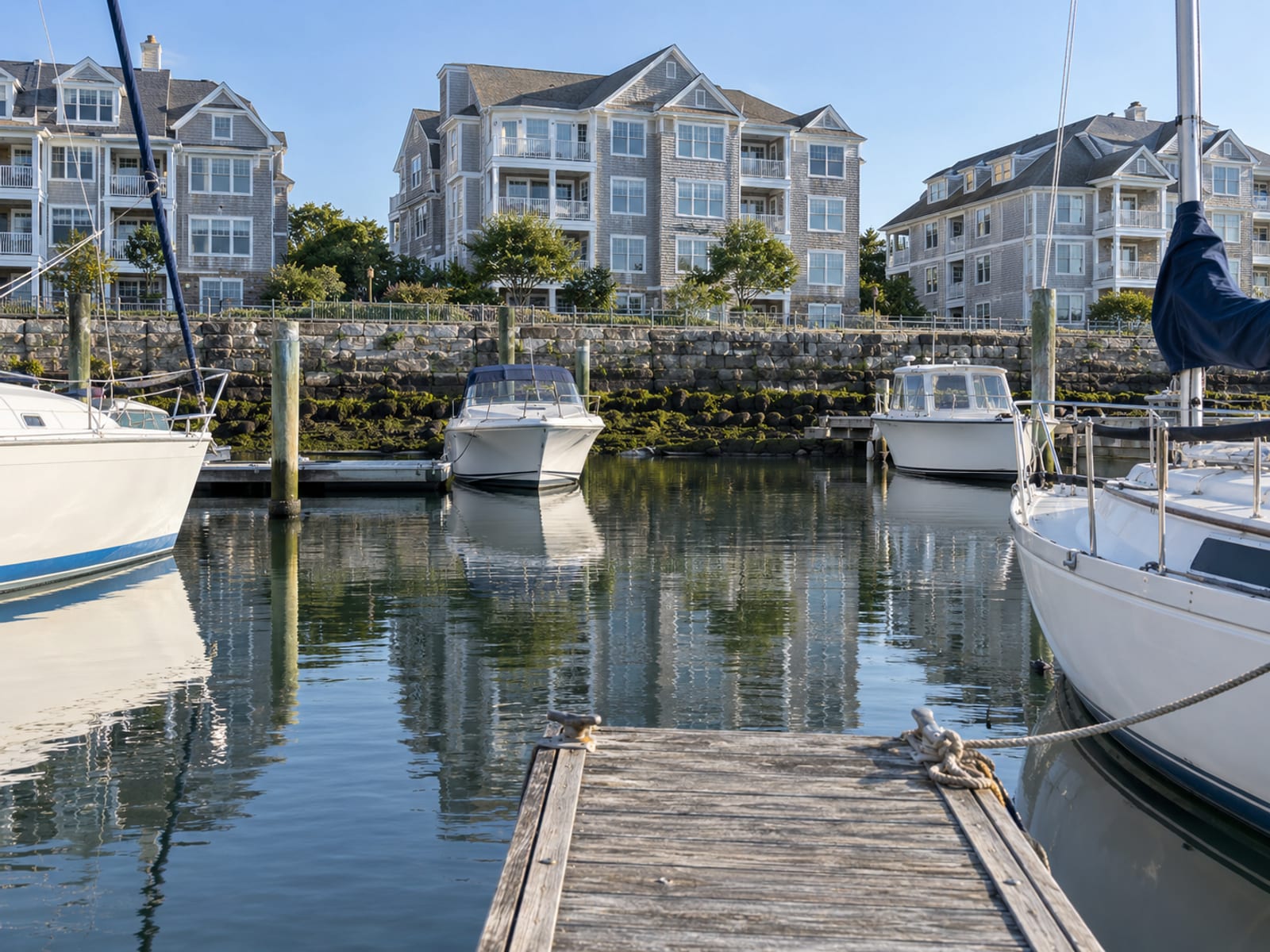
What does Connecticut law say about hurricane deductibles?
Connecticut's hurricane-deductible statute, Conn. Gen. Stat. § 38a-316a (opens in a new tab), lets an insurer impose a hurricane deductible in place of the overall policy deductible on three kinds of policy issued or renewed on or after October 1, 2012: a personal risk policy, a condominium association master policy and a unit owners' association property policy. It applies during the period that begins with a National Hurricane Center hurricane warning for any part of Connecticut, if the hurricane produces maximum sustained surface winds of at least 74 miles per hour somewhere in the state.
That listed scope is the point for a lender review. An apartment, office, retail or industrial building on an ordinary commercial form is not on the statute's list, so the statutory trigger cannot be assumed to govern its wind deductible. The policy's own wind or named-storm wording does that work, and the lender tests it against the guide's deductible cap. How those deductibles are built on Connecticut commercial forms is covered in property insurance for Connecticut REIT portfolios.
How do Connecticut floodplain and coastal rules affect rebuilding?
Rebuilding rules decide how much of a loss payment turns back into a building the lender can rely on. Connecticut's Coastal Management Act begins at Conn. Gen. Stat. § 22a-90 (opens in a new tab), and the DEEP coastal permit program (opens in a new tab) regulates construction, substantial maintenance, dredging and fill in tidal wetlands and in tidal, coastal or navigable waters.
State flood-management certification, set out in Conn. Gen. Stat. § 25-68b (opens in a new tab) and the sections that follow, covers state actions within or affecting floodplains, and DEEP's flood management program (opens in a new tab) reviews floodplain and critical activities using 100-year and 500-year flood concepts. Local floodplain ordinances can add substantial-damage and substantial-improvement thresholds. A Connecticut floodplain management document (opens in a new tab) describes substantial damage as damage where restoring the structure would equal or exceed 50% of its market value before the damage.
Ordinance-or-law coverage can address the added cost of meeting building, zoning or land-use rules after a covered loss. It does not grant a permit or override a floodplain, coastal or municipal requirement. Ask the agency what amount applies, and compare it with what a rebuild in that flood zone would trigger.

Can the FAIR Plan or a surplus lines insurer satisfy the lender?
Not automatically. Fannie Mae's carrier-rating requirements do not apply to policies issued through state-sponsored insurance programs or by insurers participating in the NFIP, according to Fannie Mae's evidence-of-insurance and carrier-rating section (opens in a new tab). That exception reaches the rating test only; a state plan still has to meet the coverage, evidence and deductible requirements. Confirm commercial or multifamily eligibility directly with the Connecticut FAIR Plan, the Connecticut Insurance Department and the lender.
A surplus lines policy is acceptable only when four things line up: the insurer is eligible under Connecticut's surplus lines rules, the policy meets the lender's coverage and evidence requirements, the agency guide permits the arrangement, and the lender or servicer accepts the insurer and policy. The Connecticut Insurance Department publishes its list of licensed insurers and surplus lines insurers (opens in a new tab).
What evidence should the lender receive?
A certificate of insurance is not always enough. Fannie Mae states that certificates, binders and single endorsements are not acceptable permanent evidence in the situations its guide (opens in a new tab) describes. Lenders ask for lender-specific evidence wording more often than a generic certificate, so confirm the exact form before the closing date.
The evidence package usually turns on the mortgagee clause and lender address, any required loss-payee wording, the policy documents and declarations, the endorsements, the flood-zone determination, cancellation and nonrenewal notice terms, and renewal evidence. Freddie Mac's Chapter 31 also requires flood-zone monitoring, so ask whether the lender expects an updated determination when FEMA revises a map.

Documents to have ready for the lender
- Loan papersThe loan agreement's insurance covenant and the current lender or agency guide section.
- FloodThe FEMA flood-zone determination, the map panel and its effective date.
- ValuesThe property valuation or total-insurable-value calculation.
- PoliciesThe property policy, the flood policy or private flood wording, any excess flood policy, and the windstorm and named-storm wording.
- Income and liabilityThe business-income or rental-value schedule and the liability and umbrella evidence.
- Lender wordingThe mortgagee clause, cancellation and renewal notices, and the evidence-of-insurance form.
- LicenseA Connecticut license check on the agency and the producer.
What to ask the agency before closing or renewal
Bring the loan agreement, the lender guide section and the proposed policies to the agency, and ask it to confirm each of these:
- The exact named insured and property address.
- The mortgagee clause, lender address and any required loss-payee wording.
- The FEMA flood-zone determination and map-panel effective date.
- Whether the property is in a special flood hazard area, a coastal high-hazard area, a 500-year flood area or a CBRS or OPA area.
- The required building and contents flood limits, and whether NFIP, private flood and excess flood coverage are acceptable.
- Any flood, windstorm, named-storm, hail and storm-surge exclusions.
- How each deductible is calculated: percentage or dollar, per building, per occurrence, or across a blanket limit.
- The replacement-cost valuation and the total-insurable-value calculation.
- The business-income or rental-value period and deductible.
- Liability and umbrella requirements.
- The insurer's rating and surplus lines eligibility.
- The evidence form, policy copies, declarations, endorsements and renewal evidence the lender expects.
- Cancellation and nonrenewal notice provisions, and whether the lender requires annual flood-zone monitoring.
- Whether the agency and the individual producer hold Connecticut licenses, which you can check on the Connecticut insurance license lookup (opens in a new tab).
Check what you know about Connecticut lender insurance requirements
Frequently asked questions
When is flood insurance federally required for a Connecticut commercial property?
The federal mandatory-purchase rule applies when the building securing the loan is in a designated special flood hazard area and the loan is made, insured or regulated under federal flood law. The lender can add contractual flood requirements on top of that, including for buildings outside the mapped zone.
Does a $500,000 NFIP building limit equal the lender's required amount?
No. It is an NFIP program limit for a non-residential or other residential building. The loan documents can require more, met through private or excess flood coverage where the guide accepts it.
Can private flood insurance replace an NFIP policy?
It can when it meets the lender guide and federal requirements. Fannie Mae requires a private flood policy to use replacement-cost valuation and to be at least as broad as a standard NFIP policy, and the lender must approve the wording and the evidence.
Does Connecticut's hurricane deductible law apply to a commercial apartment building?
Section 38a-316a (opens in a new tab) lists personal risk policies, condominium association master policies and unit owners' association property policies. An ordinary commercial property form is not on that list, so its wind or named-storm wording, tested against the lender's deductible cap, decides the answer.
How do I check a Connecticut agency's license?
Use the Connecticut insurance license lookup (opens in a new tab) to confirm the agency and the individual producer, their license status and their property and casualty authority. Check the business entity and the individual separately.
Your next step
Gather the loan agreement's insurance covenant, the lender guide section, the flood-zone determination and the proposed policies, and take the questions above to a licensed agency before the closing or renewal date. The rest of a Connecticut REIT's program, from liability to management lines, is in insurance for Connecticut REITs. You can find agencies by city and category in the Riskado directory of Connecticut insurance agencies.
Terms to know
Tap a term to see what it means.
Special flood hazard area. The area FEMA maps as subject to flooding by the base flood, where the federal mandatory-purchase rule can apply.
Mandatory purchase. The federal requirement to carry flood insurance on a building in a special flood hazard area that secures a federally made, insured or regulated loan.
Force placement. Flood insurance a lender buys after the required notices when required coverage is missing or too small.
Excess flood insurance. Coverage above an NFIP or primary flood policy, used to reach a lender's required amount.
Named-storm deductible. A wind deductible triggered by a named storm, whose base and trigger come from the policy wording.
Total insurable value. The full insurable value of the property, used to test coverage amounts and percentage deductibles.
Mortgagee clause. Policy wording that protects the lender's interest in the property and sets its notice rights.
Ordinance or law coverage. Coverage for the added cost of repairing or rebuilding to current building, zoning or land-use rules after a covered loss.