Average Cost of Car Insurance in Vermont: What Drivers Pay and What Drives Your Quote
Riskado
Vermont drivers spent an average of $893.16 per insured vehicle on car insurance in 2023, compared with $1,281.92 nationally, according to the NAIC 2022/2023 Auto Insurance Database Report (opens in a new tab). That year's Vermont average premiums were $381.32 for liability, $385.07 for collision and $191.41 for comprehensive. These are statewide historical averages, not a quote for any one driver. Your own price depends on the insurer's filed rating plan and on factors such as your driving record, claims, age, location, vehicle, use, mileage, credit information where permitted, coverages and deductibles.
Key takeaways
- Average expenditure$893.16 per insured vehicle in 2023, compared with $1,281.92 nationally.
- Coverage averagesLiability $381.32, collision $385.07 and comprehensive $191.41.
- Not a quoteThese are statewide historical averages, not a quote for any one driver.
- What sets your priceThe insurer's filed rating plan and factors such as driving record, claims, age, location, vehicle, use, mileage, credit information where permitted, coverages and deductibles.
What Vermont drivers paid in the latest NAIC data
The NAIC reports five figures for Vermont in 2023:
- Average expenditure: $893.16
- Liability average premium: $381.32
- Collision average premium: $385.07
- Comprehensive average premium: $191.41
- Combined average premium: $957.80
The two headline numbers measure different things. Average expenditure takes the total written premium and divides it by liability written exposures, meaning the insured vehicles carrying liability. Every insured car has liability, but not every car has collision or comprehensive, so this figure reflects what Vermonters actually bought. Combined average premium simply adds the three coverage averages together, so $957.80 describes a policy with liability, collision and comprehensive, per the NAIC (opens in a new tab).
If you budget monthly, dividing by 12 gives about $74.43 for average expenditure and about $79.82 for the combined average premium. Those are arithmetic conversions, not monthly quotes.
Neither figure is a "minimum coverage" or "full coverage" price. Liability covers injuries and damage you cause to others, collision covers damage to your car from a crash and comprehensive covers noncollision physical damage. A quote for liability only is best compared with the $381.32 liability average, while a quote with all three coverages is closer in shape to the $957.80 combined figure.
Is Vermont cheaper than nearby states?
Yes, on the same NAIC measure. Vermont ranked 46th of the 50 states plus Washington, D.C., by 2023 average expenditure, which puts it among the least expensive states in the country, according to the NAIC (opens in a new tab) and the Insurance Information Institute's table (opens in a new tab) of that data.
Here is how Vermont compares with its neighbors using the same year and the same measure:
- Vermont: $893.16
- New Hampshire: $986.84
- Massachusetts: $1,326.46
- New York: $1,752.55
- United States: $1,281.92
Vermont's average expenditure was lower than the national figure and lower than each of those neighboring states. If you are moving from one of them, a lower Vermont price is in line with the statewide pattern, though your own quote still depends on your details.
Hover or tap a row to highlight it.
| State | Average expenditure per insured vehicle | Source |
|---|---|---|
| Vermont | $893.16 | NAIC (opens in a new tab) |
| New Hampshire | $986.84 | NAIC (opens in a new tab) |
| Massachusetts | $1,326.46 | NAIC (opens in a new tab) |
| New York | $1,752.55 | NAIC (opens in a new tab) |
| United States | $1,281.92 | NAIC (opens in a new tab) |
How Vermont prices have moved
Vermont's average expenditure held steady for several years and then rose sharply, according to the NAIC (opens in a new tab):
- 2019: $783.69
- 2020: $784.31
- 2021: $779.96
- 2022: $792.96
- 2023: $893.16
The 2023 figure was 12.6% higher than 2022. Broader cost pressure plays a part. Underwriting costs, driving locations, accident rates, traffic density, auto theft, repair costs and state laws all affect state premiums and expenditures, according to the NAIC. Nationally, the average incurred loss per collision claim rose 18.6% from 2020 to 2021, per the NAIC's 2021 to 2022 report announcement (opens in a new tab). Auto premiums in Vermont were increasing as of January 2025, according to a Vermont Department of Financial Regulation (DFR) consumer advisory (opens in a new tab).
Why two Vermont drivers can receive different prices
A statewide average blends every driver, vehicle and town. Your insurer prices your household using its own filed rating plan. Common auto rating factors include location, age, gender where permitted, marital status, driving experience, driving record, claims history, credit history, prior insurance coverage, vehicle type, vehicle use, mileage, coverage limits and deductibles, according to the NAIC (opens in a new tab). Which factors an insurer uses, and how much weight each carries, depends on its filed plan.
A few of these deserve a closer look:
- Vehicle. A different car can change your rating because make, model, repair cost, safety characteristics and use may change.
- Claims and violations. A claim or violation can affect a renewal when the insurer's filed plan applies a surcharge. Under 8 V.S.A. § 4671 (opens in a new tab), a surcharge is additional premium based on experience or record, and the experience period is the three years before application or the 39 months before renewal.
- Coverages and deductibles. The limits and deductibles you pick change the price of each coverage.
Credit information in Vermont
Vermont allows insurers to use credit information for personal insurance, within limits set by 8 V.S.A. § 4727 (opens in a new tab). Under that statute, an insurer may not:
- Use income, gender, address, ZIP code, ethnic group, religion, marital status or nationality as factors in an insurance score.
- Deny, cancel or nonrenew solely on credit information.
- Base renewal rates solely on credit information.
- Take adverse action solely because you have no credit-card account.
- Use a credit report or insurance score older than 90 days for an adverse action.
- Go more than 36 months without recalculating or updating credit information when credit is used, subject to statutory exceptions.
The statute also limits the insurer to reunderwriting and rerating once in a 12-month period at your request. If credit played a role in your quote, ask whether an insurance score was used, what notice and review rights apply and whether you can ask for an update.
Does location or winter driving affect the price?
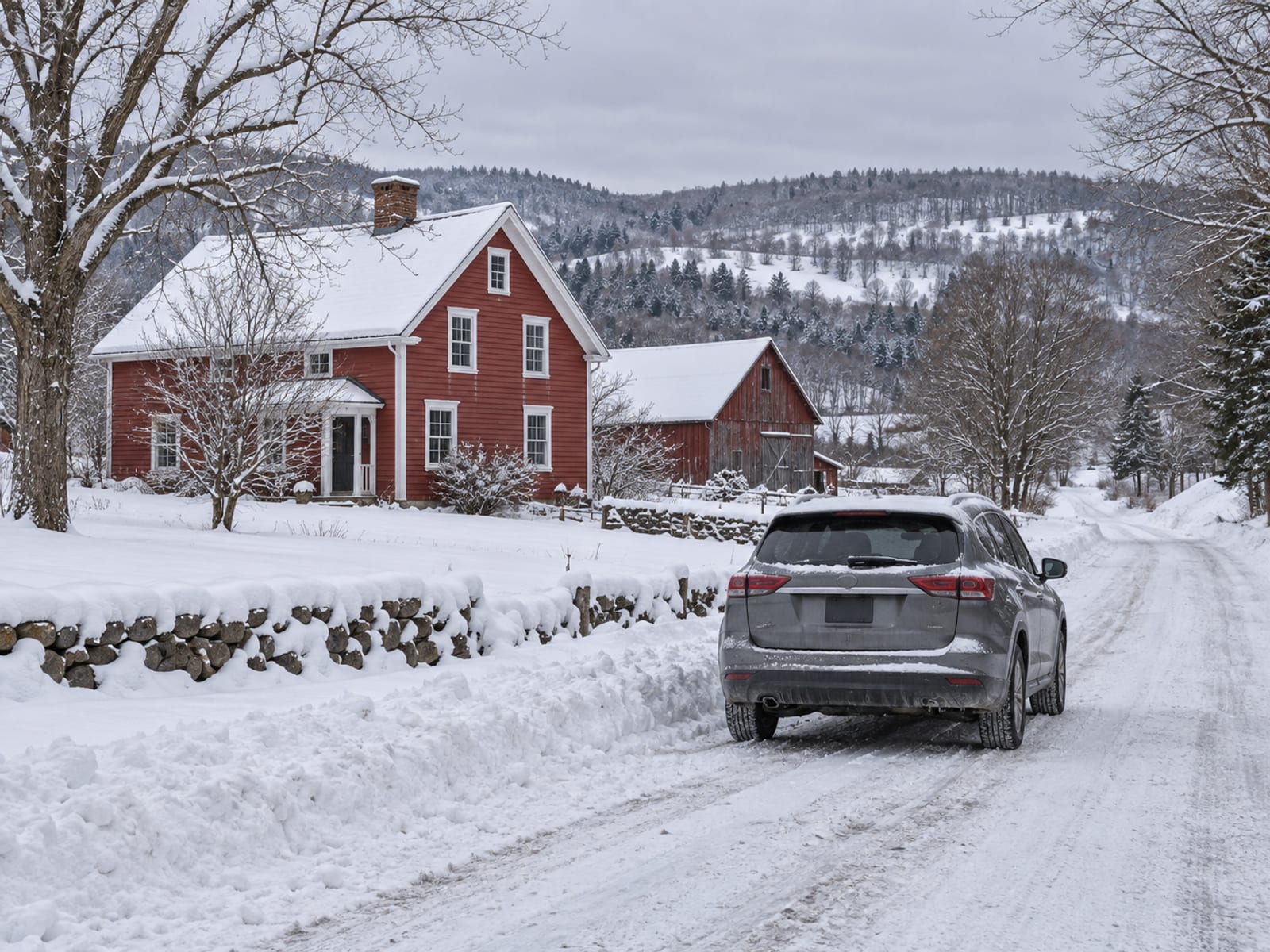
Location can be a rating variable when an insurer includes it in its filed rating plan. Repair costs and accident rates are general cost factors too, and they show up in your price through the insurer's filed plan rather than as a separate winter or town charge you can see. The useful step is practical: ask your agent which garaging territory was used for your address and confirm it is correct. If you are moving within Vermont, request quotes with the new address and the same coverage details so the territory is the only thing that changes.
How Vermont regulates auto rates
The DFR reviews insurance company rate and form filings through its Rates and Forms Section (opens in a new tab) and makes public nonconfidential filings available through the NAIC's SERFF system. Auto premiums are not set by the DFR. Its role is to review proposed rates to determine whether they are excessive, inadequate or unfairly discriminatory, according to the DFR (opens in a new tab). Insurers set prices within their approved filings.
If your renewal premium increased
You can ask your insurer for an explanation of a premium increase, and if one is not provided, you can contact DFR Consumer Services, according to the DFR consumer advisory (opens in a new tab). Ask whether the change came from a filed rate change, a surcharge, a new vehicle, a different address or another rating factor, and ask for the notice language that applies to your policy.

What Vermont requires
Vermont requires liability insurance on vehicles you operate, according to the Vermont DMV (opens in a new tab). Our guide to Vermont car insurance requirements covers the statutory limits in full. Ask your agent to confirm that the liability limits in any quote meet or exceed the state minimum.
Driving without insurance carries consequences beyond the policy. Operating an uninsured vehicle can result in a citation, a fine, points on your license and an SR-22 requirement, and a person required to file financial responsibility insurance must keep it for at least three years, according to the Vermont DMV (opens in a new tab). Before you cancel one policy to start another, confirm the new coverage is active so there is no gap.
A lender or leasing company can set its own insurance terms on a financed or leased vehicle, separate from state law. Ask your lender which coverages and deductibles it requires before you request quotes.

Discounts to ask about
Personal auto policy packages in Vermont must include notice that discounts are commonly available in the market, according to the DFR disclosure requirement (opens in a new tab). Commonly available discount categories include multiple vehicles, driver education courses, good student, safety devices, anti-theft devices, low mileage, good driver or renewal, auto-home packages and dividends, per the NAIC (opens in a new tab). Availability and eligibility vary by insurer and filing, so ask which discounts were applied, which others you might qualify for and what documentation is needed.
Personal versus commercial auto insurance
Personal auto and commercial auto insurance are separate products. If you use a vehicle for business, such as making deliveries or visiting clients, ask whether the quote is for personal or commercial auto and whether your use is covered under it.
How to compare Vermont quotes
Compare policies on an apples-to-apples basis, as the DFR's consumer guide to auto insurance (opens in a new tab) advises. Keep these the same in every request:
- Drivers and driver history.
- Vehicles and vehicle use.
- Garaging address and annual mileage.
- Liability limits and optional coverages.
- Collision and comprehensive deductibles.
- Discounts applied.
- Payment schedule and policy term.
Gather driver names, dates of birth and license information, vehicle identification and any financing or lease details, and a list of recent tickets, accidents and claims before you start. You can also ask an agent to show the premium difference caused by each change and to identify every discount or surcharge in the price.

Questions to ask an agent about price
- What liability limits, optional coverages and deductibles are included?
- Is the quote based on the correct garaging address and annual mileage?
- How are the vehicle's make, model, use and repair characteristics rated?
- Which driving-record and claims items affected the price?
- Does the insurer use credit information or an insurance score in Vermont, and what review rights apply?
- Which discounts were applied, and which available ones were not?
- How much would changing a deductible or coverage selection change the premium?
- Is this quote for personal auto or commercial auto?
- If the renewal increased, which filed rate change, surcharge or rating factor caused it?
- What happens if a payment is missed or coverage is cancelled?
Check what you know about Vermont car insurance costs
Frequently asked questions
Is the Vermont combined average premium the same as the average expenditure?
No. The $957.80 combined average premium adds the average liability, collision and comprehensive premiums, while the $893.16 average expenditure reflects actual spending and the mix of coverages people bought, according to the NAIC (opens in a new tab).
Can a Vermont insurer set my renewal rate based only on my credit?
No. 8 V.S.A. § 4727 (opens in a new tab) bars basing renewal rates solely on credit information. Credit can still be one factor where the insurer's filed plan uses it.
How long can a ticket or accident affect a Vermont surcharge?
The surcharge experience period is the three years before application, or the 39 months before renewal, under 8 V.S.A. § 4671 (opens in a new tab).
How long does an SR-22 filing last in Vermont?
A person required to file financial responsibility insurance must maintain it for at least three years, according to the Vermont DMV (opens in a new tab).
Next steps
Start with your declarations page and any lender requirements, then request quotes using the same drivers, vehicles, limits and deductibles at each company. Our Vermont insurance agency directory lists agencies by city and by category if you want a local agency to talk with. Our guides to Vermont car insurance requirements, the average cost of car insurance in Connecticut and New York, whether your credit score affects car insurance and how to switch car insurance cover the next questions a quote can raise.
Terms used in this guide
Tap a term to see what it means.
Average expenditure. Total written premium divided by liability written exposures, the insured vehicles carrying liability.
Combined average premium. The liability, collision and comprehensive averages added together.
Surcharge. Additional premium based on experience or record.
Experience period. The three years before application, or the 39 months before renewal, used for a surcharge.
Insurance score. A score built from credit information that Vermont insurers may use within the limits of Vermont law.
SERFF. The NAIC system through which the DFR makes nonconfidential rate and form filings public.
SR-22. A financial responsibility insurance filing that a person required to file must keep for at least three years.