Alabama Motorcycle Insurance: Whether It Is Required, Minimum Limits, Helmet and License Rules, What It Costs and What a Policy Covers
Riskado
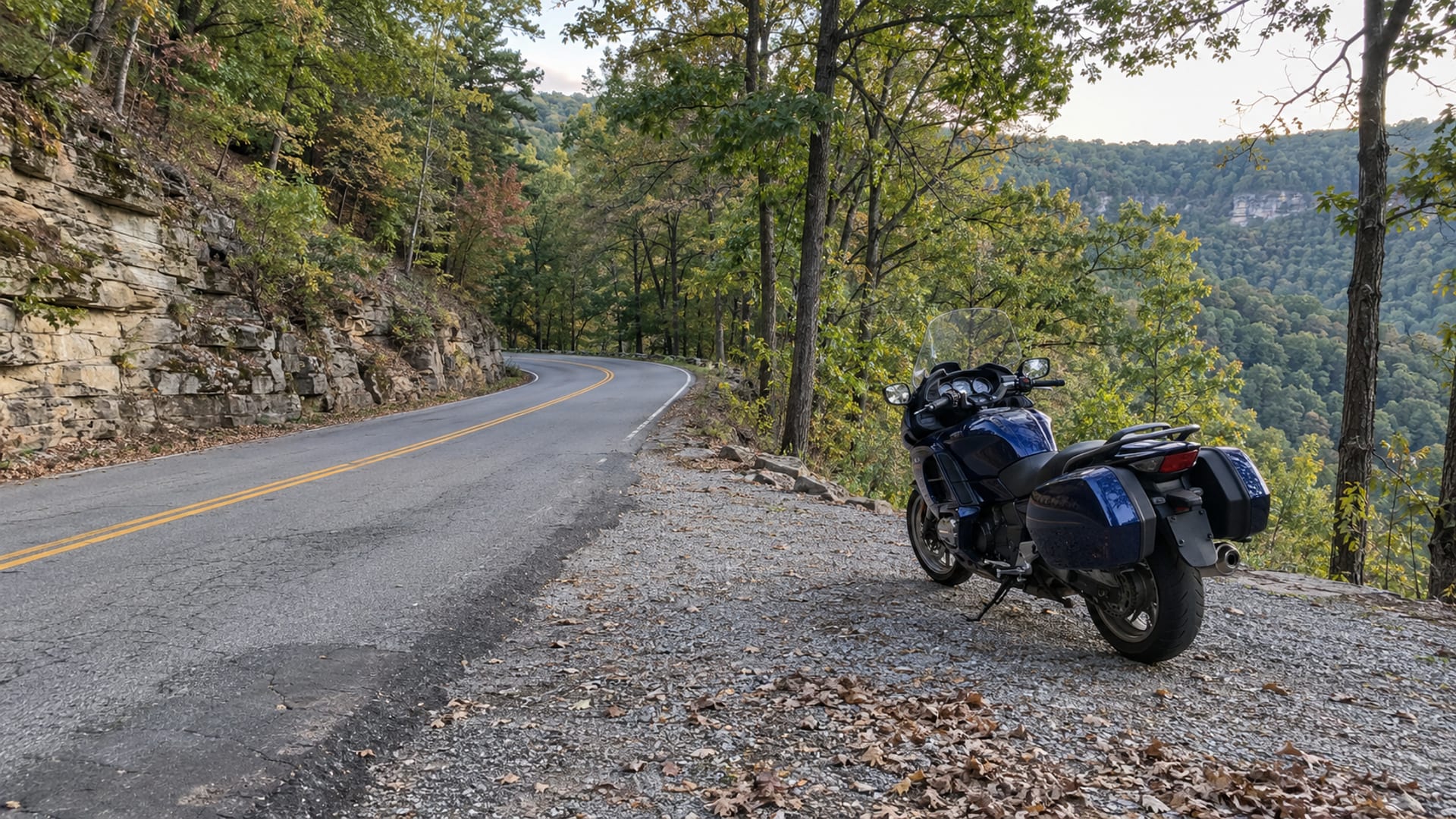
Alabama requires liability insurance on a motorcycle that's ridden or registered for use on public roads. The minimum limits are $25,000 for bodily injury or death of one person, $50,000 for two or more people and $25,000 for property damage, according to the Alabama Department of Revenue (opens in a new tab). The Department checks coverage through the Online Insurance Verification System when you register or renew, and asks for your insurance card if it can't confirm the policy. To ride, you also need a Class M license, and every operator and passenger must wear an approved helmet and shoes. Collision, comprehensive, uninsured motorist, medical payments, accessory and roadside coverage are separate choices on the policy.
Key takeaways
- Required coverageLiability of at least $25,000 per person, $50,000 per accident and $25,000 for property damage on any motorcycle ridden or registered for public roads.
- ProofThe state checks coverage through OIVS at registration and asks for your insurance card if it can't confirm the policy.
- LicenseRiding takes a Class M license, earned since 2016 by passing an ALEA-designated test or completing a specified safety course.
- HelmetEvery operator and passenger must wear approved headgear and shoes.
- Optional coverageCollision, comprehensive, uninsured motorist, medical payments, accessory and roadside coverage are separate choices.
Does Alabama require motorcycle insurance?
Yes. No one may operate, register or keep the registration of a motor vehicle designed for public highways unless it's covered by a liability policy, a commercial automobile liability policy, a liability bond or a cash deposit, according to the Alabama Department of Revenue (opens in a new tab). Alabama defines a motorcycle as a motor vehicle with a seat or saddle for the rider, designed to travel on no more than three wheels, according to the Alabama Law Enforcement Agency motorcycle manual (opens in a new tab), so the same rule covers your bike.
The policy must be an Alabama policy from an insurer qualified to write motor vehicle liability insurance in the state. The limits come from Code of Alabama § 32-7-6 (opens in a new tab), and they're the same for a motorcycle as for a car:
- $25,000 for bodily injury or death of one person in an accident.
- $50,000 for bodily injury or death of two or more people in an accident.
- $25,000 for damage to property in an accident.
Liability pays for injuries and damage you cause to other people. It doesn't pay to fix your motorcycle or to treat your own injuries.
What proof does Alabama ask for?
When you register or renew, the license plate issuing official tries to verify your Alabama liability insurance through the Online Insurance Verification System, or OIVS, according to the Department of Revenue's registration FAQ (opens in a new tab). If the system can't confirm the policy, you must show evidence of Alabama insurance, and the insurance card is the most common evidence.
On the road, every operator must carry evidence of insurance on the vehicle, under Code of Alabama § 32-7A-6 (opens in a new tab). An insurance card, a temporary card, the current declarations page or an insurance binder all qualify. If you bought the bike within the previous 20 calendar days, proof of purchase together with a valid card for the vehicle it replaced also counts. Check that the VIN on your card matches the registration, because a mismatch can stop OIVS from confirming the policy.
From purchase to the road
- Buy coverageGet an Alabama liability policy that meets 25/50/25 before you ride or register the bike.
- RegisterThe license plate official checks the policy through OIVS and asks for your insurance card if it can't confirm it.
- Carry proofKeep an insurance card, declarations page or binder with you; within 20 calendar days of buying, proof of purchase plus the card for the vehicle it replaced also counts.
- Get licensedEarn the Class M designation by passing an ALEA-designated test or completing a specified safety course.
- RideWear an approved helmet and shoes, and make sure any passenger has footrests.
What happens after a lapse or a failed check?
If the Department of Revenue determines a vehicle wasn't insured as the law requires, it suspends the registration. Reinstatement takes proof of current liability insurance and a $200 fee for a first violation, or $400 for later violations, according to the Department of Revenue (opens in a new tab) and Code of Alabama § 32-7A-12 (opens in a new tab). Buying a policy after the verification date doesn't cancel the suspension.
A bike that sat unused during the gap is treated differently. If the motorcycle was stored, inoperable or otherwise unused, you can claim that exemption from the reinstatement fee once during the registration period at your local licensing office, according to the Department of Revenue's liability insurance FAQs (opens in a new tab). You'll need evidence of non-use, and the registration is revoked for the rest of the period instead of being reinstated. Alabama residents serving in the military outside the state, and their spouses, may qualify for a separate exemption with a copy of the orders and proof of insurance from the state where they live.
If you get a verification notice and you were insured, contact your insurer and ask it to report the policy, then follow the instructions on the notice. The state's Be Sure to Insure (opens in a new tab) site has further instructions and appeal rights.
Hover or tap a row to highlight it.
| Situation | What it takes | Source |
|---|---|---|
| First violation | Proof of current insurance and a $200 reinstatement fee | Alabama Department of Revenue (opens in a new tab) |
| Later violations | Proof of current insurance and a $400 reinstatement fee | Alabama Department of Revenue (opens in a new tab) |
| Bike stored, inoperable or unused during the gap | Evidence of non-use; the registration is revoked for the rest of the period and no fee is due (once per registration period) | Department of Revenue FAQs (opens in a new tab) |
What license do you need to ride?
Alabama lists Class M as its motorcycle license class, with a separate "B" restriction for motor-driven cycles, according to the Alabama Law Enforcement Agency (opens in a new tab). A rider who is at least 16 and holds a Class M license may operate a motorcycle or a motor-driven cycle. A 14- or 15-year-old can get a restricted license for a motor-driven cycle only, meaning a cycle of 5 horsepower or less, according to the ALEA motorcycle manual (opens in a new tab).
Since January 1, 2016, a new motorcycle operator must pass an ALEA-designated motorcycle test or complete a specified safety course and have the Class M designation on the license, under Act 2015-223, according to the Alabama Legislature's summary of 2015 acts (opens in a new tab). Riders 17 and younger also follow the graduated driver license restrictions. The act doesn't apply to anyone licensed to ride before January 1, 2016. Your path depends on your age, your current license and whether you take a course, so confirm it with ALEA before you book a test.
What helmet and equipment rules apply?
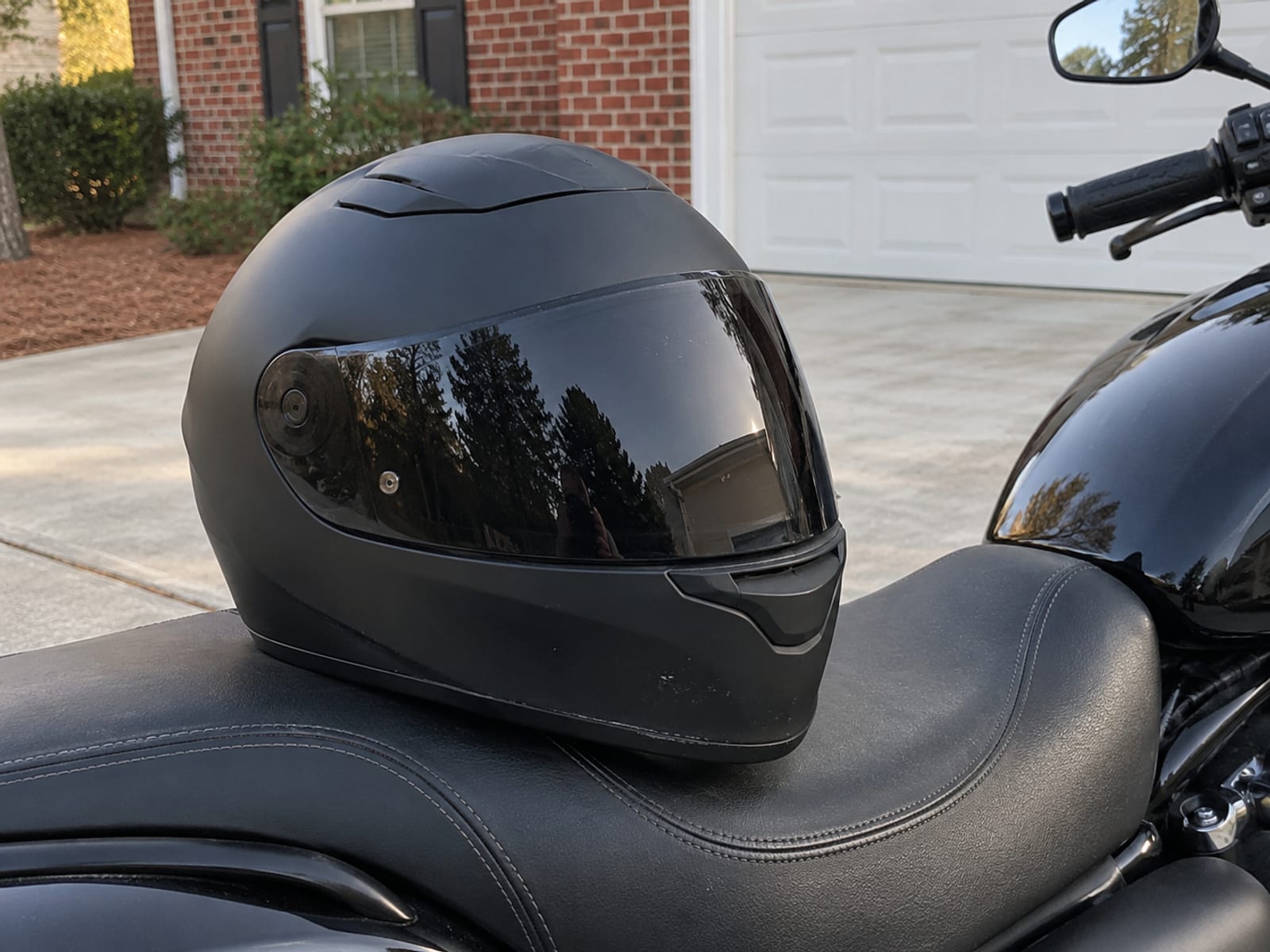
No one may operate or ride on a motorcycle or motor-driven cycle without protective headgear that meets state standards, and shoes are required too, under Code of Alabama § 32-5A-245 (opens in a new tab). The rule covers the operator and every passenger, at any age. The section doesn't apply to people riding inside an enclosed cab or to the operator of an autocycle. A parent or guardian may not let a juvenile ride without a helmet or shoes.
Section 32-5A-244 (opens in a new tab) adds two equipment rules. A motorcycle carrying a passenger, other than in a sidecar or enclosed cab, must have footrests for the passenger. Handlebars can't sit more than 15 inches above the part of the seat the operator uses.
What does motorcycle insurance cover?
Beyond the required liability coverage, a motorcycle policy is a set of choices. The Insurance Information Institute (opens in a new tab) describes the main parts:
- Collision pays for damage to your bike from a crash, usually up to its book value before the loss, minus your deductible.
- Comprehensive pays for damage from events other than a collision, such as fire, theft or vandalism, also minus your deductible.
- Uninsured and underinsured motorist coverage typically pays for medical treatment, lost wages and, in some cases, property damage when the at-fault driver has no insurance or too little.
- Custom parts and accessories coverage matters because many policies cover only factory-standard parts or limit coverage for added equipment.
Medical payments coverage pays medical bills for you and your passengers. It can duplicate health or disability benefits you already have, so compare it with your other coverage before you buy, according to the Alabama Department of Insurance (opens in a new tab). Towing and labor coverage pays to tow your vehicle to a repair shop, up to the policy limit, and may overlap with an auto club membership.
If the bike is financed, the loan agreement may require collision and comprehensive and the lender's name on the policy. Check the agreement and tell your agent before you choose deductibles.
Does Alabama require uninsured motorist coverage?
Alabama requires it to be included, and you can turn it down. Under Code of Alabama § 32-7-23 (opens in a new tab), a motor vehicle liability policy on a vehicle registered or principally garaged in Alabama must include uninsured motorist coverage at least equal to the bodily injury limits in § 32-7-6, unless the named insured rejects it. If you rejected it on an earlier policy with the same insurer, the renewal doesn't have to include it unless you ask for it in writing.
The statute counts a vehicle as uninsured when neither the owner nor the driver has bodily injury liability insurance, when the other policy's limits are below the state minimum, when the other insurer becomes insolvent, or when all the available coverage is less than what the injured person is legally entitled to recover. Before you sign anything about this coverage, ask your agent what limits you're accepting, reducing or rejecting.
How much does motorcycle insurance cost in Alabama?
One named figure: the average rate for a liability-only Progressive motorcycle policy with one vehicle in Alabama was $168.64 a year, based on Progressive policies from May 2025 through April 2026, according to Progressive (opens in a new tab). That's one insurer's average for liability coverage, not a statewide average and not a quote. Adding collision, comprehensive, uninsured motorist coverage or higher limits changes the price.
Your age, driving record and where you live affect the price, along with the type or style of bike, its age, how many miles you ride a year and where you store it, according to the Insurance Information Institute (opens in a new tab). Ask each agent which factors their insurer rates on.
Can you pause coverage while the bike is stored?
A lay-up policy suspends all coverage except comprehensive during the months the bike isn't used, and it's available primarily in northern states, according to the Insurance Information Institute (opens in a new tab). Ask your insurer whether a storage or lay-up option exists on an Alabama policy and what stays in force.
Don't drop liability coverage on a bike that's still registered just because it's parked. Alabama's rule applies to keeping a registration, not only to riding. If you plan to store the motorcycle for a season, ask your licensing office and your insurer how to handle the registration first, and keep comprehensive in place if you want theft and fire protection while it sits.
What should you do after a crash?
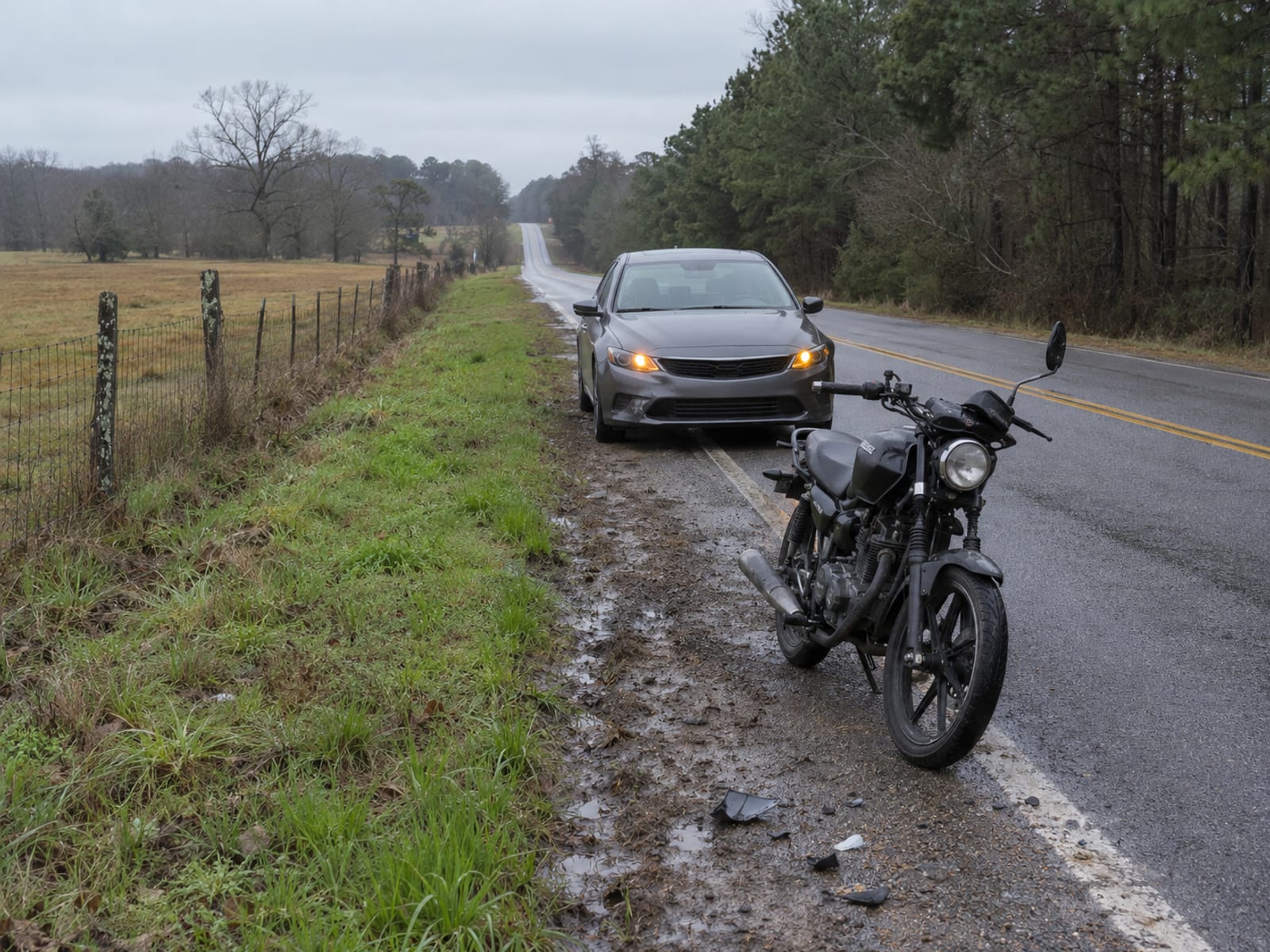
Get medical care and report the crash as required. Exchange information and photograph the scene when it's safe. Notify your insurer promptly, as the policy requires. Keep repair estimates, medical records, witness names and any police report, and ask the claims adjuster which coverages are being reviewed, such as liability, collision, medical payments or uninsured motorist.
The Alabama Department of Insurance can take a complaint about how a claim is handled, but it can't decide fault, decide what a claim is worth, give legal advice or intervene in a pending lawsuit, according to its complaint page (opens in a new tab). Questions about fault and legal rights go to an attorney.
How do you check an agent or file a complaint?
The Alabama Department of Insurance offers an Insurance Agent Search and "Check License Status / Licensee Search" through its online services (opens in a new tab). Look up the agent or agency before you buy or renew.
For a complaint, first contact the insurer or producer. If the response isn't satisfactory, use the ALDOI online consumer complaint form (opens in a new tab) and include the company or producer name, the policy number, any claim number and a detailed description. Consumer Services is at 334-241-4141 or 1-800-433-3966, according to the ALDOI contact page (opens in a new tab), and you can ask there whether help is available in Spanish.
Questions to ask your agent
- Is the motorcycle listed with the correct VIN, year, make and model?
- Does the policy meet Alabama's $25,000/$50,000/$25,000 liability minimums?
- How and when will the insurer report this policy to OIVS?
- Are passengers covered, and on what terms?
- How are collision and comprehensive losses valued, and what deductible applies?
- Are custom parts, paint, electronics, saddlebags, trailers or a sidecar covered, and up to what amount?
- What uninsured motorist limits am I accepting, and what happens if I reduce or reject them?
- Is medical payments coverage available, and how does it work with my health insurance?
- Is roadside assistance or towing included, and what are its limits?
- Is commuting, touring, delivery or other business use covered?
- Who else may ride the bike under this policy?
- Is a storage or lay-up option available, and what stays covered?
- Is my lender listed correctly?
- What are the reporting deadlines and documents needed after a crash?
Check what you know about Alabama motorcycle insurance
Frequently asked questions
Can an adult ride without a helmet in Alabama?
No. Section 32-5A-245 (opens in a new tab) requires every operator and rider of a motorcycle or motor-driven cycle to wear approved protective headgear and shoes. The section exempts only people riding inside an enclosed cab and autocycle operators.
Do I need a Class M license if I already have a Class D?
Yes. Class D is the private passenger class, and Class M is the motorcycle class, according to ALEA (opens in a new tab). Since 2016, new riders get it by passing an ALEA-designated test or completing a specified safety course.
What happens if my insurance can't be verified?
The Department of Revenue asks for evidence of coverage. If the bike turns out to have been uninsured, the registration is suspended until you show current insurance and pay $200 for a first violation or $400 for later ones, according to the Department of Revenue (opens in a new tab).
Does liability insurance pay to repair my motorcycle?
No. Liability pays for injuries and damage you cause to others. Collision and comprehensive cover damage to your own bike, subject to the deductible and the policy's valuation terms, according to the Insurance Information Institute (opens in a new tab).
Before you ride
Get Alabama liability coverage on the bike before you register or ride it, keep the insurance card with you, earn the Class M designation and wear a helmet and shoes every time. Then decide on collision, comprehensive, uninsured motorist and accessory coverage with an Alabama-licensed agent, using the questions above. Riskado's directory lists Alabama insurance agencies by city and by category.
Key terms
Tap a term to see what it means.
25/50/25. Shorthand for Alabama's minimum liability limits: $25,000 for injury or death of one person, $50,000 for two or more people and $25,000 for property damage.
OIVS. The Online Insurance Verification System the Department of Revenue uses to confirm coverage at registration.
Class M. Alabama's motorcycle license class.
Motor-driven cycle. A small cycle, such as a moped, that a 14- or 15-year-old can ride with a restricted license.
Uninsured motorist coverage. Coverage that pays when the at-fault driver has no insurance or too little.
Lay-up policy. An arrangement that suspends all coverage except comprehensive during months the bike isn't used.
Reinstatement fee. The $200 or $400 fee to lift a registration suspension after an uninsured violation.