Average Cost of Car Insurance in Massachusetts: What Drivers Pay and What Drives Your Quote
Riskado
The latest statewide figures put Massachusetts car insurance at $1,326.46 a year per insured vehicle in average expenditure for 2023, or about $110.54 a month if you divide by 12. The 2023 combined average premium, which describes a policy carrying liability, collision and comprehensive, was $1,413.49, or about $117.79 a month, according to the NAIC 2022/2023 Auto Insurance Database Report (opens in a new tab). Those monthly numbers are simple division, not billing quotes. Your own price depends on your coverage, vehicle, garaging territory, driving record, the insurer's rating plan and the discounts you qualify for.
Key takeaways
- Average expenditure$1,326.46 a year per insured vehicle in 2023, or about $110.54 a month divided by 12.
- Combined average premium$1,413.49 in 2023 for a policy carrying liability, collision and comprehensive, or about $117.79 a month.
- Monthly figuresSimple division, not billing quotes.
- What sets your priceYour coverage, vehicle, garaging territory, driving record, the insurer's rating plan and the discounts you qualify for.
What the Massachusetts averages include
The two NAIC figures measure the same market in two ways, so it helps to know which one you are holding up against your quote.
The combined average premium adds three separate coverage averages. In 2023, Massachusetts liability averaged $710.19 (about $59.18 a month), collision averaged $519.88 (about $43.32 a month) and comprehensive averaged $183.42 (about $15.29 a month), according to the NAIC report (opens in a new tab). Added together, they come to $1,413.49, the average cost of a policy with all three.
Average expenditure takes the total written premium for liability, collision and comprehensive and divides it by liability car-years, meaning the number of insured vehicles carrying liability over a year. Every insured car carries liability, but not every car carries collision or comprehensive, so this figure comes out lower at $1,326.46.
Neither number is a "minimum coverage" price or a universal "full coverage" quote. "Full coverage" is an informal label, not a Massachusetts legal category, and a policy sold under that name can include different coverages, limits and deductibles, according to the Division of Insurance's Basics of Auto Insurance (opens in a new tab). The NAIC data also combine regular-market and residual-market business, reflect Safe Driver Insurance Plan credits and surcharges for 2019 through 2023, and do not adjust for individual limits, deductibles, vehicles or driver classifications.
Hover or tap a row to highlight it.
| Figure | Per year | Per month (divided by 12) | Source |
|---|---|---|---|
| Liability average premium | $710.19 | About $59.18 | NAIC (opens in a new tab) |
| Collision average premium | $519.88 | About $43.32 | NAIC (opens in a new tab) |
| Comprehensive average premium | $183.42 | About $15.29 | NAIC (opens in a new tab) |
| Combined average premium | $1,413.49 | About $117.79 | NAIC (opens in a new tab) |
| Average expenditure | $1,326.46 | About $110.54 | NAIC (opens in a new tab) |
How Massachusetts compares with the national average
Massachusetts sits close to the national figures. The 2023 national average expenditure was $1,281.92 and the national combined average premium was $1,438, according to the NAIC report (opens in a new tab). That puts Massachusetts somewhat above the national average expenditure and slightly below the national combined average premium. Both Massachusetts figures were above the median state average expenditure of $1,114 and median combined average premium of $1,268.
Hover or tap a row to highlight it.
| Measure | Massachusetts | National | Median state |
|---|---|---|---|
| Average expenditure | $1,326.46 | $1,281.92 | $1,114 |
| Combined average premium | $1,413.49 | $1,438 | $1,268 |
Prices have climbed recently. Massachusetts average expenditure rose from $1,191.02 in 2022 to $1,326.46 in 2023, and the combined average premium rose from $1,256.62 to $1,413.49, per the NAIC (opens in a new tab). National auto rates rose because of higher labor and parts costs, vehicles with more expensive technology and more frequent natural catastrophes, according to an April 2024 statement from the Massachusetts Division of Insurance (opens in a new tab). When repairs cost more, insurers can seek rate changes to cover claims.
Why your quote is different from the statewide average
A statewide average blends every driver, vehicle and town together. Your quote reflects your own details. Rating factors in Massachusetts may reflect territory, driver or vehicle characteristics, use, the insurer's merit rating plan, coverage level and deductible option, according to 211 CMR 79 (opens in a new tab).
In practice, these are the details that move a quote:
- Coverage basis. Liability alone costs less than liability plus collision and comprehensive.
- Limits and deductibles. The amounts you pick change the price of each coverage.
- Vehicle. Age and vehicle cost affect premiums when you buy collision or comprehensive, according to the Massachusetts RMV (opens in a new tab).
- Territory. Where the car is garaged places it in a rating territory.
- Mileage and use. How far and how you drive the car.
- Driving record. Surchargeable incidents under the insurer's merit rating plan.
- Discounts. Which ones the insurer offers and which were applied.
The NAIC (opens in a new tab) also lists broader cost drivers such as medical, wage-loss and litigation costs, repair costs, parts and labor, theft, storms, traffic density, accident rates and population density.
Does Boston cost more than the rest of Massachusetts?
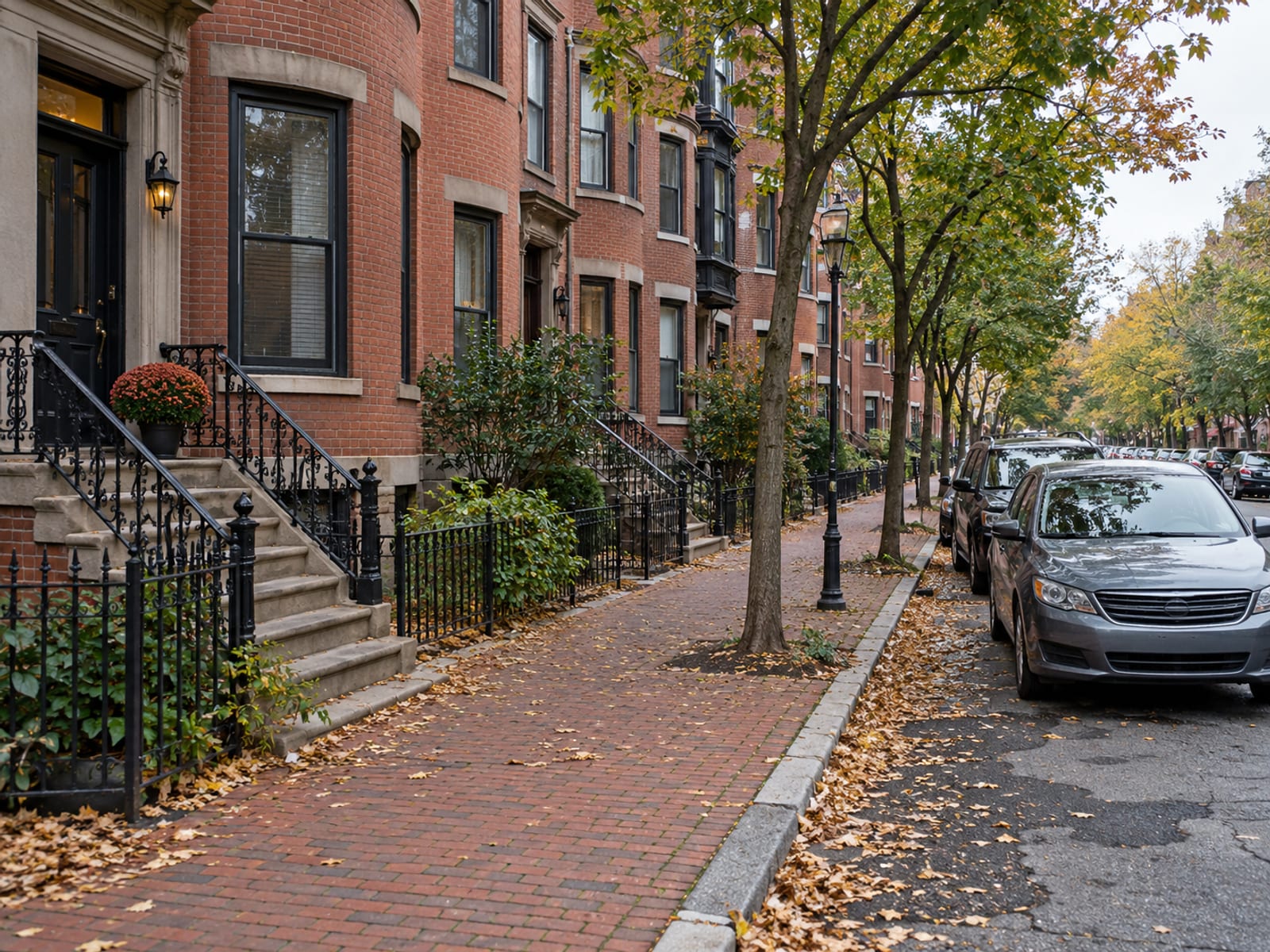
Territory is a rating factor because loss experience differs by municipality and geographic area. Boston has historically been split into its own set of rating territories, numbered 17 through 26 in the Division of Insurance's 2005 territory decision (opens in a new tab), while the rest of the state uses other territory numbers. That decision is an older filing, so treat it as background on how territories work rather than a current price table.
A statewide average cannot tell you what a Boston address will cost. If you are moving into or out of Boston, the most useful step is to request quotes using the exact new garaging address and the same coverage details, so the only thing that changes is the territory.
How Massachusetts sets auto insurance rates
Massachusetts used to run a fixed-and-established market, with rates set through a common system. The state now has a competitive market in which each insurer uses its own rates and rating systems, subject to Division of Insurance approval, according to It Pays To Shop Around (opens in a new tab). That is why two companies can quote different prices for the same driver and car.
Every company licensed to write private-passenger auto insurance in Massachusetts must give residents a way to get a quote online or by phone. You can find each one, whether it sells direct, through exclusive agents or through independent agents, on the state's list of companies writing private passenger auto insurance (opens in a new tab).
How accidents and tickets affect the price
Your driving record works through a merit rating plan. Insurers may use the state's Safe Driver Insurance Plan (SDIP) or submit their own approved merit rating plan, according to the Massachusetts RMV (opens in a new tab).
Under SDIP, your rating is based on surcharge points from surchargeable incidents over a six-year experience period. The RMV's example assigns:
- 2 points for a minor traffic-law violation.
- 5 points for a major traffic-law violation.
- 4 points for a major at-fault accident.
- No points for the first minor, non-criminal traffic-law violation in the experience period.
A driver with no surchargeable incidents gets a 00 rating, and a licensed driver with at least six years of experience and a clean six-year record can receive the Excellent Driver Discount Plus credit code of 99. For insurers using SDIP, each surcharge point means a 15% increase on the compulsory coverages and collision for experienced operators, and a 7.5% increase for inexperienced operators. Those percentages apply to the affected coverages, not automatically to the whole premium.
Hover or tap a row to highlight it.
| Surchargeable incident | Surcharge points |
|---|---|
| Minor traffic-law violation | 2 |
| Major traffic-law violation | 5 |
| Major at-fault accident | 4 |
| First minor, non-criminal traffic-law violation in the experience period | 0 |
An at-fault accident becomes surchargeable when the driver is more than 50% at fault and the claim payment exceeds $1,000, subject to the coverage and accident rules listed by the RMV's Surchargeable Incidents (opens in a new tab) page and 211 CMR 134 (opens in a new tab).
Checking your record before you shop
You can request your driving record through the RMV using the driving record request form (opens in a new tab) or Mass.Gov/myRMV. The Merit Rating Board (opens in a new tab) maintains individual driving records and administers SDIP, and can be reached at 857-368-8100. Knowing what is on your record before you request quotes makes it easier to spot an incident that was entered incorrectly.

What changes for a new or young driver
Inexperienced drivers generally have higher insurance costs because they get into more accidents than experienced drivers, according to the Massachusetts RMV (opens in a new tab). There is no official statewide dollar average for new or young drivers, so the reliable number is a quote built on the actual driver, vehicle, address, mileage, limits and deductibles.
Two discounts are worth asking about for a young driver. Insurers may offer a discount for completing an approved driver-training course, and a good-student discount for keeping an overall B average or better, per the RMV (opens in a new tab). Insurers choose which discounts to offer, so availability varies. Other discounts some insurers offer include defensive driving, accident-free, low mileage, multi-car, anti-theft, telematics and paid-in-full, according to the Division of Insurance (opens in a new tab).
What Massachusetts requires, and what changed in 2025
Compulsory minimums rose for policies written or renewed on or after July 1, 2025, according to the Division of Insurance Consumer Bill of Rights (opens in a new tab) and its notice on the new mandatory limits (opens in a new tab):
- Bodily Injury to Others: $25,000 per person and $50,000 per accident.
- Uninsured Auto: $25,000 per person and $50,000 per accident.
- Property damage liability: $30,000 per accident.
- Personal Injury Protection (PIP): $8,000 per person, which continues.
If your renewal came after that date, part of a price change may reflect the higher required limits. Optional coverages such as collision and comprehensive sit on top of these, and a lender may require them on a financed or leased car. Ask your lender what it requires before you choose deductibles.
Hover or tap a row to highlight it.
| Coverage | Minimum |
|---|---|
| Bodily Injury to Others | $25,000 per person and $50,000 per accident |
| Uninsured Auto | $25,000 per person and $50,000 per accident |
| Property damage liability | $30,000 per accident |
| Personal Injury Protection (PIP) | $8,000 per person |
Restricted factors in Massachusetts
Insurers may not deny automobile insurance based on gender, race, creed, national origin, marital status, religion, age, occupation, income, principal place of garaging, education or homeownership, according to the Consumer Bill of Rights (opens in a new tab). An insurer may refuse coverage only on nondiscriminatory grounds and must give reasons for a denial. If you are unsure how a particular factor, including credit information, was treated in your quote, ask the agent directly.
Drivers who cannot find a company willing to write coverage can apply through the Massachusetts Automobile Insurance Plan (opens in a new tab). Insurers also ask about gaps in coverage when they prepare quotes, so a lapse can affect the price you are offered.

How to compare quotes fairly
Quotes should use identical coverage and limits so the comparison is apples to apples, according to the Division of Insurance's Basics of Auto Insurance (opens in a new tab). Keep these details the same in every request:
- Every household driver and regular operator.
- Vehicle year, make, model and VIN.
- Garaging address.
- Annual mileage and vehicle use.
- Coverage limits and deductibles.
- Optional coverages.
- Policy period, six months or twelve.
- Applied discounts.
Questions to ask an agent about price
- Which coverages and limits are included, and what is the separate price for each?
- Are the limits, deductibles and policy period identical to the other quote?
- Which household drivers and regular operators were included?
- How were the VIN, use, mileage and garaging address entered?
- Which discounts were applied, and which others could apply with documentation?
- Does the insurer use SDIP or its own approved merit rating plan, and which surchargeable events were counted?
- Does the reported insurance history show a gap?
- Is the policy written in the voluntary market or through the Massachusetts Automobile Insurance Plan?
Check what you know about Massachusetts car insurance costs
Frequently asked questions
Is the Massachusetts average a monthly or yearly number?
The NAIC reports yearly figures: $1,326.46 in average expenditure and $1,413.49 in combined average premium for 2023. Dividing by 12 gives about $110.54 and $117.79, which are arithmetic conversions, not monthly quotes.
Does one speeding ticket raise my Massachusetts insurance?
Under SDIP, the first minor, non-criminal traffic-law violation in the six-year experience period carries no surcharge points, according to the Massachusetts RMV (opens in a new tab). Treatment depends on the merit rating plan your insurer uses, so ask which plan applies.
Are all Massachusetts insurers required to use the Safe Driver Insurance Plan?
No. Insurers may use SDIP or their own approved merit rating plan, which is one reason the same record can price differently at two companies.
How much more does a surcharge point cost?
For insurers using SDIP, each point adds 15% to the compulsory coverages and collision for an experienced operator and 7.5% for an inexperienced operator. It does not apply to every part of the policy.
Next steps
Pull your current declarations page and your driving record first, then request quotes using those exact limits, deductibles, drivers and garaging address. When you want to talk it through with a local agency, our Massachusetts insurance agency directory lists agencies by city and by category. Our guides to Massachusetts car insurance requirements, the average cost of car insurance in Connecticut and New York, whether your credit score affects car insurance and how to switch car insurance pick up the next questions a quote can raise.
Terms used in this guide
Tap a term to see what it means.
Average expenditure. Total written premium for liability, collision and comprehensive divided by liability car-years.
Combined average premium. The liability, collision and comprehensive averages added together.
Liability car-years. The number of insured vehicles carrying liability over a year.
Rating territory. The area where a car is garaged, used as a rating factor because loss experience differs by location.
Safe Driver Insurance Plan (SDIP). The state merit rating plan that rates drivers on surcharge points over a six-year experience period.
Surcharge point. A point assigned for a surchargeable incident under a merit rating plan.
Personal Injury Protection (PIP). Required coverage of $8,000 per person in Massachusetts.
Massachusetts Automobile Insurance Plan. The plan for drivers who cannot find a company willing to write coverage.