DC No-Fault Insurance: How the District's Choice System Works After a Crash
Riskado
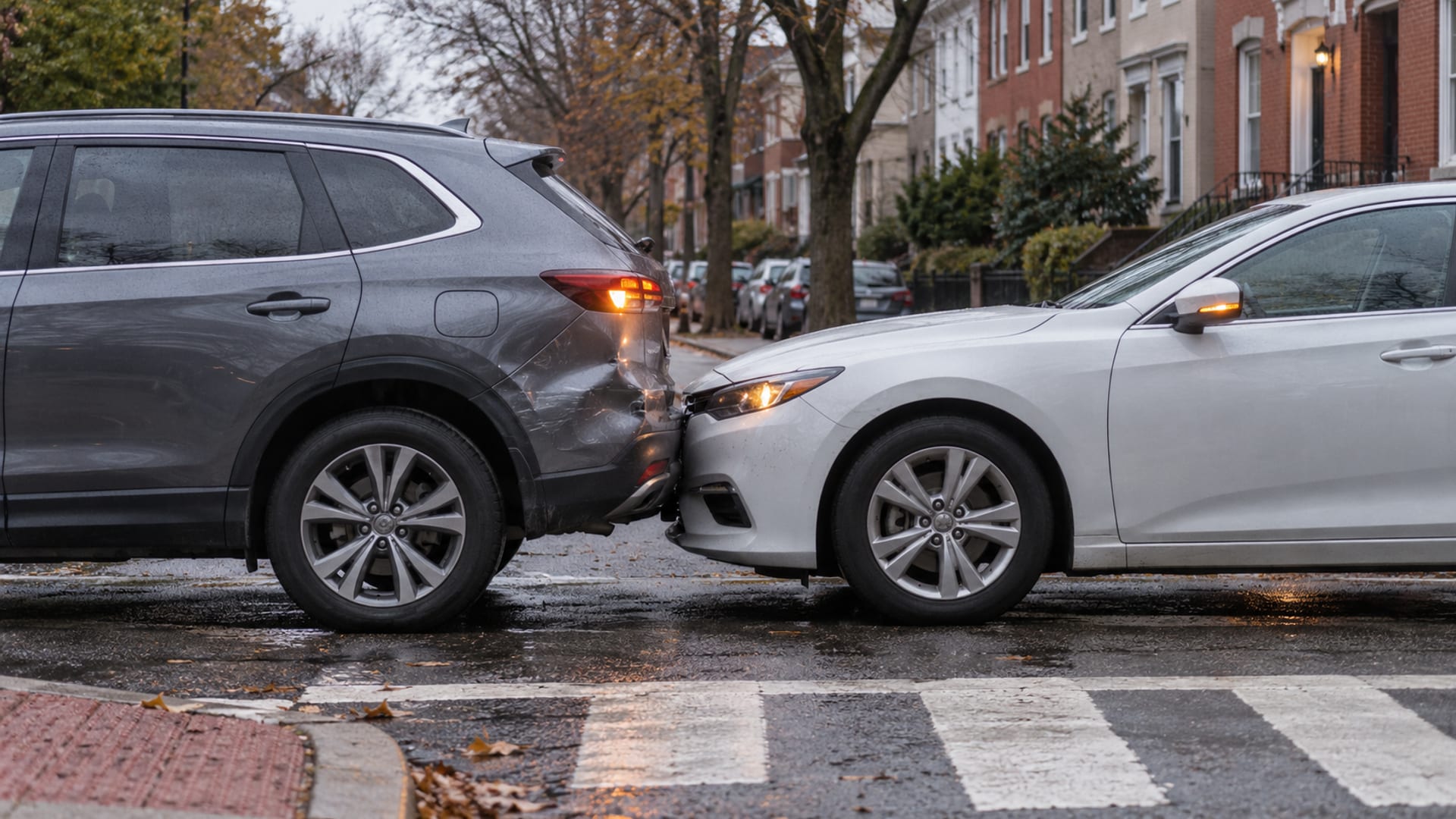
DC has an optional no-fault benefit called personal injury protection, or PIP. Every insurer must offer PIP to a person required to carry DC auto insurance, but the policyholder decides whether to buy one or more of the PIP coverages, under DC Code § 31-2404 (opens in a new tab). PIP can pay reasonable medical and rehabilitation expenses, work loss and funeral benefits without regard to fault. After a crash, a victim who wants PIP must notify the PIP insurer within 60 days, and choosing PIP limits a later lawsuit to the conditions in DC Code § 31-2405 (opens in a new tab). Liability insurance stays mandatory either way.
Key takeaways
- Optional PIPEvery insurer must offer personal injury protection, but the policyholder decides whether to buy any of it.
- No-fault benefitsPIP can pay medical and rehabilitation expenses, work loss and funeral benefits without regard to fault.
- 60 daysA victim who wants PIP must notify the PIP insurer within 60 days of the crash.
- Lawsuit limitsChoosing PIP limits a later lawsuit to the serious-injury, 180-day, benefit-exhaustion and death exceptions in DC law.
- Liability stays mandatoryLiability insurance is required whether or not you buy PIP.
Is DC a no-fault state?
DC is best described as a choice system. PIP is the no-fault part, and it's optional: under § 31-2404(a)(1) (opens in a new tab), each insurer must offer it to each person required to have insurance, and it pays its benefits without anyone proving who caused the crash. The DC Department of Insurance, Securities and Banking (DISB) (opens in a new tab) describes DC PIP the same way, as optional coverage for medical, rehabilitation, funeral and lost-wage benefits.
The fault-based part is mandatory. DC Code § 31-2406 (opens in a new tab) requires insurers to provide property damage liability, third-party bodily injury liability and uninsured motorist protection, in addition to offering optional PIP. Taxicab insurers and self-insurers are exempt from the PIP-offer requirement in that section.
Hover or tap a row to highlight it.
| Coverage | Required amount or rule | Source |
|---|---|---|
| Bodily injury liability | $25,000 per person and $50,000 per accident | DC Code § 31-2406 (opens in a new tab) |
| Property damage liability | $10,000 | DC Code § 31-2406 (opens in a new tab) |
| Uninsured motorist property damage | $5,000, with a $200 deductible | DC Code § 31-2406 (opens in a new tab) |
| Personal injury protection | Must be offered; buying it is optional | DC Code § 31-2404 (opens in a new tab) |
So, a DC policy always carries liability coverage for harm you cause others, and it may or may not carry PIP for your own injuries, depending on what was selected when the policy was bought.
What do you have to decide after a crash?
If you have PIP, the main decision is whether to take PIP benefits or rely on a liability claim. Under § 31-2405 (opens in a new tab), a victim who wants PIP must notify the PIP insurer of that election within 60 days of the accident. The insurer must tell an identifiable victim in writing about the 60-day election period, and the period can be extended by mutual written agreement between the victim and the insurer.
If the victim doesn't make an election within 60 days, mandatory liability insurance applies. If the victim elects PIP, a civil action based on another person's liability is restricted to the exceptions in § 31-2405(b) (opens in a new tab).
The PIP election after a DC crash
- AccidentThe 60-day election period starts on the day of the crash.
- Written noticeThe insurer must tell an identifiable victim in writing about the 60-day period.
- ElectionA victim who wants PIP notifies the PIP insurer within 60 days; the period can be extended by mutual written agreement.
- No electionIf no election is made within 60 days, mandatory liability insurance applies.
- After electing PIPA lawsuit based on another person's liability is limited to the serious-injury, 180-day and benefit-exhaustion exceptions.
The 60 days start at the accident, not at the end of treatment. Mark the date, keep the insurer's written notice, and make your election in writing so you have a record of it.

What does DC PIP pay?
PIP pays three kinds of benefits, without regard to fault, under § 31-2404 (opens in a new tab):
- Medical and rehabilitation: reasonable and necessary medical and rehabilitation products, services and accommodations.
- Work loss: qualifying lost income and replacement services loss, which covers paying someone for household tasks the injured person can't do.
- Funeral: funeral and funeral-related benefits paid to survivors.
Because the benefits don't depend on fault, PIP can start paying while the question of who caused the crash is still open. Whether a particular bill or wage loss qualifies depends on the policy terms and the statute, so ask the insurer what documents it needs for each type of benefit.
What PIP limits are available?
The statute sets the floor and the options insurers must make available, according to § 31-2404 (opens in a new tab):
- Medical and rehabilitation benefits of at least $50,000 per victim, with $50,000 and $100,000 options.
- Work-loss benefits of at least $12,000 per accident, with $12,000 and $24,000 options.
- Funeral benefits of actual costs up to $4,000 per victim.
Hover or tap a row to highlight it.
| Benefit | Statutory amount | Source |
|---|---|---|
| Medical and rehabilitation | At least $50,000 per victim; $50,000 and $100,000 options | DC Code § 31-2404 (opens in a new tab) |
| Work loss | At least $12,000 per accident; $12,000 and $24,000 options | DC Code § 31-2404 (opens in a new tab) |
| Funeral | Actual costs up to $4,000 per victim | DC Code § 31-2404 (opens in a new tab) |
| Election deadline | 60 days after the accident | DC Code § 31-2405 (opens in a new tab) |
The $200 deductible in § 31-2406(f)(3) (opens in a new tab) belongs to uninsured motorist property damage coverage, not to PIP. Check your declarations page for the PIP limits you selected and whether any deductible applies to them.
Who does DC PIP cover, and where?
PIP covers a victim who is an insured, or an occupant of the insured vehicle or of a vehicle the insured is driving, under § 31-2404(a)(1) (opens in a new tab). The coverage applies to injuries from the insured's operation or use of a motor vehicle, or use of the insured vehicle, within or outside DC. A crash in Maryland or Virginia can still fall under a DC policy's PIP.
The statute's wording centers on insureds and occupants. If you want to know how your policy treats you or a family member as a pedestrian, a bicyclist or anyone outside the insured vehicle, ask the insurer to point you to the policy language.

Can you turn PIP down when you buy a policy?
Yes. Under § 31-2404(a)(2) (opens in a new tab), an insured may buy, solely at the insured's option, any one or any combination of the three PIP coverages: medical and rehabilitation, work loss and funeral.
Your policy application, declarations page and insurer records show which coverages you chose. If you aren't sure what you selected, ask the insurer how the election or rejection was recorded and request a copy of those documents. Whether PIP is worth the premium is a question to put to your agent alongside the details of the health insurance you already have.
When can you still sue after choosing PIP?
A victim who elects PIP may bring a civil action based on another person's liability only in the situations listed in § 31-2405(b) (opens in a new tab). The first is an injury that "directly results in substantial permanent scarring or disfigurement, substantial and medically demonstrable permanent impairment which has significantly affected the ability of the victim to perform his or her professional activities or usual and customary daily activities, or a medically demonstrable impairment that prevents the victim from performing all or substantially all of the material acts and duties that constitute his or her usual and customary daily activities for more than 180 continuous days."
The second is when "the medical and rehabilitation expenses of a victim or work loss of a victim exceeds the amount of personal injury protection benefits available." In other words, a victim whose costs run past the PIP limits isn't stuck with the PIP payout alone.
Death claims are treated separately. Under § 31-2405(c) (opens in a new tab), survivors may bring a civil action for loss and noneconomic loss from a victim's death regardless of an earlier PIP election. Whether a specific injury meets one of these conditions is a legal question, so an injured person deciding on the election may want a lawyer to review the facts before the 60 days run out.
How does PIP work with other insurance?
PIP generally pays after other coverage. Under § 31-2406(g) (opens in a new tab), a victim can't claim PIP benefits for a loss covered by another insurer or other insurance coverage until those benefits are exhausted. The exception lets PIP pay to cover a deductible under that other coverage.
Workers' compensation covers employees' work-related medical expenses, rehabilitation costs and missed wages, according to DISB (opens in a new tab). If you were hurt while driving for work, or you have health insurance, Medicare or Medicaid, ask the PIP insurer how it coordinates with that coverage before you submit bills.

What deadlines apply to a PIP claim?
The firm statutory deadline is the 60-day election in § 31-2405 (opens in a new tab), along with the insurer's duty to send written notice of it and the option to extend it by mutual written agreement.
Your policy may also set claim-reporting and proof-of-loss requirements. Report the accident to your insurer promptly, and ask for the claim forms, the list of documents it needs, and its timetable for payment. DISB's guidance on insurance after a car accident (opens in a new tab) covers reporting the crash and keeping records.
Does a PIP or no-fault claim raise your rates?
An insurer may not increase rates because of an accident unless it is first determined that the accident was caused by the insured's fault, under § 31-2406(a)(5) (opens in a new tab). DISB adds that a claim can still lead to a higher premium: increases are more likely when the accident is your fault, and an insurer might also raise premiums after more than one not-at-fault accident within a policy period, according to DISB's guidance on car insurance and rental cars (opens in a new tab).
Insurers set their own rates through filings that DISB reviews, according to DISB (opens in a new tab). Ask your insurer how long a specific claim will stay in its underwriting or claims history and how it will be rated. Parts of § 31-2406 (opens in a new tab) are scheduled to change on October 1, 2027, so check the current text after that date.
What can you do if a PIP claim is denied?
Start with the insurer. Ask for the reason for the denial in writing, the policy language it relies on, and what additional records would change the decision.
If the dispute continues, § 31-2405(h) (opens in a new tab) lets a person with a claim under mandatory or optional auto insurance request resolution by the DC Board of Consumer Claims Arbitration. The other party or parties must consent before the Board hears the case, and the arbitration is binding.
You can also file a complaint with DISB's Consumer Services Division (opens in a new tab) if you're a DC resident or the contract was executed in DC. Submit it online, or send the completed consumer complaint form (opens in a new tab) with supporting documents by email or by mail to 1050 First Street NE, Suite 801, Washington, DC 20002. DISB's phone number is (202) 727-8000.

How do you check an agent's license?
Use DISB's license verification service (opens in a new tab). Select the jurisdiction and the licensee search type, enter the information you know, and search for the agent or company. Check the producer's name, license status, license authority and any disciplinary information before you do business. DISB's insurance producer licensing page (opens in a new tab) has more on how producers are licensed.
Questions to ask an agent about PIP
Bring your declarations page and ask:
- Is PIP included on this policy, or was it declined?
- Which PIP coverages are selected: medical and rehabilitation, work loss, funeral?
- What limits and exclusions apply, and is there a deductible?
- Who counts as an insured or an occupant under this policy?
- Does the coverage apply when the vehicle is used outside DC?
- How do I make the 60-day election after a crash, and what written notice will the insurer send?
- How does PIP coordinate with my health insurance, Medicare, Medicaid or workers' compensation?
- What documents does the insurer need for medical expenses and work loss?
- How do I report a claim?
- How does the insurer rate not-at-fault claims?
- If I use the car for business, does a personal or a commercial auto policy apply?
- Are you licensed in DC?
For help picking someone to work with, see how to choose an insurance agent, and Riskado's directory lists insurance agencies in the District.
Check what you know about DC no-fault insurance
Frequently asked questions
Is PIP required in DC?
No. Insurers must offer PIP to people required to carry DC auto insurance, but buying it is the policyholder's choice under § 31-2404 (opens in a new tab). Liability and uninsured motorist coverage remain mandatory.
What happens if I miss the 60-day election?
Mandatory liability insurance applies, under § 31-2405 (opens in a new tab). The 60 days can be extended only by a mutual written agreement between you and the insurer.
Do I have to prove the other driver was at fault to get PIP?
No. PIP pays medical and rehabilitation, work-loss and funeral benefits without regard to fault, within the limits on your policy.
Can another insurer have to pay before PIP?
Generally, yes. A victim can't claim PIP for a loss covered by another insurer or coverage until those benefits are exhausted, except to cover a deductible, under § 31-2406(g) (opens in a new tab).
Will a not-at-fault claim raise my premium?
DC law bars a rate increase for an accident unless it's first determined the insured was at fault. DISB says more than one not-at-fault accident within a policy period might still lead to a higher premium.
Your next step
If you were just in a crash, find the date of the accident and count 60 days forward, then call your insurer to ask whether your policy carries PIP, which coverages and what limits. If you're buying a policy, compare the PIP options side by side with the health insurance you already have, and get the selection you make in writing.
Key terms
Tap a term to see what it means.
Personal injury protection (PIP). Optional DC coverage that pays medical and rehabilitation, work-loss and funeral benefits without regard to fault.
No-fault. A benefit paid without anyone proving who caused the crash.
Election. The victim's written choice, made to the PIP insurer within 60 days of the accident, to receive PIP benefits.
Work loss. Qualifying lost income and replacement services loss after a crash.
Replacement services loss. The cost of paying someone for household tasks an injured person can't do.
Liability insurance. Mandatory coverage that pays for injuries and damage you cause to other people.
Uninsured motorist coverage. Mandatory coverage for losses caused by a driver with no insurance.
Board of Consumer Claims Arbitration. The DC board that can decide an auto insurance claim dispute when all parties consent; its decision is binding.
Declarations page. The page of a policy that lists the coverages, limits and deductibles you selected.