How to File a Car Insurance Claim: Steps, What Not to Say, and Whether It Is Worth Filing
Riskado
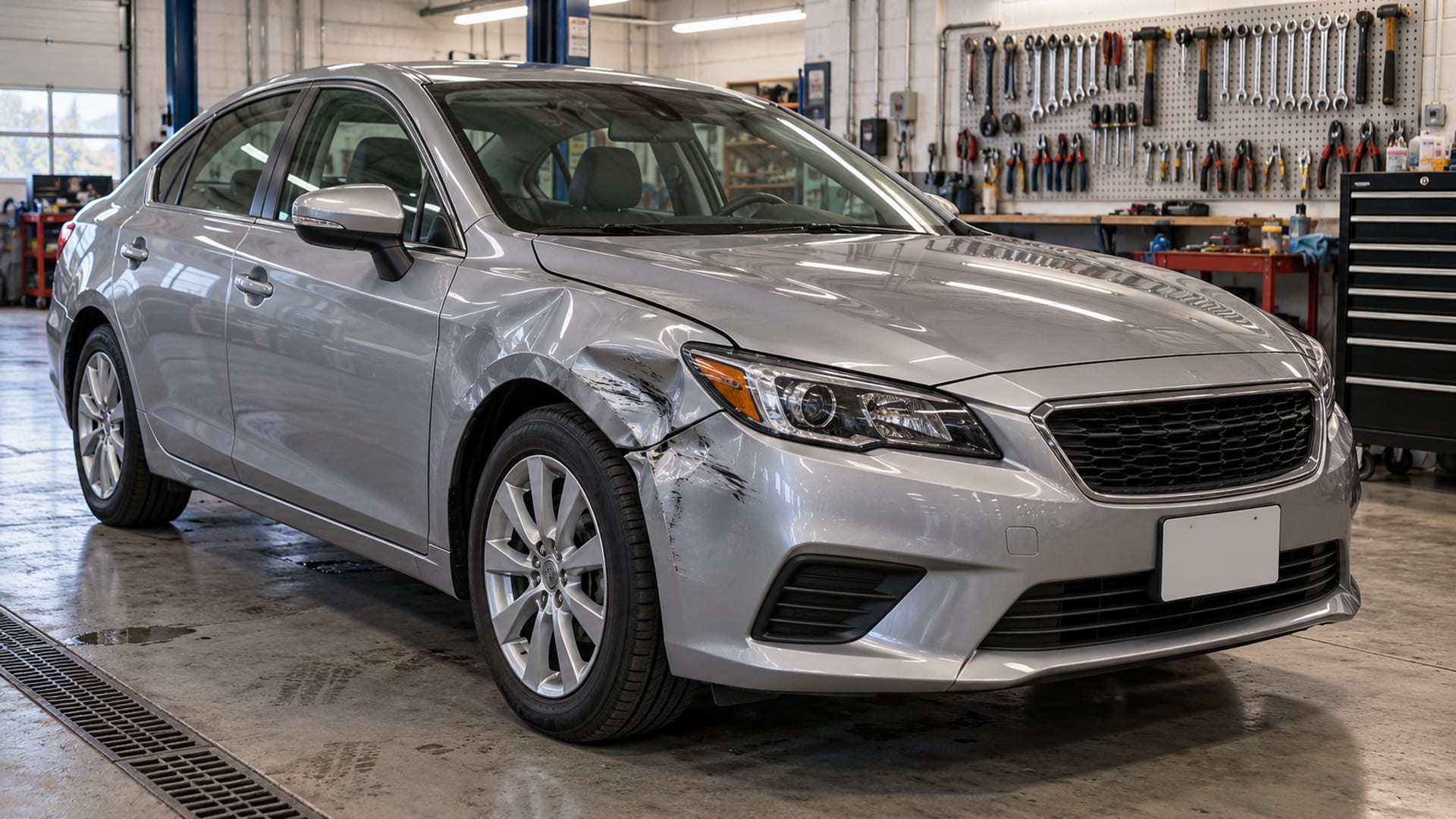
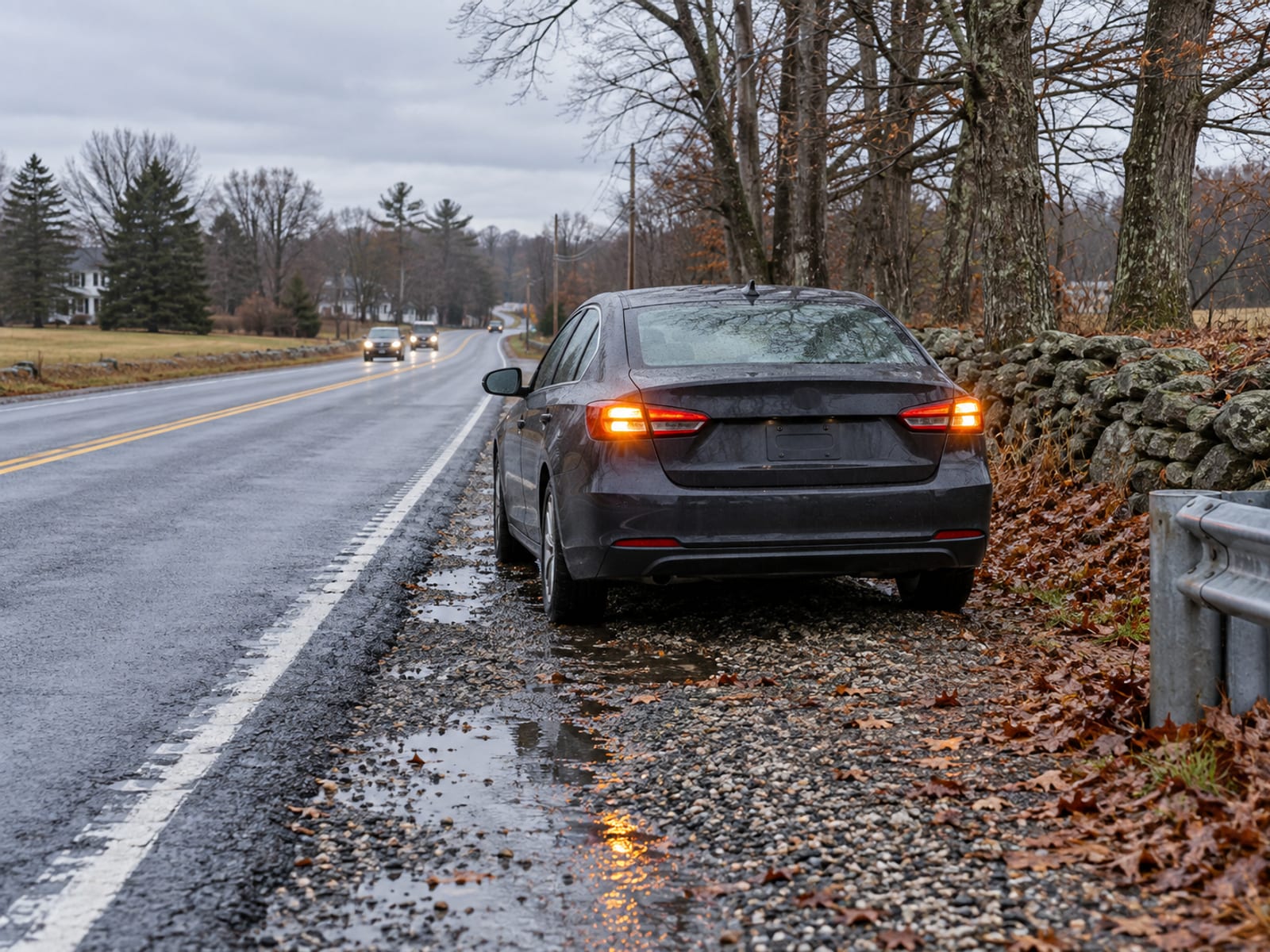
After a crash, protect people first and move a drivable vehicle out of traffic if it is safe. Call emergency services if anyone is hurt, notify police as required, exchange information, photograph the scene and the damage, and call your insurer as soon as possible at the number on your proof-of-insurance card, per the NAIC (opens in a new tab). Before filing a small claim, compare the likely repair cost with your deductible, because claim frequency and claim type can affect premiums and renewal. Your policy controls coverage, and Connecticut drivers can choose their own repair shop, according to the Connecticut Insurance Department (CID) (opens in a new tab).
Key takeaways
- At the sceneProtect people first, move a drivable vehicle out of traffic if it is safe, call emergency services if anyone is hurt and notify police as required.
- Document everythingExchange information, photograph the scene and the damage, and note the officer's details and report number.
- Call your insurerUse the number on your proof-of-insurance card as soon as possible.
- Before filing a small claimCompare the likely repair cost with your deductible, because claim frequency and claim type can affect premiums and renewal.
- Your repair shopYour policy controls coverage, and Connecticut drivers can choose their own repair shop.
What should you do first after a crash?
The steps run in a fixed order, and the first few happen at the scene.
- Stop at or near the crash site.
- If the vehicle can move safely, move it out of traffic, and stay out of traffic lanes yourself.
- Call emergency services if anyone is injured.
- Notify police when required.
- Exchange names, addresses, insurer names and insurance contact details with the other driver.
- Write down the other vehicle's make, model, year and plate number.
- Collect names and contact details from witnesses.
- Record the responding officer's name, badge number, contact details, report number and instructions for getting the report.
- Note the date, time, location, road conditions, weather and skid marks.
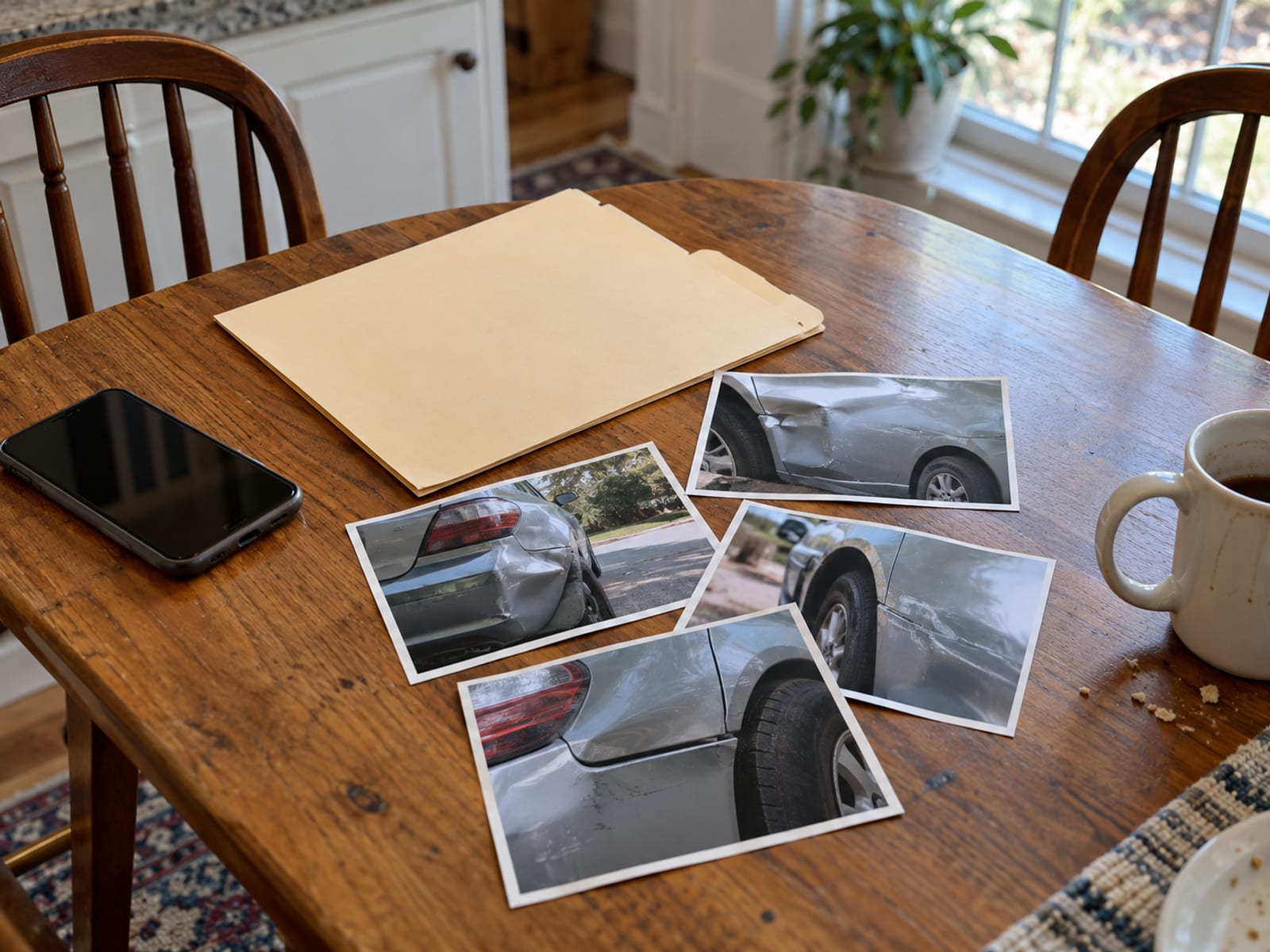
- Photograph or diagram the scene and the damage.
- Call your insurer using the number on your proof-of-insurance card, and ask what forms and documents it needs.
- Keep notes on every conversation with your agent and the adjuster.
Sources for these steps: the NAIC (opens in a new tab) and the Connecticut DMV Driver's Manual (opens in a new tab).
Should you file a claim or pay for repairs yourself?
The answer turns on your policy and the facts, and a few numbers frame it. Start with the policy and your deductible, then compare the deductible with the likely repair cost. Claim frequency and claim type can affect premiums and renewal, and prior claims can be reported to private claim databases such as C.L.U.E. and used by insurers. A second not-at-fault accident within a policy period can also lead a company to raise premiums, according to the NAIC.
Repair costs are part of the math. Car repair costs rose 27% over the three years before April 2025, per Labor Department data cited in a CID consumer notice dated April 11, 2025 (opens in a new tab).
These points belong in the decision:
- The estimated repair cost and the deductible that applies.
- Whether the loss looks covered under your policy.
- Whether another driver, a property owner or another third party is involved.
- Whether anyone might be injured, and whether hidden damage could appear later.
- Whether the car is financed or leased.
- Whether your policy requires prompt notice.
- Whether uninsured or underinsured motorist coverage could apply.
- Whether the loss could grow or another party could make a claim later, which is a reason to have a formal claim record.
Ask your insurer how the event would be classified and recorded, and ask whether it could affect renewal or your rating.
Who should you call about the claim?
It depends on whose coverage pays for what.
A first-party claim is made under your own policy, such as collision or comprehensive coverage for damage to your vehicle. You contact your own insurer, pay any deductible, and follow that policy's claims process. Connecticut does not require collision or comprehensive coverage, although a lender or leasing company can require it, per CID's auto insurance page (opens in a new tab).
A third-party claim is made against the other driver's liability insurer for damage that driver allegedly caused. Liability and coverage have to be established under the other driver's policy. When the other driver is legally at fault, you can be entitled to loss-of-use compensation or a comparable rental vehicle for a reasonable repair or settlement period, according to CID's repair FAQ (opens in a new tab).
Hover or tap a row to highlight it.
| First-party claim | Third-party claim | |
|---|---|---|
| Whose insurer you contact | Your own insurer | The other driver's liability insurer |
| What it covers | Damage to your vehicle under coverage such as collision or comprehensive | Damage the other driver allegedly caused |
| What has to be established | Coverage under your policy, and you pay any deductible | Liability and coverage under the other driver's policy |
| Rental and loss of use | Depends on whether you bought rental reimbursement coverage, and on its limits and time restrictions | When the other driver is legally at fault, a comparable rental vehicle or loss-of-use compensation for a reasonable repair period |
Your own insurer's number is on the proof-of-insurance card, so that is the call to start with. On it, ask whether the claim is being handled under your policy or as a claim against another driver, and, if the other driver has no insurance, whether uninsured motorist coverage applies.
What information and documents should you gather?
Keep everything in one place:
- Proof of insurance and policy information.
- Police or crash report information.
- Names and contact details for drivers and witnesses.
- Photos, videos, diagrams and scene notes.
- Repair estimates and itemized invoices.
- Towing, storage, rental and other receipts.
- Medical or injury records, where they bear on the claim.
- Dates, names and notes from every call with the insurer.
- Written explanations, valuation reports and claim decisions.
The same records support a complaint or arbitration later, which is covered below.
What should you say to the insurer or adjuster?
Give the facts you know: what happened, when and where, and who was involved. Leave out guesses about fault and about damage you haven't seen. Cooperate with the adjuster's investigation, keep notes, track the dates of each conversation with your agent or adjuster, ask questions, and request a written explanation of claim decisions, per the NAIC.
If the adjuster asks for a recorded statement, ask the agency or insurer what the policy's cooperation terms require before you agree. The same goes for the question of fault: stick to what you observed, and let the investigation reach the conclusion.
How does the adjuster inspect and evaluate the damage?
The insurer assigns an adjuster, who inspects the damage and prepares an estimate, and questions come up at each stage. Useful ones to ask are whether an inspection is required before repairs begin, what the deadline is for sending requested information, and how the insurer handles hidden damage found after the inspection.
If the car may be a total loss, ask how its value was calculated and ask for the valuation report and a written explanation. Blue Book is only a guide, according to NAIC. For a constructive total loss in Connecticut, the insurer must use at least the average of NADA or another approved public source and one other approved industry source, per CID's repair FAQ.
Ask, too, whether the estimate includes non-OEM, recycled or aftermarket parts, and how the estimate identifies them.
Can you choose the repair shop?
Yes. A Connecticut driver can choose any repair shop, including a dealer or specialty shop, according to CID. An insurer can provide a list of preferred shops, but no one has to use it, and a car towed to a particular shop does not have to be repaired there.
Before repairs begin, get written confirmation that the insurer and the shop agree on the repair price, as CID recommends. If the shop's labor rate is higher than the amount the insurer approves, you can end up paying the difference or paying out of pocket, or you can pursue a complaint and possibly arbitration.
A Connecticut repair shop must get written authorization stating a maximum estimate for parts and labor before work starts. The shop must also provide an itemized invoice and identify used or rebuilt parts, according to the Attorney General's auto repair guide (opens in a new tab).
Who pays for towing, storage, rental cars, and loss of use?
It depends on whether the claim is yours or against the other driver.
- Third-party claim: When the other driver is legally at fault, that driver's insurer should pay for a comparable rental vehicle or reasonable loss-of-use compensation for a reasonable repair period, per CID.
- Your own policy: Rental payment depends on whether you bought rental reimbursement coverage, and on its limits and time restrictions.
- Storage: Storage charges remain the owner's responsibility to the shop or towing company. The insurer can pay storage as part of the claim for a reasonable period and can set a written cutoff date.
Ask the adjuster which towing, storage, rental or loss-of-use benefits apply to your claim and what limits or time restrictions come with them. More detail is in CID's repair FAQ (opens in a new tab).
What Connecticut crash reports are required?
Two separate things are easy to mix up: notifying police and the official crash report that goes to the state.
A driver must stop after a crash and notify police when there is an injury or a death, and can't leave an injury or death crash before police have the information they need. A crash must be reported to police if there is an injury, a death or property damage. Both rules are in the Connecticut DMV Driver's Manual.
The official report is the investigator's job. Conn. Gen. Stat. § 14-108a (opens in a new tab) requires the investigating police officer, agency or individual to complete the report and forward it to the Commissioner of Transportation no later than five days after finishing the investigation, when a crash involves a death, an injury, or property damage above $1,000 to any one individual, including the operator. That five-day deadline belongs to the investigator, and it is not a deadline for drivers to file their own reports. To learn whether a separate driver filing applies to your crash, ask the responding police agency or the Connecticut DMV.
Hover or tap a row to highlight it.
| Item | Figure | Source |
|---|---|---|
| Official crash report triggers | A death, an injury, or property damage above $1,000 to any one individual, including the operator | Conn. Gen. Stat. § 14-108a (opens in a new tab) |
| Deadline for the investigator to forward the report | Not later than five days after completing the investigation | Conn. Gen. Stat. § 14-108a (opens in a new tab) |
| Auto arbitration filing fee | $20, non-refundable, paid by each party | CID Bulletin CL-5 (opens in a new tab) |
| Arbitration written decision | Within 15 days after the hearing | CID Bulletin CL-5 (opens in a new tab) |
| Payment of an award in the claimant's favor | Within 10 business days after the decision is received | CID Bulletin CL-5 (opens in a new tab) |
| Car repair cost trend | Up 27% over the three years before April 2025 | CID consumer notice, April 11, 2025 (opens in a new tab) |
What if the insurer delays, denies, or disputes the claim?
Start with the insurer. Ask questions, request a written explanation, and check the policy for an appraisal clause, which sets a process for valuation disagreements, per NAIC.
Escalating a disputed claim in Connecticut
- Ask the insurerAsk questions and request a written explanation, and check the policy for an appraisal clause.
- Check the claim-handling standardsConnecticut's unfair claim settlement practices include failing to act with reasonable promptness and failing to give a reasonable explanation for a denial.
- File a written complaint with CIDSend it online, by form or by email with your contact information, the insurer, the insurance type, your policy number and a summary.
- Consider auto arbitrationAvailable for physical-damage disputes once a complaint has been filed and CID's efforts have failed, when coverage and liability are not in dispute.
Connecticut law also sets standards for claim handling. Unfair claim settlement practices under Conn. Gen. Stat. § 38a-816(6) (opens in a new tab) include failing to acknowledge and act with reasonable promptness, failing to maintain prompt investigation standards, failing to affirm or deny coverage within a reasonable time after proof of loss, failing to make prompt and fair settlements when liability is reasonably clear, and failing to give a reasonable explanation for a denial or compromise offer. Payment timing varies by state and claim, and special investigations or heavy weather-claim volume can extend the process, according to NAIC. Ask the insurer which claim-handling deadline applies under your policy.
If the dispute continues, file a written complaint with CID online, by downloadable form or by email. Include your name, contact information, the insurer, the type of insurance, your policy or insurance identification number, and a summary of the problem. CID forwards qualifying complaints to the insurer for a response, and it can't require payment for a loss outside the contract when no violation has occurred, per CID's complaint process (opens in a new tab).
Connecticut auto arbitration can also be available for physical-damage disputes once a complaint has been filed and CID's efforts to resolve it have failed, according to CID Bulletin CL-5 (opens in a new tab). Coverage and liability must not be in dispute. Eligible issues include repair costs, vehicle value, loss of use, rental bills and storage charges. Each party pays a $20 non-refundable fee, and the claimant submits supporting evidence such as estimates, invoices, photographs, receipts and notes. The bulletin calls for a written decision within 15 days after the hearing, with awards in the claimant's favor paid within 10 business days after the decision is received.

Questions to ask the adjuster or agent
- What coverage section applies to this loss, and what deductible applies?
- What are the claim number and the adjuster's contact information?
- What documents, photographs, estimates or forms are needed, and by when?
- Is an inspection required before repairs begin?
- Is the claim being handled under my policy or as a claim against another driver?
- How will the insurer evaluate liability and coverage?
- How do I supplement an estimate if hidden damage appears?
- Does the insurer require a written agreement with the shop before repairs?
- How will the claim be recorded for claim-history purposes, and could it affect renewal or my rating?
- What is the insurer's complaint or escalation process, and does the policy have an appraisal clause?
Check what you know about filing a car insurance claim
Common questions
How do I claim insurance if it's not my fault?
File against the at-fault driver's liability insurer for damage that driver caused, or start a claim under your own collision coverage and let your insurer handle it. When the other driver is legally at fault, you can seek a comparable rental vehicle or loss-of-use compensation for a reasonable repair period.
What not to say when filing a car insurance claim?
Leave out guesses and speculation, and stick to what you saw and know. Keep notes of what you said and when, and ask for decisions in writing.
Is it worth filing a car insurance claim?
Weigh the likely repair cost against your deductible, then weigh claim frequency and claim type, which can affect premiums and renewal. Your agent can tell you how your insurer would classify and record the event.
Can I choose my repair shop in Connecticut?
Yes. There are no restrictions on the shop you select, although your insurer can give you a list of shops.
How do I complain about a Connecticut insurer?
Send a written complaint to CID online, by form or by email, with your contact information, the insurer, the insurance type, your policy or identification number and a summary of the problem.
Your next step
Gather your proof of insurance, the police report number, your photos and your repair estimates, then take the questions above to a licensed insurance agency. Check the agency's license on the Connecticut insurance license lookup (opens in a new tab) before you share your details.
Terms used in this guide
Tap a term to see what it means.
First-party claim. A claim made under your own policy, such as collision or comprehensive coverage for damage to your vehicle.
Third-party claim. A claim made against the other driver's liability insurer for damage that driver allegedly caused.
Deductible. The amount you pay toward a covered loss before your insurer pays.
Adjuster. The person the insurer assigns to inspect the damage and prepare an estimate.
Appraisal clause. A policy provision that sets a process for valuation disagreements.
Loss of use. Compensation, or a comparable rental vehicle, while your car is being repaired or the claim is settled.
Total loss. A vehicle the insurer values at the cost to replace it rather than repair it.