Maine Homeowners Insurance: What It Costs, What It Covers, and How to Compare Quotes
Riskado
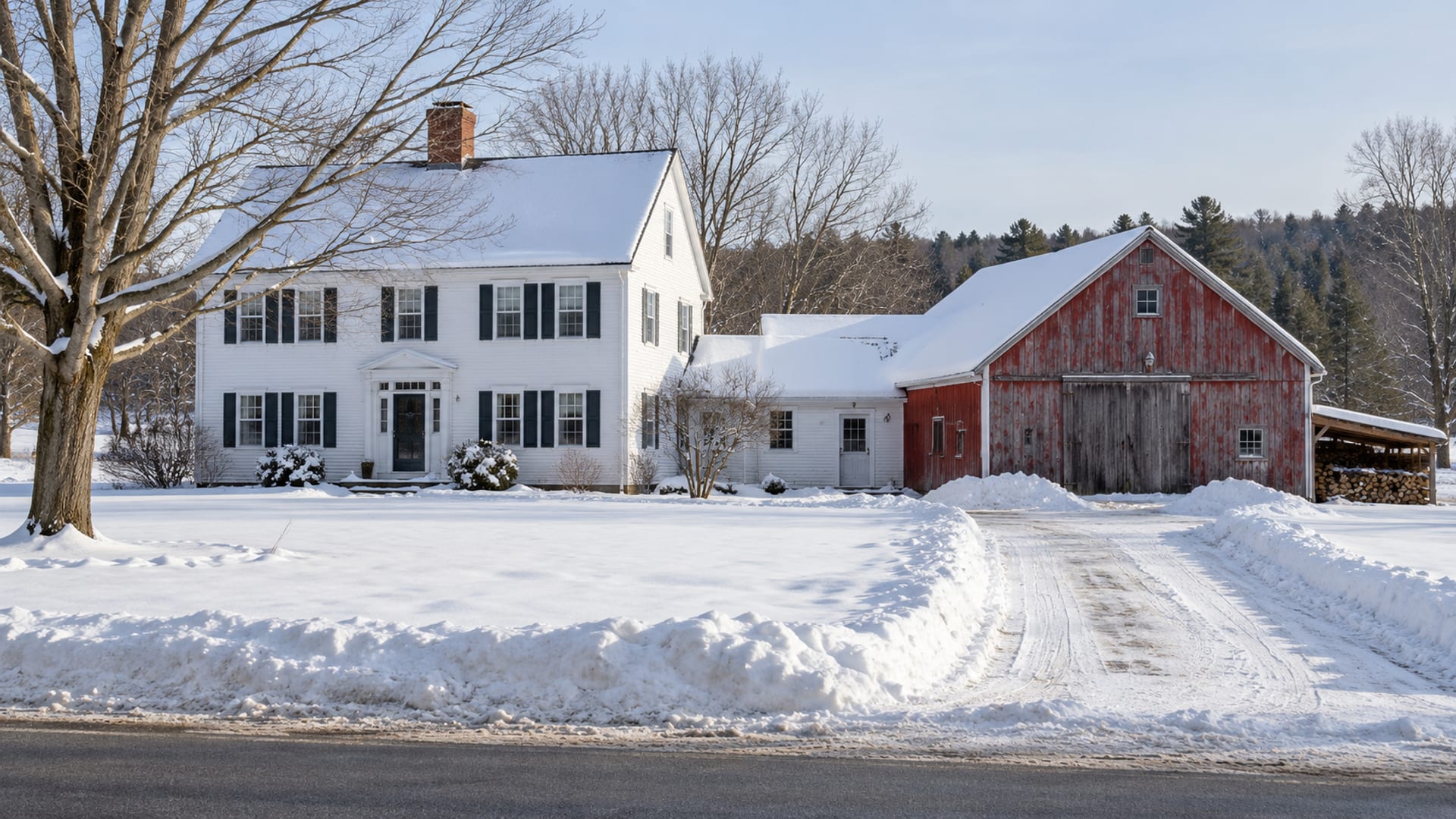
Maine homeowners insurance is usually a package that covers the house, other structures on the property, your belongings, extra living costs after a covered loss, personal liability and medical payments for guests. The average HO-3 premium in Maine was $1,150 for 2023, compared with a countrywide HO-3 average of $1,737, according to the NAIC 2023 Homeowners Report (opens in a new tab). That is a historical average, not a quote. Standard policies commonly exclude flood and may give limited or no sewer-backup coverage without an endorsement. Coastal location, rebuilding cost, claims history, condition, heating and deductibles all move the price.
Key takeaways
- What a policy coversThe house, other structures on the property, your belongings, extra living costs after a covered loss, personal liability and medical payments for guests.
- Average premiumThe average Maine HO-3 premium was $1,150 for 2023, compared with a countrywide HO-3 average of $1,737. That is a historical average, not a quote.
- Common gapsStandard policies commonly exclude flood and may give limited or no sewer-backup coverage without an endorsement.
- What moves the priceCoastal location, rebuilding cost, claims history, condition, heating and deductibles.
What does homeowners insurance cost in Maine?
The $1,150 Maine figure and the $1,737 countrywide figure come from the NAIC's 2023 Homeowners Report (opens in a new tab), published in 2026. The NAIC calculates them by dividing written premium by insured exposures, so they describe what policyholders paid on average in 2023. For comparison, the countrywide HO-3 average was $1,569 a year earlier, according to the NAIC 2022 report (opens in a new tab).
Hover or tap a row to highlight it.
| Area and year | Average premium | Source |
|---|---|---|
| Maine, 2023 | $1,150 | NAIC 2023 Homeowners Report (opens in a new tab) |
| Countrywide, 2023 | $1,737 | NAIC 2023 Homeowners Report (opens in a new tab) |
| Countrywide, 2022 | $1,569 | NAIC 2022 report (opens in a new tab) |
Your own premium depends on the home. Insurers rate a Maine home on its estimated rebuilding cost, not its market value, purchase price or tax assessment, according to the Maine Bureau of Insurance (opens in a new tab). The other rating factors include construction type, distance from a fire department, how close the home is to the coast, the age of the home, the heating method, claims history, credit history and available discounts.

Why Maine premiums have been rising
Storms are a large part of the answer. Recent rate pressure is tied partly to more severe and frequent storms and natural disasters, and to higher reinsurance costs for property insurers, according to the Maine Bureau of Insurance July 2024 availability report (opens in a new tab). Maine had five disaster declarations and one emergency declaration in 2023, compared with a historical average of about one disaster declaration per year since 1970.
The same report ties coverage problems to specific property traits: prior claims, older or poorly maintained homes, vacant homes, homes with a business, certain dogs, long periods without insurance, and woodstoves or heat pumps used as the main heat source. If your renewal went up or an insurer declined you, ask the agent which of these factors applied.
What a Maine homeowners policy covers
A homeowners policy is built from six coverages, according to the Maine Bureau of Insurance (opens in a new tab):
- Dwelling: damage to the house and its permanently installed plumbing, wiring and heating systems.
- Other structures: detached structures such as fences and pools, subject to policy terms. If you have a detached garage, shed or dock, ask how the policy treats it.
- Personal property: belongings damaged, destroyed or lost from a covered peril, including some property away from home.
- Loss of use: some additional living expenses when damage from a covered peril makes the home unlivable.
- Personal liability: financial loss when you are responsible for injury to someone else or damage to their property.
- Medical payments: medical bills for other people injured on your property.
Policies also come in different forms. The Special Form, usually called HO-3, is the most common in Maine, according to the Bureau's covered-perils page (opens in a new tab). It covers the buildings against everything except what is specifically excluded, and covers personal property against a list of named perils. A Broad Form policy names its perils, including freezing and the weight of ice or snow.
Valuation matters as much as the form. Ask whether the dwelling, other structures and personal property will be paid at replacement cost or actual cash value, which subtracts depreciation.
What standard policies usually leave out
Flood. Homeowners policies generally exclude flood, and flood coverage is usually bought separately through the National Flood Insurance Program or a participating insurer, according to the Maine Bureau of Insurance (opens in a new tab). Damage from rising groundwater, rivers, streams or lakes is typically excluded too, according to the Bureau's flood FAQ (opens in a new tab).
Earthquake. Earthquake and other earth movement are common exclusions, according to the Maine consumer's guide to homeowners insurance (opens in a new tab).
Sewer backup and sump-pump overflow. Water that backs up through a sewer or drain, or overflows a sump pump, may have limited or no coverage unless you add an endorsement, according to the Maine consumer's guide to homeowners insurance (opens in a new tab). If your basement holds a furnace, a freezer or finished living space, ask what the endorsement limit is.
Wind, hurricane deductibles and coastal homes
Homeowners policies cover windstorm and hail, but coastal policies may limit that coverage with a percentage deductible, according to the Maine consumer's guide (opens in a new tab).
Maine allows hurricane deductibles only under set conditions, according to the 2024 availability report (opens in a new tab). A hurricane deductible applies only while your location is under a National Weather Service hurricane warning and through 24 hours after the last warning for that forecast area ends. You must be told when the policy is issued that a hurricane deductible applies. The percentage varies by policy, so ask for it in writing.
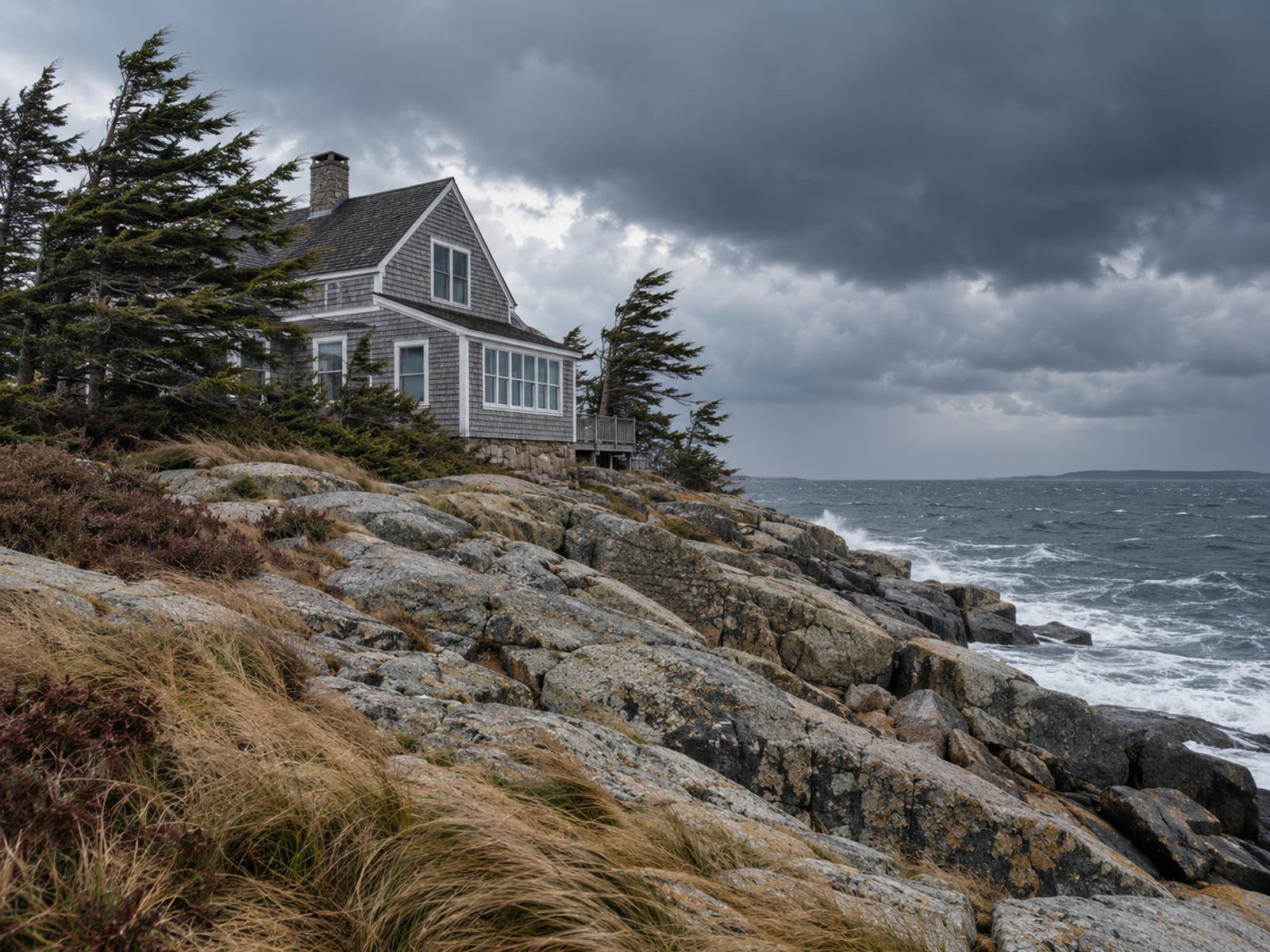
Coastal and island homes face particular affordability and availability challenges because of wind exposure and increasing storm severity.
Frozen pipes, ice dams and heating losses
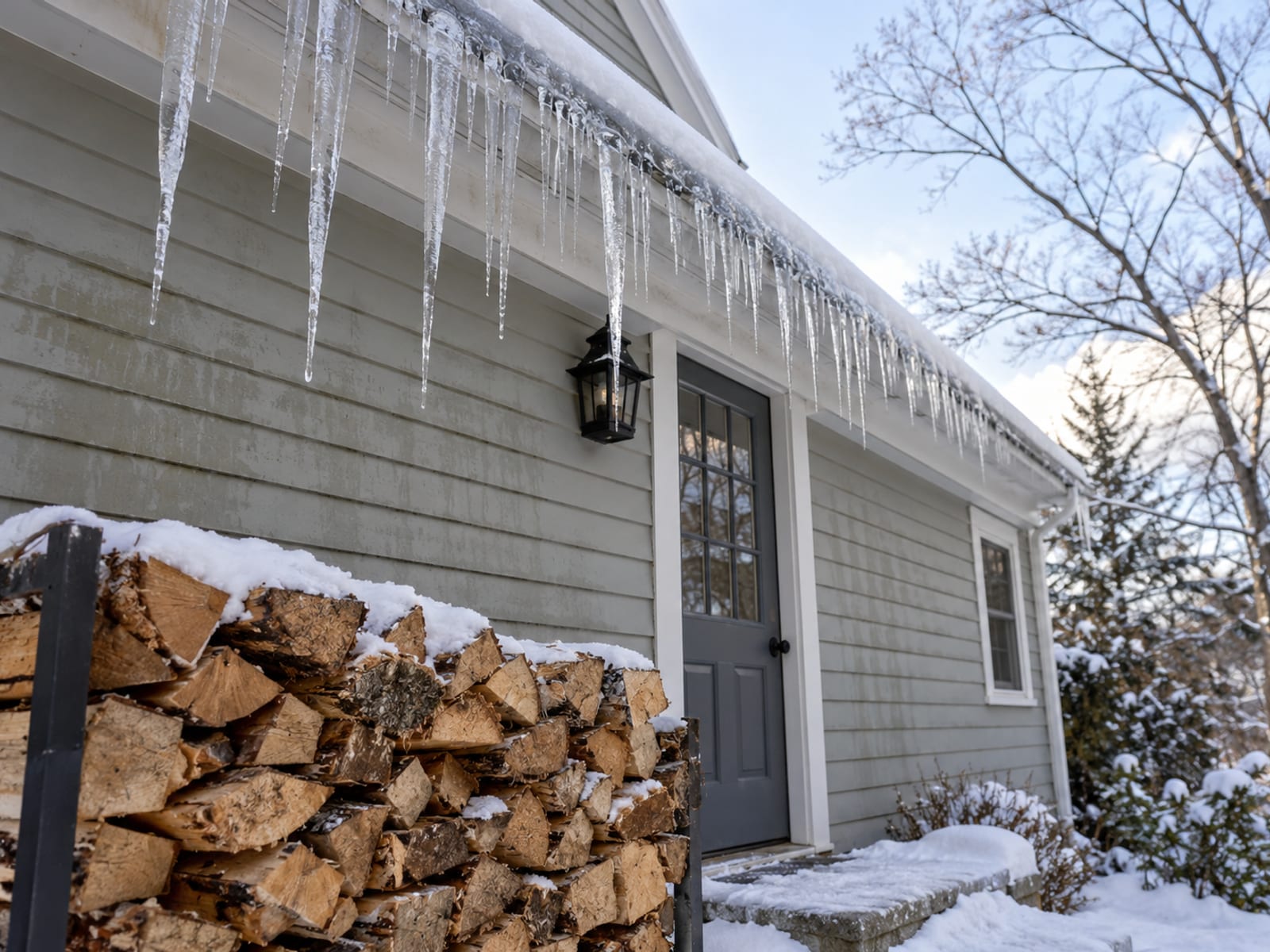
Winter losses turn on the policy form, the cause of the damage, the exclusions, your maintenance duties and any endorsements. Under the named HO-3 Special Form (opens in a new tab), accidental discharge or overflow of water or steam from plumbing, heating, air-conditioning, sprinkler systems or household appliances may be covered, while the failed system or appliance itself may be excluded. Policies can also attach maintenance conditions, so ask what heating or water-shutoff conditions apply when the home is empty.
For any specific loss, such as a burst pipe, an ice dam leaking through the ceiling or an oil tank leak, ask the agent to show you the policy language that would apply, including exclusions and any conditions you must meet.
Heating also affects price and availability. Using wood as the only or main heat source may increase the premium, according to the Maine Bureau of Insurance (opens in a new tab), and woodstoves or heat pumps used as primary heat can make coverage harder to find, with many underwriting guidelines requiring central heat, according to the 2024 availability report (opens in a new tab).
Camps, seasonal homes and second homes
Maine treats some non-primary homes differently. For a residence other than your primary home that is expected to sit continuously empty for three months in any 12-month period, the initial underwriting period is 120 days instead of the usual 90, under 24-A M.R.S. § 3049 (opens in a new tab).
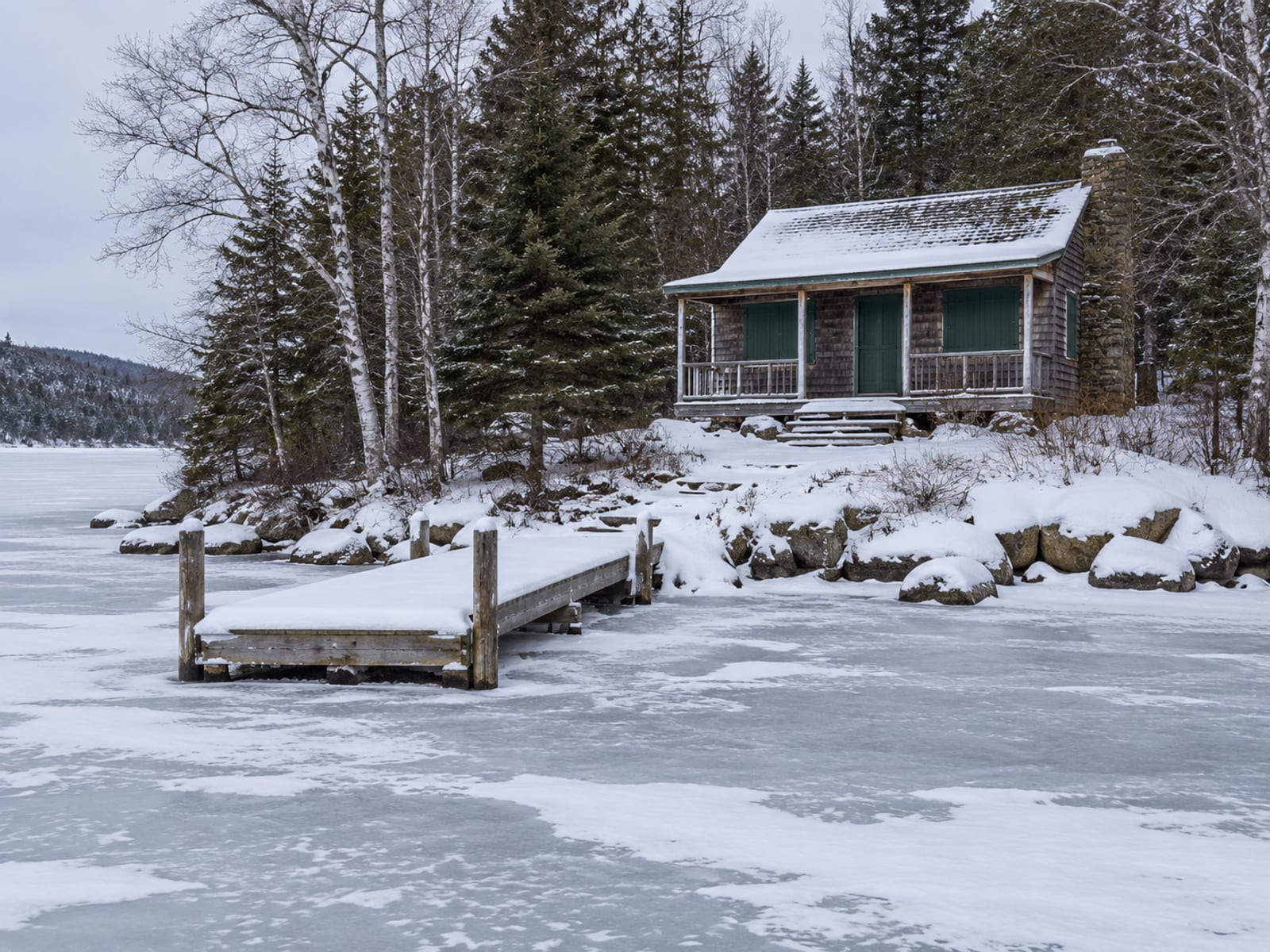
Insurers also set their own requirements for camps and seasonal homes, covering heating, winterization, vacancy, road access, water shutoff, occupancy, rental use and upkeep. Tell the agent about seasonal occupancy, winter closure, whether the place is heated, any rental activity, road access and second-home use before the policy is bound. A policy written for a year-round primary home may not fit a camp that is closed and unheated from November to May.
Cancellation and nonrenewal rules
During the first 90 days of a new policy, the initial underwriting period, an insurer has more room to cancel. After that, a cancellation must rest on a ground listed in 24-A M.R.S. § 3049 (opens in a new tab), including:
- Nonpayment of premium
- Fraud, material misrepresentation or failure to disclose a material fact
- Violating policy terms or conditions
- A crime conviction or negligent acts that increase an insured hazard
- Physical changes that make the property uninsurable
- Vacancy without custodial care
- A trampoline still on the property 30 days after notice
- An unfenced pool still out of compliance 30 days after notice
- A dog-bite loss, unless the dog is removed
- Failure to follow reasonable loss-control recommendations within 90 days
Notice periods are at least 10 days for nonpayment and at least 20 days for other reasons, according to the Maine Bureau of Insurance (opens in a new tab). A nonrenewal notice must reach you at least 30 days before the policy expires, state an explicit reason and tell you about your right to a hearing, under 24-A M.R.S. § 3051 (opens in a new tab). The Bureau must receive a hearing request within 30 days after you receive the notice.
If an insurer is leaving or nonrenewing you, ask the Bureau or an agency which admitted insurers and surplus-lines options are available for your property. Maine homeowners coverage was written by 107 active companies in 2022, according to the 2024 availability report (opens in a new tab).
Hover or tap a row to highlight it.
| Rule | Timing | Source |
|---|---|---|
| Initial underwriting period, new policy | 90 days | 24-A M.R.S. § 3049 (opens in a new tab) |
| Initial period, non-primary home expected to be empty three continuous months | 120 days | 24-A M.R.S. § 3049 (opens in a new tab) |
| Cancellation notice for nonpayment | At least 10 days | Maine Bureau of Insurance (opens in a new tab) |
| Cancellation notice for other reasons | At least 20 days | Maine Bureau of Insurance (opens in a new tab) |
| Nonrenewal notice | At least 30 days before the policy expires | 24-A M.R.S. § 3051 (opens in a new tab) |
| Hearing request | Received by the Bureau within 30 days after you receive the notice | Maine Bureau of Insurance (opens in a new tab) |
| Trampoline or unfenced pool | Cancellation allowed if still out of line 30 days after notice | 24-A M.R.S. § 3049 (opens in a new tab) |
| Loss-control recommendations | Cancellation allowed if not followed within 90 days | 24-A M.R.S. § 3049 (opens in a new tab) |
Filing a claim
You have to prove the cause and extent of the damage, according to the Bureau's homeowners claims page (opens in a new tab). Report the loss promptly, protect the property from more damage, keep records and receipts for temporary repairs, and report theft or vandalism to police when your policy requires it.
Every homeowners policy has an appraisal clause, which settles disagreements about the amount of a loss but not whether the policy covers it or what caused it, according to the Bureau's claims FAQ (opens in a new tab). Each side usually picks an appraiser, and an umpire can settle what they cannot agree on. Once you supply an acceptable proof of loss and the amount is determined, the insurer generally has 30 days to pay or dispute the claim.
How to check an agent or file a complaint
You can look up a licensed agent or company by name, license number or ID number through the Maine insurance license lookup (opens in a new tab). Confirm anything important with the Bureau directly, since the online listing is a public service and not a legal record.
To complain about an insurer or agent, use the Bureau's property and casualty complaint form (opens in a new tab). Explain what happened, name the company or agent, give dates, and attach the policy, letters, claim papers, appraisals, police reports and other records. The Bureau can be reached at Insurance.PFR@maine.gov, 207-624-8475 or 800-300-5000, or Bureau of Insurance, 34 State House Station, Augusta, ME 04333, according to its complaint page (opens in a new tab).
How to compare quotes
Two quotes with different prices may not cover the same things. Line them up on policy form, covered perils, deductibles (including any wind or hurricane deductible), replacement cost versus actual cash value, flood, sewer backup, exclusions, and how each treats seasonal or rental use.
Questions to ask each agency:
- What policy form are you quoting?
- Is the dwelling limit based on estimated rebuilding cost, and what documents support that number?
- Are the house, detached structures and belongings paid at replacement cost or actual cash value?
- What exclusions apply to flood, earth movement, sewer backup, sump-pump overflow, mold and water damage?
- Is there a separate wind, hail, water or hurricane deductible, and when does it apply?
- Is the property rated as a primary home, camp, seasonal home, second home, rental or vacant property?
- What winterization, heating, water-shutoff or inspection conditions apply?
- How are oil tanks, woodstoves, heat pumps, the roof and prior claims treated?
- Can I buy flood insurance separately through the NFIP or a participating insurer?
- How do I report a claim and submit proof of loss?
- What notice would I get if the insurer later cancels or nonrenews?
Bring your current declarations page, the full policy and endorsements, construction and square footage details, roof, plumbing, electrical and heating information, fuel-storage details, prior claims, flood-zone information and any rental or home-business details.
Check what you know about Maine homeowners insurance
FAQ
Is my home insured for what I paid for it?
Not necessarily. Dwelling coverage is generally based on the estimated cost to rebuild, not market value, purchase price or assessed value, according to the Maine Bureau of Insurance (opens in a new tab).
Can my insurer cancel because I have a trampoline or pool?
Yes, after notice. Under 24-A M.R.S. § 3049 (opens in a new tab), cancellation is allowed if a trampoline is still there, or an unfenced pool is still out of compliance, 30 days after the insurer's notice.
What if my insurer and I disagree on the repair amount?
You can invoke the policy's appraisal clause, which every Maine homeowners policy has, according to the Bureau's claims FAQ (opens in a new tab). Appraisal decides only the amount of the loss.
Is the underwriting period different for a seasonal camp?
Yes. A non-primary home expected to be empty for three continuous months in a year has a 120-day initial period instead of 90 days, under 24-A M.R.S. § 3049 (opens in a new tab).
How long do I have to ask for a hearing on a nonrenewal?
The Bureau must receive your request within 30 days after you receive the notice, according to the Maine Bureau of Insurance (opens in a new tab).
Next steps
Start with your current declarations page and a realistic rebuilding cost. Then ask two or three agencies to quote the same form, limits and deductibles, add flood and sewer-backup questions to every conversation, and get the hurricane deductible and any seasonal conditions in writing before you choose.
Terms used in this guide
Tap a term to see what it means.
HO-3. The Special Form homeowners policy, which covers buildings against everything not specifically excluded and belongings against named perils.
Dwelling coverage. Coverage for damage to the house and its permanently installed plumbing, wiring and heating systems.
Loss of use. Coverage for some additional living expenses when a covered loss makes the home unlivable.
Endorsement. A change added to a policy, such as sewer-backup coverage.
Hurricane deductible. A separate deductible that applies only during a National Weather Service hurricane warning and for 24 hours after it ends.
Initial underwriting period. The first 90 days of a new policy, or 120 days for certain non-primary homes, when an insurer has more room to cancel.
Appraisal clause. The policy provision that settles disagreements about the amount of a loss.
Surplus lines. Coverage from insurers not admitted in Maine, used when the regular market does not offer a policy.