Maryland Insurance Lapse: The MVA Uninsured Fines, How to Pay or Clear Them, and What to Do Next
Riskado
Maryland requires insurance on a vehicle for as long as it is registered, even if the car sits in the driveway, according to the Maryland MVA (opens in a new tab). If coverage lapses, the MVA charges $200 for 1 through 30 days without insurance, then $7 for each day starting on day 31, up to $3,500 per violation in a 12-month period, under Transportation Article § 17-106 (opens in a new tab). Your next step depends on the notice. If it is wrong, ask your insurer to correct the record or send an FR-19. If the lapse is real, restore coverage or return your plates to stop the daily charge, then pay and clear the case.
Key takeaways
- Insurance while registeredMaryland requires insurance on a vehicle for as long as it is registered, even if the car sits in the driveway.
- Days 1 through 30The MVA charges $200.
- From day 31$7 more for each day, up to $3,500 per violation in a 12-month period.
- If the notice is wrongAsk your insurer to correct the record or send an FR-19.
- If the lapse is realRestore coverage or return your plates to stop the daily charge, then pay and clear the case.
How much is the Maryland insurance lapse fee?
The current schedule on the MVA's fees and payment options page (opens in a new tab) matches Transportation Article § 17-106(e)(1) (opens in a new tab):
Hover or tap a row to highlight it.
| Time without required insurance | Penalty |
|---|---|
| Days 1 through 30 | $200 |
| Each day beginning on day 31 | $7 more per day |
| Maximum per violation in a 12-month period | $3,500 |
A lapse of a single day falls in the first tier, so even a short gap carries the $200 charge. After day 30, the total climbs by $7 every day until coverage is restored or the plates are returned. A 60-day lapse, for example, would come to $200 plus 30 days at $7, or $410.
You may still see $150 listed as the first-30-day amount in older MVA publications, such as this earlier MVA insurance compliance brochure (opens in a new tab). That figure is out of date. Use the amount on your MVA notice and the current fee schedule.
Is there a grace period for car insurance in Maryland?
Not for MVA purposes. The penalty under § 17-106 (opens in a new tab) starts with a lapse of 1 day, and the statute does not set aside a penalty-free window for a registered vehicle.
What people often call a grace period is something different: the insurer's billing rules. An insurer must give you at least 10 days' advance notice before cancelling an auto policy for nonpayment, according to the Maryland Insurance Administration (opens in a new tab). Some insurers will reinstate a policy after a late payment, but Maryland law does not require them to. Neither of those protects you from the MVA penalty if the policy actually ends and the car is still registered.
If you missed a payment, call your insurer and ask two things: whether the policy was cancelled or reinstated, and which dates it will report to the MVA.

How the MVA learns about a lapse
Insurers must electronically report final terminations and lapses to the MVA, under Transportation Article § 17-104 (opens in a new tab). When coverage was cancelled, lapsed, reported incorrectly, or couldn't be verified, the MVA may send a written insurance violation notice, according to the MVA's penalty and payment page (opens in a new tab).
Your notice lists a case number, the violation period, the total amount due, and the payment deadline. Keep those details in front of you when you call the insurer or the MVA.
From an MVA lapse notice to a cleared record
- Read the noticeNote the case number, the violation period, the total amount due and the payment deadline.
- Call the insurerConfirm the policy dates, the vehicle and the VIN on the policy.
- Fix a wrong recordAsk the insurer to correct the electronic record with the MVA and to send an FR-19.
- Stop the daily chargeIf the lapse is real, restore insurance or return the plates.
- PayPay through the method on the notice and save the payment confirmation.
- Keep proofKeep the FR-19, the payment confirmation and the plate-return receipt.
- Check the flagAllow 3 to 5 business days for records to update, then check myMVA.
What to do if the notice is wrong
Reporting mistakes happen, such as a reinstatement that never reached the MVA or a policy tied to the wrong VIN. Start with your insurer, not the MVA:
- Call the insurer and confirm the policy dates, the vehicle, and the VIN on the policy.
- Ask the insurer to correct the electronic record with the MVA.
- Ask for an FR-19, the form that shows required coverage was in place for the period in question.
Insurers must provide FR-19 forms to policyholders free of charge, according to the Maryland Insurance Administration (opens in a new tab). Once corrected information reaches the MVA, the penalty may be reduced or removed.
To challenge an MVA penalty, contact the MVA at 410-768-7000, according to the MIA (opens in a new tab), and follow the review instructions on your notice. Ask about the deadline for a challenge when you call, and keep notes of the date and who you spoke with.

If the lapse is real: restore coverage or return the plates
Once you know the lapse happened, the daily charge is the thing to stop. You have two ways to do it.
If you are keeping the car on the road, buy or reinstate insurance and confirm that the new insurer reports the policy to the MVA.
If you are not going to keep the car insured, return the plates. Plates must be returned when a vehicle is sold, traded, junked, moved out of Maryland, no longer used, or when insurance is cancelled, according to the MVA's plate return page (opens in a new tab). You can keep the plates only if you transfer them to another vehicle you own. Return them at an MVA branch or a 24-hour tag-return drop box, or mail them with the tag return form (opens in a new tab). The MVA recommends certified mail with a return receipt. Keep insurance active until the plates are returned, and keep the receipt.
Returning the plates promptly can avoid the penalty in some situations. Under § 17-106 (opens in a new tab), the MVA may not assess the penalty when plates are returned within 10 days after the lapse and certain conditions apply, including a title transfer, an out-of-state move with the plates returned by mail, a salvage certificate, or a dealer that has possession of the vehicle and an obligation to return the plates.
How to pay the MVA uninsured penalty
You can pay online by following the instructions on your notice, by mail to the address on the notice, or in person at an MVA branch or kiosk where that service is offered, according to the MVA (opens in a new tab). Include the notice, reference, or ICD case number with the correct amount, and save the payment confirmation.
Paying alone does not restore a suspended registration. Under § 17-106 (opens in a new tab), reinstatement requires replacement insurance, certified evidence of that insurance, and payment of the assessed penalty.
Can you get a payment plan?
If you can't pay the full amount by the deadline, contact the MVA using the information on your notice before the deadline passes, and ask what options apply to your case.
If the debt has already been sent to the Maryland Central Collection Unit (CCU), the CCU can set up a payment schedule for MVA Insurance Compliance debts, according to the CCU debtor portal (opens in a new tab). Use the portal for eligibility and application details at that stage.
Referral to the CCU costs more. The MVA adds 17% to the total amount due when a case is referred, according to the MVA penalty page (opens in a new tab). On a $410 balance, that would add about $70.
What an insurance flag is and how to remove it
An insurance flag is a hold on your vehicle record tied to an unresolved lapse or compliance issue. The MVA must have the flag removed before it can process a registration transaction or a title transfer, according to the MVA's vehicle flags page (opens in a new tab). That means you can't renew or transfer while it stays on the record.
To clear it, provide valid proof of insurance that meets Maryland requirements and resolve any related penalty or compliance case. Records can take 3 to 5 business days to update after that. You can check the status through the myMVA flag lookup tool or your myMVA account.
Registration suspension and plate surrender
Under § 17-106 (opens in a new tab), your registration is suspended automatically as of the lapse date, with the suspension taking effect no later than 60 days after the MVA receives notice of the lapse. It stays suspended until you replace the insurance, submit certified evidence, and pay the assessed penalty.
Once you are notified that your registration is suspended, you must surrender the registration evidence within 48 hours. If you don't, the state may take steps to recover it, and your driver's license can be suspended until the registration evidence is returned.
Driving during a lapse is a separate problem. Knowingly driving, or letting someone else drive, a vehicle without required insurance can bring criminal penalties under Transportation Article § 17-107 (opens in a new tab).
What if you sold, stored, or stopped driving the car?
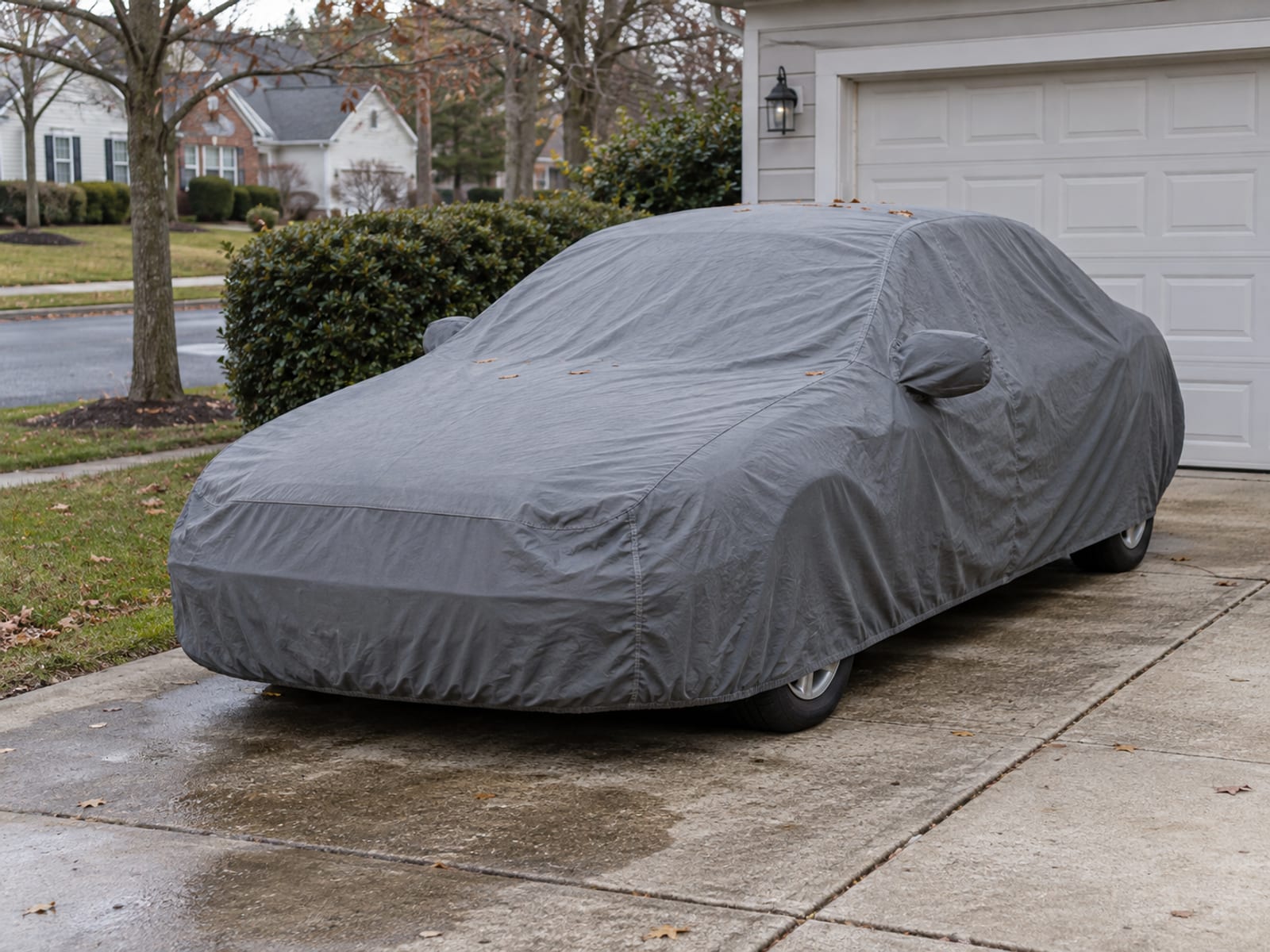
A parked car still needs insurance while it is registered. If you plan to stop driving a vehicle, return the plates first and cancel insurance after, keeping the tag-return receipt.
A sale works the same way. Selling a car privately with your plates still attached can leave the vehicle connected to your record and trigger a notice, according to the MVA Title and Registration Manual (opens in a new tab). Take the plates off at the sale, then return them or move them to another vehicle you own. If the car was totaled, junked, or you moved out of state, return the plates and keep proof of the return and of the title transfer or salvage certificate.
What happens if you don't pay
Unpaid insurance penalties can lead to registration suspension, vehicle flags, a growing balance, and referral to the CCU with the 17% addition, according to the MVA (opens in a new tab). Until the penalty is paid, § 17-106 (opens in a new tab) bars the MVA from reinstating the suspended registration, issuing a new registration, or renewing one for any vehicle you own, co-own, or lease, subject to the statute's exceptions.
Hover or tap a row to highlight it.
| Rule | Figure | Source |
|---|---|---|
| Registration suspension | Automatic as of the lapse date, effective no later than 60 days after the MVA receives notice | Transportation Article § 17-106 (opens in a new tab) |
| Surrender of registration evidence after a suspension notice | Within 48 hours | Transportation Article § 17-106 (opens in a new tab) |
| Plate return that can avoid the penalty | Within 10 days after the lapse, when certain conditions apply | Transportation Article § 17-106 (opens in a new tab) |
| Insurer notice before cancelling for nonpayment | At least 10 days | Maryland Insurance Administration (opens in a new tab) |
| Addition when a case is referred to the CCU | 17% of the total amount due | Maryland MVA (opens in a new tab) |
| Record update after a flag is resolved | 3 to 5 business days | MVA vehicle flags page (opens in a new tab) |
Will a lapse affect your future insurance?
It can. A lapse may lead to a higher premium afterward, or some insurers may decline to cover you or the vehicle, according to the Maryland Insurance Administration (opens in a new tab). Insurers commonly ask about prior coverage when you apply, according to the MIA's auto rates page (opens in a new tab).
If private insurers turn you down, Maryland Auto Insurance provides a transitional option for drivers who cannot get coverage in the private market, according to its FAQ page (opens in a new tab). Its stated eligibility conditions include:
- Maryland residency.
- Owning a Maryland-registered vehicle or holding a valid Maryland driver's license.
- Cancellation or nonrenewal by a standard insurer for a reason other than nonpayment, or refusal by two standard insurers.
- No unpaid Maryland Auto premium.
Maryland Auto policies are sold through a network of producers, not directly by Maryland Auto, so you apply through an agent.
Questions to ask an agent when restarting coverage
When you call an agency to get insured again, these questions help close out the lapse cleanly:
- What effective date will appear on the new policy?
- Can you confirm coverage is active for this vehicle and VIN?
- Will the insurer report the policy to the MVA electronically?
- What proof should I send to the MVA?
- Can the old insurer provide an FR-19 for the disputed period?
- Was my old policy cancelled or reinstated, and what dates will it report?
- What billing deadline applies, and what happens if a payment is late?
- Does the insurer need documents about the prior lapse?
- Is the insurer authorized to write auto insurance in Maryland?
- If private coverage isn't available, do I meet Maryland Auto's eligibility rules?
Riskado's directory lists insurance agencies across the US, including Maryland agencies by city and category.
Check what you know about Maryland insurance lapse penalties
Frequently asked questions
Does the daily fee stop when I return my plates?
Yes. Returning the plates stops future insurance penalties once the MVA receives and records them, according to the MVA (opens in a new tab). Keep the receipt or certified mail record as proof of the date.
Who sends the FR-19, me or my insurer?
The insurer completes it, and Maryland insurers must provide it to policyholders free of charge, according to the MIA (opens in a new tab). Ask the insurer whether it will also correct the electronic record with the MVA.
How long until a flag clears after I fix the problem?
Allow 3 to 5 business days for MVA records to update after you resolve the case, according to the MVA flags page (opens in a new tab). Check myMVA before you schedule a registration renewal or title transfer.
Is the $3,500 cap per year?
The cap is $3,500 for each violation in a 12-month period, under § 17-106 (opens in a new tab). A separate violation can carry its own penalty.
Next steps
Read your notice for the case number, dates, amount, and deadline. Call your insurer to confirm whether the lapse is real. Then either correct the record with an FR-19, or restore coverage or return the plates, and pay through the method on the notice. Keep every receipt until the flag is gone from your myMVA account.
Terms used in this guide
Tap a term to see what it means.
Lapse. A period when a registered vehicle has no required insurance in force.
MVA. The Maryland Motor Vehicle Administration, which registers vehicles and assesses uninsured penalties.
FR-19. A form the insurer completes, free of charge, showing required coverage was in place for a period.
Insurance flag. A hold on a vehicle record tied to an unresolved lapse or compliance issue that blocks registration and title transactions.
Central Collection Unit (CCU). The Maryland unit that collects referred MVA insurance compliance debts and can set up a payment schedule.
Tag return. Returning license plates to the MVA at a branch, a drop box or by mail.