Georgia Driving Without Insurance: The Ticket and Fine, License and Registration Suspension, Whether the Car Can Be Taken and How to Fix It
Riskado

In Georgia, knowingly driving a car without the required liability insurance, or letting someone else drive it, is a misdemeanor. Under O.C.G.A. § 40-6-10 (opens in a new tab), the court can impose a fine of $200 to $1,000, up to 12 months in jail, or both, and a conviction can lead to a driver's license suspension through the Department of Driver Services (DDS) (opens in a new tab). A separate track runs through the Department of Revenue Motor Vehicle Division: a $25 lapse fine and a possible registration suspension when the vehicle's insurance drops off the state database, according to Georgia DOR (opens in a new tab). Start by checking who sent your notice, the court, DDS or DOR, because each one handles a different consequence and a different fix.
Key takeaways
- The offenseKnowingly driving, or letting someone drive, without required liability insurance is a misdemeanor under Georgia law.
- The penalty rangeA fine of $200 to $1,000, up to 12 months in jail, or both.
- Your licenseA conviction leads to a DDS suspension; a second or later conviction adds an SR-22A for three years.
- Your registrationDOR charges a $25 lapse fine and can suspend the registration when insurance drops off the state record.
- First stepCheck whether the notice came from the court, DDS or DOR, because each handles a different fix.
What Georgia requires you to carry
Georgia drivers must carry liability insurance of at least $25,000 per person and $50,000 per incident for bodily injury, plus $25,000 for property damage, according to the Georgia Office of Commissioner of Insurance and Safety Fire (OCI) (opens in a new tab). Liability pays others when you're legally responsible for a crash. Collision and comprehensive, which pay for damage to your own car, aren't required by state law, though a lender or leasing company can require them. Our article on Georgia car insurance requirements covers the full list.
Is driving without insurance a misdemeanor in Georgia?
Yes. An owner or any other person who knowingly operates a vehicle without effective insurance, or knowingly authorizes someone else to drive it, commits a misdemeanor under O.C.G.A. § 40-6-10(b) (opens in a new tab). The punishment is a fine of at least $200 and no more than $1,000, imprisonment for up to 12 months, or both. Failing to keep proof of insurance as the statute requires carries the same range.
The statute has two protections worth knowing. A driver isn't guilty if they carry their own policy that extends coverage to any vehicle they drive. And an officer can't write the citation when the only reason is that the officer couldn't pull insurance information from DOR's records.
The fine is only part of the bill. Court costs and surcharges are set by the court that handles the citation, so the total varies from court to court. Call the clerk of the court named on your citation and ask for the full amount due, including costs and surcharges.
Can you go to jail for a no-insurance ticket?
Jail is legally possible. The statute allows up to 12 months, a fine, or both, and it doesn't set a different maximum for a first or repeat offense. The sentence in your case is up to the court. What clearly changes with a repeat conviction is the driver's license side, which DDS handles.
Will Georgia suspend your driver's license?
A conviction is reported to DDS, and DDS suspends the license. For a first no-proof-of-insurance offense, the license must be suspended for 60 days before you're eligible to reinstate, and you'll need to show proof of insurance and pay the reinstatement fee, according to the DDS first-offense FAQ (opens in a new tab). DDS also answers a question many drivers ask: if you were driving someone else's car, the suspension still applies, because the driver is always responsible for providing proof of valid insurance.
For a second or later conviction, the license must be suspended for 90 days before you're eligible. You'll pay the higher fee and present a Georgia Safety Responsibility Insurance Certificate, the SR-22A, and keep that coverage for three years, according to the DDS multiple-conviction FAQ (opens in a new tab). A driver who doesn't own a car still has to buy an SR-22A non-owner policy. Neither suspension allows a limited driving permit. Our article on Georgia SR-22 insurance goes through the filing step by step.
The current DDS reinstatement fee table (opens in a new tab) lists $200 by mail and $210 in person for a first no-proof-of-insurance offense, and $300 by mail and $310 in person for a second or later one. DDS says your own fee can differ because of conviction dates, other convictions or other suspensions, so check your record through DDS Online Services before you pay. Partial payments aren't accepted.
Hover or tap a row to highlight it.
| Item | Amount or period | Who handles it |
|---|---|---|
| Statutory fine for driving uninsured | $200 to $1,000, up to 12 months in jail, or both | The court |
| Fine when you prove coverage existed at the stop | No more than $25, and no report to DDS | The court |
| First no-proof-of-insurance suspension | 60 days before you can reinstate | DDS |
| Second or later suspension | 90 days before you can reinstate, plus an SR-22A for three years | DDS |
| DDS reinstatement fee, first offense | $200 by mail, $210 in person | DDS |
| DDS reinstatement fee, second or later | $300 by mail, $310 in person | DDS |
| Lapse fine | $25, plus up to $160 if not paid within 30 days | DOR |
| Registration reinstatement fee | $60, or $160 after three or more suspensions in five years | DOR |
Will Georgia suspend the vehicle registration?
This is the DOR side, and it can start without any traffic stop at all. Georgia DOR treats 10 or more consecutive days with no liability insurance on record as a lapse, according to its registration suspension page (opens in a new tab). A lapse also occurs when a policy ends and no new policy information arrives within 30 days. Insurers have 30 days to send new insurance information electronically.
When a lapse happens, DOR mails the registered owner a notice. The fine is $25 for a lapse while the vehicle is actively registered, and it can grow by up to $160 more if the $25 isn't paid within 30 days, according to DOR's lapse page (opens in a new tab). If no payment is made and no new insurance information is received within 30 days of the Notice of Pending Suspension, the registration is suspended. While it's suspended, a plate can't be issued, transferred, replaced or renewed, and the vehicle can't be driven.
From a Georgia insurance lapse to a suspended registration
- The lapse10 or more consecutive days with no liability insurance on record, or no new policy reported within 30 days after one ends.
- DOR noticeDOR mails the registered owner a notice; the lapse fine is $25.
- 30 days laterIf the $25 isn't paid, the fine can grow by up to $160, and a Notice of Pending Suspension follows.
- SuspensionWith no payment and no new insurance on record within 30 days of that notice, the registration is suspended.
- ReinstatementInsurance on record, the $25 lapse fine, a $60 reinstatement fee ($160 after three suspensions in five years) and any taxes due.
To reinstate the registration, the DOR reinstatement page (opens in a new tab) lists continuous Georgia liability insurance, the $25 lapse fine, a $60 reinstatement fee, and any other registration fees and ad valorem taxes due. If three or more registration suspensions occur within five years, the reinstatement fee is $160 instead of $60. Paying alone doesn't restore the tag. Once your insurance shows in the state system, the registration is reinstated; if you pay and no updated insurance appears, the vehicle stays suspended. The Georgia insurance lapse fee article covers refunds and the letter itself in more detail.
Can the car be towed or impounded?
It can happen, depending on the situation. An owner without acceptable proof of Georgia liability insurance can't register, renew, replace or transfer a tag, and is subject to fines and vehicle impoundment if the lack of proof is detected by law enforcement or the vehicle is involved in an accident, according to DOR's insurer responsibilities page (opens in a new tab). Driving with a canceled, suspended or revoked registration is a criminal offense on its own and may lead to impoundment, according to DOR's vehicle insurance requirements page (opens in a new tab).
The tow decision is made at the scene by the officer. If your car has been towed, ask the law enforcement agency which offense the tow was based on and what it needs before release, then fix the insurance record and the registration before you drive again. For fleet vehicles, O.C.G.A. § 40-6-10 (opens in a new tab) makes the law enforcement agency liable for the towing fees when it doesn't recognize a valid fleet insurance card.
How does Georgia know whether a vehicle is insured?
Insurers report each policy to DOR's Georgia Electronic Insurance Compliance System, GEICS, within 30 days of the date coverage begins, and they report terminations and vehicle changes too, according to DOR (opens in a new tab). GEICS matches each VIN against the state's tag and title system. A match places a valid insurance indicator on the vehicle's record, which police and county tag offices can see.
For most vehicles, that database indicator is the proof that counts, and a paper insurance card alone isn't acceptable proof except for fleet, self-insured and certain commercial registrations. Other acceptable proof includes a binder showing the VIN for 30 days from its issue date, and a bill of sale dated within 30 days of purchase together with a valid declarations page. Under O.C.G.A. § 40-6-10 (opens in a new tab), DOR's insurance records are prima-facie evidence of the facts they show, except for fleet and approved self-insured vehicles.
If you have insurance but got a letter saying you don't, the cause is usually one of a short list: the vehicle has no valid Georgia insurance, the VIN on the insurance card doesn't match the state's record, the vehicle is on a fleet policy, or the vehicle isn't insured, according to DOR's insurance letters FAQ (opens in a new tab). Only your insurance company can correct the GEICS record; the county tag office can't. You can check your vehicle's insurance status online through DRIVES e-Services.
What if you were insured when you were stopped?
Bring proof to court. If you show the court that the required insurance was in effect when the citation was issued, the court may impose a fine of no more than $25, and it doesn't send the case to DDS, so your license isn't suspended, under O.C.G.A. § 40-6-10(a)(7) (opens in a new tab). The DDS court reference manual (opens in a new tab) says the proof must show valid insurance at the time of the stop for the vehicle and driver cited, and applicable surcharges may still apply.
The rule turns on coverage that existed at the time of the stop. Buying a policy after the ticket is a different fact. It matters for reinstatement and for driving legally from here on, but it doesn't show you were insured that day.
What if you crash while uninsured?
Liability insurance is what pays the other person when you're legally responsible. Without it, you may be personally responsible for the injuries and damage the crash caused, according to OCI (opens in a new tab).
A second consequence can follow. If you don't satisfy a claim for crash damage and the claim is filed under Georgia's Safety Responsibility Law, DDS issues an order suspending your license, according to the DDS Safety Responsibility Law page (opens in a new tab). To avoid that suspension, DDS lists three routes: your insurer files Form SR-21 if you had liability coverage at the time of the crash, you file a general or conditional release signed by the claimant, or you post security to cover the damages along with an SR-22A. You can request a hearing within 10 days of receiving the suspension order.
The no-insurance charge doesn't decide who caused the crash. Fault, the other driver's claim and any other traffic charges each move on their own track. Our article on how to file a car insurance claim explains how claims work once insurance is involved on either side.
What if you hit a parked car with no insurance?
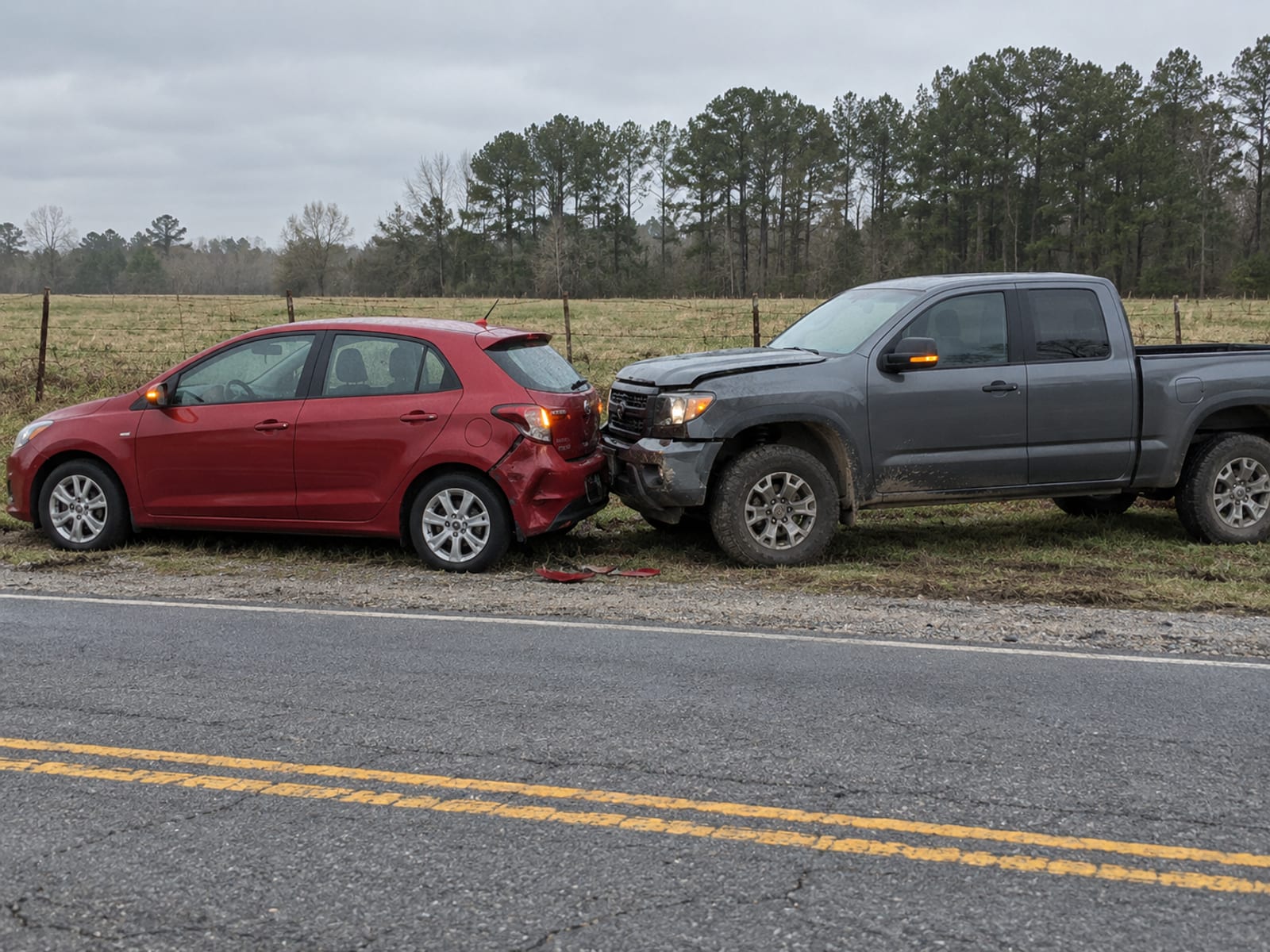
The no-insurance offense and the damage to the parked car are separate matters. You may be personally responsible for the repair bill, and the collision itself brings its own duties to stop, identify yourself and leave your contact information for the owner. Follow the responding officer's instructions, and confirm any requirements with the court or law enforcement agency handling the matter.
At the scene, OCI's auto claim tips (opens in a new tab) say to notify the police, get the officer's name and the report details, and collect names, plates and insurance information from everyone involved, including witnesses.
What to do after a DOR letter or a citation
Work through it in order, because the steps depend on each other.
- Read the notice and note who sent it. A court date comes from the citation, a suspension notice comes from DDS, and a lapse or pending suspension letter comes from DOR.
- Get coverage in place, or confirm the coverage you already had. Ask your insurer to check that the VIN on the policy matches your registration and that the policy has been reported to GEICS.
- Check the vehicle's insurance status online through DRIVES e-Services.
- Pay the DOR lapse fine online through DRIVES e-Services, at a self-service tag kiosk, by mail to your county tag office or in person there.
- If the registration is already suspended, pay the reinstatement fee and any taxes due through the county tag office.
- For the court case, bring proof of any coverage that was in effect on the day of the stop.
- For a DDS suspension, wait out the eligibility period, then reinstate online, by mail or in person with proof of insurance or the SR-22A your case requires.
If the car was sold, totaled, stored or is no longer driven, cancel the registration before you cancel the insurance. DOR says Georgia law requires you to cancel the registration within 30 days of canceling the insurance, and that a letter can arrive even after a sale if the registration stays active.

Spanish-language information
AyudaLegalGeorgia, the Spanish side of GeorgiaLegalAid.org, explains Georgia car insurance responsibilities in Spanish on its page ¿Qué debo saber sobre el seguro de automóvil? (opens in a new tab). The DOR, DDS and OCI pages on penalties, reinstatement and complaints are in English. If you need language help with a notice, contact the agency that sent it, or reach Georgia Legal Services Program or Atlanta Legal Aid through the GeorgiaLegalAid Spanish home page (opens in a new tab).
Checking an agent and filing a complaint
Insurance agents, agencies and companies must be licensed to do business in Georgia, according to OCI's agent and agency licensing page (opens in a new tab). Before you share personal details, look the person or business up with the Georgia insurance license lookup (opens in a new tab) and confirm the license is active.
If you have a problem with an insurer, an agent or a claim, contact the company or agent first and keep a record of every exchange. If that doesn't resolve it, file through OCI's Consumer Complaint Portal (opens in a new tab), with the company name, the agent or adjuster's name, your policy and claim numbers, both sides of your insurance card and a short description. An OCI complaint addresses insurer and agent conduct. A court citation or a DDS suspension is handled by the court or DDS.
Questions to ask an insurance agent
When you call an agency to get coverage back in place, these questions help you leave with a policy that clears the state record:
- Is the insurer licensed in Georgia, and is the agent or agency licensed?
- Does the VIN on the policy match my registration exactly?
- When will the new policy be reported to GEICS, and how can I confirm it?
- What proof should I keep while the record updates?
- Does the policy cover everyone who drives the car, and are any drivers or uses excluded?
- What happens if a payment is late or the policy is canceled?
- If I need an SR-22A, can you file it, and is a non-owner policy an option?
- If the car is financed or leased, what coverage does the lender or lessor require?
- What should I do if the car is sold, stored, totaled or no longer driven?
You can compare agencies by city and category in Riskado's Georgia agency directory.
Check what you know about driving without insurance in Georgia
Frequently asked questions
How much is a no-insurance ticket in Georgia?
The statutory fine is $200 to $1,000, with up to 12 months in jail possible, under O.C.G.A. § 40-6-10 (opens in a new tab). Court costs and surcharges come on top and vary by court. Any DOR lapse fine and DDS reinstatement fee are separate charges.
Can a no-contest plea keep my license from being suspended?
The court decides whether a nolo contendere plea is allowed. If it is, a nolo plea avoids the license suspension for a first no-insurance conviction within five years, according to DDS.
What happens if I hit a parked car and have no insurance?
You may be personally responsible for the damage, and the collision brings its own duty to stop and leave your information for the owner. The no-insurance charge is handled separately from the property damage.
Does paying the DOR fine end the registration suspension?
Only when updated insurance also shows in the state system. DOR says a paid fine with no insurance on record leaves the vehicle suspended.
Can I get a limited permit during a no-insurance suspension?
No. DDS doesn't issue a limited driving permit for a first or a repeat no-insurance suspension.
Getting back on the road
Separate the three tracks and handle each one: the court case and its fine, the DDS license suspension and the DOR registration status. Get insurance in place, confirm it shows on your vehicle's record, and keep your receipts and notices together until every agency shows you as clear. An agency in Riskado's Georgia directory can help you put coverage back in place and confirm it reaches the state record.
Key terms
Tap a term to see what it means.
Lapse. In Georgia, 10 or more consecutive days with no liability insurance on record with DOR.
GEICS. The Georgia Electronic Insurance Compliance System, the DOR database insurers report policies to.
DRIVES e-Services. DOR's online service for checking insurance status, paying insurance fines and canceling a registration.
SR-22A. The Georgia Safety Responsibility Insurance Certificate an insurer files with DDS after a second or later no-insurance conviction.
SR-21. The form an insurer files with DDS to show a driver had liability coverage at the time of a crash.
Binder. A temporary proof of coverage, acceptable in Georgia for 30 days from its issue date.
Prima-facie evidence. Evidence treated as true unless it is rebutted.