Virginia Business Insurance Requirements: Workers' Compensation, Commercial Auto and What Else to Ask About
Riskado

Two legal insurance questions come first for a Virginia business. Workers' compensation is required when an employer regularly has more than two employees, and part-time, full-time, seasonal and family workers count, as can some subcontractors' employees, according to the Virginia Workers' Compensation Commission (VWC) (opens in a new tab). Vehicles registered in Virginia must meet the state's financial responsibility minimums, which rose to $50,000/$100,000/$25,000 for policies effective January 1, 2025 or later, according to the Virginia DMV (opens in a new tab), and for-hire and commercial carriers face higher limits. General liability, professional liability, a business owner's policy, certificates of insurance and surety bonds usually come from a contract, landlord, lender, client or a specific regulated activity rather than from one general small-business insurance law.
Key takeaways
- Workers' compensationRequired when an employer regularly has more than two employees; part-time, full-time, seasonal and family workers count, as can some subcontractors' employees.
- Business vehiclesPolicies effective January 1, 2025 or later must carry at least $50,000/$100,000/$25,000, and for-hire and commercial carriers face higher limits.
- Everything elseGeneral liability, professional liability, a BOP, certificates of insurance and surety bonds usually come from a contract, landlord, lender, client or regulated activity.
Does your business have enough employees to need workers' compensation?
An employer that regularly employs more than two part-time or full-time employees must carry workers' compensation in Virginia. In practice that means three or more employees, under Code of Virginia § 65.2-101 (opens in a new tab) and its contractor guidance (opens in a new tab).
The count is broad. Part-time, full-time and seasonal workers count, and so do minors, aliens and family members who work in the business. Executive officers count too, unless they reject coverage through the statutory procedure.
Calling someone an independent contractor, or paying them on a 1099, does not settle whether they are an employee. Employment status depends on the facts, and common-law principles apply, with control over the means and method of the work carrying the greatest weight, according to the VWC's employer FAQs (opens in a new tab). An employee also cannot be excluded from coverage by signing a waiver.
Subcontractors can change the math. Under § 65.2-302 (opens in a new tab), an owner or contractor is liable for compensation to workers employed by a subcontractor doing work that is part of the owner's trade, business or occupation, or work the contractor took on for someone else. That is the statutory-employer rule, and it is why a general contractor asks every subcontractor for proof of coverage.
Some groups are excluded or treated separately, including casual employees, domestic servants, certain farm and horticultural laborers, and employers that regularly have fewer than three employees in the same business, subject to statutory exceptions and voluntary election rules.

Are owners, partners, LLC members and officers counted?
A sole proprietor with no employees and no subcontractors is not required to carry workers' compensation, according to the VWC (opens in a new tab), though a sole proprietor can choose to buy it.
Section 65.2-101 (opens in a new tab) leaves these people out of the definition of employee unless they elect to be included and notify the insurer:
- A sole proprietor.
- The only shareholder of a stock corporation with one shareholder.
- The only member of a one-member LLC.
- All partners of a business.
Once included, the person receives the benefits of an employee and takes on an employee's responsibilities.
Executive officers work the other way. An officer counts as an employee by default, but can reject coverage for accidental injury or death by giving notice to the employer before an accident and filing the required notice with the Commission, under § 65.2-300 (opens in a new tab). The rejection does not apply to occupational disease. An officer who rejected coverage can revoke the rejection, but coverage does not reach injuries that happen within five days after notice of the revocation.
How can a Virginia employer get workers' compensation?
Virginia employers can secure coverage in several ways, under § 65.2-801 (opens in a new tab):
- A policy from an insurer authorized to write workers' compensation in Virginia.
- An individual self-insurance certificate issued by the VWC.
- Membership in a licensed group self-insurance association.
- Membership in an eligible local-government group self-insurance pool.
- A professional employer organization (PEO) arrangement that includes authorized voluntary-market workers' compensation insurance.
If no insurer will write a policy voluntarily, the employer has the right to apply to the State Corporation Commission to have the risk assigned to a licensed workers' compensation carrier, under § 65.2-820 (opens in a new tab). NCCI manages Virginia's assigned-risk market, and Virginia has no state workers' compensation fund, according to the VWC (opens in a new tab). The VWC's Insurance Department (opens in a new tab) handles coverage questions.
What happens if a business goes without required workers' compensation?
The penalties stack. Under § 65.2-805 (opens in a new tab), an employer that fails to insure can face a civil penalty of up to $250 for each day of noncompliance, capped at $50,000. The employer can also be liable to an injured employee for compensation under the Act or for damages in a civil lawsuit, and in that lawsuit it loses the defenses of employee negligence, fellow-servant negligence and assumption of risk.
After a Commission finding and 15 days' certified written notice, the Commission can order the employer to stop operating until it shows compliance. An employer that knowingly and intentionally fails to insure, or to provide evidence of compliance, commits a Class 2 misdemeanor under § 65.2-806 (opens in a new tab).
When an employee of an uninsured employer files a claim, the employer can also be liable for the actual cost of medical care and compensation payments, according to the VWC's Claims Services Department (opens in a new tab).
Hover or tap a row to highlight it.
| Rule | Figure |
|---|---|
| Employee threshold | More than two employees, generally three or more |
| Civil penalty for failing to insure | Up to $250 per day, capped at $50,000 |
| Criminal penalty | Class 2 misdemeanor for a knowing and intentional failure |
| Notice before a cease-operations order | 15 days' certified written notice after a Commission finding |
| Officer coverage after revoking a rejection | Not for injuries within five days after notice of revocation |
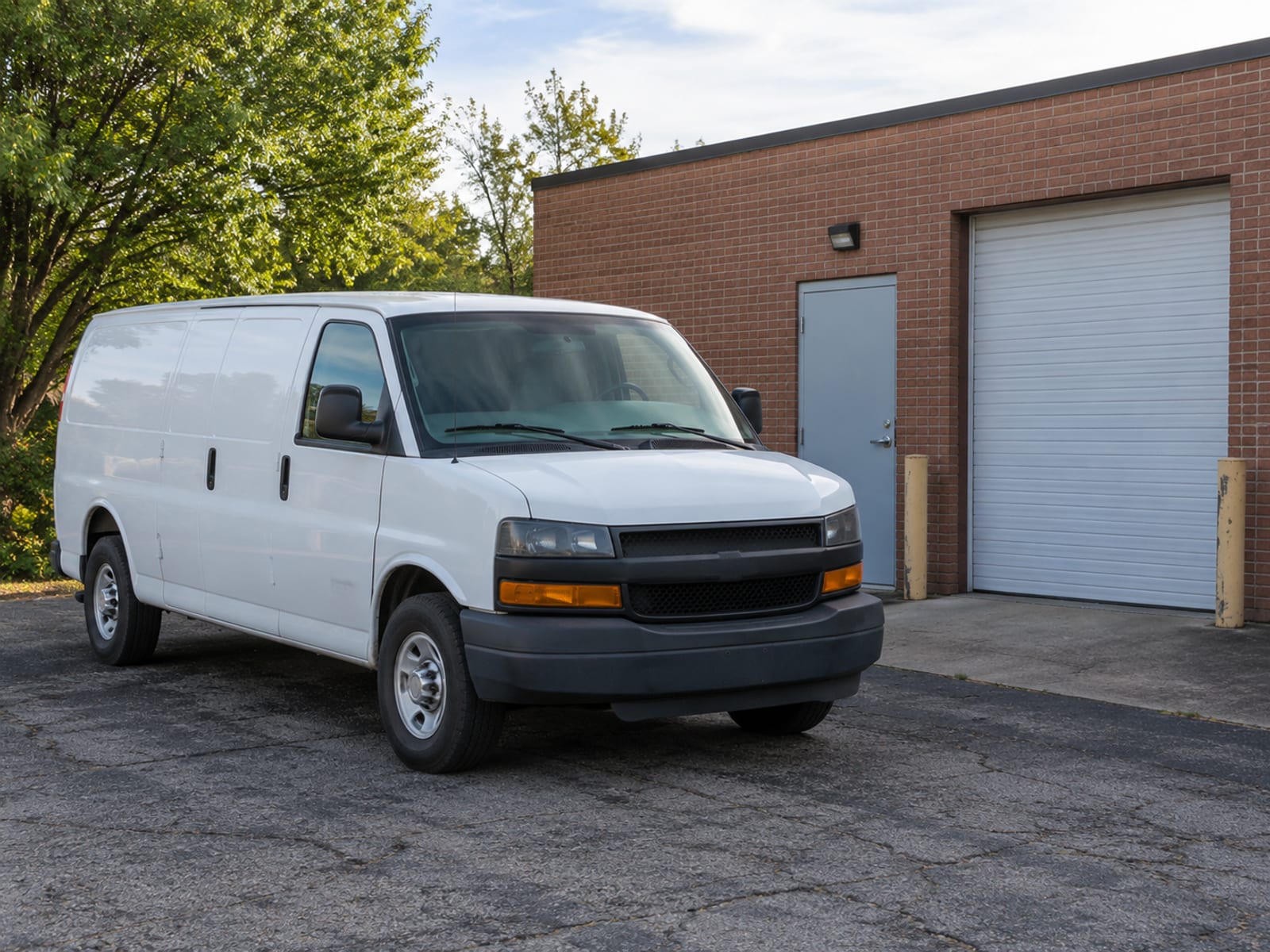
What insurance do business vehicles need?
Every Virginia-registered vehicle needs liability coverage at the state minimums. For policies effective January 1, 2025 or later, those are, according to the Virginia DMV (opens in a new tab):
- $50,000 for injury or death of one person.
- $100,000 for injury or death of two or more people.
- $25,000 for property damage.
Policies effective from January 1, 2022 through December 31, 2024 used $30,000/$60,000/$20,000, so an older certificate or quote may still show those lower numbers. Self-insurance and surety bonds are special options for owners of business vehicles, according to the DMV.
Carriers that haul people or property for hire face much higher limits, according to the DMV's motor carrier insurance and surety bond requirements (opens in a new tab):
- Passenger, contract passenger, employee-hauler, sightseeing and non-emergency medical transportation carriers: $350,000 for 1 to 6 passengers, $1.5 million for 7 to 15, and $5 million for 16 or more.
- Property carriers over 10,000 pounds GVWR: $750,000 in liability, plus $50,000 in cargo insurance when hauling household goods.
- Property carriers from 7,501 to 10,000 pounds GVWR: $300,000 in liability, according to the DMV's property carrier requirements (opens in a new tab).
- Certain smaller property carriers: limits vary depending on whether a transport request has been accepted and the vehicle is carrying the property.
- Transportation network companies: $1 million in primary liability during an accepted prearranged ride, according to the DMV's TNC insurance requirements (opens in a new tab).
Hover or tap a row to highlight it.
| Vehicle or operation | Minimum liability |
|---|---|
| Ordinary registered vehicle, policies effective January 1, 2025 or later | $50,000/$100,000/$25,000 |
| Ordinary registered vehicle, policies effective 2022 through 2024 | $30,000/$60,000/$20,000 |
| Passenger carriers, 1 to 6 passengers | $350,000 |
| Passenger carriers, 7 to 15 passengers | $1.5 million |
| Passenger carriers, 16 or more passengers | $5 million |
| Property carriers over 10,000 pounds GVWR | $750,000, plus $50,000 cargo for household goods |
| Property carriers from 7,501 to 10,000 pounds GVWR | $300,000 |
| Transportation network company, accepted ride | $1 million primary |
Many motor carriers must file proof of insurance with DMV, and some authority types must file a surety bond or an irrevocable letter of credit with DMV Motor Carrier Services. Requirements change with the authority type, passenger capacity, vehicle size and operation. Outside motor carriers, identify your exact regulated activity and confirm its insurance or bond requirement with the Virginia licensing or permitting authority responsible for it.
Which other coverage do businesses discuss beyond the legal minimums?
Most coverage a small business carries is not required by a Virginia statute. It is required by a lease, a client contract or a lender, or it is chosen to protect the business.
Commercial general liability addresses third-party bodily injury and property damage claims arising from premises and operations, along with products and completed operations, according to the SCC's Virginia Commercial Insurance Guide (opens in a new tab). A liability policy can pay for your defense and pay claims on your behalf up to its limits, subject to the policy.
Professional liability addresses claims arising from wrongful acts, errors, omissions or malpractice in professional services. Both professional and general liability policies can be written on an occurrence or a claims-made form, and the two forms have different reporting consequences.
A business owner's policy (BOP) is a package. It typically includes property, business interruption or continuation, and liability insurance, according to the NAIC (opens in a new tab). A BOP does not automatically replace workers' compensation, commercial auto, professional liability or coverage built for a specific activity.
Beyond those, businesses discuss commercial property, business interruption, inland marine for tools and equipment on the move, cyber, liquor liability and employment practices coverage, depending on what they do. No single limit fits every business, so the right amount is a conversation with a licensed agent about your contracts and exposures.

What does a certificate of insurance prove?
A certificate of insurance is a summary, not a policy. Under Code of Virginia § 38.2-518 (opens in a new tab), it is a document prepared or issued by an insurer or insurance producer and given to a third party as a statement or summary of property or casualty coverage.
Virginia law limits what a certificate can do:
- It cannot confer rights beyond the policy.
- It cannot represent that the insurer will give notice of cancellation or nonrenewal unless the policy requires that notice.
- It must carry a disclaimer, or one substantially similar, stating that it is informational only, creates no additional rights, and does not extend, amend or alter the coverage, terms, exclusions or conditions.
The law also prohibits anyone from knowingly demanding, preparing or issuing a certificate with false or misleading information, or one that claims to alter coverage. If a client needs to be named as an additional insured, that has to happen in the policy itself; a certificate only reports it.

What affects the cost of business insurance in Virginia?
Prices turn on a set of factors rather than a single average, according to the SCC's commercial insurance guide (opens in a new tab):
- Commercial auto: vehicle type, territory, mileage, use and loss experience.
- Commercial liability: territory, type of business, products or operations, square footage, payroll or sales, loss history and years in business.
- Workers' compensation: job classification and payroll, with audits adjusting the estimated exposure after the policy period.
To compare prices, ask an agent to explain the premium basis for each policy, and compare proposals that use the same coverages, limits, deductibles, classifications and exposures. Keep payroll, sales, mileage, vehicle, subcontractor and loss records organized, because audits rely on them.
How to check an agent and file a complaint
You can look up an agent, agency or insurance company in the Bureau of Insurance's Producer, Navigator and Company Search Engine (opens in a new tab). The Bureau licenses and regulates insurance companies, agencies and agents in Virginia.
Complaints about an insurer or agent go through the SCC's Insurance Complaint Portal (opens in a new tab). The Bureau can assist with Virginia-issued policies and review the insurer's or agent's response.
Workers' compensation compliance questions go to the VWC. To report an employer that should have coverage and does not, use the VWC's Referral for Lack of Coverage (opens in a new tab).
Questions to ask an agent
These questions keep the conversation on your actual business:
- Which Virginia requirements apply to my employee count and business structure?
- Which workers count as employees for this policy, including part-time, seasonal, family, leased and subcontractor workers?
- How does the policy treat executive officers, LLC members, partners and sole proprietors?
- What classifications, payroll, sales, mileage, vehicle use and loss history affect the premium, and how will the audit work?
- What exclusions apply?
- Is the liability policy occurrence-based or claims-made, and if claims-made, what reporting or tail issues should I understand?
- Does the BOP include business interruption, property and liability, or only some of those?
- Are owned, hired and non-owned vehicles covered?
- What does a certificate of insurance show, and what does it not change?
- Are the insurer, agency and producer licensed or authorized in Virginia?
- If voluntary workers' compensation coverage is unavailable, what is the assigned-risk procedure?
- What records should I keep for employees, subcontractors, payroll, vehicles and property?
- How are cancellations, nonrenewals and premium changes communicated?
Riskado's directory lists insurance agencies across the US, including Virginia agencies by city and category, if you want to talk these through with a local agent.
Check what you know about Virginia business insurance
Frequently asked questions
Does a sole proprietor without employees need workers' compensation in Virginia?
No. A sole proprietor with no employees and no subcontractors is not required by law to carry it, according to the VWC (opens in a new tab). A sole proprietor can still elect coverage.
Can a corporate officer opt out of workers' compensation?
An executive officer can reject coverage for accidental injury or death by giving notice before an accident and filing it with the Commission, under § 65.2-300 (opens in a new tab). The rejection does not cover occupational disease.
Does every Virginia business need general liability insurance?
General liability is often required by a lease, a client contract or another business arrangement. Check those documents and any licensing rules for your activity to see what limits they call for.
Do part-time and seasonal employees count toward the workers' compensation threshold?
Yes. The VWC counts part-time, full-time and seasonal workers as employees, according to its contractor guidance (opens in a new tab).
Where to start
Count your regular employees, including part-time and seasonal workers, and check whether any subcontractors' employees could count. Confirm that every business vehicle meets the 2025 minimums or the higher carrier limits that apply to it. Then pull your lease, client contracts and loan documents, list the coverage and certificates they require, and take that list to a licensed agent.
Terms used in this guide
Tap a term to see what it means.
Workers' compensation. Insurance that pays medical care and compensation to employees for work-related injuries and occupational disease.
Statutory employer. An owner or contractor who is liable for compensation to a subcontractor's workers doing work that is part of its business.
Executive officer. A corporate officer who counts as an employee unless he or she rejects coverage through the statutory notice.
Assigned risk. The process that places an employer with a licensed carrier when no insurer will write workers' compensation voluntarily.
PEO. A professional employer organization, an arrangement that can include workers' compensation coverage.
GVWR. Gross vehicle weight rating, which sets the liability limits for many property carriers.
Certificate of insurance. A summary of coverage issued to a third party; it cannot change the policy.
BOP. A business owner's policy, a package that typically includes property, business interruption and liability insurance.
Claims-made. A liability policy form that responds to claims made during the policy period, with its own reporting rules.
Occurrence. A liability policy form that responds to events that happen during the policy period.