Georgia Motorcycle Insurance: Required Coverage, What It Costs, Helmet and License Rules and What to Ask Your Agent
Riskado
Georgia requires liability insurance on a motorcycle before it's ridden on public roads. The minimum limits are $25,000 for bodily injury to one person, $50,000 for bodily injury to everyone hurt in one accident and $25,000 for property damage, according to the Georgia Office of Commissioner of Insurance and Safety Fire (opens in a new tab). The Georgia Department of Revenue (opens in a new tab) requires that coverage to stay in force for as long as the bike's registration is active, and your insurer reports it to the state electronically. To ride, you also need a Class M license or Class M instructional permit, and Georgia requires an approved helmet. Collision, comprehensive, medical payments, uninsured motorist limits, custom parts and roadside help are separate choices to review with an agent.
Key takeaways
- Required coverageLiability of $25,000 per person and $50,000 per accident for bodily injury and $25,000 for property damage.
- RegistrationCoverage must stay in force while the registration is active, and your insurer reports it electronically.
- LicenseA Class M license or Class M instructional permit.
- HelmetGeorgia requires an approved helmet for every rider and passenger.
- Optional choicesCollision, comprehensive, medical payments, uninsured motorist limits, custom parts and roadside help.
Does Georgia require motorcycle insurance?
Yes. Under O.C.G.A. § 40-6-11 (opens in a new tab), no owner or other person may ride a motorcycle, or let someone else ride it, unless the owner has liability insurance on it equal to the security required under O.C.G.A. § 40-9-37 (opens in a new tab). Riding without it is a misdemeanor. Section 40-9-37 points to the limits in O.C.G.A. § 33-7-11(a)(1)(A) (opens in a new tab), which is how the motorcycle minimum ends up at the same 25/50/25 as a car.
Hover or tap a row to highlight it.
| Coverage | Georgia minimum |
|---|---|
| Bodily injury, one person | $25,000 |
| Bodily injury, all people in one accident | $50,000 |
| Property damage, one accident | $25,000 |
Liability coverage pays for injuries and damage you cause to other people. It doesn't pay to repair your own motorcycle or treat your own injuries. The same statute requires you to carry proof of coverage on you or on the motorcycle while riding, and a violation of that proof rule carries a fine of up to $25 without a license or tag suspension.
The minimum is a legal floor, not a measure of what a serious crash costs. Our article on Georgia car insurance requirements covers the same limits for cars, and an agency can quote higher limits side by side with the minimum.
What you need before registering a motorcycle
Valid insurance is required to register a motorcycle and get a Georgia plate, and to renew, transfer or replace one, according to the Department of Revenue's insurance coverage page (opens in a new tab). Your insurer files proof of coverage electronically with the Department of Revenue. An insurance card alone isn't accepted as proof at the tag office, though you still carry it on the bike.
For a newly bought motorcycle, the Department of Revenue accepts a valid insurance binder from a Georgia-licensed insurer together with a bill of sale dated within 30 days of the purchase. Make sure the VIN on the policy matches the title, because the insurer's electronic report is tied to the vehicle record.
If you've just moved to Georgia, you have 30 days from your move date to register, according to the Department of Revenue's new-resident page (opens in a new tab). You apply at your county tag office with a Georgia driver's license or ID, a completed MV-1 Title/Tag Application, the out-of-state title or qualifying registration, lien or lease paperwork if it applies, and proof of Georgia liability coverage.
From purchase to the road
- License or permitA Class MP permit at 16 or a Class M license at 17.
- Liability coverageAt least 25/50/25, with the VIN on the policy matching the title.
- Electronic filingYour insurer reports the coverage to the Department of Revenue.
- County tag officeBring the MV-1, proof of ownership, your Georgia license or ID and proof of coverage; new residents register within 30 days.
- Continuous coverageKeep liability coverage in force for as long as the registration is active.
What happens if your motorcycle insurance lapses?
Georgia requires owners to keep continuous Georgia liability coverage on any vehicle with an active registration, according to the Department of Revenue (opens in a new tab). A gap can bring fines and possible suspension of the registration, and riding on a suspended, revoked or canceled registration is a criminal offense that can lead to impoundment.
You can check your status through DRIVES e-Services with the "Look Up Insurance Status" option. If the result looks wrong, call your insurer and ask what it reported. Our article on the Georgia insurance lapse fee covers the fees and reinstatement steps.
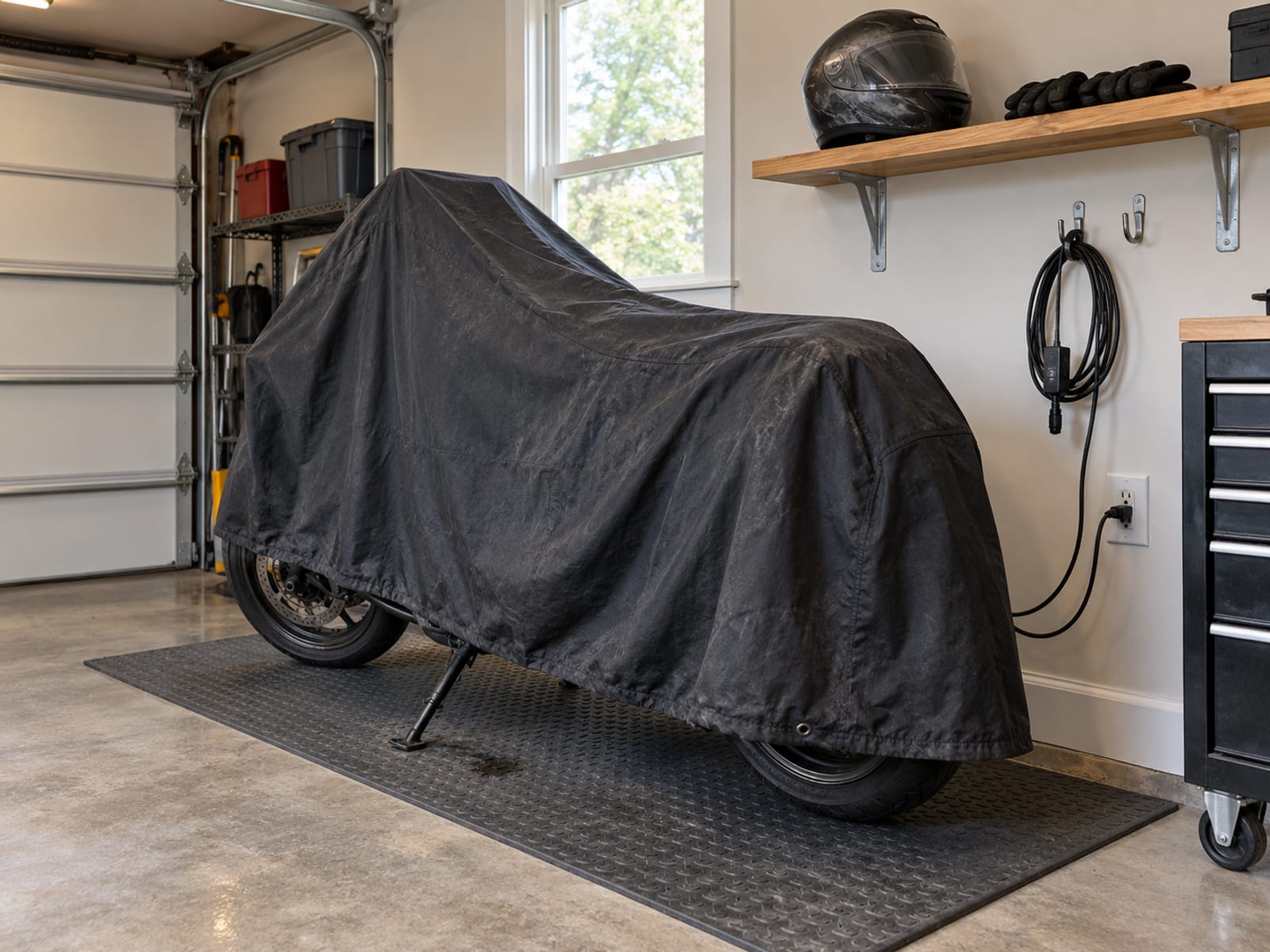
Storing the bike for the winter is where this rule catches riders. If a vehicle is inoperable or out of service, the Department of Revenue advises canceling the registration before canceling the insurance, to avoid fines or penalties. Ask your agent what a storage or reduced-coverage option does to your liability coverage before you change anything on an actively registered motorcycle.
How uninsured motorist coverage works on a motorcycle policy
Uninsured motorist coverage pays for injuries and property damage you suffer when the at-fault driver has no insurance. Under O.C.G.A. § 33-7-11 (opens in a new tab), a motor vehicle liability policy issued in Georgia must include it, at limits of at least 25/50/25 or equal to your liability limits if those are higher. You can choose lower uninsured motorist limits than your liability limits, and any named insured can reject the coverage in writing.
That makes the signed form on file important. Ask your agent which limits are on your policy now, whether property damage is included, and whether a rejection or lower-limit selection was ever signed. Our article on Georgia uninsured motorist coverage goes further into the Georgia options, and do you need uninsured motorist coverage covers it in general terms.
Optional coverage for the bike and rider
Georgia law doesn't require physical damage coverage, but a lender or leasing company usually requires it on a financed or leased vehicle, according to the Georgia Office of Commissioner of Insurance and Safety Fire (opens in a new tab). The common optional coverages are:
- Collision, for damage to your motorcycle from hitting another vehicle or an object.
- Comprehensive, for damage from causes other than a collision, such as theft, fire, vandalism or weather.
- Medical payments, for covered medical costs after a crash.
- Towing and labor, or roadside assistance, as the policy defines it.
- Rental reimbursement, where the policy offers it for a motorcycle.
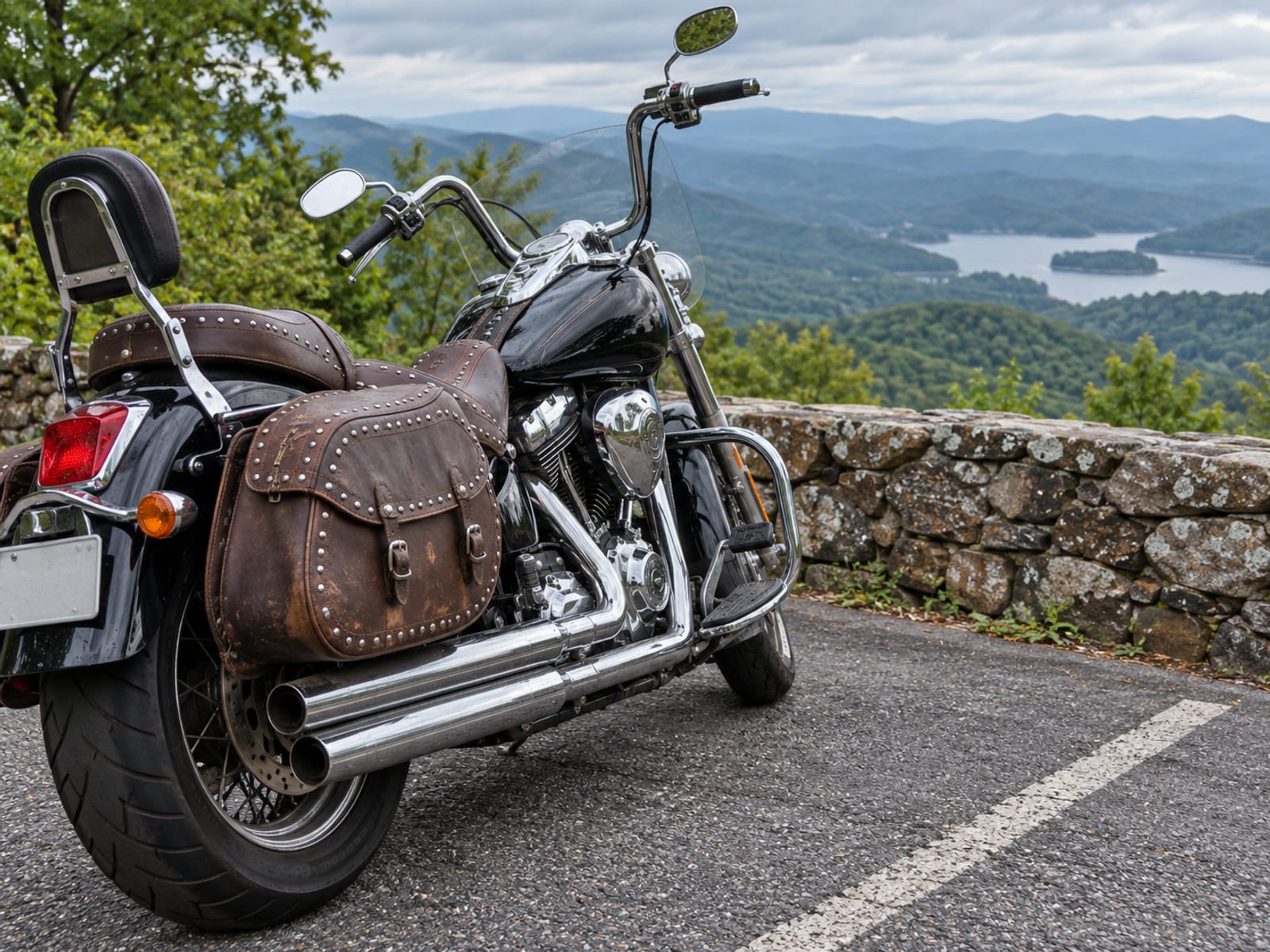
- Accessory and custom-parts coverage, for saddlebags, aftermarket parts and other equipment.
Custom parts are where a claim can surprise you. Ask whether accessories are covered automatically, up to what limit, how they're valued and what receipts or photos the insurer wants. Our article on comprehensive vs collision insurance explains the difference between those two coverages.
What does motorcycle insurance cost in Georgia?
For one named figure, the average annual cost of a liability-only Progressive motorcycle policy with one vehicle in Georgia was $200.19 in 2025, based on Progressive policies from May 2025 through April 2026, according to Progressive (opens in a new tab). That's one insurer's average for liability coverage, not a statewide average and not a quote. Adding collision, comprehensive or higher limits changes the price.
Insurers rate a policy on factors such as driving record, where the vehicle is kept, age, gender, marital status, prior coverage, how the vehicle is used and its make and model, according to the Georgia Office of Commissioner of Insurance and Safety Fire (opens in a new tab). Progressive also names the type of bike and your coverage choices. An agent may ask about annual miles, storage, riding experience, training, passengers, business use and modifications, but each insurer's rating plan decides how much they matter.
To compare quotes fairly, give every agency the same rider, motorcycle, use, limits, deductibles and coverages.
Does a car policy cover a motorcycle?
Don't assume it does. A motorcycle has to be eligible under the policy and listed on it, or otherwise covered by its terms. Ask your agent whether you need a separate motorcycle policy, and whether the policy covers passengers, modifications, the way you ride and how the bike is stored.
What license does Georgia require?
You need a Class M license or a Class M instructional permit to ride. For a Class M license, the Georgia Department of Driver Services (opens in a new tab) requires you to be at least 17 and to either complete a Georgia Motorcycle Safety Program course and present the 90-day license test waiver, or pass the motorcycle skills test at a DDS Customer Service Center. Applicants under 18 must also meet Joshua's Law requirements.
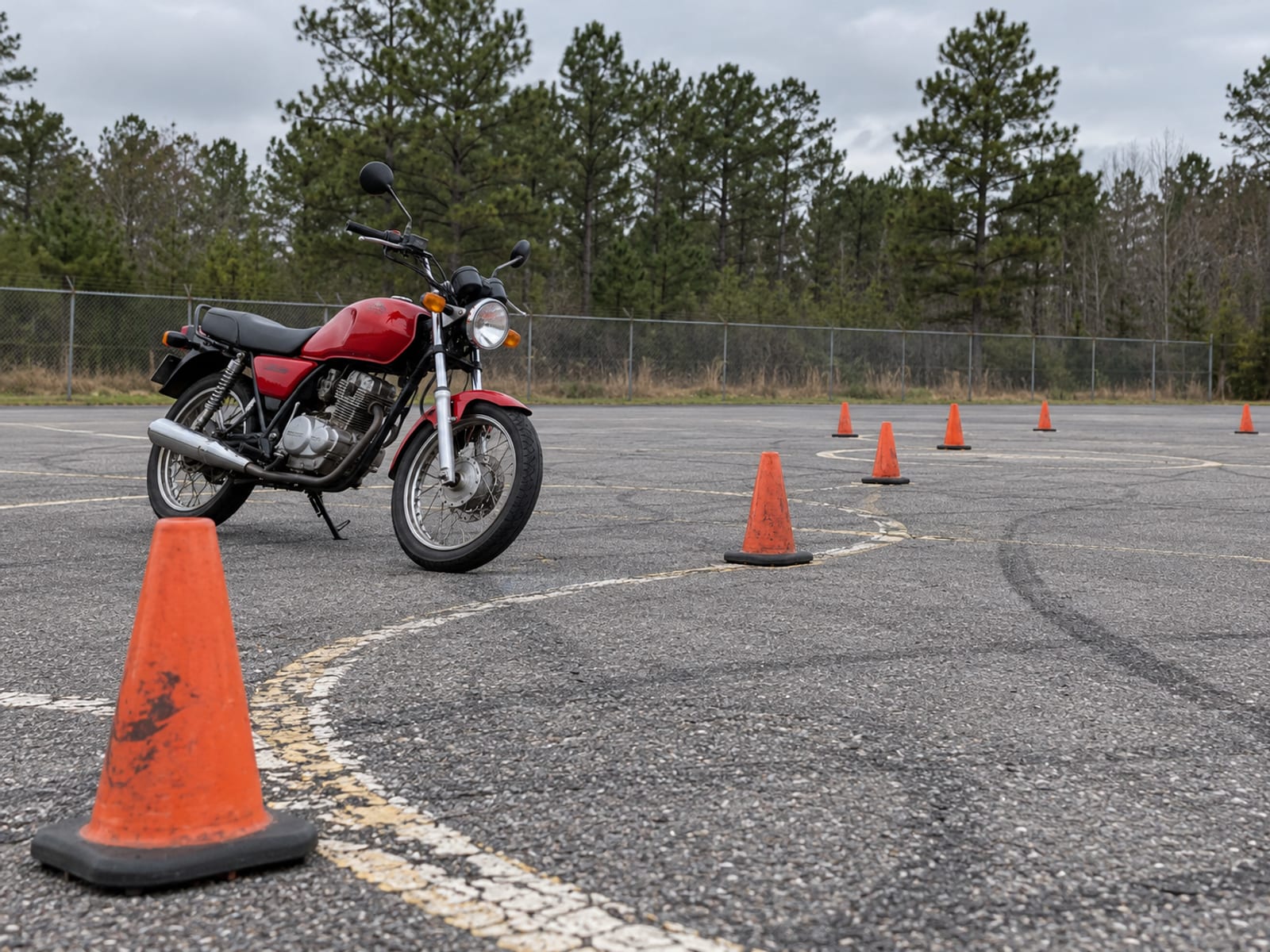
The skills test brings insurance into the license process. You must bring a DOT-approved helmet and protective goggles, a motorcycle that passes a safety inspection, the registration or proof of ownership, and valid insurance.
A Class MP instructional permit is available at 16, according to the DDS motorcycle licensing manual (opens in a new tab). Applicants under 18 need a parent or guardian's signature, and permit holders may ride only in daylight, with no passengers and off limited-access roads.
Helmet and eye-protection rules
Every rider and passenger on a motorcycle must wear protective headgear that meets the standards set by the commissioner of public safety, under O.C.G.A. § 40-6-315 (opens in a new tab). If the motorcycle has no windshield, the rider must also wear an approved eye-protective device. The rule doesn't apply inside an enclosed cab.
Beyond what the law requires, the Department of Driver Services (opens in a new tab) advises face and eye protection, gloves, a jacket, long pants and sturdy footwear.
What to do after a motorcycle crash
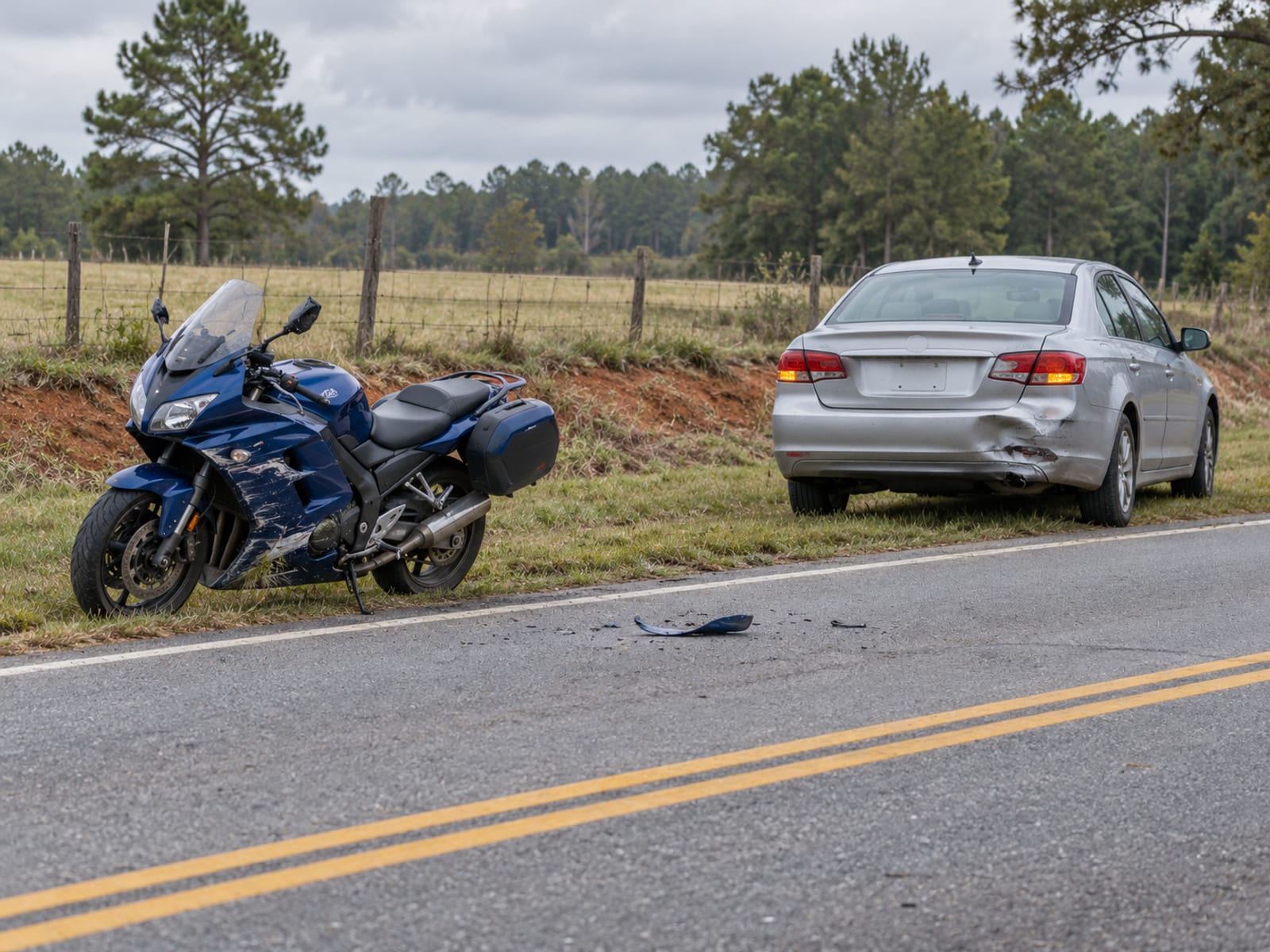
The Georgia Office of Commissioner of Insurance and Safety Fire's auto claim tips (opens in a new tab) apply on a motorcycle too:
- Notify the police right away, and get the officer's name, badge number and how to get a copy of the report.
- Get the other driver's name, address, phone, plate number, insurer and policy number, plus the names of passengers and witnesses.
- Don't make spoken or written statements about who was responsible.
- Take photographs if you can, and note the speeds, weather, road conditions, signs and the point of impact.
- Notify your insurer or agent as soon as possible, even if someone else caused the crash, and ask which forms and documents support your claim.
Medical payments, liability, uninsured motorist, collision and comprehensive each respond to different losses, so the policy and the facts of the crash decide which one pays.
How to check an agent or file a complaint
Agents, agencies and insurers must be licensed to sell insurance in Georgia. Use the Georgia insurance license lookup (opens in a new tab) before you send personal documents.
For a problem with a policy or claim, ask the insurer to resolve it first and keep notes of calls, names, dates and letters. If that fails, file one complaint through the Georgia Office of Commissioner of Insurance and Safety Fire's Consumer Complaint Portal (opens in a new tab). Include the insurer's exact name, the agent or adjuster, your policy number, the claim number and loss date, both sides of your insurance card, a short description and copies of supporting documents. If you disagree with the result, you can send a written rebuttal to your assigned complaints analyst. Consumer Services can be reached at (404) 656-2070 or (800) 656-2298.
Questions to ask your agent
- Is the motorcycle listed by the correct VIN, and how does the insurer report it to the Department of Revenue?
- What liability limits are on the declarations page?
- What uninsured motorist limits apply, and has anyone signed a rejection or a lower-limit selection?
- Does the policy cover passengers?
- What does medical payments coverage pay?
- Does comprehensive cover theft, fire, vandalism, flood and weather?
- Are accessories, safety gear, saddlebags and custom parts covered, and are they paid at actual cash value, replacement cost or another basis?
- Is roadside assistance included, and what are its limits?
- Is the bike covered for commuting, touring, delivery, rental or business use?
- What happens to coverage if I store the motorcycle, and what do I need to do with the Department of Revenue first?
- Does my lender require comprehensive and collision?
- How is a total loss valued, and what deductible applies to each physical damage coverage?
- How do I report a claim?
Check what you know about Georgia motorcycle insurance
Frequently asked questions
Can I register a motorcycle without insurance in Georgia?
No. Your insurer must file proof of Georgia liability coverage electronically, or for a newly bought bike you can show a valid binder with a bill of sale dated within 30 days, according to the Department of Revenue (opens in a new tab). An insurance card by itself isn't accepted.
Does liability insurance pay for my own motorcycle?
No. Liability pays for injuries and damage you cause to others. Collision and comprehensive cover damage to your motorcycle, and both are optional under Georgia law unless a lender requires them.
Can I keep the plate active and drop coverage for the winter?
No. A vehicle with an active registration must keep continuous liability coverage. The Department of Revenue (opens in a new tab) advises canceling the registration before canceling insurance on a vehicle that's out of service.
Can a 16-year-old ride a motorcycle in Georgia?
A 16-year-old can hold a Class MP instructional permit, which allows daylight riding only, with no passengers and off limited-access roads, according to the DDS licensing manual (opens in a new tab). The full Class M license starts at 17.
Before you ride
Get your Class M license or permit, buy at least 25/50/25 liability coverage, and confirm your insurer reported the VIN to the Department of Revenue before your tag office visit. Then decide on uninsured motorist limits, physical damage and custom-parts coverage with an agent. For help choosing someone to work with, see how to choose an insurance agent. Riskado's directory lists insurance agencies across the US, including Georgia, by city and by category.
Key terms
Tap a term to see what it means.
25/50/25. Shorthand for Georgia's minimum liability limits: $25,000 bodily injury per person, $50,000 per accident and $25,000 property damage.
Uninsured motorist coverage. Coverage for your injuries and property damage when the at-fault driver has no insurance.
Class M license. The Georgia license class required to ride a motorcycle.
Class MP permit. The Georgia motorcycle instructional permit, available at 16 with daylight, passenger and road limits.
Insurance binder. A temporary proof of coverage a Georgia-licensed insurer issues for a newly acquired vehicle.
DRIVES e-Services. The Department of Revenue's online service where you can look up a vehicle's insurance status.
Collision coverage. Coverage for damage to your motorcycle from hitting another vehicle or an object.
Declarations page. The page of a policy that lists the coverages, limits, deductibles and vehicles.