Georgia Diminished Value Claim: Who Can File, What OCI Rule 120-2-52 Says, the 17c Formula Question, How to Negotiate and the Deadlines
Riskado
Yes, a Georgia driver can usually claim diminished value, which is the drop in a car's market value that remains after an accident and a proper repair. A study published by the NAIC's Journal of Insurance Regulation calls Georgia the only state with clear legal direction that first-party claimants can recover diminished value from their own auto insurers, and it lists Georgia among the states that allow it in third-party claims (NAIC, 2023 (opens in a new tab)). Georgia Rule 120-2-52 (opens in a new tab) sets claim-handling deadlines for first-party claims, but it does not set a formula, including the 17c formula. The amount depends on the vehicle, the repairs, its prior condition, market evidence and your policy.
Key takeaways
- Who can claimGeorgia allows diminished value claims against your own insurer and against the at-fault driver's insurer.
- What it isThe market value a car loses after an accident, even after a proper repair.
- Rule 120-2-52Sets first-party claim deadlines, written-denial rules and arbitration, but no valuation formula.
- The 17c formulaA calculation method, not a statute or regulation.
- Lawsuit deadlineGenerally four years after the right of action accrues for a Georgia property damage lawsuit.
What is diminished value after a repair?
Diminished value is the gap between what your car was worth before the crash and what it's worth after repairs. The NAIC study explains it with two identical used cars for sale at the same price. If a buyer learns that one was wrecked and repaired, the buyer will most likely choose the other one, even if the repair was excellent (NAIC, 2023 (opens in a new tab)).
The study separates three kinds of diminished value. Parts-related loss comes from inferior replacement parts. Repair-related loss comes from poor workmanship. Inherent diminished value is the stigma of having an accident claim on the vehicle's record, and it is the one most claims are about, because it remains even after a repair that restores the car's quality, safety, function and appearance.
That standard of restoration comes from the Georgia rule itself. For first-party repairs, an insurer's written estimate must allow workmanlike repairs that return the vehicle to its preaccident condition in quality, safety, function and appearance, under Rule 120-2-52-.04 (opens in a new tab). A finished repair answers the repair question. It doesn't answer the value question.
Which insurer receives the claim?
Start by deciding whose policy you're claiming against, because the answer changes which rules apply.
A third-party claim goes to the at-fault driver's liability insurer. If another driver caused the crash, the loss in your car's value is part of the property damage that driver's liability coverage may owe, and the NAIC study lists Georgia among the states that allow diminished value in third-party claims (NAIC, 2023 (opens in a new tab)).
A first-party claim goes to your own insurer under your policy, usually under collision coverage when you caused the crash or when you choose to use your own coverage. Georgia's first-party authority traces to the Georgia Supreme Court's 2001 ruling that an insurer's first-party obligation included the diminished value loss as well as the repairs, according to the NAIC study. Your policy's terms, limits and exclusions still apply, so read the physical damage section and ask how your insurer handles diminished value. If you're unsure which coverage applies, our guide to comprehensive vs collision insurance explains the difference.
The claim-handling timelines in Rule 120-2-52 apply to first-party property damage claims under personal private passenger auto policies. A third-party claim against another driver's insurer is a different relationship, so don't assume those deadlines govern it.
Does Georgia require the 17c formula?
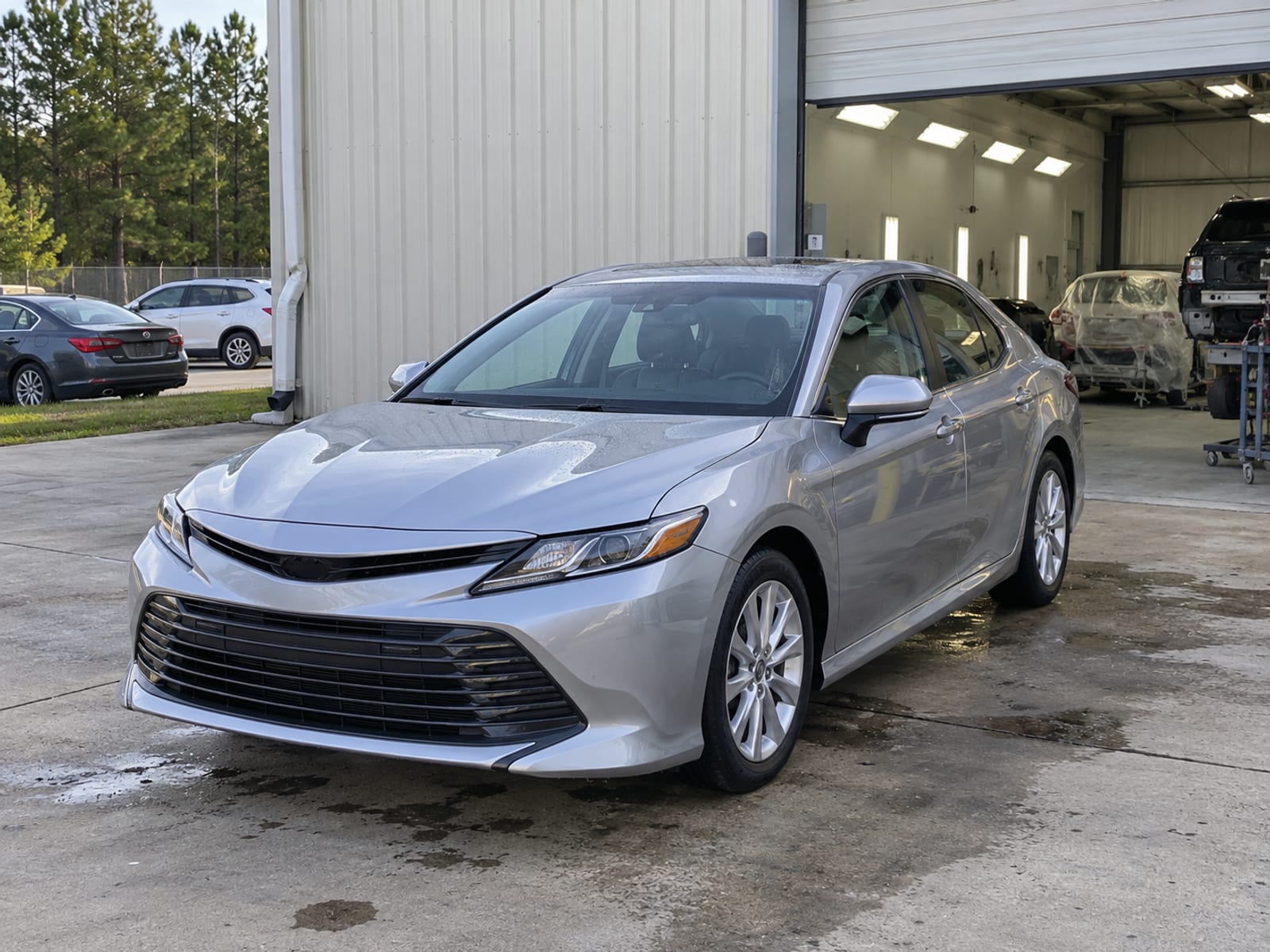
No. The 17c formula is a calculation method, not a statute or regulation. Rule 120-2-52 (opens in a new tab) doesn't mention it and doesn't set any diminished value formula.
The NAIC study describes the formula, which Georgia has historically used, this way: diminished value equals 10% of the vehicle's NADA retail value, multiplied by a damage modifier and a mileage modifier, each ranging from zero to one (NAIC, 2023 (opens in a new tab)). Moderate damage, for example, gets a 0.5 damage modifier. The study calls the formula "not sound and well-received." It points out that mileage is already part of the NADA retail value, so the mileage modifier can count mileage twice, and that the formula includes no post-repair inspection to account for repair quality.
An insurer may use 17c, another method or its own valuation. If an adjuster's offer was built on 17c, ask for the inputs it used, including the base value, the cap and each modifier, so you can see where your evidence differs.
How is the loss measured?
There is no single accepted method. The NAIC study says a consistently accepted method for determining diminished value doesn't exist, and it identifies the factors that drive the amount:
- Value before the accident. A car with a high pre-accident value has more to lose. Older cars, cars in poor condition and high-mileage cars have less room to fall.
- Repair severity. The size of the loss usually tracks the extent of the repairs.
- Local market prices. The study recommends a list of at least four comparable vehicles, using dealership prices rather than private-sale prices, along with dealer opinions on how the damage affects trade-in and resale value.
- Accident history. Vehicle-history reports that show the accident are what create the stigma buyers react to.
- Prior damage. Earlier damage or claims can lower both the before and after values.
Some claimants hire an independent licensed appraiser at their own cost. An appraisal is evidence, not a guaranteed number, and the NAIC study notes that both dealer opinions and appraisals can produce inflated estimates. A report that shows its comparable vehicles and explains each adjustment is easier for an adjuster to check than a single figure.
What should you send with the claim?
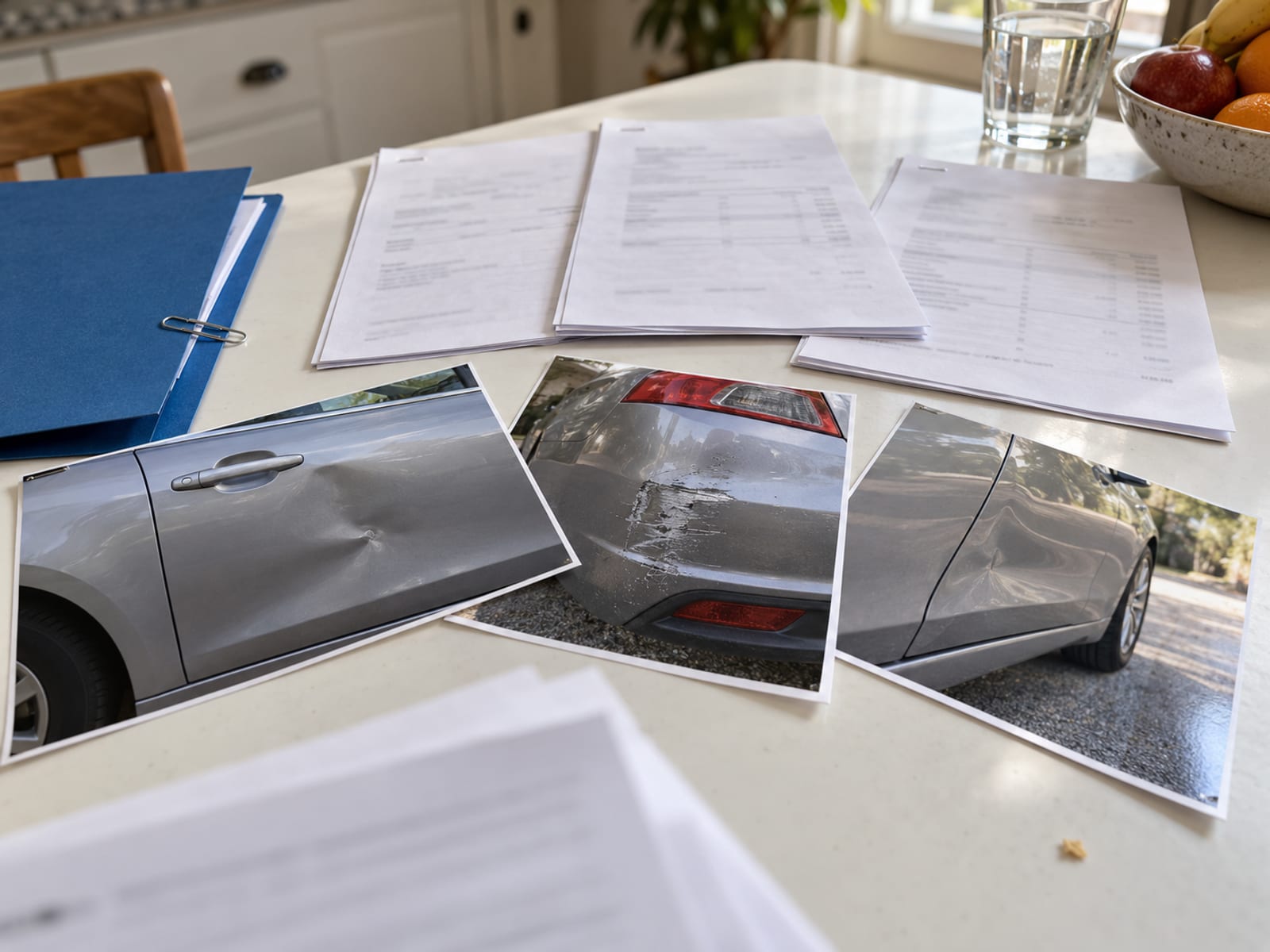
Tell the insurer in writing that you're claiming diminished value, give the claim number and attach your evidence. If you haven't reported the crash yet, our guide on how to file a car insurance claim covers that first report. A complete package usually includes these items.
Hover or tap a row to highlight it.
| Document | What it shows |
|---|---|
| Claim number and loss date | Which claim the demand belongs to |
| Photographs of the damage | How serious the damage was before repair |
| Repair estimate and final repair invoice | The parts, labor and severity of the repair |
| Vehicle-history report | That the accident now appears on the vehicle's record |
| Prior-damage records | The car's condition before this crash |
| Comparable vehicle listings | Market prices for similar cars with and without accident history |
| Independent appraisal, if you have one | A documented valuation method and result |
| Policy declarations and relevant provisions | Which coverage and terms apply to a first-party claim |
| Lease or loan documents, if any | Who else has an interest in the vehicle |
| Copies of all correspondence | What was asked, offered and decided, and when |
Send copies and keep the originals. Keep a dated log of every call with the adjuster, as the NAIC's auto claim guidance (opens in a new tab) suggests, and ask for each decision in writing.
What response timelines apply to a first-party claim?
When you claim under your own personal auto policy, Rule 120-2-52-.03 sets the pace. The rule's timing section was last amended effective July 1, 2022.
First-party claim timelines under Rule 120-2-52-.03
- Within 15 days of noticeThe insurer acknowledges the claim, unless it pays within that time.
- Within 15 days, where applicableThe insurer provides proof-of-loss forms with reasonable explanations of their use.
- Within 15 days of the completed proof of lossThe insurer affirms or denies liability on a motor vehicle claim. If no proof of loss is required, the coverage investigation happens within 30 days of notice.
- Within 5 business days after that deadlineIf the insurer needs more time, it tells you why and estimates how long.
- No more than 60 days from noticeThe insurer accepts or denies the claim, unless the claim file shows that requested information wasn't provided.
- Within 10 days of confirmed coverageThe insurer pays once coverage is confirmed and the full amount is determined and not in dispute.
The rule also covers repair disputes. If you give the insurer a written estimate showing necessary repairs cost more than its estimate, the insurer must review and respond within 15 days, under Rule 120-2-52-.04 (opens in a new tab). Deductions for betterment or depreciation must be documented and itemized, and the rule limits them.
What if the offer is denied or too low?
Ask for the reason in writing first. Under Rule 120-2-52-.03(7) (opens in a new tab), a first-party insurer can't deny a claim based on a policy provision, condition or exclusion unless it cites that specific provision, and the denial must be in writing. A written explanation tells you whether the disagreement is about coverage or about the amount.
If the issue is the amount, respond to the valuation itself. Point to the comparable vehicles, the repair severity and the history report, and ask the adjuster which inputs it used. The NAIC suggests trying to resolve differences with the insurer directly, bringing in your repair shop if it helps, and checking your policy for an appraisal clause when you disagree about value (NAIC (opens in a new tab)). You don't have to accept terms you're uncomfortable with.
For a first-party claim where the insurer has affirmed liability but you still disagree on the amount, either side can ask the Insurance Commissioner in writing to arbitrate, under Rule 120-2-52-.03(6) (opens in a new tab). The request describes the facts and the status of negotiations, the parties share the arbitration cost equally, and a settlement reached under the rule binds both parties without waiving other common-law rights.
If the dispute stays unresolved, you can file with the Georgia Office of Commissioner of Insurance and Safety Fire. Contact the insurer first and ask it to resolve the issue, keep records of every call and email, and send copies rather than originals, according to OCI's complaint page (opens in a new tab). Then submit one complaint through the online Consumer Complaint Portal with your contact information, the insurer's name, the adjuster's name, the policy and claim numbers, the loss date, both sides of your insurance card, a short description and copies of your documents. OCI's Consumer Services Division asks the company for a written response, reviews whether the policy and state insurance laws were followed and requests corrective action when needed.

What deadline applies?
The general limit for a property damage lawsuit in Georgia is four years. Under O.C.G.A. § 9-3-32 (opens in a new tab), actions for the recovery of personal property, or for damages for its conversion or destruction, must be brought within four years after the right of action accrues.
That period is for filing suit, and when it starts depends on the facts and how the claim is characterized. Your policy may also set its own notice and proof-of-loss deadlines for a first-party claim. Report the loss promptly, send your diminished value demand once the repair is finished and the evidence is together, and ask the insurer in writing what deadlines its policy sets.
What about leases, financing, prior damage and releases?
A lease or loan can affect who has an interest in the car and whose name goes on the check. Read the lease or loan agreement, tell the insurer about the leasing company or lender, and ask how a diminished value payment will be issued.
Prior damage and age make the comparison harder, not impossible. A car with earlier accident history or high mileage starts from a lower value, so the comparable vehicles need to match that history and condition. Have the prior-damage records ready, because the adjuster will likely find them.
Read any release before you sign it. A repair payment and a diminished value payment can be separate parts of the same loss, but a release that settles "all property damage," "all claims" or unknown and future claims may end a diminished value claim you haven't made yet. If a document from the insurer includes release language, ask in writing whether it covers diminished value and, if you're still pursuing it, ask for wording that leaves it open.
Questions to ask the insurer or your agent
- Is this a first-party or third-party claim, and which policy applies?
- Does my policy address diminished value, exclude it or leave it undefined?
- What proof-of-loss documents do you need, and by what date?
- What valuation method did you use, and what were the inputs?
- Will you consider comparable vehicle listings and an independent appraisal?
- Does my policy have an appraisal clause?
- Which policy provision supports this denial or deduction?
- Does this release or payment document include diminished value?
- How will a payment be issued if the car is leased or financed?
To confirm that an agent or adjuster is licensed, use the Georgia insurance license lookup (opens in a new tab). If you want help reviewing your auto coverage before your next renewal, Riskado's directory lists insurance agencies across Georgia by city and by category.
Check what you know
Check what you know about Georgia diminished value claims
Frequently asked questions
Is a diminished value claim worth doing?
It depends on how much value the accident took and how strong your evidence is. Newer, higher-value cars with serious repairs and an accident on their history report usually lose the most, while older, high-mileage cars have less value to lose (NAIC, 2023 (opens in a new tab)). Compare the cost of an appraisal with the likely loss before you buy one.
Is it too late to file a diminished value claim?
The general deadline for a property damage lawsuit under O.C.G.A. § 9-3-32 (opens in a new tab) is four years after the right of action accrues. Your policy can set shorter notice and proof-of-loss deadlines for a first-party claim, so check the policy and ask the insurer in writing.
Can insurance deny a diminished value claim?
Yes, but a first-party denial based on a policy provision must cite that provision and be in writing under Rule 120-2-52-.03(7) (opens in a new tab). If you disagree, send more valuation evidence, ask about arbitration through the Commissioner once liability is affirmed, or file with OCI (opens in a new tab).
How long does a diminished value claim take?
For a first-party claim, the insurer generally has 15 days to affirm or deny liability after a completed proof of loss and no more than 60 days from notice overall, unless requested information is missing. Payment is due within 10 days after coverage is confirmed and the amount is settled, under Rule 120-2-52-.03 (opens in a new tab).
How do I calculate the diminished value of my car?
Compare the car's pre-accident market value with its value after repair, using comparable dealer listings, the repair severity and the history report. The 17c formula is one method, not a legal requirement, and the NAIC study criticizes it for counting mileage twice and skipping a post-repair inspection (NAIC, 2023 (opens in a new tab)).
Before you send the demand
Confirm whose insurer you're claiming against, gather the repair records, photographs, history report and comparable listings, and put your demand in writing with the claim number. Keep copies of everything, ask for every decision in writing, and read any release line by line before you sign. If the insurer doesn't respond within the rule's deadlines on a first-party claim, or you can't resolve the amount, OCI's complaint process is the next step.
Key terms
Tap a term to see what it means.
Diminished value. The loss in a vehicle's market value after accident damage and repair.
Inherent diminished value. The value lost because an accident appears on the vehicle's history, even after a proper repair.
First-party claim. A claim under your own insurance policy.
Third-party claim. A claim against the at-fault driver's liability insurer.
17c formula. A diminished value calculation that multiplies 10% of a NADA retail value by damage and mileage modifiers.
Proof of loss. The documents or form an insurer requires to evaluate a claim.
Release. A signed document that settles a claim and can end future claims for the same loss.
Comparable vehicles. Similar cars for sale in the local market, used to measure value.