Pennsylvania Small Business Insurance: What the Law Requires and What Is Worth Asking About
Riskado

Pennsylvania law requires two kinds of business insurance: workers' compensation once you have one or more employees, and liability insurance on every registered vehicle the business owns. Workers' compensation covers part-time, seasonal, and family employees too, subject to specific exclusions, according to the Pennsylvania Department of Labor and Industry (opens in a new tab). Everything else, including general liability, professional liability, commercial property, business interruption, and a business owners policy, comes into play through a lease, a client contract, a lender, a license, or your own risks. Home improvement contractors also need Attorney General registration with proof of liability insurance.
Key takeaways
- Workers' compensationRequired once you have one or more employees, including part-time, seasonal and family employees, subject to specific exclusions.
- Business vehiclesEvery registered vehicle the business owns needs liability insurance.
- Everything elseGeneral liability, professional liability, commercial property, business interruption and a business owners policy come into play through a lease, a client contract, a lender, a license or your own risks.
- Home improvement contractorsAttorney General registration requires proof of liability insurance.
Legal requirements, contract requirements, and optional coverage
It helps to sort every insurance question into one of four buckets before you talk to an agent:
- Required by Pennsylvania law: workers' compensation for covered employers, and liability insurance for registered motor vehicles.
- Required by a license or registration: for example, home improvement contractor registration with the Attorney General.
- Required by a contract: a landlord, client, or lender may require general liability, property coverage, or a certificate of insurance before you sign or start work.
- Optional, based on your risks: coverage you choose because of what the business does, owns, or could be sued over.
General liability and professional liability are generally contract or risk-management matters in Pennsylvania rather than universal statewide requirements. For any trade, profession, or municipality with its own license, check that licensing agency for insurance-proof rules that apply to you.

When does Pennsylvania require workers' compensation?
Coverage is required once you have one or more employees. That count includes full-time, part-time, seasonal, and family employees, including a spouse or child, unless every employee falls within an exclusion, according to the Department of Labor and Industry's LIBC-200 employer information (opens in a new tab). Coverage begins on the date of hire, according to the Department's LIBC-100 workers' compensation pamphlet (opens in a new tab), so the policy needs to be in place before your first employee starts.
Under Section 305 of the Workers' Compensation Act (opens in a new tab), every liable employer must insure its workers' compensation obligations through the State Workers' Insurance Fund (SWIF), an authorized insurer, a mutual association, or an approved exemption.
Calling someone an independent contractor does not settle the question. Status depends on the actual working relationship, including factors such as whether you control where the person works, supervise them, assign their duties, set their hours, and pay them regularly, according to the LIBC-200 employer information (opens in a new tab). If a worker sends you invoices but works like an employee, get a professional opinion on that specific arrangement before you rely on the label.

Who may be exempt or excluded?
These categories may be excluded or exempt, according to the Department of Labor and Industry's LIBC-200 employer information (opens in a new tab):
- Sole proprietors and general partners with no other employees.
- LLCs whose only employees are LLC members.
- People granted a religious exemption by the Department.
- Executive officers granted an exclusion.
- Domestic workers who have not elected coverage.
- Certain agricultural workers.
- Workers covered by another workers' compensation system.
- Certain commission-only licensed real estate or insurance personnel who qualify as independent contractors under tax rules.
- Casual employees and volunteers in some circumstances.
A corporate executive officer seeking exclusion uses the Application for Executive Officer Exemption (LIBC-509) and the Executive Officer Declaration (LIBC-513), according to the Department's SWIF coverage application page (opens in a new tab).
An owner's exclusion covers the owner, not the business. If you have any employee who is not excluded, the business generally still needs workers' compensation.
What happens if an employer has no workers' compensation?
The penalties are both criminal and administrative. Under Section 305(b) (opens in a new tab), failing to carry required coverage is a third-degree misdemeanor, and an intentional failure is a third-degree felony. Each day of violation is a separate offense, a court may impose fines and imprisonment, and a court may order restitution up to the amount of an injured employee's award.
There is also an administrative track. If the Department asks you to certify your coverage and you do not return the form within 15 days, the Department may assess $200 a day until you comply or for up to 30 days from service, under Section 1610 of the Workers' Compensation Act (opens in a new tab). Intentional violations can also support a court stop-work order, according to the Department's violations and penalties guide (opens in a new tab).
If an uninsured employer's worker is hurt, the Uninsured Employer Guaranty Fund can pay the benefits owed, and the fund may then pursue the employer for restitution, under the Workers' Compensation Act (opens in a new tab). The employer stays exposed to the workers' compensation obligation and to possible prosecution.
Can SWIF provide workers' compensation?
Yes. SWIF is a Pennsylvania workers' compensation insurer created by statute and run as an enterprise fund within the Department of Labor and Industry, and it serves as an assured source of coverage for Pennsylvania employers, according to the Department's SWIF page (opens in a new tab). It is often described as a last-resort insurer for businesses that have trouble finding private coverage, in the Insurance Department's consumer guide to workers' compensation (opens in a new tab), but any Pennsylvania business may apply, subject to SWIF's application and underwriting process, according to the SWIF application page (opens in a new tab).
SWIF coverage begins the day after SWIF receives a properly completed application along with the premium payment. You can also buy workers' compensation from an authorized private carrier through an agent or broker, or, if eligible, use approved individual self-insurance or a certified group fund, according to the Department's guidance on purchasing workers' compensation insurance (opens in a new tab).
What Pennsylvania requires for business vehicles
All motor vehicles subject to registration, including cars, vans, motorcycles, recreational vehicles, trucks, and buses, must have liability insurance, according to PennDOT's insurance overview (opens in a new tab). The minimums are:
Hover or tap a row to highlight it.
| Liability coverage | Minimum |
|---|---|
| Injury or death of one person in an accident | $15,000 |
| Injury or death of more than one person in an accident | $30,000 |
| Damage to another person's property | $5,000 |
These are financial responsibility floors, not a measure of what a business vehicle needs. Commercial auto questions also involve who owns the vehicle, who drives it, cargo, lender terms, client contracts, and federal or interstate rules for some operations. Employees who drive their own cars for deliveries or client visits, and vehicles you rent or borrow, raise hired and non-owned auto questions; ask whether a personal auto policy or your business policy would respond in those cases.
PennDOT allows vehicle self-insurance only through an approved process, with minimum collateral of $50,000 for one secured vehicle and $10,000 for each additional vehicle, up to $1,000,000, according to its vehicle self-insurance page (opens in a new tab).
Home improvement contractors need registration and insurance proof
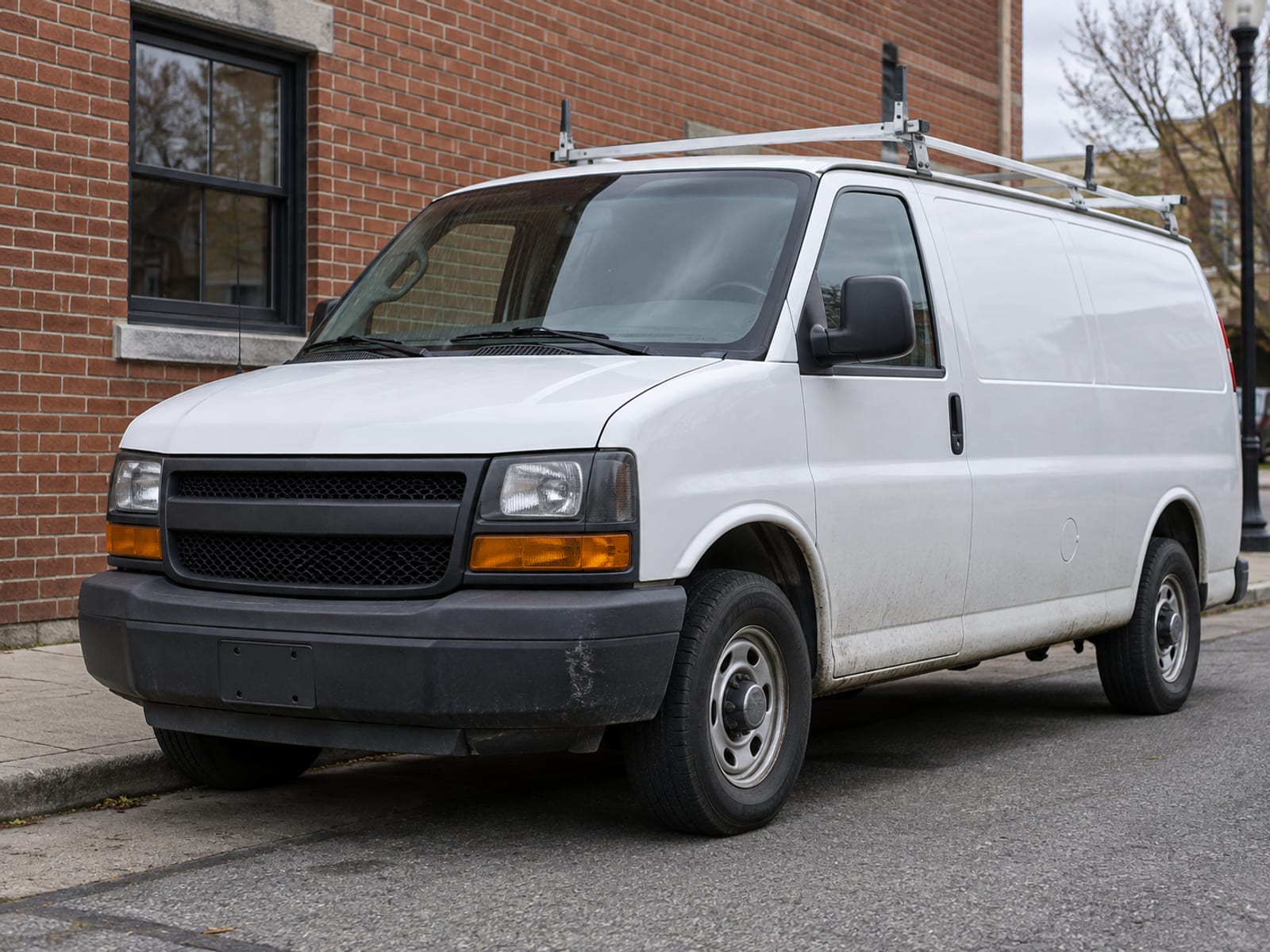
Contractors who perform at least $5,000 of home improvements a year must register with the Pennsylvania Attorney General, subject to statutory exceptions, according to the Attorney General's home improvement contractor FAQ (opens in a new tab). The application requires proof of at least:
- $50,000 of personal injury liability coverage.
- $50,000 of property damage liability coverage.
Those amounts concern liability coverage, not workmanship or quality. The registration fee is $100 every two years on the Attorney General's current HIC registration system (opens in a new tab); confirm the fee there when you apply, since it controls over older references. The online system became operational April 24, 2026, with a grace period for affected contractors that ended June 8, 2026, according to the Attorney General's registration page (opens in a new tab). Registration is not an endorsement, recommendation, or approval of a contractor's competency or skill.
Hover or tap a row to highlight it.
| Item | Figure | Source |
|---|---|---|
| HIC personal injury liability proof | At least $50,000 | Attorney General HIC FAQ (opens in a new tab) |
| HIC property damage liability proof | At least $50,000 | Attorney General HIC FAQ (opens in a new tab) |
| HIC registration fee | $100 every two years | HIC registration system (opens in a new tab) |
| Workers' compensation certification response | 15 days | Workers' Compensation Act, Section 1610 (opens in a new tab) |
| Penalty for not returning the certification | $200 a day, for up to 30 days from service | Workers' Compensation Act, Section 1610 (opens in a new tab) |
General liability vs professional liability
General liability, also called commercial general liability, responds to third-party claims such as bodily injury, damage to someone else's property, personal injury including libel and slander, false or misleading advertising, medical expenses, and related defense costs, according to the NAIC (opens in a new tab) and the SBA (opens in a new tab). It generally does not replace workers' compensation for employee injuries or commercial auto for vehicle liability.
Professional liability, sometimes called errors and omissions, protects against financial loss from malpractice, errors, and negligence in professional services, according to the SBA (opens in a new tab). It is separate from premises, product, and ordinary third-party liability, so a consultant, designer, or other service business may be asked about both. Riskado's guide to general liability vs professional liability insurance goes further on the differences.
What a business owners policy includes and leaves out
A business owners policy (BOP) packages property, business interruption, and liability coverage for eligible small businesses, according to the NAIC (opens in a new tab).
A BOP typically does not include commercial auto, workers' compensation, health or disability insurance, or professional-practice liability, according to the NAIC (opens in a new tab). Eligibility and exact coverage depend on the policy and your operations, so ask what your specific BOP form includes before you treat it as complete.
Running the business from home. Personal homeowners or renters policies may limit coverage for business property and exclude business-related liability, according to the NAIC (opens in a new tab). If you keep inventory, equipment, or client visits at home, raise that with your agent directly.
What a certificate of insurance does and does not do
A certificate of insurance is evidence that a policy was issued, with selected details such as the insured, the insurer, the policy period, and certain coverage information. It is not the policy itself. It does not rewrite policy terms, add coverage the policy excludes, or guarantee a claim will be paid.
A landlord, client, lender, or licensing body may request a certificate to document your insurance. When one asks, send the request wording to your agent and ask them to confirm the policy, effective dates, certificate holder, any required endorsements such as additional insured status, waiver or cancellation-notice language, and whether the contract's requirements are actually in the policy.

What small business insurance costs in Pennsylvania
Premiums vary by business activity, payroll, revenue, employee count, location, claims history, limits, deductibles, and coverage type. Pennsylvania customer figures from Insureon and Simply Business show the range:
Hover or tap a row to highlight it.
| Coverage | Insureon average per month | Simply Business median per month |
|---|---|---|
| General liability | $53 | $41 |
| Workers' compensation | $127 | $90 |
| Professional liability | $123 | $33 |
| Business owners policy | $48 |
The Insureon (opens in a new tab) figures are averages for Pennsylvania small-business owners who bought policies through Insureon, a customer base that generally had fewer than five employees, revenue from under $50,000 to over $200,000, and five years or less in business. The Simply Business (opens in a new tab) figures are medians for Pennsylvania customers who bought at least one listed policy between July 1, 2025, and December 31, 2025. Both are historical customer figures for context, not quotes. Your own premium will depend on your business, and the reliable way to find it is to request quotes with matching limits.
Questions to ask an agent
- Which risks come from my specific products, services, locations, vehicles, and employees?
- Which policies does Pennsylvania law require for my business?
- Which requirements come from my lease, client contracts, lender, or a licensing agency?
- How should my part-time, seasonal, family, and subcontracted workers be classified?
- Does the proposed policy cover professional errors, premises liability, products, advertising, or business property?
- What does the BOP include and exclude?
- Do I need commercial auto for owned, leased, rented, or employee-owned vehicles?
- Does my homeowners or renters policy cover any home-based business property or liability?
- What exclusions, deductibles, conditions, payroll audits, and reporting duties apply?
- What do you need to issue a certificate of insurance?
- Who is the insurer, and are you licensed in Pennsylvania for this line?
- How are payroll, revenue, vehicle use, and claims history used in pricing?
- What changes must I report during the policy term, and how do I report a claim or work injury?
What to bring to that conversation
- Legal business name, entity type, address, and operating locations.
- A description of your products and services.
- Payroll, employee count, and details on part-time, seasonal, family, officer, and subcontracted workers.
- Current and projected revenue.
- A vehicle list with ownership, use, and driver information.
- Property, equipment, inventory, tools, and leased premises.
- Existing policies, declarations pages, and loss history.
- Lease, lender, client, licensing, and certificate requirements.
- HIC registration information, if it applies.
- Your desired effective date.
Riskado's directory lists insurance agencies across the United States, state by state, including Pennsylvania agencies by city and by category, and our guides on what insurance a small business needs and how to choose an insurance agent can help you prepare.
Checking an agent or insurer
Before you buy, confirm that the producer or agency is licensed for the line of insurance you need and that the carrier is authorized to write it in Pennsylvania, through the Pennsylvania Insurance Department (opens in a new tab). Complaints about an insurer or licensee go through Pennsylvania Consumer Services Online, and the Department also publishes a complaint form (opens in a new tab). For a home improvement contractor, the Attorney General's HIC registration search (opens in a new tab) shows whether a contractor is registered.
Check what you know about Pennsylvania small business insurance
Frequently asked questions
Does hiring one part-time employee trigger workers' compensation?
Yes, generally. Pennsylvania counts part-time and seasonal workers, and coverage begins on the date of hire, so arrange the policy before the employee's first day.
Can I exclude myself as an LLC member or corporate officer?
An LLC whose only employees are its members can fall outside the requirement, and executive officers can apply for exclusion using forms LIBC-509 and LIBC-513. Once the business has any non-excluded employee, it still needs coverage for that worker.
Does my personal auto policy cover business driving?
Ask your agent before you rely on it. Every registered vehicle needs at least the $15,000/$30,000/$5,000 liability minimums, but how a personal policy treats deliveries, client visits, or business-owned vehicles depends on its terms.
Is general liability required for every Pennsylvania business?
Not as a statewide rule. A lease, client contract, lender, licensing program, or industry rule may require it, so check each agreement for the required limits and any additional insured wording.
Getting the order right
Start with what the law requires: workers' compensation before your first hire, and liability coverage on every registered vehicle. Then read your lease, client contracts, loan documents, and any license applications for their insurance terms, and bring the list above to a licensed Pennsylvania agent. With the legal floor and the contract terms in hand, the conversation about general liability, professional liability, property, and a BOP becomes a question of which risks your business actually carries.
Terms used in this guide
Tap a term to see what it means.
Workers' compensation. Insurance for employers' obligations to employees injured on the job, required in Pennsylvania once you have one or more employees.
SWIF. The State Workers' Insurance Fund, a Pennsylvania workers' compensation insurer run within the Department of Labor and Industry.
General liability. Coverage for third-party claims such as bodily injury, damage to someone else's property and related defense costs.
Professional liability. Coverage for financial loss from errors and negligence in professional services, also called errors and omissions.
Business owners policy (BOP). A package of property, business interruption and liability coverage for eligible small businesses.
Certificate of insurance. Evidence that a policy was issued, with selected details; it is not the policy itself.
Additional insured. A person or business a contract asks to be added to your policy by endorsement.
Hired and non-owned auto. Liability questions that arise when employees drive their own cars for work or the business rents or borrows vehicles.