South Carolina Car Insurance Requirements: Minimum Limits, Required Uninsured Motorist Coverage, the Grace Period Question and Windshield Rules
Riskado

South Carolina requires every auto policy to carry liability coverage of at least $25,000 for bodily injury to one person, $50,000 for bodily injury to two or more people in one accident and $25,000 for property damage, under S.C. Code § 38-77-140 (opens in a new tab). The policy must also include uninsured motorist coverage at those same minimums, under S.C. Code § 38-77-150 (opens in a new tab). Insurers must offer underinsured motorist coverage, but you don't have to buy it. South Carolina is a tort-liability state, and there is no required grace period for paying a renewal premium. Comprehensive coverage pays for a broken windshield, and insurers can't charge a deductible for safety-glass repair or replacement, according to the South Carolina Department of Insurance (opens in a new tab).
Key takeaways
- Minimum liability$25,000 bodily injury per person, $50,000 per accident and $25,000 property damage, often written 25/50/25.
- Uninsured motoristRequired on every policy at the same minimum limits.
- Underinsured motoristInsurers must offer it; buying it is your choice.
- Renewal paymentsNo required grace period; an unpaid policy expires at the end of its term.
- WindshieldsComprehensive covers broken glass, with no deductible for safety-glass repair or replacement.
What are South Carolina's minimum liability limits?
The state minimum is often written as 25/50/25. Each number caps what the policy pays for one kind of claim, and the South Carolina Department of Insurance (opens in a new tab) lists the same figures as the statute.
Hover or tap a row to highlight it.
| Coverage | Minimum limit |
|---|---|
| Bodily injury, one person in one accident | $25,000 |
| Bodily injury, two or more people in one accident | $50,000 |
| Property damage, one accident | $25,000 |
These amounts have applied to policies issued or renewed on or after January 1, 2007, when 2006 Act No. 395 amended § 38-77-140 (opens in a new tab).
Liability coverage pays for harm you cause to other people, not for your own car or your own injuries. Bodily injury liability responds to claims from people hurt in an accident you're legally responsible for, and those claims may include medical expenses, lost wages and pain and suffering, according to the Department of Insurance (opens in a new tab). Property damage liability covers other vehicles and other property, such as buildings, walls, fences and equipment.
The two bodily injury numbers work together. If you injure three people in one crash, no single person can receive more than $25,000 from a minimum policy, and all three together can't receive more than $50,000. The minimum is a legal floor. If you're deciding whether to carry more, our article on how much car insurance you need goes through the tradeoffs, and an agency can quote higher limits beside the minimum.
What does required uninsured motorist coverage pay?
Uninsured motorist coverage protects you directly. It pays if you're injured or your property is damaged by an uninsured driver or a hit-and-run driver, according to the Department of Insurance (opens in a new tab).
Under S.C. Code § 38-77-150 (opens in a new tab), every auto policy must include an uninsured motorist provision that pays the amounts you're legally entitled to recover from the owner or operator of an uninsured vehicle, with limits no lower than the liability minimums. The same section requires at least $25,000 of coverage for damage to your own property in one accident, and it lets the policy exclude the first $200 of that property loss. The Department of Insurance describes this as a deductible of typically $200.
Because the coverage follows the liability minimums, a basic South Carolina policy carries uninsured motorist limits of at least 25/50/25. Our article on South Carolina uninsured motorist coverage covers that coverage in more detail.
Is underinsured motorist coverage required?
No. Underinsured motorist coverage applies when the at-fault driver has insurance, but less than your damages. Insurers must offer it in South Carolina, but you're not required to buy it, according to the Department of Insurance (opens in a new tab).
The offer comes on a written form. Under S.C. Code § 38-77-350 (opens in a new tab), insurers offer optional coverages and higher limits in writing. If you fail or refuse to return the signed offer form to the insurer within 30 days, the insurer adds uninsured and underinsured motorist coverages with the same limits as your liability coverage. Keep a copy of whatever you sign, and ask your agent which underinsured limits are on your declarations page now.
Is there a grace period for car insurance in South Carolina?
There is no required grace period for paying a renewal premium. If the insurer doesn't receive the renewal payment by the end of the policy period, the policy expires at the end of that period, according to the Department of Insurance auto FAQ (opens in a new tab). The same FAQ says the law requires the renewal notice at least 15 days before the renewal premium is due.
A new policy that starts the day after the old one expires gives you continuous coverage from its effective date. That next-day start doesn't extend the old policy, so a lapsed or unpaid policy shouldn't be treated as active while you shop.
You may also hear about a 20-business-day window. That's the time the SCDMV gives an owner to have an insurer verify coverage after a lapse notice, covered in the next section. It's a deadline to show proof, not permission to drive without insurance.
What happens when insurance stops on a registered vehicle?
Insurance companies notify the SCDMV when a vehicle owner's policy is canceled. If the SCDMV then has no current insurance on file, it sends you a letter, and you have 20 business days to have an insurance company electronically verify coverage, according to the SCDMV (opens in a new tab).
If verification doesn't arrive, the SCDMV suspends your driving privilege, license plate and the registrations of the vehicles listed on the policy. You may have to pay up to $400 to reinstate your driving and registration privileges. If you don't return a suspended plate, a law enforcement officer will take it.
The SCDMV also says that if you turn in your license plate and registration at a branch before you cancel the insurance, you won't be penalized. If you're selling a car, storing it or moving it out of state, return the plate first and cancel the policy second.
From a canceled policy to reinstatement
- Policy canceledThe insurer notifies the SCDMV that coverage on the vehicle ended.
- SCDMV letterYou have 20 business days to have an insurer electronically verify coverage.
- No verificationYour driving privilege, plate and registration may be suspended.
- ReinstatementYou may pay up to $400 to reinstate driving and registration privileges.
- Plate not returnedA law enforcement officer will take it.
A conviction for driving uninsured carries separate consequences. If you're convicted while driving a vehicle you own, your license and registration stay suspended until the SCDMV receives a $700 uninsured motorist fee, and your insurer must file an SR-22 certificate of insurance for three years from the suspension date. If you're convicted while driving a vehicle you don't own, your license is suspended for 30 days and you pay a $100 reinstatement fee. Our articles on driving without insurance in South Carolina and South Carolina SR-22 insurance cover those steps.
What do new residents need to do?
New residents have 45 days to transfer vehicle registration to South Carolina, and 45 days to apply for a South Carolina driver's license or ID, according to the SCDMV's moving page (opens in a new tab).
The vehicle steps run in a set order, according to the SCDMV's guide for moving vehicle owners (opens in a new tab):
- Give your insurance company your new South Carolina address. The company must be licensed to do business in South Carolina.
- Contact your county auditor with the VIN and your latest registration card, then pay the property tax bill to the county treasurer. You must pay it before you can register the vehicle.
- Visit an SCDMV branch with a completed Title Application (SCDMV Form 400), your out-of-state title or registration, acceptable ID, your liability insurance company information, the original paid property tax receipt, the $250 Infrastructure Maintenance Fee and the title and registration fees.
You'll give your insurance company's name when you first register in South Carolina and every time you renew, and the SCDMV verifies liability coverage electronically through the Automobile Liability Insurance Reporting (ALIR) system, according to the SCDMV's insurance requirements page (opens in a new tab). Keep proof of insurance with you. If an officer stops you and you can't show it, you may be ticketed, and you avoid a license suspension by showing that you had insurance on that vehicle within 30 days of the ticket.
Does South Carolina require windshield coverage?
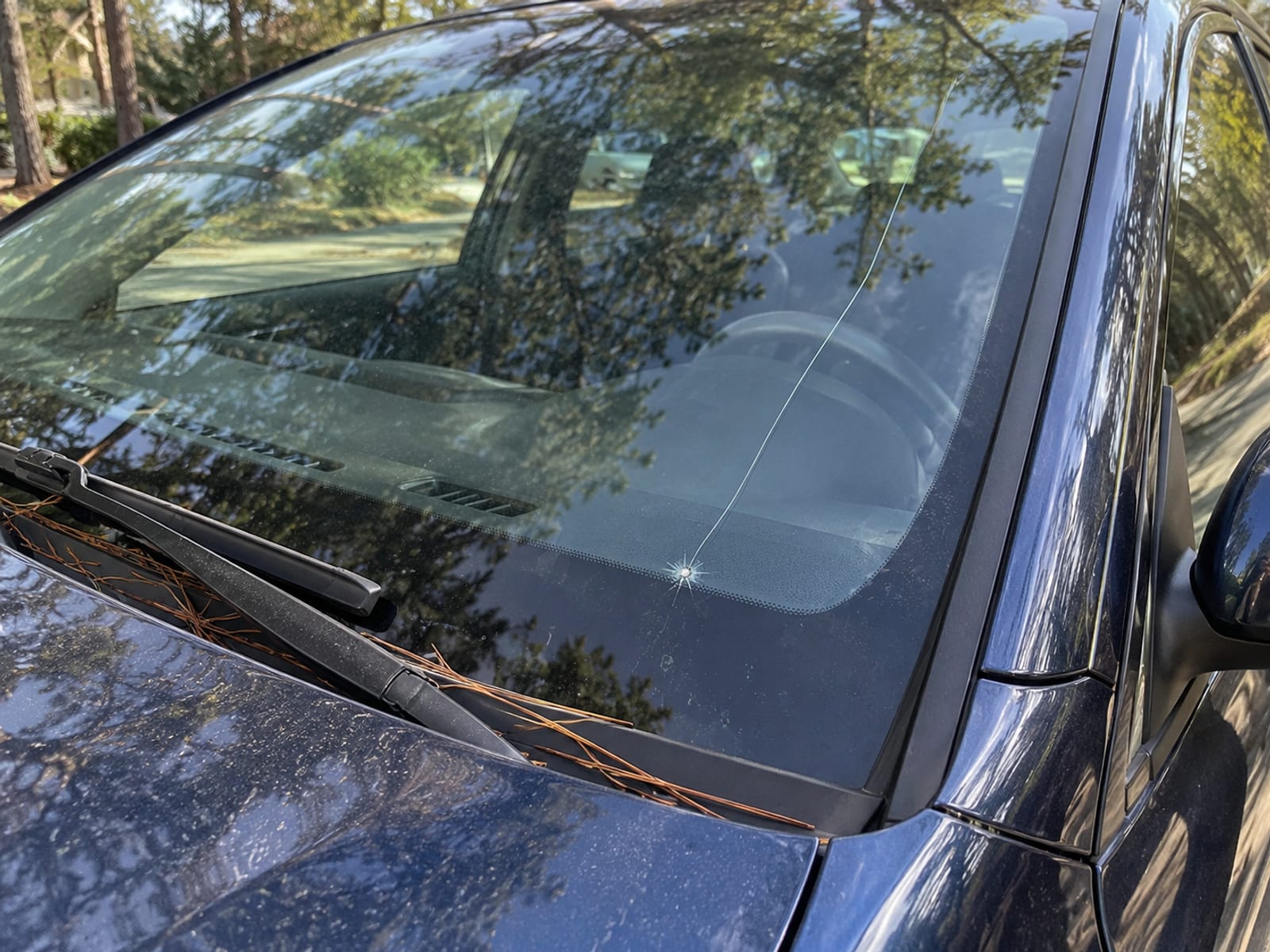
The state doesn't require coverage for your own windshield. Liability coverage pays for damage you cause to others, so it doesn't repair your own glass. Comprehensive coverage covers broken glass, including windshield damage, according to the Department of Insurance (opens in a new tab).
Comprehensive is optional under state law, though a lender may require it. When you do carry it, South Carolina auto insurers can't impose a deductible for safety-glass repairs or replacements, and the auto FAQ (opens in a new tab) says the deductible is waived for private passenger vehicles. Our article on the South Carolina windshield replacement law covers glass claims in more detail.
Who pays after a crash in South Carolina?
South Carolina is a tort-liability state, not a no-fault state. A person who isn't at fault can pursue a claim against the at-fault party, according to the Department of Insurance auto FAQ (opens in a new tab).
In practice, the at-fault driver's bodily injury and property damage liability respond to your claim, up to that policy's limits and terms. When the at-fault driver has no insurance or drives away, your own uninsured motorist coverage is the part of your policy that steps in.
What optional coverage can you add?
Beyond the required liability and uninsured motorist coverage, the Department of Insurance (opens in a new tab) describes several optional coverages:
- Collision, for physical damage to your car when it collides with an object, such as a tree or another car.
- Comprehensive, for damage from almost all other causes, including fire, vandalism, flooding, theft, falling objects, collisions with animals and broken glass.
- Underinsured motorist coverage, offered but not required.
- Medical payments coverage.
- Rental reimbursement coverage.
- Towing and labor coverage.
Comprehensive and collision aren't required by law, but your lender may require them. A loan or lease agreement can also set deductibles and require the lienholder to be listed on the policy, so confirm the exact terms with the lender or leasing company before you buy.
When can an insurer cancel or refuse to renew?
An insurer can cancel a new auto policy without cause during the first 90 days. After the first 90 days, it can cancel only for reasons stated in the policy, under S.C. Code § 38-77-121 (opens in a new tab). That statement must be printed in bold on the first page of the application.
A cancellation or refusal to renew isn't effective unless the insurer mails or delivers a written notice to the address on the policy. Under S.C. Code § 38-77-120 (opens in a new tab), the notice must give an effective date at least 15 days after it's mailed or delivered, state the insurer's specific reason and tell you about your right to ask for a review. Within 15 days of receiving the notice, you or your attorney may ask the Director of Insurance in writing to review whether the insurer complied with South Carolina law.
You can also ask for the reasons in writing. Under S.C. Code § 38-77-390 (opens in a new tab), if you send a written request within 90 business days of the notice, the insurer or agent must give you the specific reasons, and the personal information that supports them, within 21 business days. Keep every notice, renewal bill and payment record.
How do you check an agent or file a complaint?
Use the South Carolina insurance license lookup (opens in a new tab) to confirm that an agent or agency holds a license before you share personal documents. The Department of Insurance's Insurance Locator (opens in a new tab) also searches insurers and agents licensed to do business in South Carolina.
For a problem with an insurer, agent or adjuster, contact the company first and keep a record of every exchange. If that doesn't resolve it, the Office of Consumer Services (opens in a new tab) takes complaints at 803-737-6180 or consumers@doi.sc.gov. Include the company name, the agent or adjuster's name, your policy or claim number, the date of loss, a description of the problem and copies of supporting documents. Insurance entities have 7 days to respond to the department.
Questions to ask an agency
- Does this policy meet 25/50/25, and what higher limits can you quote beside it?
- What uninsured and underinsured motorist limits are on the policy, and do they match my liability limits?
- What deductible applies to uninsured motorist property damage?
- Did I sign an optional coverage form, and what did it select?
- Does comprehensive cover windshield damage, and is the safety-glass deductible waived?
- What deductibles apply to collision and comprehensive?
- What does my lender or leasing company require?
- Are rental reimbursement and towing included, and what are their limits?
- Are all household drivers listed?
- Does the policy cover business use, delivery or rideshare driving?
- What does the policy exclude?
- How will I receive renewal, cancellation and nonrenewal notices?
- How do I report a claim after hours?
- When will you report this policy to the SCDMV?
For help choosing someone to work with, see how to choose an insurance agent. Riskado's directory lists South Carolina insurance agencies by city and by category.
Check what you know about South Carolina car insurance requirements
Frequently asked questions
Does uninsured motorist property damage have a deductible?
It can. S.C. Code § 38-77-150 (opens in a new tab) lets the policy exclude the first $200 of damage to your property, and the Department of Insurance (opens in a new tab) describes a typical $200 deductible. Your declarations page shows the amount on your policy.
What if I get a ticket for not showing proof of insurance?
You avoid a license suspension by showing that you had insurance on the vehicle you were driving within 30 days of receiving the ticket, according to the SCDMV (opens in a new tab). Ask your insurer for a copy of your proof of coverage for that date.
Can an insurer cancel a policy I just bought?
Yes, during the first 90 days, without cause. After that, the insurer can cancel only for reasons stated in the policy, under S.C. Code § 38-77-121 (opens in a new tab).
How much notice does an insurer give before a renewal premium is due?
At least 15 days, according to the Department of Insurance auto FAQ (opens in a new tab). Because there is no required grace period, pay by the due date on that notice or arrange new coverage that starts when the old policy ends.
A short checklist
Confirm that your policy carries 25/50/25 liability and uninsured motorist coverage at no less than the same limits, and know which underinsured limits you chose. Keep proof of insurance in the car, pay renewals by the due date, and answer any SCDMV letter within 20 business days. If you're moving to South Carolina, update your insurer's address, pay the county property tax and register within 45 days.
Key terms
Tap a term to see what it means.
25/50/25. Shorthand for South Carolina's minimum liability limits: $25,000 bodily injury per person, $50,000 per accident and $25,000 property damage.
Uninsured motorist coverage. Coverage that pays you when an uninsured or hit-and-run driver injures you or damages your property.
Underinsured motorist coverage. Coverage that applies when the at-fault driver's insurance is less than your damages.
Tort-liability state. A state where the person at fault for a crash is responsible for the damages it causes.
Comprehensive coverage. Coverage for damage to your car from causes other than a collision, including broken glass.
ALIR. The Automobile Liability Insurance Reporting system the SCDMV uses to verify coverage electronically.
SR-22. A certificate of insurance an insurer files with the SCDMV, required for three years after an uninsured-driving conviction on a vehicle you own.
Declarations page. The page of a policy that lists the coverages, limits, deductibles and dates.