Florida Golf Cart Insurance: Whether It Is Required, Street Rules, The Villages and Other Communities and What a Policy Covers
Riskado
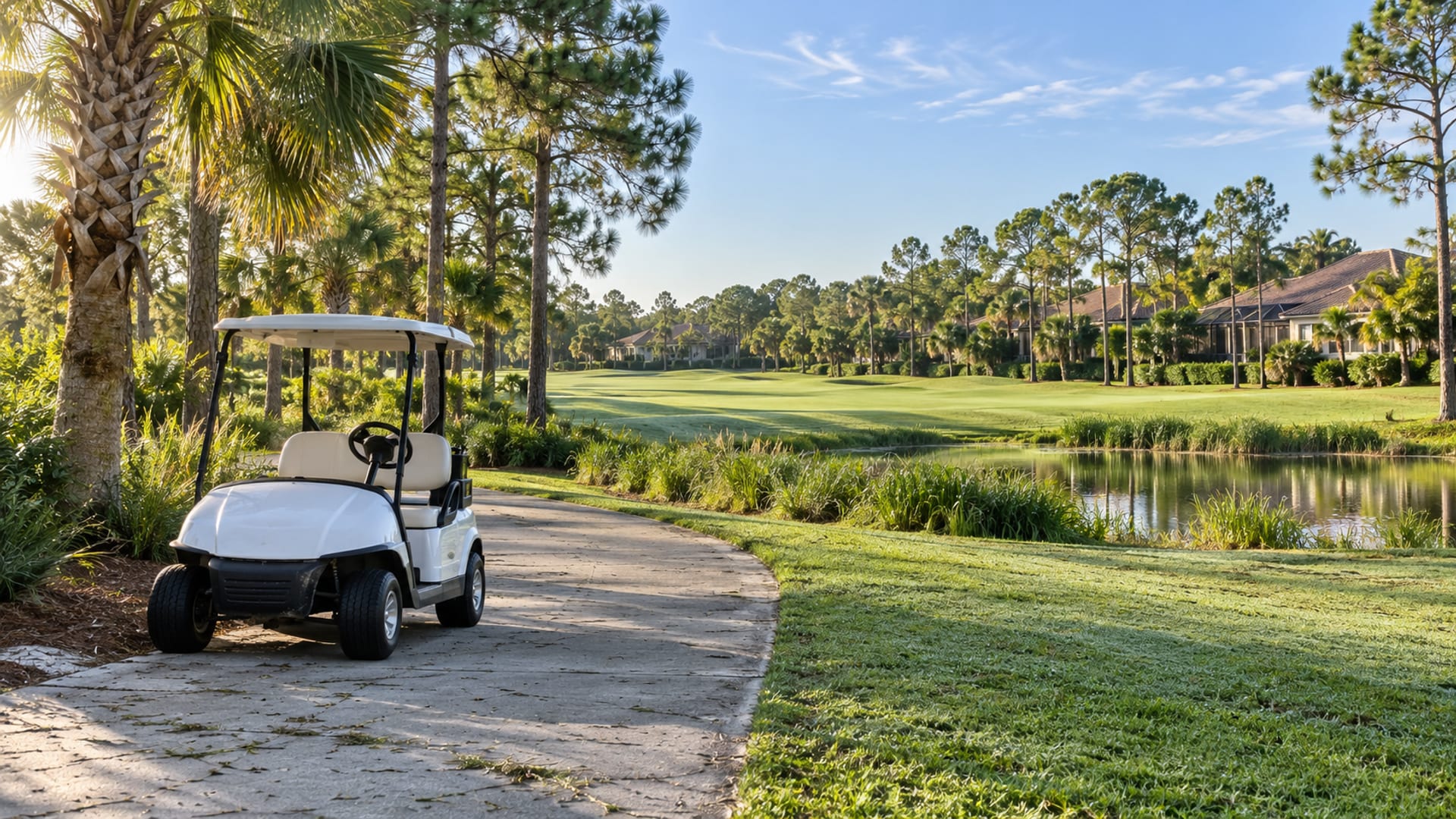
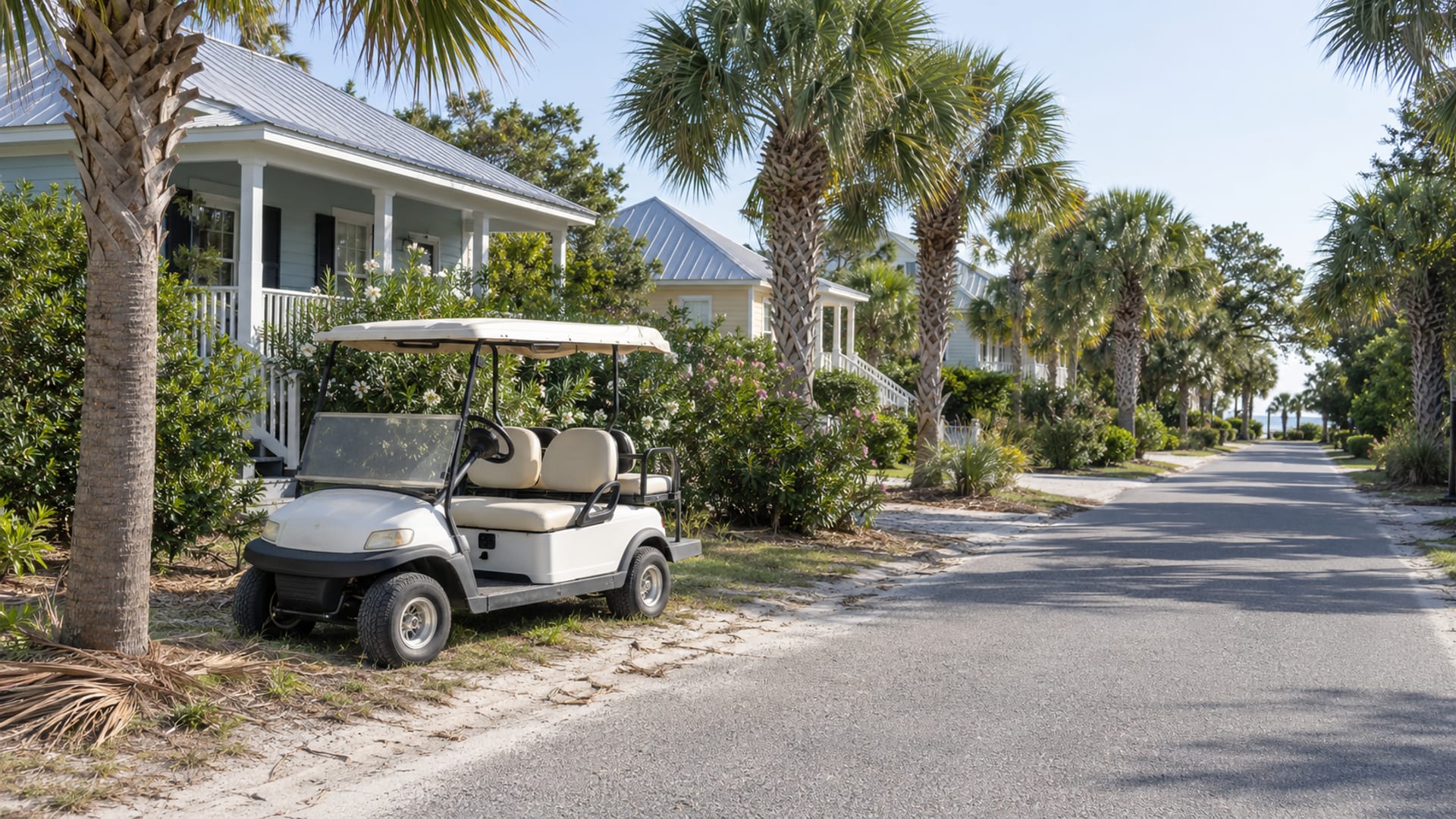
Florida doesn't require insurance on a golf cart the way it does on a low-speed vehicle. A golf cart, in Florida law, can't go faster than 20 mph, and one operated under the state's golf cart rules is exempt from registration and license plates under Fla. Stat. § 320.105 (opens in a new tab), so it isn't tied to the personal injury protection (PIP) and property damage liability (PDL) coverage required for registration. A low-speed vehicle tops out above 20 mph but no higher than 25 mph, and it must be titled, registered and insured with PIP and PDL, according to the Florida Department of Highway Safety and Motor Vehicles (opens in a new tab) (FLHSMV). A community, rental company, lender or homeowners association can still require coverage, and your homeowners policy may cover only part of the risk.
Key takeaways
- Golf cartCan't exceed 20 mph and is exempt from registration and plates when operated under the state rules.
- InsuranceA compliant golf cart isn't tied to the PIP and property damage liability required for registration.
- Low-speed vehicleTops out above 20 mph but no higher than 25 mph, and must be titled, registered and insured with PIP and PDL.
- Other rulesA community, rental company, lender or homeowners association can still require coverage.
Is your vehicle a golf cart or a low-speed vehicle?
The answer decides which rules apply. Fla. Stat. § 320.01 (opens in a new tab) defines a golf cart as a motor vehicle designed and manufactured for use on a golf course for sport or recreation that isn't capable of exceeding 20 mph. The same section defines a low-speed vehicle as any four-wheeled vehicle whose top speed is greater than 20 mph but not greater than 25 mph, including neighborhood electric vehicles. Low-speed vehicles must meet the federal safety standard in 49 C.F.R. § 571.500.
A cart modified to go faster than 20 mph is no longer an exempt golf cart. To title and register a converted cart, FLHSMV requires it to be street-legal, inspected and assigned a VIN at a Motorist Services Regional Office, and the owner must bring proof of Florida insurance with at least $10,000 of PDL and $10,000 of PIP, along with an Affidavit for Golf Cart Modified to a Low Speed Vehicle (opens in a new tab), bills of sale for the parts and a certified weight slip, according to its low-speed vehicle guide (opens in a new tab). Anyone driving a low-speed vehicle needs a valid driver license, and low-speed vehicles may run only on streets posted at 35 mph or less.
Hover or tap a row to highlight it.
| Golf cart | Low-speed vehicle | |
|---|---|---|
| Top speed | Not capable of exceeding 20 mph | Greater than 20 mph, not greater than 25 mph |
| Title and registration | Exempt when operated under the golf cart rules | Required |
| Insurance for registration | Not required | At least $10,000 PIP and $10,000 PDL |
| Driver | Under 18: learner's or driver license; 18 and older: government photo ID | Valid driver license |
| Roads | Designated roads and approved crossings | Streets posted at 35 mph or less |
| Source | Fla. Stat. §§ 320.01 (opens in a new tab), 320.105 (opens in a new tab), 316.212 (opens in a new tab) | Fla. Stat. § 320.01 (opens in a new tab); FLHSMV |
If you're shopping for a used cart, check whether it carries a state-assigned VIN or a manufacturer's statement of compliance with the federal standard. FLHSMV told insurers in a September 22, 2015 bulletin (opens in a new tab) that a converted golf cart can be identified by a department-assigned VIN beginning with "FLA".
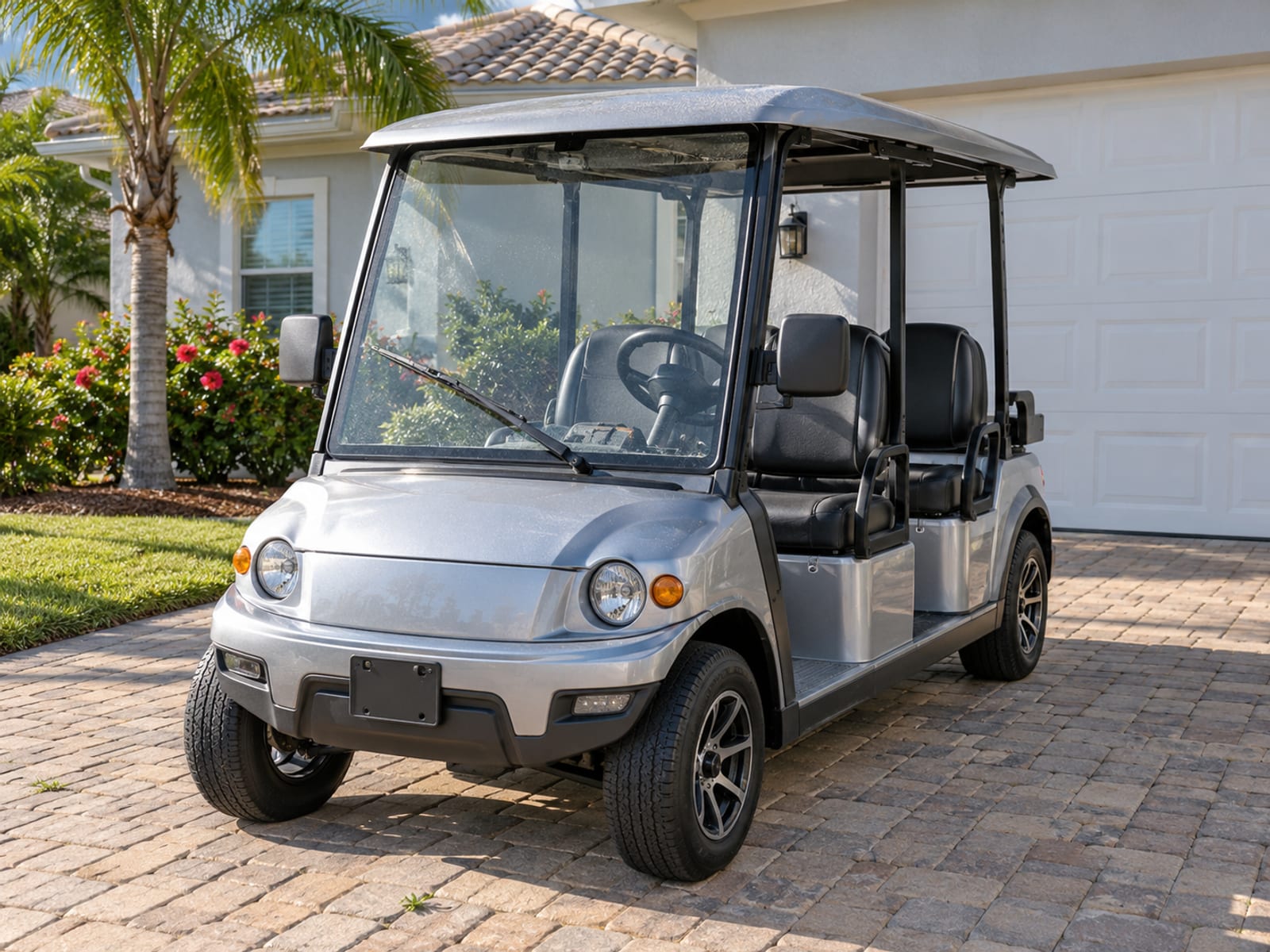
Does a Florida golf cart need insurance, a title or a plate?
A compliant golf cart doesn't need a title, registration or plate. FLHSMV's 2015 bulletin states that golf carts aren't required to be titled or registered and so aren't required to carry PIP and PDL for those purposes. The same bulletin notes that a golf cart owner can still buy PIP or liability insurance, even though that coverage isn't connected to titling or registration.
A low-speed vehicle is treated like other registered motor vehicles. It must be titled, registered and insured under Fla. Stat. § 320.02 (opens in a new tab), and FLHSMV warns that registering a low-speed vehicle without PIP and PDL can lead to a suspension of the owner's license and registrations. If you're unsure which you own, ask your agent before you choose a policy, because the classification changes what the law requires and which policy forms an insurer will offer. Our article on Florida car insurance requirements and our article on Florida PIP insurance explain the registered-vehicle rules.
Where can you drive a golf cart in Florida?
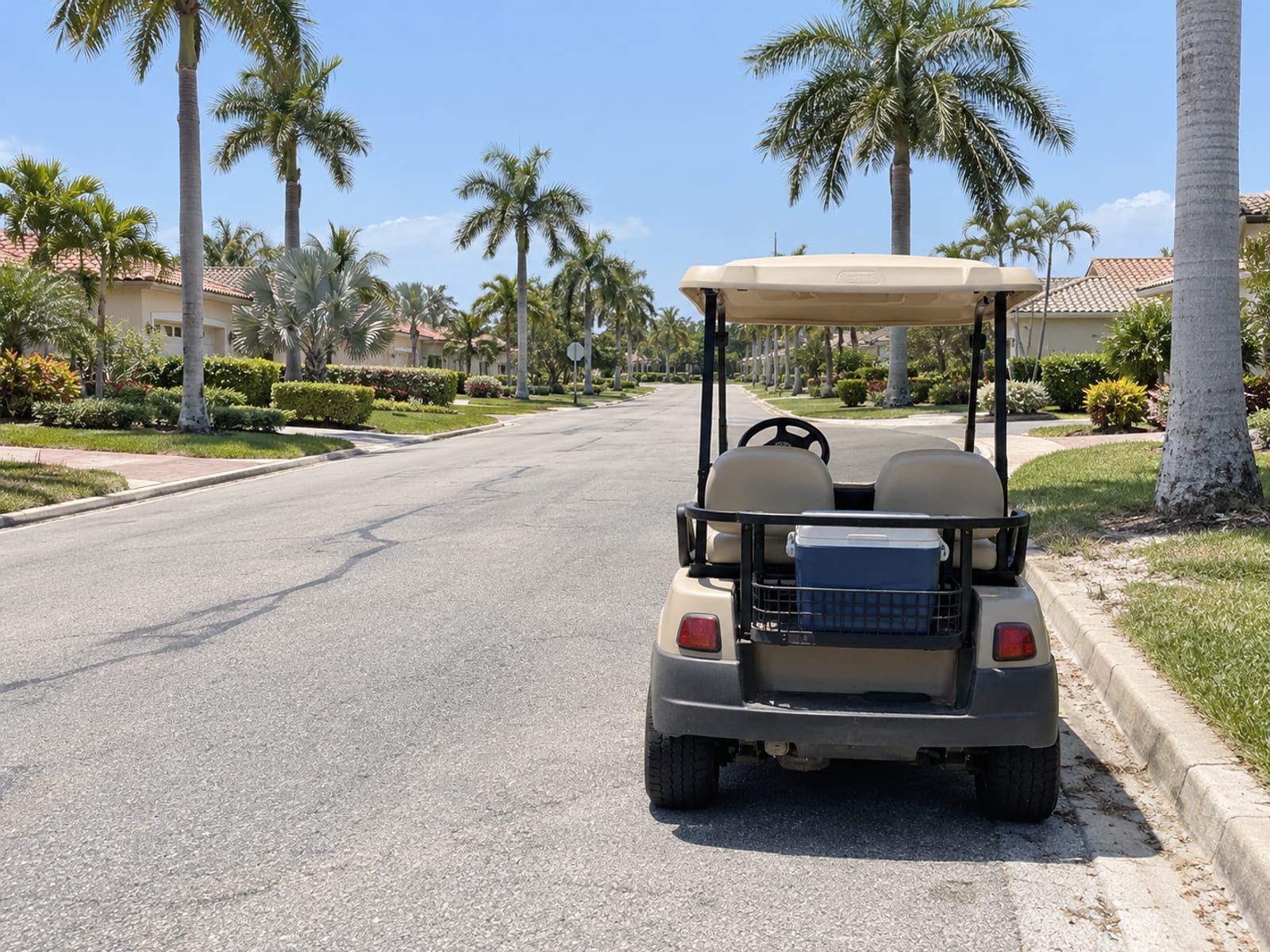
Golf carts are banned from public roads in Florida except where the law allows them, under Fla. Stat. § 316.212 (opens in a new tab). A cart may run on a county road the county has designated, a municipal street the city has designated, a two-lane county road inside a city that the city has designated, or a water control district road designated for carts. Before designating a road, the local government must decide carts can travel or cross it safely and then post signs. FLHSMV describes designated roads as having a posted speed limit of 30 mph or less in its low-speed vehicle guide (opens in a new tab).
The statute also allows certain crossings of the State Highway System that the Department of Transportation has approved, including midblock crossings where a golf course sits on both sides of a highway, and operation on State Park Road System roads posted at 35 mph or less when the Division of Recreation and Parks authorizes it.
Carts may run only between sunrise and sunset unless the local government allows night operation and the cart has headlights, brake lights, turn signals and a windshield. Every cart on a public road needs efficient brakes, reliable steering, safe tires, a rearview mirror and red reflectorized warning devices on the front and rear. A local government can adopt stricter rules by ordinance, so check your city or county before you drive off your street.
Age and ID rules
Since October 1, 2023, a person under 18 driving a golf cart on a public road must have a valid learner's license or driver license, and a person 18 or older must carry valid government-issued photo ID, under Fla. Stat. § 316.212 (opens in a new tab) and FLHSMV (opens in a new tab). Local rules can add to this.
Hover or tap a row to highlight it.
| Rule | Requirement under Fla. Stat. § 316.212 (opens in a new tab) |
|---|---|
| Where | County, city or water control district roads designated for golf carts, and approved crossings |
| When | Sunrise to sunset, unless the local government allows night use and the cart has headlights, brake lights, turn signals and a windshield |
| Equipment | Efficient brakes, reliable steering, safe tires, a rearview mirror and red reflectorized warning devices front and rear |
| Under 18 | Valid learner's license or driver license |
| 18 and older | Valid government-issued photo ID |
| Local rules | A city or county can adopt stricter rules by ordinance |
What about The Villages and other golf cart communities?
Florida gives self-contained retirement communities a separate path. Under Fla. Stat. § 316.2125 (opens in a new tab), reasonable operation of a golf cart equipped and operated under the § 316.212 rules is permitted within a self-contained retirement community unless a county or city prohibits it.
Sumter County adopted Ordinance 2011-07 in April 2011 to allow golf carts on roads in areas designated as self-contained retirement communities, and in May 2011 county staff recommended designating The Villages' developments of regional impact, according to a Sumter County Board of Commissioners executive summary (opens in a new tab). The petition proposed carts on all roads within those developments except named roads, including El Camino Real (apart from two crossings), Buenos Aires Boulevard, Morse Boulevard south of County Road 466, Buena Vista Boulevard, Powell Road, County Roads 466, 101, 103, 466A and 44A, Rainy Trail and Stillwater Trail. Road designations can change, so follow posted signs and check current county and community rules.
State law doesn't set a community-wide insurance rule for The Villages or other golf cart communities. A homeowners association, community district, golf course or rental company may set its own requirements for permits, insurance, ages or crossings, so ask the organization that governs the place you drive. Barrier-island towns and resort areas can have their own ordinances and rental terms as well.
Does homeowners insurance cover a golf cart?
Sometimes, and usually only in narrow situations. Homeowners policies commonly exclude liability for motor vehicles and then give back limited coverage for some golf carts in some places. In the standard ISO homeowners special form, edition HO 00 03 10 00, published as a sample by the Insurance Information Institute (opens in a new tab), liability coverage extends to an owned golf cart designed to carry up to four people and not built or modified to exceed 25 mph, while it's on a golfing facility, crossing designated public roads, or inside a private residential community where carts can legally travel that is subject to a property owners association and contains the insured's home. The same form excludes vehicles registered for road use or required to be registered, vehicles rented to others, vehicles used to carry people or cargo for a charge and most business use.
Your policy may follow that form, change it with an endorsement or use different wording entirely. Theft of the cart, damage to it, and accessories may fall under personal property coverage with its own limits and exclusions. Read your declarations page and policy, and ask your agent where and how the cart is covered. The Florida Department of Financial Services (opens in a new tab) reminds homeowners that coverage varies by policy, and the NAIC (opens in a new tab) suggests discussing recreational items with your agent. Our article on Florida homeowners insurance covers the policy more broadly.
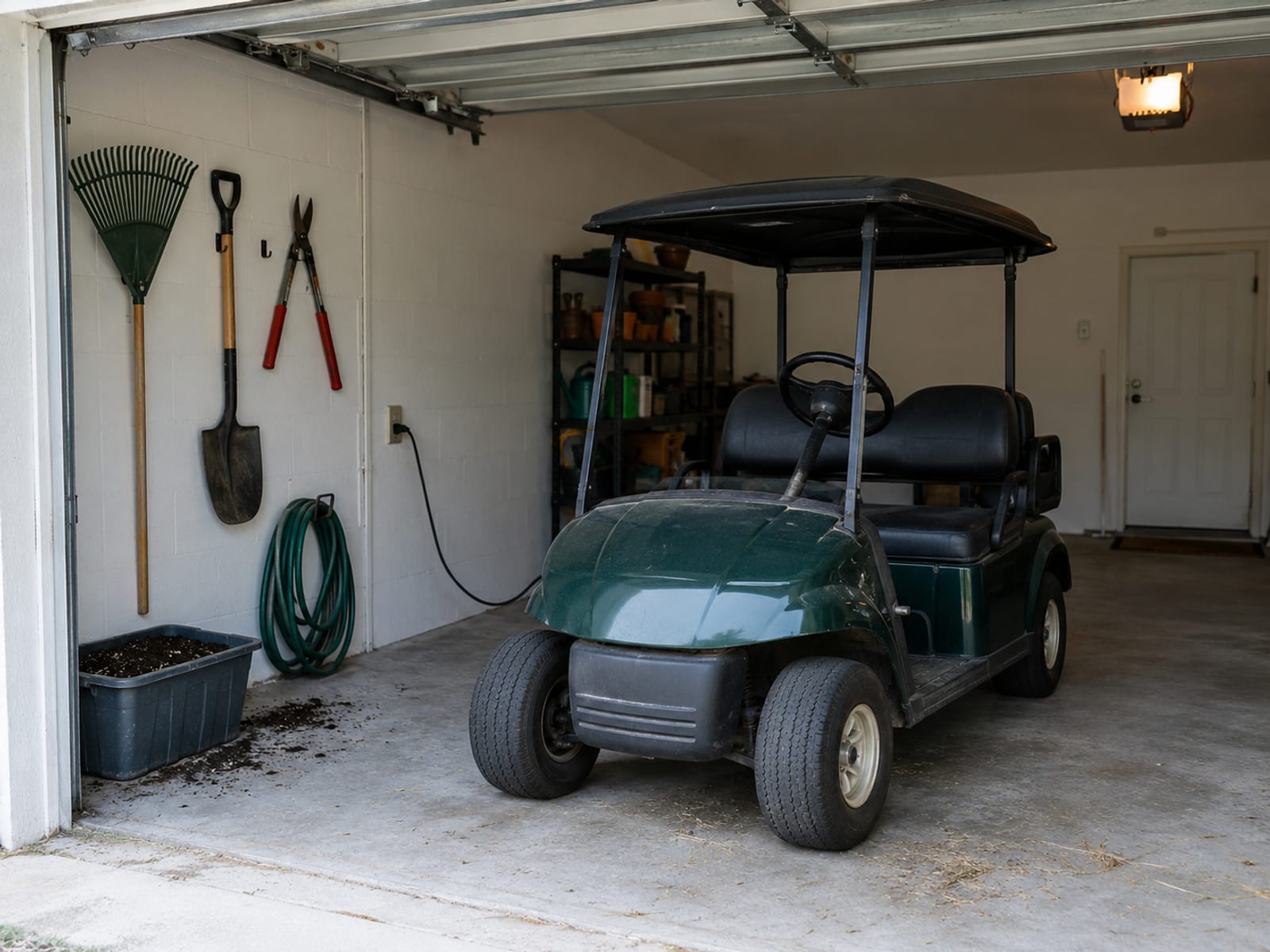
What a standalone golf cart policy can cover
A separate golf cart policy fills the gaps a homeowners policy leaves. Depending on the insurer and form, it can combine:
- Liability for injuries or property damage you cause to others.
- Collision coverage for damage to the cart.
- Comprehensive, or other-than-collision, coverage for theft, fire, vandalism and weather.
- Medical payments for qualifying injuries.
- Coverage for accessories and custom parts.
- Towing or roadside help.
- Guest drivers using the cart with permission.
Policies can exclude racing, speed modifications, unlisted drivers, rental, business use, carrying passengers for a fee and use outside a permitted area. List custom equipment and its value before you buy or renew, and ask whether accessories are included automatically, capped by a sublimit or covered only by an endorsement (opens in a new tab).
A personal auto policy is written for private passenger vehicles, as DFS (opens in a new tab) describes it, and a golf cart may not fit its definition of a covered auto. Don't assume your car policy extends to the cart; ask your agent. Our article on whether car insurance follows the car or the driver explains how auto coverage attaches.
What changes for rentals and business use?
A rented cart is governed by the rental agreement. Read it for what the rental company covers and what you're responsible for, including physical damage, theft, deductibles, passengers and roadside obligations. Personal policies can exclude rented, for-hire and business use, as the sample homeowners form does. The NAIC's guide to the sharing economy (opens in a new tab) gives similar questions to ask when you rent or rent out a vehicle.
A resort, golf course, farm, delivery operation or rental fleet should tell its agent exactly how carts are used and who drives them, since personal policies can exclude business use. Our article on Florida small business insurance covers commercial coverage in the state.
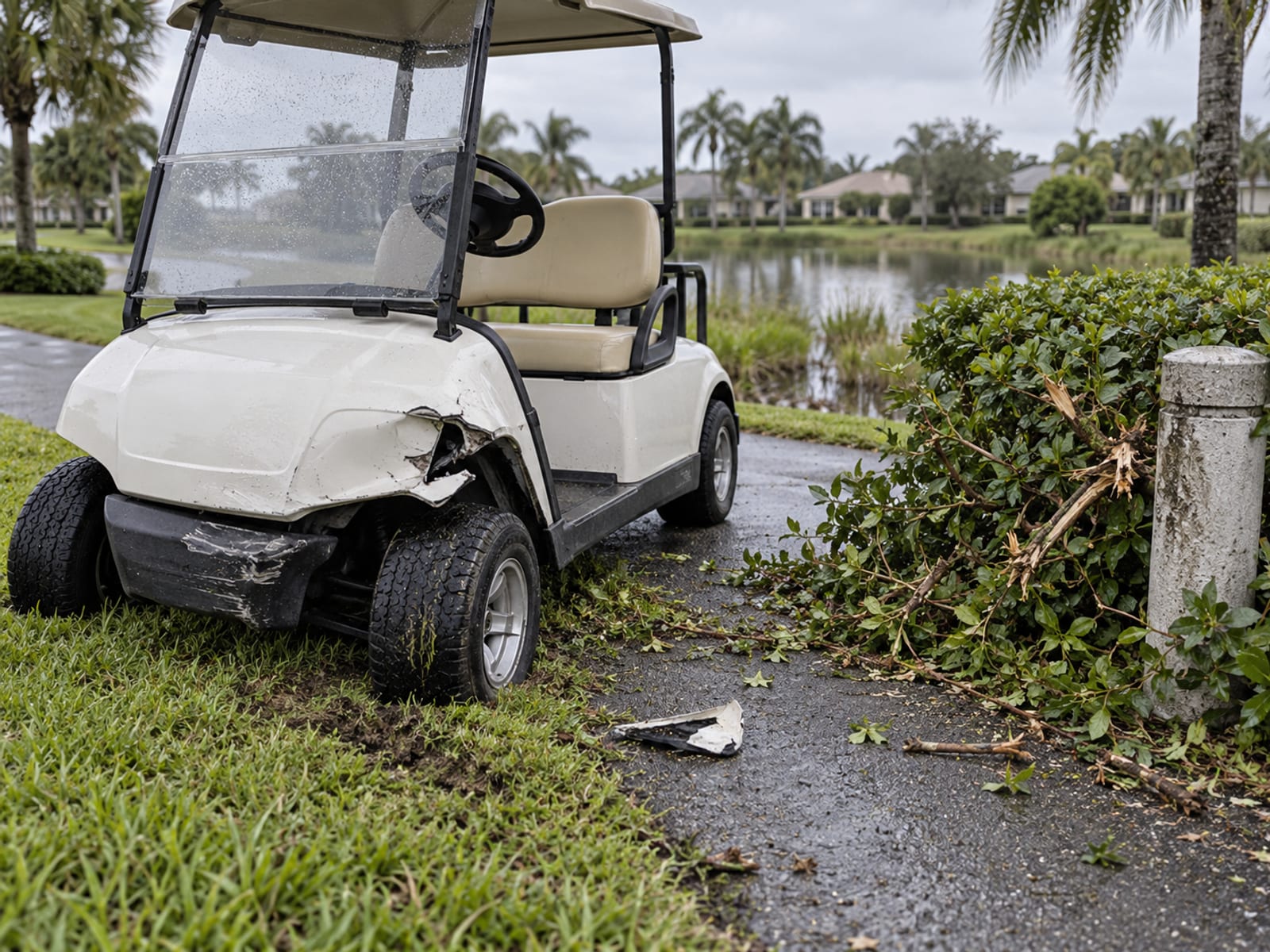
What to do after a golf cart accident
Which policy pays depends on whether the vehicle was a golf cart or a low-speed vehicle, where the crash happened, who owned and drove it and how it was used. Don't assume PIP applies; Florida's PIP requirement is tied to vehicles that must be registered, and an exempt golf cart is treated differently from a registered low-speed vehicle.
After a crash, collect:
- The cart's make, model, top speed and any modifications.
- Whether it was titled and registered.
- The exact road, path, course or private property, and any posted signs.
- The driver's name and whether the owner gave permission.
- Photos, witness names, police or incident report numbers, medical records and repair estimates.
- Every policy that might apply, including homeowners, golf cart, auto and the rental agreement.
Report the loss to each insurer that may be involved and let them sort out which policy responds.
How to check an agent and get help
Verify an agent or agency with the Florida insurance license lookup (opens in a new tab) before you sign or pay. Agents must be licensed and appointed with the companies whose products they sell, according to DFS (opens in a new tab). For a complaint or help with a claim, contact the DFS Division of Consumer Services (opens in a new tab).
Questions to ask your agent
- Is my vehicle legally a golf cart or a low-speed vehicle, and what speed does the policy recognize?
- Does the policy cover use on public roads, and which roads, paths, courses and communities are in the covered territory?
- Is night driving covered?
- Are guest drivers and household members covered, including minors where the law allows?
- Are theft, fire, vandalism, collision and weather covered?
- Are batteries, accessories and custom parts covered, and how are they valued?
- Are rental, for-hire or business uses excluded?
- Does my homeowners policy provide any overlapping coverage?
- What deductibles and sublimits apply?
- What happens to coverage if I convert the cart to a low-speed vehicle?
When you're ready to compare options, Riskado's directory lists insurance agencies across the US, including Florida, by city and by category.
Check what you know about Florida golf cart insurance
Frequently asked questions
Can I drive my golf cart on a road posted at 35 mph?
Only if that road has been designated for golf carts or falls under one of the statute's specific exceptions, such as an approved crossing or an authorized State Park road. FLHSMV describes designated roads as posted at 30 mph or less in its low-speed vehicle guide (opens in a new tab).
Do I need a driver license to drive a golf cart as an adult?
Not under state law alone. An adult driving on a public road must carry valid government-issued photo ID, under Fla. Stat. § 316.212 (opens in a new tab), though a local ordinance or community rule can be stricter.
Does a low-speed vehicle driver need a license?
Yes. Anyone operating a low-speed vehicle must have a valid driver license, according to FLHSMV (opens in a new tab).
Can a local government require more than the state does?
Yes. A local government can adopt an ordinance with stricter golf cart operation and equipment rules than § 316.212 (opens in a new tab), and it must post signs or otherwise tell residents that the ordinance exists.
Before you buy, drive or renew
Confirm your cart's top speed and whether it has been modified, find out which roads your city or county has designated, and read your community's and any rental company's rules. Then compare your homeowners policy with a standalone golf cart policy, and keep the bill of sale, photos and an accessory list with your insurance papers.
Key terms
Tap a term to see what it means.
Golf cart. In Florida law, a motor vehicle built for golf course use that can't exceed 20 mph.
Low-speed vehicle (LSV). A four-wheeled vehicle with a top speed above 20 mph but no higher than 25 mph, which must be titled, registered and insured.
PIP. Personal injury protection, the injury coverage Florida requires on registered vehicles.
PDL. Property damage liability, coverage for damage you cause to someone else's property.
Designated road. A road a county, city or water control district has approved and signed for golf cart use.
Self-contained retirement community. A community where Florida law permits golf cart operation unless a county or city prohibits it.
Endorsement. A change added to a policy that adds, removes or alters coverage.
Declarations page. The page of a policy that lists coverages, limits, deductibles and dates.