Georgia Golf Cart Insurance: Whether It Is Required, Registration, Peachtree City and Community Rules and What a Policy Covers
Riskado
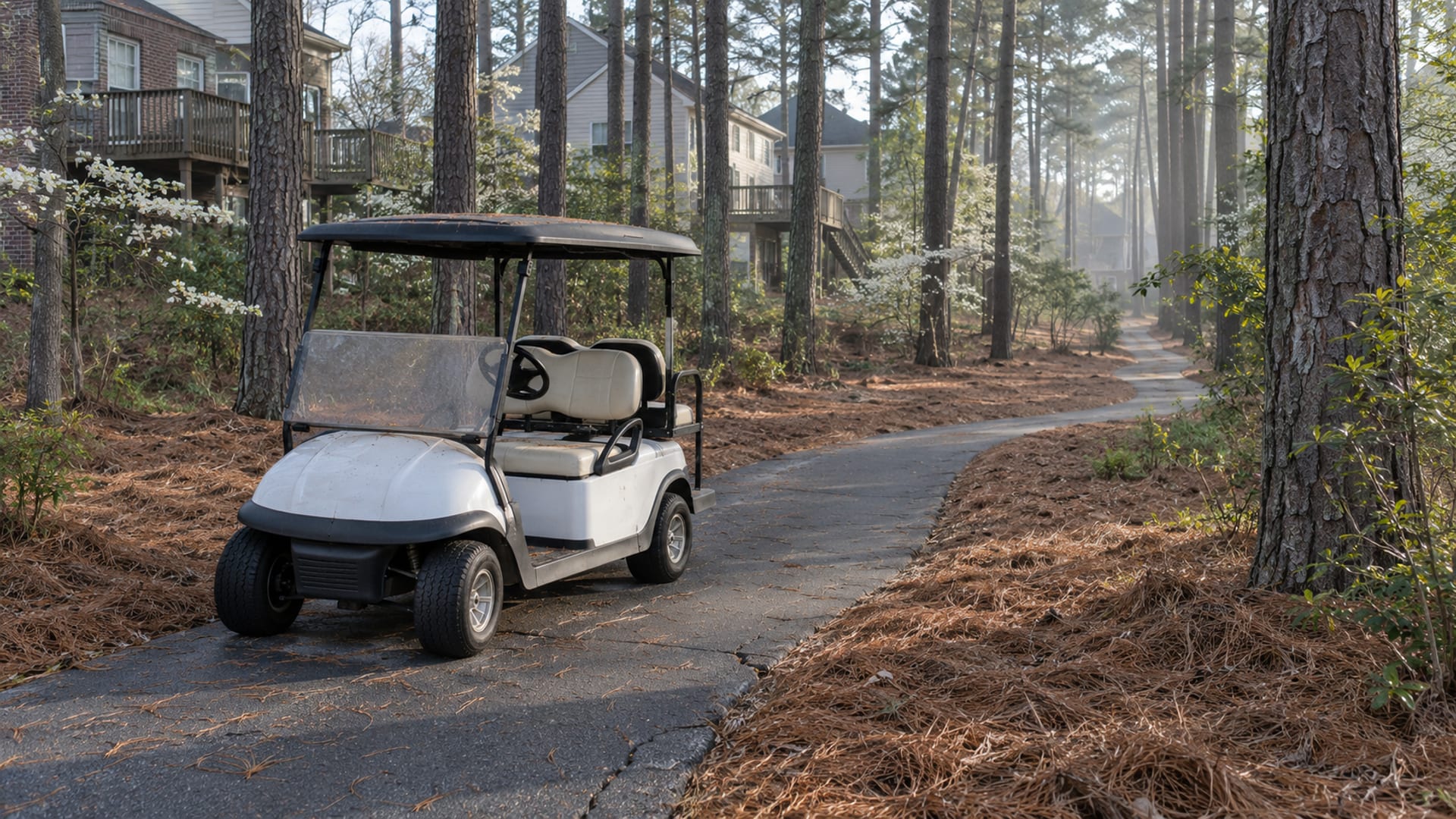
Georgia doesn't put one insurance rule on every golf cart. The state doesn't register or title motorized carts, according to the Georgia Department of Revenue (opens in a new tab). A low-speed vehicle is a different machine in the law: it needs state registration, liability insurance and required equipment to run on public streets, and it may use only roads posted at 35 mph or less. Local rules sit on top of state law. Peachtree City requires local cart registration and decals, and Jekyll Island requires liability insurance for personal transportation vehicles on its public streets. A homeowners policy may help in narrow situations, but most homeowners policies don't cover motorized vehicles, according to the Georgia Office of Commissioner of Insurance and Safety Fire (opens in a new tab). Ask an agent to classify your vehicle and confirm the policy wording for how you actually use it.
Key takeaways
- State registrationGeorgia doesn't register or title motorized carts.
- Low-speed vehiclesAn LSV needs state registration, liability insurance and required equipment, and may use only roads posted at 35 mph or less.
- Local rulesPeachtree City requires local cart registration and decals; Jekyll Island requires liability insurance for PTVs on public streets.
- Homeowners policiesMost don't cover motorized vehicles, so confirm the wording for your cart.
Is golf cart insurance required in Georgia?
State law doesn't require liability insurance on an ordinary motorized cart simply because you own one. The registration exemption from the Georgia Department of Revenue (opens in a new tab) covers motorized carts, so there's no state tag, title or insurance filing tied to the cart itself.
That exemption isn't the whole answer. A city, county, island authority, homeowners association, landlord or golf course can set its own insurance condition, and Jekyll Island already does for street use. The answer also changes when the vehicle is really a low-speed vehicle, which carries state registration and insurance duties.
Using the cart only on your own land or on a course doesn't remove liability either. If a passenger is hurt or the cart damages a neighbor's car, you can still face a claim, and the question becomes which policy, if any, responds.
Who sets which rule
- State lawVehicle categories, LSV registration and insurance, PTV equipment, driver's license rules and highway crossings.
- Local governmentWhich streets and paths carts may use, local registration and decals, and local insurance conditions such as Jekyll Island's.
- Owners and associationsRules on golf courses, private roads and in communities.
- Your policyWhether a homeowners, auto or cart policy actually covers the cart and how you use it.
What kind of vehicle do you own?
The category drives almost every other answer, from where you can drive to which policy fits. Georgia defines these vehicles in O.C.G.A. § 40-1-1 (opens in a new tab):
Hover or tap a row to highlight it.
| Vehicle | How Georgia defines it | State registration |
|---|---|---|
| Golf car or golf cart | Designed to carry people and equipment to play golf, with an average speed under 15 mph | Motorized carts are not registered or titled by the state |
| Personal transportation vehicle (PTV) | At least four wheels, top level-ground speed under 20 mph, unladen weight up to 1,375 pounds, carries no more than eight people | Not registered or titled by the state; local registration may apply |
| Low-speed vehicle (LSV) | Four wheels, top speed over 20 mph but not over 25 mph, built or converted to federal LSV safety standards | Registered, insured and equipped under state law for public streets |
| Multipurpose off-highway vehicle (MPOHV) | A utility vehicle that meets the state's MPOHV criteria | Voluntary registration, no title; golf carts don't qualify |
The PTV definition also reaches older carts with at least three wheels, an unladen weight of 1,300 pounds or less and a top speed of 20 mph that a local government authorized on its roads before January 1, 2012. The statute notes that local ordinances may call these "motorized carts."
An MPOHV owner who chooses to register must show Georgia automobile liability coverage and keep it in force while registered, according to the Department of Revenue's MPOHV page (opens in a new tab). The same page excludes golf carts because they're built mainly for recreation rather than utility work.
If you've added a lift kit, a faster motor or a speed controller, tell your agent. A change in top speed can move a cart from one category to another.
Where can you drive a golf cart in Georgia?
A cart isn't automatically allowed on every road. Under O.C.G.A. § 40-6-331 (opens in a new tab), a local government may designate public streets, parts of streets or PTV paths for cart use by ordinance and set the conditions for using them. A city that allows carts on its streets must post warning signs where state highways enter its limits.
Crossings have their own rules. A PTV may cross a state highway only at a crossing designated for that purpose, built as an active grade crossing and marked with a PTV crossing sign. On city and county roads, it may cross only where the local government has designated a crossing.
A low-speed vehicle follows a different limit. Under O.C.G.A. § 40-6-362 (opens in a new tab), an LSV may run only on highways where the posted speed limit doesn't exceed 35 mph. Private roads and golf-course paths follow the owner's rules, so check with the course, the association or the property owner before you drive there.
Who may drive a golf cart?
Georgia law requires every PTV operator to hold a valid driver's license, under O.C.G.A. § 40-6-331 (opens in a new tab). The exception is a locality that adopted an ordinance before January 1, 2012 allowing carts on its streets without a license. LSVs in Peachtree City may be driven only by licensed drivers, according to Peachtree City (opens in a new tab).
Age rules depend on the vehicle, the roadway and the local ordinance. Before you let a teenager drive, confirm the rule with the city or county where the cart will be used and with the Georgia Department of Driver Services (opens in a new tab), and ask your agent whether the policy covers young or unlicensed household drivers.
Registration, titles, permits and decals
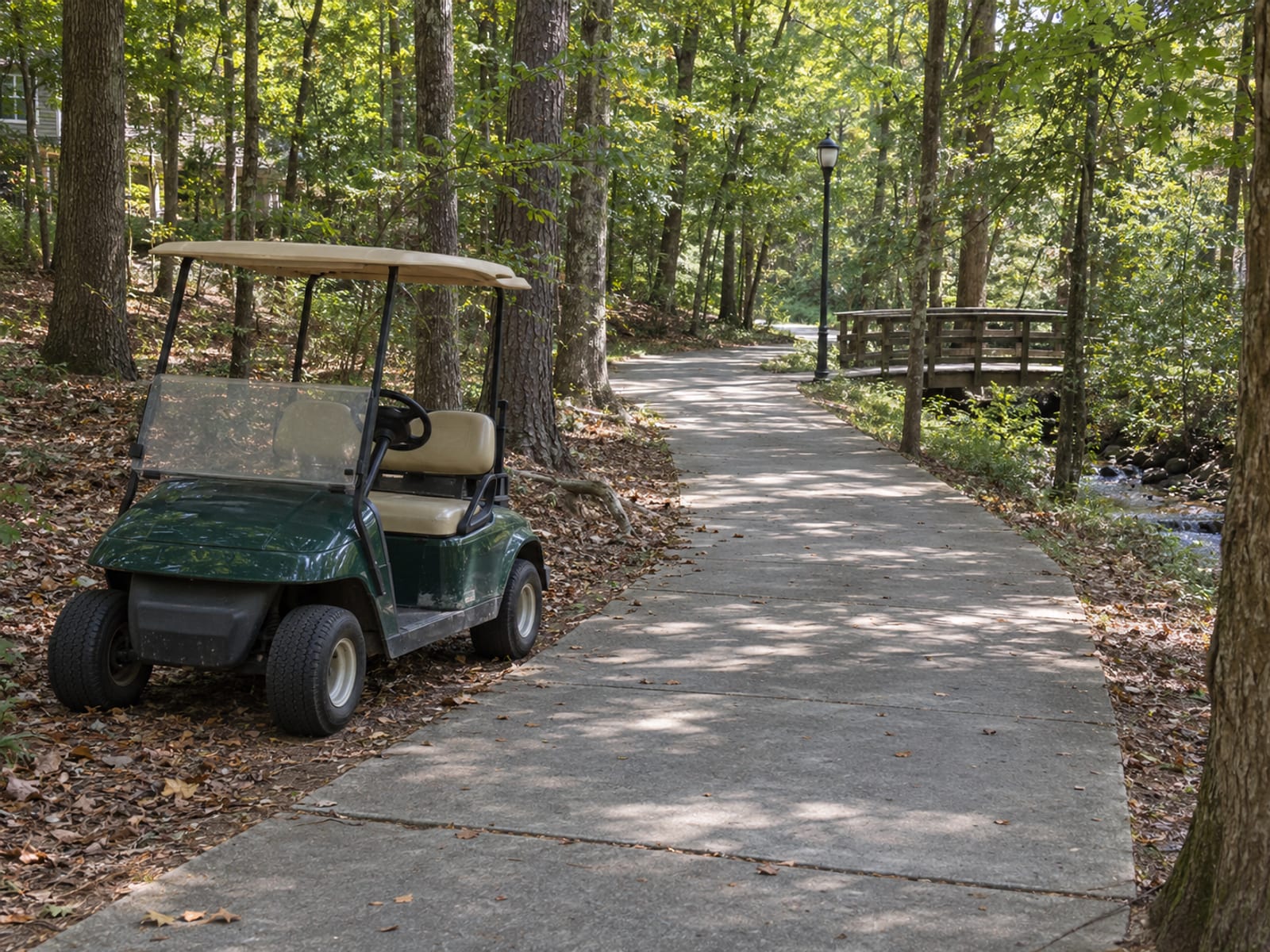
There's no state title or registration for a standard motorized cart. An LSV is different: it must be registered with the State of Georgia and carry insurance to use public streets, as the Jekyll Island Authority's ordinance (opens in a new tab) restates from state law. In Peachtree City, LSVs are tagged through the Fayette County Tag Office.
Local registration is where most cart owners meet paperwork. Peachtree City (opens in a new tab) sets these rules:
- Carts are registered only to owners age 18 or older.
- A cart must be registered within 10 days of purchase, in person at City Hall.
- You bring a completed registration form, proof of ownership such as a sales receipt, a photo ID and the fee.
- Under the amended ordinance, decals go on both the front and rear of the cart, and new decals were mailed with the 2026 renewals.
- The 2026 three-year resident renewal, covering 2026 through 2028, totals $45.
- Nonresidents pay a $15 annual registration plus a $235 path user fee, for $250 a year.
- You must tell the city within 10 days of selling a cart and within 60 days of moving.
The complete path and cart rules are in Peachtree City Ordinance 1253, Chapters 70 and 78.
What equipment does a cart need?
Georgia requires every PTV to carry a braking system with a parking brake, a reverse warning device, a main power switch, head lamps, reflex reflectors, tail lamps, a horn, a rearview mirror, safety warning labels, and hip restraints and hand holds or a combination of them, under O.C.G.A. § 40-6-330.1 (opens in a new tab). Those requirements don't apply to carts driven in daylight under local ordinances adopted before January 1, 2012.
Local rules can add more. LSVs on Peachtree City's paths are limited to 20 mph and need an amber strobe light. Jekyll Island adds turn signals, brake lights, a seat belt for each seat and a slow-moving vehicle emblem for PTVs. Check equipment against your vehicle's category and the current local ordinance rather than one universal list.
How Peachtree City, Jekyll Island and other communities differ
Jekyll Island is the clearest example of a local insurance rule. Under the Jekyll Island Authority's Ordinance O-2022-1 (opens in a new tab), no owner may drive a PTV on public streets, or let anyone else drive it, without liability insurance at limits no lower than those in O.C.G.A. § 33-7-11(a)(1)(A) (opens in a new tab), which are $25,000 per person and $50,000 per accident for bodily injury and $25,000 for property damage. Proof of that insurance must stay in the PTV at all times.
The same ordinance keeps PTVs off sidewalks, bike paths, golf-cart paths, unimproved trails, service roads and state highways, and requires seat belts for everyone riding on a public street. Golf carts may not use Jekyll's public streets except to cross while playing golf or for an approved special event, and only Authority-owned carts may be used on the Authority's golf courses.
Peachtree City runs a registration and decal system for its path network, with separate rules for LSVs. Other islands, resorts, subdivisions and retirement communities can set rules through ordinances, leases, permits or association policies. Confirm the rule with the city, county, community association or property owner where the cart will be used.
Does homeowners insurance cover a golf cart?
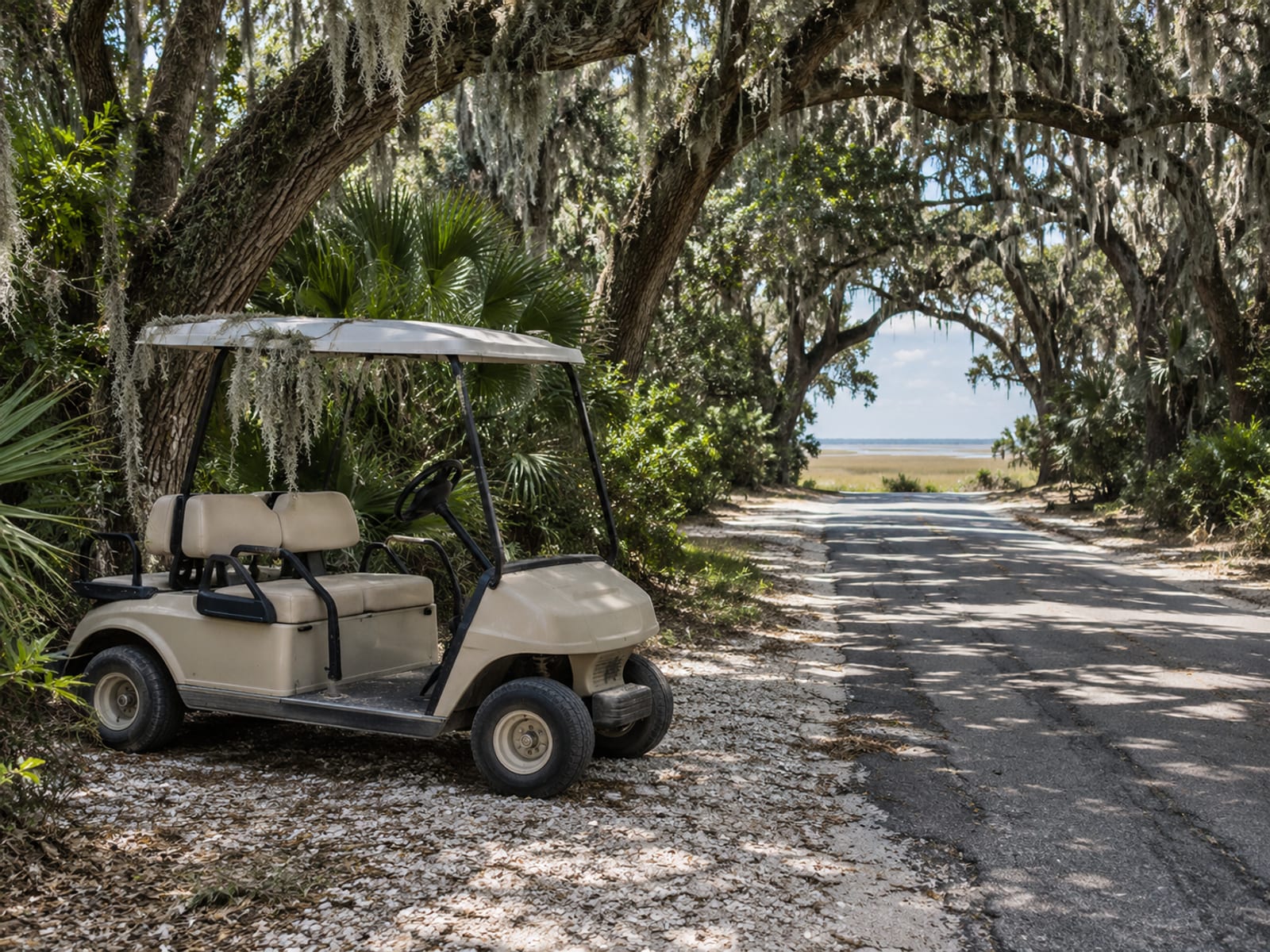
A homeowners policy generally covers your home, your belongings, extra living costs if the home becomes unlivable, and personal liability for accidents on your property, according to the Georgia Office of Commissioner of Insurance and Safety Fire (opens in a new tab). Most homeowners policies don't cover motorized vehicles, and separate coverage is usually available.
So, treat any homeowners protection for a cart as something to confirm, not assume. Questions to ask about your own policy:
- Does the cart count as covered personal property?
- Does liability apply only on your premises, or also on paths and streets?
- Are theft, collision and overturn damage covered or excluded?
- Are accessories and modifications covered?
- Is business, rental or paid use excluded?
- Is there a special limit or deductible for the cart?
Our article on Georgia homeowners insurance covers the rest of the policy.
What a standalone golf cart policy can cover
A separate cart policy is built for the vehicle itself. Depending on the form, it may include:
- Liability for bodily injury or property damage you cause.
- Collision damage to the cart.
- Comprehensive coverage for theft, fire, vandalism, weather or falling objects.
- Medical payments for qualifying injuries.
- Accessories, custom equipment or permanently installed additions.
- Towing or roadside assistance, if included.
The policy form controls the covered causes of loss, exclusions, deductibles, limits, driver restrictions, territory, and whether the cart is covered on public roads, private paths, golf courses or for business. Give your agent the cart's top speed, every added accessory, all regular drivers and every intended use.
Does your auto policy cover the cart?
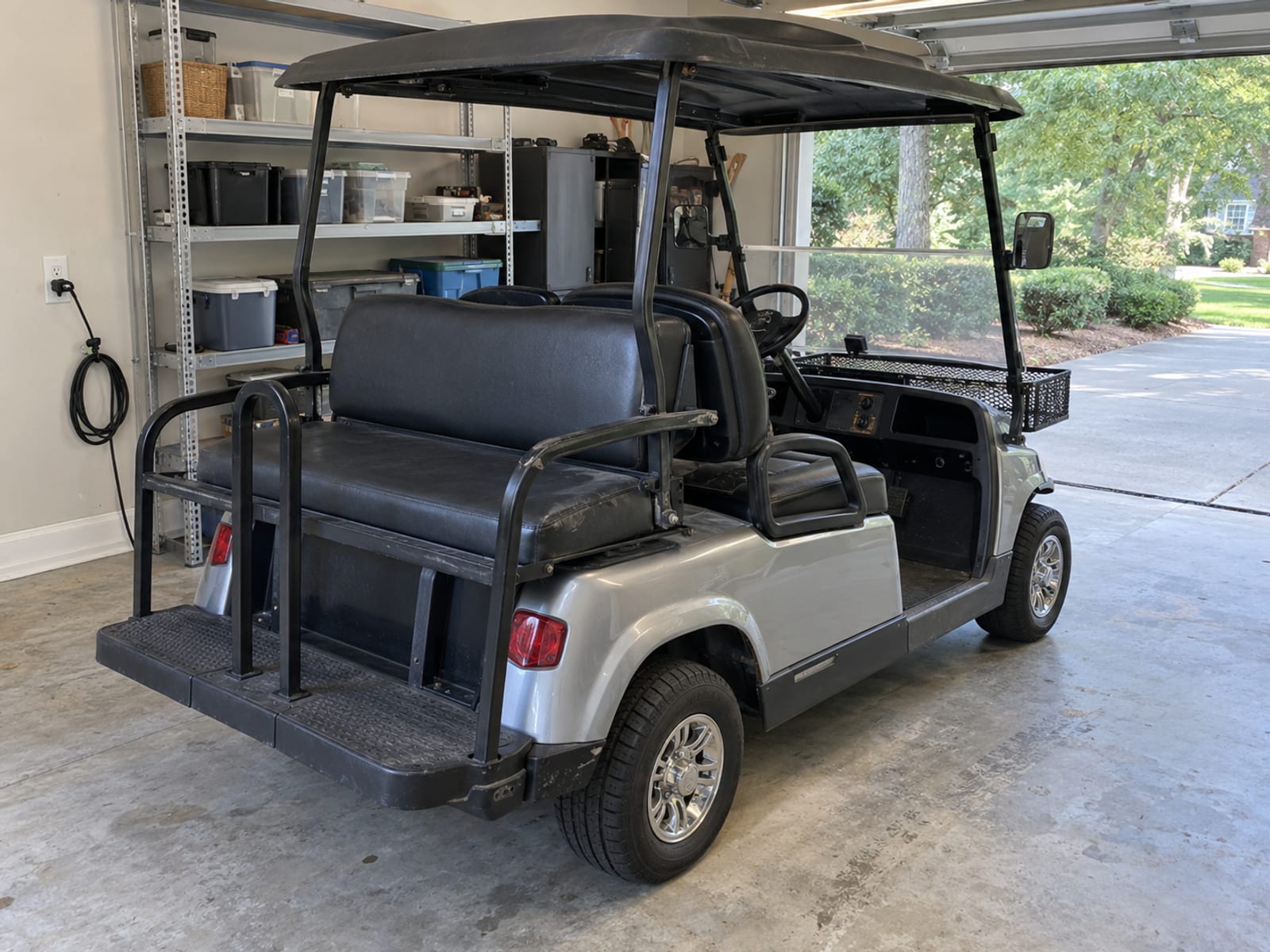
A personal auto policy doesn't automatically cover a golf cart. The answer depends on how the policy defines a covered auto, its exclusions for off-road or recreational vehicles, any endorsement and how you use the cart. Ask the agent for a written answer naming the exact vehicle and the exact use covered. Our article on whether car insurance follows the car or the driver explains how vehicle and driver definitions work in a policy.
What if the cart is used for business or rentals?
Rentals, tours, deliveries, paid rides and other business use may be excluded from personal coverage or call for a commercial policy. A business should tell the agent about ownership, employees, customers, passengers, rental arrangements, storage, maintenance, and use on public roads or private premises.
What happens after a golf cart accident?
A cart crash can lead to claims for bodily injury, property damage, medical bills or damage to the cart. Which insurer responds depends on the facts, the vehicle's category, the policy and its exclusions.
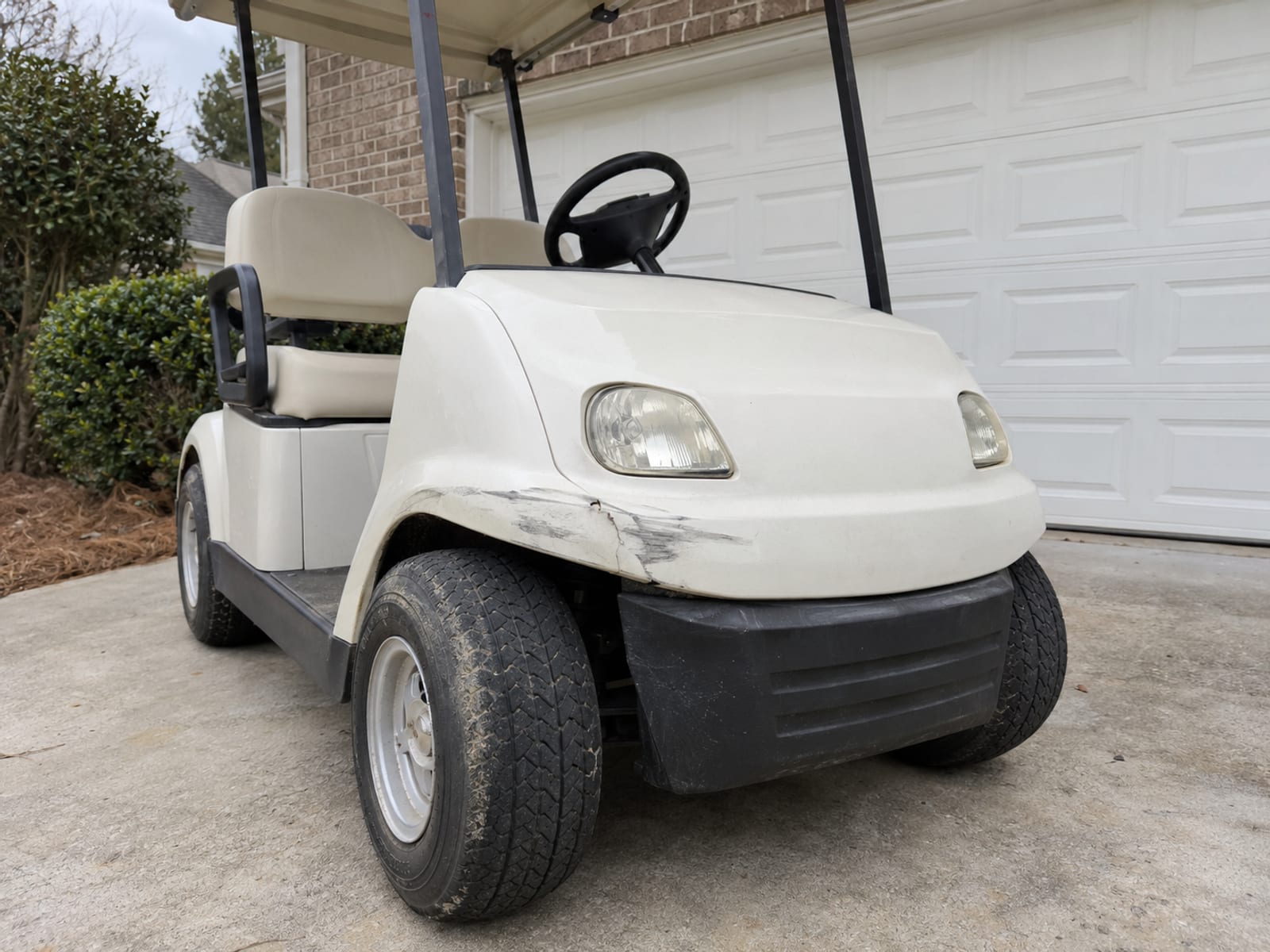
The Georgia Office of Commissioner of Insurance and Safety Fire's auto claim tips (opens in a new tab) set out steps that fit a cart crash on a street: notify the police, exchange names, contact and insurance information, note passengers and witnesses, take photographs, avoid statements about who was at fault, and notify your insurer or agent as soon as possible, even if someone else caused it. Keep medical records, repair estimates and any local permit documents with the claim file.
How to check an agency or file a complaint
Use the Georgia insurance license lookup (opens in a new tab) to confirm that an agent, agency or insurer is licensed in Georgia. Search the exact legal name.
If you have a problem with an insurer, agent or claim, contact the insurer first. If that doesn't resolve it, file one complaint through the Georgia Office of Commissioner of Insurance and Safety Fire's Consumer Complaint Portal (opens in a new tab), with the insurer's name, the agent or adjuster, your policy and claim numbers, a short description and copies of your documents. Consumer Services can be reached at (404) 656-2070 or (800) 656-2298.
Questions to ask your agent
- How does Georgia classify this vehicle: golf cart, PTV, LSV or MPOHV?
- Does state registration apply, and does my city or community require local registration or proof of insurance?
- Where does the policy cover the cart: public streets, community paths, golf courses, private property?
- Are all regular drivers covered, and are there age, license or household-driver limits?
- Is liability coverage included, and at what limits?
- Are collision and comprehensive included, and do they cover theft, fire, vandalism, weather and battery damage?
- Are accessories and modifications scheduled or excluded?
- Are passengers covered?
- Is towing or roadside assistance included?
- Is rental, tour, delivery or other business use excluded?
- What happens if the cart is borrowed, rented or driven by a guest?
- What proof of insurance should I carry?
- What are the deductibles, limits, exclusions and cancellation terms?
- How does this policy work with my homeowners or auto policy?
Check what you know about Georgia golf cart rules
Frequently asked questions
Do I need insurance to drive a golf cart on Georgia streets?
It depends on the vehicle and the place. An LSV on public streets needs state registration and insurance, and Jekyll Island requires liability insurance for PTVs on its public streets. Ask the city or county where you'll drive whether its cart ordinance adds an insurance condition.
Does a golf cart need a title in Georgia?
No title is issued for a motorized cart, according to the Georgia Department of Revenue (opens in a new tab). An MPOHV can be registered voluntarily but is never titled, and golf carts don't qualify as MPOHVs.
Can a golf cart cross a state highway in Georgia?
Only at a crossing designated for PTVs, built as an active grade crossing and marked with a PTV crossing sign, under O.C.G.A. § 40-6-331 (opens in a new tab). On city and county roads, a cart may cross only where the local government has designated a crossing.
What should I tell an agent when asking about a golf cart policy?
Give the vehicle type and top speed, where it's kept, who owns it, every regular driver, and whether you use it on public streets or paths. Also mention passengers, any business or rental use, modifications, accessories and storage.
Before you drive
Classify the cart, check your city or community ordinance, and confirm where you're allowed to drive and who may drive. Then ask whether your homeowners or auto policy responds, and compare that answer with a standalone cart policy. For help choosing someone to work with, see how to choose an insurance agent. Riskado's directory lists insurance agencies across the US, including Georgia, by city and by category.
Key terms
Tap a term to see what it means.
Motorized cart. The term Georgia's Department of Revenue uses for carts the state doesn't register or title, and a name some local ordinances use for older PTVs.
Personal transportation vehicle (PTV). A vehicle with at least four wheels, a top level-ground speed under 20 mph, an unladen weight up to 1,375 pounds and room for no more than eight people.
Low-speed vehicle (LSV). A four-wheeled vehicle with a top speed over 20 mph but not over 25 mph, built to federal LSV safety standards, that must be registered and insured for public streets.
Multipurpose off-highway vehicle (MPOHV). A utility vehicle that may be registered voluntarily in Georgia but is never titled; golf carts don't qualify.
Active grade crossing. A designated crossing point where a PTV may cross a state highway.
Liability coverage. Insurance that pays for injuries and damage you cause to other people.
Comprehensive coverage. Coverage for damage from causes other than a collision, such as theft, fire or weather.