Georgia Boat Insurance: Whether It Is Required, What a Policy Covers, Coastal and Lake Rules and What to Ask Your Agent
Riskado
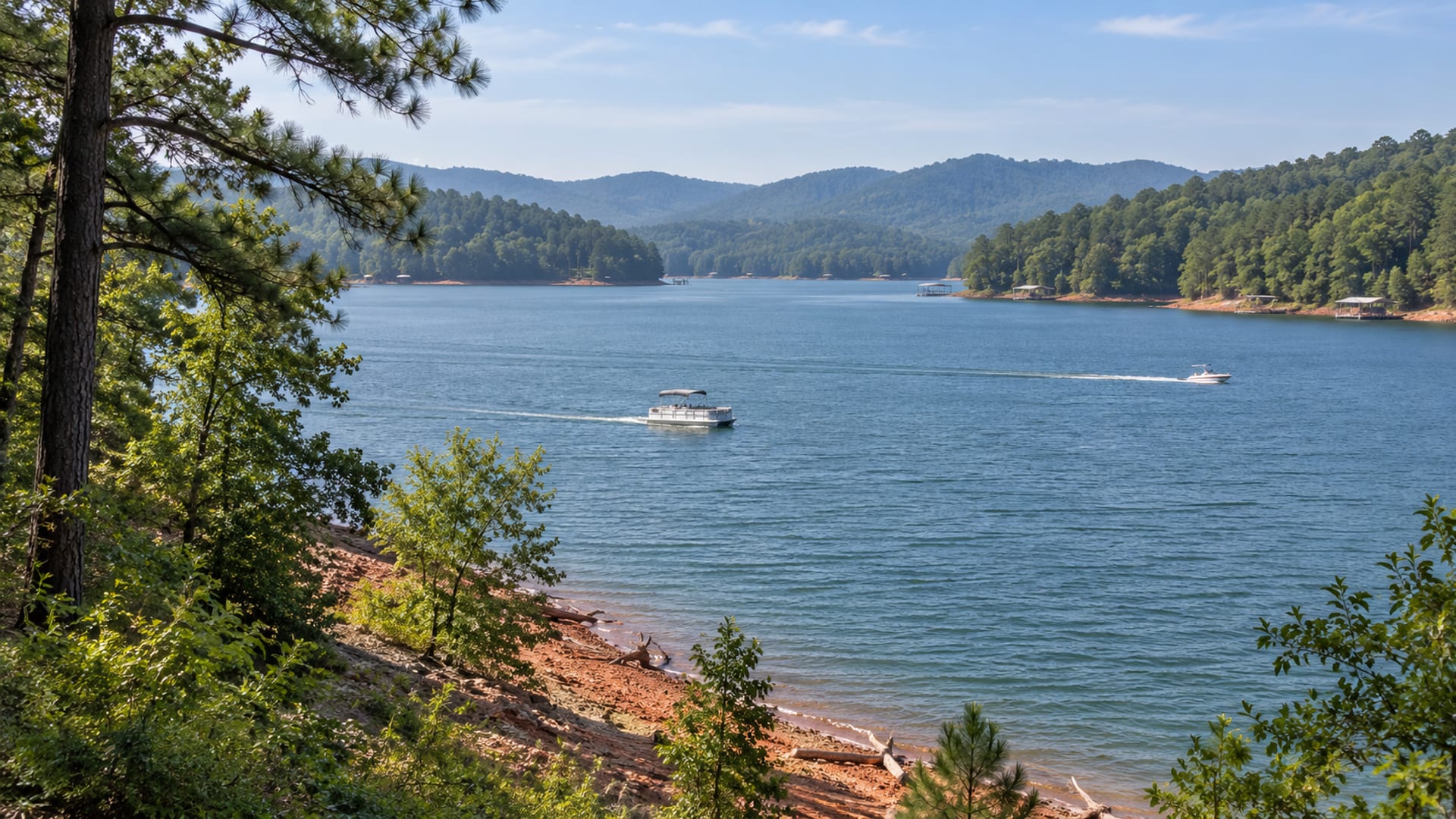
Georgia law doesn't require insurance on a recreational boat, according to Progressive's Georgia boat insurance page (opens in a new tab). What Georgia does require is registration: a motorized boat used on public waters needs a Georgia Certificate of Boat Registration and a validation decal from the Georgia Department of Natural Resources (opens in a new tab), along with rules on equipment, operator age, boater education and accident reporting. Insurance usually enters through a contract. A marina may require liability coverage, and a lender may require comprehensive and collision on a financed boat. A homeowners policy may cover a small boat for limited damage, but a boat of any significant size is excluded, according to the NAIC (opens in a new tab). A separate boat policy can cover the hull, liability, medical payments, towing and more, depending on its terms.
Key takeaways
- InsuranceGeorgia law doesn't require insurance on a recreational boat.
- RegistrationA motorized boat on public waters needs a Georgia Certificate of Boat Registration and a validation decal.
- ContractsA marina may require liability coverage, and a lender may require comprehensive and collision.
- HomeownersA homeowners policy may cover a small boat for limited damage; boats of any significant size are excluded.
Is boat insurance required in Georgia?
There are three different kinds of requirement here, and they come from different places.
- State law covers registration, numbering, equipment, operator rules, boater education and accident reports.
- A marina, storage facility, lender, lease or lake community may require insurance as a condition of its contract.
- Everything else is your choice: coverage you buy to protect the boat and to pay for harm you cause others.
So, a registered boat isn't an insured boat. Registration is a state record of ownership, and insurance is a separate contract you arrange with an insurer.
What must be registered and numbered?
A motorized boat or personal watercraft (PWC) used on public waters needs a Georgia Certificate of Boat Registration and a validation decal, according to the Department of Natural Resources (opens in a new tab). Sailboats over 12 feet must also be registered, according to the DNR Wildlife Resources Division (opens in a new tab).
These boats don't need Georgia registration:
- Sailboats under 12 feet.
- Canoes, kayaks, rowboats and rubber rafts with no mechanical propulsion.
- Boats used only on private ponds or lakes.
The certificate must be on board whenever the boat is operated. The registration number goes on both sides of the bow in block letters at least three inches high. A boat registered in another state doesn't need Georgia registration unless it's used in Georgia for more than 60 consecutive days. You must tell the DNR Boat Registration Office within 15 days of an address change, and within 15 days if the boat is abandoned or destroyed.
Registrations last three calendar years and expire on the last day of the owner's birth month in the final year, according to the Wildlife Resources Division (opens in a new tab). You can register or renew online through Go Outdoors Georgia, by phone or by mail.
Hover or tap a row to highlight it.
| Boat length | Registration fee |
|---|---|
| Under 16 feet | $35 |
| 16 feet to under 26 feet | $70 |
| 26 feet to under 40 feet | $140 |
| 40 feet and over | $210 |
A $10 transaction fee applies to every application, and a lapsed registration carries a $10 late fee.
Does homeowners insurance cover a boat?
Sometimes, and only a little. A homeowners policy's personal property coverage might cover a small boat for $1,500 or less in physical damage, according to the NAIC (opens in a new tab). Liability coverage for boats is limited. Insurers generally offer it only for small sailboats of 26 feet or less and powerboats with small motors, which the NAIC describes as 50 horsepower for inboard and inboard/outboard motors and 25 horsepower for outboards. A boat of any significant size is excluded from both property and liability coverage, and a PWC will likely need a separate boat policy.
Those figures are the NAIC's general examples; your policy's own wording controls. Check your homeowners policy for:
- The dollar limit for the boat, motor and equipment.
- Whether it covers physical damage only or liability too.
- Whether the boat is covered while docked, stored, trailered or in transit.
- Whether the motor, trailer, electronics, fishing gear and personal property are included.
- Exclusions for size, horsepower, racing, rental, commercial use or PWCs.
- The deductible and how losses are valued.
Our article on Georgia homeowners insurance covers the rest of the homeowners policy.
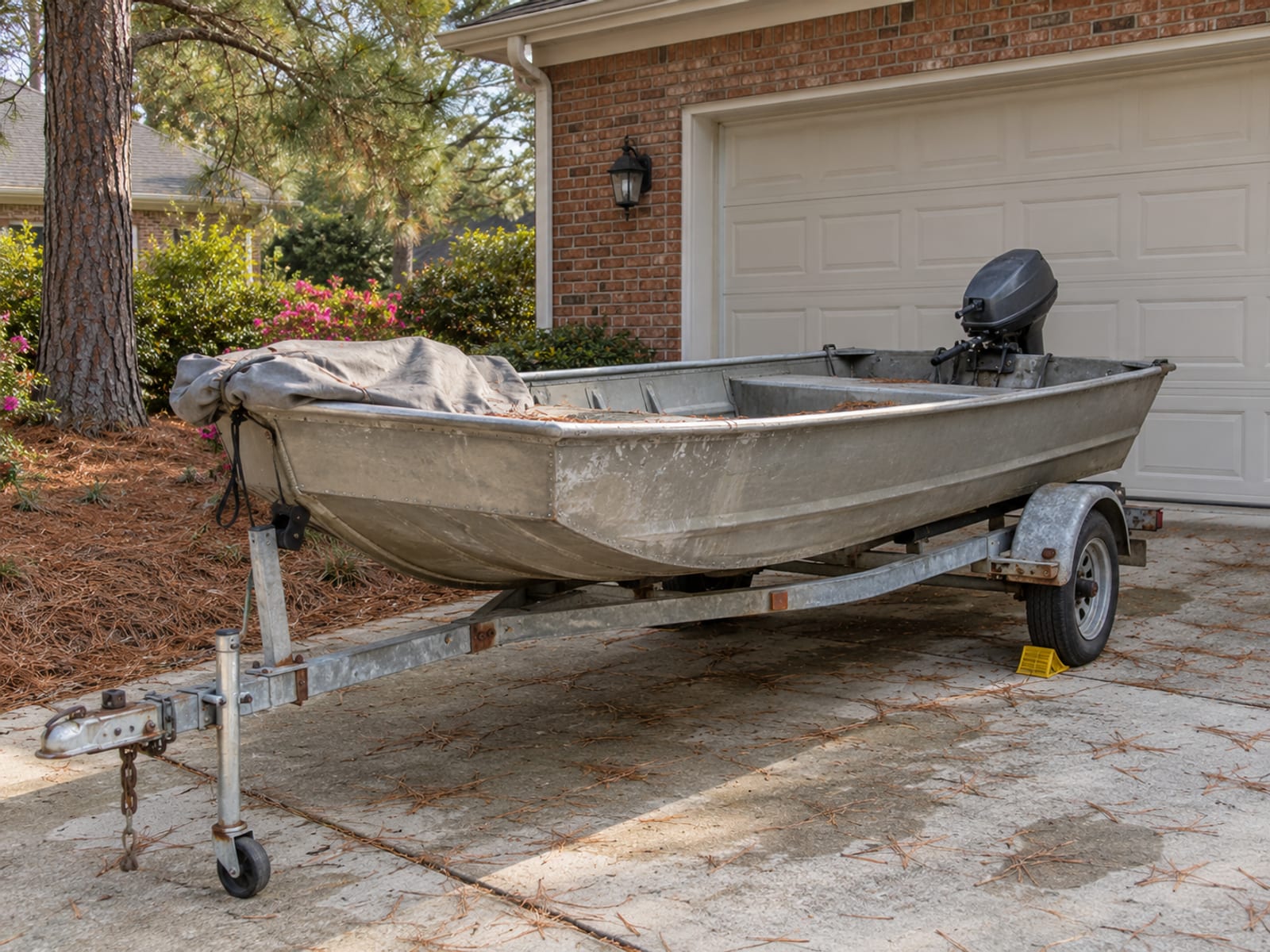
What a boat policy can cover
A boat policy is built around the vessel and the way you use it. Depending on the policy, it may cover:
- Physical damage to the hull and motor.
- Collision with another boat, a dock, a submerged object or other property.
- Theft, vandalism, fire and weather losses.
- Bodily injury and property damage liability to others.
- Medical payments for eligible injuries.
- Uninsured or underinsured boater coverage, where offered.
- Towing and on-water emergency assistance.
- Fuel-spill liability.
- Personal effects, fishing equipment and electronics.
- The boat trailer.
Policies also carry limits and exclusions. Common ones involve racing, commercial, rental, charter or guide use, operators not listed on the policy, use outside the navigation area, wear and tear, corrosion and mechanical breakdown, poor maintenance, unlawful operation and unapproved modifications. Not every boat policy includes every option, so ask for the coverage list in writing.
Agreed value or actual cash value?
How the policy values your boat decides what a total loss pays. Under agreed value, you and the insurer settle on the boat's value when the policy is written, and a covered total loss is paid on that amount, subject to the deductible and the policy's conditions. Under actual cash value, the insurer pays what the boat was worth at the time of the loss after depreciation, which can be well below what you paid.
Neither method suits every boat. Read the valuation clause and the declarations page, and ask how partial losses are handled too. Our article on replacement cost vs actual cash value explains depreciation in more detail.
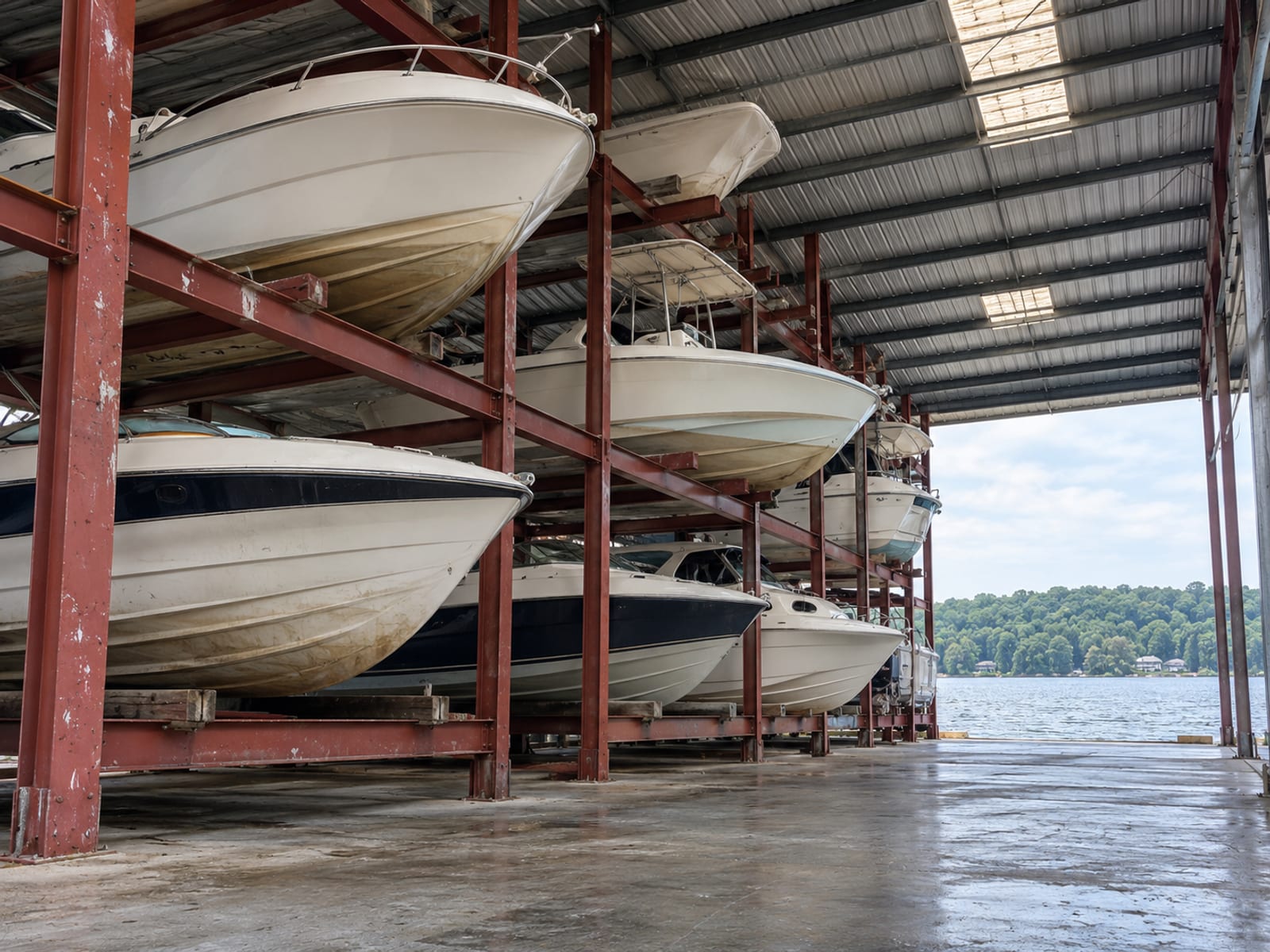
What marinas and lenders require
Some marinas require boat liability coverage, and a lender may require comprehensive and collision on a leased or financed boat, according to Progressive (opens in a new tab). A marina, storage facility, lease or lake community may also ask for:
- A certificate of insurance.
- The marina, lender or facility named as an additional interest or loss payee.
- A minimum liability limit.
- A stated navigation area.
- Notice if the policy is canceled or not renewed.
These are contract terms, not Georgia law, and the written agreement controls. Get the facility's or lender's requirements in writing and hand them to your agent before you buy.
Lakes, rivers, the coast and the trailer
A boat policy's navigation area decides where coverage applies, whether that's Lake Lanier, Lake Allatoona, Lake Hartwell, Lake Oconee, a river, the Intracoastal Waterway or the Atlantic coast. Coastal and offshore use can call for a broader navigation area, different underwriting and more safety equipment. Since July 1, 2022, certain boats on Georgia's coastal waters must carry day and night visual distress signals, under a law that amended O.C.G.A. Sections 52-7-3 and 52-7-8, according to the Georgia General Assembly's 2022 summary of general statutes (opens in a new tab).
The trailer needs its own answer. Auto insurance may pay for injuries or damage you cause while towing a boat trailer, but it won't pay for damage to the trailer, while a boat policy can pay to repair or replace a damaged trailer up to its limits, according to Progressive (opens in a new tab). Check how your policy treats the boat in transit, at launch and haul-out, in storage and during hurricane season.
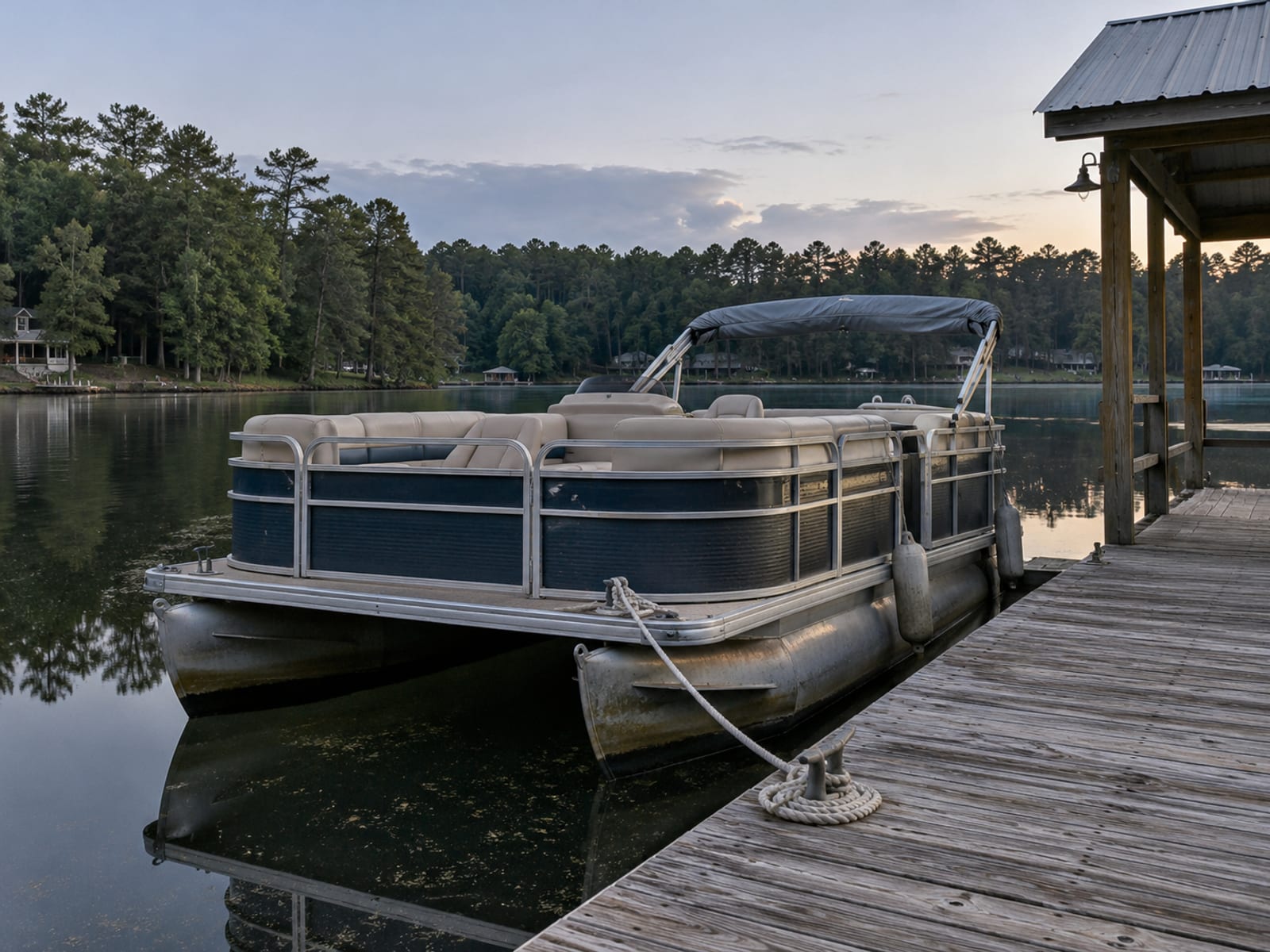
Safety and operator rules that matter
Anyone born on or after January 1, 1998 must complete an approved boater education course before operating a motorized vessel on Georgia waters, according to the Department of Natural Resources (opens in a new tab). The exemptions cover licensed U.S. Coast Guard masters, people operating on a private lake or pond, and nonresidents who carry proof of an approved course from another state.
Operators 16 and older need proper identification on board, and operators under 16 face limits on boat length and motor size, according to the DNR's boat operation rules (opens in a new tab). Check the current rule with the DNR before a young family member takes the helm, and tell your agent who will operate the boat.
The DNR's operating restrictions (opens in a new tab) add more:
- Children under 13 must wear an appropriately sized life jacket while the boat is under way, unless they're inside a fully enclosed cabin.
- Boats may not exceed idle speed within 100 feet of a moored or anchored vessel, a wharf, a pier, people in the water or certain shorelines.
- PWCs may not exceed 5 mph within 100 feet of moored or anchored vessels, shores, docks, piers, bridges or people in the water.
- Operating a boat under the influence of alcohol or drugs is unlawful.
Everyone on a PWC must wear a life jacket, and PWCs may not operate between sunset and sunrise, according to the DNR equipment checklist (opens in a new tab). The checklist also lists life jackets, a fire extinguisher, a sound-producing device and navigation lights by boat class.
A policy may contain operator, use or unlawful-operation provisions. A boating violation doesn't by itself decide a claim, because the policy language and the facts control.
What to do after a boating accident
An operator involved in an accident must stop, help anyone injured or in danger when it's safe to do so, and give their name, address and vessel identification in writing to anyone injured and to the owner of any damaged property, according to the DNR boating handbook (opens in a new tab). The accident must be reported by the quickest means if it causes:
- A death, or a person's disappearance from a boat in circumstances that suggest death or injury.
- An injury that needs first aid or medical attention.
- Property damage of more than $2,000 to all boats, docks and other property involved.
Most reports must be made within five days. A report is due within 48 hours if a person dies within 24 hours, is disabled for more than 24 hours, needs medical treatment or disappears from a boat.
For the insurance claim, notify your insurer promptly, photograph the damage, get a copy of the DNR or law enforcement report, collect witness names and follow the policy's claim instructions.
Reporting a Georgia boating accident
- At the sceneStop, help anyone injured when it's safe, and give your name, address and vessel identification in writing.
- Within 48 hoursReport if a person dies within 24 hours, is disabled for more than 24 hours, needs medical treatment or disappears from a boat.
- Within five daysReport most other accidents, including property damage of more than $2,000.
- Insurance claimNotify your insurer promptly with photos, the accident report and witness names.
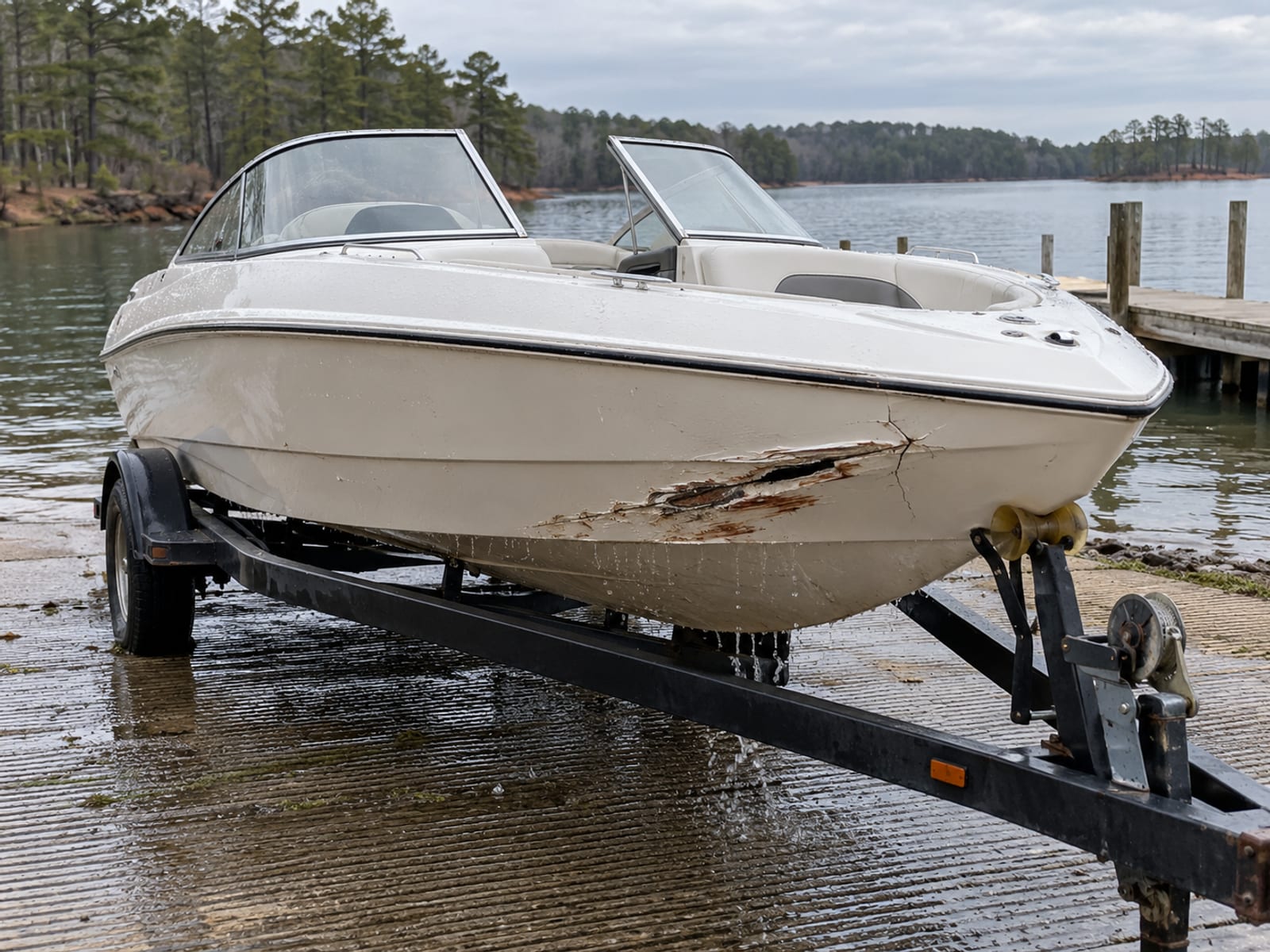
What does boat insurance cost in Georgia?
For one named figure, the average annual cost of a Progressive boat insurance policy with one watercraft in Georgia was $449.93 in 2025, based on Progressive policies from December 2024 through November 2025, according to Progressive (opens in a new tab). That's one insurer's average, not a statewide figure and not a prediction for your boat.
Progressive lists the type of watercraft, your boating experience, your claims history and horsepower among the factors, with larger engines generally costing more to insure. Value, length, storage, navigation area and how you use the boat also come up in a quote. Ask an agent for a quote built on your exact boat, use, storage, operators and coverages.
How to check an agent or file a complaint
Use the Georgia insurance license lookup (opens in a new tab) to confirm that an insurer or agent is licensed to sell insurance in Georgia.
For a problem with an insurer, agent or claim, contact the insurer first. If that doesn't resolve it, file one complaint through the Georgia Office of Commissioner of Insurance and Safety Fire's Consumer Complaint Portal (opens in a new tab), with the insurer's exact name, the agent or adjuster, your policy and claim numbers, a short description and copies of your documents. A complaint doesn't pause your policy's claim deadlines. Consumer Services can be reached at (404) 656-2070 or (800) 656-2298.
Questions to ask your agent
- Is insurance required for this boat by my lender, marina, lease or facility, and what do their written terms say?
- Is the policy agreed value or actual cash value, and how are partial losses paid?
- Are the hull, motor, trailer, tender, electronics, fishing gear and personal property covered?
- What liability limits apply, and is medical payments coverage included?
- Is uninsured or underinsured boater coverage available?
- Is fuel-spill liability included?
- Is towing or on-water assistance included?
- Are all intended operators covered, including guests and young operators?
- Are water-skiing, tubing and PWC use covered?
- What navigation area applies to the lakes, rivers or coastal waters where I boat?
- Is the boat covered while trailered, stored, launched, hauled out or at a marina?
- What exclusions apply to racing, rental, charter, guide work or living aboard?
- What deductible applies to each type of loss?
- What changes do I need to report at renewal?
Check what you know about Georgia boat insurance
Frequently asked questions
Does a Georgia boat registration prove I have insurance?
No. The DNR registration certificate and decal show the boat is registered, and insurance is a separate policy. A marina or lender that requires coverage will ask for your policy or a certificate of insurance.
Do I need a boater education card in Georgia?
You do if you were born on or after January 1, 1998 and operate a motorized vessel on Georgia waters, according to the DNR (opens in a new tab). Exemptions cover licensed Coast Guard masters, private ponds and lakes, and nonresidents with an approved course from another state.
Does auto insurance cover my boat trailer?
Auto insurance may pay for injuries or damage you cause while towing, but not for damage to the trailer itself, according to Progressive (opens in a new tab). A boat policy can cover the trailer up to its limits.
How long does a Georgia boat registration last?
Three calendar years, expiring on the last day of the owner's birth month in the final year, according to the Wildlife Resources Division (opens in a new tab). You can renew any time after October 1 of the year before it expires.
Before you launch
Register the boat and carry the certificate, check the education and equipment rules, and get any marina or lender insurance terms in writing. Then compare your homeowners coverage with a boat policy, paying attention to valuation, navigation area, operators and the trailer. For help choosing someone to work with, see how to choose an insurance agent. Riskado's directory lists insurance agencies across the US, including Georgia, by city and by category.
Key terms
Tap a term to see what it means.
Certificate of Boat Registration. The Georgia DNR document that must be on board whenever a registered boat is operated.
Validation decal. The registration decal displayed on the boat along with its registration number.
Personal watercraft (PWC). A small craft such as a jet ski, which a homeowners policy will likely not cover.
Agreed value. A valuation method where you and the insurer set the boat's value when the policy is written.
Actual cash value. A valuation method that pays what the boat was worth at the time of the loss, after depreciation.
Navigation area. The waters where a boat policy's coverage applies.
Loss payee. A lender or other party named on the policy to be paid on a covered loss.
Fuel-spill liability. Coverage for your legal responsibility when fuel from your boat spills.