Pennsylvania Car Insurance Lapse Penalty: Registration Suspension, Restoration and the Exceptions
Riskado
In Pennsylvania, a lapse in liability insurance on a registered vehicle can lead to a three-month registration suspension, according to the PennDOT Insurance Law FAQs (opens in a new tab). A short lapse can avoid it: under 75 Pa.C.S. § 1786 (opens in a new tab), the exception applies when the lapse lasted less than 31 days (PennDOT describes it as 30 days or less) and you can show the vehicle was not driven. Restoring a suspended registration takes current proof of insurance and a $119 restoration fee under the 2026 PennDOT MV-70S fee schedule (opens in a new tab). Instead of serving the suspension, you may pay a $500 civil penalty plus that fee and show proof of insurance, no more than once in 12 months. Until your coverage and registration status are clear, do not drive the car.
Key takeaways
- SuspensionA lapse in liability insurance on a registered vehicle can lead to a three-month registration suspension.
- Short-lapse exceptionA lapse of less than 31 days avoids it when you can show the vehicle was not driven.
- RestorationRestoring a suspended registration takes current proof of insurance and a $119 restoration fee.
- Civil penaltyYou may pay a $500 civil penalty plus the fee instead of serving the suspension, no more than once in 12 months.
- Until it is clearDo not drive the car until your coverage and registration status are clear.
One point clears up a lot of confusion. Your insurer's payment deadline and PennDOT's lapse rules are two different clocks. Pennsylvania law does not require insurers to give a premium-payment grace period, according to the Pennsylvania Insurance Department auto insurance guide (opens in a new tab). Any grace period is a term of your own policy, so confirm it with your insurer. PennDOT's 30-day window is a separate rule about whether a lapse leads to a suspension.
What should you do after receiving a PennDOT insurance letter?
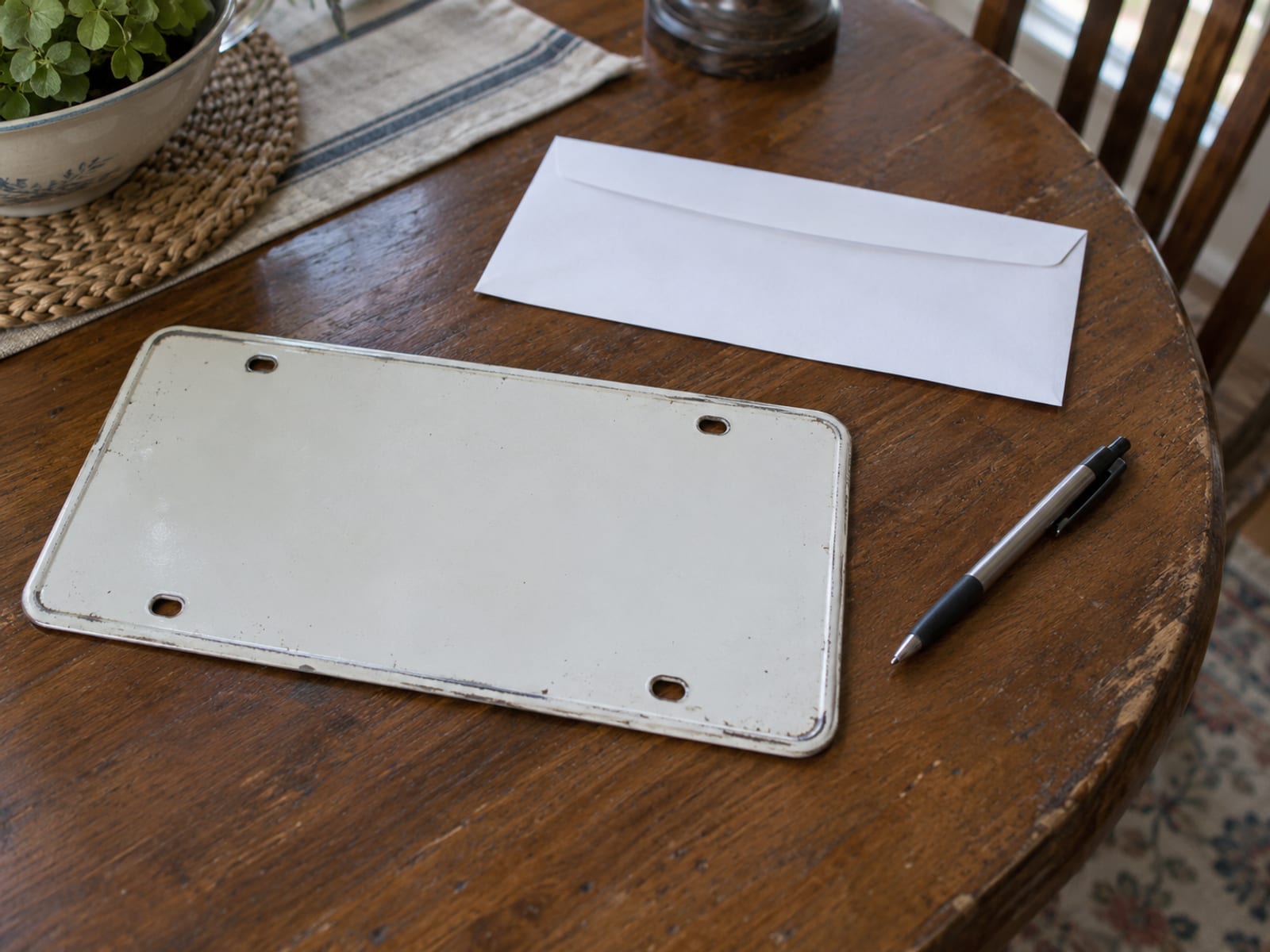
PennDOT usually starts with a proof letter asking for your current insurance information, according to the PennDOT guide to insurance letters (opens in a new tab). If you do not respond, cannot prove coverage, or do not meet an exception, PennDOT sends a suspension letter. That letter tells you to surrender your plate and registration card by a stated effective date and lists what restoration will require.
When a letter arrives, work through it in this order:
- Find the exact date your coverage ended. Your insurer's cancellation notice or the PennDOT letter will show it.
- Stop driving the vehicle until you know whether it is insured and registered.
- Get proof of current insurance, such as an insurance ID card, declaration page or valid binder.
- Respond through PennDOT's proof of insurance and restoration services (opens in a new tab), following the instructions on the letter.
If your insurer reinstated the same policy and there was no actual gap, PennDOT asks for a signed headquarters letter on company letterhead. It needs the policy number, VIN, effective and expiration dates, the company's NAIC number, and the date coverage resumed.
From a lapse to a restored registration
- Coverage endsYour insurer cancels or terminates the policy and reports it to PennDOT.
- Proof letterPennDOT asks for your current insurance information.
- Suspension letterIf you cannot prove coverage or meet an exception, PennDOT tells you to surrender your plate and registration card by a stated date.
- Suspension or civil penaltyServe the three-month suspension, or pay the $500 civil penalty instead, no more than once in 12 months.
- RestorationProvide current proof of insurance and the $119 restoration fee; PennDOT may return a valid plate and card within 7 to 10 business days.
How does PennDOT learn about a cancellation?
Insurers report cancellations and terminations to PennDOT, under 75 Pa.C.S. § 1786(e) (opens in a new tab). New coverage works the other way. Insurance companies are not required to tell PennDOT when you buy a new policy, according to the PennDOT Financial Responsibility FAQs (opens in a new tab). That is why a driver who switched companies can still get a letter: the old insurer reported the cancellation, and nothing automatic told PennDOT about the replacement. If that happens to you, send the new policy information when PennDOT asks for it.
How many days count as a lapse in Pennsylvania?
For PennDOT's short-lapse exception, the statute says "less than 31 days," and PennDOT's own pages say "30 days or less." Both mean the same thing in practice: a lapse of 31 days falls outside the exception.
The count starts on the date your insurance was cancelled or terminated, not the day PennDOT's letter shows up in your mailbox, per the PennDOT Insurance Law FAQs (opens in a new tab). If your policy ended March 1 and the letter arrives March 20, most of your window has already passed. Your insurer's policy and cancellation notice decide when coverage ended; PennDOT then applies its own rules once it gets the cancellation report.

Can a short lapse avoid the suspension?
Yes, if two things are true: the lapse was less than 31 days, and the vehicle was not driven, or allowed to be driven, during the gap, under 75 Pa.C.S. § 1786(d)(2)(i) (opens in a new tab).
You show this with current proof of insurance and the MV-221 Statement of Non-Operation of Vehicle (opens in a new tab) when PennDOT asks for it. The form asks for the insurance cancellation date, the date new coverage started, and the vehicle, plate, VIN and title information. PennDOT also accepts it through its online Statement of Non-Operation service (opens in a new tab). Before you fill it in, ask your insurer to confirm the exact dates so the form matches their records.
What does restoring your registration require?
If the suspension goes ahead, it runs three months, and no one may drive the vehicle during that time, according to the PennDOT Insurance Law FAQs (opens in a new tab). To restore the registration afterward, PennDOT requires:
- The suspension period to be completed.
- Current proof of insurance, generally submitted within 30 days before your eligibility date.
- Your plate and registration card surrendered as directed.
- The $119 motor vehicle registration restoration fee listed on the MV-70S schedule (4-26) (opens in a new tab).
- A registration renewal or application if the registration expired in the meantime.
Once you meet all of that, PennDOT may return a valid plate and card within 7 to 10 business days, according to the PennDOT registration restoration FAQ (opens in a new tab). Fees change from time to time, so check the current MV-70S before you pay.
You can request a restoration requirements letter online through the PennDOT restoration letter service (opens in a new tab). Have the first eight numbers of your title number, the last four digits of the VIN, and the first two letters of your last name or company name ready.
Can you pay $500 instead of serving the suspension?
Yes, with conditions. Under 75 Pa.C.S. § 1786(d)(1.1) (opens in a new tab), you can pay a $500 civil penalty instead of serving the registration suspension. You still pay the restoration fee and provide proof of financial responsibility, and the option is limited to once in a 12-month period. PennDOT takes payment through its civil penalty payment service (opens in a new tab) or by form MV-222.
The $500 option only covers the registration suspension. It does not erase separate penalties for driving uninsured or for a crash without coverage.
Hover or tap a row to highlight it.
| Item | Serve the suspension | Pay the civil penalty |
|---|---|---|
| Registration suspension | 3 months | None |
| Payment | $119 restoration fee | $500 civil penalty plus the $119 restoration fee |
| Proof of insurance | Required | Required |
| Conditions | The suspension period must be completed before restoration | No more than once in 12 months |
What if the car was stored, sold, repossessed or registered elsewhere?
A registered vehicle needs insurance even if it sits in the driveway. If you plan to cancel liability insurance on a car that is in storage, being repaired or not running, PennDOT directs you to surrender the plate and registration card right away, according to the PennDOT Financial Responsibility FAQs (opens in a new tab). Under 75 Pa.C.S. § 1786(g)(2) (opens in a new tab), you are not penalized for keeping a registered vehicle without coverage if you voluntarily surrendered the plate and card when coverage ended. Return both, since PennDOT asks for the plate and the card together, although it may start suspension credit when it receives the plate alone.
Other situations each have their own paperwork, per the PennDOT guide to insurance letters (opens in a new tab):
- Sold or transferred: send the title or bill of sale.
- Salvaged: send the salvage documentation.
- Repossessed: send the repossession letter.
- Registered in another state: send the out-of-state registration card or title. A Pennsylvania-registered car simply being outside the state does not count as an exception, so ask PennDOT which documents fit your car's status.
If insurance is cancelled and the vehicle stays registered, surrender the plate and card within the 30-day period that applies. A lapse that happens at the same time as, or after, a seasonal registration expires is excluded under § 1786 (opens in a new tab).
One more point for financed cars: collateral protection insurance bought by a lender protects the lender and is not liability insurance, according to PennDOT. Ask your agent whether your car carries the liability coverage Pennsylvania requires.

What if you were on military duty?
Section 1786 includes an exception for service members. It applies when you had coverage before, it lapsed while you were on temporary or emergency duty, and the vehicle was not driven. The exception lasts until 30 days after you return, as long as the vehicle stays parked until coverage is in place. Separately, PennDOT gives military hardship cases additional supervisor review through its Financial Responsibility Unit, according to the PennDOT Financial Responsibility FAQs (opens in a new tab). PennDOT's page on registering a vehicle as military personnel stationed out of state or deployed overseas (opens in a new tab) confirms that registered vehicles still need insurance.
What happens if you drove uninsured or had a crash?
Driving during a lapse raises the stakes. Penalties for operating without required liability insurance include, according to the PennDOT Insurance Law FAQs (opens in a new tab):
Hover or tap a row to highlight it.
| Consequence | Amount or length |
|---|---|
| Fine on conviction | At least $300 |
| Vehicle registration suspension | 3 months |
| Driver's license suspension (if you drove or allowed the car to be driven) | 3 months |
| Vehicle registration restoration fee | $119 (2026 MV-70S) |
| Driver's license restoration fee | $94 |
| Commercial driver's license restoration fee | $202 |
After a reportable crash, if PennDOT finds the owner had no financial responsibility at the time, it must suspend the owner's operating privilege where applicable and revoke the registration under 75 Pa.C.S. § 1785 (opens in a new tab). There is also a money consequence: under 75 Pa.C.S. § 1714 (opens in a new tab), the owner of a currently registered vehicle without financial responsibility cannot recover first-party benefits, the coverage that pays your own medical costs after a crash. Other claims after a crash are a separate legal question, and a lawyer can advise on your specific case.
How do you avoid a lapse when changing insurers?
A clean switch takes a few steps, according to the PennDOT Statement of Non-Operation page (opens in a new tab):
- Confirm the new policy's effective date and that it lists the right VIN.
- Keep the old policy active through the new policy's start date.
- Get the new ID card, declaration page or binder.
- If PennDOT sends a proof letter, submit the new policy information promptly.
- If the old insurer reported a cancellation even though you were covered the whole time, ask it for a signed headquarters letter showing the dates and no lapse.
How can you challenge a wrong cancellation?
If an insurer cancelled your policy in error or did not send proper notice, file a complaint through the Pennsylvania Insurance Department's consumer services portal (opens in a new tab). You create an account, identify the insurer and policy number, upload the cancellation notice, billing records, policy documents, proof of continuous or replacement coverage and any PennDOT letters, and explain the correction you want. The Insurance Department's phone line for help is 1-877-881-6388.
Timing matters here. To preserve appeal rights, a statement disputing a cancellation or nonrenewal should reach the Insurance Department within 30 days of the company's mailing of the notice, according to the Insurance Department auto guide (opens in a new tab). While the complaint is under review, ask PennDOT whether it can hold the suspension notice, and send it proof of your current insurance. Registration questions, fees and proof go to PennDOT, not the Insurance Department.

Questions to ask your insurer or agent
- What exact date did my coverage end, and what date was reported to PennDOT?
- Was the policy cancelled, nonrenewed or reinstated?
- If it was for nonpayment, what payment deadline applied, and does my policy have a grace period?
- Can you issue a headquarters letter with the policy number, VIN, dates, NAIC number and the date coverage resumed?
- What dates should I put on the MV-221?
- Is my car covered without a break through the start of my new policy?
If you want to talk this through with someone local, Riskado's directory lists insurance agencies in Pennsylvania and in every other state, by city and by category.
Check what you know about Pennsylvania insurance lapses
Frequently asked questions
Is there a 30-day grace period for car insurance in Pennsylvania?
Not for paying your premium; Pennsylvania law does not require insurers to offer one, so check your policy. PennDOT's separate 30-day rule lets a short lapse avoid suspension only if the car was not driven.
What if my lapse lasted exactly 31 days?
The statute requires less than 31 days, so a 31-day lapse falls outside the short-lapse exception. Expect the suspension or the $500 civil penalty route.
Can I drive while my registration suspension is pending?
No one may drive the vehicle while the registration is suspended. Until PennDOT confirms your status and your insurance is in place, keep the car parked.
Does my new insurance company notify PennDOT?
No. Insurers report cancellations, not new policies, so send your new proof of insurance when PennDOT asks for it.
Terms used in this guide
Tap a term to see what it means.
Lapse. A period when a registered vehicle has no required liability insurance.
Financial responsibility. The liability insurance or other proof Pennsylvania requires for a registered vehicle.
Proof letter. A PennDOT letter asking for your current insurance information.
Statement of Non-Operation (MV-221). The form that shows a vehicle was not driven during a short lapse.
Civil penalty in lieu of suspension. A $500 payment you can make instead of serving the registration suspension, no more than once in 12 months.
Restoration fee. The fee PennDOT charges to restore a suspended registration, $119 on the 2026 MV-70S.
Headquarters letter. A signed insurer letter on company letterhead confirming the policy dates and that coverage resumed.
Collateral protection insurance. Coverage a lender buys to protect itself; it is not liability insurance.