Connecticut Car Insurance Requirements: What the Law Requires and What to Ask Your Agent
Riskado

Every registered car in Connecticut needs continuous liability insurance of at least $25,000 for bodily injury to one person, $50,000 for bodily injury in one accident, and $25,000 for property damage, according to the Connecticut DMV (opens in a new tab). Uninsured and underinsured motorist coverage is also required, at a minimum of $25,000 per person and $50,000 per accident (Connecticut Insurance Department (opens in a new tab)). Collision and comprehensive coverage are not required by state law, although a lender or leasing company can require them. A lapse of more than 14 days can bring a $200 fine and registration suspension, and a new resident has 90 days to register an out-of-state vehicle.
Key takeaways
- Required liabilityAt least $25,000 per person and $50,000 per accident for bodily injury, and $25,000 per accident for property damage.
- Uninsured and underinsured motorist coverageAlso required, at a minimum of $25,000 per person and $50,000 per accident.
- Collision and comprehensiveNot required by state law, although a lender or leasing company can require them.
- LapsesA lapse of more than 14 days can bring a $200 fine and registration suspension.
- New residentsHave 90 days to register an out-of-state vehicle.
What does Connecticut require on every registered car?
Three things: liability limits at or above the minimums, matching uninsured and underinsured motorist coverage, and no gaps in coverage while the car is registered. The liability limits are set by Conn. Gen. Stat. § 14-112 (opens in a new tab), and the DMV (opens in a new tab) dates the current figures to January 1, 2018. A $50,000 combined single limit for bodily injury and property damage is also an option, according to the Insurance Department (opens in a new tab).
Continuous coverage matters even for a car that sits in the driveway. A registered vehicle has to stay insured unless the registration or plates are canceled or placed on hold, per the DMV (opens in a new tab).
Hover or tap a row to highlight it.
| Coverage | Minimum | Source |
|---|---|---|
| Bodily injury liability, per person | $25,000 | Connecticut DMV (opens in a new tab) |
| Bodily injury liability, per accident | $50,000 | Connecticut DMV (opens in a new tab) |
| Property damage liability, per accident | $25,000 | Connecticut DMV (opens in a new tab) |
| Uninsured and underinsured motorist, per person | $25,000 | Conn. Gen. Stat. § 38a-336 (opens in a new tab) |
| Uninsured and underinsured motorist, per accident | $50,000 | Conn. Gen. Stat. § 38a-336 (opens in a new tab) |
What do the minimum liability limits pay for?
Liability coverage pays for harm you cause to other people, not for your own car or your own injuries. Bodily injury liability covers injuries to others, with $25,000 as the most the minimum policy pays for one person and $50,000 as the most for everyone hurt in one accident. Property damage liability covers the other driver's car or other property you damage, up to $25,000 per accident.
A serious crash can produce costs above those figures, and the minimum is simply the legal floor. The useful question for an agency is what higher limits would cost and what each step up adds. The NAIC shopping tool (opens in a new tab) lists limits and deductibles among the points to compare in writing.
Is uninsured and underinsured motorist coverage required?
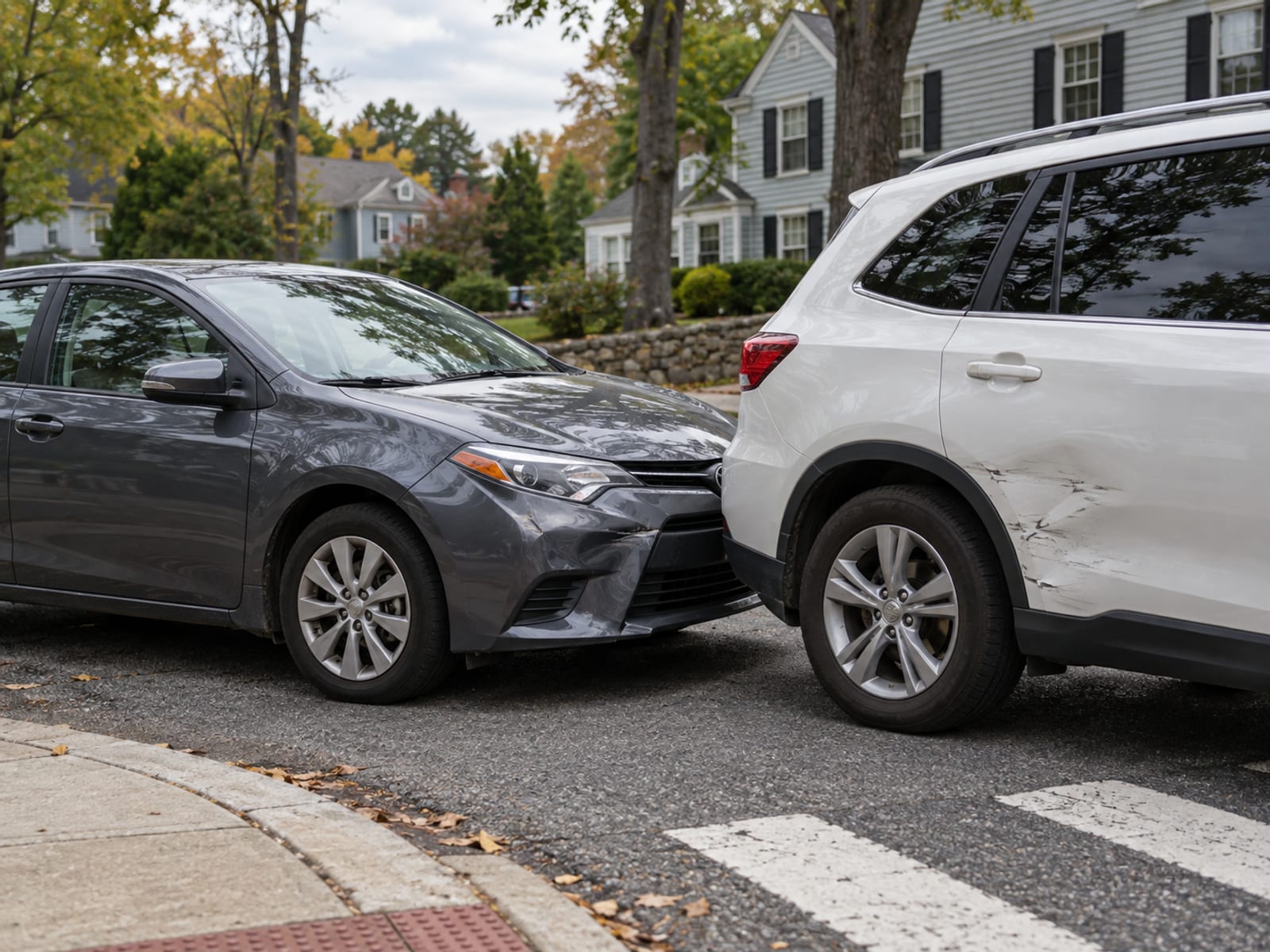
Yes. Under Conn. Gen. Stat. § 38a-336 (opens in a new tab), an auto liability policy has to carry uninsured and underinsured motorist coverage at no less than the § 14-112 limits, which is $25,000 per person and $50,000 per accident. This coverage pays you when the at-fault driver has no insurance, or not enough.
For policies issued or renewed on or after January 1, 1994, the default limits match your bodily injury liability limits. A named insured can ask for a lower amount, but only in writing, and the request has no effect unless the named insured signs an informed-consent form approved by the Insurance Commissioner. That form explains the coverage, lists the options and shows the premium costs, according to Insurance Department Bulletin PC-65 (opens in a new tab). The amount can never drop below the statutory minimum. Insurers must also offer limits up to twice your bodily injury liability limits.
A separate product, underinsured motorist conversion coverage, is bought under Conn. Gen. Stat. § 38a-336a (opens in a new tab). For this coverage, the usual cap on total recovery from all policies does not apply. If you think you may have signed a reduction form, your declarations page and the signed form are the documents to ask the insurer or agency for.
Is Connecticut a fault state, and is PIP required?
Connecticut is a fault-based liability state. The driver who causes the accident is responsible for the injuries and property damage to others, and the required coverages follow that structure.
Personal injury protection is not required in Connecticut. The Insurance Department's coverage regulation (opens in a new tab) lists bodily injury liability, property damage liability and uninsured and underinsured motorist protection as the required areas. Medical payments coverage is a separate, optional coverage, and if a policy includes it, the same regulation governs how it works. If you want medical payments coverage on your policy, ask the agency what it pays and what limit applies.
Hover or tap a row to highlight it.
| Coverage | Required by Connecticut law? | Notes |
|---|---|---|
| Bodily injury and property damage liability | Yes | At or above the § 14-112 (opens in a new tab) minimums |
| Uninsured and underinsured motorist | Yes | At no less than the § 14-112 (opens in a new tab) limits |
| Personal injury protection | No | Not among the required coverages |
| Medical payments | No | Separate optional coverage |
| Collision and comprehensive | No | A lender or leasing company can require both |
What proof of insurance does the DMV require?
To register a vehicle, you need proof of Connecticut insurance, and your insurance company supplies a Connecticut Insurance Identification Card, according to the DMV (opens in a new tab). When the DMV asks for proof later, it accepts a declarations page, a letter of experience or a valid permanent Connecticut Insurance Identification Card.
The DMV also checks on its own. Insurers must report canceled or uninsured vehicles to the DMV, which is how most lapse notices start. Whether an electronic copy of your card works for a given DMV transaction is a question for the DMV or your insurer before you go.
What happens if coverage lapses?
The DMV mails a warning or suspension notice. A lapse of more than 14 days can bring a $200 fine, and ignoring the notice can suspend the vehicle's registration along with all registration privileges in the owner's name, per the DMV's compliance page (opens in a new tab).
You have two ways to resolve it. You can pay the $200 fine and send proof of current insurance, or you can dispute the notice with documentation, such as proof that coverage was continuous. A declarations page with dates on it is the usual starting document. If the car is no longer insured because it is parked for good, sold or stored, cancel the registration or place the plates on hold before you drop liability coverage.
What must a new Connecticut resident do?
A person who establishes residency in Connecticut has 90 days to register an out-of-state vehicle, according to the DMV (opens in a new tab). The vehicle needs insurance that meets Connecticut's minimums before it can be registered, so the policy has to be in place first. Tell your current insurer or a Connecticut agency about the move early enough to get a Connecticut Insurance Identification Card in hand.

What might a lender or leasing company require?
Collision coverage pays for damage when your car hits another vehicle or an object. Comprehensive coverage pays for damage from causes other than collision, including fire, severe weather, vandalism, floods and theft, per the Connecticut Insurance Department (opens in a new tab). Connecticut law requires neither one, but a lending institution or leasing company can require both, according to the Insurance Department (opens in a new tab).
A lender can also set a maximum deductible and require that it be listed as a loss payee on the policy. Gap coverage addresses the difference between what a car is worth and what you still owe after a covered total loss, and whether you need it depends on your loan or lease contract. Ask the lender or leasing company for its insurance requirements in writing, then bring that document to the agency.
What does a premium depend on, and what notice comes before nonrenewal?
Geographic area, vehicle type, driving record and credit history are among the factors behind a premium, along with claims history, parking location, anti-theft devices, weather and deductibles, according to a June 26, 2024 consumer alert (opens in a new tab). Rate increases, discounts and surcharges differ by insurer because each insurer files its own rates. For context, Connecticut's 2023 combined average premium was $1,508.21 per insured vehicle, up from $1,377.39 in 2022, per the NAIC 2022/2023 Auto Insurance Database Report (opens in a new tab). Those are statewide averages, not a quote for any one driver.
An insurer that will not renew a policy covered by Conn. Gen. Stat. § 38a-323 (opens in a new tab) has to give at least 60 days' advance notice. Under Bulletin PC-66 (opens in a new tab), the notice must state a specific reason, and a general phrase such as "claims experience" or "underwriting judgment" is not enough. The permitted reasons depend on the statute and policy type.
What should you ask an insurance agency?
A list prepared before the call keeps the conversation on your situation. Drawing on the NAIC shopping tool (opens in a new tab) and the Insurance Department's auto insurance guidance (opens in a new tab), these questions cover the main points:
- What are the three liability limits on my policy, and what would higher limits cost?
- What are my uninsured and underinsured motorist limits, and did I sign a reduction form?
- What do collision and comprehensive cover, and which deductibles are available?
- Does my lender or leasing company require specific limits or deductibles, and does my contract require gap coverage?
- Does the policy cover another person driving my car, rental cars, work, or delivery driving? Personal auto policies can exclude business activities such as pizza delivery.
- What exclusions apply?
- Is rental reimbursement included? Is towing?
- Can I use my own repair shop, and are original or aftermarket parts covered?
- What discounts apply, and how will my driving history, claims history, credit history, location and vehicle type affect the premium?
- How do I report a claim?
- What notice will I get if the policy is canceled or not renewed?
Bring the vehicle identification number, the registered owner's name, your current declarations page and any lender or lessor requirements. Review your coverage at every renewal and ask about discounts, per the Insurance Department (opens in a new tab).
What to bring to the agency
- The carThe vehicle identification number and the registered owner's name.
- Your policyYour current declarations page and proof of continuous coverage.
- Lender paperworkAny lender or lessor insurance requirements, in writing.
- Your questionsThe list above, including limits, deductibles, exclusions and the notice before a cancellation or nonrenewal.
Check what you know about Connecticut car insurance requirements
How do you check an agent's license and file a complaint?
The Connecticut Insurance Department's licensing page (opens in a new tab) links to the license lookup (opens in a new tab), which runs on the NAIC State Based Systems platform. Search the agent or agency by name before you sign anything.
A dispute with an insurer or agent goes to the department through its online complaint process (opens in a new tab), by email at insurance@ct.gov, or by phone at 800-203-3447 or 860-297-3900. Name yourself, the insurer, the policy, the claim if there is one, the agent or agency, and the problem.
Frequently asked questions
Can I cancel my insurance and keep the car registered?
No, a registered vehicle has to stay insured. If you plan to drop liability coverage, cancel the registration or put the plates on hold first, then confirm the change with the DMV so no lapse notice follows.
Does the $200 fine apply to any lapse?
The DMV cites it for a lapse longer than 14 days. After the notice arrives, you can pay the fine and provide proof of current insurance, or dispute the notice with documents that show continuous coverage.
Can I drive on my out-of-state insurance after I move here?
The DMV gives a new resident 90 days to register an out-of-state vehicle, and the vehicle needs Connecticut-minimum insurance before registration. Ask your insurer when the policy will be updated to a Connecticut policy.
Is medical payments coverage the same as PIP?
No. PIP is not a required coverage in Connecticut, and medical payments coverage is a separate optional coverage governed by the Insurance Department's regulation. If a policy lists it, the limit on the declarations page tells you the amount.
Your next step
Take the questions above, your declarations page and any lender paperwork to a licensed Connecticut agency. Before you sign, look the agent or agency up on the Connecticut insurance license lookup (opens in a new tab) so the license is confirmed.
Terms used in this guide
Tap a term to see what it means.
Liability coverage. Coverage for harm you cause to other people and their property, not for your own car or injuries.
Uninsured and underinsured motorist coverage. Coverage that pays you when the at-fault driver has no insurance, or not enough.
Declarations page. The page of a policy that lists your coverages, limits and dates; the DMV accepts it as proof of insurance.
Connecticut Insurance Identification Card. The proof of insurance your insurer supplies for registering a vehicle.
Lapse. A gap in required coverage on a registered vehicle; one longer than 14 days can bring a $200 fine.
Loss payee. A lender or leasing company listed on the policy so it is paid for a covered loss on the car.
Gap coverage. Coverage for the difference between a car's worth and what you still owe after a covered total loss.