Vermont Snowmobile Insurance Requirements: Registration, VAST Trail Membership and Coverage
Riskado
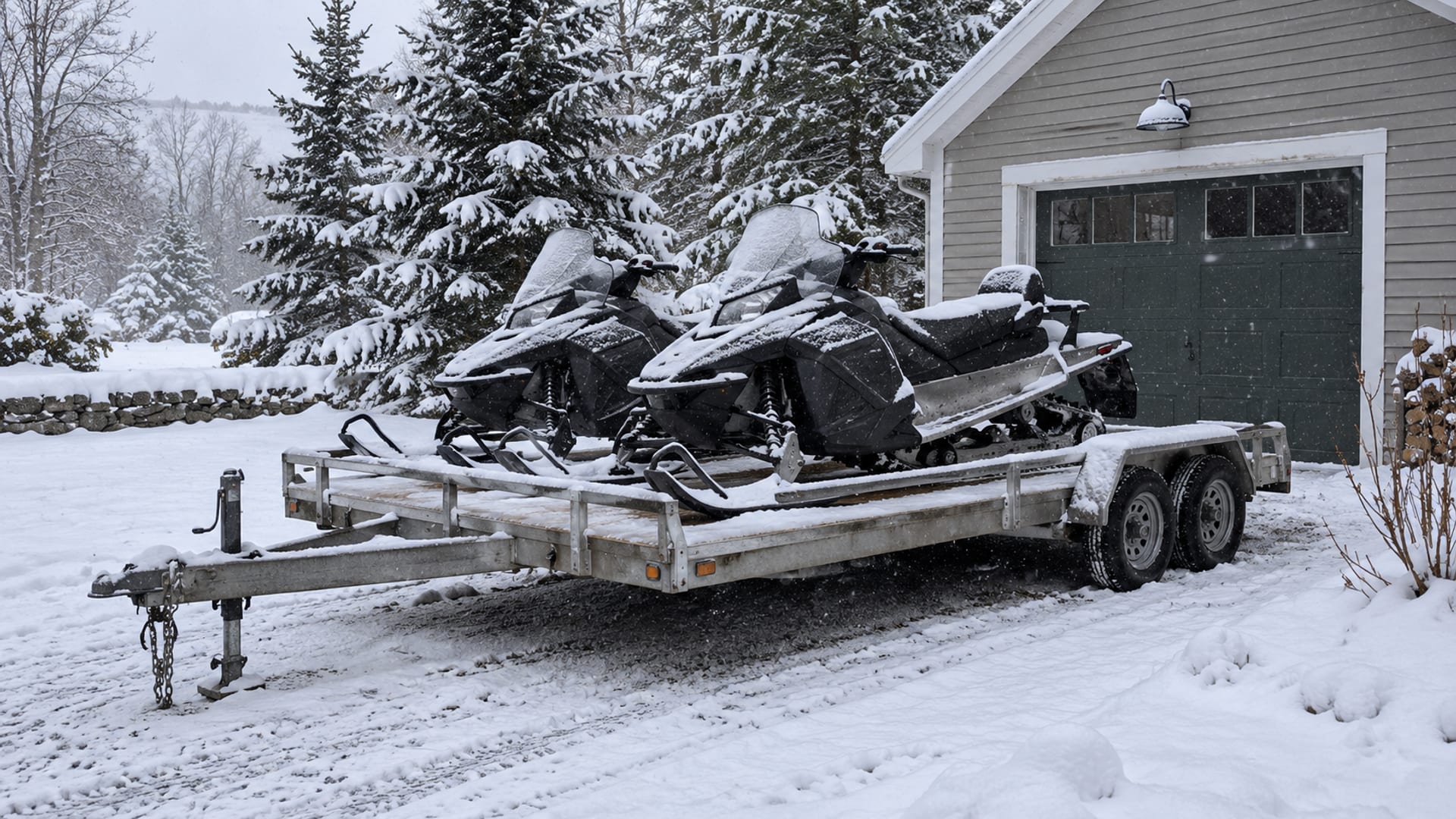
Vermont requires snowmobile liability insurance, or an approved bond, whenever you ride on the Statewide Snowmobile Trail System or a public right-of-way, except on the owner's own property. The minimums under 23 V.S.A. § 3206 (opens in a new tab) are $25,000 for one person injured or killed, $50,000 for two or more people injured or killed, and $10,000 for property damage in one crash. You also need a valid registration and, for ordinary VAST trail riding, a Vermont Trails Maintenance Assessment (TMA) trail pass. Plan on a separate snowmobile policy: snowmobiles are not covered under typical homeowners, renters or auto policies, according to the NAIC (opens in a new tab).
Key takeaways
- When it is requiredOn the Statewide Snowmobile Trail System or a public right-of-way, except on the owner's own property.
- Minimum liability$25,000 for one person, $50,000 for two or more people and $10,000 for property damage in one crash.
- RegistrationA valid registration from Vermont or another state or province.
- Trail passA Vermont Trails Maintenance Assessment (TMA) for ordinary VAST trail riding.
- Separate policySnowmobiles are not covered under typical homeowners, renters or auto policies, according to the NAIC.
Do you need snowmobile insurance to ride in Vermont?
Yes, on trails and public rights-of-way. Under 23 V.S.A. § 3206 (opens in a new tab), you cannot operate a snowmobile on the Statewide Snowmobile Trail System or a public right-of-way, except on the owner's property, without liability insurance or a bond of at least:
- $25,000 for one person killed or injured.
- $50,000 for two or more people killed or injured.
- $10,000 for property damage in one crash.
Instead of a policy or bond, an owner can file evidence of self-insurance of $115,000 with the Commissioner. Whichever you choose, you must keep it in force and carry proof in the required form. Proof on your phone or another portable electronic device counts.
If you are stopped without proof, you are not convicted under this rule if you send or show proof that was in effect at the time of the stop within seven business days, under 23 V.S.A. § 3206 (opens in a new tab). That rule helps when you forgot the card; it does not help if the policy had lapsed.
Riding only on your own land falls outside the insurance requirement in that section. Registration, safety certificate and land-permission rules can still apply there; ask an agent whether you want liability coverage there as well.
What registration a Vermont snowmobile needs
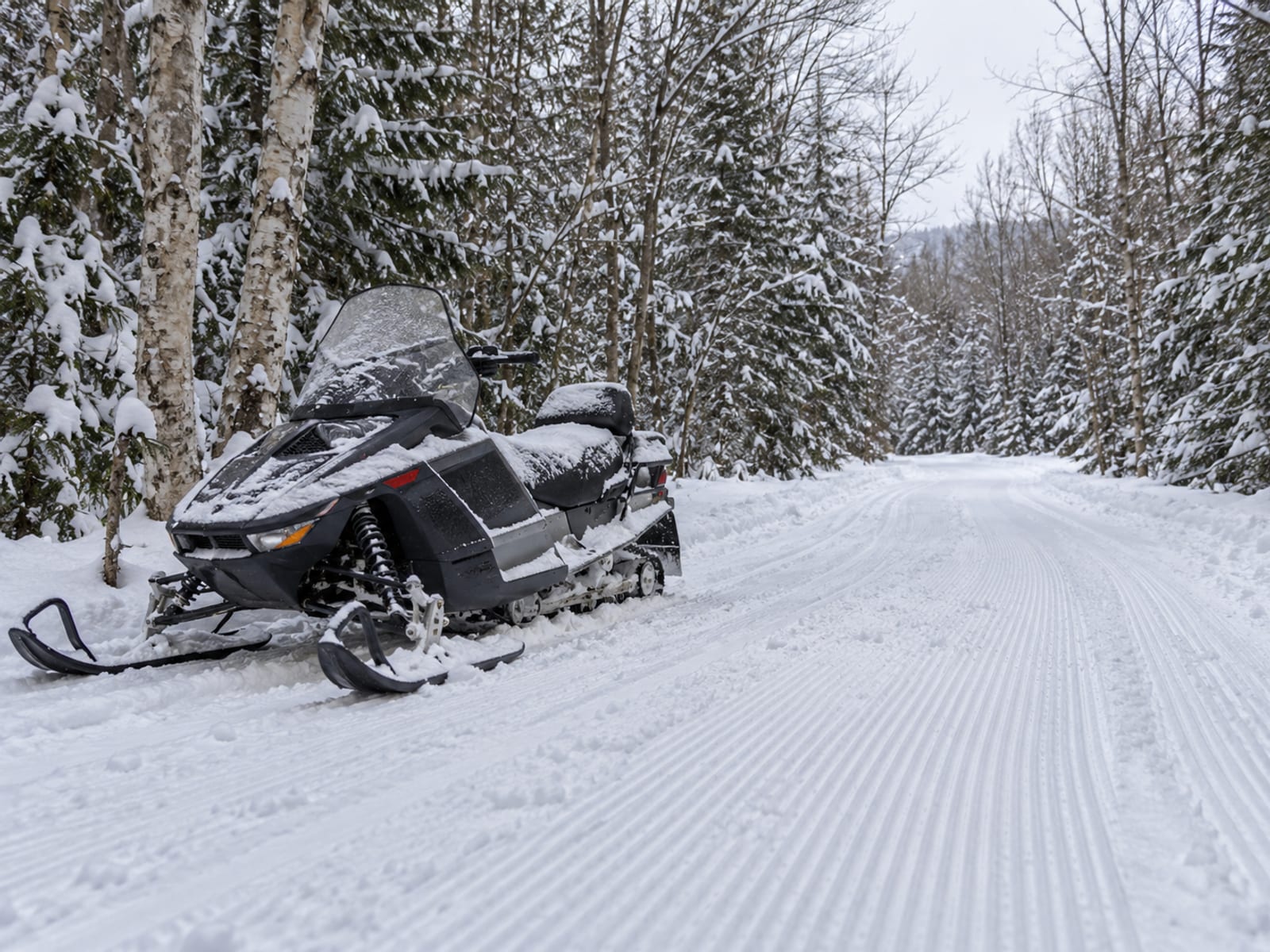
Your sled must be registered and numbered by Vermont or by another state or province, and for ordinary in-state riding it must display the required Vermont TMA decal, under 23 V.S.A. § 3202 (opens in a new tab). The Vermont registration year runs from September 1 through August 31, so a registration bought in February expires at the end of that August. Registration does not, by itself, give you permission to ride on any public or private land.
The Vermont DMV fee page (opens in a new tab), checked October 1, 2026, lists:
- Resident snowmobile registration: $28.
- Nonresident snowmobile registration: $36.
- Antique snowmobile registration: $50.
- Registration transfer: $3.
- Replacement registration: $6.
- Title, where applicable: $27.
The DMV snowmobile registration application (opens in a new tab) asks for the sled's make, year and VIN, ownership and purchase information, registration status and tax documentation. Have your bill of sale and any prior registration handy before you start. The DMV registration instructions (opens in a new tab) walk through each field.
What the VAST TMA trail pass is
The TMA is your trail access document. It is the Trails Maintenance Assessment tied to membership in the Vermont Association of Snow Travelers (VAST) and a local club, and the TMA fee and dues include an individual VAST membership, according to the VAST bylaws (opens in a new tab). When you buy online, you choose a club, and the club dues are included in the listed price, according to VAST (opens in a new tab).
VAST's 2026 pricing (opens in a new tab) lists:
- Vermont-registered sled: $155 early-bird through December 15, then $195 for the regular season.
- Out-of-state sled: $185 early-bird through December 15, then $235 for the regular season.
- Three-day pass: $90.
- Antique TMA: $70 for the first sled and $25 for each additional sled, under the listed conditions.
Buying by December 15 saves $40 on a Vermont-registered sled and $50 on an out-of-state sled. Confirm current pricing before you buy, since VAST sets it by season.
Hover or tap a row to highlight it.
| Item | Figure or rule | Source |
|---|---|---|
| Liability, one person killed or injured | $25,000 | 23 V.S.A. § 3206 (opens in a new tab) |
| Liability, two or more people killed or injured | $50,000 | 23 V.S.A. § 3206 (opens in a new tab) |
| Property damage, one crash | $10,000 | 23 V.S.A. § 3206 (opens in a new tab) |
| Self-insurance alternative | $115,000 filed with the Commissioner | 23 V.S.A. § 3206 (opens in a new tab) |
| Time to show proof in effect at a stop | Seven business days | 23 V.S.A. § 3206 (opens in a new tab) |
| Resident registration | $28 | Vermont DMV (opens in a new tab) |
| Nonresident registration | $36 | Vermont DMV (opens in a new tab) |
| TMA, Vermont-registered sled | $155 by December 15, then $195 | VAST 2026 pricing (opens in a new tab) |
| TMA, out-of-state sled | $185 by December 15, then $235 | VAST 2026 pricing (opens in a new tab) |
| Three-day TMA | $90 | VAST 2026 pricing (opens in a new tab) |
The TMA and your insurance are two separate things. VAST requires riders to carry liability insurance and sells the TMA as a trail assessment and membership, so the trail pass does not serve as your liability policy. You need both.
Can visitors ride with an out-of-state registration?
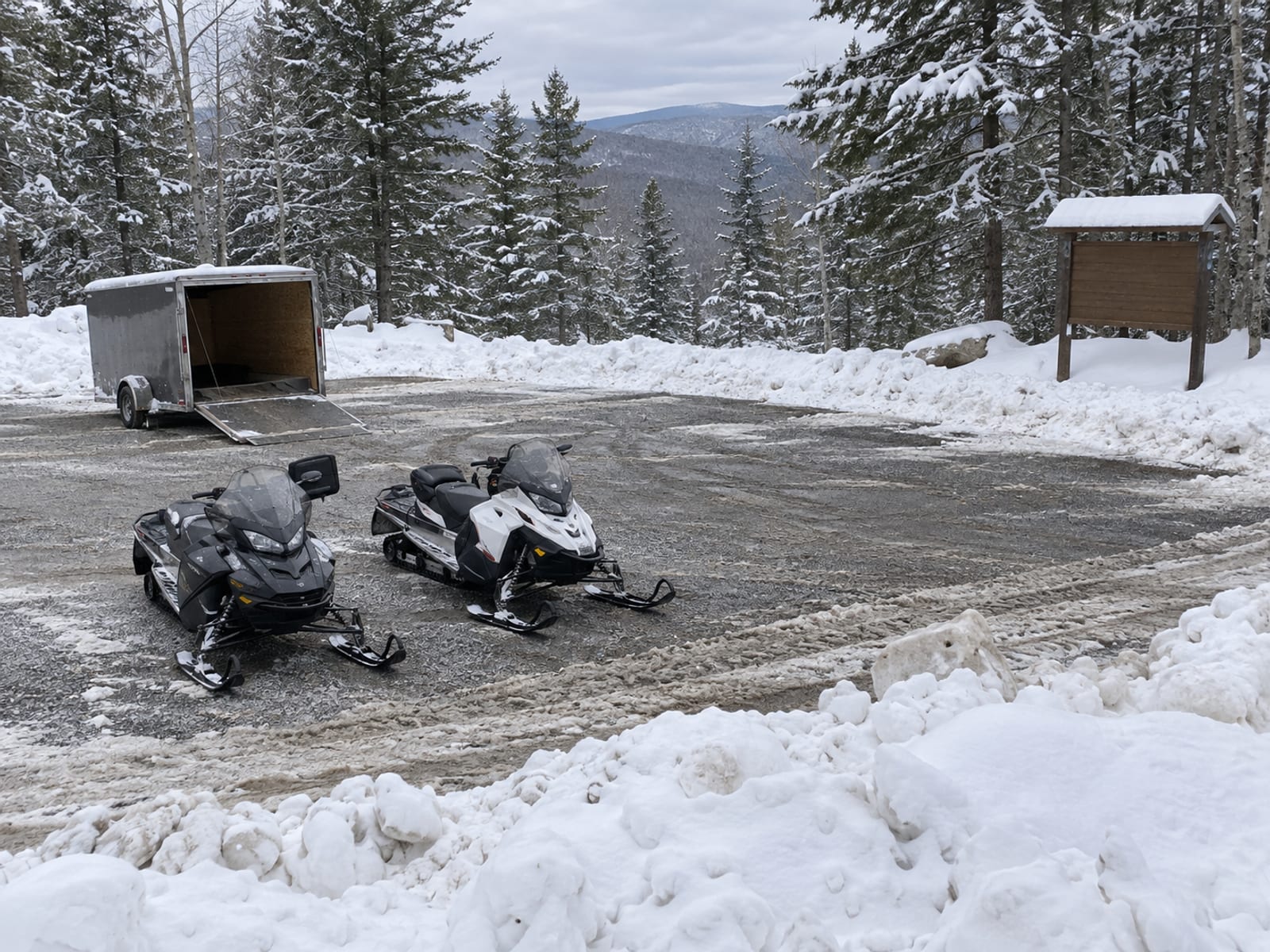
Yes. Vermont recognizes a snowmobile legally registered and numbered by another state or province, as long as a valid Vermont TMA decal is displayed next to the registration decal, according to the DMV registration instructions (opens in a new tab). Your home-state registration covers the registration piece; it does not replace the TMA.
An out-of-state rider must join a county and local club and buy the applicable TMA, according to VAST (opens in a new tab). 23 V.S.A. § 3202 (opens in a new tab) carves out narrow exceptions for short access routes to food, fuel, lodging, repair services, border customs and designated areas, but those do not open the trail system to riders without a TMA.
Before a Vermont trip, check that your home policy meets Vermont's $25,000, $50,000 and $10,000 minimums and covers riding in Vermont. Then pack this list:
- Your out-of-state registration.
- Your Vermont TMA evidence, with the decal displayed.
- Proof of liability insurance, on paper or on your phone.
- Your snowmobile safety certificate, if one is required for you.
Operator and land-use rules
Insurance and registration are only part of riding legally. These rules come from 23 V.S.A. § 3206 (opens in a new tab) and the Vermont DMV Snowmobile Manual (opens in a new tab):
- Safety education. If you were born after July 1, 1983, you need a snowmobile education certificate to ride on private or public land or water, subject to statutory exemptions. Carry the certificate or a copy and show it on request. A certificate from another state or country can satisfy the rule if it meets or substantially meets International Association of Snowmobile Administrators criteria. VAST lists safety course details (opens in a new tab).
- Children under 8 may not operate a snowmobile, except on land owned by their parents, family or guardian.
- Children 8 to under 12 who complete the course may ride only under the direct supervision of a parent or legal guardian, who is liable for the child's actions.
- Plowed public highway crossings. Stop, yield and cross at about 90 degrees. The operator must be at least 16, or at least 12 and directly supervised by someone 18 or older.
- Private land. You need ownership, written permission, permission through a VAST club reflected by a valid TMA, or landowner posting that snowmobiling is allowed.
- Public land or water must be designated for snowmobile use.
- Headgear. Protective headgear is required on the Statewide Snowmobile Trail System, with a grooming exception in the statute.
What a snowmobile policy may cover
Vermont law sets only the liability minimum. Everything else depends on the policy form, so treat these as categories to ask your agent about:
- Liability pays for injuries or property damage you are legally responsible for causing to others. This is the part Vermont requires.
- Collision covers damage to your sled from a collision or upset, subject to the deductible.
- Comprehensive covers risks such as theft, fire, vandalism, weather and animal impact, subject to the deductible.
- Uninsured or underinsured motorist coverage may protect you if another operator without enough insurance injures you, depending on the form.
- Medical payments coverage may pay qualifying medical expenses.
- Trailer or transport coverage may be separate, limited or added by endorsement.
Ask the agency to show you each coverage, exclusion, deductible and trailer limit in the actual policy before you buy.
Does homeowners or auto insurance cover a snowmobile?
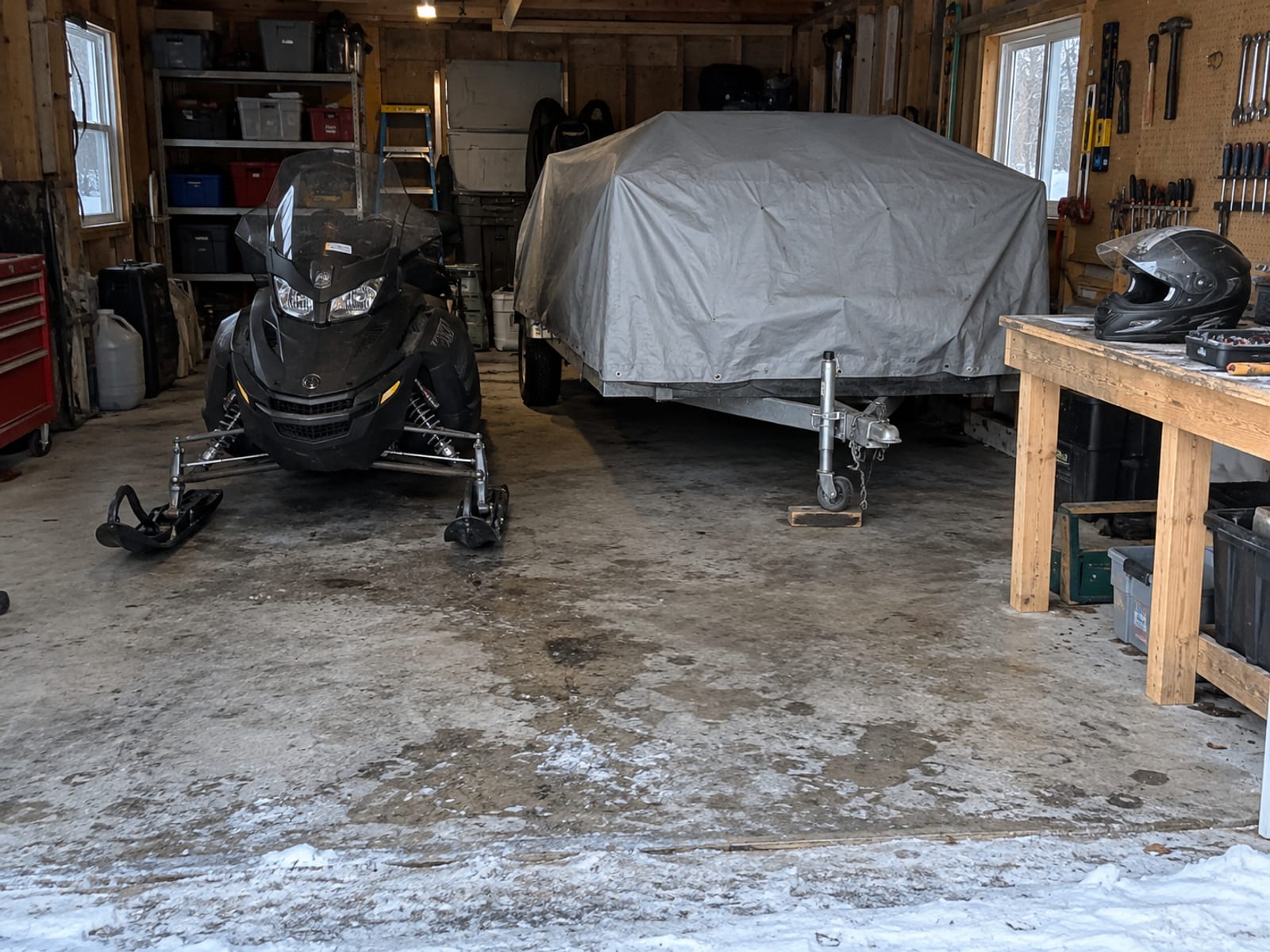
Generally not. The NAIC says snowmobiles are not covered under typical homeowners, renters or auto policies and suggests talking with an agent about a separate snowmobile policy, according to its snowmobile coverage guidance (opens in a new tab) and its winter mishaps article (opens in a new tab).
Your own policy controls, though, through its endorsements, exclusions, vehicle definitions and location rules. Ask your insurer to confirm in writing whether your homeowners or auto policy gives any coverage for the sled's liability, damage, theft, transport or trailer. If the answer is no, or only partial, a separate policy fills the gap.
How much it costs to insure a snowmobile
Snowmobile insurance averaged $15 a month nationally, with liability-only coverage running about $10 to $20 a month, or $120 to $240 a year, according to ValuePenguin (opens in a new tab), updated July 6, 2026. Its listed cost factors are the snowmobile model, your policy limits and any extra coverages.
That is national context, not a Vermont rate or a quote. When you ask for a price, ask which details about the sled, rider, use, location, deductible and coverage are driving it. Add the $28 or $36 registration and the TMA to your season budget as well.
Check the agency or insurer
You can confirm whether an insurance agent or company is actively licensed in Vermont, and for which lines, through the Vermont insurance license lookup (opens in a new tab). DFR's Insurance Division regulates insurance companies, agents and adjusters doing business in the state. If a problem comes up, use the DFR insurance complaint process (opens in a new tab) or call consumer assistance at 800-964-1784 or 802-828-3302, or email dfr.insuranceinfo@vermont.gov.
Questions to ask before you buy
- Does the policy meet Vermont's $25,000, $50,000 and $10,000 liability requirements?
- Will the insurer accept my Vermont or out-of-state registration?
- What proof of insurance will I get, and can I carry it electronically?
- Does the policy cover riding on VAST trails, public rights-of-way, private land and every place I plan to ride?
- Are passengers and other permitted operators covered?
- What do collision and comprehensive include, such as theft, fire, vandalism, animal impact and weather?
- Is uninsured or underinsured motorist coverage available?
- Is my trailer, the sled during transport, or attached equipment covered?
- What is excluded during storage, transport, racing, rental, commercial or guided-tour use?
- What deductible applies to each physical-damage coverage?
- What happens if the policy is canceled, nonrenewed or lapses before a planned ride?
If you would like to compare agencies, Riskado's Vermont agency directory lists insurance agencies by city and by category.
Check what you know about Vermont snowmobile insurance
Frequently asked questions
Is snowmobile insurance required in Vermont?
Yes, to ride on the Statewide Snowmobile Trail System or a public right-of-way, except on the owner's property. You can meet the rule with a liability policy, a bond or $115,000 in filed self-insurance under 23 V.S.A. § 3206 (opens in a new tab).
Does a VAST membership include insurance?
No. VAST requires riders to carry liability insurance and treats the TMA as a trail assessment and membership, according to VAST (opens in a new tab). Buy the policy and the TMA separately.
How much is a VAST trail pass for an out-of-state sled?
$185 if bought by December 15 and $235 after that, with a $90 three-day pass also available, according to VAST's 2026 pricing (opens in a new tab). Confirm the price before you buy.
What if I forgot my insurance card when I was stopped?
You can avoid a conviction under the insurance rule by sending or showing proof that was in effect at the time of the stop within seven business days, under 23 V.S.A. § 3206 (opens in a new tab). Keeping proof on your phone avoids the problem.
Can a 12-year-old ride a snowmobile in Vermont?
A child aged 8 to under 12 who completes the safety course may ride only under the direct supervision of a parent or legal guardian. At 12, a rider can cross a plowed public highway only with direct supervision by someone 18 or older, under 23 V.S.A. § 3206 (opens in a new tab).
Before your first ride of the season
Line up three things: a liability policy that meets Vermont's minimums, a current registration from Vermont or your home state, and a VAST TMA for the trails. Add your safety certificate if you need one, keep proof of all of it on hand, and ask your agent to confirm in writing what the policy covers beyond liability.
Getting ready to ride in Vermont
- InsuranceA liability policy, bond or filed self-insurance that meets Vermont's $25,000, $50,000 and $10,000 minimums, with proof on paper or on your phone.
- RegistrationA current registration from Vermont or your home state or province.
- Trail passA VAST TMA for the trails, with the decal displayed.
- Safety certificateRequired if you were born after July 1, 1983, subject to statutory exemptions.
- Policy checkAsk your agent to confirm in writing what the policy covers beyond liability.
Sources: 23 V.S.A. § 3206 (opens in a new tab); 23 V.S.A. § 3202 (opens in a new tab); Vermont DMV fees (opens in a new tab); Vermont DMV Snowmobile Manual (opens in a new tab); VAST, what you need to ride (opens in a new tab); VAST 2026 pricing (opens in a new tab); NAIC (opens in a new tab); ValuePenguin (opens in a new tab); Vermont DFR license verification (opens in a new tab).
Terms used in this guide
Tap a term to see what it means.
TMA. The Trails Maintenance Assessment, the VAST trail pass that includes VAST and local club membership.
VAST. The Vermont Association of Snow Travelers, which sells the TMA and requires riders to carry liability insurance.
Statewide Snowmobile Trail System. The trail network where Vermont requires snowmobile liability insurance or a bond.
Self-insurance. An alternative to a policy or bond: evidence of $115,000 filed with the Commissioner.
Collision. Coverage for damage to your sled from a collision or upset, subject to the deductible.
Comprehensive. Coverage for risks such as theft, fire, vandalism, weather and animal impact, subject to the deductible.