Accident Forgiveness: What It Covers, Who Qualifies, and When It Is Worth Paying For
Riskado
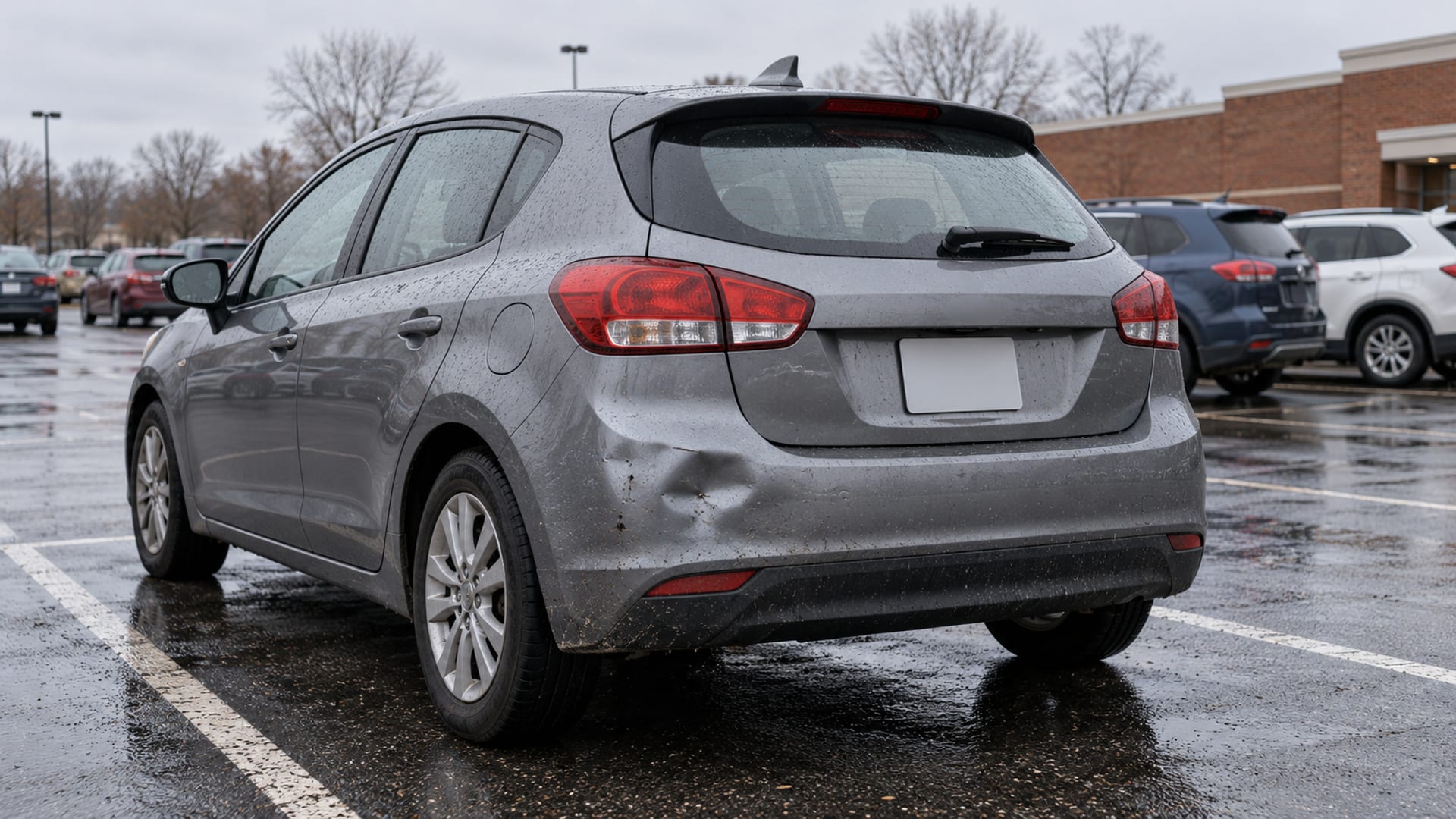
Accident forgiveness is an optional auto insurance feature that can keep your insurer from raising your rate after an eligible accident, often a first at-fault one. It is an insurer's own product, not a legal right, and it does not erase the accident from your driving record or your claims history. Each insurer sets its own rules for who qualifies, what it costs, how large the claim can be, how many times it applies, and whether it protects one driver or the whole policy. Some insurers include it or award it after several clean years, and others sell it as an add-on. Your declarations page shows whether you have it.
Key takeaways
- What it isAn optional auto insurance feature that can keep your insurer from raising your rate after an eligible accident, often a first at-fault one.
- Who sets the rulesEach insurer, not the law. Qualifying rules, cost, claim size, number of uses and whether it protects one driver or the whole policy all differ.
- What it does not doIt does not erase the accident from your driving record or your claims history.
- How you get itSome insurers include it or award it after several clean years, and others sell it as an add-on.
- Where to checkYour declarations page shows whether you have it.
What does accident forgiveness change?
Accident forgiveness is an insurer's agreement not to raise your premium after an at-fault accident, according to the NAIC (opens in a new tab). It can come built into a standard policy, be offered to long-time customers, or be sold as an extra endorsement.
It changes one thing, which is how your insurer rates you at renewal. It does not repair your car, pay anyone's injury or property claim, or freeze every part of your premium. The accident itself still happened, and the records of it still exist.
The term also gets used for several different products. Progressive (opens in a new tab) sells three versions: small accident forgiveness, a loyalty version, and a purchased option. Allstate (opens in a new tab) sells it as an optional feature. A claims-free discount is a different thing again. It rewards a stretch without claims, and losing that discount after an accident can raise your premium, according to the Connecticut Insurance Department (opens in a new tab). A minor-violation waiver deals with a traffic ticket, and it does not necessarily forgive an accident.
Accident forgiveness is generally a personal auto feature. A commercial auto policy has its own wording, so confirm it separately with the insurer or agency if the vehicle belongs to a business.

What should you check before deciding?
Start with your current policy, because you may already have it. Look at your declarations page and your latest renewal notice for an accident forgiveness line or endorsement. Then find out which of three versions you are looking at: included automatically, earned after a clean stretch, or purchased for an added charge.
Next, ask which driver and which vehicle it protects. Some versions follow a single driver, and others apply to the whole policy. The answer decides whether a second driver in your household is covered.
Finally, find out when it applies. Liberty Mutual's rate protection (opens in a new tab) applies at renewal, which is the moment most people first see a surcharge.
Will it cover your accident?
Whether your accident qualifies depends on the insurer's conditions, and those conditions differ. Published rules from three large insurers show how much.
Progressive's small accident forgiveness applies to a first claim of $500 or less, and it is available to all Progressive auto customers (Progressive FAQ (opens in a new tab)). Its large accident forgiveness is for customers who have been with the company five years and stayed accident-free and violation-free for up to five consecutive years (Progressive discounts (opens in a new tab)). Its purchased option may forgive one eligible accident per policy period.
Liberty Mutual sells an optional benefit for a first accident. Eligibility may require five years of accident-free driving and no violations in the previous five years, and drivers age 25 or younger need five consecutive clean years before a first accident is forgiven. Availability varies by state, per Liberty Mutual's customer disclaimer (opens in a new tab).
With Allstate's feature added, rates will not go up after an accident, even one that was the driver's fault. No universal clean-years rule or number of uses is published for it. Allstate's motorcycle First Accident Waiver has its own conditions, including a 48-month policy-age requirement, and those belong to motorcycle policies only (Allstate motorcycle coverage (opens in a new tab)).
Hover or tap a row to highlight it.
| Insurer and version | Published rule | Source |
|---|---|---|
| Progressive, small accident forgiveness | Applies to a first claim of $500 or less and is available to all Progressive auto customers | Progressive FAQ (opens in a new tab) |
| Progressive, large accident forgiveness | For customers who have been with the company five years and stayed accident-free and violation-free for up to five consecutive years | Progressive discounts (opens in a new tab) |
| Progressive, purchased option | May forgive one eligible accident per policy period | Progressive (opens in a new tab) |
| Liberty Mutual, optional benefit | For a first accident. Eligibility may require five years of accident-free driving and no violations in the previous five years; drivers age 25 or younger need five consecutive clean years. Availability varies by state | Liberty Mutual (opens in a new tab) |
| Allstate, optional feature | Rates will not go up after an accident, even one that was the driver's fault. No universal clean-years rule or number of uses is published | Allstate (opens in a new tab) |
So the questions that settle it are these: Does your accident have to be at fault? Is there a claim-payment threshold? Do you need a set number of clean years first? Would a ticket connected to the accident disqualify you? And how many accidents can the feature forgive?
What does it cost?
Published sources support three pricing structures. The feature can be included automatically in a policy or loyalty program, earned after a claim-free or violation-free period, or bought as an optional endorsement.
Standard policies that include it may carry a higher premium, and the feature is more often sold as an endorsement for a fee, with costs that vary by insurer, according to the NAIC (opens in a new tab). Progressive's purchased option raises the cost of the policy, while its loyalty benefits may be included (Progressive (opens in a new tab)). Liberty Mutual sells it as additional coverage, with no published dollar price.
A universal price is not something you can look up in advance. Ask for the exact added premium on your own policy, and ask whether the price changes at each renewal. Then compare that number with what an at-fault surcharge could add, using your insurer's own rating plan.
For a sense of scale, insurers could raise premiums by as much as 40 percent after an accident, according to a 2009 NAIC article (opens in a new tab). That figure is 17 years old and is national background, not a forecast for your policy. Many New York rating plans apply a surcharge of up to 40 percent for a first at-fault accident, with a three-year experience period, according to the New York Department of Financial Services (opens in a new tab).

Will your premium still change?
Yes, it can. Accident forgiveness addresses the surcharge tied to one accident. Other rating factors, discounts, filed rates, added vehicles or drivers, and underwriting changes can still move your total premium.
Rate increases, discounts and surcharges vary by insurer and by the rating plan it files with the state, so there is no one-size-fits-all increase. The Connecticut Insurance Department (opens in a new tab), for example, says exactly that for its state. So, when a renewal notice arrives after an accident, ask the agency for a written explanation of any surcharge or any lost discount, and ask whether the feature was applied.
Does the accident stay on your record?
Yes. Accident forgiveness changes how your insurer applies a rate increase, and the accident can remain in other places. Three separate things are in play: the insurer's surcharge treatment, your state driving record, and your insurance claims-history report.
Three separate places an accident can show up
- The insurer's surcharge treatmentThis is the part accident forgiveness changes: how your insurer rates you at renewal.
- Your state driving recordMassachusetts keeps operator driving records, including at-fault accident claim records, at its Merit Rating Board.
- Your claims-history reportLexisNexis Risk Solutions keeps insurance claims-history information and runs a process for disputing incomplete or inaccurate entries.
Massachusetts shows how the pieces differ. Its Merit Rating Board (opens in a new tab) keeps operator driving records that contain at-fault accident claim records, comprehensive claim records, traffic violations, and out-of-state incidents. An at-fault accident may be added to a Massachusetts driving record and used in calculating insurance ratings, according to the RMV (surchargeable incidents (opens in a new tab)).
Claims history sits elsewhere. LexisNexis Risk Solutions (opens in a new tab) keeps insurance claims-history information, lets you request a consumer disclosure report, and runs a process for disputing incomplete or inaccurate entries. If your fault determination looks wrong, Massachusetts publishes an appeals process for an insurer's at-fault accident determination (opens in a new tab), and any insurer can tell you its own dispute procedure.
Reporting is a separate duty. Your policy and the law decide when you must notify your insurer of an accident, and accident forgiveness does not remove that obligation.

Do state laws protect you after an accident?
Some states limit when an insurer may decline, cancel or nonrenew a policy after an accident, and people often mistake those rules for accident forgiveness. They are a different protection. Each state's law and insurance department (opens in a new tab) set them, and they limit cancellation and nonrenewal; they do not require an insurer to forgive an at-fault accident or create an accident forgiveness endorsement. Whether an insurer offers the feature in your state comes down to its filed policy and rating plan, so ask the insurer or agency whether yours includes it.
For example, under Conn. Gen. Stat. § 38a-358 (opens in a new tab), a Connecticut insurer cannot decline, cancel or nonrenew a private passenger auto policy because of a first or second accident in the current experience period in which you were not at fault and had no moving violation conviction. The notice that state requires before a nonrenewal is in our guide to Connecticut car insurance requirements.
What can a state surcharge system contain?
Surcharge rules are set state by state, and a state that publishes its rules in detail shows what such a system can contain. Massachusetts is one example. Some auto insurers offer accident forgiveness as part of their policies, and it may be included in a standard policy at a higher premium, according to Mass.gov (opens in a new tab).
A merit-rating plan adjusts premiums partly on at-fault accidents and driving records, according to the Division of Insurance. A driver found more than 50 percent at fault may receive an at-fault accident determination and could face a higher premium under the insurer's plan.
A surchargeable at-fault accident in Massachusetts is one where the operator is more than 50 percent at fault, the vehicle is a private passenger car, and the claim payment exceeds $1,000 after the deductible. A minor accident falls between $1,000 and $5,000, and a major accident is above $5,000 (surchargeable incidents (opens in a new tab)).
Under 211 CMR 134.13 (opens in a new tab), the regulation assigns three surcharge points for a minor accident and four for a major accident in fixed-and-established markets. In a competitive market, an insurer may adopt a merit-rating plan with a different system. Either way, a plan cannot use an accident or violation more than six years old from the policy effective date, and it cannot raise premiums for accidents or violations for more than five years.
Hover or tap a row to highlight it.
| Accident type | Claim payment, after the deductible | Surcharge points in fixed-and-established markets |
|---|---|---|
| Minor | More than $1,000 through $5,000 | Three points |
| Major | Above $5,000 | Four points |
What should you ask an agency at renewal?
Bring the paperwork along with the questions. Useful documents are your declarations page, the renewal offer, any accident forgiveness endorsement, the claim number and payment amount, the date and description of the accident, the fault determination, and your driving record if you have one.
Then ask:
- Is accident forgiveness on my current policy, and is it an endorsement, a discount, a loyalty benefit, or a claims-free feature?
- What is the added premium, if any?
- Which driver does it protect, and does it apply to every vehicle on the policy?
- Does it cover only at-fault accidents, or accidents involving a traffic violation too?
- Is there a claim-payment threshold?
- How many accidents can be forgiven, and does that mean once per policy period or once for the whole relationship?
- Does the benefit reset after several clean years?
- Does it protect against a surcharge, a lost discount, or both?
- Can my total premium still change for other reasons?
- Will the accident appear in the insurer's claims history, and will it be reported to a state driving-record or merit-rating database?
- Does the benefit end if the policy lapses or is canceled, and does it transfer to another insurer?
- What happens if the policy is rewritten or moved to an affiliate?
- Which policy form, endorsement, or declarations-page entry confirms the benefit?
- What is the procedure for disputing an incorrect fault determination?
Ask how your rates may be affected, and get the cost, eligibility, and conditions before you buy. The written policy, the endorsement, the declarations page, and the filed rating plan control in the end.

Check what you know about accident forgiveness
Frequently asked questions
Is accident forgiveness worth getting?
The answer depends on three numbers you can get from your agency: the added premium for the feature, the surcharge your insurer would apply after an at-fault accident, and how long that surcharge lasts. Compare the cost of the feature year after year with the surcharge you could face, and check whether you already qualify for a free version through loyalty or clean years.
How many times can you use accident forgiveness?
The limit belongs to the insurer. Progressive's purchased option may forgive one eligible accident per policy period, and other programs set their own limits. Ask whether the limit is per policy period or for the whole time you stay with the insurer.
What qualifies you for accident forgiveness?
Qualifying rules include clean-driving years, insurer tenure, a claim-size cap, and no violations. Progressive and Liberty Mutual each set a five-year clean-record condition for their programs, and Progressive's small accident version needs only a first claim of $500 or less. Your agency can tell you which condition applies to your policy.
How much extra does accident forgiveness cost?
No universal price exists, and some versions cost nothing because they are included or earned. For a purchased version, ask for the exact added premium on your actual policy, in writing.
Does it follow you to a new insurer?
Do not assume it does. Ask the new insurer how it treats the accident and ask the current insurer whether the benefit ends when the policy ends.
Your next step
Take the list of questions above to a licensed agency, which you can find in the Riskado agency directory, and ask for the answers in writing, along with the endorsement or declarations-page entry that confirms them. Check that the agency is licensed on your state's license lookup (opens in a new tab) before you share policy details.
Terms used in this guide
Tap a term to see what it means.
Accident forgiveness. An insurer's agreement not to raise your premium after an eligible at-fault accident.
Surcharge. An increase in your premium tied to an accident or violation.
Endorsement. A written addition to a policy, such as an extra sold to add accident forgiveness.
Declarations page. The page of a policy that lists your coverages, limits and endorsements.
Claims-free discount. A discount that rewards a stretch without claims. Losing it after an accident can raise your premium.
Merit-rating plan. A plan that adjusts premiums partly on at-fault accidents and driving records.
At-fault determination. An insurer's finding about who caused an accident, which can be disputed.