Georgia Homeowners Insurance: Why Rates Are Rising, What It Costs, Claim Laws, What It Covers and What to Do at Renewal
Riskado
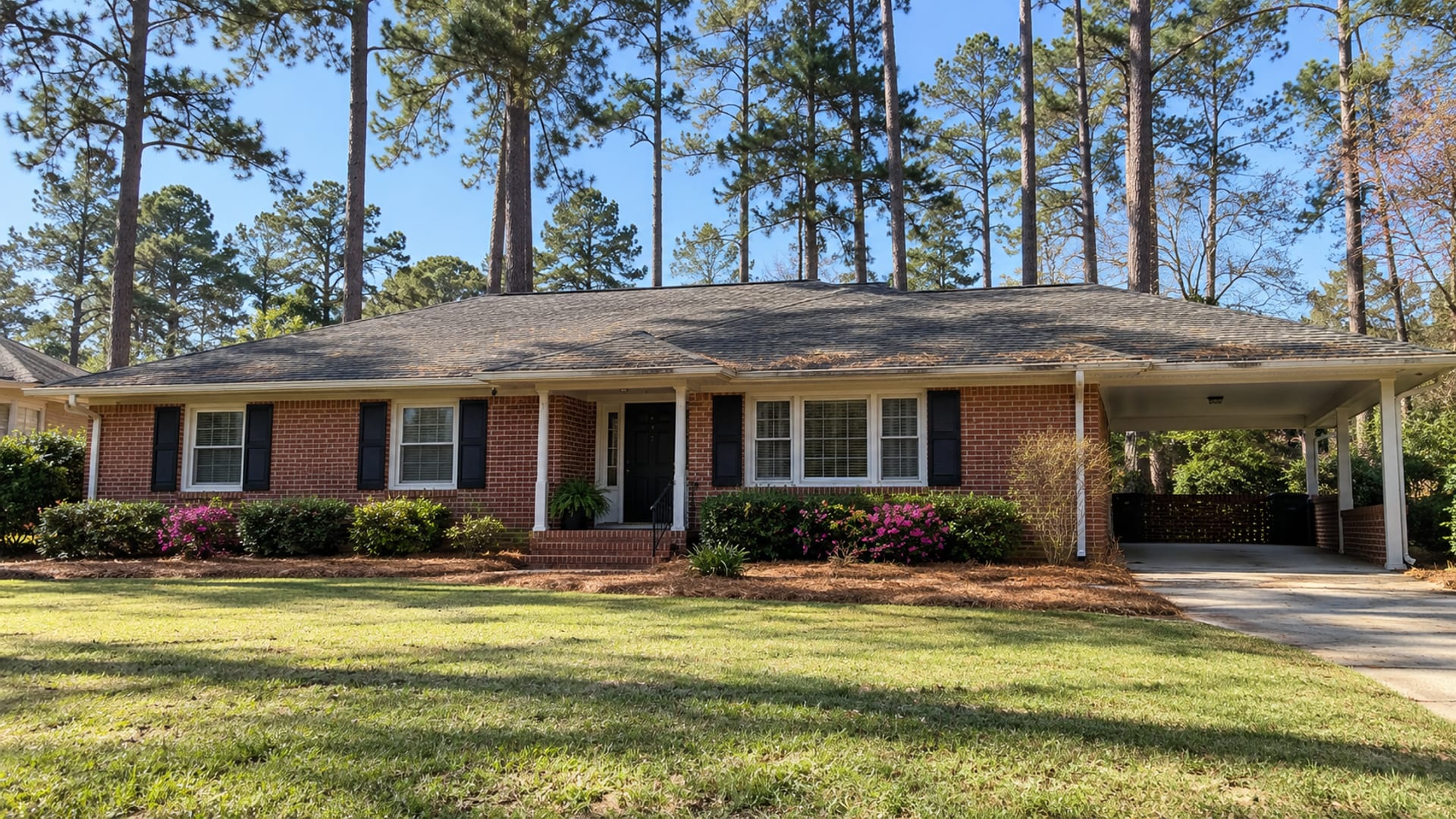
A Georgia homeowners insurance increase usually comes from one of two places: the insurer's filed rates, or something about your own property and policy, such as the roof's age or condition, a higher dwelling limit, a new deductible or a claim. Higher rebuilding costs and storm losses feed both. A statewide average doesn't set your renewal price. Start by comparing the new declarations page with last year's, then ask the insurer which rating or underwriting factors changed. Check the roof and dwelling details it has on file. If the notice cuts coverage or ends the policy, note the effective date, because Georgia law sets minimum notice periods, and the Georgia Underwriting Association (opens in a new tab) is the fallback when no private insurer will write the home.
Key takeaways
- Two sources of changeAn increase comes from the insurer's filed rates, from your own roof, limits, deductible or claims, or from both.
- Averages are not quotesGeorgia's 2023 HO-3 average was $1,828, and your renewal can sit well above or below it.
- Compare the pagesLine up this year's and last year's declarations pages and ask which rating or underwriting factors changed.
- Notice rulesPolicies issued or renewed on or after January 1, 2026 get at least 60 days' notice before nonrenewal.
- Last resortThe Georgia Underwriting Association covers homes no private insurer will write, through a licensed agent.
Why are Georgia homeowners insurance rates going up?
Several pressures push premiums up at the same time. Hail, high winds, tornadoes and hurricanes drive catastrophe losses, and the NAIC's 2023 homeowners report (opens in a new tab) records federal disaster declarations for Georgia in 2021, 2023 and 2024. Rebuilding costs matter too, because materials, labor, local building rules and repair prices all shape what an insurer expects to pay after a loss.
Nationally, more costly reinsurance, natural catastrophe losses and higher repair costs have pushed property insurance rates higher, according to the Insurance Information Institute (opens in a new tab). That is national context, and it reaches Georgia through each insurer's own pricing.
In Georgia, insurers submit rate and product filings through SERFF, and the Property and Casualty section of the Office of Commissioner of Insurance and Safety Fire (OCI) (opens in a new tab) reviews them. A filing shows the change the insurer first asked for and the final rate impact, and those two numbers can differ after review, according to OCI's SERFF instructions (opens in a new tab). There's no single Georgia-wide percentage that applies to every homeowner.
Is my increase statewide or specific to my house?
It can be both. A filed rate change applies to a group of policies, while your own price also depends on your territory, policy form, dwelling limit, deductible, roof age and condition, claims history and the insurer's underwriting rules. Georgia's Rule 120-2-66 (opens in a new tab) governs the written guidelines insurers use to issue, decline, nonrenew or cancel residential policies, and it bars criteria that create fictitious groupings of risks and unfair discrimination.
So, ask the insurer or your agent a direct question: how much of this change comes from the filed rate, and how much comes from my property or my coverage? If the answer points to the roof, ask what roof age, condition or inspection result it's using, and whether updated roof records would change it. Our article on homeowners insurance canceled after an inspection covers what to do when an inspection drives the change.
What does homeowners insurance cost in Georgia?
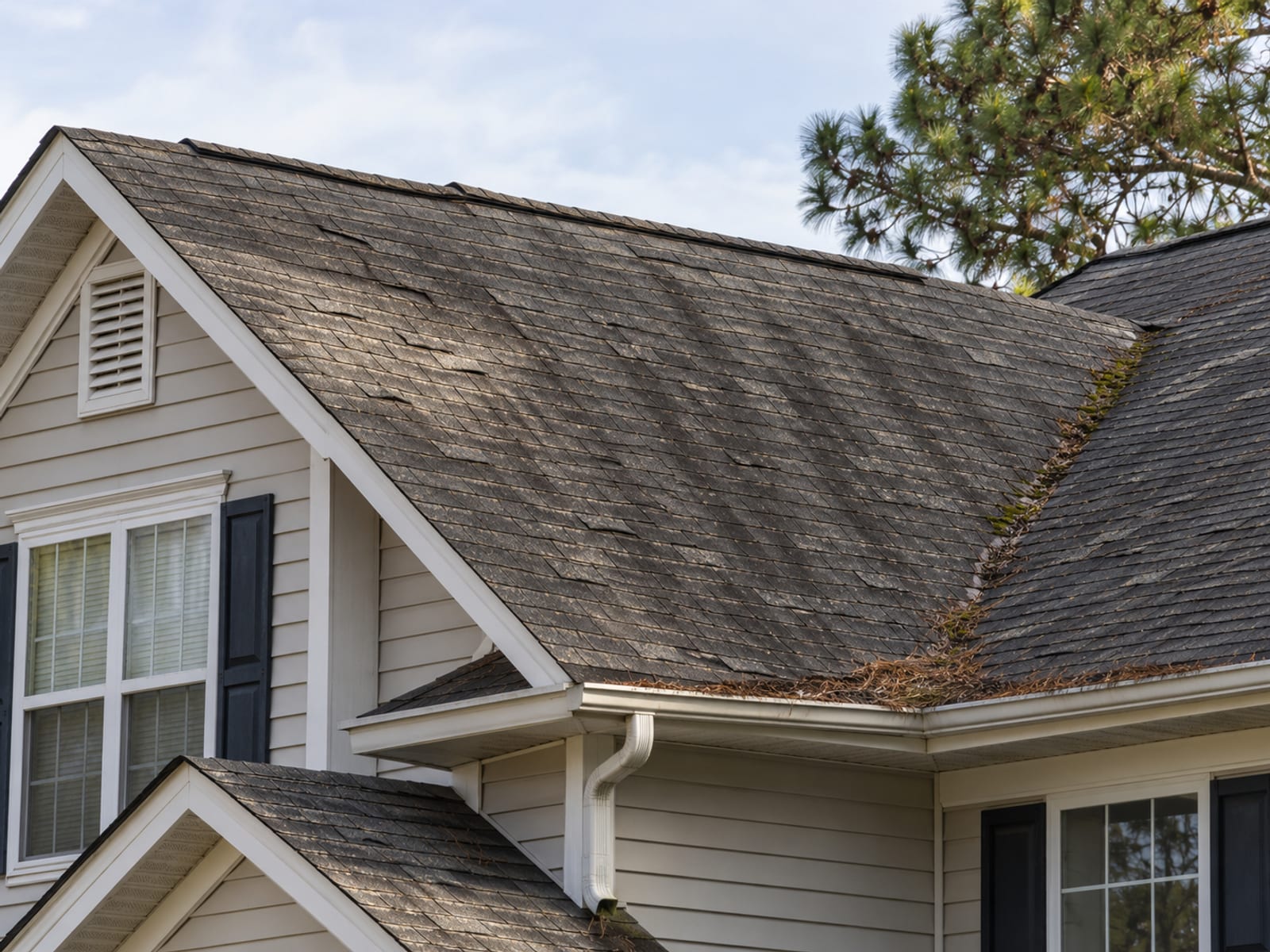
The average Georgia premium for an HO-3 policy, the most common owner-occupied homeowners form, was $1,828 for 2023, according to the NAIC homeowners report (opens in a new tab) published in July 2026. Across all owner-occupied dwelling fire and homeowners forms in Georgia, the 2023 average was $1,773. For HO-3 policies with $400,000 to $449,999 of coverage, the Georgia average was $1,901.
Hover or tap a row to highlight it.
| Policy group | 2023 average annual premium |
|---|---|
| HO-3 policies, all coverage amounts | $1,828 |
| HO-3 policies, $400,000 to $449,999 of coverage | $1,901 |
| All owner-occupied dwelling fire and homeowners forms | $1,773 |
These are annual averages from past data, not quotes. They blend different homes, insurers, deductibles, policy terms and underwriting results, and the NAIC itself treats average premium as an imperfect measure because hazards, real estate values, limits and deductibles vary so much. Compare your premium with the same policy form and coverage range, and treat the gap as a reason to ask questions rather than as proof of an error.
How much coverage does a $400,000 house need?
Market value and rebuilding cost are different numbers. Dwelling coverage is meant to pay to repair or rebuild the house, and replacement cost is "the amount it would take to replace or rebuild your home" without a deduction for depreciation, according to OCI's home insurance page (opens in a new tab). A home that sells for $400,000 may cost more or less than that to rebuild, depending on square footage, construction type, local labor and material costs and code requirements.
Ask the agent how the insurer estimated the rebuilding cost, what it assumed about the home, and whether the policy carries extended or guaranteed replacement cost. Our article on how much homeowners insurance you need goes through the limits in more detail.
Does Georgia require homeowners insurance?
A mortgage lender commonly requires homeowners insurance as a condition of the loan, and most mortgage lenders also require you to list them as the mortgagee on the policy, according to the NAIC consumer guide (opens in a new tab). Your lender decides how much coverage you need, according to OCI (opens in a new tab). That is a loan contract term. If you own the home outright, the decision is yours, but the house and your liability are still exposed.
If your coverage lapses while you have a mortgage, the lender will likely buy a policy for the home, with a higher premium and coverage limited to the structure, according to the NAIC guide.
What does a standard policy cover?
A Georgia homeowners policy generally covers damage to the house and detached buildings, your belongings, extra costs to live elsewhere while the home can't be lived in, and personal liability, with medical payments as another standard part of the package, according to OCI (opens in a new tab). An HO-3 covers the building on a broad basis and personal property against named perils, and the policy form, endorsements and declarations page decide what applies to you.
What does a standard policy leave out?
Homeowners policies don't cover flood damage, according to the NAIC consumer guide (opens in a new tab), so flood needs its own policy. Our article on Georgia flood insurance covers flood zones, the waiting period and NFIP limits.
Other common exclusions and limits include earth movement, sewer or drain backup unless you add an endorsement, wear and tear, and maintenance problems. A homeowners policy isn't a maintenance contract, and it doesn't pay to repair items that simply wear out, according to the NAIC guide. Mold or water damage from a gradual or excluded cause, motorized vehicles and policy-specific sublimits can also limit a claim. When a detail isn't clear on your declarations page, ask the insurer whether it's covered and under which endorsement.

How do the 80 percent rule and replacement cost work?
The 80 percent rule is a coinsurance condition. Insure your home for at least 80 percent of its replacement value, according to OCI (opens in a new tab). If dwelling coverage drops below 80 percent of the full replacement cost, the insurer may reduce what it pays on a claim, according to the NAIC consumer guide (opens in a new tab).
OCI's disaster guide (opens in a new tab) gives an example. If a home would cost $50,000 to rebuild, you'd need $40,000 of coverage to meet the 80 percent condition. Even then, a total loss would leave you $10,000 short, so OCI suggests insuring for the full cost to rebuild.
Replacement cost pays to repair or replace with like kind and quality without subtracting depreciation, subject to the limit and deductible. Actual cash value subtracts depreciation, so it usually pays less. Roofs are often handled differently: some policies pay actual cash value on the roof and replacement cost on the rest of the home, according to the NAIC's post-disaster claims guide (opens in a new tab), and some carry a separate roof deductible. Our article on replacement cost vs actual cash value shows how the two methods change a payment.
How do I protect my claim?
Report a loss as soon as you can, because your policy may set a deadline for notice, according to OCI's claim tips (opens in a new tab). Make temporary repairs to prevent more damage, keep every receipt, and hold off on permanent repairs until the damage is inspected. If you can, get a repair estimate before you meet the adjuster.
If you disagree with the insurer, ask for the specific policy language behind its position. If a claim is denied, get a written letter explaining the reason. Keep the policy, declarations pages, photos, estimates, invoices and all correspondence together.
What notice does an insurer have to give before nonrenewal?
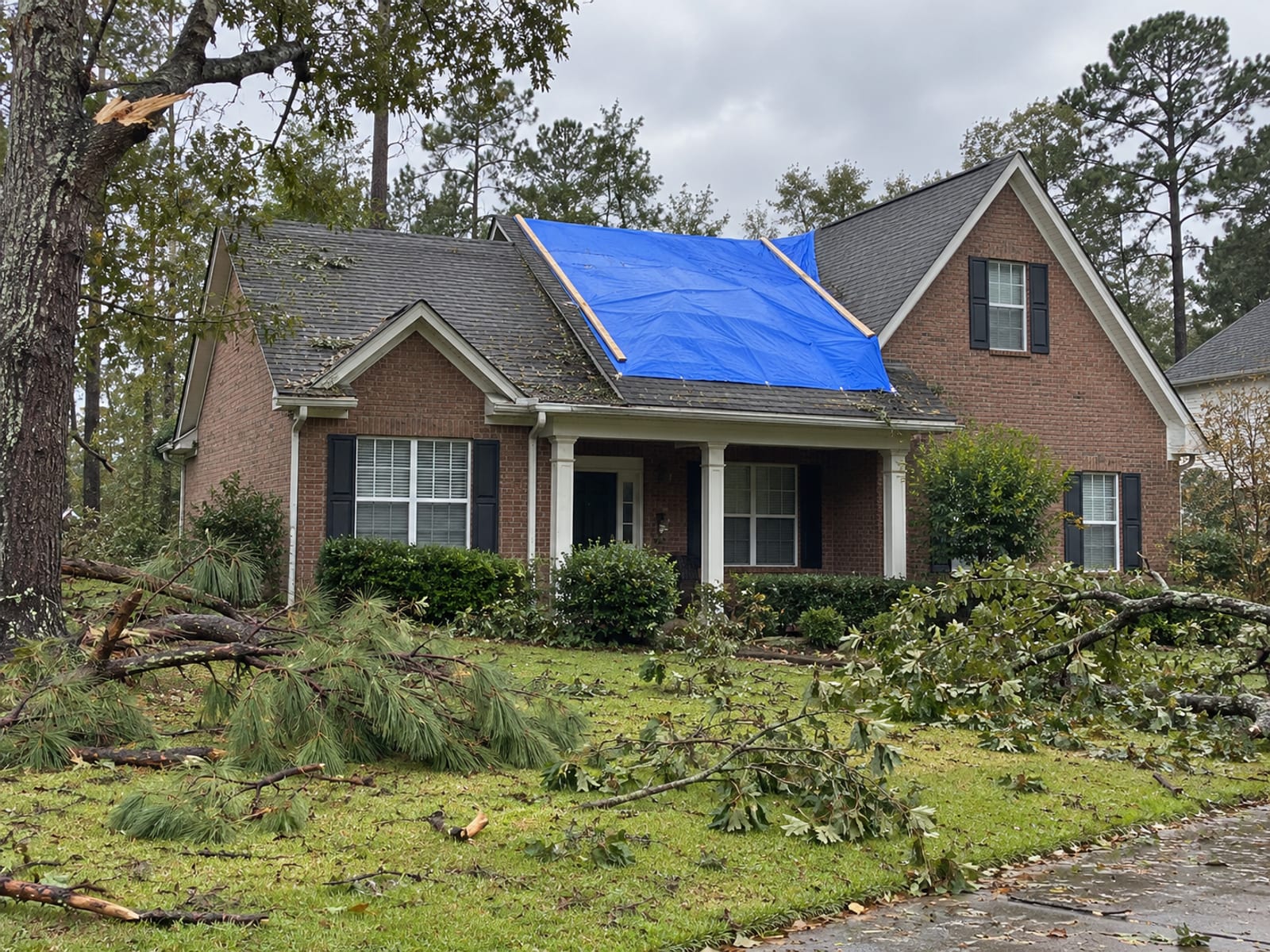
For policies issued, delivered or renewed on or after January 1, 2026, a Georgia insurer that won't renew a homeowners policy must mail or deliver written notice at least 60 days before the nonrenewal takes effect, under O.C.G.A. § 33-24-46 (opens in a new tab). That period was 30 days before Act 277 of 2025 (opens in a new tab) took effect. The insurer must give the reason, and the notice must tell you about your possible eligibility for the Georgia FAIR Plan, with the address to contact.
A reduction in coverage gets its own notice. The insurer must send it at least 30 days before the change, in a separate document headed "NOTICE OF REDUCTION IN COVERAGE" in capital letters, under the same statute.
OCI Bulletin 24-EX-2 (opens in a new tab) lists reasons an insurer can't use to refuse renewal:
- You don't buy, or won't agree to buy, other insurance from the insurer.
- The insurer changed its eligibility or underwriting rules, unless the Commissioner approved the change on the grounds the statute allows.
- Two or fewer claims in the past 36 months that weren't caused by negligent or intentional acts of you or people living at the home.
Once a policy or renewal has been in effect for more than 60 days, the insurer can cancel only for nonpayment, fraud, a change in the risk that substantially increases a covered hazard, or a violation of a material policy term.
Georgia notice rules for homeowners policies
- After 60 days in effectOnce a policy or renewal has been in effect more than 60 days, cancellation is limited to nonpayment, fraud, a substantially increased hazard or a material policy violation.
- At least 30 days before a coverage cutA reduction in coverage needs a separate "NOTICE OF REDUCTION IN COVERAGE."
- At least 60 days before nonrenewalFor policies issued or renewed on or after January 1, 2026, with the reason stated.
- With the nonrenewal noticeInformation about possible eligibility for the Georgia FAIR Plan and how to contact it.
What should I do after a nonrenewal?
Read the reason and the effective date first. Then ask the insurer what underwriting basis it used and whether repairs or documents could change the decision. Contact a licensed Georgia agent right away so you have time to compare offers before the old policy ends, and keep coverage continuous, especially if you have a mortgage. If the notice doesn't match the rules above, contact OCI. Our national article on homeowners insurance non-renewal covers the general steps.

What if no private insurer will cover the home?
The Georgia Underwriting Association administers Georgia's FAIR Plan. It is a residual market for property owners who can't find an insurer willing to cover them, and an application goes through a licensed agent. FAIR Plan coverage is basic: it can insure the building and belongings against listed perils such as fire, lightning, windstorm, hail, explosion, riot, smoke, aircraft and vehicles, and other coverages depend on the product and policy, according to OCI's business insurance guide (opens in a new tab). Our article on the Georgia FAIR Plan covers who qualifies, the limits and how to apply.
How do I check an agent and file a complaint?
Use the Georgia insurance license lookup (opens in a new tab) to confirm an agent, agency or company is licensed in Georgia before you share documents. OCI's licensing page (opens in a new tab) explains who must hold a license.
If a problem with an insurer or agent stays unresolved, first ask the company to fix it, then file through OCI's Consumer Complaint Portal (opens in a new tab). Have your contact information, the insurer's exact name, the agent or adjuster's name, your policy number, any claim number and loss date, and a short description ready. Send copies and keep the originals. OCI's consumer line is 404-656-2070 or 800-656-2298.
Questions to ask before you renew
- What changed from my prior declarations page?
- Did the dwelling limit, deductible, endorsements, exclusions or valuation method change?
- How much of the increase comes from a filed rate change, and how much from my property?
- What roof age, condition and inspection details are on file, and what documents would you accept to update them?
- Is the roof paid at replacement cost or actual cash value, and is there a separate roof deductible?
- Is flood excluded, and is sewer backup covered only by endorsement?
- How are personal property and valuables limited?
- What loss-of-use, liability and medical-payments limits apply?
- Which discounts apply for bundling, deadbolts, alarm systems or a new roof?
- What claims appear in my underwriting record?
- If this is a nonrenewal or reduction, what is the effective date and the stated reason?
- Is the agent and agency licensed in Georgia?
- If private coverage isn't available, can you submit a Georgia Underwriting Association application?
Check with your agent at least once a year to make sure the policy still fits, as OCI (opens in a new tab) suggests. OCI also lists possible discounts for insuring your home and car with the same company, deadbolt locks, alarm systems and roof replacement. A higher deductible lowers the premium, but only choose one you can afford to pay after a loss. To compare renewal offers, Riskado's directory lists insurance agencies across Georgia by city and by category.
Check what you know about Georgia homeowners insurance
Frequently asked questions
Why did my Georgia homeowners insurance go up when I didn't file a claim?
Your premium can rise with no claim from an approved rate filing (opens in a new tab), higher rebuilding costs or a higher dwelling limit. Roof age, a new deductible or an underwriting change can also play a part. Ask the insurer to name the factors that changed on your policy.
Can my insurer refuse to renew after one hail claim?
An insurer can't refuse to renew a residential property policy because of two or fewer claims in the past 36 months that weren't caused by negligent or intentional acts of the insured or residents, according to OCI Bulletin 24-EX-2 (opens in a new tab). Other reasons, such as property condition, can still apply. The notice must state the reason.
How much notice do I get before nonrenewal in Georgia?
For policies issued or renewed on or after January 1, 2026, at least 60 days, under O.C.G.A. § 33-24-46 (opens in a new tab). A reduction in coverage needs at least 30 days' notice in a separate document.
Is the 80 percent rule the same as being fully insured?
No. Meeting 80 percent may keep the insurer from reducing a partial claim, but a total loss can still leave you short, according to OCI's disaster guide (opens in a new tab). Insuring for the full cost to rebuild closes that gap.
Before your renewal date
Line up last year's and this year's declarations pages, write down every change, and ask for the reason behind each one in writing. Gather roof records, renovation receipts and photos of the home's condition. If a nonrenewal or reduction notice arrives, mark the effective date and start comparing coverage with a licensed agent well before it.
Key terms
Tap a term to see what it means.
HO-3. The most common owner-occupied homeowners form, covering the building broadly and personal property against named perils.
Declarations page. The page of a policy that lists coverages, limits, deductibles and dates.
Replacement cost. The cost to repair or rebuild with like kind and quality, without subtracting depreciation.
Actual cash value. Replacement cost minus depreciation.
Coinsurance (80 percent rule). A condition that can reduce a claim payment when dwelling coverage is below 80 percent of the full replacement cost.
Nonrenewal. An insurer's refusal to renew a policy at the end of its term.
Reduction in coverage. A change by the insurer that removes coverage, narrows it or adds an exclusion.
Georgia Underwriting Association. The association that administers Georgia's FAIR Plan, the residual market for property insurance.