Connecticut Renters Insurance: Cost, Coverage, and Whether Your Landlord Can Require It
Riskado
Connecticut's general landlord-tenant chapter, Chapter 830 of the Connecticut General Statutes (opens in a new tab), does not set a universal rule that every tenant must carry renters insurance, but a landlord can make it a condition of your lease. A renters policy covers your belongings, your personal liability and some living costs after a covered loss, and your landlord's policy protects the building, not your things. Flood damage is excluded from typical renters insurance, so your lease and the policy's exclusions are the two documents to read side by side.
Key takeaways
- Is it required by law?Chapter 830 does not set a universal rule that every tenant must carry renters insurance.
- Can a lease require it?Yes, a landlord can make it a condition of your lease.
- What a policy coversYour belongings, your personal liability and some living costs after a covered loss.
- The landlord's policyIt protects the building, not your things.
- FloodExcluded from typical renters insurance, so read your lease and the policy's exclusions side by side.
Is renters insurance required in Connecticut?
State law and your lease are two separate sources of rules. The rental-agreement provisions in Conn. Gen. Stat. § 47a-3 (opens in a new tab) and § 47a-4 (opens in a new tab) govern which terms a lease can and cannot contain, and they do not single out renters insurance as something every tenant must buy. The Connecticut Department of Housing (opens in a new tab) publishes a model lease and the required landlord-tenant forms if you want to compare your own lease against them.
So, the practical question is what your lease says. If you are deciding whether to buy a policy, the lease is where a requirement would show up.
Can a landlord require renters insurance in the lease?
A landlord can write an insurance requirement into a lease as a contract term. Whether a particular clause is enforceable depends on its exact wording and the law that applies, so a question about a specific clause belongs with a qualified Connecticut housing or legal resource.
When you read the insurance clause, write down these details:
- The coverage the lease names, including any minimum liability or personal-property amounts.
- The proof the landlord wants, and when it is due.
- Who has to be listed on the policy or named as an insured.
- How renewal proof is delivered each year.
- What happens if the policy is canceled or lapses.
A lapse can stop your coverage under the policy's own cancellation or expiration terms, and it can also put you out of step with the lease. Ask the landlord and the agency what it takes to restore compliance. The lease wording sets the consequences of a lapse, so read that clause closely.

What to write down from your lease's insurance clause
- Coverage namedAny minimum liability or personal-property amounts.
- Proof requiredWhat the landlord wants and when it is due.
- Who is listedWho has to appear on the policy or be named as an insured.
- Renewal proofHow it is delivered each year.
- If coverage lapsesWhat the lease says happens.
What does renters insurance cover?
A renters policy has three main parts, according to the Connecticut Insurance Department (opens in a new tab) and the NAIC (opens in a new tab):
- Personal property. Your furniture, clothes, electronics and other household contents, up to the amount stated in the policy and for the causes of loss the policy names.
- Personal liability. A claim that you accidentally injured another person or damaged someone else's property can be covered, subject to the policy's terms. The Department also lists medical payments for guests who are hurt.
- Additional living expenses. If a covered loss makes your home unlivable, the policy can pay certain costs of living somewhere else for a time. This part is also called loss of use.
Whether the liability part applies to accidental damage to the rental unit itself is a policy-specific question, so put it on your list for the agency.
What does renters insurance exclude?
Flood damage is the exclusion that surprises people most. Connecticut's flood guidance (opens in a new tab) says homeowners and renters policies do not cover flood, and that a separate flood policy can cover a renter's belongings. Flood losses also happen outside mapped high-risk zones; the Department states that 25% to 40% of flood losses fall outside designated high-risk areas. A new flood policy normally carries a 30-day waiting period before it takes effect.
Sewer and drain backup is generally excluded from basic property policies, and some policies add it back through an endorsement, which is a written change to the policy. Earthquake damage is not covered by a typical renters policy either, per the Department's flood fact sheet (opens in a new tab) and homeowners FAQ (opens in a new tab).
Beyond named exclusions, four other features shape what a claim pays:
- Deductible. The amount you pay before the insurer pays.
- Limits. The policy's stated maximum for personal property and for liability.
- Special limits. Jewelry, electronics, bicycles, collectibles, cash and business property can have lower caps, and the Department explains that some high-value items may need added coverage.
- Covered causes. Personal property is covered for the causes of loss the policy lists, so a cause that is not listed is not paid.
For mold, frozen pipes or water damage from a specific source, the policy language decides, so ask the agency to point to the exact line.
Does the landlord's insurance cover the tenant?
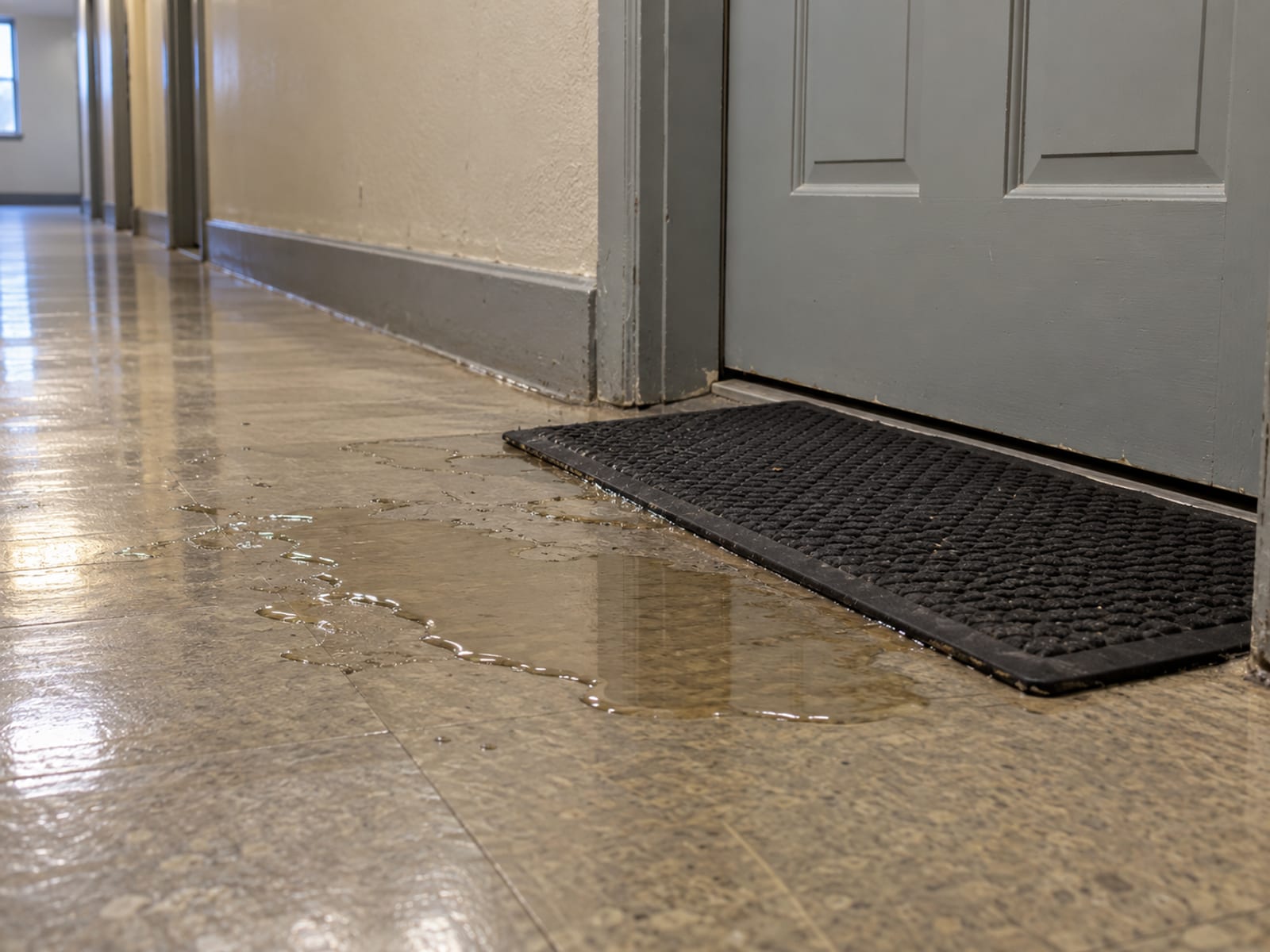
Landlord insurance protects the building, and tenants should not assume it covers their belongings or liability, according to the Connecticut Insurance Department (opens in a new tab). If a pipe bursts and ruins your couch, laptop and clothes, the building policy pays for the building. Your belongings, your liability and your temporary housing costs run through your own renters policy, within its terms.
The same Department warns student renters about this gap in a 2025 consumer advisory (opens in a new tab).
How does actual cash value differ from replacement cost?
These two terms decide how much a claim pays for a damaged item, and the definitions are in the Department's common-terms page (opens in a new tab) and the NAIC's policy guide (opens in a new tab).
Actual cash value is what the item was worth at the time of the loss. The insurer starts from the replacement cost, subtracts depreciation for age and wear, and then subtracts your deductible. A five-year-old television is paid as a five-year-old television.
Replacement cost is the amount needed to replace the item with a new one, without a deduction for depreciation. Deductibles, policy limits and claim conditions still apply.
Policies can differ on which method they use, and some let you choose. Ask the agency which method applies to your belongings and what it does to the premium. The NAIC also recommends that renters understand the total value of what they own, make an inventory and read the limits and exclusions before choosing coverage.

What does renters insurance cost in Connecticut?
The Connecticut average renters premium was $175 in 2022, compared with a national average of $171, according to NAIC data reproduced by the Insurance Information Institute (opens in a new tab). That figure is for an HO-4 renters policy, which covers a tenant's personal property on a broad named-peril basis.
Treat the $175 as a dated state average, not a quote. The NAIC calculates the average premium as premiums divided by exposure per house year, and your own price depends on the address, your belongings, the valuation method, the deductible, the liability limit and the insurer. Only an agency or insurer can give you a figure for your situation, and a monthly price for a specific coverage amount, such as $100,000 of personal property, also comes from a quote on your own details.
Hover or tap a row to highlight it.
| Area | Average premium | Source |
|---|---|---|
| Connecticut | $175 | NAIC data reproduced by the Insurance Information Institute (opens in a new tab) |
| United States | $171 | NAIC data reproduced by the Insurance Information Institute (opens in a new tab) |
What should a renter ask an agency?
Bring your lease and your inventory, and ask:
- Does this policy meet every insurance requirement in my lease?
- What proof does the landlord need, and how is renewal proof delivered?
- Who is insured under the policy?
- How are roommates and household members treated, and does the lease ask each adult for proof?
- Are my belongings paid at actual cash value or replacement cost?
- What deductible applies?
- Which causes of loss are covered for personal property?
- Are flood, sewer backup, earthquake, mold and water damage covered or excluded?
- Do special limits apply to jewelry, electronics, bicycles, collectibles, cash or business property?
- Is there coverage for property away from home, and for a home business?
- Does liability coverage apply to accidental damage to the rental unit?
- Does the policy pay additional living expenses after a covered loss?
- What happens if the policy is canceled, nonrenewed or lapses?
- How do I report a claim?
Roommate treatment varies by policy, so get the answer in writing before you rely on one policy for two people.
To compare quotes fairly, give every agency the same information: address, occupancy, lease requirements, household members, inventory, high-value items, valuation method, deductible and liability terms. Then line up the declarations page, exclusions, endorsements, limits, cancellation terms and proof-of-insurance process from each.
An inventory makes that conversation, and any later claim, easier. Photograph each room, list major items with their purchase dates, and save receipts, serial numbers and appraisals where you have them. Keep the declarations page and policy forms with the inventory, and keep the policy active if your lease asks for continuous coverage.
What to gather for an inventory
- PhotosPhotograph each room.
- Major itemsList them with their purchase dates.
- PaperworkSave receipts, serial numbers and appraisals where you have them.
- Policy documentsKeep the declarations page and policy forms with the inventory.
Check what you know about Connecticut renters insurance
How can a renter verify an agent or file a complaint?
The Connecticut Insurance Department's licensing page (opens in a new tab) links to the State Based Systems license lookup (opens in a new tab), where you can confirm that an agent or agency is licensed in Connecticut and what authority the license carries. Check before you buy coverage or act on advice.
If an insurer or agent does not resolve a problem, you can file a complaint through the Department's complaint page (opens in a new tab). Submit it online, email insurance@ct.gov, or call 800-203-3447 or 860-297-3900. The Department's complaint process (opens in a new tab) asks you to include the insurer, the type of insurance, the policy number if you have it, your contact information and a summary of the issue.
Connecticut renters insurance FAQ
Is renters insurance mandatory in Connecticut?
The general landlord-tenant provisions in Chapter 830 (opens in a new tab) do not require every tenant to carry it. A lease can still make it a condition of renting, so read the insurance clause before you sign or renew.
How much is renters insurance a month in Connecticut?
Connecticut's 2022 average premium was $175 a year, or about $14.60 a month, according to NAIC data (opens in a new tab). Your own monthly price depends on your coverage amounts, deductible and valuation method, so ask an agency for a quote built on your inventory.
Does renters insurance cover flooding?
No. Flood damage is excluded, and a separate flood policy can cover a renter's belongings, usually after a 30-day wait, per the Connecticut Insurance Department (opens in a new tab). Ask the agency how sewer backup is treated, since that can depend on an endorsement.
What happens if my policy lapses?
Coverage ends under the policy's cancellation or expiration terms, and the lapse can break a lease requirement. Contact the landlord and the agency right away to learn what proof or reinstatement is needed.
Your next step
Take your lease's insurance clause and the questions above to a licensed agency, and confirm the agent or agency on the Connecticut insurance license lookup (opens in a new tab) before you buy. Ask for the declarations page and policy forms in writing, and compare them with the lease line by line.
Terms used in this guide
Tap a term to see what it means.
HO-4. A renters policy form that covers a tenant's personal property on a broad named-peril basis.
Personal liability. Coverage for a claim that you accidentally injured another person or damaged someone else's property, subject to the policy's terms.
Additional living expenses. Coverage for certain costs of living somewhere else when a covered loss makes your home unlivable; also called loss of use.
Endorsement. A written change to a policy, which can add back coverage such as sewer and drain backup.
Actual cash value. What an item was worth at the time of the loss, after depreciation and the deductible.
Replacement cost. The amount needed to replace an item with a new one, without a deduction for depreciation.
Special limits. Lower caps on categories such as jewelry, electronics, bicycles, collectibles, cash and business property.