Does New Hampshire Require Motorcycle Insurance? Financial Responsibility, Coverage Options, and What a Policy Covers
Riskado
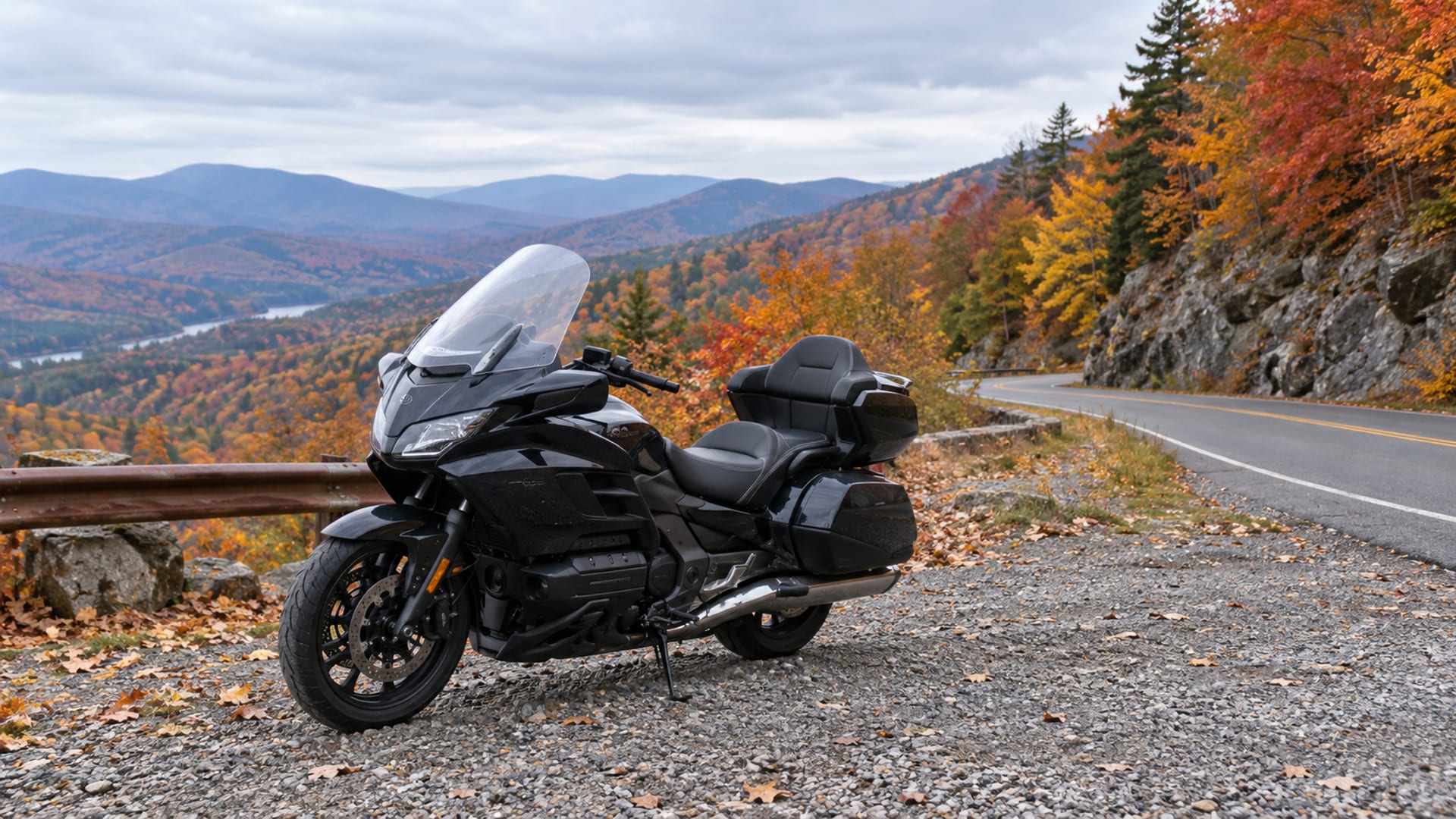
No. New Hampshire has no general law requiring every motorcycle owner to buy insurance, according to the New Hampshire Driver Manual (opens in a new tab). The state does enforce financial responsibility. After certain crashes, convictions or other qualifying actions, the DMV can require proof of financial responsibility and suspend your license and registration until you provide security and future proof, under RSA 264:3 (opens in a new tab). When proof is required, it must cover $25,000 for injury or death to one person, $50,000 for two or more people in one accident and $25,000 for property damage, per RSA 264:20 (opens in a new tab). A lender can also require coverage on a financed bike.
Key takeaways
- Is it required?New Hampshire has no general law requiring every motorcycle owner to buy insurance.
- Financial responsibilityAfter certain crashes, convictions or other qualifying actions, the DMV can require proof and suspend your license and registration until you provide security and future proof.
- Proof amounts$25,000 for injury or death to one person, $50,000 for two or more people in one accident and $25,000 for property damage.
- Financed bikesA lender can also require coverage.
What financial responsibility means for a New Hampshire rider
Financial responsibility is your ability to pay for damage you cause. Going without insurance doesn't remove that obligation; an uninsured driver involved in a crash may be responsible for the damages and medical bills, according to the New Hampshire Driver Manual (opens in a new tab). The question for a rider is how those costs would be paid, and whether the state will step in with a proof requirement.
When Chapter 264 requires proof, RSA 264:20 (opens in a new tab) sets the amounts:
Hover or tap a row to highlight it.
| Financial-responsibility amount | Figure |
|---|---|
| Bodily injury or death, one person, one accident | $25,000 |
| Bodily injury or death, two or more people, one accident | $50,000 (subject to the one-person limit) |
| Injury to or destruction of property, one accident | $25,000 |
These figures apply to motor vehicles generally; the statute sets no separate, lower amount for motorcycles. They define the proof you must be able to show once a requirement is triggered, rather than a policy every owner must buy before riding.
You can meet a proof requirement in more than one way. RSA 264:21 (opens in a new tab) allows a certificate from an insurance or surety company, a deposit of money or securities as described in RSA 264:22 (opens in a new tab), or, for a corporation, a showing of financial ability. For most individual riders, an insurer's certificate is the practical route.

When can the DMV require proof?
The most common trigger is a crash. After receiving an accident report required under RSA 264:25 (opens in a new tab), the DMV may suspend the driver's license and registration certificate, require the plates to be surrendered, and suspend the owner's registration and driving privilege until sufficient security is furnished and future financial responsibility is maintained, under RSA 264:3 (opens in a new tab).
That accident suspension does not apply if the owner had a liability policy or bond in effect, if a non-owner driver was covered for driving vehicles they don't own, or if the DMV finds that another policy, bond or approved proof covered the liability. In other words, a rider with liability coverage in force at the time of the crash generally avoids this suspension.
Proof can also be required after qualifying convictions or administrative actions. The state's rules at Saf-C 207 (opens in a new tab) call for an SR-22 certificate in specified situations, including certain repeat convictions, reckless-driving convictions and other financial-responsibility actions. An SR-22 filing generally runs three years from the accident, conviction or administrative action that required it, under Saf-C 207.12.
What happens after a crash without insurance?
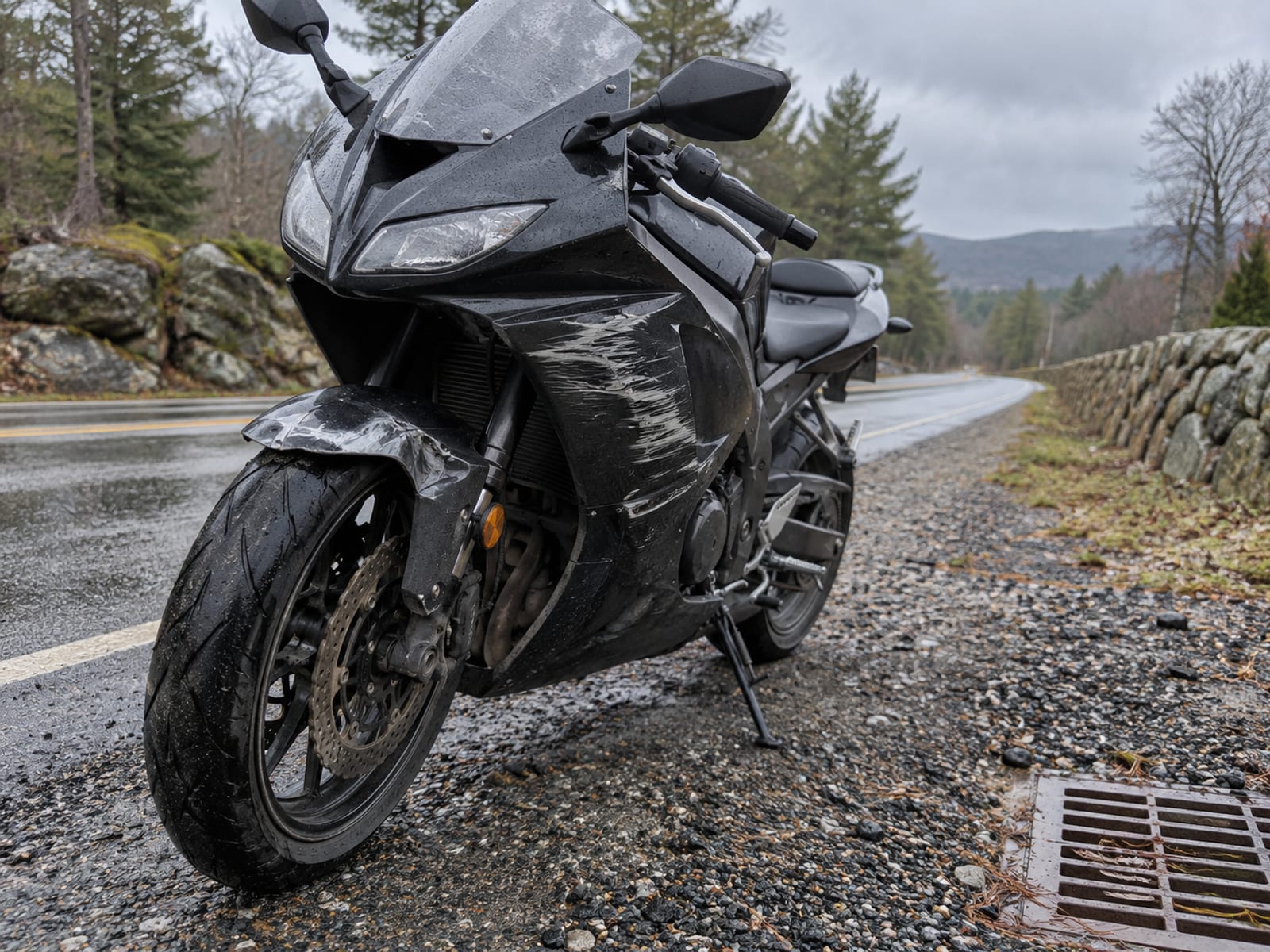
After a qualifying reported accident, the DMV can suspend your license, driving privilege, registration certificate and plates, and you'll need security to cover possible judgments plus future proof of financial responsibility, per RSA 264:3 (opens in a new tab).
Getting those privileges back takes more than waiting. Under RSA 264:7 (opens in a new tab), the suspension stays in effect until you obtain a release or a favorable judgment, or satisfy a judgment as the law provides, and you give and maintain proof of financial responsibility. While the suspension lasts, the motorcycle involved can't be registered in your name, and neither can any other vehicle.
Your own costs can include the damages and medical bills you're legally responsible for, on top of the suspension and reinstatement steps. That exposure is the main reason to weigh liability coverage even though the state doesn't require a policy up front.
After a qualifying crash without insurance
- Accident reportThe DMV receives the accident report required under RSA 264:25.
- SuspensionThe DMV can suspend your license, driving privilege, registration certificate and plates.
- SecurityYou furnish security to cover possible judgments.
- Release or judgmentThe suspension stays until you obtain a release or a favorable judgment, or satisfy a judgment as the law provides.
- Future proofYou give and maintain proof of financial responsibility before privileges return.
Do you need proof of insurance to register a motorcycle?
Registration starts with a municipal permit from your town or city clerk. RSA 261:148 (opens in a new tab) lists the documents for an initial registration or ownership transfer: government-issued photo identification, a title or title application when one is required, a bill of sale in specified cases, and a current or previous registration in the situations the statute describes. An insurance card is not on that list. Call the clerk handling your registration to confirm what they need for your transaction, since forms are handled locally under RSA 261:152 (opens in a new tab).
A 2026 bill, HB 1558-FN (opens in a new tab), proposed requiring proof of insurance or other financial responsibility at registration. It was a proposal, and the current RSA text still governs registration.
What does motorcycle insurance cover?
A motorcycle policy is built from separate coverages, and each one answers a different question about who gets paid. Common options, using GEICO's New Hampshire motorcycle page (opens in a new tab) as one insurer's example:
- Bodily-injury liability: injuries or death you cause to others.
- Property-damage liability: damage you cause to someone else's property.
- Collision: damage to your motorcycle from a collision.
- Comprehensive: non-collision losses such as theft, vandalism, fire or weather.
- Uninsured and underinsured motorist: your injuries when the at-fault driver has no insurance or too little.
- Medical payments: specified medical expenses.
- Custom parts and equipment: aftermarket additions to the bike.
- Riding gear and accessories: selected equipment such as helmets or luggage, depending on the policy.
- Roadside or towing assistance.
Availability, limits, deductibles, exclusions and how the bike is valued all depend on the insurer and policy form. Liability pays others, not you. Damage to your own motorcycle falls under collision and comprehensive, so if the bike is financed or worth replacing, those are the coverages to price. A lender or lienholder may require them under the financing agreement, so read the loan documents and ask the lender which coverages and deductibles it accepts.
Medical payments on a motorcycle
New Hampshire's medical-payments provision, RSA 264:16 (opens in a new tab), is written for private-passenger automobile policies. Ask your agent whether medical payments is offered on your motorcycle policy and whether it would cover both you and a passenger.
Is uninsured-motorist coverage required on a New Hampshire motorcycle policy?
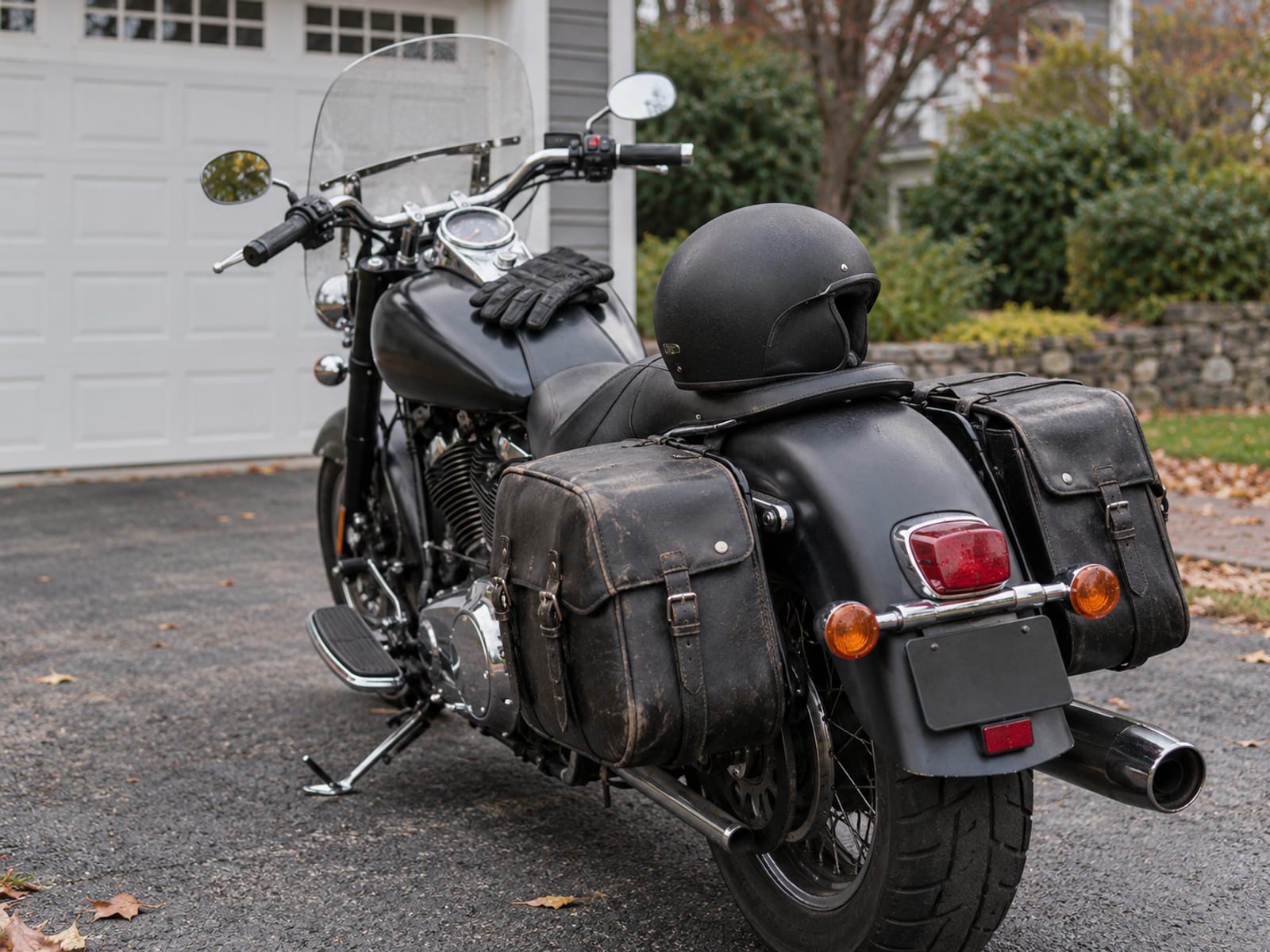
If you buy a liability policy, uninsured-motorist coverage generally comes with it. RSA 264:15 (opens in a new tab) requires a motor-vehicle liability policy for a vehicle registered or principally garaged in New Hampshire to include coverage for insured people who are entitled to recover damages from uninsured or hit-and-run drivers for bodily injury, sickness, disease or death, subject to the statute's exceptions.
The coverage must be at least the bodily-injury amounts set by the liability rules. When you choose liability limits above the minimum, uninsured-motorist coverage automatically matches those higher limits unless the named insured rejects that in writing. The statute also contains an exception for commercial vehicles not owned by the policyholder. Because motorcycle policy forms differ, ask your agent how uninsured-motorist coverage is written on your policy and what rejecting it would mean. For more on the coverage itself, see do you need uninsured motorist coverage.
What license or endorsement do you need to ride?
Insurance and licensing are separate requirements. RSA 263:31 (opens in a new tab) requires a motorcycle license, restricted motorcycle license or motorcycle endorsement to operate a motorcycle. The director can waive the driving test if you show adequate experience or complete a state-approved rider education course, such as the DMV's Basic Rider Course (opens in a new tab), subject to the rules.
New riders can start with a learner's permit under RSA 263:32 (opens in a new tab). A permit holder may ride only between sunrise and sunset and may not carry passengers. The permit is valid for 45 days and can be renewed once for another 45 days. An endorsement doesn't establish financial responsibility, and a policy doesn't replace the license.
What should a seasonal rider ask before changing coverage for winter?
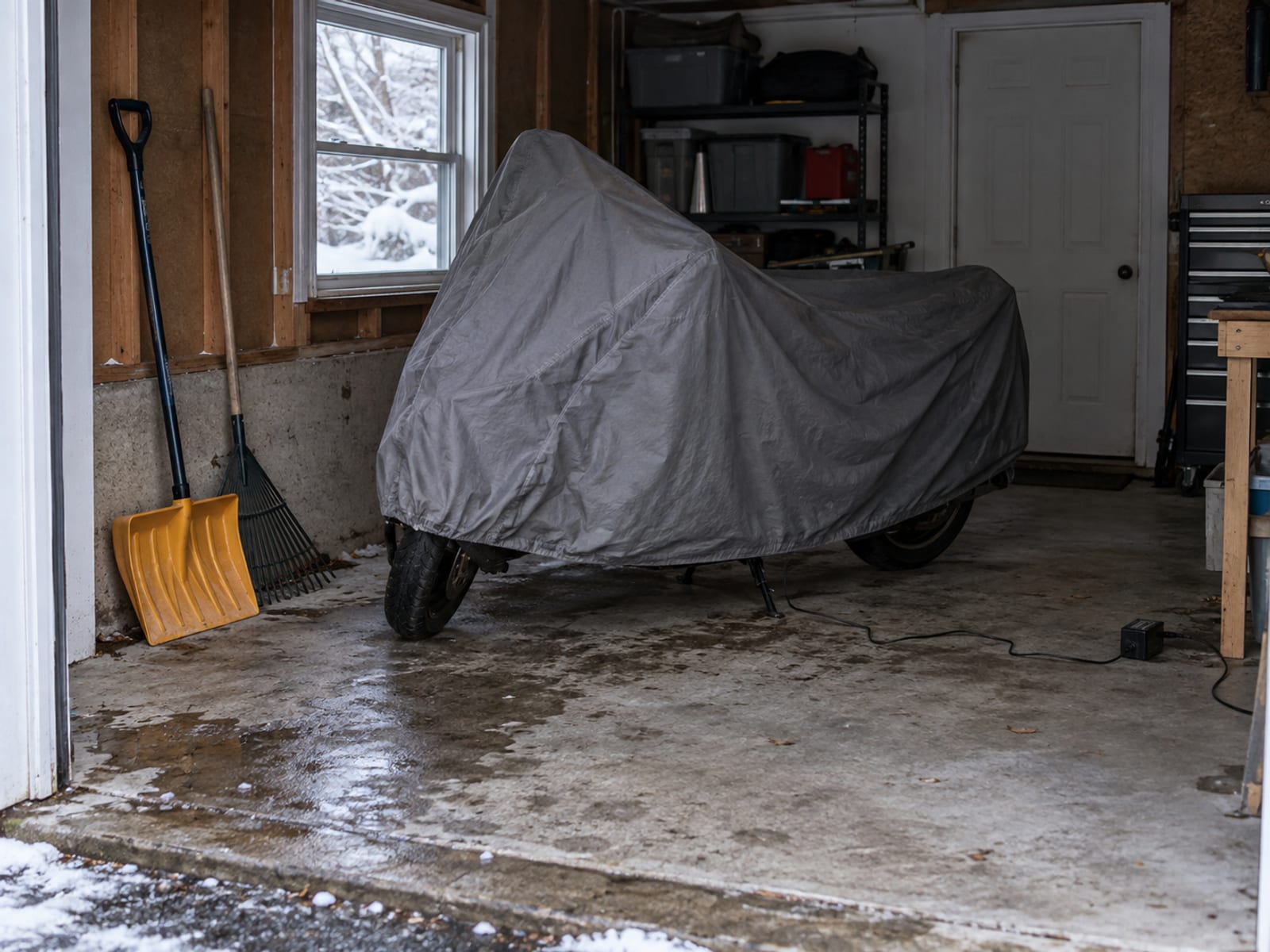
If you store your bike for the winter, insurers handle that period in different ways. Before you change anything, ask how storage, layup, reduced use, comprehensive-only coverage, cancellation and reinstatement work on your specific policy, and whether the bike would stay covered for theft, fire or other losses while it sits.
The stakes rise if you have an active SR-22. Under Saf-C 207.09 (opens in a new tab), when an insurer files an SR-26 cancellation, the state sends you notice that your license and registration will be suspended 20 days later unless a new SR-22 is filed within that window. Confirm with the insurer, in writing if you can, that any winter change keeps your filing in place.
How much does motorcycle insurance cost in New Hampshire?
Your price depends on your age, riding history, location, motorcycle type, how you use it, the coverages and deductibles you choose and the insurer's underwriting. For a sense of scale, ValuePenguin's New Hampshire motorcycle insurance comparison (opens in a new tab), published September 25, 2026, reported an average of $27 per month. That figure came from 210 quotes from six companies across 30 New Hampshire cities and towns for one sample rider and motorcycle, so it is comparison-site quote data rather than a state average or a prediction of your premium. Ask an agent for a quote on your own bike and coverage choices.
Questions to ask a motorcycle insurance agent
Bring these to an agency so the policy matches how you ride:
- Is this policy written specifically for a motorcycle, and what liability coverage applies?
- Does it satisfy an active New Hampshire financial-responsibility or SR-22 filing?
- What happens to the filing if the policy is canceled, rewritten or changed for winter?
- How is uninsured-motorist coverage written, and what are the rejection options?
- Does medical payments cover me and a passenger?
- Is the bike covered for theft, fire, vandalism, weather and collision?
- Are custom parts, accessories, luggage, helmets and protective gear covered?
- Is the motorcycle valued at actual cash value, stated amount or another method?
- What exclusions apply to racing, track days, passengers, business use or other riders?
- Is roadside assistance included, and what does my lender require?
If you also drive a car, compare with New Hampshire car insurance requirements and how much car insurance you need. Riders across the border can read Connecticut motorcycle insurance.
Check what you know about New Hampshire motorcycle insurance
Frequently asked questions
Can I ride a motorcycle without insurance in New Hampshire?
Yes, as long as you aren't under a financial-responsibility or SR-22 requirement and your lender doesn't require coverage. You still remain responsible for any damages and medical bills you cause, and an uninsured crash can lead to license and registration suspension.
How long does an SR-22 last in New Hampshire?
An SR-22 filing generally lasts three years from the accident, conviction or administrative action that required it, under Saf-C 207.12 (opens in a new tab). Letting it lapse can trigger suspension 20 days after the state's notice.
Does liability insurance pay to fix my own motorcycle?
No. Liability pays for injuries and damage you cause to others. Repairs to your own bike come from collision or comprehensive coverage, if you carry them.
Can a learner's permit holder carry a passenger?
No. Under RSA 263:32 (opens in a new tab), permit holders may not carry passengers and may ride only between sunrise and sunset.
Before your next ride
Check three things: whether you're under any financial-responsibility or SR-22 requirement, what your lender's financing agreement says about coverage, and whether your license carries the motorcycle endorsement. Then talk with an agent about liability, uninsured-motorist, collision and comprehensive coverage, and settle your winter plan before the riding season ends.
Terms used in this guide
Tap a term to see what it means.
Financial responsibility. Your ability to pay for damage you cause, which the DMV can require you to prove after qualifying events.
SR-22. The certificate New Hampshire uses in specified situations to show future proof of financial responsibility.
SR-26. The cancellation an insurer files, which starts a 20-day window before suspension unless a new SR-22 is filed.
Uninsured-motorist coverage. Coverage for your injuries when the at-fault driver has no insurance or is a hit-and-run driver.
Collision. Coverage for damage to your motorcycle from a collision.
Comprehensive. Coverage for non-collision losses such as theft, vandalism, fire or weather.
Motorcycle endorsement. The license credential RSA 263:31 requires, along with a motorcycle license or restricted motorcycle license, to operate a motorcycle.