New Hampshire Boat Insurance: What the State Requires, What a Policy Covers, and How Lake Owners Compare Coverage
Riskado
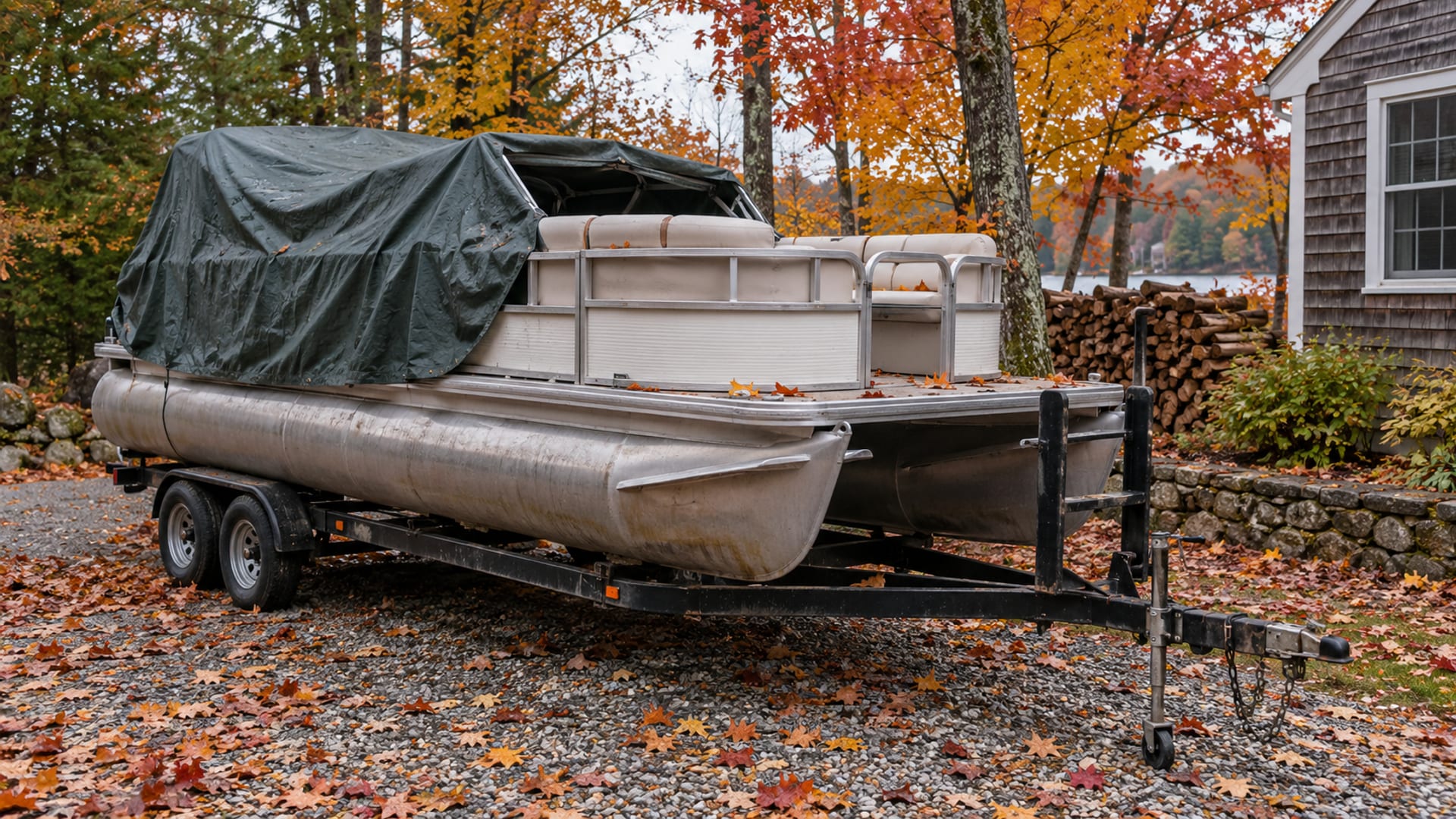
Insurance is not a condition of registering a recreational boat in New Hampshire. The state's vessel registration rules, Saf-C 2300 (opens in a new tab), call for an application, proof of ownership, vessel details and fees, and proof of insurance is not among those documents. Registration itself is required for boats that aren't exempt under RSA 270-E (opens in a new tab). A boat policy covers what registration doesn't: damage to the boat, liability for injuries or property damage, medical payments, uninsured boaters, towing, salvage, trailers and personal property. Your homeowners policy may cover only a small boat, and only partly. A lender, marina or lake association can also require insurance by contract.
Key takeaways
- RegistrationInsurance is not a condition of registering a recreational boat in New Hampshire, but registration is required for boats that aren't exempt.
- What a policy coversDamage to the boat, liability, medical payments, uninsured boaters, towing, salvage, trailers and personal property.
- Homeowners policyMay cover only a small boat, and only partly.
- ContractsA lender, marina or lake association can require insurance by contract.
Do you need boat insurance in New Hampshire?
State law and private agreements answer this question differently. New Hampshire's recreational boating statutes and registration rules cover registration, safety education, operation, equipment and accident duties, and they do not make insurance a condition of owning or operating a recreational boat.
A private party can still require it. If you finance the boat, your lender may make insurance a loan condition and set the coverages, limits, deductible and loss-payee listing it wants. Financed or leased watercraft may be subject to lender-required coverage, according to the Travelers boat and yacht insurance FAQ (opens in a new tab). Marinas, dock owners and lake associations may ask for proof of liability insurance or other documents under their own agreements or rules. Those requirements vary by organization, so ask each one for its requirement in writing before you sign a slip agreement or close on a loan.
Then there's the risk side. Without a policy, you pay for damage to your own boat, and you're personally exposed if someone is hurt or a dock is damaged in an accident you're responsible for. Whether that exposure is worth insuring is your decision, and it depends on the boat, how you use it and what you already own.

What you need before you put a boat in the water
Most boats must be registered before they are placed, operated or used on New Hampshire waters, under RSA 270-E (opens in a new tab). RSA 270-E:4 exempts certain vessels, including sailboats under 12 feet and human-powered rowboats and canoes, under the conditions in the statute.
To register, you'll need the following under Saf-C 2300 (opens in a new tab):
- A completed state boat registration application.
- Proof of ownership. For an initial registration, the ownership document must carry the signatures of both you and the seller.
- A qualifying 12-digit hull identification number. A boat without one needs a verification form completed by a New Hampshire law enforcement officer.
- The registration fee and the applicable boat fee.
You can apply at the Division of Motor Vehicles, a Marine Patrol location, an authorized agent, or by mail as the rules allow. Registrations expire December 31 following issuance, and the registration certificate must be aboard whenever the boat is operated. A temporary registration allows operation for no more than 30 consecutive days, under RSA 270-E:14.
Do New Hampshire boat operators need a boating safety certificate?
You need a safe-boater education certificate to operate a motorized vessel with more than 25 horsepower on New Hampshire public waters, subject to statutory exceptions, under RSA 270-D:10 (opens in a new tab). Keep the certificate, or an acceptable physical or electronic copy, with you while operating.
Earning one takes an approved course or an equivalency exam. The minimum passing grade is 80 percent, a classroom course must provide at least eight hours of instruction, and the certificate is good for your lifetime unless it is revoked for cause, under RSA 270-D:13 (opens in a new tab). A temporary certificate may be valid for up to 14 days and may be issued only once per calendar year, under RSA 270-D:14. The education rules and course standards are also set out in Saf-C 6100 (opens in a new tab).
Age matters too. Under RSA 270:30 (opens in a new tab), a person under 16 may not operate a motorized vessel over 25 horsepower unless accompanied by someone at least 18 who holds a valid safe-boater certificate. Commercial operation has its own age and certification rules. New Hampshire also sets safety equipment and operating requirements by vessel type; check the current state boating requirements for your boat before launch.
When you ask about insurance, tell the agency who will operate the boat and whether each operator holds a certificate.
Hover or tap a row to highlight it.
| Rule | What it says | Source |
|---|---|---|
| Registration expiry | December 31 following issuance | RSA 270-E (opens in a new tab) |
| Temporary registration | Operation for no more than 30 consecutive days | RSA 270-E:14 (opens in a new tab) |
| Safe-boater certificate | Required to operate a motorized vessel over 25 horsepower, subject to exceptions | RSA 270-D:10 (opens in a new tab) |
| Exam passing grade | 80 percent | RSA 270-D:13 (opens in a new tab) |
| Classroom course | At least eight hours of instruction | RSA 270-D:13 (opens in a new tab) |
| Certificate length | Lifetime, unless revoked for cause | RSA 270-D:13 (opens in a new tab) |
| Temporary certificate | Up to 14 days, once per calendar year | RSA 270-D:14 (opens in a new tab) |
| Operators under 16 | Over 25 horsepower only with someone at least 18 who holds a valid certificate | RSA 270:30 (opens in a new tab) |
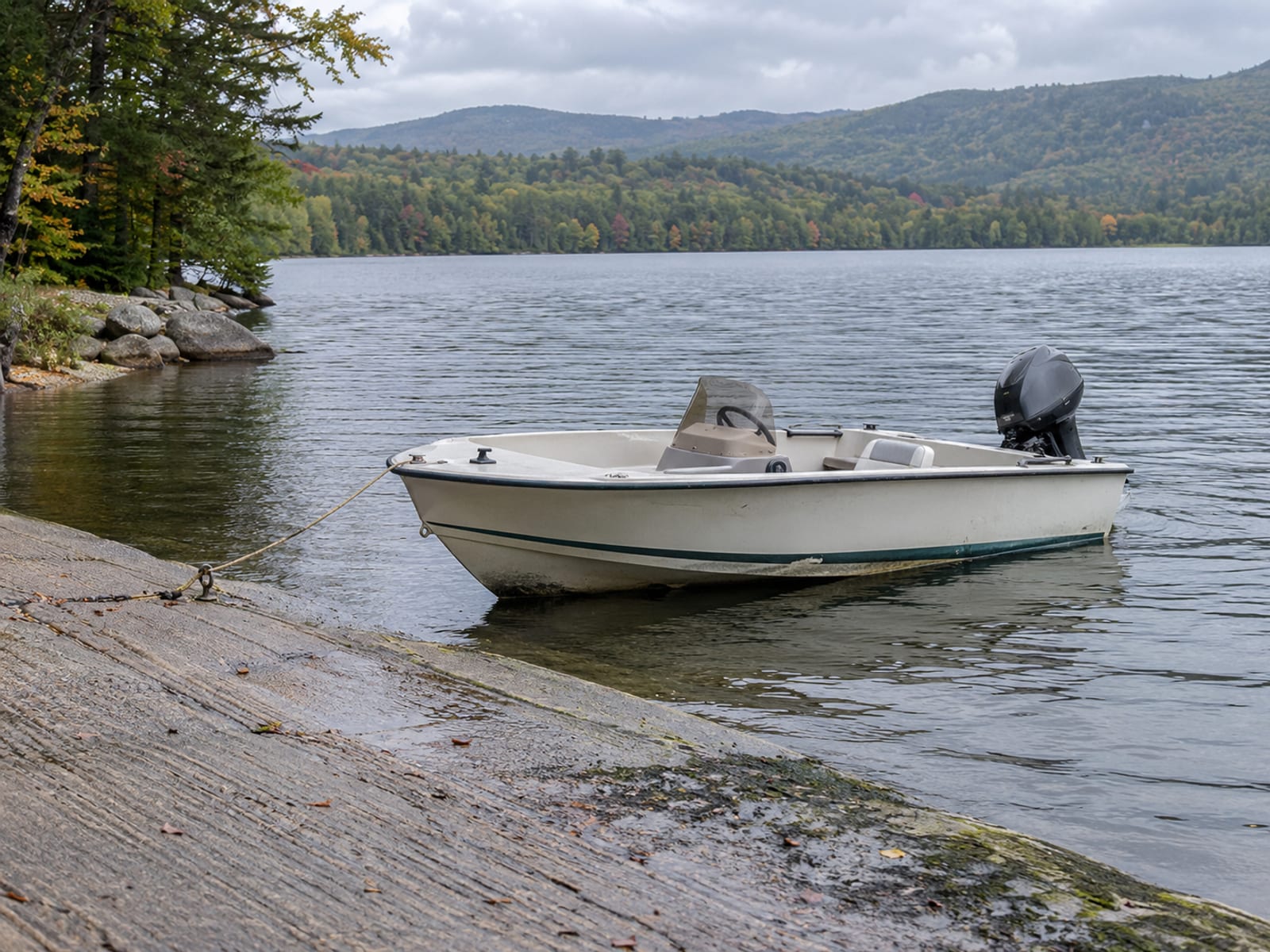
What does a New Hampshire boat policy cover?
Boat policies differ by insurer, and the policy wording controls. The common building blocks, according to the North Carolina Department of Insurance boat insurance guide (opens in a new tab) and Travelers' description of boat and yacht coverage (opens in a new tab), are:
- Physical damage to the boat from specified losses such as collision, fire, theft, lightning, vandalism and weather, with motors and machinery covered subject to policy terms.
- Liability for bodily injury and property damage you're legally responsible for.
- Medical payments for reasonable and necessary medical or funeral expenses after a boating accident.
- Uninsured or underinsured boater coverage, where included or available, for injuries caused by another boater without enough insurance.
- Towing and assistance, which may pay for transport to a repair facility, fuel delivery or on-water help, subject to terms.
- Salvage and wreck removal, subject to the policy.
- Trailer coverage, which may require a specific endorsement or may fall under your auto policy instead.
- Personal property used or stored aboard, subject to limits and exclusions. Fishing equipment, electronics, phones and computers may be excluded or limited separately.
Fuel-spill liability also appears among the coverage examples Travelers (opens in a new tab) lists. None of these items is automatic. Ask the agency to point to each one on the quote or declarations page.
Does homeowners insurance cover a boat?
Sometimes, and only up to a point. A homeowners policy might cover a small boat for $1,500 or less in physical damage, according to the NAIC guide to property insurance (opens in a new tab). Liability coverage is limited. Insurers generally extend liability to some small sailboats and powerboats with small motors, while a boat of significant size may be excluded for both property and liability. Personal watercraft likely need a separate boat policy. The $1,500 figure is general consumer guidance, not a New Hampshire legal limit.
If you plan to rely on your homeowners policy for a canoe, kayak or small motorboat, read its watercraft definitions, limits, exclusions, operator provisions and liability terms first.
Agreed value, actual cash value and where the boat is covered
How a policy values your boat decides what you'd receive after a total loss. An actual cash value policy pays the boat's value at the time of loss, after depreciation and wear. An agreed value policy sets a value you and the insurer accept up front and may pay that amount for a covered total loss, subject to the policy's conditions, according to the Insurance Information Institute (opens in a new tab). For an older boat that has lost value, the difference between the two can be large, so ask which basis a quote uses.
Hover or tap a row to highlight it.
| Valuation basis | What a covered total loss pays | Source |
|---|---|---|
| Actual cash value | The boat's value at the time of loss, after depreciation and wear | Insurance Information Institute (opens in a new tab) |
| Agreed value | A value you and the insurer accept up front, subject to the policy's conditions | Insurance Information Institute (opens in a new tab) |
A policy's territory limits set where the boat can be used while coverage applies. A policy may name particular waters, geographic boundaries or seasonal conditions, and using the boat outside that territory can affect coverage, according to the Insurance Information Institute (opens in a new tab). If you split time between Lake Winnipesaukee, Lake Sunapee, a river and the seacoast, or you trailer to another state, ask whether each location is inside the territory.
Transport terms can carry their own limits. Travelers (opens in a new tab) describes a 500-mile radius for certain common-carrier transport situations and treats those terms differently from towing the boat on your own trailer.
How lake owners compare coverage
Comparing quotes works best when each agency is pricing the same boat, use and waters. Give every agency the same details: the boat's value and purchase documents, the motor and machinery, where it's kept in season and stored in winter, the waters you'll use, who will operate it, and any trailer, electronics, fishing gear or personal effects you want covered. Then line up the answers side by side:
- Agreed value or actual cash value?
- What waters and geographic areas are included, and are lakes, rivers, tidal and coastal waters treated the same?
- Are collision with submerged objects, theft, vandalism, storms, fire and freeze damage covered?
- How are the motor, permanently attached equipment, trailer and personal effects treated?
- What liability, medical payments and uninsured boater coverage is included?
- What towing, assistance, salvage and wreck removal applies?
- Are passengers and permitted operators covered, and are waterskiing, tubing, racing, rentals or guide services excluded?
- What deductibles apply?
- What does my lender, marina or lake association need to see, and how will you provide it?
- How does cancellation or a lapse affect coverage, and who gets notice?
If you use the boat for a business, such as rentals, guiding or carrying passengers for hire, say so up front. Commercial use can call for a different policy.
How does winter lay-up affect coverage?
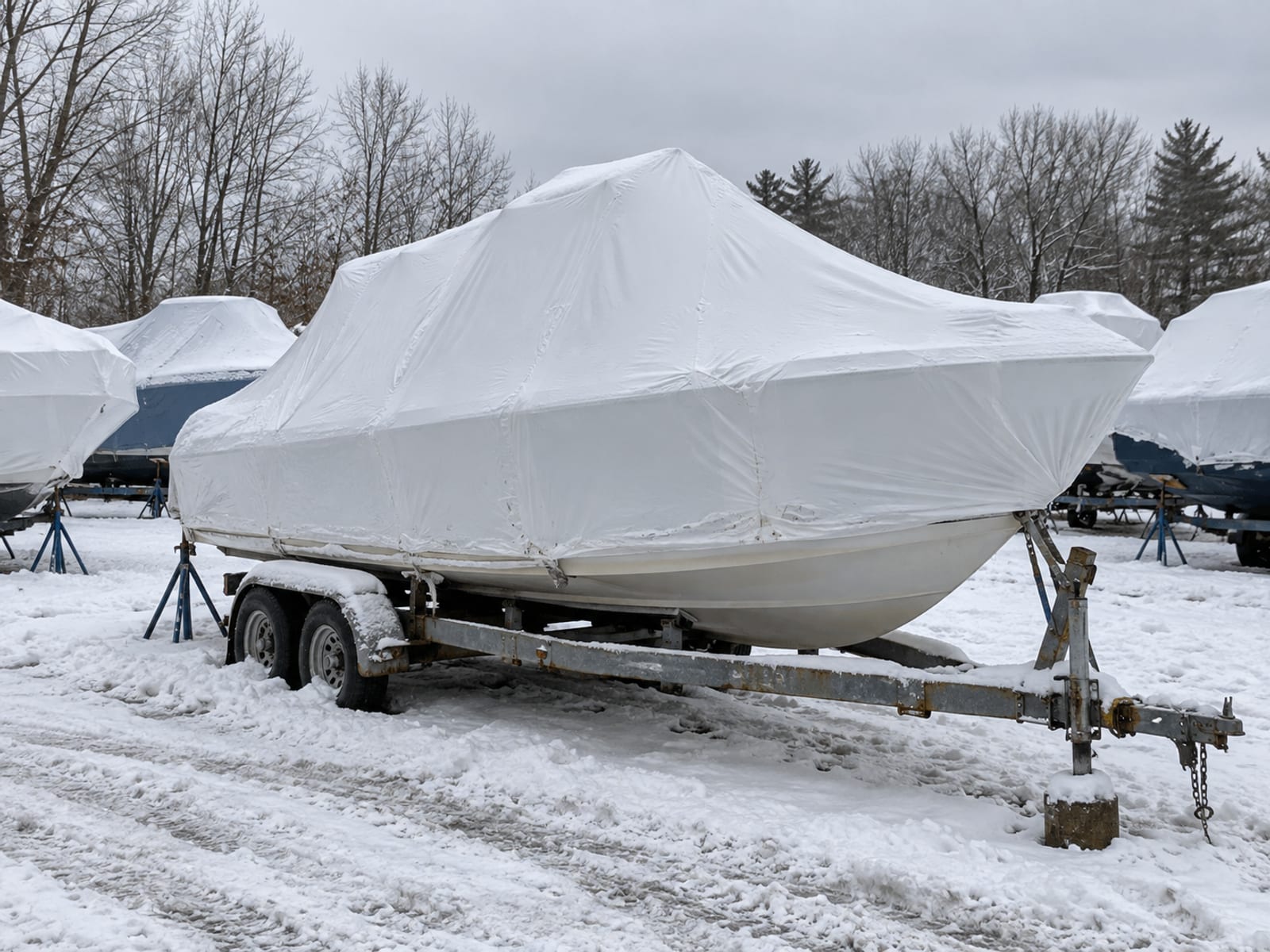
A lay-up provision can limit when and where you may operate the boat during the off-season, but it doesn't necessarily end all coverage while the boat is stored, according to the Insurance Information Institute (opens in a new tab). Storage brings its own risks: theft, storm damage, freeze damage, and damage to engines or water systems.
Before you haul out, check the policy's lay-up dates, storage location requirements, haul-out and winterization conditions, freeze provisions, and whether you may move or run the boat during lay-up. If you plan an early spring launch or a late fall trip, confirm those dates fit inside the policy's operating period.
What to do after a boating accident in New Hampshire
If your boat is involved in an accident with death, personal injury or property damage, and you know or reasonably should know it, you must stop immediately at the scene and give whatever help you can to people on the other vessel, under RSA 270:1-a (opens in a new tab).
You must also give your name, the owner's name and address, the boat's registration number, and the name and address of each person aboard to the other operator, an injured person or the property owner. If they can't receive it because of injury, absence or another reason, give that information to a Marine Patrol or other police officer at the scene, the nearest police station or Marine Patrol headquarters. Failing to comply can bring serious criminal penalties under RSA 270:1-b, graded by the violation and whether death or injury resulted.
After you've met those duties, contact your insurer, take photos, and keep names and contact details for witnesses and everyone involved.
Check what you know about New Hampshire boat insurance
New Hampshire boat insurance FAQ
Does a canoe or small sailboat need to be registered?
Some don't. RSA 270-E:4 exempts certain vessels, including sailboats under 12 feet and human-powered rowboats and canoes, under the statute's conditions, according to RSA 270-E (opens in a new tab).
Can I use my boat while waiting for a permanent registration?
A temporary registration allows operation for no more than 30 consecutive days under RSA 270-E:14. Keep the paperwork aboard.
Is my trailer covered by my boat policy?
It depends on the policy. Trailer coverage may require a specific endorsement or may fall under your auto policy, according to the North Carolina Department of Insurance (opens in a new tab). Ask both your boat and auto insurers.
How long does a safe-boater certificate last?
For life, unless revoked for cause, under RSA 270-D:13 (opens in a new tab). A temporary certificate lasts up to 14 days and can be issued once per calendar year.
Before you launch
Register the boat, make sure every operator who needs a safe-boater certificate has one, and get your lender's or marina's insurance requirements in writing. Then decide what you want covered and ask two or three licensed agencies to quote the same boat, waters and use so you can compare the answers line by line.
Terms used in this guide
Tap a term to see what it means.
Safe-boater education certificate. The certificate New Hampshire requires to operate a motorized vessel over 25 horsepower, subject to exceptions.
Hull identification number. The 12-digit number that identifies a boat for registration.
Agreed value. A boat value you and the insurer accept up front, which may be paid for a covered total loss.
Actual cash value. The boat's value at the time of loss, after depreciation and wear.
Territory limits. The waters and areas where the boat can be used while coverage applies.
Lay-up provision. Policy terms that limit when and where you may operate the boat during the off-season.
Loss payee. A lender listed on the policy to receive payment for a covered loss.
Salvage and wreck removal. Coverage for recovering or removing a damaged or sunken boat, subject to the policy.