Vermont Renters Insurance: What It Costs, What It Covers, and Whether a Landlord Can Require It
Riskado

Renters insurance is generally optional under Vermont law, but your landlord can make it a condition of your written lease. A standard renters policy, called an HO-4, covers your personal belongings, your personal liability, medical payments to others and additional living expenses after a covered loss, according to the Vermont Department of Financial Regulation (DFR) (opens in a new tab). It generally does not cover flood damage, and your landlord's policy does not cover your belongings. The average Vermont HO-4 premium was $165 a year in 2023, according to the NAIC Homeowners Report (opens in a new tab); your price depends on your policy details, deductible, location and insurer. Start by reading your lease, then compare any policy's limits and exclusions against what it asks for.
Key takeaways
- Required?Renters insurance is generally optional under Vermont law, but a landlord can make it a condition of your written lease.
- What an HO-4 coversYour personal belongings, your personal liability, medical payments to others and additional living expenses after a covered loss.
- What it leaves outFlood damage is generally excluded, and your landlord's policy does not cover your belongings.
- Average costThe average Vermont HO-4 premium was $165 a year in 2023, according to the NAIC.
- First stepRead your lease, then compare any policy's limits and exclusions against what it asks for.
Can a Vermont landlord require renters insurance?
Yes, through the lease. Vermont's residential rental law, 9 V.S.A. chapter 137 (opens in a new tab), sets out the obligations of landlords and tenants and defines what a rental agreement is under § 4451 (opens in a new tab). The terms in your rental agreement carry weight, subject to the protections in that chapter; a lease cannot be used to get around the landlord's statutory obligations under § 4454 (opens in a new tab). Renters insurance is a private lease condition rather than a statewide rule, so whether you need it depends on what you signed.
When you read your lease, look for these points:
- Whether coverage is required, and for whom (the named leaseholder or every adult tenant).
- Any minimum liability amount.
- What proof the landlord accepts, such as a declarations page or a certificate.
- Whether the landlord must be listed as an interested party on your policy.
- What the lease says happens if coverage is canceled or lapses.
If something in the lease is unclear, ask the landlord in writing. For broader tenant questions, the Vermont Attorney General's consumer resources (opens in a new tab) direct tenants to review their rental agreements and point to Vermont Legal Aid and other tenant help.
How much renters insurance costs in Vermont
Vermont's average HO-4 premium was $165 per year in the NAIC's 2023 data, published in 2026. In that table, Vermont tenant policies covered about 769,175 house-years of exposure and produced $127,277,470 in written premium, according to the NAIC Homeowners Report, Table 5 (opens in a new tab).
That $165 is a statewide historical average across every amount of coverage people bought. It is not a quote, and it does not reflect Burlington, a college rental or a rural apartment specifically. The NAIC table shows different averages by amount-of-insurance range, so the amount of coverage you choose affects what you pay.
Hover or tap a row to highlight it.
| Figure | Value | Source |
|---|---|---|
| Vermont HO-4 average premium | $165 per year (2023 data) | NAIC Homeowners Report (opens in a new tab) |
| NFIP renters contents maximum | Up to $100,000 | FloodSmart (opens in a new tab) |
| Standard NFIP waiting period | 30 days after purchase, subject to listed exceptions | FloodSmart (opens in a new tab) |
When you ask for a quote, these factors are worth asking about:
- The amount of personal property coverage.
- Your deductible.
- Which perils are covered.
- Optional endorsements, such as scheduled jewelry.
- The building and its location.
- Your claims history and the insurer's underwriting rules.
What a standard renters policy covers
An HO-4 policy has several parts, and each one answers a different "what if."
Personal property. This covers your belongings when a covered peril damages or destroys them. That includes everyday items such as clothing, electronics and household appliances, according to Vermont DFR (opens in a new tab). Renters insurance is not only for expensive possessions; a full apartment of ordinary furniture and clothes adds up.
Personal liability. This covers your legal responsibility if you injure someone or damage their property, subject to the policy limit. Your landlord's insurance does not protect you here; DFR notes it does not cover a tenant's personal liability for damage the tenant causes.
Medical payments to others. A standard renters policy may include medical payments coverage for qualifying injuries to guests, subject to the policy language and limits.
Additional living expenses. If covered damage to the building forces you to live somewhere else during repairs, this part helps pay those extra costs, according to Vermont DFR (opens in a new tab). Ask whether your policy sets a time or dollar limit on it.
Your policy language controls each of these, including the limits and the deductible.
Hover or tap a row to highlight it.
| Part | What it answers |
|---|---|
| Personal property | Your belongings, when a covered peril damages or destroys them |
| Personal liability | Your legal responsibility if you injure someone or damage their property, up to the policy limit |
| Medical payments to others | Qualifying injuries to guests, subject to the policy language and limits |
| Additional living expenses | Extra costs of living elsewhere while covered damage to the building is repaired |
What renters insurance usually leaves out
Several gaps come up often enough that you should ask about them before you buy, according to Vermont DFR (opens in a new tab):
- Flood. Standard renters policies generally exclude flood damage.
- Earthquake. Excluded unless you add separate coverage.
- Roommates' property. A roommate's belongings are not covered unless the policy specifically provides for them. Ask how the policy treats roommates and whether each person needs a separate policy.
- High-value items. Jewelry, art, collectibles and high-value electronics can carry special lower limits.
- Other listed exclusions. Each policy has its own excluded causes of loss.
If you are wondering about a sewer backup, frozen pipe or groundwater event, ask the insurer how the policy treats each one, since water damage terms vary by policy.
Does your landlord's insurance protect your belongings?
No. A landlord's policy protects the building and may protect the landlord against damage tenants cause, but it does not extend to your personal property, according to Vermont DFR (opens in a new tab). If a fire damages your apartment, the landlord's insurer may pay to repair the walls and roof while your couch, laptop and clothes stay your responsibility unless you have your own policy.

Flood insurance for Vermont renters
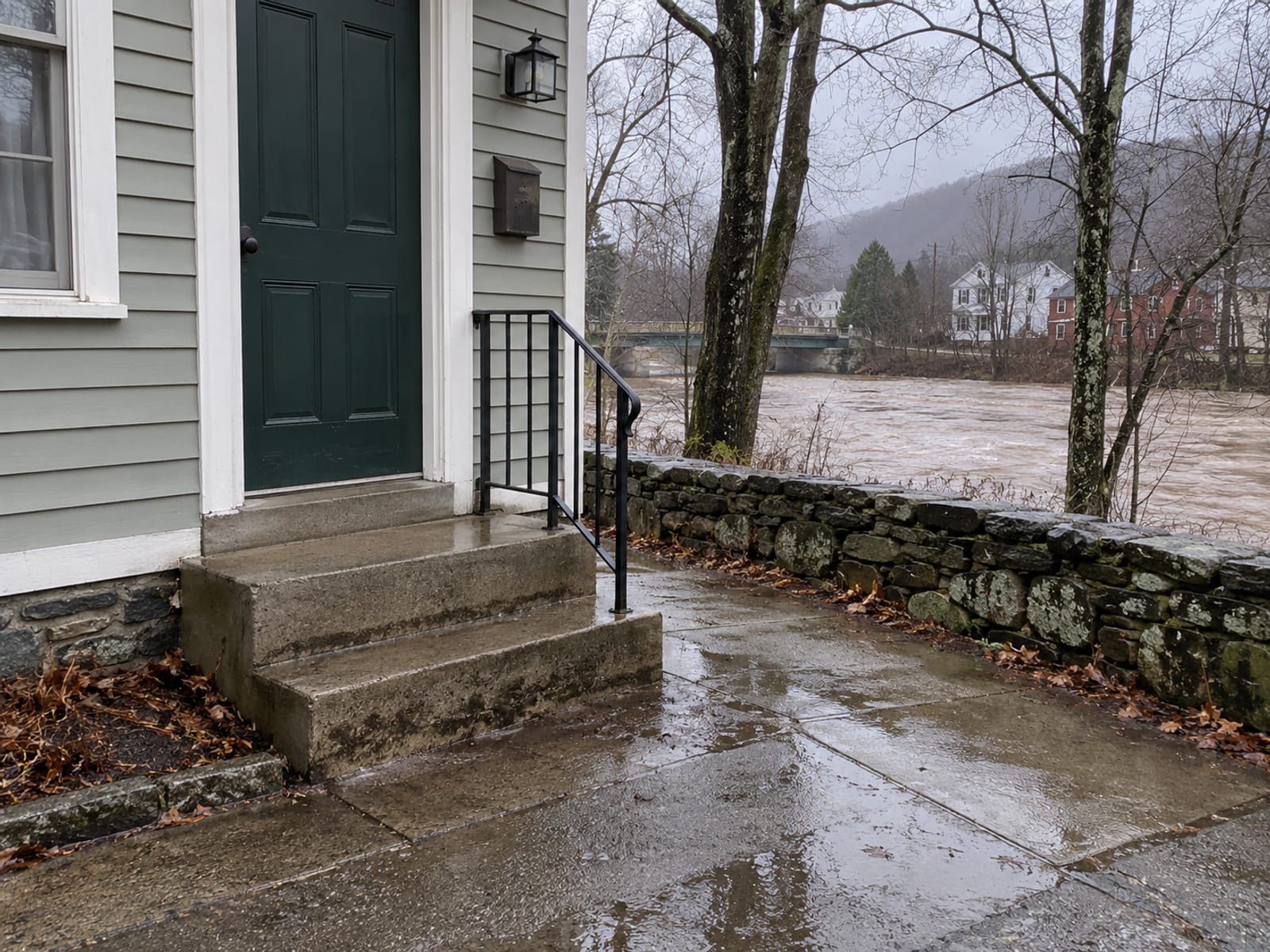
Because standard renters policies generally exclude flood, flood coverage for your belongings comes through a separate policy. Renters can buy contents-only coverage through the National Flood Insurance Program, which covers up to $100,000 of contents damage, according to FloodSmart, FEMA's NFIP site (opens in a new tab). Covered contents include furniture, clothing, televisions, computers, rugs and some artwork, according to the NFIP renters brochure (opens in a new tab).
Two details affect timing and eligibility. The standard NFIP waiting period is 30 days after purchase, subject to listed exceptions, so buy before you need it. Coverage is available to renters in communities that participate in the NFIP.
Few federal programs help renters recover property after a disaster, and many property policies do not cover flood damage, according to Vermont Emergency Management (opens in a new tab). If your rental is in a flood-prone area, ask an agent about NFIP contents coverage along with your renters policy.
Replacement cost, actual cash value and scheduled property
How your policy values your belongings decides how much you receive after a claim. Actual cash value subtracts depreciation, so a five-year-old laptop pays out at its worn value. Replacement cost is designed to pay what it costs to replace the item, subject to the policy's conditions, limits and valuation rules, according to the Vermont DFR homeowners insurance guide (opens in a new tab).
If you own jewelry, art, collectibles or expensive electronics, ask whether scheduled personal property or another endorsement is available and what appraisal or documentation the insurer requires. A bicycle or business equipment you keep at home may also have a special limit, so name those items when you ask for a quote.
How to file a renters insurance claim
Good records make a claim faster and more accurate. Vermont DFR recommends keeping a home inventory with photographs and proof of ownership, according to its home and renters insurance guidance (opens in a new tab). After a loss:
- Notify your insurer promptly.
- Protect people and prevent further damage when it is safe to do so.
- Photograph and document the damaged property.
- Gather receipts, invoices, serial numbers, appraisals and inventory records.
- Follow the insurer's instructions for inspection and documentation.
- Keep copies of every communication and claim document.
For a flood claim, the NFIP claims checklist (opens in a new tab) lists the documentation and loss-reporting steps. Your policy sets the claim deadlines, proof requirements, deductible and settlement process, so confirm those directly with the insurer.

Check that your agent and insurer are licensed
Before you buy, confirm the agent and company are licensed in Vermont. The Vermont insurance license lookup (opens in a new tab) shows whether an agent or company is actively licensed to do business in the state and which lines of insurance the license covers. DFR also publishes producer and agency license information (opens in a new tab), with producer lists updated quarterly.
Questions to ask before you accept a policy
Bring these to an agent or insurer:
- Which hazards are covered, and are flood and earthquake excluded?
- How does the policy treat roommates?
- Is my property valued at actual cash value or replacement cost?
- What special limits apply to jewelry, electronics, bicycles or collectibles?
- How much liability coverage is included, and is medical payments coverage part of it?
- Does the policy pay additional living expenses if my rental becomes uninhabitable, and for how long?
- What deductible applies, and does it apply to every claim?
- What documentation will I need for a claim?
- Can you provide proof of coverage in the form my landlord requires?
- Are you and the insurer licensed in Vermont?
If you would like to talk through these with an agency, Riskado's Vermont agency directory lists insurance agencies by city and by category.
Check what you know about Vermont renters insurance
Frequently asked questions
Is renters insurance required by law in Vermont?
Renters insurance is generally optional under Vermont's residential rental law, 9 V.S.A. chapter 137 (opens in a new tab). A landlord can still require it as a lease condition, so the lease you sign decides whether you need it.
Does renters insurance cover theft?
Ask the insurer whether theft is a covered peril under the policy, including theft from a car or of a bicycle. Then ask what special limits apply to electronics and jewelry, since high-value items can carry lower limits under a standard policy.
What does NFIP flood insurance cover for renters?
It covers contents only, up to $100,000, for belongings such as furniture, clothing, televisions and computers, according to FloodSmart (opens in a new tab). The standard waiting period is 30 days after purchase, and you must live in a participating community.
Is the $165 average what I will pay?
No. The NAIC's 2023 figure (opens in a new tab) is a statewide average across all coverage amounts. Your premium depends on your coverage amount, deductible, location and insurer.
What should I keep for a future claim?
Keep a home inventory with photos, receipts, serial numbers and appraisals. Those records serve as proof of ownership if you need to file.
Before you sign or renew
Read the lease for any insurance requirement and proof rule, decide how much property and liability coverage fits your belongings, and ask directly about flood, roommates and high-value items. With those answers and a licensed agent confirmed through DFR, you can pick a policy that meets the lease and protects what you own.
Sources: Vermont DFR, home and renters insurance (opens in a new tab); Vermont DFR homeowners insurance guide (opens in a new tab); NAIC 2023 Homeowners Report (opens in a new tab); 9 V.S.A. chapter 137 (opens in a new tab); FloodSmart, buy a policy (opens in a new tab); Vermont Emergency Management (opens in a new tab); Vermont DFR license verification (opens in a new tab).
Terms used in this guide
Tap a term to see what it means.
HO-4. The standard renters insurance policy, covering personal property, personal liability, medical payments to others and additional living expenses.
Additional living expenses. Coverage that helps pay the extra cost of living elsewhere while covered damage to the building is repaired.
Actual cash value. A valuation that subtracts depreciation, so an older item pays out at its worn value.
Replacement cost. A valuation designed to pay what it costs to replace an item, subject to the policy's conditions and limits.
Scheduled personal property. An endorsement that lists high-value items such as jewelry or art for their own coverage.
NFIP. The National Flood Insurance Program, which sells contents-only flood coverage to renters in participating communities.