Alabama Homeowners Insurance: Why Rates Are High and Rising, What Drives Your Price, Coastal and Inland Differences and What to Do at Renewal
Riskado
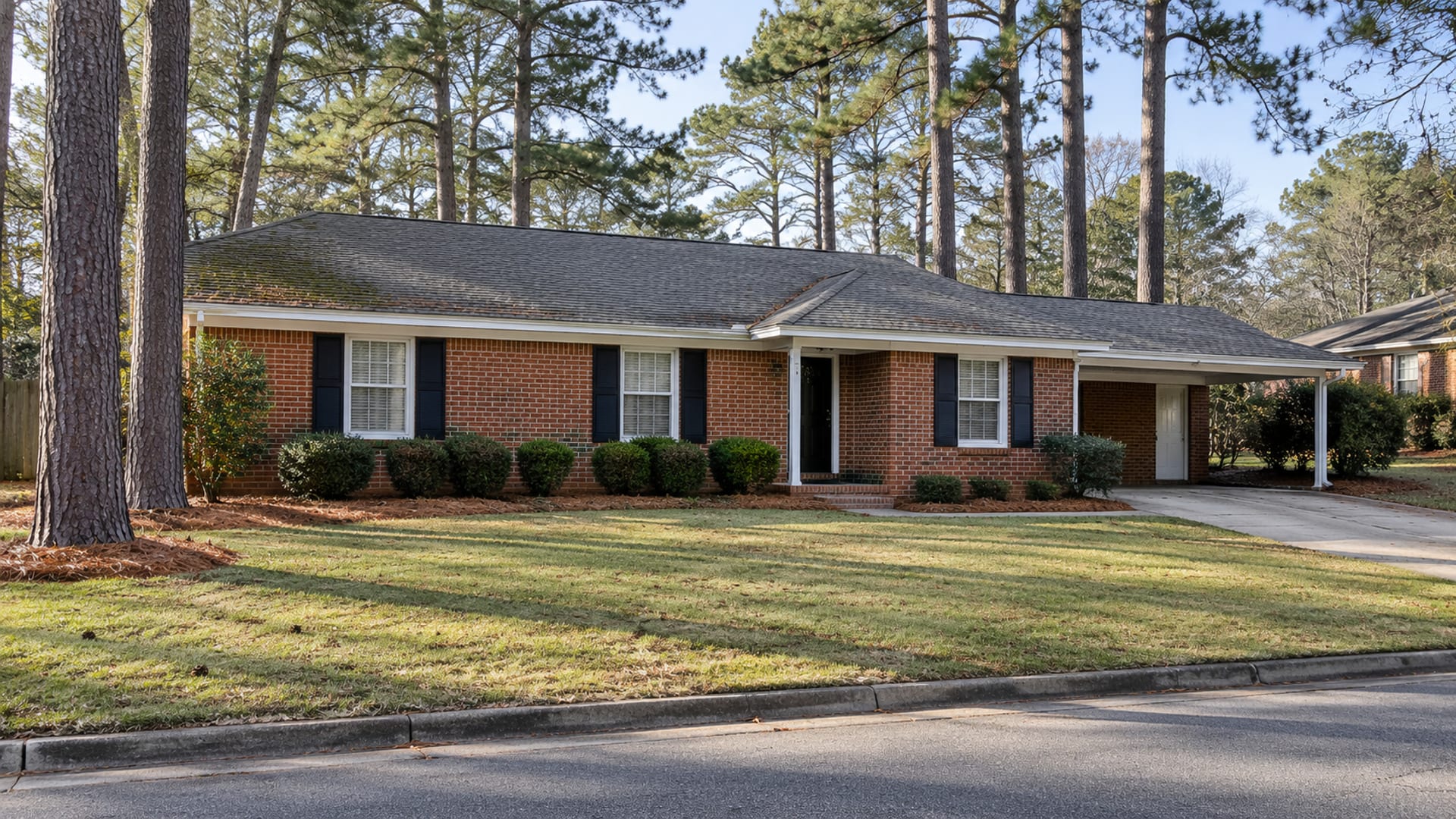
An Alabama homeowners insurance increase can come from a filed rate change, higher rebuilding costs, storm and hail losses, your home's location and construction, roof condition, claims history, credit-based insurance score, a higher coverage limit or a deductible change. Homes south of the 31st parallel in Mobile and Baldwin counties also sit in a separate coastal wind market, where the Alabama Insurance Underwriting Association (opens in a new tab) insures eligible property when private coverage isn't available. Start with your renewal declarations page: compare the premium, dwelling limit, deductibles and exclusions with last year's. Then ask an Alabama-licensed agency to explain each change, and deal with any non-renewal before the current policy ends. Flood is generally a separate policy.
Key takeaways
- What drives the increaseFiled rates, rebuilding costs, storm and hail losses, location, construction, roof condition, claims, credit-based insurance score, limits and deductibles.
- The coastHomes south of the 31st parallel in Mobile and Baldwin counties can turn to the AIUA when private coverage isn't available.
- First stepCompare this year's declarations page with last year's, line by line.
- Non-renewalDeal with it before the current policy ends.
- FloodGenerally a separate policy.
What to check first on an Alabama renewal
Put last year's declarations page next to the new one and go line by line. Look at the premium, the dwelling limit (Coverage A), the ordinary deductible, any wind, hail, named-storm or hurricane deductible, the roof settlement terms, the listed endorsements and exclusions, and the effective date. A higher dwelling limit or a new percentage deductible changes your bill and your out-of-pocket cost after a storm, so it helps to know which line moved before you call anyone.
Your policy is the controlling document. Alabama insurers must give homeowners policyholders an outline of coverage and a policy checklist under Code of Alabama § 27-22-43 (opens in a new tab), and the checklist in Alabama Department of Insurance (ALDOI) Bulletin 2012-10 (opens in a new tab) says that where the checklist and the policy disagree, the terms of the policy govern. Read the endorsements, not just the summary.
If the renewal letter mentions a roof inspection, a roof age limit or a request for photos, answer it before the deadline in the letter. A missing response can turn a premium question into a coverage question, as our article on homeowners insurance cancelled after an inspection explains.
How much does homeowners insurance cost in Alabama?
The most recent NAIC figures cover 2023. In Alabama, the average premium for the HO-3 policy form, the most common owner-occupied homeowners form, was $1,906, and the average across all owner-occupied dwelling and homeowners forms combined was $1,862, according to the NAIC Homeowners Insurance Report: Data for 2023 (opens in a new tab), published in July 2026.
The average climbs with the amount of insurance. Alabama HO-3 policies averaged $1,442 for $150,000 to $199,999 of dwelling coverage, $1,858 for $300,000 to $324,999 and $2,574 for $500,000 to $599,999, in the same report. These are averages of reported premium per insured house for a year, not a quote for any home, and they lag current prices by more than two years.
Hover or tap a row to highlight it.
| Policy and amount of dwelling insurance | Average annual premium |
|---|---|
| HO-3, $150,000 to $199,999 | $1,442 |
| HO-3, $300,000 to $324,999 | $1,858 |
| HO-3, $500,000 to $599,999 | $2,574 |
| HO-3, all amounts | $1,906 |
| All owner-occupied dwelling and homeowners forms | $1,862 |
ALDOI also runs a homeowners premium comparison tool (opens in a new tab) that shows real filed premiums from insurers for set examples, such as an HO-3 on a brick house with $150,000 or $300,000 of Coverage A, a 10-year-old dwelling, a $500 deductible and no claims. The department notes that the figures leave out surcharges and discounts, so your own premium will differ.
Why are Alabama homeowners insurance rates rising?
Rates in Alabama are set through filings the department reviews. In ALDOI's summary of the data it reviews for homeowners rate filings (opens in a new tab), an insurer submits five years of premiums and non-catastrophe losses statewide and by territory, projects hurricane losses with computer models, and projects other wind and hail losses, such as tornadoes, with models or a 20-year loss history. Those projected losses are compared with a target loss ratio that accounts for commissions, overhead, taxes, the net cost of reinsurance and a profit margin the department caps at 10% of premium. When projected losses run above the target, the filing calls for higher rates, statewide and by territory.
The costs behind those losses have climbed. Repair and rebuilding expenses rose nearly 30% over the past five years, driven by inflation, supply-chain problems, material prices and labor shortages, according to a Triple-I analysis published December 17, 2025 (opens in a new tab). The same analysis points to severe convective storms, the hail, tornado and thunderstorm events common in Alabama, as a growing source of insured loss.
Your own increase can also come from your policy. A higher dwelling limit set to match rebuilding costs, a new claim, a roof that crossed an age threshold or a change in discounts all show up at renewal even when the statewide rate didn't move much.
Why location matters: the coast and the rest of the state
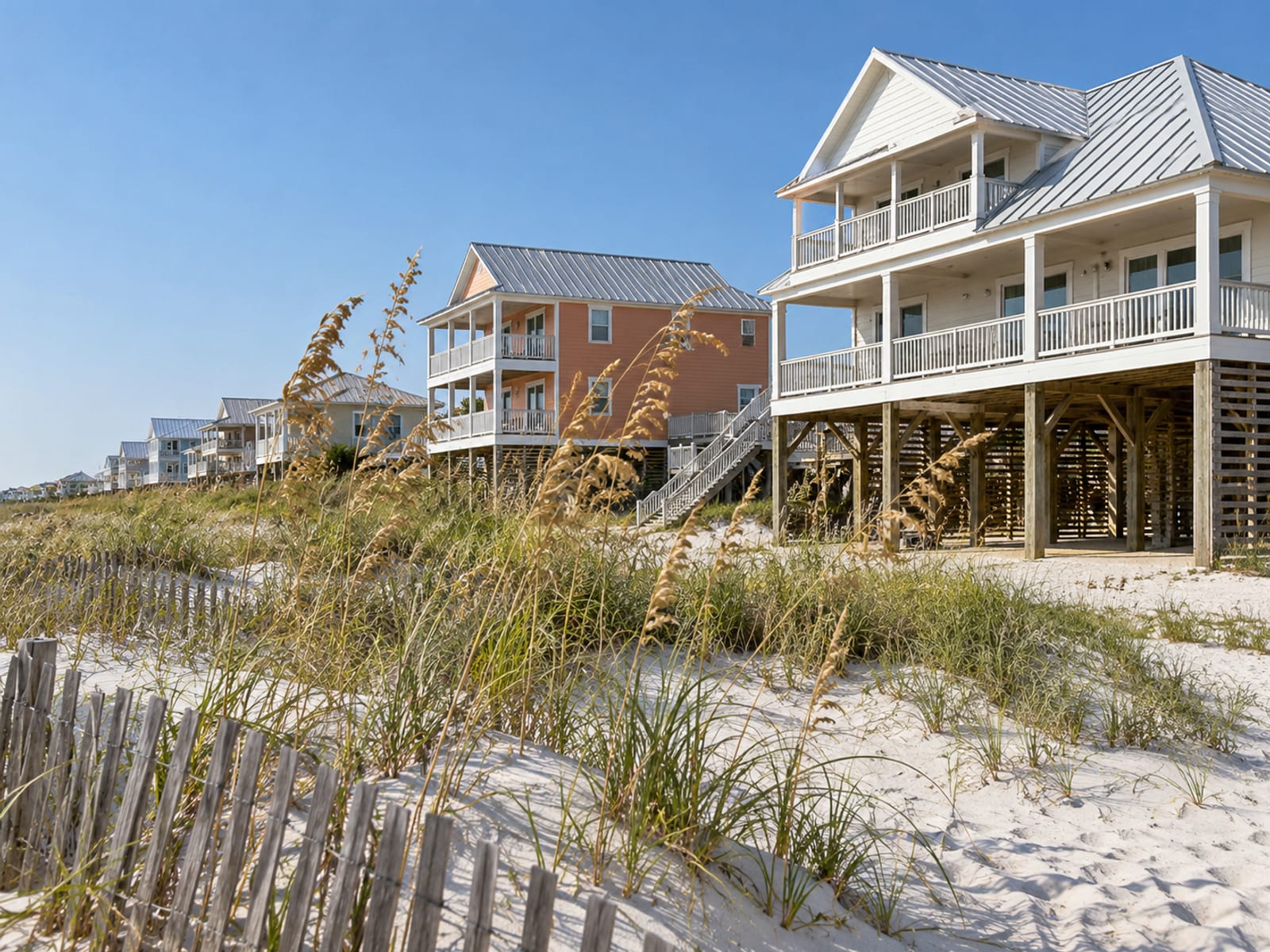
Insurers price by territory, and wind is the biggest piece of the bill near the Gulf. ALDOI estimated that hurricane and wind exposure represents about 70% to 80% of the cost of homeowners insurance on the coast and about 40% to 60% upstate, in its December 23, 2016 announcement of FORTIFIED discounts (opens in a new tab).
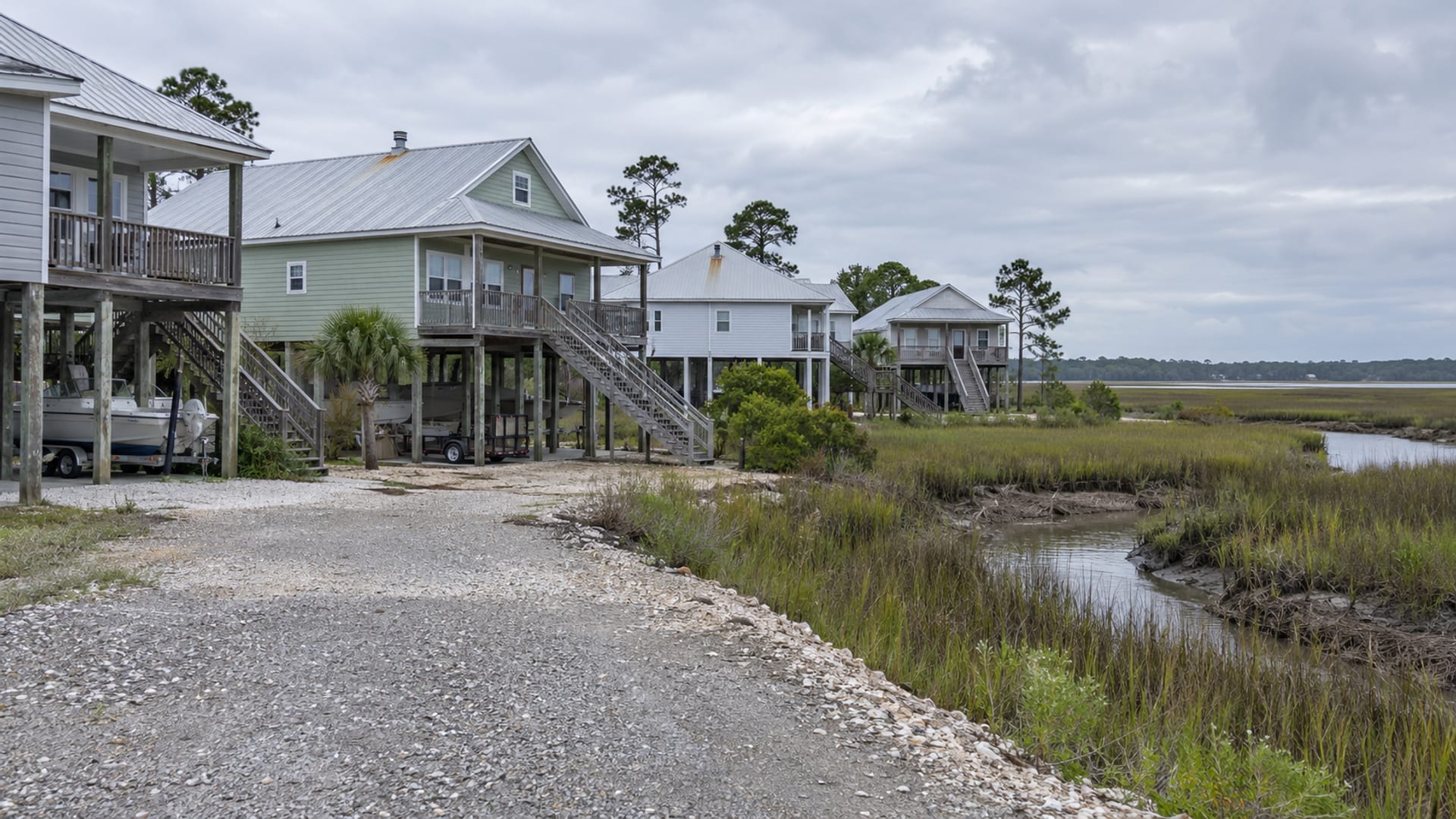
On the coast, the market works differently. Some coastal homeowners policies exclude wind, and the homeowner buys wind and hail coverage separately. The Alabama Insurance Underwriting Association (opens in a new tab), often called the Beach Pool, exists to give owners of eligible property in Baldwin and Mobile counties a market when they can't find coverage privately. Its eligible areas lie south of the 31st parallel in those two counties, and you check a specific address on the AIUA maps page.
Inland, the main weather risks are tornadoes, hail and straight-line wind. These homes still carry a wind cost, and some inland policies use percentage deductibles for wind as well, so territory alone doesn't tell you what your policy contains.
What sets your individual premium
ALDOI's comparison tool shows how many details go into one price: the policy form, construction type, dwelling limit, age of the home, deductible, credit score, prior lapses, how the premium is paid, multi-policy discounts, protective devices such as smoke detectors and deadbolts, claims and the protection class for your ZIP code. Each insurer weighs these under its own filed rating plan.
The factors you can document are the roof, construction and mitigation features. A roof's age, material and condition affect both price and eligibility. A home certified to an IBHS FORTIFIED standard qualifies for a wind discount under Alabama law, covered below. Your claims history and the dwelling limit you choose also move the price, and the NAIC consumer guide to homeowners insurance (opens in a new tab) lists location, coverage amount, replacement cost and deductibles among the main pricing factors.
What an Alabama homeowners policy covers and leaves out
A standard homeowners policy commonly covers the dwelling, other structures, personal property, additional living expenses, personal liability and medical payments to others, each subject to the limits and exclusions on your declarations page.
Wind and hail are usually covered perils, but they may carry their own deductible. Flood insurance in Alabama is not part of a standard policy. Homeowners policies generally do not cover flood damage, according to FEMA's Spanish-language explanation (opens in a new tab), updated February 14, 2025, and ALDOI's July 2025 consumer insight (opens in a new tab) adds that homeowners and renters policies typically don't cover sewer backups, water main breaks or earthquake damage. Mold, wear and tear, maintenance problems and slow seepage are commonly excluded or limited.
Water damage depends on the cause. A sudden pipe burst, a sewer backup, groundwater seepage and rising floodwater are treated differently, so ask how your policy handles each one and whether a water backup endorsement is available.
How wind, hail and hurricane deductibles work
Many Alabama policies have two kinds of deductible: an ordinary deductible for most claims and a separate deductible for wind, hail, named storms or hurricanes, which our article on the Alabama hurricane deductible covers in detail. ALDOI's natural disasters guide (opens in a new tab) explains that the wind or hurricane deductible may be a dollar amount or a percentage of the home's insured value, not a percentage of the loss.
The percentage version adds up quickly. In an ALDOI example (opens in a new tab), a $200,000 home with a 1% deductible would have a $2,000 deductible, and a 5% deductible would be $10,000. ALDOI also notes that some insurers use percentage wind deductibles in inland counties, not only in Baldwin and Mobile.
Read the endorsement for the trigger. It defines what counts as a named storm or hurricane, when the event starts and ends, and whether the deductible applies once per event or per claim.
What is the 80 percent rule?
The 80 percent rule is about keeping your dwelling limit close to the cost of rebuilding. If your dwelling coverage drops below 80% of your home's full replacement cost, your insurer may reduce what it pays on a claim, according to the NAIC consumer guide (opens in a new tab).
Replacement cost is the cost to rebuild with similar materials at today's prices. It isn't the same as market value, which includes the land and moves with the real estate market. When rebuilding costs rise, insurers often raise the dwelling limit at renewal to keep pace, and that alone can raise the premium. Ask for the replacement-cost estimate behind your dwelling limit and whether your roof is settled at replacement cost or actual cash value.
What happens after a cancellation or non-renewal
A homeowners insurance non-renewal notice isn't the end of your coverage options, but the date on it matters. Read it for the effective date and the stated reason, and ask the insurer or agency to put the reason in writing if it isn't clear. Keep the notice, because a new insurer or the AIUA will ask why the old policy ended.
Alabama added protections for weather-related claims. Under ALDOI's Revised Bulletin 2025-08 (opens in a new tab), dated February 4, 2026, an insurer may not cancel or non-renew a personal or commercial property policy based solely on a claim from a catastrophe, natural disaster, act of nature or weather-related cause, effective January 1, 2026. For new policies written on or after March 15, 2026, and renewals on or after May 15, 2026, an insurer also may not add a surcharge or move the policy to a higher-priced tier based solely on such a claim. The bulletin applies to insurers authorized in Alabama and to the AIUA. It still allows action when there are other substantial reasons, such as concealment, misrepresentation or fraud, and it allows a claims-free discount to be removed after a weather-related claim.
If you believe a notice or surcharge rests only on a storm claim, ask the insurer for the reason in writing and contact ALDOI Consumer Services, which can also confirm the notice rules for your type of policy.
Alabama Revised Bulletin 2025-08 dates
- January 1, 2026No cancellation or non-renewal based solely on a catastrophe, natural disaster or weather-related claim.
- February 15, 2026Insurers whose rating rules didn't comply had to file amended rating manuals.
- March 15, 2026New policies: no surcharge or higher-priced tier based solely on such a claim.
- May 15, 2026Renewals: the same surcharge and tier protection applies.
What if private coverage isn't available?
Ask an agency to check several markets: admitted insurers, eligible surplus lines insurers and, on the coast, the AIUA. Surplus lines insurers can write risks the standard market declines, but their policy forms and rules can differ, so compare the coverage, deductibles and exclusions line by line.
The AIUA is limited to eligible property in designated areas south of the 31st parallel in Baldwin and Mobile counties. You can't apply directly: an AIUA authorized agent submits the application, and the association decides whether the property meets its underwriting standards, according to the AIUA FAQ (opens in a new tab). Its main product covers wind, hail and hurricane, and it often sits alongside a separate policy for fire, theft and liability.
What can lower or steady the premium at renewal
There's no guaranteed saving, but several requests are worth making. Ask whether a higher deductible is available and what it would cost you after a claim. Ask about multi-policy discounts and discounts for smoke detectors, alarms, deadbolts and sprinkler systems, which ALDOI's consumer insight (opens in a new tab) lists as common.
A FORTIFIED roof in Alabama is the largest documented discount. Alabama law, Code of Alabama § 27-31D-2 (opens in a new tab), requires insurance companies to provide a premium discount or rate reduction for homes retrofitted to IBHS FORTIFIED standards. Under ALDOI Bulletin 2016-07, the benchmark discounts on the wind portion of the premium are 20% for FORTIFIED Roof, 35% for Silver and 40% for Gold on an existing home with a roof more than five years old, and 35%, 45% and 50% when the roof is five years old or less, according to the ALDOI and University of Alabama report published May 5, 2025 (opens in a new tab). The discount applies to the wind portion, not the whole premium.
Help with the cost of a FORTIFIED roof may be available. The Strengthen Alabama Homes (opens in a new tab) program states that its grants pay 100% of the mitigation cost up to $10,000, as of October 13, 2026, with applications opening by county on the program's schedule while funds last.
Questions to ask an Alabama agency
- What policy form do I have, and what changed from last year?
- Is my dwelling limit based on a current replacement-cost estimate?
- What is my ordinary deductible, and is my wind, hail or hurricane deductible a dollar amount or a percentage?
- Does the hurricane deductible apply per event or per claim, and what triggers it?
- Is my roof settled at replacement cost or actual cash value?
- What roof documents or inspection does the insurer need?
- Does the policy exclude or limit flood, mold, earthquake, sinkhole or water backup?
- How do my claims and credit-based insurance score affect this policy?
- Which discounts apply, including multi-policy, protective devices and FORTIFIED?
- If I get a non-renewal, what is the reason and the deadline?
- If private coverage isn't available, does my property qualify for the AIUA or a surplus lines policy?
- What does my mortgage lender require on the policy?
Before you share documents, confirm the agent's license with the Alabama insurance license lookup (opens in a new tab). If an insurer doesn't resolve a problem, ALDOI asks you to contact the company or producer first and then file through its online consumer complaint process (opens in a new tab), including your policy number, claim number if any and a detailed description. The department can require corrective action when an insurer didn't meet its legal obligations, but it doesn't give legal advice or decide what a claim is worth. Spanish-speaking homeowners can ask ALDOI Consumer Services about language help with a notice or policy.
Documents to bring to an Alabama agency
- Declarations pagesLast year's and this year's.
- Policy and endorsementsThe full policy, including wind and hurricane deductible endorsements.
- NoticesAny non-renewal, cancellation or inspection letter.
- Roof recordsRoof age, material, permits and inspection reports.
- ClaimsYour prior claims information.
- Rebuilding estimateThe replacement-cost estimate behind your dwelling limit.
- Lender and floodYour mortgage insurance requirements and any flood-zone or flood policy documents.
- FORTIFIED certificateIf your home has one.
Check what you know about Alabama homeowners insurance
Frequently asked questions
Is homeowners insurance required by law in Alabama?
Owning a home doesn't by itself require you to buy homeowners insurance. Most mortgage lenders require it and list themselves as the mortgagee, and if the coverage lapses, the lender will likely buy insurance on the home and charge you, according to the NAIC consumer guide (opens in a new tab). That lender-placed coverage typically protects the structure only, at a higher premium.
Is a 50 percent renewal increase normal in Alabama?
A single figure doesn't apply to every home. Large jumps often combine a filed rate increase with a higher dwelling limit, a new deductible structure, a lost discount or a claim. Ask the agency to split the increase into those pieces using last year's and this year's declarations pages.
How do I stop my home insurance from going up?
You can't control filed rates, but you can control some of the inputs. Keep the roof documented and maintained, ask about every discount you qualify for, consider whether a higher deductible fits your savings, and look into a FORTIFIED roof, which carries required wind discounts in Alabama.
Does AIUA cover flood?
No. The AIUA (opens in a new tab) states that flood is not covered under its policies and requires flood insurance equal to your fire and wind coverage when the property is in a flood zone. Flood coverage comes from the National Flood Insurance Program or a private flood insurer.
Before your current policy ends
Compare the two declarations pages, write down every change, and take them to an Alabama-licensed agency with your roof documents, claims history and any non-renewal notice. Ask about deductibles, the dwelling limit, flood and discounts, and if the private market won't write the home, ask about surplus lines and the AIUA before the expiration date.
Key terms
Tap a term to see what it means.
Declarations page. The page of a policy that lists the coverages, limits, deductibles, endorsements and dates.
HO-3. The most common owner-occupied homeowners policy form.
Coverage A. The dwelling limit, the most the policy pays to repair or rebuild the house.
Replacement cost. The cost to rebuild or repair with similar materials at today's prices, without subtracting depreciation.
Actual cash value. Replacement cost minus depreciation for age and wear.
Hurricane deductible. A separate deductible for hurricane wind loss, often a percentage of the insured value.
80 percent rule. The point below which an insurer may reduce a claim payment, when dwelling coverage falls under 80% of full replacement cost.
AIUA. The Alabama Insurance Underwriting Association, the coastal market for eligible property in Baldwin and Mobile counties.
Non-renewal. An insurer's decision not to renew a policy for another term.
Surplus lines. Coverage from insurers not admitted in the state, used for risks the standard market declines.