South Carolina Boat Insurance: Whether It Is Required, Registration, Marina and Lender Rules and What It Costs
Riskado
South Carolina doesn't require proof of insurance to register a recreational boat, according to the South Carolina Department of Natural Resources (opens in a new tab). The state does require title and registration for covered watercraft, with exemptions for documented vessels and boats propelled only by human power, and SCDNR handles both. A marina or lender can still make insurance a condition of its contract, including liability coverage, physical-damage coverage, proof of insurance or additional-insured status. A boat policy can cover the hull, equipment, liability, medical payments, towing and uninsured boaters, but the exact protections, exclusions, deductibles and navigation limits depend on the policy you buy.
Key takeaways
- State lawRegistering a boat with SCDNR doesn't require proof of insurance.
- Title and registrationRequired for covered watercraft and outboard motors of 5 horsepower or more, with exemptions such as documented vessels.
- ContractsA marina slip agreement or a boat loan can require insurance even though the state doesn't.
- The policy decidesHull, liability, medical payments, towing, uninsured boater and storm terms depend on the form and endorsements.
Does South Carolina require boat insurance?
No state law requires it for a recreational boat. State registration laws don't require you to show proof of insurance to register a boat in South Carolina, according to the SCDNR's titling and registration FAQ (opens in a new tab). That answer is the same whether the boat has a motor, is a sailboat or is a personal watercraft, and whether you use it on Lake Murray, Lake Keowee, Lake Hartwell, the coast or the Intracoastal Waterway. Boat insurance isn't required by South Carolina law, though some marinas mandate liability coverage and a lender may require comprehensive and collision coverage on a financed boat, according to Progressive's South Carolina boat insurance page (opens in a new tab).
Lawmakers have proposed changing that. Senate Bill 26 of the 2025-2026 session (opens in a new tab) would require owners of watercraft of more than 70 horsepower to carry liability insurance of at least $50,000 per occurrence. A bill becomes a requirement only if it's enacted, so check its status with the General Assembly before relying on either answer.
Can a marina or lender still require boat insurance?
Yes. A marina's insurance requirement is a term of its slip agreement, not a South Carolina law, and it binds you once you sign. A slip agreement can set a minimum liability limit for the boat, require coverage for damage to the boat, ask for a certificate of insurance at signing and on request, name the marina as an additional insured and allow the marina to end the agreement if proof isn't supplied.
Each marina sets its own terms and amounts. A lender's requirement works the same way: because the boat is collateral, the loan documents can require physical-damage coverage and the lender listed on the policy. Get the written slip agreement, any lake community rules and your loan documents, and ask the agency to match the policy to each one.
What must be titled and registered in South Carolina?
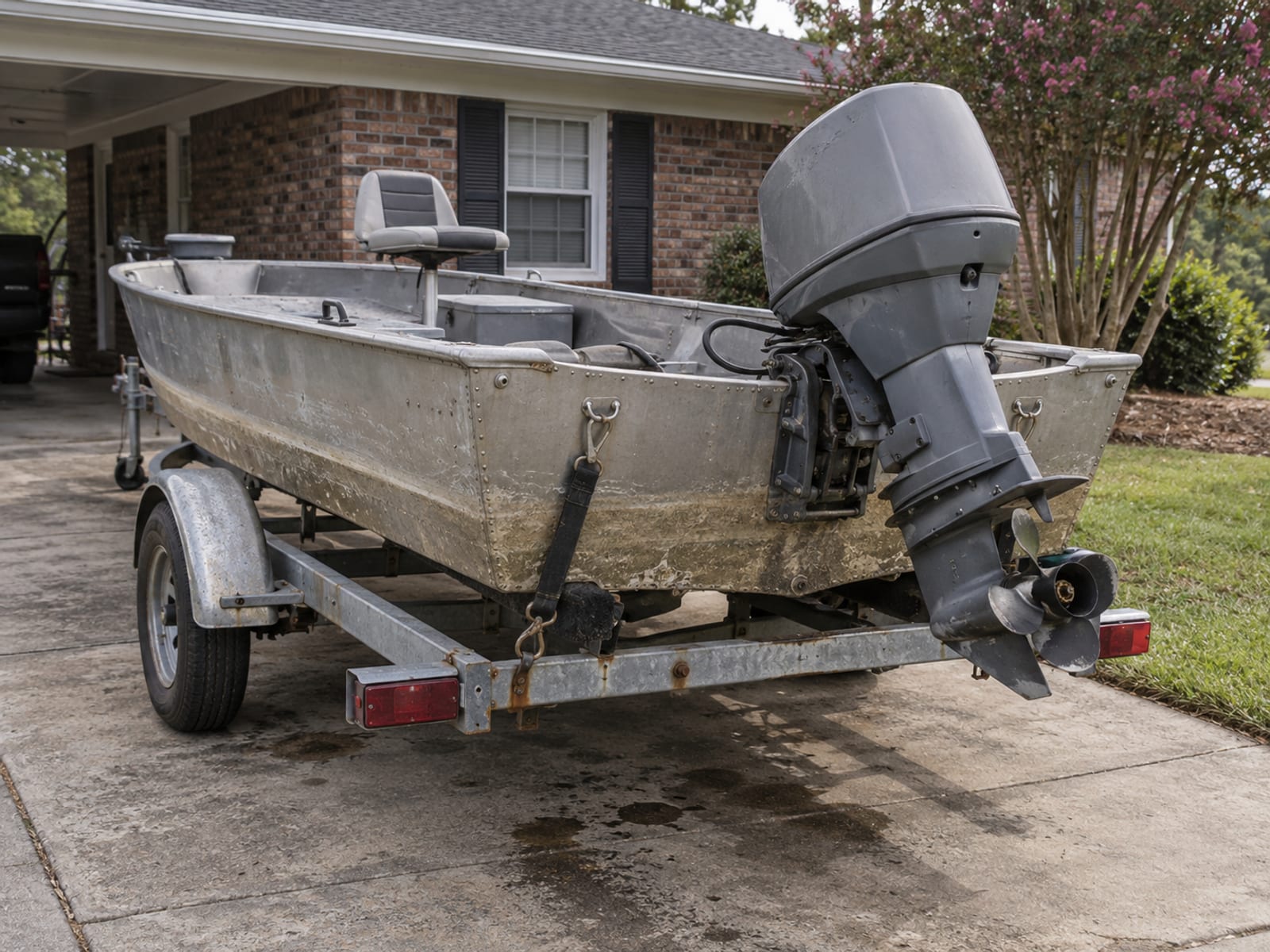
SCDNR handles watercraft and outboard motor titling and registration, and its registration rules (opens in a new tab) set out which vessels are covered. The main points:
- All motorized boats and watercraft must be titled, except exempted vessels.
- Sailboats must be titled, and a sailboat with any propulsion, such as an outboard, trolling motor or inboard, must also be registered, under the SCDNR sailboat rules (opens in a new tab).
- Outboard motors of five horsepower or more must be titled.
- Documented vessels don't need South Carolina registration, though an outboard motor on a documented vessel may still need a title when South Carolina is the state of principal use, according to SCDNR's documented vessel page (opens in a new tab).
- Windsurfers and watercraft propelled only by human power, paddles or similar devices don't need to be registered or titled.
- A temporary certificate of number lets you operate for up to 60 days from the purchase date, under the conditions in the SCDNR FAQ (opens in a new tab).
The paperwork depends on how you bought the boat. Expect to provide a title or bill of sale, a manufacturer's statement of origin for a new boat, hull identification information, lien details and, for a boat previously titled in South Carolina, a paid property tax receipt in your name or a county notice that no taxes are due. Boat trailers don't need a South Carolina title unless they weigh 2,500 pounds or more empty, and heavier trailers are titled through the SCDMV, according to the SCDNR FAQ (opens in a new tab). The statutes behind these rules are in Title 50, Chapter 23 of the South Carolina Code (opens in a new tab).
How much does South Carolina boat registration cost?
SCDNR lists these basic fees on its fee schedule (opens in a new tab):
Hover or tap a row to highlight it.
| Item | Fee |
|---|---|
| South Carolina boat registration and title, first time in SC | $20 |
| Annual registration renewal | $10 |
| Watercraft title, unpowered vessel | $10 |
| Sailboat title, wind only | $10 |
| Sailboat registration and title, with propulsion | $20 |
| Late fee, application more than 30 days after purchase or renewal more than 30 days after expiration | $15 |
| Late fee, application more than 60 days after purchase or renewal more than 60 days after expiration | $30 |
| Casual excise or use tax on a boat, or a boat and motor bought from the same individual | 5% of the purchase price, capped at $500 |
The late fees run from the purchase date, so file the application within 30 days of buying the boat. If you've already paid casual excise or use tax to SCDNR or another state, keep the receipt, because SCDNR asks for proof that it was paid.
What does boat insurance cover?
A boat policy can protect the boat and the people around it. A boat insurance policy provides liability coverage if someone is injured on your boat, covers bodily injury you cause to others and covers property damage to your boat, according to the South Carolina Department of Insurance's summer insurance guide (opens in a new tab). Many policies add other sections, and insurers describe options such as medical payments, towing and on-water assistance, uninsured boater coverage, personal effects, trailer coverage, fuel-spill liability and hurricane haul-out, as Progressive's boat coverage page (opens in a new tab) shows for its own policies.
None of those extras is automatic across every form. Before you buy, ask the agency which sections the quote includes, what each limit is and which ones are optional endorsements.
What does boat insurance exclude?
Exclusions vary by policy form, and the exact wording controls. Ask whether your policy excludes or limits:
- Wear and tear, deterioration and lack of maintenance.
- Racing or speed contests.
- Commercial use the policy doesn't allow.
- Operators the policy excludes.
- Navigation outside the policy's geographic limits.
- Losses that follow a failure to meet the policy's safety conditions.
Ask for the exclusions page itself rather than a summary, and check it against how you actually use the boat.
How do agreed value and actual cash value work?
The way a policy values your boat decides what you're paid after a loss. The SCDOI's guide (opens in a new tab) describes three loss settlement provisions:
Hover or tap a row to highlight it.
| Settlement type | Total loss | Partial loss |
|---|---|---|
| Actual cash value | The boat's current value, minus your deductible | The depreciated value of lost or damaged items, minus your deductible |
| Agreed amount value | The value you and the insurer agreed on when you bought the policy, minus your deductible | Replacement cost, minus your deductible, with no depreciation taken |
| Replacement cost | Replacement with a boat as similar to yours as possible | Set by the policy terms |
Our article on replacement cost vs actual cash value explains how depreciation changes a payout.
How do storms and hurricanes affect coverage?
Storm terms are where boat policies differ most, so read the policy and endorsements for:
- Whether storm or hurricane damage is covered at all.
- Whether a named-storm deductible applies, and how it compares with the ordinary deductible.
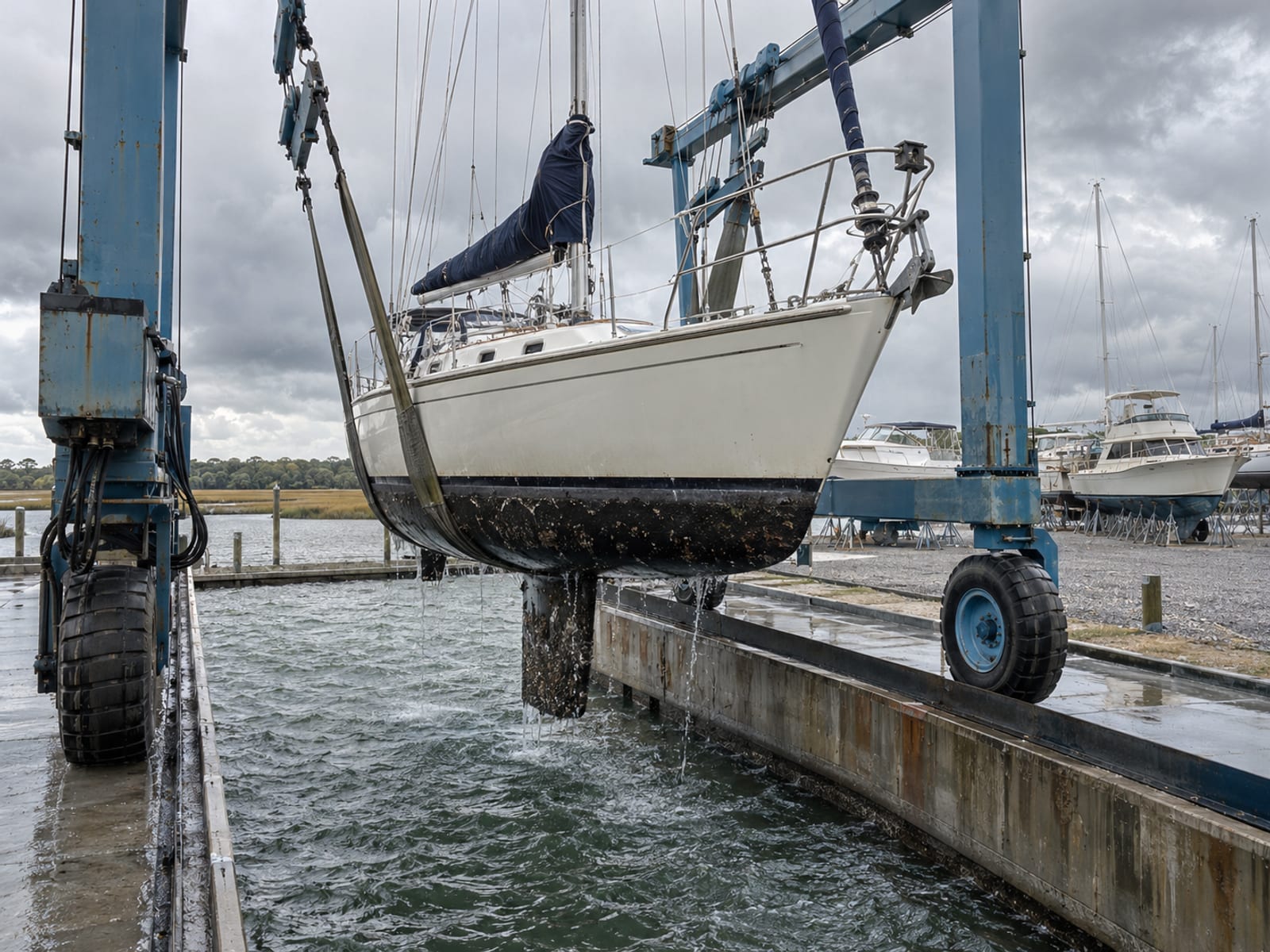
- Whether the policy requires a haul-out, a move to a safe harbor or other preparation before a storm.
- Whether haul-out costs are reimbursed, and what triggers that payment.
- Whether a seasonal lay-up period suspends navigation or changes coverage.
- Where the boat may go during a given period, including coastal, offshore or Intracoastal waters.
Some watercraft policies may be suspended during the months the boat isn't in use, and some carry minimum or fully earned premiums, according to the SCDOI (opens in a new tab). Haul-out terms are insurer-specific. One Progressive coverage pays 50% of the cost of a professional haul-out, up to $2,000, when the National Weather Service issues a tropical storm or hurricane watch or warning for the county where the boat sits, according to Progressive (opens in a new tab). GEICO Marine reimburses 50% of the labor cost, up to $1,000, when the boat is in the path of a NOAA named storm, according to GEICO Marine (opens in a new tab). Those are examples from two insurers, not South Carolina rules, so ask for the exact storm deductible, haul-out trigger, deadline and navigation limit in your own policy.
What boating safety rules apply?
SCDNR enforces operator, equipment and conduct rules that apply whether or not you're insured:
- Since August 18, 2023, boaters born after July 1, 2007 must pass an approved boater education course before operating a boat, personal watercraft or specialty propcraft powered by a motor of 10 horsepower or more, with an exception for renters holding a valid rental safety certificate, according to SCDNR boater education (opens in a new tab).
- Every vessel must carry a wearable U.S. Coast Guard-approved life jacket for each person aboard, sized for the wearer, readily accessible and in serviceable condition, according to SCDNR's life jacket rules (opens in a new tab).
- Children under 12 must wear an approved life jacket on a vessel less than 16 feet long, and anyone operating, riding on or being towed behind a personal watercraft must wear one.
- Boats 16 feet or longer must carry a Type IV throwable device, according to the SCDNR rules and regulations guide (opens in a new tab).
- Vessels may not go faster than idle speed within 50 feet of an anchored vessel, wharf, pier, dock or person in the water, or within 100 yards of the Atlantic coastline, according to the same guide.
- Operating a boat under the influence of alcohol or drugs is a crime under Title 50, Chapter 21 of the South Carolina Code (opens in a new tab).
Does homeowners insurance cover a boat?
Only in a limited way. The personal property coverage of a homeowners policy may cover a small boat for $1,500 or less in physical damage, but coverage for your liability is limited, and a large boat will be excluded for both property and liability, according to the SCDOI (opens in a new tab). Personal watercraft such as jet skis often need a separate policy, which your homeowners insurer may offer.
Coverage for the motor, trailer, equipment, theft, storm damage and use away from home depends on your homeowners policy and its endorsements. Ask your agent to compare what the homeowners policy pays with what a separate boat policy would pay. South Carolina homeowners insurance has more on what a standard policy covers.
How much does boat insurance cost?
Boat insurance prices vary widely with the boat and how you use it. In 2024-2025, the average annual cost of a boat policy at Progressive ranged from $274.42 in Wisconsin to $867.86 in Florida, according to Progressive (opens in a new tab). That's one insurer's range across other states, not a South Carolina figure.
Factors that can move a quote include the boat's value, age, length and type, the engine and horsepower, inland or coastal use and the navigation area, where the boat is stored or moored, the operator's experience and claims history, how the boat is used, the coverages and deductibles you choose, the valuation method and storm exposure. For a price on your boat, ask a licensed South Carolina agency for a quote based on the boat, its use, its navigation area and any marina or lender requirements.
What should you do after an accident, theft or storm loss?
Notify your insurer promptly, follow the claim instructions in the policy and keep:
- The policy and declarations page.
- Registration, title and hull identification information.
- Photos and video of the damage.
- A written description of what happened.
- Names and contact details for operators, passengers and witnesses.
- Any police, marine law enforcement or Coast Guard report.
- Repair estimates, invoices and receipts.
- Marina, storage yard or towing records.
- The written marina or lender requirement if the claim involves a contract condition.
South Carolina law also puts duties on the operator. The operator of a vessel involved in a collision, accident or other casualty must, when it's safe, give practical assistance to anyone affected and give their name, address and vessel identification in writing to anyone injured and to the owner of damaged property, under S.C. Code § 50-21-130 (opens in a new tab). The operator must report an accident to SCDNR when it results in death, loss of consciousness, medical treatment beyond first aid or disability lasting more than 24 hours, and property damage above the reporting threshold also triggers a report, according to the SCDNR rules and regulations guide (opens in a new tab). Contact SCDNR promptly after a qualifying accident, use the accident report on its boating forms page (opens in a new tab) and notify your insurer without delay.
How do you check an agent or file a complaint?
The South Carolina insurance license lookup (opens in a new tab) shows whether an agent or agency holds a South Carolina license, and the SCDOI's Insurance Locator (opens in a new tab) lets you search licensed insurance companies and agents, called producers, along with company contact and complaint information.
If a problem comes up, contact the insurer or agent first and ask for an explanation. If that doesn't resolve it, take it to SCDOI Consumer Services (opens in a new tab). The department's authority covers the people and companies it licenses and policies issued in South Carolina.
What should you ask an agency?
Take these questions to the agency, along with your slip agreement and loan documents:
- Is the boat insured at actual cash value, agreed amount value or another basis?
- What are the hull, machinery, equipment, trailer and personal effects limits?
- What liability coverage applies to bodily injury and property damage?
- Are medical payments, uninsured boater coverage and towing or emergency assistance included?
- Are fuel-spill liability and wreck removal covered?
- What exclusions apply to wear, maintenance, racing, commercial use and unlisted operators?
- Are Lake Murray, Lake Keowee, Lake Hartwell, coastal waters and the Intracoastal Waterway within the navigation limits?
- Is there a lay-up or seasonal restriction?
- What named-storm or hurricane deductible applies, and is a haul-out required?
- How is a jet ski or other personal watercraft treated?
- What proof must go to my marina or lender, and can they be listed the way the contract requires?
- What must I do after an accident, theft or storm loss?
- Are there cancellation, suspension or minimum-premium provisions?
For help choosing someone to work with, see how to choose an insurance agent. Riskado's directory lists insurance agencies across the US, including South Carolina, by city and by category.
Check what you know about South Carolina boat insurance
Frequently asked questions
Do I need a boater education card to rent a boat?
A person born after July 1, 2007 may rent a boat, personal watercraft or specialty propcraft while holding a valid rental safety certificate instead of completing the full course, according to SCDNR (opens in a new tab). SCDNR also accepts any NASBLA-approved online course for those who want the full certification.
Does my car insurance cover my boat trailer?
Auto insurance may pay for injuries or damage you cause while towing a boat trailer, but it won't pay for damage to the trailer itself, according to Progressive (opens in a new tab). Ask whether a boat policy can add trailer coverage.
Do I have to register a canoe or kayak?
No. Watercraft propelled only by human power, paddles or similar devices don't need to be registered or titled in South Carolina, according to the SCDNR FAQ (opens in a new tab). Adding a motor changes that.
What happens if I change my address?
You must send SCDNR a notification of address change within 30 days of any change, according to the SCDNR FAQ (opens in a new tab). Tell your insurer too, since where the boat is kept affects the policy.
Before you launch
Title and register the boat with SCDNR within 30 days of purchase, keep the registration card aboard and carry the required life jackets. Read your slip agreement and loan documents for any insurance terms, then ask the agency to show you the valuation method, navigation limits, storm deductible and exclusions in writing before you buy.
Key terms
Tap a term to see what it means.
Actual cash value. A settlement based on the boat's current value, after depreciation, minus the deductible.
Agreed amount value. A settlement based on a value you and the insurer agree on when the policy is issued.
Additional insured. A person or business, such as a marina, added to your liability coverage at its request.
Waiver of subrogation. A contract term that stops your insurer from seeking repayment from the other party after paying your claim.
Named-storm deductible. A separate deductible that applies to damage from a named tropical storm or hurricane.
Haul-out. Lifting a boat out of the water, often before a storm, to protect it.
Navigation limits. The waters and dates where the policy covers the boat.
Documented vessel. A vessel documented with the U.S. Coast Guard, which doesn't need South Carolina registration.