Does Maine Require Boat Insurance? Registration, Marinas and What Coverage Exists
Riskado
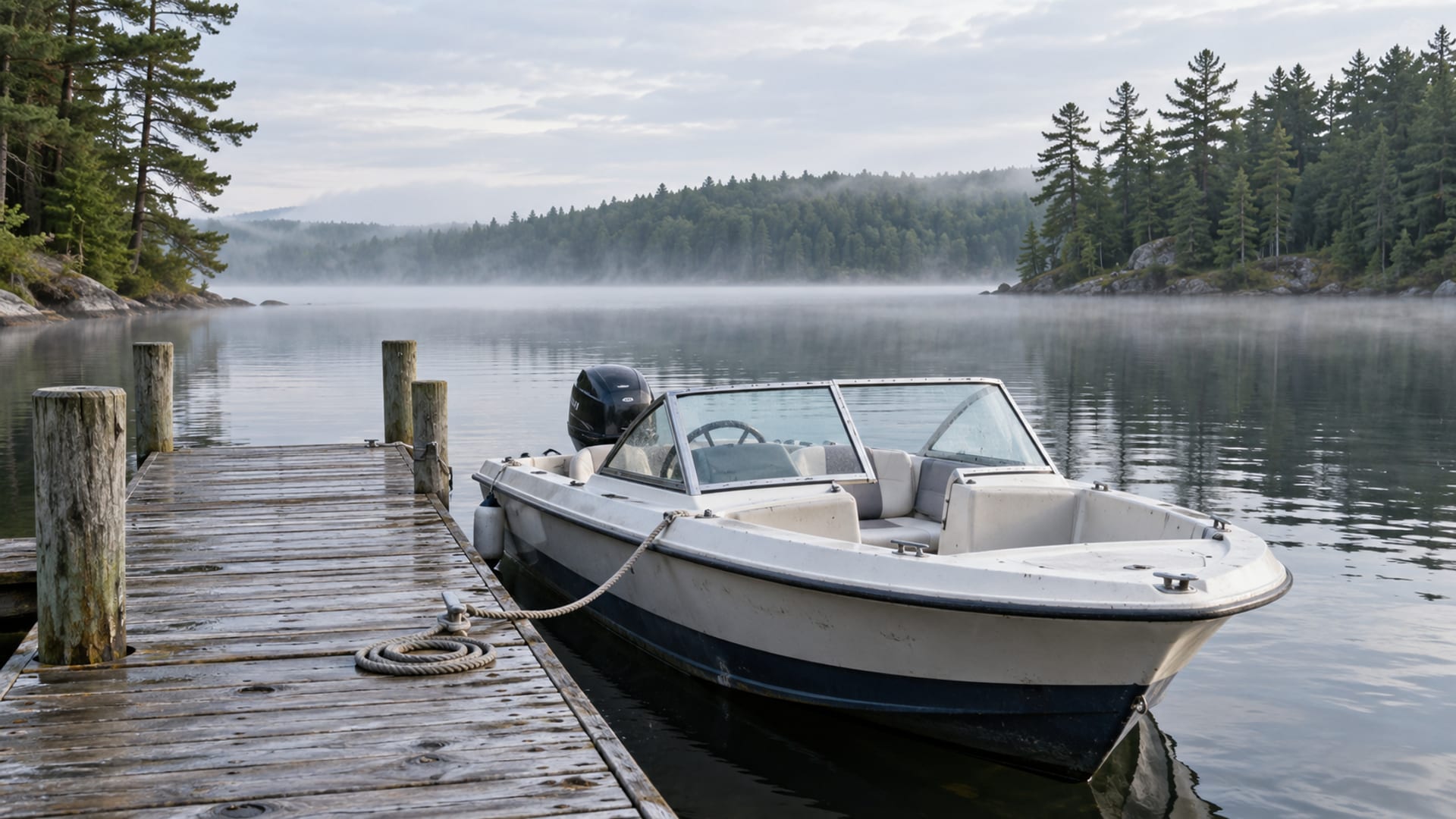
Maine does not generally require insurance to register or operate a recreational boat. What Maine does require is registration for most motorboats used on its waters, including personal watercraft, along with the fee, an identification number, validation stickers and, on inland waters, a lake and river protection sticker, according to Maine Inland Fisheries and Wildlife (IF&W) (opens in a new tab). Insurance can still be required by a lender, marina, mooring agreement, storage facility or business contract. A homeowners policy may cover a small boat in a limited way, but boat type, horsepower, length, use and policy wording decide that. Check the state rule and any private contract separately, then confirm what the policy itself covers.
Key takeaways
- Is insurance required?Maine does not generally require insurance to register or operate a recreational boat.
- What Maine requiresRegistration for most motorboats, including personal watercraft, with the fee, an identification number, validation stickers and, on inland waters, a lake and river protection sticker.
- Who can require insuranceA lender, marina, mooring agreement, storage facility or business contract.
- Homeowners coverageA homeowners policy may cover a small boat in a limited way; boat type, horsepower, length, use and policy wording decide that.
- What to checkThe state rule and any private contract separately, then what the policy itself covers.
What Maine requires to register a boat
Registration is the state's requirement, and it has nothing to do with insurance. Under 12 M.R.S. § 13056 (opens in a new tab), you apply to the commissioner, pay the registration fee and receive a certificate of number. The identification number goes on both sides of the bow, the validation stickers go with it, and the certificate has to be available for inspection, electronically where that is permitted.
Before registration, you also need proof that the watercraft excise tax was paid or that the boat is exempt, under 36 M.R.S. § 1504 (opens in a new tab). Sales or use tax is a separate prerequisite under 12 M.R.S. § 13003 (opens in a new tab). None of these steps asks for an insurance card or proof of financial responsibility.
Current fees, which include the $1 agent fee, run by horsepower and by where you use the boat, according to Maine IF&W (opens in a new tab):
- 0 to 10 horsepower: $41 for inland waters, $16 for tidal waters
- 11 to 50 horsepower: $46 inland, $21 tidal
- 51 to 115 horsepower: $52 inland, $27 tidal
- Over 115 horsepower: $60 inland, $35 tidal
- Personal watercraft: $60 inland, $35 tidal
A registration is good through December 31 of the year it is issued. The statute already schedules fee changes beginning January 1, 2028, so check the IF&W page before you renew that year.
Hover or tap a row to highlight it.
| Boat | Inland waters | Tidal waters | Source |
|---|---|---|---|
| 0 to 10 horsepower | $41 | $16 | Maine IF&W (opens in a new tab) |
| 11 to 50 horsepower | $46 | $21 | Maine IF&W (opens in a new tab) |
| 51 to 115 horsepower | $52 | $27 | Maine IF&W (opens in a new tab) |
| Over 115 horsepower | $60 | $35 | Maine IF&W (opens in a new tab) |
| Personal watercraft | $60 | $35 | Maine IF&W (opens in a new tab) |
Motorized watercraft used on inland waters also need the lake and river protection sticker. That sticker applies even to some boats that skip Maine registration, which matters for visitors.
Which boats do not need Maine registration
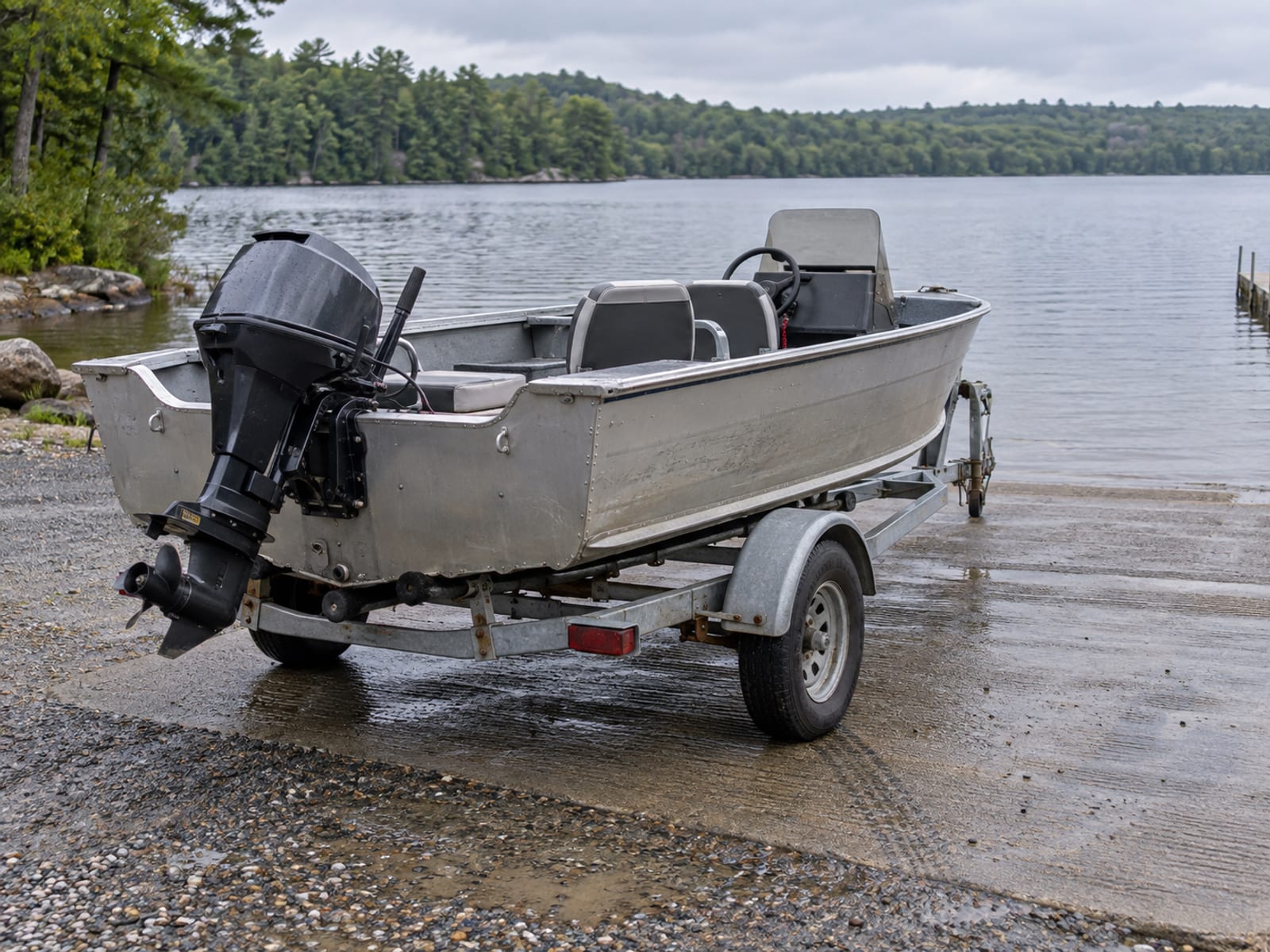
Several kinds of boats are exempt from Maine registration, according to Maine IF&W (opens in a new tab). The list includes federally documented vessels, qualifying out-of-state boats, military or public watercraft, qualifying government boats, ships' lifeboats, qualifying foreign boats and boats used only for racing that carry a recognized racing-association number.
If you live outside Maine and your boat is properly registered in your home state, you generally do not need a Maine registration unless the boat stays in Maine for more than 60 consecutive days after a change in its principal use. You still need the lake and river protection sticker when you run a motorized boat on inland waters.
Documentation deserves a closer look. Coast Guard documentation is a federal system of nationality and registration, and it can take the place of Maine registration. It is not proof of insurance, and it does not cancel a lender's requirements, a marina contract, tax obligations or safety rules.
Can a lender or marina require boat insurance?
Yes. Lenders, marinas, boatyards, storage facilities and mooring authorities write their own insurance terms into their contracts, and those terms apply whether or not the state requires anything. A boat loan commonly asks for physical-damage coverage on the hull so the lender's collateral is protected. A marina commonly asks for liability coverage and a certificate showing it.
Requirements you may see in a lender or facility agreement include:
- Liability insurance
- Hull or physical-damage coverage
- A certificate of insurance
- The facility named as an additional insured or additional interest
- Notice if the policy is canceled
- A minimum policy term
- Coverage while the boat is stored, hauled, serviced or moored
- Limits on where or how the boat is used
As one example, the Cape Ann Marina insurance requirements form (opens in a new tab) asks for a certificate of insurance that lists several affiliated companies as additional insureds, and it requires that certificate while the boat is stored or serviced on the property. That is a business requirement, not Maine law. Ask your lender, marina or mooring authority for its written requirements before you choose a policy, and send those to whoever arranges your coverage.
Does homeowners insurance cover a boat?
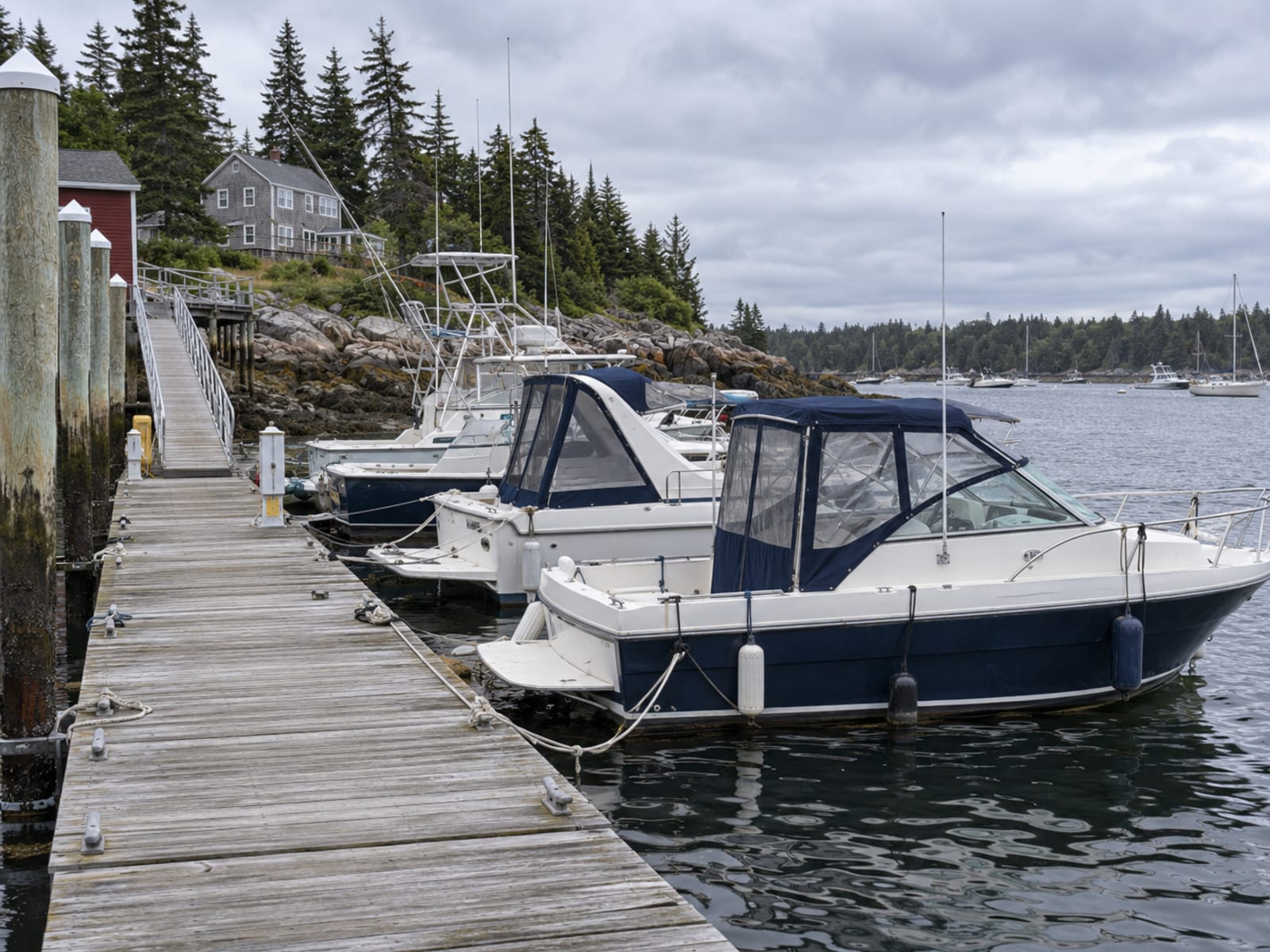
Sometimes, and usually only a little. Homeowners insurance covers property and liability only as the policy provides, according to the Maine Bureau of Insurance (opens in a new tab). The published Maine Homeowners Policy Booklet (opens in a new tab) sets a $1,000 special limit for watercraft, and that limit includes trailers, furnishings, equipment and outboard motors. A boat worth far more than that would have very little physical-damage protection under that form.
Liability is limited too. That booklet's form has no liability coverage for inboard or inboard-outdrive boats over 50 horsepower, sailboats 26 feet or longer, and outboard motors over 25 total horsepower, subject to its own exceptions and reporting rules.
Forms differ from company to company. Liability is included for outboard-powered boats with engines up to 25 horsepower and for sailboats under 26 feet under one insurer's Maine homeowners underwriting guidelines (opens in a new tab), filed with the Bureau of Insurance. Under those guidelines, the base form does not extend liability to inboard and inboard-outboard boats, personal watercraft, outboards over 25 horsepower or sailboats 26 feet and longer, and an endorsement may be used for other watercraft.
The practical step is to pull your own homeowners policy and read the watercraft section, then ask your agent three things: what dollar limit applies to the boat, motor and trailer; whether liability applies to your boat's horsepower and length; and whether an endorsement or a separate boat policy is the better fit for what you own.
What a boat policy can cover
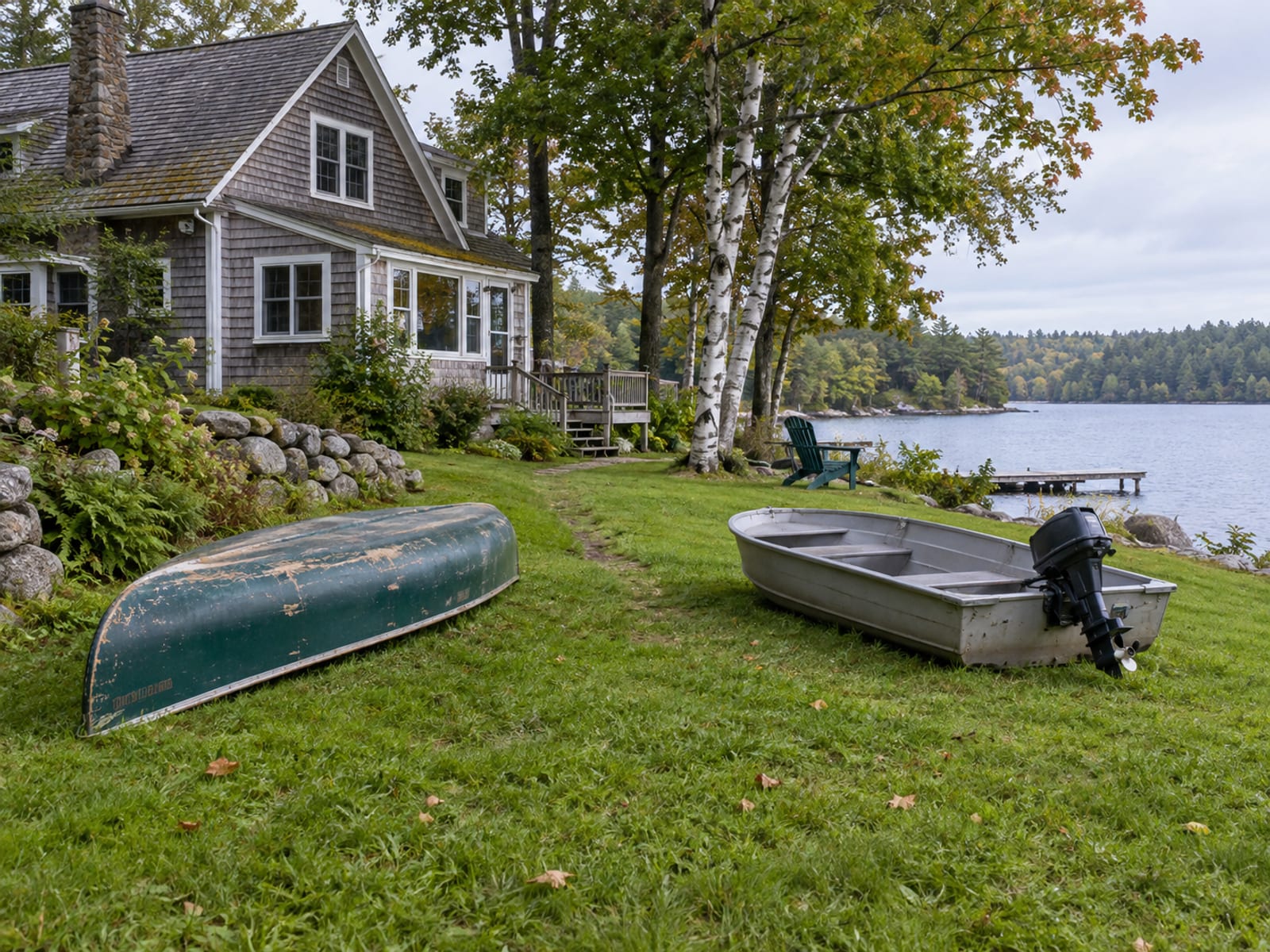
A separate boat policy is built from several parts, and not every policy includes every part. The declarations, endorsements, definitions, exclusions, deductibles, area limits and conditions decide what you actually have.
The common pieces are:
- Liability: injury to other people and damage to their property. The Maine Office of the State Controller (opens in a new tab) describes this protection and indemnity exposure as including injury, damage to docks and other vessels, certain fines and legally required wreck removal.
- Hull or physical damage: accidental damage to or loss of the boat from covered causes such as collision, theft or sinking.
- Medical payments: medical bills for covered injuries to you or your passengers, subject to policy terms.
- Uninsured or underinsured boater: protection for injuries caused by another boater who lacks enough liability insurance, as Progressive (opens in a new tab) describes it.
- Towing and on-water assistance: towing, jump starts, soft ungrounding or bringing fuel when included.
- Salvage and wreck removal: costs to salvage the boat or remove a wreck when covered.
- Fuel-spill liability: liability for covered fuel spills, which GEICO Marine (opens in a new tab) includes in its description of liability coverage along with medical payments, uninsured boater, salvage and wreck removal.
- Trailer and equipment: coverage for listed trailers, motors, fishing gear or personal effects where the policy includes it.
Maine law treats marine and protection-and-indemnity insurance as its own category, defined in 24-A M.R.S. § 708 (opens in a new tab). If you also carry an umbrella policy, ask whether it sits over your boat liability; Riskado's page on whether you need umbrella insurance covers how those layers work.
What boat insurance costs
Progressive reported on November 14, 2024, that its own average annual boat-insurance cost for 2024 to 2025 ranged from $274.42 in Wisconsin to $867.86 in Florida, and it placed Maine in a group of lower-cost states with a group average of $307.01, according to Progressive's boat insurance cost page (opens in a new tab). That figure reflects one company's policyholders, not the whole Maine market, and it is not a quote. Age, boat type, boating history, coverage and location all affect the price, according to Progressive. For a real number, ask for a quote based on your boat, its use, where it is stored, where you run it and the coverage you choose.
Duties that apply whether or not you are insured
Insurance does not replace what Maine expects of every operator.
Operating or trying to operate a watercraft while under the influence is prohibited under 12 M.R.S. § 10701 (opens in a new tab). The alcohol limit is 0.08 grams per 100 milliliters of blood or 210 liters of breath for anyone 21 or older, and anything above 0.00 for anyone under 21. It is a Class D crime, with minimum fines of $400 for a first conviction, $600 with one prior conviction within six years, and $1,000 with two or more priors within six years. Additional minimum fines apply in some cases involving refusal to submit to testing, and the consequences grow when serious bodily injury or death results.
After an accident involving injury, death or a disappearance that suggests death or injury, the operator must immediately notify the nearest available law-enforcement officer by the quickest means available, under 12 M.R.S. § 13069-A (opens in a new tab). You must give your name, address and boat registration number to anyone injured and to other operators or occupants involved, and you must give reasonable assistance.
Written reports follow under 12 M.R.S. § 13069-C (opens in a new tab). A report is due within 24 hours when an accident causes death, disappearance, loss of consciousness, medical treatment or disability lasting more than 24 hours. An accident with only watercraft or property damage estimated at $2,000 or more must be reported within 72 hours. Missing these requirements is a civil violation with a fine of $100 to $500, and failures involving injury or death can bring criminal charges. You can get the accident report form through Maine IF&W (opens in a new tab). Report to your insurer as well, since the policy will have its own notice conditions.
Hover or tap a row to highlight it.
| Situation | What the operator must do | Source |
|---|---|---|
| Injury, death or a disappearance that suggests either | Notify the nearest available law-enforcement officer immediately and give reasonable assistance | 12 M.R.S. § 13069-A (opens in a new tab) |
| Death, disappearance, loss of consciousness, medical treatment or disability over 24 hours | Written report within 24 hours | 12 M.R.S. § 13069-C (opens in a new tab) |
| Watercraft or property damage only, estimated at $2,000 or more | Written report within 72 hours | 12 M.R.S. § 13069-C (opens in a new tab) |
| Missing a reporting requirement | Civil violation, fine of $100 to $500 | 12 M.R.S. § 13069-C (opens in a new tab) |
Commercial, charter, rental and documented vessels
Business use changes the answer. Commercial fishing, carrying passengers for hire, charters and rentals each bring their own federal, state, licensing and contract rules, and a recreational policy may exclude them. If you take money for any use of the boat, say so when you ask about coverage.
Documentation itself is mandatory for some boats. Vessels of five net tons or more used in commercial fishing or in coastwise trade generally must be documented unless exempt, according to the Coast Guard's National Vessel Documentation Center (opens in a new tab). That is a documentation rule, not an insurance rule. Certain commercial vessels face separate federal pollution-related financial-responsibility requirements, including insurance guarantees used for Certificates of Financial Responsibility through the Coast Guard's National Pollution Funds Center (opens in a new tab). Those rules do not carry over to an ordinary pleasure boat.
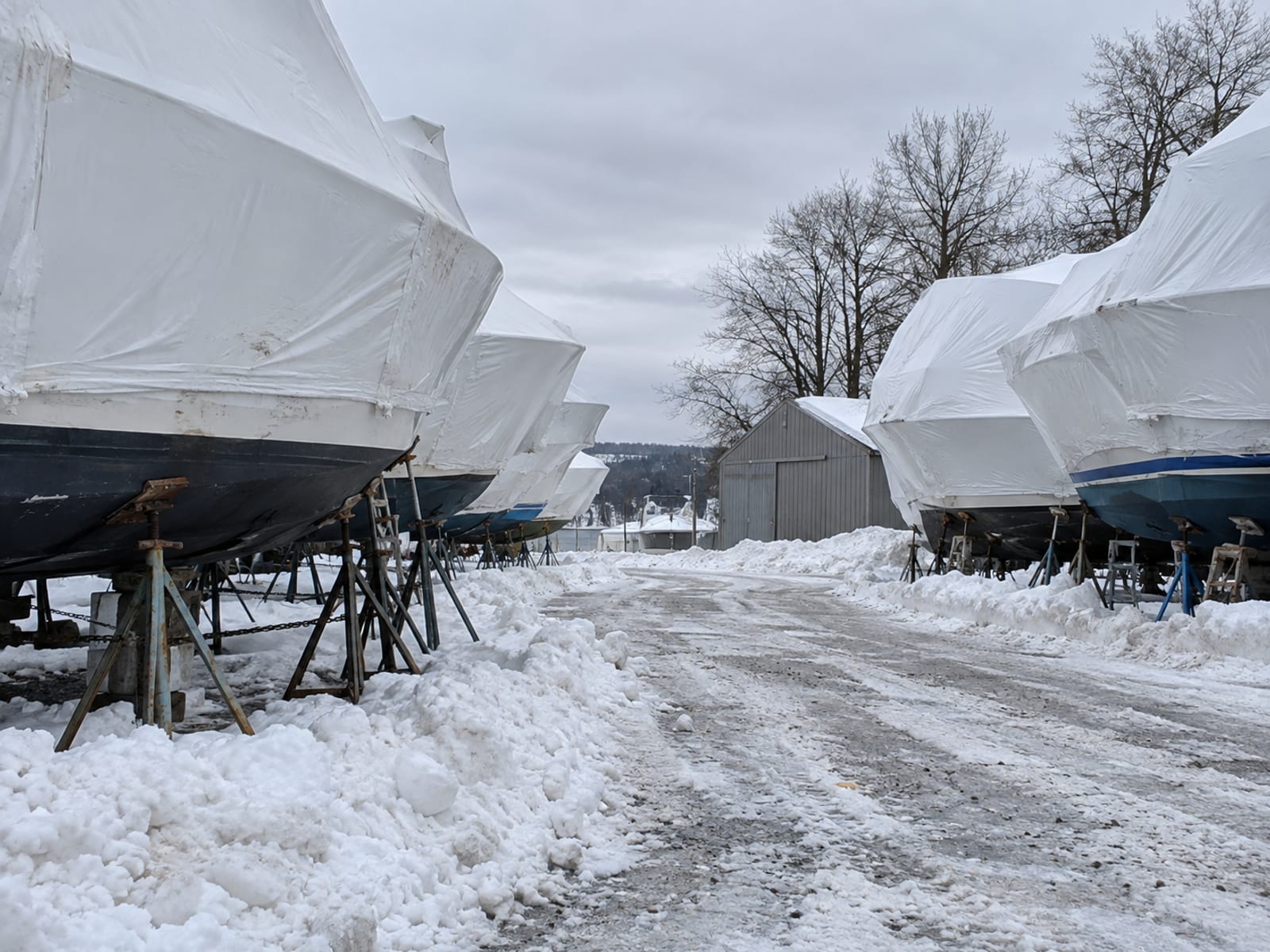
Winter storage, launch dates and where the boat may go
Marine policies often limit where and when coverage applies. The state of Maine's own ocean marine policy uses a negotiated cruising area with a warranty attached, and its minimum area is the "coastwise and tributary waters of the State of Maine," according to the Maine Office of the State Controller (opens in a new tab). Leaving the agreed area can eliminate coverage for a loss. That state policy also uses agreed-value hull coverage, which is one of the valuation choices you may see on a private policy.
A private policy may set:
- Winter layup dates
- Whether the boat must be hauled out or stored ashore
- Where it is stored
- Precautions for fire, theft, freezing or storms
- Launch and haul-out dates
- Coverage while the boat is trailered or transported
- The waters where you may operate
- Limits on offshore, coastal or international trips
Ask exactly when coverage starts and stops for storage, hauling, transport and launch, and which waters your policy allows. If you keep the boat on a lake in summer and make a coastal trip once a year, confirm both are inside your covered area.
Questions to ask before you buy or renew
Bring these to the agent or insurer:
- Is the boat covered under my homeowners policy, a separate boat policy or both?
- What horsepower and length limits apply?
- Am I covered on inland lakes, rivers, tidal waters and coastal waters?
- What layup and storage conditions does the policy set?
- Is the hull settled at actual cash value, agreed value or another basis?
- Are the motor, trailer, permanently attached equipment, fishing gear and personal effects covered?
- What exclusions apply to wear and tear, mechanical breakdown, mold, animals, racing, chartering, rental or business use?
- Are liability, medical payments and uninsured boater coverage included?
- Are towing, salvage, fuel-spill liability and wreck removal included?
- What does my lender or marina need on the certificate, and do they need to be an additional insured or additional interest?
- What happens if the policy is canceled, nonrenewed or lapses?
- What documents will I need for valuation, ownership, registration, storage and claims?
Some boat equipment and gear may also fall under inland marine coverage; Riskado's guide to inland marine insurance explains that line. For help picking someone to ask, read how to choose an insurance agent.
Check what you know about boat insurance in Maine
FAQ
Do I need proof of insurance to register a boat in Maine?
No. Maine registration calls for an application, the fee and proof that the excise tax was paid or the boat is exempt, according to Maine IF&W (opens in a new tab). Insurance is not on that list.
Do canoes and kayaks need Maine registration?
Maine's registration requirement covers motorboats, including personal watercraft, under 12 M.R.S. § 13056 (opens in a new tab). If you add a motor to a canoe or kayak, check whether it now counts as a motorboat before you put it in the water.
Does homeowners insurance cover my boat trailer?
It may, within a small limit. The Maine Homeowners Policy Booklet (opens in a new tab) counts trailers inside its $1,000 watercraft limit, together with the boat, furnishings, equipment and outboard motors.
Does a documented vessel skip all Maine requirements?
No. Documentation can replace Maine registration, but private contracts, tax obligations, safety rules and policy terms still apply.
What if my boat policy lapses while the boat is at a marina?
A lapse can put you out of step with the marina or lender contract, since many require proof of coverage while the boat is stored or serviced. Ask your insurer what happens on cancellation or nonrenewal, and ask the facility how much notice its contract requires.
Before your next launch
Sort the question into its parts. Maine wants the boat registered, taxed and stickered. Your lender and marina may want insurance, and their contracts say how much. Your homeowners policy may cover a small boat in a small way, and a boat policy fills in from there. With those three answers in hand, you can ask an agent for exactly the coverage your boat and your contracts call for.
Terms used in this guide
Tap a term to see what it means.
Certificate of number. The Maine registration certificate issued for a motorboat, which has to be available for inspection.
Lake and river protection sticker. A sticker required on motorized watercraft used on Maine inland waters, including some boats that skip Maine registration.
Coast Guard documentation. A federal system of nationality and registration that can take the place of Maine registration but is not proof of insurance.
Hull coverage. Physical-damage coverage for accidental damage to or loss of the boat from covered causes such as collision, theft or sinking.
Protection and indemnity. Marine liability for injury to others, damage to docks and other vessels, certain fines and legally required wreck removal.
Additional insured. A party, such as a marina, named on your policy so that it shares in the liability protection.
Agreed value. A hull valuation set when the policy is written rather than at the time of the loss.
Layup. The period when a boat is out of service for the season, often with storage conditions set in the policy.