Alabama Renters Insurance: Whether It Is Required, What a Policy Covers and Costs, Landlord Requirements and Renting Near the University of Alabama or Auburn
Riskado
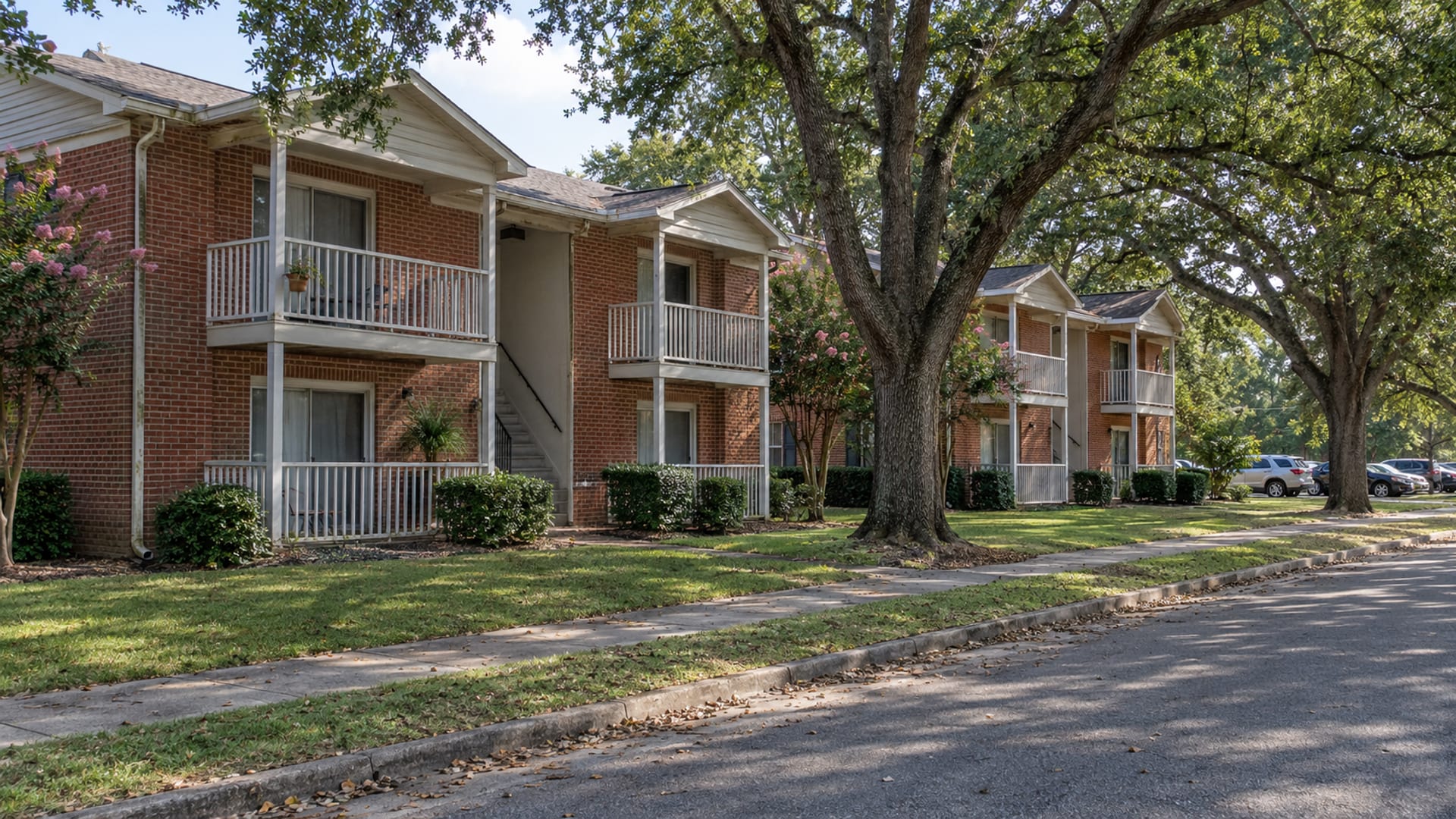
Alabama law doesn't require renters insurance, but a landlord can make it a condition of your lease. Your landlord's insurance won't cover your personal belongings; only a renters policy protects them if they're damaged or stolen, according to the Alabama Department of Insurance (ALDOI) (opens in a new tab). Most renters policies provide three coverages: personal property, liability and additional living expenses. Flood and storm surge aren't part of a standard renters policy, so a renter who wants that protection buys a separate flood policy for contents. Alabama's average tenant policy cost $219 for the year in 2023, according to the NAIC's Homeowners Report (opens in a new tab). Students should confirm whether a parent's policy reaches their dorm or apartment before move-in.
Key takeaways
- Required?Alabama law doesn't require renters insurance, but a landlord can make it a lease condition.
- The landlord's policyIt won't cover your personal belongings.
- Three coveragesPersonal property, liability and additional living expenses.
- FloodNot part of a standard renters policy; a separate contents flood policy covers it.
- Average cost$219 for the year in 2023 for an Alabama tenant policy, according to the NAIC.
Is renters insurance required in Alabama?
No Alabama law requires a tenant to carry renters insurance. A requirement, when there is one, comes from the lease. Many landlords and property managers write a renters insurance clause into the rental agreement, and that clause becomes a condition of renting the unit.
Read the clause before you sign. Look for:
- The coverage types the landlord requires, such as liability only or liability plus personal property.
- Any minimum liability limit.
- Whether every adult living in the unit must be covered.
- The proof the landlord wants, such as a declarations page or certificate.
- Whether the landlord must be listed on the policy, and how.
- Whether you must notify the landlord if the policy is canceled or not renewed.
If a clause is unclear, ask the landlord to put the requirement in writing, then hand it to the agent quoting your policy.
What does a renters policy cover?
Most renters policies typically provide three types of coverage, according to ALDOI (opens in a new tab):
- Personal property helps pay to repair or replace your belongings if they're damaged, destroyed or stolen.
- Liability can protect you if a guest is injured in your home or apartment, or if you accidentally damage someone else's property. The policy has a liability limit, which is the most it pays.
- Additional living expenses help pay costs beyond your normal expenses when you can't live in your home after a covered loss. The insurer pays only the difference between your previous living costs and your new temporary costs.
Renters insurance may also pay a visitor's medical bills if you're found responsible for their injuries. Many policies cover your belongings away from home too: if someone steals your things from your car or a hotel room, the policy can respond (ALDOI (opens in a new tab)).
Broad form or comprehensive form
ALDOI describes two major types of renters policy. The broad form, the most commonly purchased, covers your belongings against specific events, such as fire, lightning, explosion, smoke, vandalism, theft and water damage from the property's utilities. The comprehensive form covers a wider range of events, such as storm damage, unless the policy specifically excludes them, and its premium may be higher (ALDOI (opens in a new tab)). If you live in an area prone to hurricanes, ALDOI suggests a policy that specifically addresses storm damage.
Actual cash value or replacement cost
You may choose how your belongings are valued. Actual cash value pays an item's current value after age and wear. ALDOI's example: a computer that cost $2,000 five years ago may be worth $500 now, and that's what an actual cash value policy would pay. Replacement cost pays for a similar new computer (ALDOI (opens in a new tab)). Even with replacement cost coverage, the claim is initially settled at actual cash value, and the difference is paid when you replace the item (ALDOI (opens in a new tab)). Our article on replacement cost vs actual cash value compares the two in more detail.
Unusually expensive items, such as fine jewelry or an art collection, may need added coverage called a rider or floater (ALDOI (opens in a new tab)).

What doesn't a renters policy cover?
Flood is the biggest gap for Alabama renters. A standard renters policy can cover your belongings against theft, wind or fire, but it typically doesn't cover flood damage, and your landlord's flood policy covers the building, not your belongings, according to the NFIP renters brochure (opens in a new tab). Storm surge along the Gulf counts as flood.
Other gaps depend on the policy. Homeowners and renters policies typically don't cover sewage backups or water main breaks, according to ALDOI (opens in a new tab). Damage to your car in a garage or carport is a matter for your auto insurance, not your renters policy (ALDOI (opens in a new tab)). Read the exclusions page of any policy you're considering, and ask about special limits on jewelry, electronics, firearms, bicycles, cash and business property.
Flood insurance for renters
A renter in a community that takes part in the National Flood Insurance Program (NFIP) can buy a contents-only flood policy. In a rental unit above the lowest elevated floor, it covers up to $100,000 of tenant-owned property, such as clothing, furniture, electronics and kitchenware. Below the lowest elevated floor or in a basement apartment, contents coverage is limited to a washer, a dryer, a freezer and the food in it. A special limit of $2,500 applies to artwork, jewelry, furs and personal property used in business (NFIP renters brochure (opens in a new tab)).
A new NFIP policy usually takes 30 days to go into effect, so buy it before storm season rather than when a storm is forecast. Our article on Alabama flood insurance covers flood zones, the waiting period and claims.
Wind and hurricane deductibles
Some property policies carry a separate deductible for wind, hail or hurricane damage, shown as a dollar amount or a percentage, according to the ALDOI natural disasters guide (opens in a new tab). If you rent in Mobile or Baldwin County, ask whether your renters policy has one and how it applies to your belongings. The Alabama hurricane deductible article explains how these deductibles work on the coast.
Does the landlord's insurance cover you?
No. If you rent an apartment, house or condominium, your landlord's insurance doesn't cover your personal property, and the landlord is responsible only for problems with the building, according to ALDOI (opens in a new tab). The landlord's policy also doesn't provide your personal liability coverage. If a guest is hurt in your apartment or you accidentally cause damage, your own liability coverage is what responds.
What does renters insurance cost in Alabama?
Alabama's average premium for a tenant (HO-4) policy was $219 in 2023, according to the NAIC's Homeowners Report (opens in a new tab). That's a statewide average across every coverage amount, not a quote for your apartment. The same table shows the average rising with the amount of personal property coverage.
Hover or tap a row to highlight it.
| Alabama HO-4 policies, 2023 data | Average annual premium |
|---|---|
| All coverage amounts combined | $219 |
| $9,999 of coverage and under | $125 |
| $10,000 to $14,999 of coverage | $180 |
| $25,000 to $29,999 of coverage | $213 |
| $50,000 to $59,999 of coverage | $259 |
Source: NAIC Homeowners Report, data for 2023, Alabama table. For comparison, the average Alabama condominium unit (HO-6) policy was $751.
Your own price depends on where you live, how much coverage you choose, your deductible, your liability limit, your claims history and the insurer's underwriting. Many insurers offer discounts for fire or burglar alarms, fire extinguishers, sprinkler systems or deadbolts on exterior doors, for having more than one policy with the company, or for having no claims on your previous policy (ALDOI (opens in a new tab)). Our article on how much renters insurance you need walks through choosing the amounts.
Does a parent's policy cover a college student?
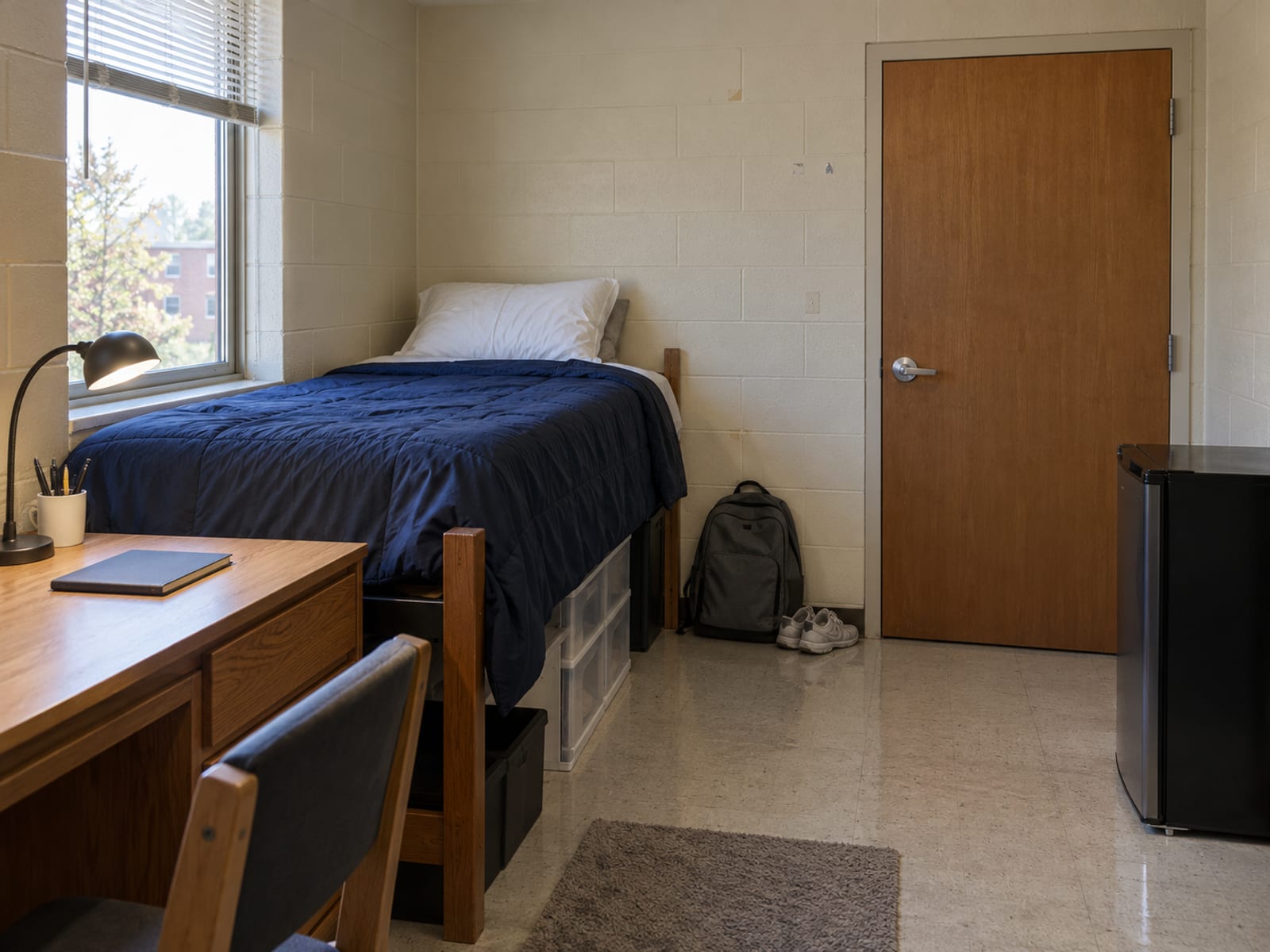
Sometimes, with limits. If a student just moved into a dorm, a parent's homeowners policy will likely cover the student's belongings in case of a loss, while students living off campus should consider renters insurance, according to the NAIC (opens in a new tab). The NAIC also says a dependent, such as a college student, is typically covered up to 10 percent of the parent's policy (NAIC (opens in a new tab)). That's a general rule of thumb. The parent's policy decides the actual limit, deductible and covered events.
Before move-in, ask the parent's insurer:
- Does the policy cover the student in a dorm, in an off-campus apartment or in a rented house?
- What limit applies to the student's belongings away from home?
- What deductible applies, and is theft of a laptop or bike covered?
- Does the policy give the student liability coverage at school?
- Does the lease require the student to carry a separate renters policy anyway?
What Alabama universities say
University housing offices in Alabama don't insure residents' belongings, and they use different words about renters insurance.
- Auburn University does not carry insurance on residents' belongings and will not pay to replace them, and it strongly encourages students to have a personal property policy while living on campus. Auburn adds that homeowners policies generally don't cover breakage or accidental damage and usually have high deductibles (Auburn Risk Management (opens in a new tab)).
- UAB says renters insurance is highly recommended for residential students and encourages parents to ask their agent whether a homeowners policy extends to a dependent's room and property in on-campus housing (UAB (opens in a new tab)).
- The University of South Alabama does not assume financial responsibility for students' personal property, under its housing contract, and strongly encourages all students to get renters insurance from a provider of their choosing before move-in (South Alabama Housing (opens in a new tab)).
If you're renting near the University of Alabama in Tuscaloosa or anywhere off campus, the private lease is what sets any insurance requirement. Read the lease, then check the parent's policy and get a quote for a renters policy so you can compare the two.
Can roommates share one policy?
Don't assume they can. Whether a roommate counts as an insured depends on the policy's definition, and many policies treat a spouse or a relative who lives with you differently from an unrelated roommate. Ask the insurer:
- Who is named on the declarations page?
- Does the policy cover a roommate who isn't related to me?
- Are both of our belongings covered, and is there one limit or two?
- Does the liability coverage protect each of us?
- Does our lease require each adult to show separate proof?
Separate policies avoid most of these questions, and some leases require them.
How do you document and file a claim?
A home inventory, with photos and proof of ownership, makes it easier to file an accurate claim, according to ALDOI (opens in a new tab). Make one before you need it.
Filing an Alabama renters claim
- Right awayRead your policy and declarations page, then report the loss to the insurer using its claim instructions.
- If something was stolenReport it to the police and keep the report number.
- Before cleanupPhotograph and video the damage when it's safe, and don't throw out damaged items until the insurer tells you to, unless safety requires it.
- While you waitMake reasonable temporary repairs to prevent more damage, and keep every receipt.
- If you can't live thereKeep records of extra living costs and note how long the policy pays them.
- During the claimGive the adjuster your inventory, receipts, serial numbers and photos.
Most policies pay reasonable and necessary costs for temporary repairs that protect covered property from further immediate damage, so keep all receipts. If the rental is uninhabitable, note how long your policy pays additional living expenses and what records you're expected to keep (ALDOI (opens in a new tab)). Your policy sets the deadlines for reporting a loss and filing proof of loss, so check the conditions section.
How do you check an agent or file a complaint?
Check the agent's license before you buy with the Alabama insurance license lookup (opens in a new tab). ALDOI also suggests confirming that the company is licensed to do business in Alabama, using its full name, and paying your premium to the insurance company rather than the producer (ALDOI (opens in a new tab)).
If you have a problem with an insurer or agent, contact them first. If that doesn't resolve it, file a complaint with ALDOI that includes your contact details, the company or agent involved, your policy number, any claim number and a detailed description (ALDOI (opens in a new tab)). ALDOI sends the complaint to the company, which must respond, and reviews whether it followed the policy. ALDOI can't determine the value of a claim or the amount owed to you.
Questions to ask an agency
- Is this a broad form or a comprehensive form policy?
- What events are covered, and what's excluded?
- Are my belongings paid at replacement cost or actual cash value?
- What deductible applies, and is there a separate wind, hail or hurricane deductible?
- Are jewelry, electronics, firearms, bicycles, cash or business property subject to special limits?
- Does the policy cover theft from my car or while I'm traveling?
- What liability limit does my lease require, and does this policy meet it?
- What does additional living expense coverage pay, and for how long?
- Is flood excluded, and can you quote an NFIP contents policy?
- Is sewer backup excluded, or is there an endorsement?
- Does the policy cover my roommate, or a student in a dorm?
- What proof can you send my landlord?
- What happens if a payment is late or the policy lapses during my lease?
- What discounts apply?
When you're ready to compare quotes, Riskado's directory lists insurance agencies across the US, including Alabama, by city and by category.
Check what you know about Alabama renters insurance
Frequently asked questions
Can my landlord require renters insurance in Alabama?
Yes, if the requirement is in your lease. The lease sets what coverage you need, the proof you must show and whether the landlord must be listed on the policy.
Does renters insurance cover storm surge?
No. Storm surge is flood, and a standard renters policy typically doesn't cover flood damage. An NFIP contents-only policy covers up to $100,000 of a renter's belongings above the lowest elevated floor.
How much does renters insurance cost per month in Alabama?
Alabama's 2023 average for a tenant policy, $219 a year, works out to about $18 a month. ALDOI's 2020 guidance put an average policy at $15 to $30 a month. Your own price depends on your address, coverage amount and deductible.
Does renters insurance cover a stolen laptop?
Personal property coverage helps pay to replace belongings that are stolen, and many policies cover theft away from home, such as from your car or a hotel room. Your deductible applies, and the valuation method decides whether you get the laptop's current value or the cost of a similar new one.
Does a parent's homeowners policy cover my off-campus apartment?
It may not. The NAIC says a parent's policy will likely cover belongings in a dorm, while students living off campus should consider renters insurance. Ask the parent's insurer before you sign the lease.
Before you sign the lease
Read the insurance clause, write down what it requires and ask for the proof format your landlord accepts. Then make a quick inventory of what you own, decide between actual cash value and replacement cost, and ask about flood coverage if you rent near the coast or a river.
Key terms
Tap a term to see what it means.
HO-4. The standard tenant, or renters, insurance policy form.
Personal property coverage. Coverage that helps pay to repair or replace belongings that are damaged, destroyed or stolen.
Liability coverage. Coverage for injuries to others or damage to their property that you're responsible for, up to the policy limit.
Additional living expenses. Extra costs of living elsewhere after a covered loss, paid as the difference over your normal costs.
Actual cash value. An item's current value after age and wear.
Replacement cost. The cost of a similar new item.
Rider or floater. Added coverage for expensive items such as fine jewelry or art.
Contents-only flood policy. An NFIP policy that covers a renter's belongings against flood.