New Jersey Renters Insurance: What It Costs, What It Covers, and Whether a Landlord Can Require It
Riskado
Renters insurance is generally optional under New Jersey law, but a landlord can make it a condition of the lease, according to the DCA Truth in Renting guide (opens in a new tab). A standard renters policy covers your belongings, personal liability, medical payments to others and extra living costs after a covered loss, according to the NJDOBI renters guide (opens in a new tab). It does not insure the landlord's building, and it excludes flood, including tidal surge. The 2023 New Jersey average for a renters (HO-4) policy was $177, according to the NAIC Homeowners Report (opens in a new tab). That is a dated statewide average, not a quote.
Key takeaways
- Is it required?Renters insurance is generally optional under New Jersey law, but a landlord can make it a condition of the lease.
- What it coversYour belongings, personal liability, medical payments to others and extra living costs after a covered loss.
- What it does not coverThe landlord's building, and flood, including tidal surge.
- Average cost$177 for a New Jersey renters (HO-4) policy in 2023, a dated statewide average and not a quote.
How much does renters insurance cost in New Jersey?
New Jersey HO-4 policies averaged $177 in 2023, according to the NAIC 2023 Homeowners Report (opens in a new tab), published in July 2026. The same New Jersey table breaks the average out by the amount of personal property coverage:
Hover or tap a row to highlight it.
| Personal property coverage | 2023 NJ average premium |
|---|---|
| Under $10,000 | $117 |
| $10,000 to $14,999 | $162 |
| $15,000 to $19,999 | $178 |
| $20,000 to $24,999 | $150 |
| $25,000 to $29,999 | $190 |
| $30,000 to $34,999 | $186 |
| $35,000 to $39,999 | $173 |
| $40,000 to $49,999 | $197 |
| $50,000 to $59,999 | $209 |
| $60,000 to $69,999 | $201 |
| $70,000 to $79,999 | $246 |
| $80,000 to $99,999 | $261 |
| $100,000 to $124,999 | $309 |
| $125,000 to $199,999 | $341 |
| $200,000 and over | $582 |
These are statewide averages across 2023 policies. They are not quotes, not suggested coverage amounts, and not figures for Jersey City, Hoboken, Newark, New Brunswick or any other single town. Your own premium depends on the coverage amount, the perils covered, the building, the deductible and the policy terms. The way to get a number for your apartment is to ask for a quote at your address.
Is renters insurance required by New Jersey law or by your lease?
The requirement, when there is one, comes from the lease. A tenant's requirement to obtain renters insurance is one of the provisions a New Jersey residential lease may include, according to the DCA Truth in Renting guide (opens in a new tab). If your lease has that clause, it is a condition of renting the unit.
Read the clause before you sign and note three things: the minimum limits it asks for, whether the landlord or management company must be listed on the policy, and what proof it wants and when. Then ask the landlord or property manager what form of proof they accept. The same DCA guide advises reading the rental agreement before signing, and it notes that a lease provision violating a statute, ordinance or regulation may be challenged in Superior Court.
If the lease says nothing about insurance, the decision is yours.
What does a standard renters policy cover?
Most New Jersey renters policies include four coverages, according to the NJDOBI renters guide (opens in a new tab):
Hover or tap a row to highlight it.
| Coverage | What it pays for |
|---|---|
| Personal Property (Coverage C) | Your belongings damaged or destroyed by a covered loss |
| Loss of Use (Coverage D) | Additional living expenses above your normal housing, food and essential costs when a covered loss makes the rental uninhabitable |
| Personal Liability (Coverage E) | Defense against certain lawsuits, and coverage when you are legally responsible for another person's injury or property damage |
| Medical Payments to Others (Coverage F) | Medical bills for people hurt at your rental, and in some cases certain injuries away from it |
Covered losses commonly include fire, lightning, sudden and accidental smoke damage, explosion, theft, vandalism, damage from aircraft and vehicles, windstorm and hail, sudden and accidental water damage, the weight of ice or snow, and riot or civil commotion, according to the same NJDOBI guide.
What does renters insurance not cover?
Common exclusions in the NJDOBI renters guide (opens in a new tab) include:
- Flood and tidal surge.
- Earthquakes and earth movement.
- Vermin.
- Certain losses from frozen pipes, and certain losses while the unit is vacant.
- Wear and tear, rot and maintenance problems.
- Pollution and some mold.
- Continuous or repeated seepage of water.
- Certain motor vehicle or watercraft liability.
- Intentional acts.
- War and nuclear hazard.
The difference between a sudden pipe burst and a slow leak matters here. Sudden and accidental water damage is a common covered loss, while continuous seepage is a common exclusion. If water damage concerns you, ask how your policy treats sewer backup, mold and seepage, since those are handled differently from flood.
Does the landlord's insurance cover your belongings?
No. The landlord's insurance covers the building structure, not your personal property, according to the NJDOBI renters guide (opens in a new tab). Your furniture, clothing, electronics and other belongings need your own coverage, and so does your personal liability.
After a fire or similar event, both policies come into play. Contact the landlord about the building and whether the unit is livable, and notify your own insurer about your belongings, any liability issue and additional living expenses.
There is also a security deposit rule worth knowing. When a tenant is displaced by fire, flood, condemnation or evacuation under the conditions the law sets, the landlord must return the security deposit within five business days and tell the tenant within three business days where it can be collected, according to the DCA Truth in Renting guide (opens in a new tab). That helps with cash flow, but it does not replace insurance.

Does renters insurance cover flood damage?
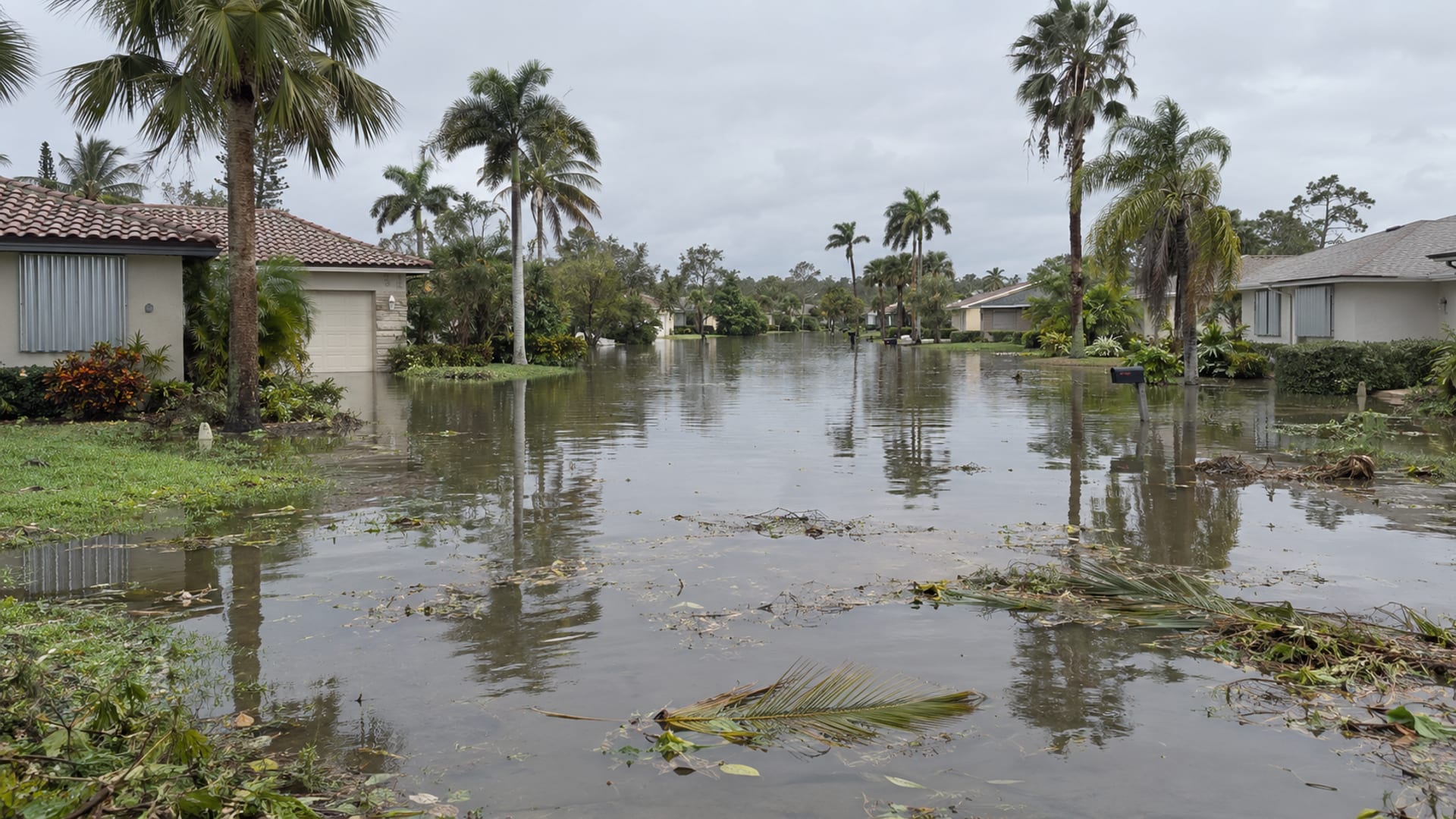
Standard renters insurance excludes flood damage, including tidal surge, according to the NJDOBI renters guide (opens in a new tab).
Separate flood coverage is available. Renters can buy National Flood Insurance Program (NFIP) contents coverage for belongings inside a rented home, up to a maximum of $100,000, according to FEMA's FloodSmart site (opens in a new tab). Covered items include furniture, clothing, televisions, computers, rugs and some artwork. NFIP contents coverage does not insure the building, and it has its own exclusions and limits, including for currency, certain papers, vehicles, property in basements, property outdoors, temporary housing and certain high-value items. A new NFIP policy generally starts after a 30-day waiting period, with some exceptions.
New Jersey has also required flood risk disclosure to prospective renters since March 20, 2024, according to the DCA landlord-tenant page (opens in a new tab). The disclosure tells you about the property's flood zone status and known flooding. It does not change what your renters policy covers.
How are your belongings valued after a claim?
The valuation method decides how much a claim pays for older items, according to the NJDOBI renters guide (opens in a new tab):
- Actual cash value pays what the item was worth at the time of the loss, based on age, condition and depreciation, minus the deductible.
- Replacement cost pays what it costs to replace the item without subtracting depreciation, subject to the policy's limits, deductible and proof requirements. Many insurers offer it as an endorsement.
A five-year-old laptop shows the difference: actual cash value pays for a five-year-old laptop, while replacement cost pays toward a new one.
Hover or tap a row to highlight it.
| Point | Actual cash value | Replacement cost |
|---|---|---|
| What it pays | What the item was worth at the time of the loss | What it costs to replace the item |
| Depreciation | Subtracted, based on age and condition | Not subtracted |
| Conditions | Minus the deductible | Subject to the policy's limits, deductible and proof requirements |
| Five-year-old laptop | Pays for a five-year-old laptop | Pays toward a new one |
| Source | NJDOBI renters guide (opens in a new tab) | NJDOBI renters guide (opens in a new tab) |
What about jewelry, electronics and other high-value items?
Many policies set special limits on certain categories of property. A scheduled personal property endorsement can cover items such as jewelry, fine art, furs and silverware separately, according to the NJDOBI renters guide (opens in a new tab). Ask the agent which categories have sublimits on the policy you are considering, and whether bicycles, computers or collectibles need separate scheduling.
What about roommates and college students?
A roommate's belongings are not automatically covered by your policy. Coverage depends on the policy's definitions and household provisions, according to the NJDOBI renters guide (opens in a new tab). Adults may be able to buy a policy together, but separate coverage may be needed for adult tenants who are not covered members of the same household, according to the NAIC guide for college students (opens in a new tab).
Students living on campus are generally covered through their parents' homeowners policy, according to NJDOBI's student guidance (opens in a new tab), but the family should tell the insurer about major purchases and confirm the terms. The NAIC adds that students under 26 who are enrolled and living in on-campus housing may be covered by a parent's homeowners or renters policy, while students living off campus may not be. If your child is moving into an off-campus apartment, check the parents' policy before assuming anything carries over.
How do you file a renters insurance claim in New Jersey?
Notify your insurer promptly. Keep damaged property if it is safe to do so, photograph or video the damage, and gather receipts, purchase records, model numbers and serial numbers. A full inventory with photos or video stored off site makes the claim easier to document, according to the NAIC guide for college students (opens in a new tab). Building that inventory before anything happens is the easiest step to take today.
New Jersey's claims handling standards under N.J.A.C. 11:2-17 set timelines for insurers, according to NJDOBI's procedure manual (opens in a new tab):
Hover or tap a row to highlight it.
| Step | Timeline |
|---|---|
| Acknowledge receipt of the claim | Within 10 working days |
| Begin investigating a property claim | Within 10 working days |
| Pay a property damage claim | Generally within 45 calendar days, unless there is clear justification for delay |
| Pay an agreed settlement | Within 10 working days after the agreement or after required claimant conditions are met, whichever is later |
If payment is delayed, the insurer must send a written notice explaining why, and a denial must be confirmed in writing with the reason. These standards govern how claims are handled. Whether a loss is paid still depends on coverage, exclusions, proof and the facts.
How do you verify an agent or insurer and file a complaint?
The Department of Banking and Insurance licenses and regulates New Jersey insurers and producers. You can check an agent through the New Jersey insurance license lookup (opens in a new tab) and confirm that an insurer writes tenant policies in New Jersey through NJDOBI's insurer listings (opens in a new tab) and its list of companies writing homeowners and tenant policies (opens in a new tab). Keep the agent's name, the company name, license information, the policy number and your correspondence.
If a problem comes up, file an inquiry or complaint through NJDOBI's Consumer Inquiry and Response Center (opens in a new tab) with the company or agent name, the policy number, relevant documents and a short description of the problem. NJDOBI investigators contact the insurer or producer and require a response, according to NJDOBI Consumer Protection Services (opens in a new tab).
Questions to ask before you buy
For the agent:
- Is this an HO-4 renters policy, and which perils does it cover?
- Is personal property paid at actual cash value or replacement cost, and what is the deductible?
- Which items have sublimits, and is scheduled personal property available?
- Does the policy cover my roommate, or does each adult need a policy?
- What liability and medical payments limits apply, and when does loss of use coverage start?
- How does the policy treat flood, tidal surge, sewer backup, mold and seepage, and can I add NFIP contents coverage?
- What happens if the policy is canceled, nonrenewed or lapses?
For the landlord or property manager:
- What limits does the lease require, and does the landlord need to be listed on the policy?
- What proof of insurance do you accept, and when is it due?
- What does the lease say happens if coverage lapses?
Riskado's directory lists insurance agencies across New Jersey and the rest of the US by city and category, so you can find an agency near your apartment.
Check what you know about New Jersey renters insurance
Frequently asked questions
Is the $177 average what I will pay?
Not necessarily. The $177 figure is a 2023 statewide average across New Jersey HO-4 policies, according to the NAIC (opens in a new tab), and premiums vary with the coverage amount, building, deductible and policy terms. A quote for your address is the only way to see your own price.
What happens if my renters insurance lapses and my lease requires it?
The lease and the policy decide the outcome. Read the lease clause and ask both the landlord and the insurer what notice and reinstatement terms apply.
Can I check whether a company sells renters insurance in New Jersey?
Yes. NJDOBI publishes a list of insurers writing homeowners and tenant policies (opens in a new tab) with contact information. An agency can tell you which of those carriers it represents.
Does a flood disclosure mean my landlord's insurance covers my things in a flood?
No. The disclosure required since March 20, 2024 tells you about the property's flood zone status and known flooding, according to the DCA (opens in a new tab). The landlord's insurance covers the building, not your belongings, so flood protection for your possessions means separate NFIP contents coverage.
Next steps
Read the insurance clause in your lease, make a quick photo or video inventory of what you own, and decide whether you want replacement cost and any scheduled items. Then ask an agency for a quote at your address, and ask separately about NFIP contents coverage if flooding is a concern where you live.
Terms used in this guide
Tap a term to see what it means.
HO-4. The renters policy form, which covers a tenant's belongings and liability rather than the building.
Loss of use. Coverage D, additional living expenses when a covered loss makes the rental uninhabitable.
Actual cash value. What an item was worth at the time of the loss, after depreciation.
Replacement cost. What it costs to replace an item without subtracting depreciation.
Scheduled personal property. An endorsement that covers listed high-value items, such as jewelry or fine art, separately.
NFIP. The National Flood Insurance Program, which sells contents coverage to renters.
Sublimit. A lower limit the policy sets for a category of property.