North Carolina Coastal Property Insurance: How the Beach Plan (NCIUA) and Fair Plan (NCJUA) Work, Who Qualifies and What to Ask Your Agent
Riskado
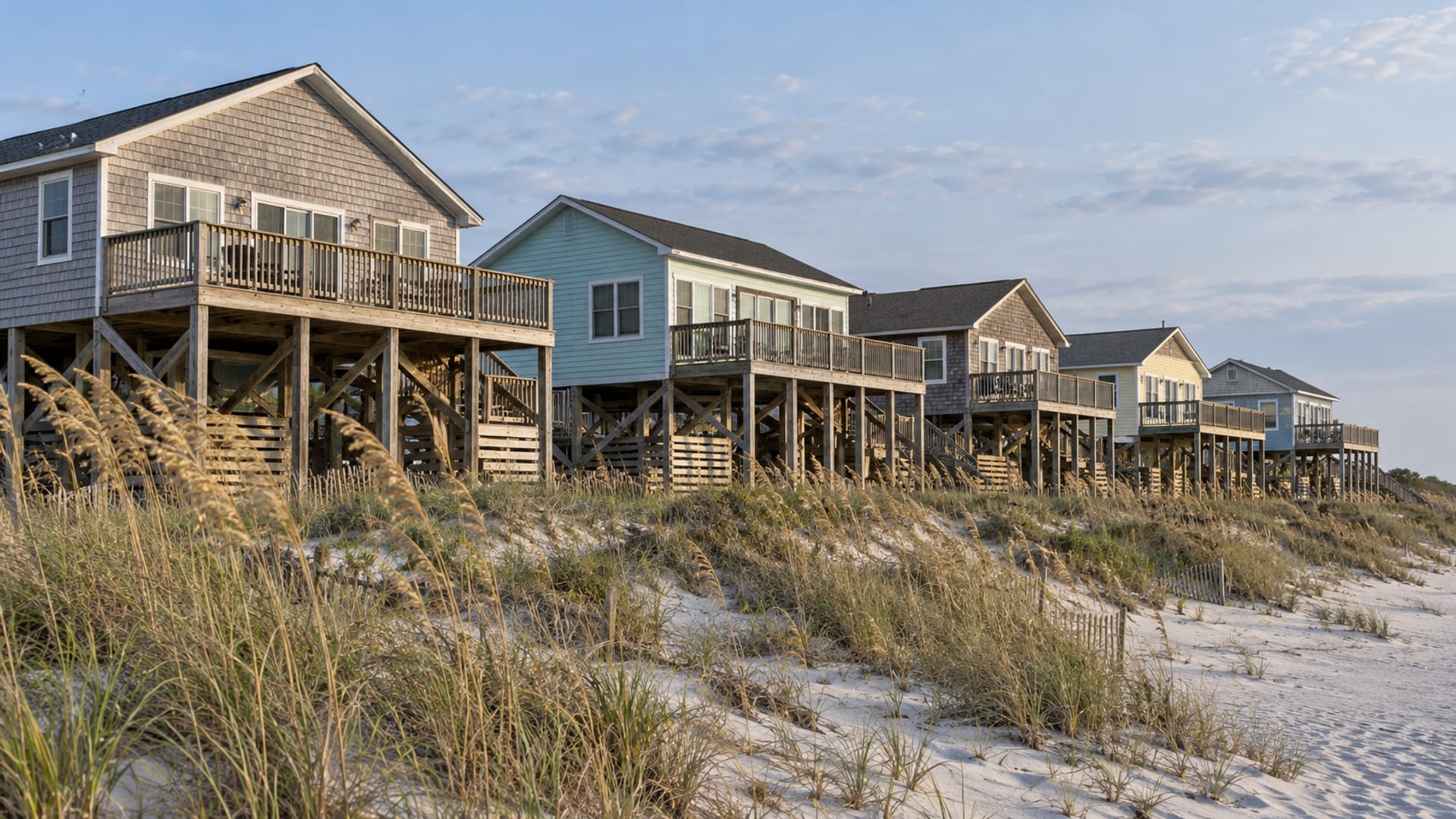
North Carolina has two related insurance plans for property owners who can't get coverage in the regular market. The North Carolina Insurance Underwriting Association (NCIUA), called the Coastal Property Insurance Pool and formerly the Beach Plan, serves the beach area and 18 coastal counties with homeowners, dwelling, commercial and windstorm and hail coverage. The North Carolina Joint Underwriting Association (NCJUA), the FAIR Plan, writes dwelling fire and commercial fire coverage everywhere in the state except the beach area. Both are markets of last resort, neither is a state agency, and neither sells flood insurance, according to the NCJUA and NCIUA (opens in a new tab). A licensed agent can check your address, look at regular-market options first and submit the application.
Key takeaways
- Coastal Property Insurance PoolNCIUA, formerly the Beach Plan, serves the beach area and 18 coastal counties.
- FAIR PlanNCJUA writes dwelling fire and commercial fire everywhere except the beach area.
- Market of last resortNeither is a state agency, and owners are encouraged to try the standard market first.
- LimitsResidential building coverage up to $1,000,000, personal property up to 40% of approved building coverage.
- No flood coverageFlood comes from a separate policy, and NFIP coverage generally starts 30 days after purchase.
Which plan fits your property
The plan depends on where the property sits and what kind of coverage you need. If the home is on the Outer Banks or another part of the statutory beach area, the Coastal Property Insurance Pool can write a full homeowners policy, a dwelling or commercial fire policy, or a windstorm and hail policy. If the home is in one of the 18 coastal counties but outside the beach area, the Pool can write homeowners and windstorm and hail coverage, and the FAIR Plan can write dwelling fire and commercial fire. Anywhere else in North Carolina, the FAIR Plan is the residual-market option.
Both associations were created by the General Assembly in 1969, and both are associations of insurance companies rather than state government facilities. Their plans of operation are subject to review and approval by the North Carolina Commissioner of Insurance, according to the NCJUA and NCIUA (opens in a new tab). Because they're the market of last resort, the associations encourage owners to try the standard market first.
Hover or tap a row to highlight it.
| Coastal Property Insurance Pool (NCIUA, formerly the Beach Plan) | FAIR Plan (NCJUA) | |
|---|---|---|
| Where it writes | The beach area and the 18 coastal counties | All of North Carolina except the beach area |
| Products | Homeowners; dwelling, homeowners and commercial windstorm and hail; dwelling and commercial fire and crime in the beach area | Dwelling fire and commercial fire |
| Residential building limit | $1,000,000 | $1,000,000 |
| Personal property limit | 40% of approved building coverage | 40% of approved building coverage |
| Commercial limit | $4 million combined, up to a $10 million aggregate | $2.5 million combined, up to a $6 million aggregate |
| Contents valuation | Actual cash value | Actual cash value |
| Flood coverage | Not offered | Not offered |
Is the property in the beach area or the coastal area?
The beach area is everything south and east of the inland waterway from the South Carolina line to Fort Macon (Beaufort Inlet), then south and east of Core, Pamlico, Roanoke and Currituck sounds to the Virginia line, the land generally known as the Outer Banks, under G.S. § 58-45-5 (opens in a new tab).
The coastal area is made up of 18 counties: Beaufort, Brunswick, Camden, Carteret, Chowan, Craven, Currituck, Dare, Hyde, Jones, New Hanover, Onslow, Pamlico, Pasquotank, Pender, Perquimans, Tyrrell and Washington. The parts of those counties that lie in the beach area count as beach area, not coastal area, under the same section.
Because one county can contain both, the county name alone doesn't settle which products are available. Give your agent the exact address and ask which territory the association assigns to it.
Who can apply
Any person with an insurable interest in eligible property can apply to the Coastal Property Insurance Pool for coverage and for an inspection, under G.S. § 58-45-35 (opens in a new tab). An insurable interest includes any lawful and substantial economic interest in keeping the property safe from loss or damage, so owners and others with a financial stake in the property can qualify. The FAIR Plan offers its coverage to any person with an insurable interest in property outside the beach area.
Eligibility still depends on the property. The application asks about the home's condition, occupancy, construction and prior insurance, and the association can require an inspection or repairs before it issues a policy. Since October 10, 2025, NCIUA has required the roof age and roof type for new homeowners and homeowners wind business, according to its October 2025 producer announcement (opens in a new tab).
What the Beach Plan covers
The Pool's homeowner, dwelling and commercial fire products cover windstorm and other perils such as fire, lightning, and vandalism and malicious mischief. Building coverage can be written on a replacement cost or actual cash value basis, subject to eligibility, and contents are written only at actual cash value, according to the NCJUA and NCIUA (opens in a new tab).
The windstorm and hail products work alongside another policy. To buy one, you need an active primary policy from an admitted North Carolina insurer that excludes windstorm, according to NCDOI (opens in a new tab). The wind policy is meant to match the primary policy as closely as possible, so the two together cover the home. Keep both declarations pages, and check that the dates, limits and mortgagee line up.
Loss of use, liability, interior water damage and other coverages depend on the policy form. A homeowners form and a wind-only form cover very different things, so ask your agent which form you're being offered and read its declarations page before you sign.
What the plans don't cover
Neither association sells flood insurance. The associations direct owners to the National Flood Insurance Program through FloodSmart (opens in a new tab) for that coverage. NFIP coverage goes into effect 30 days after purchase, with exceptions, such as when you buy flood insurance while making, increasing, extending or renewing a mortgage loan. That waiting period is the reason to arrange flood coverage well before hurricane season.
Coverage limits are the other gap. When a property's value is above the plan's maximum building limit, excess coverage to the full value has to be bought before the Pool or the FAIR Plan will issue the primary policy, according to the NCJUA and NCIUA (opens in a new tab). If your home would cost more than $1,000,000 to rebuild, ask the agent how the excess policy is placed and how it fits with the plan policy.
How deductibles and the 80 percent rule work
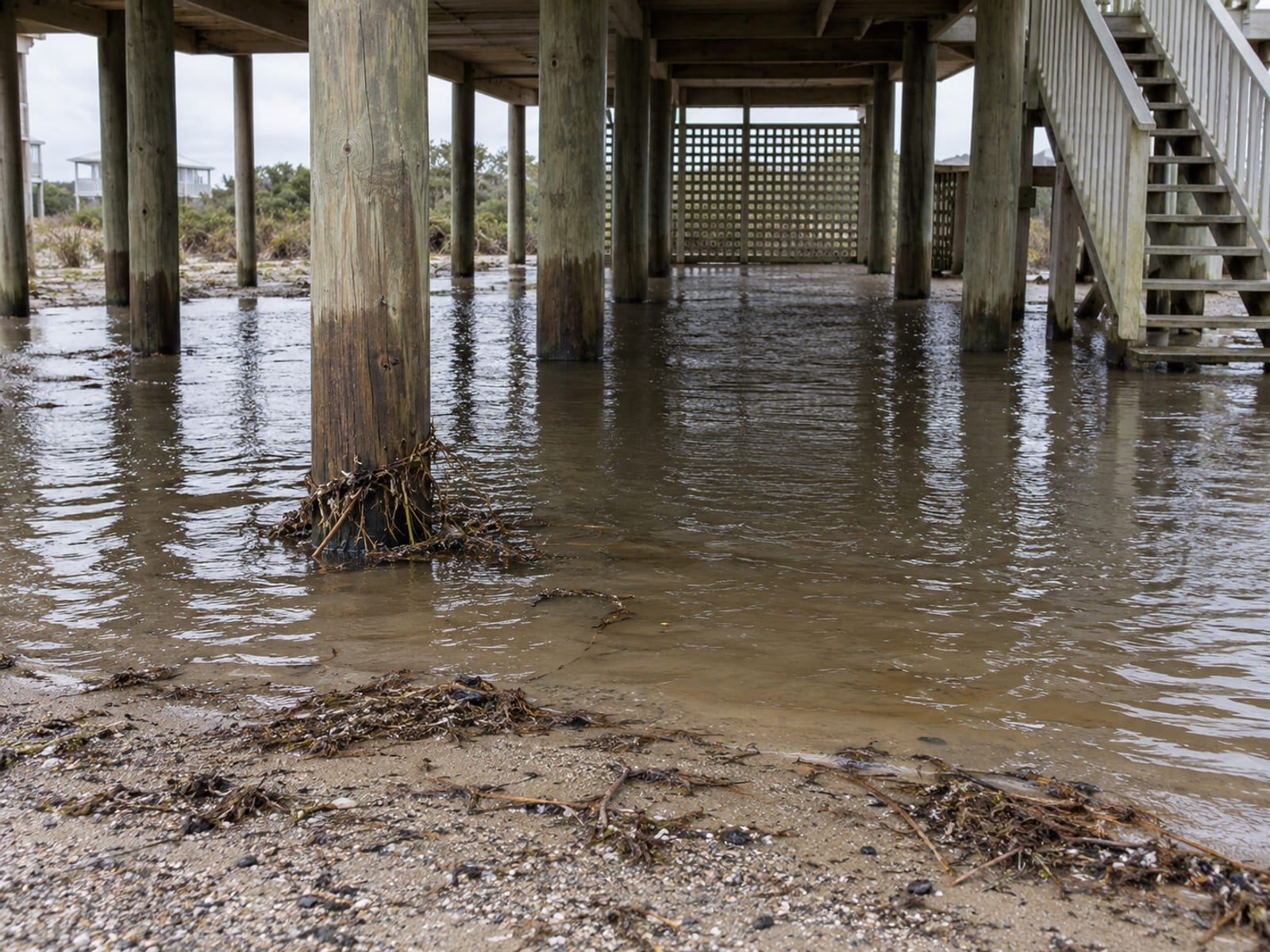
Coastal policies usually carry a separate deductible for named storms. Under the FAIR Plan's plan of operation (opens in a new tab), the minimum named-storm wind and hail deductible is 1% of the insured value of the property for its habitational policies in the coastal area and for its commercial policies anywhere in North Carolina. A named storm is a hurricane, tropical storm or tropical depression that has been given a formal name.
The deductible is a percentage of the insured value, so it grows with the coverage amount. A 2% named-storm deductible on a home insured for $300,000 is $6,000, according to NCDOI's windstorm and hail page (opens in a new tab). Your declarations page shows the exact percentage and any separate wind or hail deductible.
The 80 percent rule is about how much insurance you carry. You should carry insurance equal to at least 80 percent of the full replacement cost of the dwelling, and the land isn't part of that calculation, according to NCDOI's basic homeowners guide (opens in a new tab). It doesn't mean a claim pays 80 percent. If you carry less than the required share, the policy can reduce what it pays on a partial loss. The exact formula is in your policy's loss settlement section, so ask the agent to walk through it with your numbers.
Replacement cost pays to repair or replace with materials of similar kind and quality, while actual cash value subtracts depreciation for age and use. In both plans, contents are paid at actual cash value.
How to apply and when coverage starts
Applications go through a licensed North Carolina agent. The usual steps are:
- Ask the agent to check the regular market and confirm which plan and territory apply.
- Provide the address, ownership details, occupancy, construction, roof age and type, prior insurance and mortgagee information.
- Complete the association's application and pay the full premium or an approved installment.
- Allow any required inspection and make any required repairs.
- Review the declarations page, deductibles, exclusions and the written effective date.
The effective date depends on how the application is sent. Under the FAIR Plan's plan of operation (opens in a new tab), a properly completed application mailed with its premium takes effect at 12:01 a.m. the day after the postmark, and an application sent electronically takes effect on or after the day it's transmitted, depending on the system the agent uses. Policies are generally issued for a one-year term.
Storms can stop new business. No new or increased coverage is bound once the center of a named storm is inside a set area of the Atlantic, between 60 and 90 degrees West longitude and 11.5 and 37 degrees North latitude, starting at 12:01 a.m. the next day, under the FAIR Plan's plan of operation (opens in a new tab). The associations announce restrictions and their lifting on their named-storm restrictions page (opens in a new tab). Apply well before a storm forms.
Why Beach Plan rates changed
On January 17, 2025, the Commissioner approved statewide increases for 2025 and 2026 on all homeowners and homeowners wind forms, and NCIUA adopted the 2025 changes effective June 1, 2025, according to its February 2025 producer mailing (opens in a new tab). For a home with $250,000 of Coverage A, the mailing shows an average homeowners change of 6.89% from 2024 to 2025 and 6.54% from 2025 to 2026 across NCIUA territories, with territory averages ranging from 1.62% to 14.29%. The statewide homeowners base-rate increases behind those numbers were 7.5% on June 1, 2025 and 7.5% on June 1, 2026, according to NCDOI (opens in a new tab).
Hover or tap a row to highlight it.
| NCIUA homeowners territory | Average change, 2024 to 2025 | Average change, 2025 to 2026 |
|---|---|---|
| 110 | 4.79% | 4.51% |
| 120 | 13.85% | 14.29% |
| 130 | 2.99% | 2.99% |
| 140 | 10.60% | 9.91% |
| 150 | 1.62% | 1.52% |
| 160 | 5.43% | 5.05% |
| All territories | 6.89% | 6.54% |
The same mailing notes that the associations eliminated supplemental loss assessment coverage effective February 1, 2025. Commercial rate and deductible changes took effect November 1, 2025, according to the October 2025 announcement (opens in a new tab).
Recent changes at the coastal and FAIR plans
- February 1, 2025The associations eliminated supplemental loss assessment coverage.
- May 14, 2025NCIUA launched the Strengthen Your Roof grant for territories 110 and 120.
- June 1, 2025NCIUA adopted the approved 2025 homeowners and homeowners wind rate changes.
- July 15, 2025NCIUA launched the Strengthen Your Coastal Roof grant for territories 130 to 160.
- October 10, 2025NCIUA began requiring roof age and roof type for new homeowners and homeowners wind business.
- November 1, 2025Commercial rate and deductible changes took effect.
- June 1, 2026The second statewide 7.5% homeowners base-rate step took effect.
Mitigation credits and roof grants
Homes with qualifying construction features in the beach and coastal territories may receive mitigation credits, which are premium discounts on wind and hail coverage, according to NCDOI (opens in a new tab). The credit depends on how the home qualifies, and the IBHS FORTIFIED program verifies the construction through inspection. Ask your agent or insurer whether your home qualifies and which documents the insurer needs.
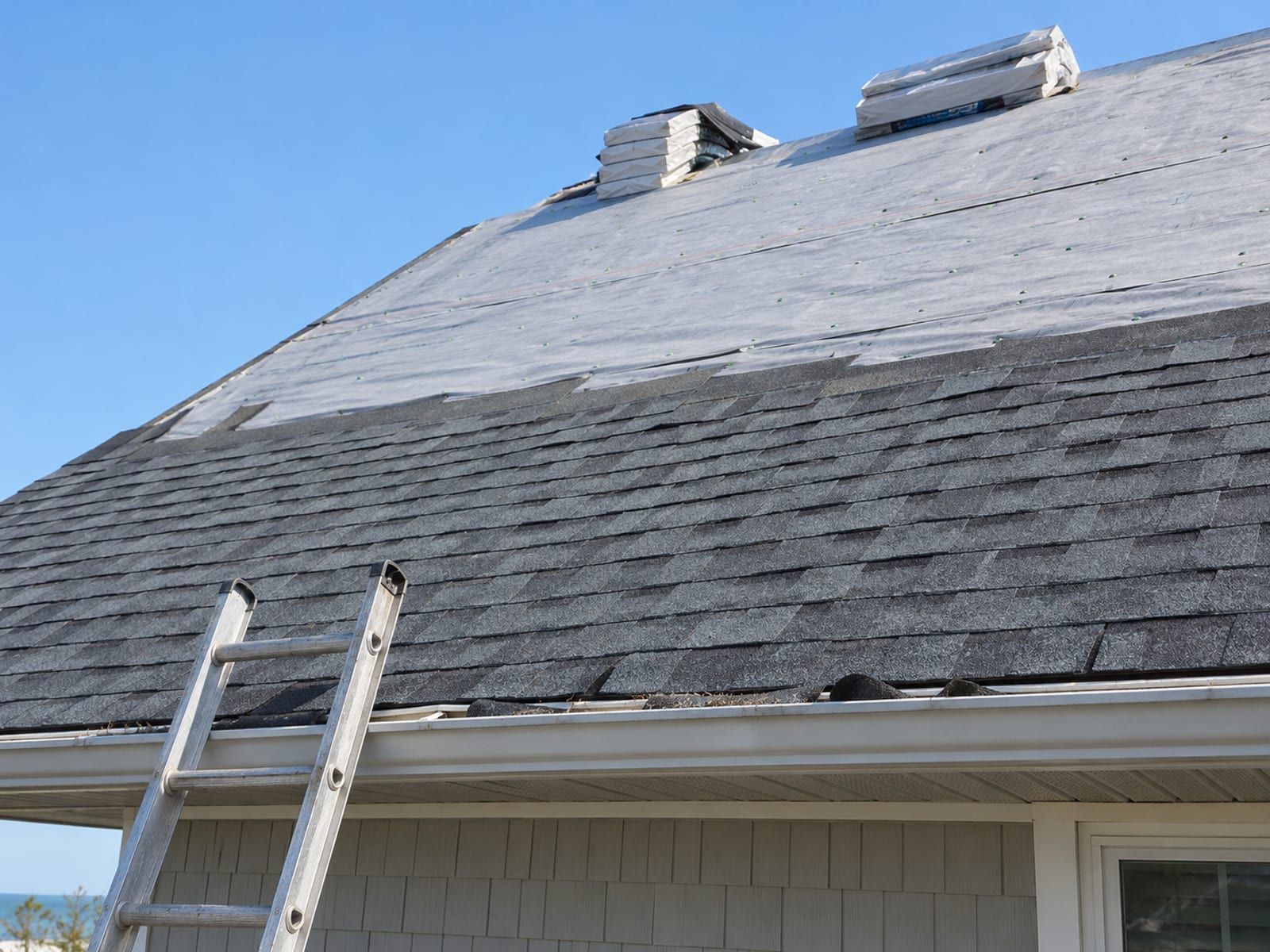
NCIUA has also funded roof grants. Its Strengthen Your Coastal Roof program, launched July 15, 2025 for rating territories 130, 140, 150 and 160, provides up to $6,000 toward an IBHS FORTIFIED roof, and its Strengthen Your Roof program, launched May 14, 2025 for territories 110 and 120, provides up to $10,000, according to the October 2025 announcement (opens in a new tab). Grants go out first come, first served until the money runs out, so check with the program before you plan a roof around one.
Will the policy satisfy your mortgage lender?
The lender decides. Send the lender the declarations page for the plan policy and any separate primary, wind or flood policy, and ask the lender to confirm that the covered perils, limits, deductibles, mortgagee clause and dates meet its requirements before closing or renewal.
Flood is often a separate lender question. A lender may require flood insurance for a property in a high-risk flood area with a government-backed mortgage, and some lenders require it elsewhere, according to FloodSmart (opens in a new tab).
Checking an agent and getting help
You can confirm an agent's license with the North Carolina insurance license lookup (opens in a new tab) before you sign an application. NCDOI helps consumers check the license status of an agent or company, understand a policy and file a complaint, according to NCDOI (opens in a new tab). Call Consumer Services at 855-408-1212, or Agent Services at 919-807-6800.
Ask the agent or plan to explain the problem first, and keep the application, declarations page, notices and letters. A complaint to NCDOI doesn't pause the deadlines in your policy for proof of loss, claims or appeals.
Questions to ask your agent
- Is this address in the beach area, the coastal area or another territory?
- Have you checked the regular market first, and what did it offer?
- Which policy form is this: homeowners, dwelling fire or windstorm and hail only?
- If wind is excluded from my primary policy, is an NCIUA windstorm and hail policy available, and does it match the primary policy's dates and limits?
- What are the building, contents, loss of use and liability provisions?
- Is the building covered at replacement cost or actual cash value?
- What is the named-storm deductible, and what insured value is it based on?
- Do I carry at least 80 percent of the replacement cost?
- Do I need excess coverage above the plan's building limit?
- What documents and inspection does the application need, and when will coverage start?
- Are named-storm restrictions in effect right now?
- Will the policy meet my mortgage lender's requirements?
- Do I need flood insurance, and how long until it takes effect?
- Does the home qualify for a mitigation credit or a current roof grant?
- How is a claim reported and adjusted, and how do I appeal an underwriting decision?
Check what you know about North Carolina's coastal property plans
Frequently asked questions
Is the Beach Plan a state agency?
No. The Coastal Property Insurance Pool is run by NCIUA, an association of insurance companies created by the General Assembly. It isn't a facility of North Carolina state government, though the Commissioner of Insurance reviews and approves its plan of operation, according to the NCJUA and NCIUA (opens in a new tab).
Does the FAIR Plan insure rental homes?
The FAIR Plan writes dwelling fire policies for property outside the beach area, and any person with an insurable interest can apply. Ask the agent which dwelling form applies to a rental and how occupancy affects eligibility.
Can I buy Beach Plan coverage when a hurricane is coming?
Not once restrictions start. No new or increased coverage is bound after the center of a named storm enters the restricted area, until the associations lift the restriction and announce it on their named-storm restrictions page (opens in a new tab).
Does the policy renew every year?
Policies are generally written for one-year terms. Under the FAIR Plan's plan of operation (opens in a new tab), the association renews a policy each year as long as the property meets its underwriting standards.
Next steps
Find the exact territory for the address, ask an agent to try the regular market, and if the plan is the answer, line up the primary policy, any windstorm and hail policy, any excess policy and a flood policy so they work together. Send the declarations pages to your lender. To compare options, a North Carolina insurance agency that writes coastal property can place both the plan policy and the policies around it.
Key terms
Tap a term to see what it means.
NCIUA. The North Carolina Insurance Underwriting Association, which runs the Coastal Property Insurance Pool.
Coastal Property Insurance Pool. The residual-market plan for the beach area and 18 coastal counties, formerly called the Beach Plan.
NCJUA. The North Carolina Joint Underwriting Association, which runs the FAIR Plan.
FAIR Plan. The residual-market plan for dwelling fire and commercial fire coverage outside the beach area.
Market of last resort. A plan meant for owners who can't get coverage in the standard market.
Beach area. The land south and east of the inland waterway and the sounds, generally known as the Outer Banks.
Insurable interest. A lawful and substantial economic interest in keeping a property safe from loss or damage.
Named-storm deductible. A percentage deductible that applies to wind and hail losses from a named storm.
Excess coverage. Insurance above a plan's maximum limit, needed when a property's value exceeds that limit.