New Jersey Homeowners Insurance: What It Costs, What It Covers, and Why Premiums Are Rising
Riskado
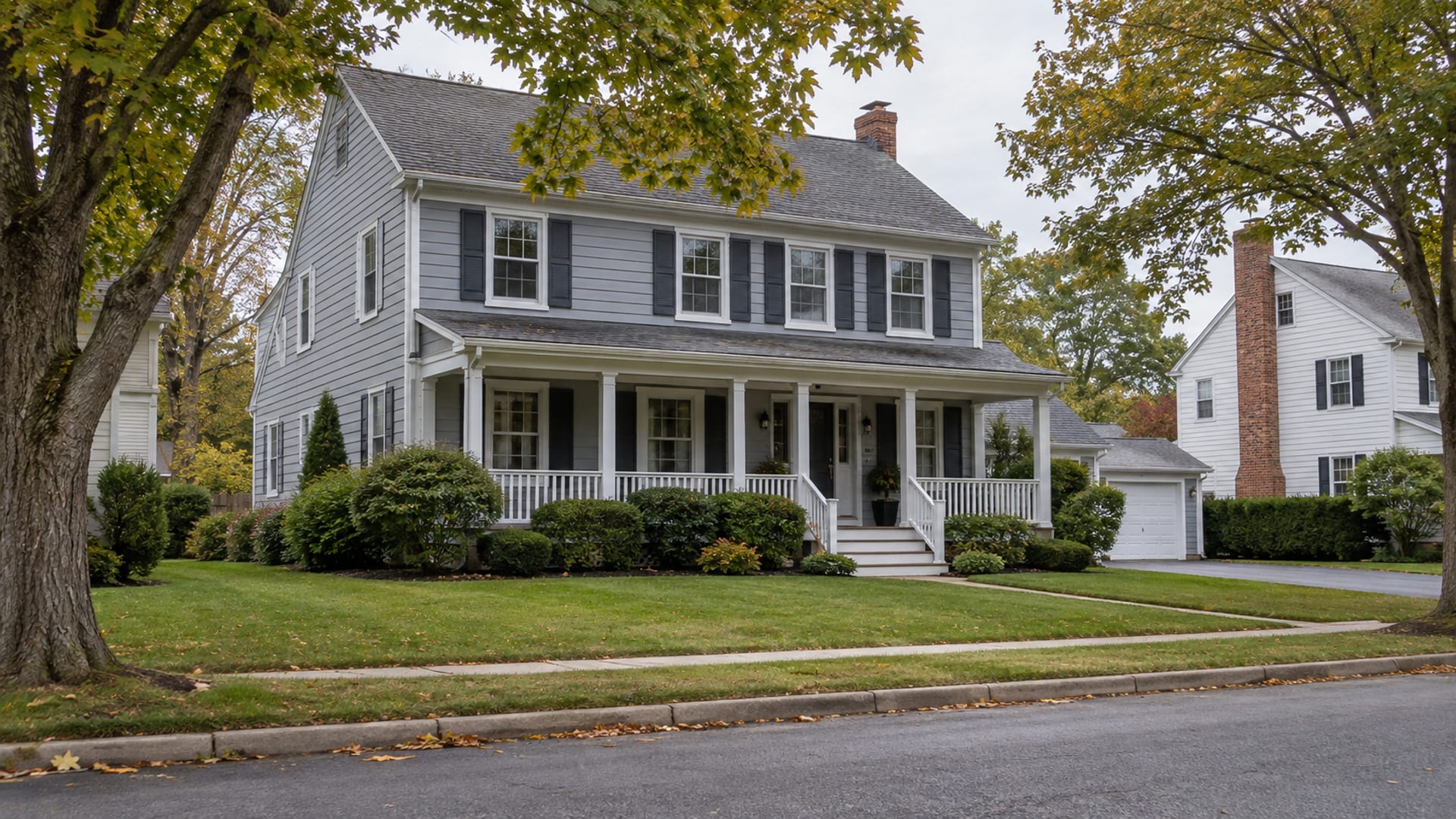
New Jersey does not generally require every homeowner to carry homeowners insurance, but a mortgage lender can require it as a condition of the loan, according to the NJDOBI homeowners FAQ (opens in a new tab). A standard policy commonly covers the home, other structures, personal property, additional living expenses, personal liability and medical payments. Flood damage is excluded under New Jersey's required flood notice (opens in a new tab), and earth movement and sewer backup usually need separate treatment. The 2023 average HO-3 premium in New Jersey was $1,560, compared with $1,731 nationwide, according to the NAIC Homeowners Report (opens in a new tab). That is a historical average, not a quote for your home.
Key takeaways
- Is it required?New Jersey does not generally require every homeowner to carry homeowners insurance, but a mortgage lender can require it as a condition of the loan.
- What it coversThe home, other structures, personal property, additional living expenses, personal liability and medical payments.
- What it leaves outFlood damage is excluded, and earth movement and sewer backup usually need separate treatment.
- Average premium$1,560 for a New Jersey HO-3 policy in 2023, compared with $1,731 nationwide. That is a historical average, not a quote.
Is homeowners insurance required in New Jersey?
The usual requirement comes from the mortgage, not from a state purchase law. Lenders require some kind of homeowners insurance because they have a financial investment in the property, according to the NJDOBI homeowners FAQ (opens in a new tab). The mortgage contract sets what the lender expects to see, so the closing documents and the servicer are the place to confirm the coverage amount, the mortgagee listing and any deductible conditions.
If you own the home outright, no lender condition applies, but the same risks to the house, your belongings and your liability to others are still there.
A lapse on a mortgaged home creates a separate problem. The servicer can place coverage on the property itself, and force-placed insurance has drawn regulatory attention in New Jersey; NJDOBI announced a 2026 force-placed insurance settlement (opens in a new tab). Keeping your own policy in force, and answering any servicer letter about proof of coverage quickly, avoids that situation.

How much does homeowners insurance cost in New Jersey?
New Jersey owner-occupied HO-3 policies averaged $1,560 in 2023, while the countrywide HO-3 average was $1,731, according to the NAIC 2023 Homeowners Report (opens in a new tab), published in 2026. New Jersey's average was $171 lower, roughly 9.9% below the national figure.
Those numbers come from reported premium divided by exposure. They do not describe a particular home, county, coverage amount, deductible or insurer, and they predate the 2025 rate changes described below. A house at the Shore, a split-level in North Jersey and a farmhouse in South Jersey can all be priced very differently from the statewide average, for reasons tied to the property and the policy rather than the region's label.
Why are New Jersey homeowners insurance premiums rising?
Homeowners rates in New Jersey are subject to prior approval by the Department of Banking and Insurance, which reviews filings so that rates are adequate to pay claims without being excessive, according to NJDOBI's Office of Property and Casualty (opens in a new tab). Each insurer files its own changes, so an increase is insurer-specific rather than one statewide number.
The department's 2025 homeowners rate history (opens in a new tab) shows how widely those approvals ranged:
Hover or tap a row to highlight it.
| Insurer | Effective date | Requested | Approved |
|---|---|---|---|
| Founders Insurance | January 10, 2025 | 23.60% | 23.60% |
| Occidental Fire and Casualty | January 21, 2025 | 14.90% | 10.10% |
| New Jersey Manufacturers | February 21, 2025 | 7.00% | 4.80% |
| St. Paul Protective | February 21, 2025 | 44.10% | 20.10% |
| State Farm Fire and Casualty | March 15, 2025 | 17.20% | 12.50% |
| Trumbull | March 20, 2025 | 6.60% | 2.90% |
| Hartford Fire | March 20, 2025 | 6.90% | 3.00% |
| USAA group average | May 13, 2025 | 6.40% | 6.40% |
An approved rate is an average for that insurer's book of business. Your own renewal can move more or less than that, because the premium also reflects the property and the policy. Rating factors include construction, the age of the house, fire protection, location, the amount of coverage, deductibles and discounts, according to the NJDOBI homeowners consumer guide (opens in a new tab). Storm exposure matters too, especially near the coast, according to NJDOBI's extreme weather guidance (opens in a new tab). Credit information and claims history can also play a part.
When a renewal arrives higher than expected, the practical move is to ask the agency or insurer what changed: the approved rate, the dwelling limit, a deductible, a discount, a recent claim, or an underwriting factor.
What does a standard homeowners policy cover?
A standard policy is a package of coverages, each with its own limit, according to the NJDOBI homeowners FAQ (opens in a new tab) and the department's consumer guide (opens in a new tab):
- Dwelling coverage for the house itself.
- Other structures, such as a detached garage, a storage shed or a fence.
- Personal property, meaning your belongings, subject to exclusions, special limits and the policy's valuation terms.
- Additional living expense or loss of use, which helps with costs when a covered loss makes the home uninhabitable.
- Personal liability for covered claims made by others.
- Medical payments for certain injuries to other people, subject to policy terms.
Whether the house and belongings are valued at replacement cost or actual cash value changes what a claim pays, and that choice sits on the declarations page. New Jersey insurers also provide a one-page homeowners policy summary (opens in a new tab), which is a quick way to compare two policies side by side. The policy itself controls if the two ever differ.
What does a standard policy leave out?
Flood is the biggest exclusion. New Jersey requires insurers to send a notice stating that homeowners insurance does not cover property damage from floods, under N.J.A.C. 11:1-5.5 (opens in a new tab). Flood insurance is a separate policy, and NJDOBI describes a waiting period of normally 30 days before a new flood policy takes effect, according to its extreme weather guidance (opens in a new tab). Buying it after a storm is forecast is usually too late.
Other common exclusions and limits listed in the NJDOBI consumer guide (opens in a new tab) include:
- Earth movement, including earthquake damage and certain other earth movement events.
- Sewer or drain backup, unless an endorsement adds it.
- Normal wear and tear, and neglect.
- Damage to automobiles.
- Certain animals, birds, fish, watercraft and other property categories.
- Building code or ordinance costs, unless additional coverage applies.
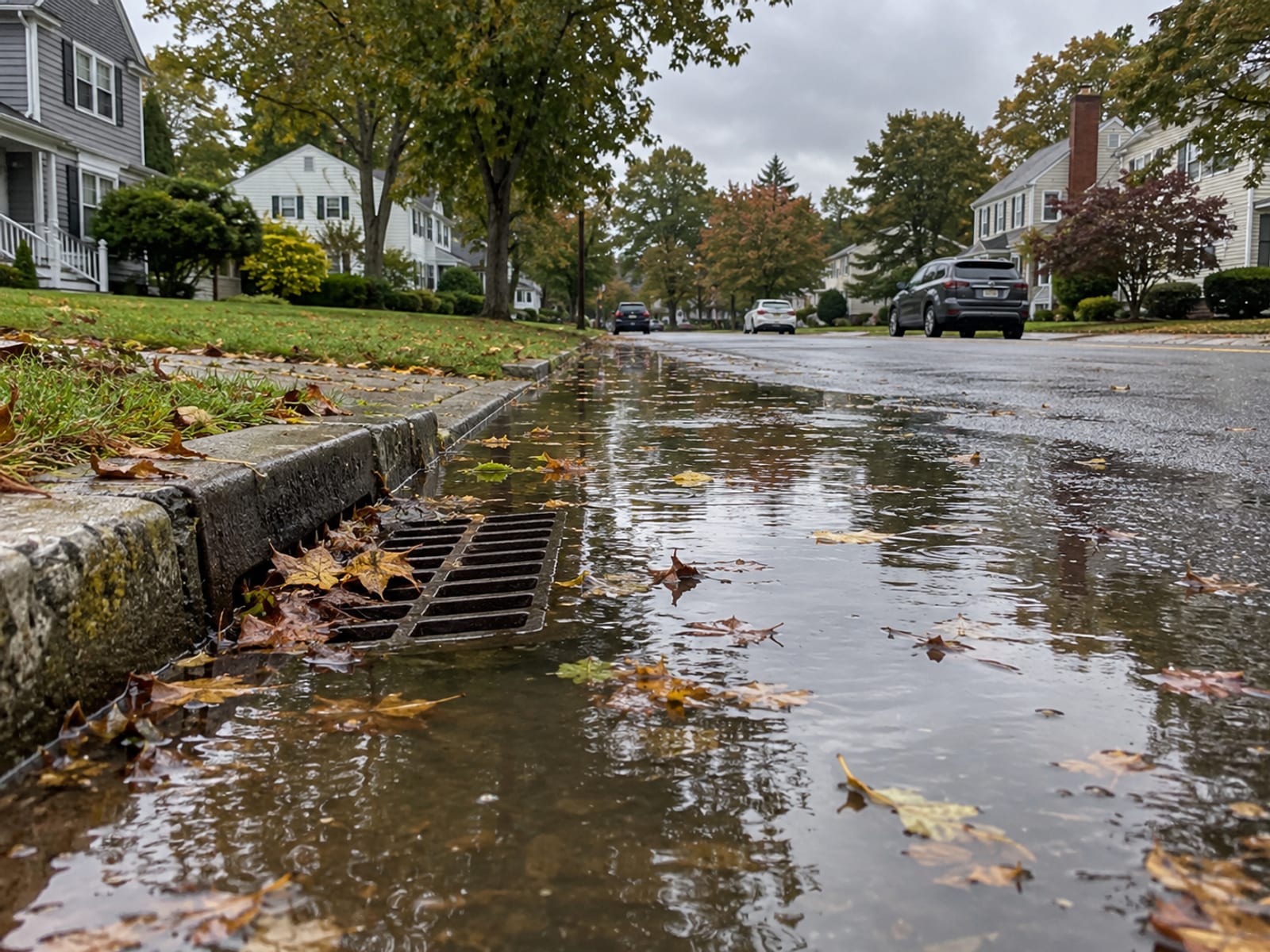
If a basement has flooded before, or the house sits low, ask specifically about a sewer backup endorsement and a separate flood policy. Those are two different coverages for two different kinds of water.
How do wind, hail and hurricane deductibles work?
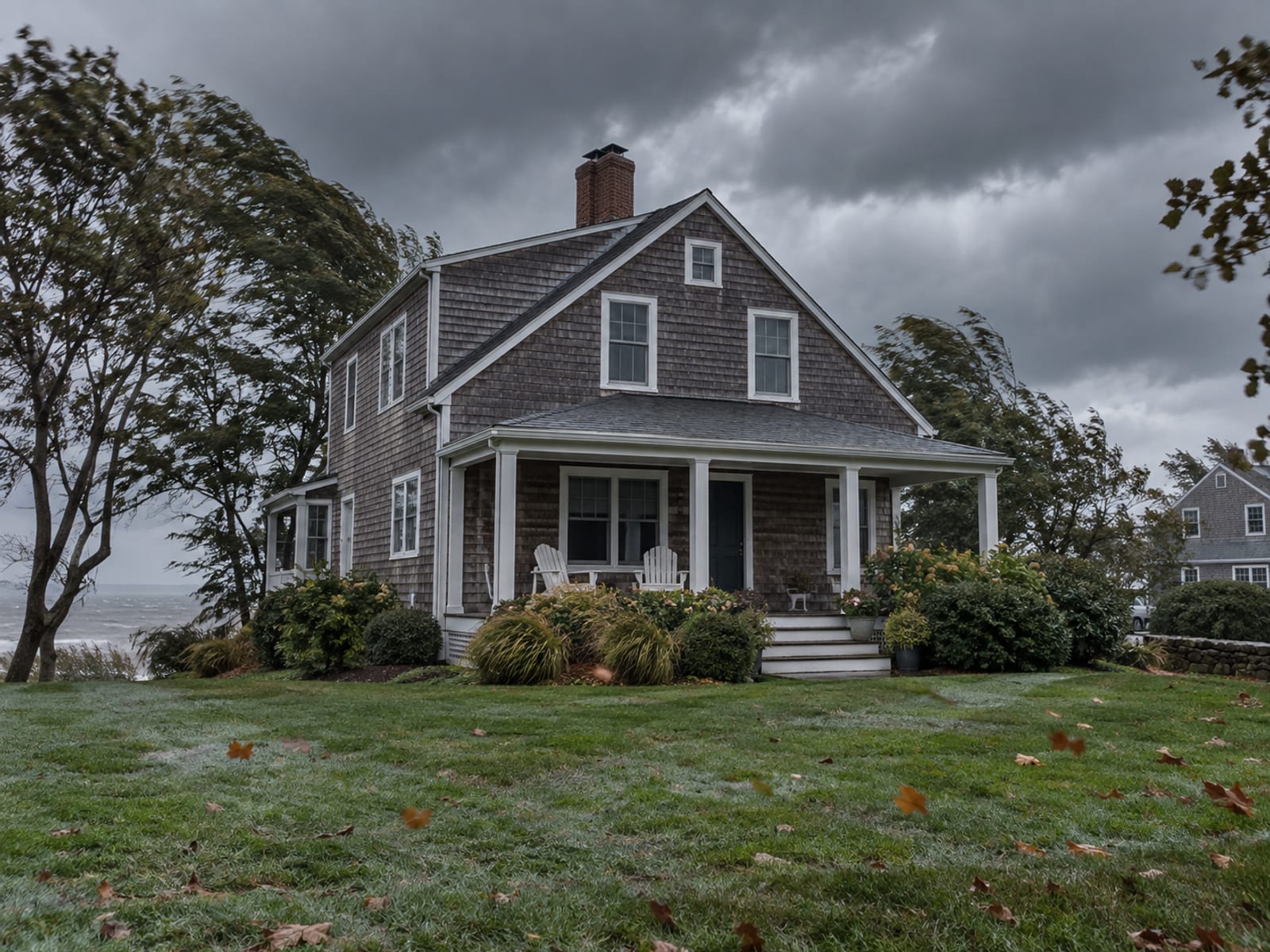
Wind damage is generally covered under a standard homeowners policy, but a separate deductible may apply, according to NJDOBI's extreme weather guidance (opens in a new tab). Two kinds can appear on a policy.
A windstorm or hail deductible may be optional and separate from the policy's all-peril deductible. It can be a fixed dollar amount or a percentage of Coverage A, the dwelling limit, up to 10%, according to the NJDOBI consumer guide (opens in a new tab).
A hurricane deductible applies only under the policy's hurricane deductible program. The common trigger is a hurricane designated by the National Weather Service when sustained winds of at least 74 mph have been measured anywhere in New Jersey. The deductible is usually 1%, 2%, 5% or 10% of Coverage A, or another stated amount set by the approved program, according to the same NJDOBI guide (opens in a new tab).
Because the percentage is taken from the dwelling limit rather than from the damage, the dollar amount you pay can be far larger than a regular flat deductible. Under N.J.A.C. 11:2-42 (opens in a new tab), insurers must send a notice of the hurricane deductible program with each new policy it applies to and with each renewal, explaining how it works and whether it is optional or mandatory. Read that notice alongside the declarations page.
Hover or tap a row to highlight it.
| Deductible | When it applies | Typical amount | Source |
|---|---|---|---|
| Windstorm or hail | Wind or hail damage, where the policy carries this separate deductible | A fixed dollar amount or a percentage of Coverage A, up to 10% | NJDOBI consumer guide (opens in a new tab) |
| Hurricane | A hurricane designated by the National Weather Service when sustained winds of at least 74 mph have been measured anywhere in New Jersey | Usually 1%, 2%, 5% or 10% of Coverage A, or another stated amount | NJDOBI consumer guide (opens in a new tab) |
What happens if the insurer cancels or does not renew?
New Jersey sets notice rules that give you time to find other coverage. According to NJDOBI's Home Insurance Basics (opens in a new tab):
- During the first 60 days of a new policy, the insurer may cancel for any reason not otherwise prohibited by law, but the cancellation does not take effect until at least 10 days after written notice is mailed or delivered.
- If the insurer renews on changed terms, it must mail a notice describing the changes at least 30 days before the renewal date.
- A nonrenewal notice must be mailed or delivered at least 30 days before the policy expires.
- A cancellation or nonrenewal notice must state the specific reason and the facts that make it apply.
- There is no grace period for homeowners premium payments.
Without a grace period, a missed payment can end coverage, so set up a reminder or escrow and keep proof of payment. The detailed rules sit in N.J.A.C. 11:1-20 (opens in a new tab), and the exact policy language and any exceptions should be checked when a notice arrives.
Hover or tap a row to highlight it.
| Event | Rule | Source |
|---|---|---|
| Cancellation of a new policy | Allowed during the first 60 days, effective at least 10 days after written notice | NJDOBI Home Insurance Basics (opens in a new tab) |
| Renewal on changed terms | Notice mailed at least 30 days before the renewal date | NJDOBI Home Insurance Basics (opens in a new tab) |
| Nonrenewal | Notice mailed or delivered at least 30 days before the policy expires | NJDOBI Home Insurance Basics (opens in a new tab) |
| Reason for cancellation or nonrenewal | The notice must state the specific reason and the facts | NJDOBI Home Insurance Basics (opens in a new tab) |
| Premium grace period | None | NJDOBI Home Insurance Basics (opens in a new tab) |
What is the New Jersey FAIR Plan?
The New Jersey Insurance Underwriting Association, known as the FAIR Plan, is a residual-market option for property owners who cannot get coverage from a standard insurer, according to NJDOBI's FAIR Plan page (opens in a new tab). You can apply directly or through a licensed agent after being unsuccessful in the standard market.
The plan can insure homes, mobile homes, rental units, most commercial buildings and business property. Basic coverage protects against perils such as fire, lightning, wind and smoke. The basic policy does not include theft or personal liability coverage, though optional theft coverage is available by endorsement. FAIR Plan coverage differs from voluntary-market coverage, with different limits and potentially higher rates, so it is an availability option rather than a match for a standard policy. If you go this route, ask an agency how to cover the liability gap.
What should you do after a loss or a claim dispute?
New Jersey's unfair claims rules, including N.J.A.C. 11:2-17 (opens in a new tab), set minimum standards for fair settlement. They cover acknowledging claims, prompt investigation, reasonable explanations for a denial or settlement offer, and payment once liability and the amount owed are reasonably clear.
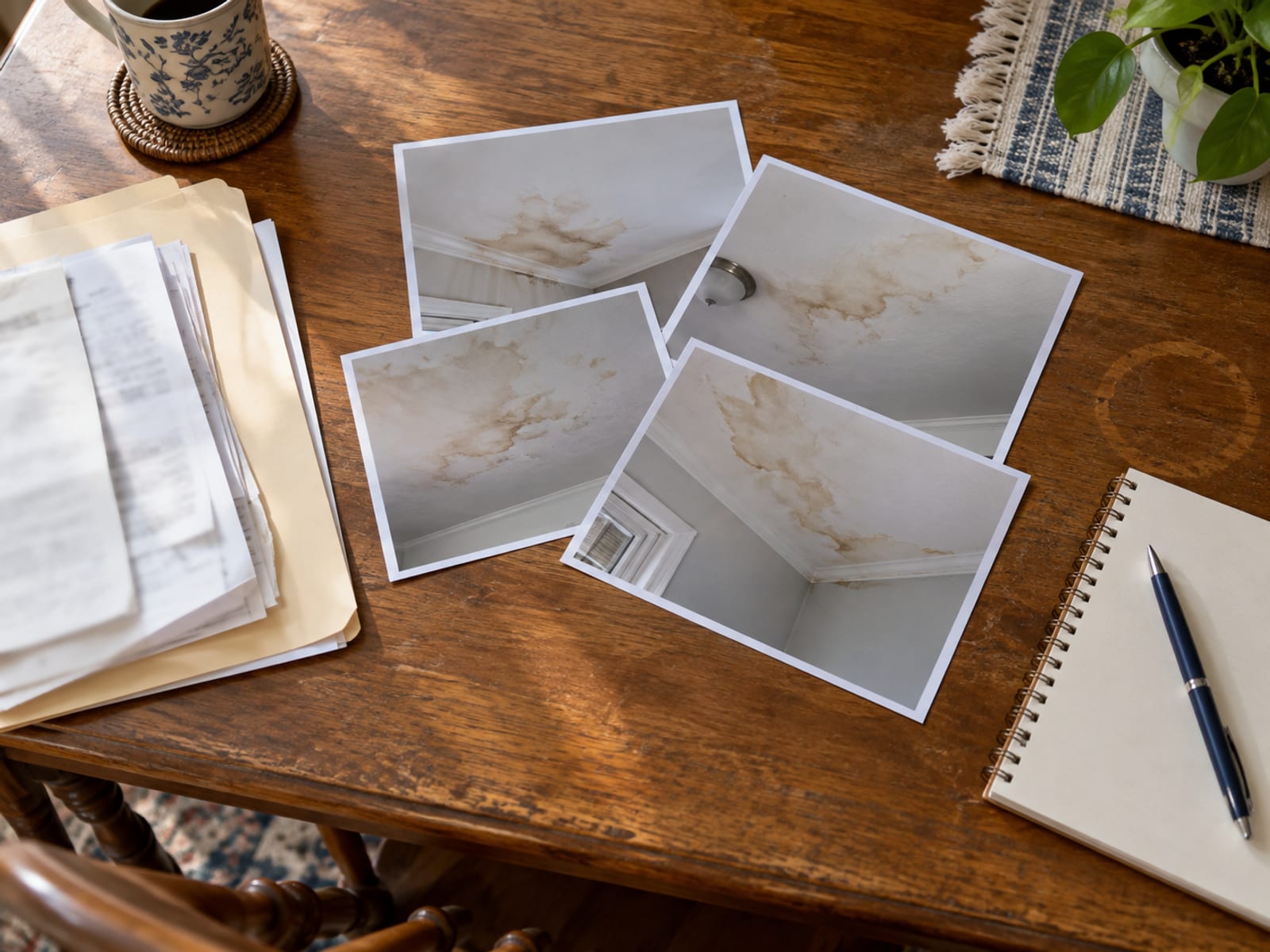
On your side, report the loss promptly, according to NJDOBI's storm claims guidance (opens in a new tab). Write down the claim number and the adjuster's contact information, keep photographs and receipts for repairs and temporary housing, and send the documents the insurer asks for. Check the policy's proof-of-loss deadline and its appraisal or dispute provisions. If you cannot resolve a problem with the insurer, the NJDOBI Insurance Claims Ombudsman (opens in a new tab) and the department's consumer complaint process are the next step.
Can credit information or claims history affect your premium?
Yes. An insurer may request consumer credit reports when writing new or renewal policies, and some companies use credit information as an indicator of how often and how severely future claims will occur, according to the NJDOBI consumer guide (opens in a new tab).
If insurance is denied or otherwise adversely affected because of a credit report, you are entitled to a notice that names the credit reporting agency and explains how to contact it, and you may be entitled to a free copy of the report, according to NJDOBI's adverse action guidance (opens in a new tab).
Claims history can be used in underwriting and rating as well. Insurers draw on CLUE, the Comprehensive Loss Underwriting Exchange, a database of prior claims, according to an NJDOBI report on claims data (opens in a new tab). The effect differs by company. Ask whether credit or claims history was used, and dispute anything inaccurate with the reporting agency.
How to compare policies and talk with an agency
Two quotes only compare fairly when the coverage, deductibles, valuation method and endorsements match. Bring the declarations page, the one-page policy summary, any renewal or nonrenewal notice, and details about the home's age, roof, systems and past claims. Then ask:
- What policy form is this, and is the dwelling valued at replacement cost or actual cash value?
- What do the other structures, personal property and additional living expense sections pay, and are there special limits on items like jewelry?
- Is sewer or drain backup available by endorsement, and is earth movement excluded?
- Is there a wind or hail deductible, a hurricane deductible, or both? What triggers the hurricane deductible, and is it mandatory?
- Was credit information or CLUE history used in rating?
- What caused the renewal premium to change, and is it tied to an approved rate filing?
- What would the FAIR Plan cover and exclude if standard insurers decline the property?
Before you sign, confirm the agent's license with the New Jersey insurance license lookup (opens in a new tab), using the agency's legal name if a search is difficult. Riskado's directory lists insurance agencies across New Jersey and every other state, by city and by category, so you can find agencies near you to call. Because flood is excluded from every standard homeowners policy, a separate New Jersey flood insurance conversation belongs in the same call.
Check what you know about New Jersey homeowners insurance
Frequently asked questions
Does homeowners insurance cover hurricane damage in New Jersey?
Wind damage from a hurricane is generally covered, but a hurricane deductible or a wind and hail deductible may apply instead of the regular deductible. Flood damage is excluded from homeowners coverage and needs a separate flood policy, according to NJDOBI (opens in a new tab).
How do I file a complaint about an insurer or agent?
Submit it to NJDOBI in writing with the company or agent name, the policy number, correspondence, the declarations page or notice involved, and a short description of the problem, according to the NJDOBI consumer assistance page (opens in a new tab). The department may contact the licensee, request a response and issue written findings.
Where can I see an insurer's rate filing?
Public rate, rule and form filings are available through SERFF, according to NJDOBI's records page (opens in a new tab). The department also posts homeowner rate information on its property and casualty page (opens in a new tab).
Is there a list of insurers that write homeowners policies in New Jersey?
Yes. NJDOBI publishes a list of homeowners insurers with contact information (opens in a new tab), which helps when you want to contact a company directly or check which carriers an agency represents.
Next steps
Pull out your declarations page and your last renewal notice, and note the dwelling limit, the deductibles and any hurricane deductible notice. Then ask two or three agencies to quote the same coverage, raise flood and sewer backup in every conversation, and get the reason for any premium change in writing.
Terms used in this guide
Tap a term to see what it means.
HO-3. The common owner-occupied homeowners policy form used in the NAIC premium averages.
Coverage A. The dwelling limit, the amount of coverage for the house itself.
Hurricane deductible. A deductible that applies only under the policy's hurricane deductible program, usually a percentage of Coverage A.
Force-placed insurance. Coverage a mortgage servicer places on the property when the owner's own policy lapses.
FAIR Plan. The New Jersey Insurance Underwriting Association, a residual-market option for owners who cannot get coverage from a standard insurer.
CLUE. The Comprehensive Loss Underwriting Exchange, a database of prior claims insurers use in underwriting and rating.
Declarations page. The page of a policy that lists the coverages, limits, deductibles and premium.