Florida Hurricane Deductible: How the Percentage Works, When It Applies, the Once-a-Season Rule and What the Options Cost You at Claim Time
Riskado
A Florida hurricane deductible is the amount you pay toward covered hurricane wind damage before your insurer pays. On a personal residential policy, Florida insurers must offer $500, 2%, 5% and 10% hurricane deductible options, with exceptions based on the dwelling limit, under Fla. Stat. § 627.701 (opens in a new tab). A percentage is figured on your policy's dwelling or structure limit, not on the home's market value, and the insurer must print the actual dollar amount on your declarations page or renewal notice. The deductible applies during a set hurricane period that starts when the National Hurricane Center issues a hurricane warning for any part of Florida and ends 72 hours after the last Florida hurricane watch or warning ends, according to the Florida Department of Financial Services (DFS) (opens in a new tab).
Key takeaways
- Required optionsFlorida insurers must offer $500, 2%, 5% and 10% hurricane deductibles on personal residential policies, with exceptions by dwelling limit.
- The baseA percentage is figured on the dwelling or structure limit, not the home's market value.
- The dollar figureThe insurer must show the actual dollar amount on the declarations page or renewal notice.
- When it appliesFrom the first hurricane warning for any part of Florida until 72 hours after the last Florida watch or warning ends.
What is the percentage based on?
The percentage applies to the policy's dwelling or structure limit. On a homeowners policy, that's usually Coverage A, the amount shown for the house itself on your declarations page. It isn't the price you paid for the home, the price a buyer would pay today or the size of the repair bill.
The DFS hurricane deductible page (opens in a new tab) uses a home insured for $200,000 with a 2% hurricane deductible as its example. Two percent of $200,000 is $4,000. If a hurricane causes $5,000 of covered wind damage, the insurer subtracts the $4,000 deductible and the covered balance is $1,000, subject to the policy and the claim adjustment.
Hover or tap a row to highlight it.
| Hurricane deductible option | Deductible in dollars | What you pay on $5,000 of covered wind damage |
|---|---|---|
| $500 | $500 | $500 |
| 2% | $4,000 | $4,000 |
| 5% | $10,000 | $5,000, because the damage is below the deductible |
| 10% | $20,000 | $5,000, because the damage is below the deductible |
At 5%, the same home carries a $10,000 hurricane deductible, and at 10% it carries $20,000. Florida law requires the insurer to compute the actual dollar value of the hurricane deductible and display it prominently on the declarations page when the policy is issued, and on the renewal declarations page or premium renewal notice at each renewal, under § 627.701 (opens in a new tab).
If your policy has an inflation guard rider, which raises the coverage limit over time, the dollar figure can grow with it. The insurer must tell you on the declarations page or renewal notice that the hurricane deductible may be higher than shown when a loss happens because of the inflation guard, according to the same statute.
What hurricane deductible options must Florida insurers offer?
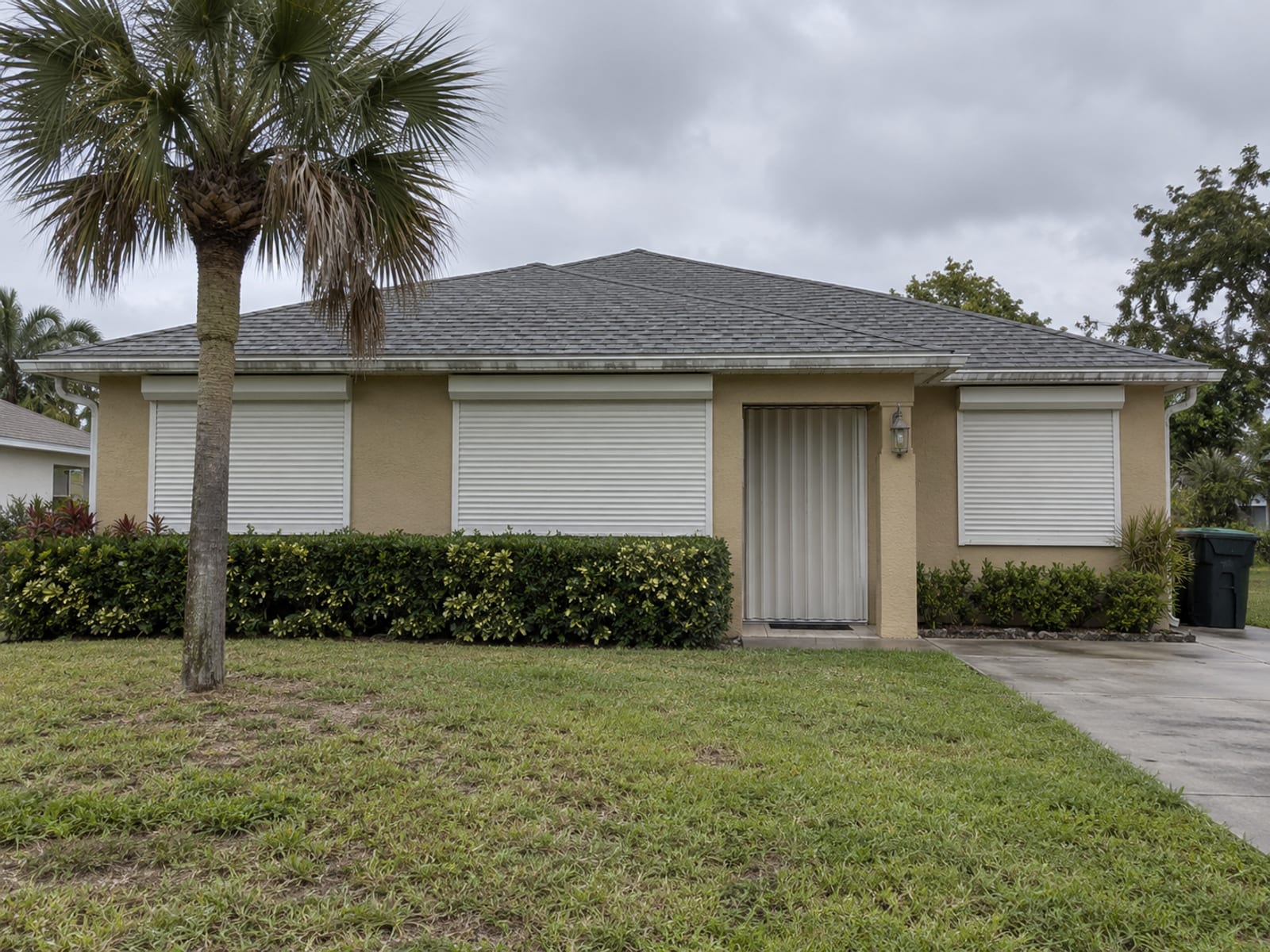
Before issuing a personal lines residential policy, an insurer must offer hurricane deductibles of $500, 2%, 5% and 10% of the dwelling limit, unless a percentage works out to less than $500. The written offer has to say which deductible applies if you don't choose one, and the insurer must remind you of the options at each renewal, under § 627.701(3) (opens in a new tab).
The statute adjusts those options by the size of the dwelling limit:
- $100,000 to under $250,000: instead of the $500 option, the insurer may offer a policy it guarantees not to nonrenew for reasons of reducing hurricane loss for one renewal period, with up to a 2% hurricane deductible.
- $250,000 or more: the insurer doesn't have to offer the $500 option, but must offer the others.
- $1 million to under $3 million: the insurer may offer 3% in place of 2%.
- $3 million or more: the insurer doesn't have to offer 2%.
Hover or tap a row to highlight it.
| Dwelling limit | What the insurer must offer |
|---|---|
| Under $100,000 | $500, 2%, 5% and 10% |
| $100,000 to under $250,000 | $500, 2%, 5% and 10%, or a one-renewal nonrenewal guarantee with up to a 2% deductible in place of the $500 option |
| $250,000 to under $1 million | 2%, 5% and 10% |
| $1 million to under $3 million | 2% or 3%, plus 5% and 10% |
| $3 million or more | 5% and 10% |
There's also a ceiling for most homes. A personal residential policy on a risk valued at less than $500,000 can't carry a hurricane deductible above 10% of the dwelling limit unless every named insured writes out, signs and dates a statement that they will pay the first stated dollar amount of hurricane damage themselves. If the home has a mortgage or lien, the lender must also approve that choice in writing.
Commercial residential policies, such as those for condominium associations and apartment buildings, follow a different rule. For those policies issued or renewed on or after January 1, 2006, the insurer must offer both a hurricane deductible that applies once a year and one that applies to each hurricane, under § 627.701(5)(b) (opens in a new tab).
Surplus lines policies, written by insurers that aren't admitted in Florida, can have different deductibles, according to the DFS. Read the policy and ask your agent whether your insurer is admitted or surplus lines.
When does the hurricane deductible apply?
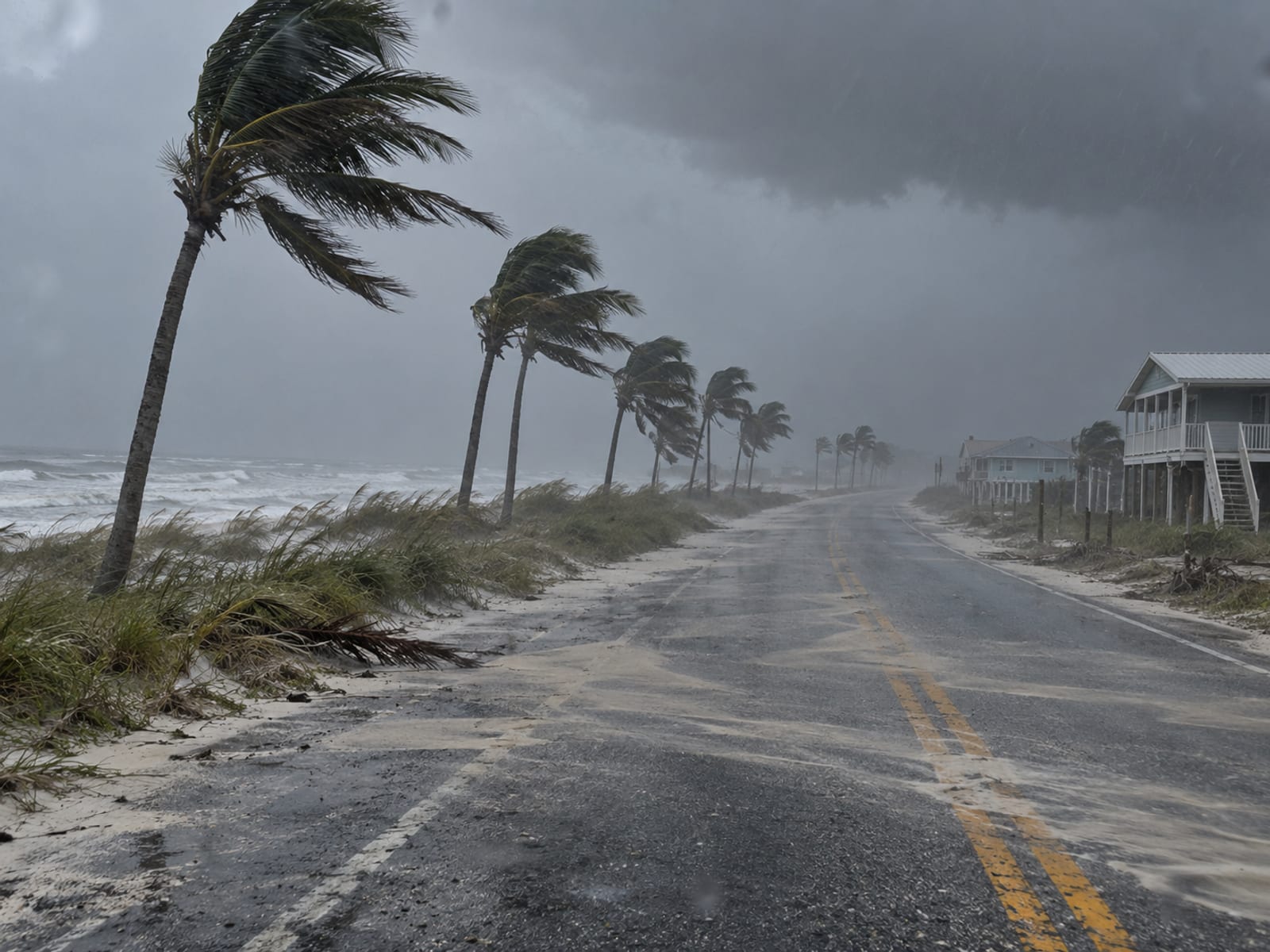
For insurance purposes, a hurricane is a storm system the National Hurricane Center of the National Weather Service has declared a hurricane, under Fla. Stat. § 627.4025 (opens in a new tab). The hurricane period in Florida begins when a hurricane warning is issued for any part of Florida and ends 72 hours after the last hurricane watch or warning for any part of Florida ends.
A tropical storm that never becomes a hurricane doesn't trigger the hurricane deductible, and damage from it falls under the policy's other deductible terms. Once the period has started, a hurricane that weakens to a tropical storm or depression as it crosses the state doesn't change which deductible applies, because the storm was a named hurricane when the warning was issued, according to the DFS hurricane deductible guide (revised May 2025) (opens in a new tab).
Hurricane XYZ: when the deductible applied (DFS example)
- September 5, 2024The weather system becomes a tropical storm. The hurricane deductible doesn't apply yet.
- September 7, 2024, 10 a.m.The first hurricane warning for Florida is issued, and the hurricane deductible period starts.
- September 11, 2024, 8 a.m.The last hurricane watch or warning for Florida ends.
- September 14, 2024, 8 a.m.The period ends, 72 hours after the last watch or warning ended.
The DFS guide walks through an example. The first hurricane warning for Florida goes up on September 7, 2024, at 10 a.m. The last watch or warning ends on September 11, 2024, at 8 a.m. The hurricane deductible applies from 10 a.m. on September 7 until 8 a.m. on September 14, 72 hours after the last watch or warning ended.
Does it apply once per storm or once per year?
On a personal residential policy issued or renewed on or after May 1, 2005, the hurricane deductible applies once per calendar year to all covered hurricane losses, as long as the policies are issued by the same insurer or an insurer in the same group, under § 627.701(5)(a) (opens in a new tab).
For a second hurricane in the same year, the insurer applies whichever is greater: the amount left on your hurricane deductible, or your all-other-perils deductible. Once a first hurricane uses up the full hurricane deductible, later hurricane claims that year carry only the all-other-perils deductible.
The DFS example (opens in a new tab) uses the $200,000 home with a $4,000 hurricane deductible and a $1,000 all-other-perils deductible. The first hurricane causes $2,000 of wind damage. That's below the deductible, so the owner pays for the repairs, and the insurer credits the $2,000 toward the year's hurricane deductible, leaving $2,000. A second hurricane causes $5,000 of damage. The remaining $2,000 is greater than the $1,000 all-other-perils deductible, so the insurer subtracts $2,000 and pays the covered $3,000.
Two hurricanes in one calendar year (DFS example)
- Starting point$200,000 dwelling limit, 2% ($4,000) hurricane deductible, $1,000 all-other-perils deductible.
- Hurricane 1$2,000 of wind damage. The owner pays it, and the insurer credits $2,000, leaving $2,000 of hurricane deductible.
- Hurricane 2$5,000 of wind damage. The remaining $2,000 is greater than $1,000, so the insurer subtracts $2,000 and pays $3,000.
- Any later hurricane that yearThe hurricane deductible is used up, so only the $1,000 all-other-perils deductible applies.
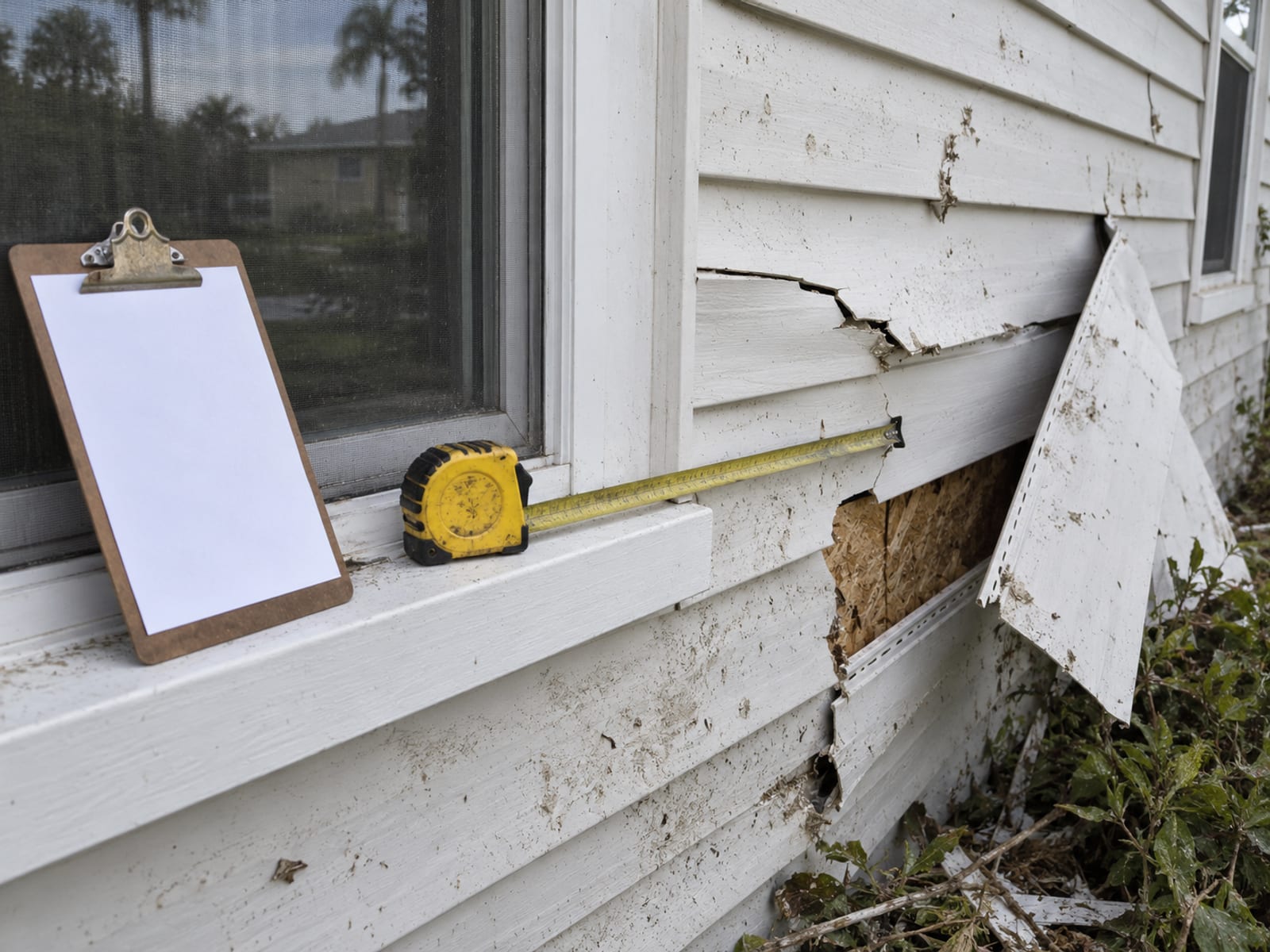
That credit depends on the first loss being on record. The DFS says to file a claim even when the damage is less than the hurricane deductible, so the insurer has a record of the credit, and Florida law lets insurers require you to report losses below the deductible or keep receipts to apply them later.
Changing insurers resets the count. If you have a hurricane claim and then move the policy to an insurer outside the original insurer's group, the new insurer can apply the full hurricane deductible to a later hurricane that year, with no credit for the first, according to the DFS. If you're offered a lower hurricane deductible on a new or renewal policy with the same group after a hurricane loss, the insurer must tell you in writing that the lower deductible won't apply until January 1 of the next year.
How is it different from your other deductibles?
A Florida homeowners policy usually has more than one deductible, and each applies to different losses. When the hurricane deductible applies, no other deductible under the policy may also be applied, according to the DFS (opens in a new tab).
- Hurricane deductible: covered hurricane wind losses during the hurricane period.
- All-other-perils deductible: covered losses from other causes, such as fire, theft or a windstorm that isn't a hurricane. Insurers must offer a $500 all-other-perils option, under § 627.701(7) (opens in a new tab).
- Roof deductible: a separate deductible some policies apply to roof losses. It can't exceed the lesser of 2% of Coverage A or 50% of the cost to replace the roof, and it can't apply to a roof loss resulting from a hurricane, under § 627.701(10) (opens in a new tab).
- Wind-and-hail deductible: some policies use a separate deductible for wind or hail damage outside a declared hurricane. The policy wording decides which deductible applies to that kind of storm.
- Flood deductible: set by a separate flood policy, which has its own terms and limits.
Florida also ties the hurricane deductible to mitigation. When you've taken appropriate hurricane mitigation steps on the home, the insurer must give you the option of a reduced hurricane deductible or a discount credit or other rate differential as provided in Fla. Stat. § 627.0629 (opens in a new tab), according to § 627.701(9) (opens in a new tab). The amount depends on the policy, the home's features and the insurer's filing, so ask which credits or deductible reductions apply to your property.
What happens with roof damage, rain and flooding?
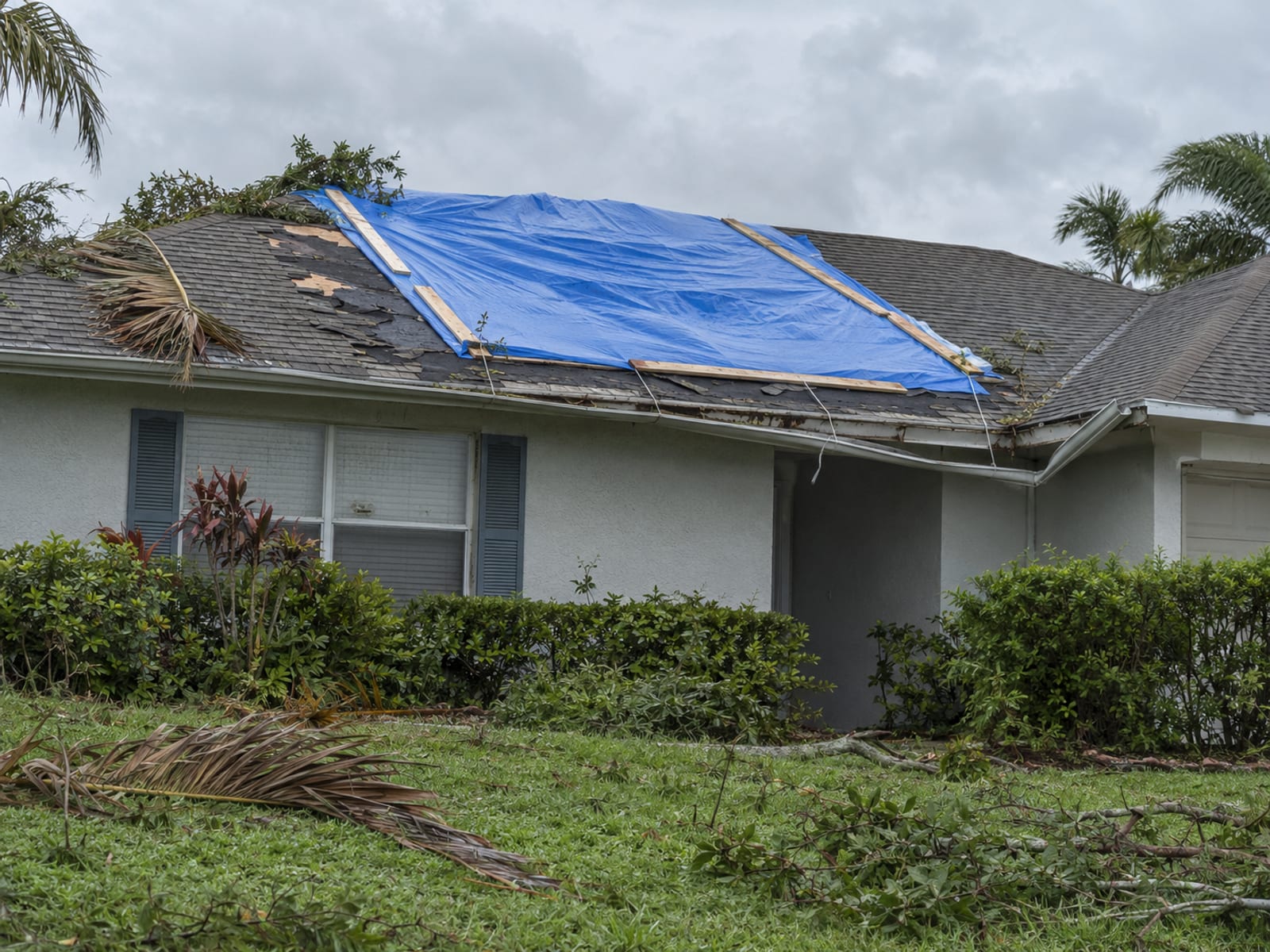
Florida hurricane coverage includes damage to the inside of a building, or to property inside it, from rain, snow, sleet, hail, sand or dust when the force of the windstorm first damages the building and creates an opening that lets the weather in, under § 627.4025 (opens in a new tab). Rain that pours through a roof the wind tore open is part of the hurricane loss.
Flood is different. Flooding falls outside Florida's hurricane coverage definition, and flood insurance is a separate policy with its own terms, limits, exclusions and deductible, according to the DFS. Storm surge is generally treated as flood rather than covered wind damage under a homeowners policy. FloodSmart (opens in a new tab) is FEMA's site for buying a National Flood Insurance Program policy.
Many hurricane losses involve both wind and water. Which policy pays for what depends on the policy's exclusions and causation wording, evidence of the opening and whether the water entered as flood or as rain. Report the loss to each insurer that might be involved, and ask each how it is applying its coverage and its deductible.
What about condos and commercial residential buildings?
A condominium unit owner's policy, usually called an HO-6, is personal residential coverage, so the unit owner's hurricane deductible follows the rules for personal policies. The building itself is usually insured under the association's master policy, which is commercial residential coverage and can use an annual or a per-hurricane deductible.
For a claim on your unit, find the Coverage A or building-property limit on your HO-6 declarations page, along with the hurricane deductible, the all-other-perils deductible and any loss assessment deductible. If the association levies an assessment after a hurricane, compare your HO-6 declarations page and loss assessment endorsement with the association's master policy, and ask your agent how the assessment is classified and which deductible applies to it.
What deadlines apply after a hurricane claim?
Florida's claim deadlines run from the date of loss. For hurricanes and other weather events, the date of loss is the date the hurricane made landfall or the date the National Oceanic and Atmospheric Administration verified the event, under Fla. Stat. § 627.70132 (opens in a new tab). Notice of a new or reopened claim must reach the insurer within 1 year after the date of loss, and notice of a supplemental claim within 18 months.
Under Fla. Stat. § 627.70131 (opens in a new tab), the insurer must acknowledge a claim communication within 7 calendar days, begin a reasonably necessary investigation within 7 days after receiving proof-of-loss statements and complete any physical inspection within 30 days after receiving them. The adjuster must give you their name and state license number. Within 60 days after receiving notice of the claim, the insurer must pay or deny the claim or a portion of it, unless factors beyond its control prevent that, and the statute pauses these deadlines during mediation or when you haven't provided requested claim information.
Hover or tap a row to highlight it.
| Step | Deadline | Where it comes from |
|---|---|---|
| Notice of a new or reopened claim | Within 1 year after the date of loss | Fla. Stat. § 627.70132 (opens in a new tab) |
| Notice of a supplemental claim | Within 18 months after the date of loss | Fla. Stat. § 627.70132 (opens in a new tab) |
| Insurer acknowledges your claim communication | Within 7 calendar days | Fla. Stat. § 627.70131 (opens in a new tab) |
| Physical inspection | Within 30 days after proof-of-loss statements | Fla. Stat. § 627.70131 (opens in a new tab) |
| Pay or deny the claim or a portion of it | Within 60 days after notice of the claim | Fla. Stat. § 627.70131 (opens in a new tab) |
Florida's Homeowner Claims Bill of Rights (opens in a new tab) adds that, on written request, you can receive within 30 days after a complete proof-of-loss statement a confirmation that the claim is covered in full, partially covered or denied, or a written notice that it's still being investigated.
Where is the deductible on your policy?
The declarations page is usually the first one or two pages of the policy. It lists the insurer, policy number, coverages, limits, deductibles, fees, endorsements, property address and agent. Look for these lines:
- Coverage A or dwelling coverage.
- The hurricane deductible percentage.
- The hurricane deductible in dollars.
- The all-other-perils deductible.
- Any roof or wind-and-hail deductible.
- An inflation guard endorsement and its notice.
- Any changes at renewal.
Questions to ask your agent before renewal
- What is my Coverage A or dwelling limit, and what is my hurricane deductible in dollars today?
- Could the inflation guard raise the dollar amount before a storm?
- How would a second hurricane in the same calendar year be handled?
- What happens to my deductible credit if I change insurers after a hurricane claim?
- What is my all-other-perils deductible, and is there a separate roof or wind-and-hail deductible?
- Is flood or storm surge excluded, and do I have separate flood coverage?
- Is the insurer admitted or surplus lines?
- For a condo, how do my HO-6 and the association's master policy split hurricane losses and assessments?
- What hurricane mitigation credits or deductible reductions are available for this home?
Check the agent before you share documents. The DFS Licensee Search (opens in a new tab) shows an agent's or agency's Florida license, and the Office of Insurance Regulation's Active Company Search (opens in a new tab) confirms an insurer is authorized in Florida. For a claim-handling problem or a question about your rights, the DFS Insurance Consumer Helpline is 1-877-MY-FL-CFO (1-877-693-5236), according to the DFS consumer resources page (opens in a new tab). The DFS also publishes consumer guides (opens in a new tab), including a Spanish edition of its hurricane deductible guide.
When you're ready to compare deductible options side by side, a Florida agency can quote each one against your dwelling limit. Riskado's directory lists Florida insurance agencies by city and category.
Check what you know about the Florida hurricane deductible
Frequently asked questions
Does a hurricane watch trigger the deductible?
No. The hurricane period starts when the National Hurricane Center issues a hurricane warning for any part of Florida. It ends 72 hours after the last hurricane watch or warning for any part of the state ends, so a watch can extend the period but doesn't start it.
Should I report damage that's less than my hurricane deductible?
Yes. The DFS advises filing even when repairs cost less than the deductible, so the insurer records the credit toward a later hurricane claim that year. Reporting also protects you if hidden damage turns up during repairs.
Does Citizens use the same hurricane deductible rules?
Citizens policy forms and declarations pages set the hurricane deductible on each Citizens policy. Check the declarations page and policy form for your current policy year, and ask your agent how the calendar-year rule applies to your Citizens policy.
Turn the percentage into a number
Find your Coverage A limit and the hurricane deductible dollar amount on your declarations page, and set that figure beside your savings. If it's more than you could pay after a storm, ask your agent what each of the other options would cost at renewal, and keep a record of any hurricane damage you find, even below the deductible.
Key terms
Tap a term to see what it means.
Hurricane deductible. The deductible that applies to covered loss caused by a hurricane during the hurricane period set by Florida law.
Coverage A. The dwelling limit on a homeowners policy, the amount for the house itself, and the base for a percentage hurricane deductible.
Declarations page. The first page or two of a policy, listing the coverages, limits, deductibles and the hurricane deductible in dollars.
All-other-perils deductible. The deductible for covered losses from causes other than a hurricane.
Roof deductible. A separate deductible some policies apply to roof losses; it can't apply to a roof loss from a hurricane.
Inflation guard. A rider that raises the coverage limit over time, which can raise a percentage deductible with it.
Surplus lines. Coverage written by an insurer that isn't admitted in Florida, which can carry different deductible terms.
Supplemental claim. A claim for more loss or damage from the same peril that the insurer already adjusted.