Florida Condo Insurance: HO-6 Requirements, What the Association Policy Covers, Loss Assessment Coverage and the Condo Law Changes After Surfside
Riskado
Florida law doesn't require every condominium owner to buy a full HO-6 policy. It does require any unit owner's residential property policy issued or renewed on or after July 1, 2010, to include at least $2,000 of loss assessment coverage, with a deductible of no more than $250 per direct property loss, under Fla. Stat. § 627.714 (opens in a new tab). The requirement to carry a full HO-6 usually comes from your lender, your condominium declaration, an association rule or a purchase contract. The association's policy covers the building as originally installed, while your HO-6 commonly covers your belongings, liability, interior items and assessments, under Fla. Stat. § 718.111(11) (opens in a new tab). Your declaration and the actual policies settle the details.
Key takeaways
- State lawUnit-owner policies issued or renewed on or after July 1, 2010, must include at least $2,000 of loss assessment coverage, with a deductible of no more than $250.
- Full HO-6A requirement to carry a complete HO-6 usually comes from a lender, the declaration, an association rule or a purchase contract.
- The splitThe association insures the building as originally installed; interior coverings, fixtures, appliances, cabinets and your belongings are yours to insure.
- After SurfsideBuildings three habitable stories or higher face milestone inspections and structural integrity reserve studies, and reserves for study items can't be waived.
Is HO-6 insurance mandatory in Florida?
The HO-6 is the condominium unit-owner form. It provides some coverage for the structure but primarily covers the owner's personal property and liability, and it includes loss assessment coverage, according to the Florida Department of Financial Services (DFS) (opens in a new tab).
State law sets the loss assessment minimum for unit-owner policies, and Chapter 718 says a unit owner's policy must conform to section 627.714. Neither section orders every owner to buy a complete HO-6. In practice, though, many owners have to carry one because someone else requires it:
- Your lender can make an HO-6 a condition of the mortgage.
- Your declaration or bylaws can require owners to insure certain parts of the unit.
- An association rule can require proof of coverage, such as a certificate each year.
- A purchase contract can require coverage before closing.
Find out which of these applies to you and what each one asks for. A lender letter or a clause in the declaration usually names the coverage, the amount and the proof required.
What does the association's master policy cover?
Every condominium association must have adequate property insurance, and an association controlled by unit owners must use its best efforts to keep adequate insurance on the association property, the common elements and the condominium property it has to insure, under § 718.111(11) (opens in a new tab).
Every association property policy issued or renewed on or after January 1, 2009, must provide primary coverage for all portions of the condominium property as originally installed, or replacement of like kind and quality under the original plans and specifications. It must also cover alterations or additions made to the condominium property or association property under § 718.113(2) (opens in a new tab).
The association can also buy liability insurance for directors and officers, insurance for association employees and flood insurance for the common elements, association property and units. Its board sets the policy deductibles, based on available funds, including reserve accounts, or on the association's authority to levy assessments. A high master-policy deductible is a common reason owners end up with an assessment after a storm.
Who pays for drywall, flooring, cabinets and appliances?
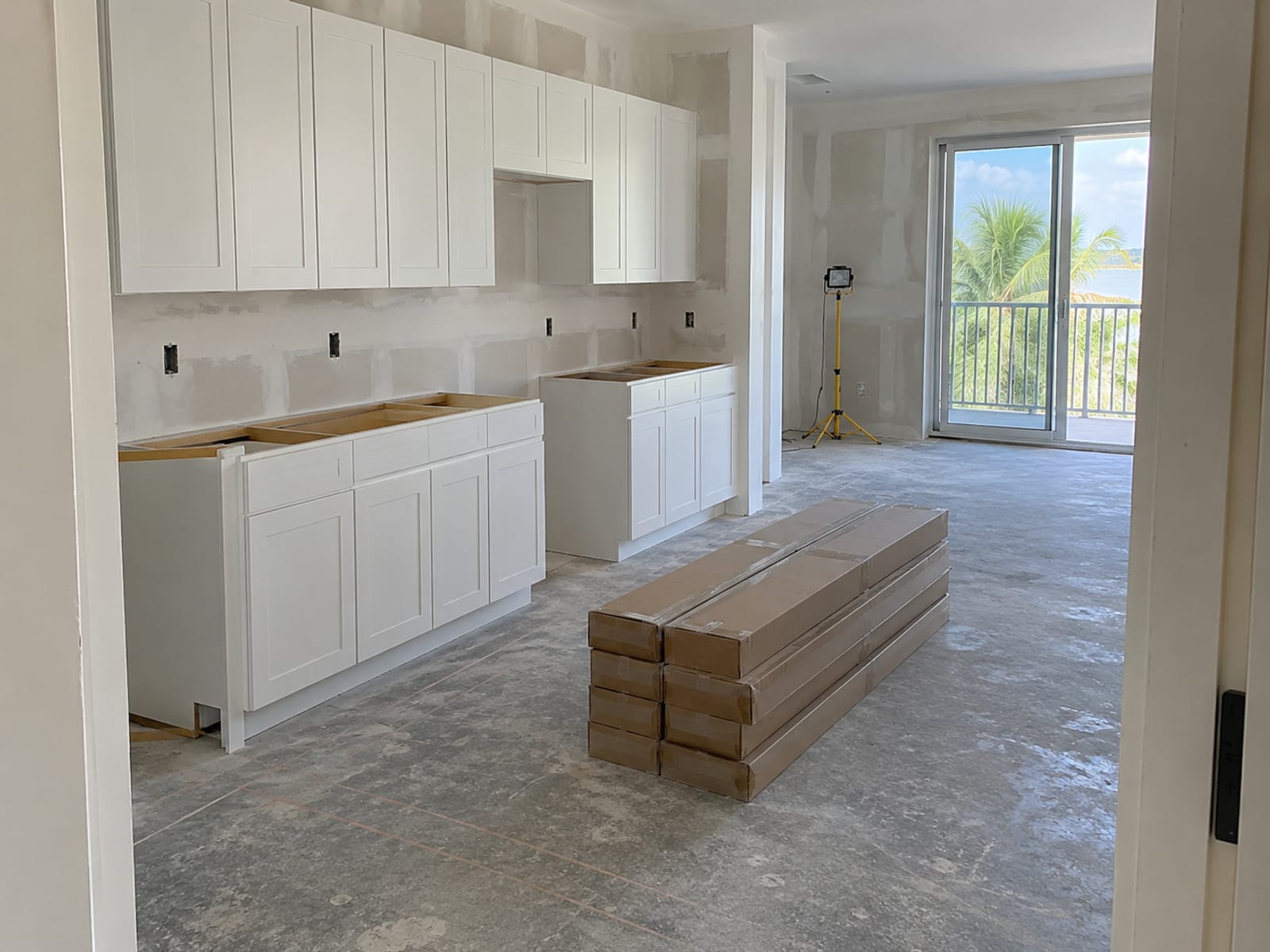
The statute draws much of the line. The association's policy must exclude these items when they are inside the unit's boundaries and serve only that unit, under § 718.111(11)(f) (opens in a new tab):
- All personal property within the unit or limited common elements.
- Floor, wall and ceiling coverings.
- Electrical fixtures.
- Appliances.
- Water heaters and water filters.
- Built-in cabinets and countertops.
- Window treatments, including curtains, drapes, blinds and hardware.
- Replacements of any of those items.
The statute says that property, and any insurance on it, is the unit owner's responsibility. Owners also pay the cost of rebuilding the parts of the condominium property they're required to insure.
Hover or tap a row to highlight it.
| Item | Usually insured by |
|---|---|
| Building and condominium property as originally installed | The association's master policy |
| Alterations or additions made under the association's approval process | The association's master policy |
| Personal property inside the unit | The unit owner |
| Floor, wall and ceiling coverings | The unit owner |
| Electrical fixtures, appliances, water heaters and water filters serving only the unit | The unit owner |
| Built-in cabinets, countertops and window treatments serving only the unit | The unit owner |
| Drywall | Depends on the declaration and the master policy; ask the association |
Drywall is the item people ask about most, and the statute doesn't name it. The exclusion covers wall coverings, but whether the drywall itself belongs to the association or to you depends on how your declaration defines the unit's boundaries, its maintenance clauses, any alterations and the master policy's wording. Read the declaration, then ask the association or its insurance representative how your building treats drywall, and have your agent set your HO-6 interior coverage to match the answer.
What does an HO-6 cover?
An HO-6 policy usually covers four things, each with its own limit:
- Personal property: furniture, clothing, electronics and other belongings, subject to the policy's special limits.
- Interior property and improvements: the parts of the unit the declaration and statute leave to you, such as flooring, cabinets, fixtures and upgrades you've made.
- Personal liability: claims that you caused injury or property damage to someone else.
- Loss assessment: your share of certain association assessments after a covered loss.
Many policies also include loss of use, which helps with living costs if a covered loss forces you out of the unit. Condo unit owners' policies normally cover the named perils listed in the policy, and an endorsement can broaden coverage to all perils except those the contract excludes, according to the DFS (opens in a new tab).
How much HO-6 coverage you need depends on what you'd have to rebuild and replace. Price out the interior items the declaration assigns to you, any improvements you've added and your belongings, then compare that with your lender's minimum and the association's deductible.
How does loss assessment coverage work?
When the association's insurance doesn't pay all of a covered loss to property the owners share, the association can assess each owner a share. Loss assessment coverage pays your share, within the policy's limit and terms.
Under § 627.714 (opens in a new tab), the required coverage works like this:
- At least $2,000 applies to all assessments made because of the same direct loss, no matter how many assessments the association levies.
- The loss must be the type of loss your own unit-owner policy covers.
- The deductible can't be more than $250 per direct property loss, and if a deductible already applies to other damage you had from the same loss, none applies to the loss assessment.
- The limit that counts is the one in effect one day before the event that caused the loss, so raising your limit after a storm doesn't apply to that storm.
- Your policy's coverage is excess over any other policy covering the same property.
Loss assessment coverage is tied to a covered direct loss. An assessment to fund reserves, pay for ordinary maintenance or deferred maintenance, or complete structural repairs that a covered event didn't cause isn't automatically a covered loss assessment. When an assessment notice arrives, check what caused it, then ask your agent whether your policy's covered causes of loss match and whether your loss assessment limit applies to an assessment for the association's deductible.
What changed after Surfside?
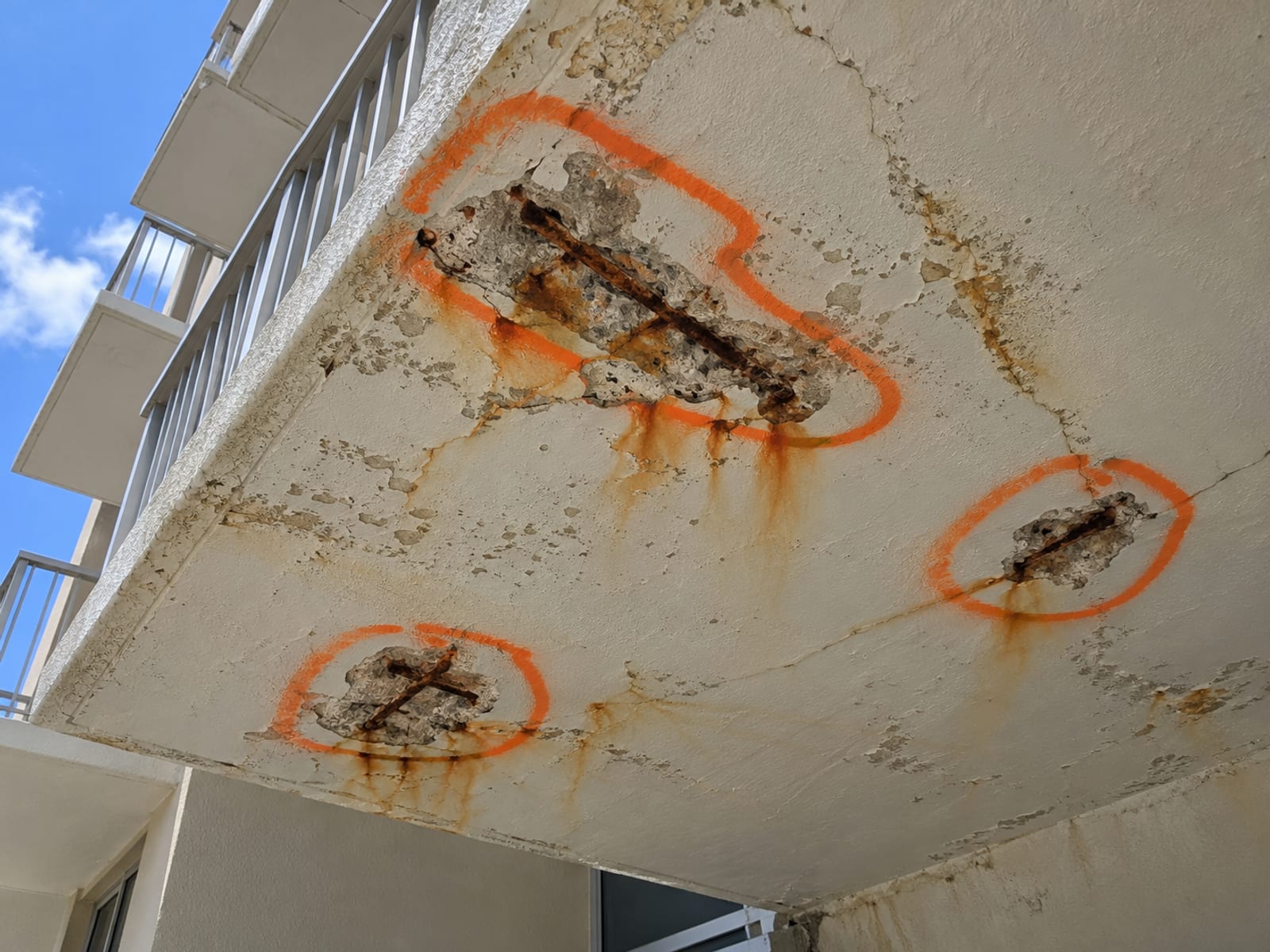
After the Champlain Towers South collapse in Surfside, Florida passed Senate Bill 4-D, Chapter 2022-269 (opens in a new tab), in 2022, which created statewide milestone inspections and structural integrity reserve studies. House Bill 1021, Chapter 2024-244, amended those rules and took effect July 1, 2024, except where a provision sets another date, according to the Florida Legislature's 2024 chapter list (opens in a new tab). The current statute text controls.
Milestone inspections. A building that is three habitable stories or more and is a residential condominium or cooperative must have a milestone inspection by December 31 of the year it reaches 30 years of age, based on its certificate of occupancy, and every 10 years after that, under Fla. Stat. § 553.899 (opens in a new tab). The local enforcement agency can require the first inspection at 25 years when local conditions, such as proximity to salt water, call for it. A licensed architect or engineer performs the inspection.
Structural integrity reserve studies. A residential condominium association must have a structural integrity reserve study at least every 10 years for each building three habitable stories or higher, under Fla. Stat. § 718.112(2)(g) (opens in a new tab). The study covers, at a minimum, the roof, the structure and load-bearing walls, fireproofing and fire protection systems, plumbing, electrical systems, waterproofing and exterior painting, and windows and exterior doors, plus any other item with a deferred maintenance or replacement cost above $25,000 (or the inflation-adjusted amount) whose failure would harm those items. It states each item's estimated remaining useful life and replacement cost and recommends a funding schedule.
Under the current text, associations existing on or before July 1, 2022, and controlled by owners other than the developer must complete the study by December 31, 2025. An association with a milestone inspection due on or before December 31, 2026, may complete the study with that inspection, but no later than December 31, 2026.
Reserve funding. For a budget adopted on or after December 31, 2024, owners in an association that must have a structural integrity reserve study can't vote to provide no reserves or less reserves than required for the study's items, and can't vote to use those reserve funds for other purposes, under the same section.
Sale disclosures. Contracts entered into after December 31, 2024, for the sale of a residential unit must state whether the association has completed a required milestone inspection or structural integrity reserve study, and a buyer of a resale unit is entitled, at the seller's expense, to current copies of the declaration, bylaws and rules, the annual budget and financial statement, the milestone inspection summary and the most recent study, under Fla. Stat. § 718.503 (opens in a new tab).
Florida condo law dates after Surfside
- 2022Senate Bill 4-D, Chapter 2022-269, creates statewide milestone inspections and structural integrity reserve studies.
- July 1, 2024House Bill 1021, Chapter 2024-244, takes effect, except where a provision sets another date.
- December 31, 2024Budgets adopted on or after this date can't waive or reduce reserves for study items, and new sale contracts must carry the inspection and study statements.
- December 31, 2025Deadline for existing owner-controlled associations to complete the structural integrity reserve study.
- December 31, 2026Latest date for a study done together with a milestone inspection due on or before that date.
None of these laws sets an HO-6 premium. They do affect association budgets, inspections and repair planning, which can mean higher regular assessments when reserves must follow the study, special assessments or loans for capital work, and more building-condition detail when the association's insurance is placed or renewed. Those assessments are separate from loss assessment coverage unless a covered loss caused them.
How do flood and hurricane deductibles fit in?
Flood damage isn't covered by a homeowners policy, according to the DFS (opens in a new tab), and an HO-6 is a homeowners form. The association may buy flood insurance for the common elements, association property and units, under § 718.111(11)(e) (opens in a new tab), but the law doesn't make every association's flood policy the same. NFIP flood insurance is available to people who own condominiums, with building coverage up to $250,000 and contents coverage up to $100,000, according to FloodSmart (opens in a new tab).
Hurricane deductibles work the same way: your HO-6 and the association's master policy are separate contracts with separate deductibles, limits and rules. Ask the association for its hurricane and wind deductibles, and ask your agent what your own HO-6 hurricane deductible is in dollars and how your loss assessment coverage would respond if the association passed part of its deductible to owners.
What does Florida condo insurance cost?
Florida's average HO-6 premium was $1,146 in 2023, according to the NAIC's homeowners and condominium report (data for 2023, published July 2026) (opens in a new tab). That's a statewide average across all coverage amounts, not a quote for any unit.
Your own premium depends on the building's age, construction and location, distance from the coast, your floor, the value of your interior and improvements, your personal property and liability limits, your deductibles, claims history, the association's master-policy terms and loss history, and whether you add coverage for water backup or other perils. A Florida agency can quote your unit with your actual declaration and master-policy details.
What should you ask the association for?
Before you buy, renew or respond to an assessment, ask the association or its manager for:
- The current master-policy declarations page and certificate of insurance.
- The policy periods, named insured and covered property.
- Building, common-element, liability, flood and wind coverage.
- Every deductible, including the hurricane and wind deductibles, and how the board would allocate them.
- Exclusions and sublimits.
- The declaration of condominium and bylaws.
- Recent budgets, assessment notices and meeting minutes.
- The milestone inspection report or summary.
- The latest structural integrity reserve study and the reserve funding schedule.
Follow the association's official-records request process, and ask the manager or board where the policy and inspection documents are kept.
How do you check an agent and get help?
Look up an agent or agency in the DFS Licensee Search (opens in a new tab) by name, agency, license number or national producer number, and check the agent's appointments as well as the license, according to the DFS Licensee Search FAQ (opens in a new tab). Confirm the insurer is authorized in Florida through the Office of Insurance Regulation's active company search (opens in a new tab).
For questions, help with a claim or a complaint about a policy, agent or agency, the DFS Division of Consumer Services helpline is 1-877-MY-FL-CFO (1-877-693-5236), according to the DFS contact page (opens in a new tab). The DFS also publishes consumer guides (opens in a new tab) on homeowners insurance, claims, mediation, hurricane deductibles and flood claims, several of them in Spanish.
Questions to ask your agent
- Which HO-6 form and endorsements are you quoting, and is it named-peril or broader?
- Are flooring, cabinets, fixtures, appliances and my improvements covered, and up to what limit?
- How is my loss assessment coverage written, and does it apply to an assessment for the association's deductible?
- What deductible applies to each covered peril, and what is my hurricane deductible in dollars?
- Is flood excluded, and does the association carry flood or wind coverage that touches my unit?
- Is water backup covered or excluded?
- How is loss of use handled, and what liability limit applies?
- What does my lender or association need to see on the certificate?
- What happens if the policy lapses before renewal or closing?
When you're ready to compare HO-6 quotes, Riskado's directory lists Florida insurance agencies by city and category.
Check what you know about Florida condo insurance
Frequently asked questions
Can I raise my loss assessment limit after a hurricane hits?
You can change it for future losses, but not for that storm. Under section 627.714 (opens in a new tab), the most your insurer pays on an assessment is the limit in effect one day before the event that caused the loss, so set the limit before a loss happens.
Does the association's insurance cover my renovations?
The association's policy must cover alterations or additions made under section 718.113(2) (opens in a new tab), the approval process for material alterations to common elements and association property. Interior items such as new flooring, cabinets and fixtures that serve only your unit are excluded from the association policy, so insure them on your HO-6.
Can the association require me to show proof of HO-6 coverage?
A declaration, bylaws or association rule can require owners to carry coverage and show proof, such as a certificate of insurance. Check your declaration for the exact requirement and the amount it names.
What is a milestone inspection?
It's a structural inspection by a licensed architect or engineer for condominium and cooperative buildings three habitable stories or higher, first due by the end of the year the building turns 30 and every 10 years after. The association must send each owner the inspector's summary within 45 days after receiving the report, and a resale buyer is entitled to a copy.
Read the declaration first
Pull your declaration, the master-policy declarations page and your HO-6 declarations page, and lay them side by side. Mark what the association insures, what the statute and declaration leave to you and what your HO-6 covers, then take any gap, especially drywall, flooring and the association's deductible, to your agent before the next renewal or closing.
Key terms
Tap a term to see what it means.
HO-6. The condominium unit-owner policy form, covering personal property, liability, some interior property and loss assessment.
Master policy. The association's property insurance on the condominium property and common elements.
Loss assessment coverage. Coverage for your share of an association assessment caused by a covered loss to property the owners share.
Declaration of condominium. The recorded document that creates the condominium and sets the unit boundaries and maintenance duties.
Common elements. The parts of the condominium property not included in the units, which owners share.
Milestone inspection. A structural inspection by a licensed architect or engineer for buildings three habitable stories or higher.
Structural integrity reserve study. A study of key building components, their remaining useful life and replacement cost, with a funding schedule.
Special assessment. A charge the association levies on owners beyond regular dues, for example after a loss or for capital work.