Florida Roof Age and Home Insurance: The 15-Year and 20-Year Questions, Roof Inspections, the 25 Percent Repair Rule and Actual Cash Value on Older Roofs
Riskado
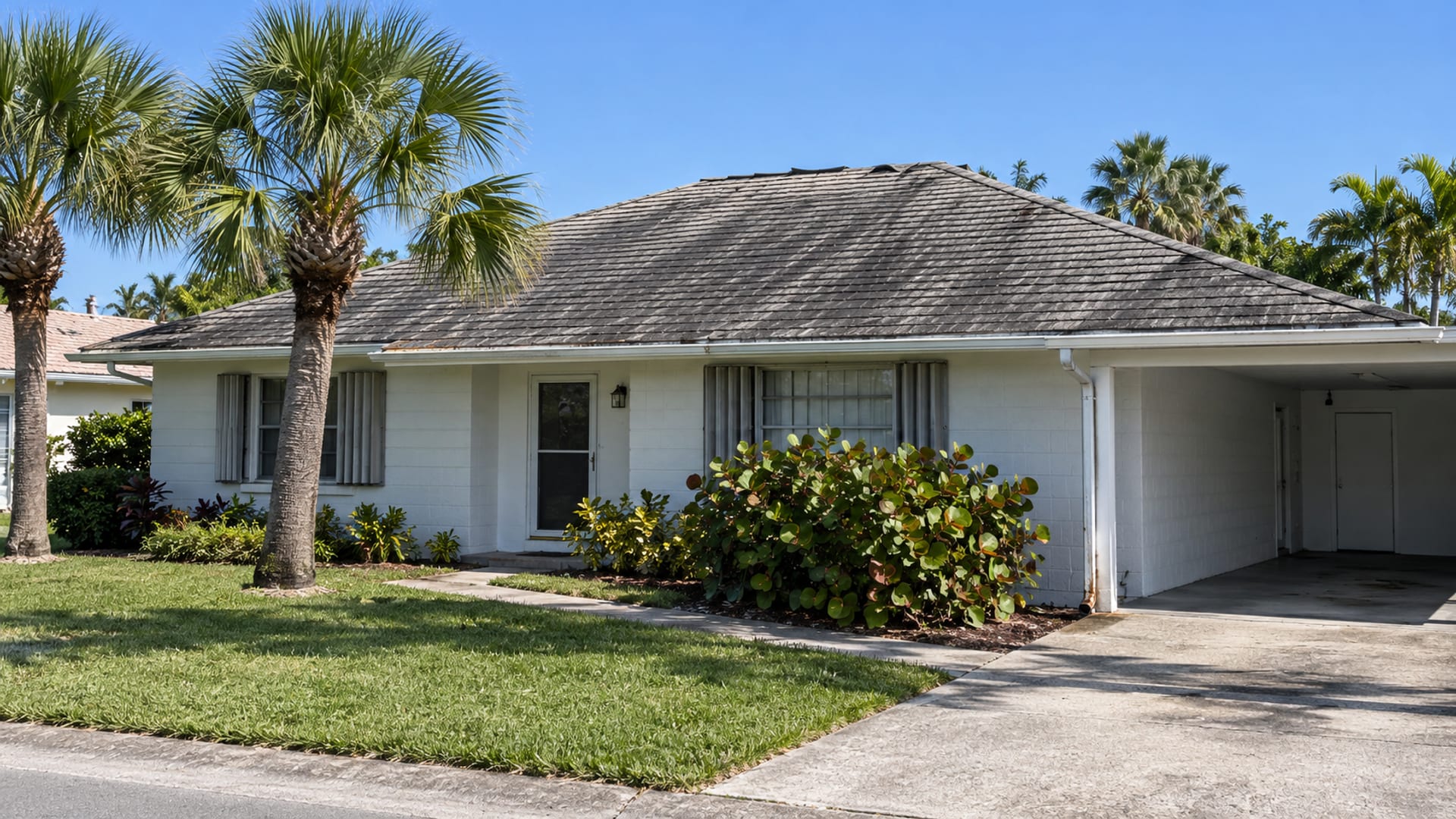
Florida has no statewide rule that every roof must be replaced at 15 or 20 years. An insurer can't refuse to write or renew a homeowners policy solely because the roof is less than 15 years old. Once a roof is at least 15 years old, the insurer must let you get an inspection from an authorized inspector, at your own expense, before it can require a new roof to issue or renew the policy. If that inspection shows at least five years of useful life left, the insurer can't refuse solely because of the roof's age, though it can still decline for other underwriting reasons. A roof claim is paid at replacement cost or actual cash value depending on your policy and its endorsements.
Key takeaways
- Under 15 yearsAn insurer can't refuse to write or renew a homeowners policy solely because of the roof's age.
- 15 years or olderThe insurer must let you get an authorized inspection, at your expense, before requiring a new roof.
- Five years of useful lifeIf the inspection shows at least five years left, the insurer can't refuse solely because of roof age.
- Other reasons still countThe insurer can decline for other underwriting reasons.
- ClaimsA roof claim is paid at replacement cost or actual cash value depending on your policy and endorsements.
Can a 15-, 20- or 25-year-old roof be insured in Florida?
Yes, it can be, but the roof's condition decides more than its age. The rule is in Fla. Stat. § 627.7011(5) (opens in a new tab), and it applies to homeowners policies issued or renewed on or after July 1, 2022.
For a roof under 15 years old, the insurer can't refuse to issue or renew the policy solely because of the roof's age. For a roof that's 15 years or older, including a 20- or 25-year-old roof, the insurer must allow you to have an authorized inspector look at it before requiring replacement as a condition of coverage. If the inspection shows five years or more of useful life remaining, the insurer may not refuse solely because of roof age.
That protection is narrow. The law also says it doesn't limit an insurer's ability to reject or non-renew a home that doesn't meet its underwriting criteria for other reasons, and it doesn't apply to mobile home policies or to policies that aren't considered homeowners policies. A roof with visible damage, active leaks or a short remaining life can still lead to a refusal.
Hover or tap a row to highlight it.
| Roof situation | What the rule says | Source |
|---|---|---|
| Less than 15 years old | The insurer can't refuse to issue or renew solely because of roof age | § 627.7011(5) (opens in a new tab) |
| 15 years or older | The insurer must allow an authorized inspection, at the homeowner's expense, before requiring replacement | § 627.7011(5) (opens in a new tab) |
| Inspection shows 5 or more years of useful life | The insurer can't refuse solely because of roof age | § 627.7011(5) (opens in a new tab) |
| Citizens, shingle roof over 25 years or tile and metal over 50 | Documentation of at least five years of remaining useful life | Citizens (opens in a new tab) |
How is roof age calculated?
Roof age runs from the last date on which 100% of the roof's surface was built or replaced under the building code in effect at the time, under § 627.7011(5) (opens in a new tab). If the roof was replaced in stages and the partial replacements eventually covered the whole surface, the age runs from the date of the first partial replacement.
That's why paperwork matters. A permit, a final inspection and a contractor's invoice showing when the whole roof was replaced give the insurer a date it can use. If you replaced half the roof after a storm and the rest later, keep the records for both jobs.
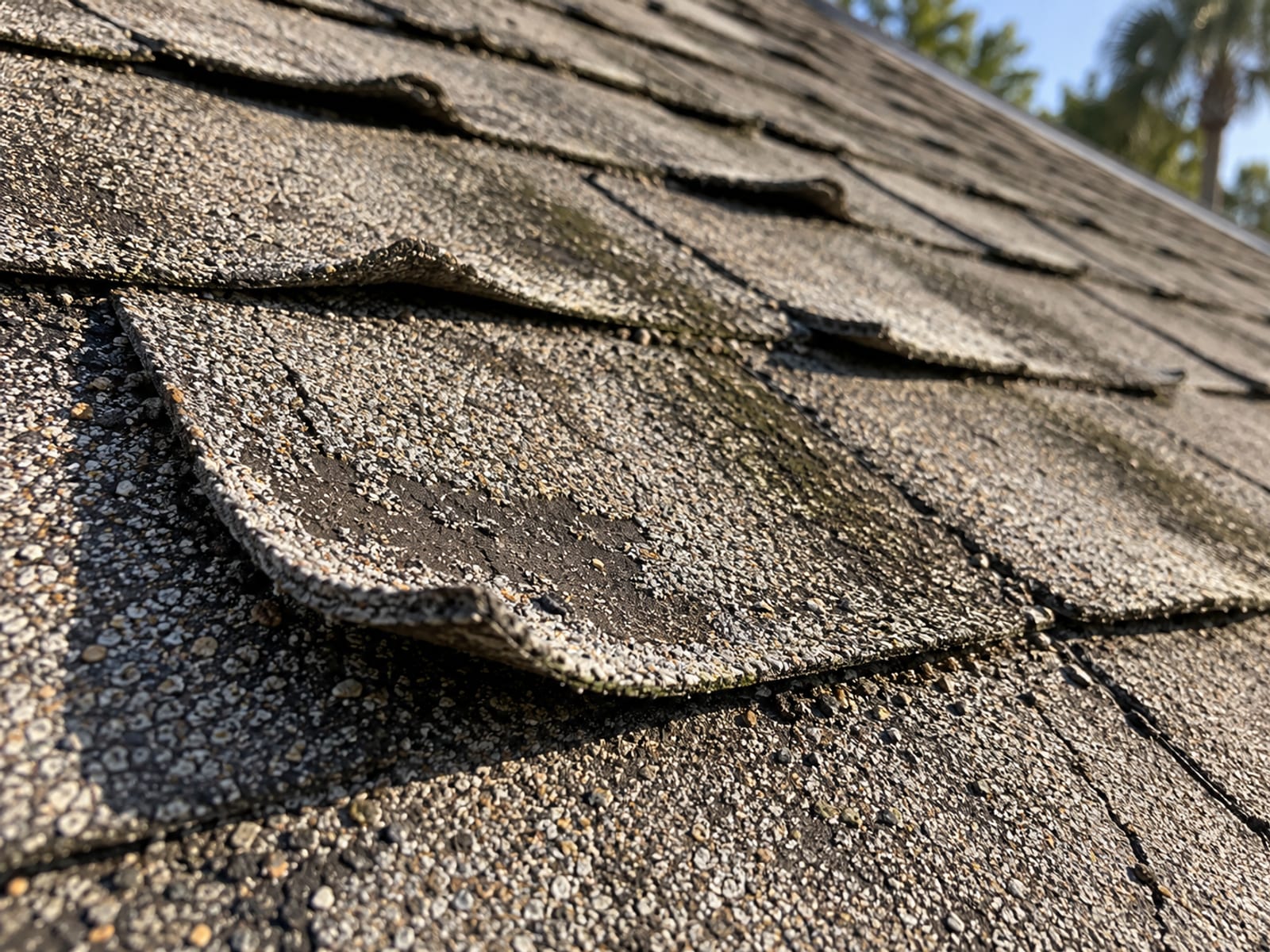
What inspection can change an insurer's decision?
Florida homeowners run into three different roof-related inspections, and each one answers a different question.
The statutory roof inspection answers how much useful life is left. It must be done by an authorized inspector, which the statute defines as someone the insurer approves who is a licensed home inspector, a certified building code inspector, a licensed general, building or residential contractor, a roofing contractor, a licensed professional engineer, another licensed design professional the statute names or another person or company the insurer recognizes as qualified. You pay for it. Ask the insurer which inspectors and report format it accepts before you book one.
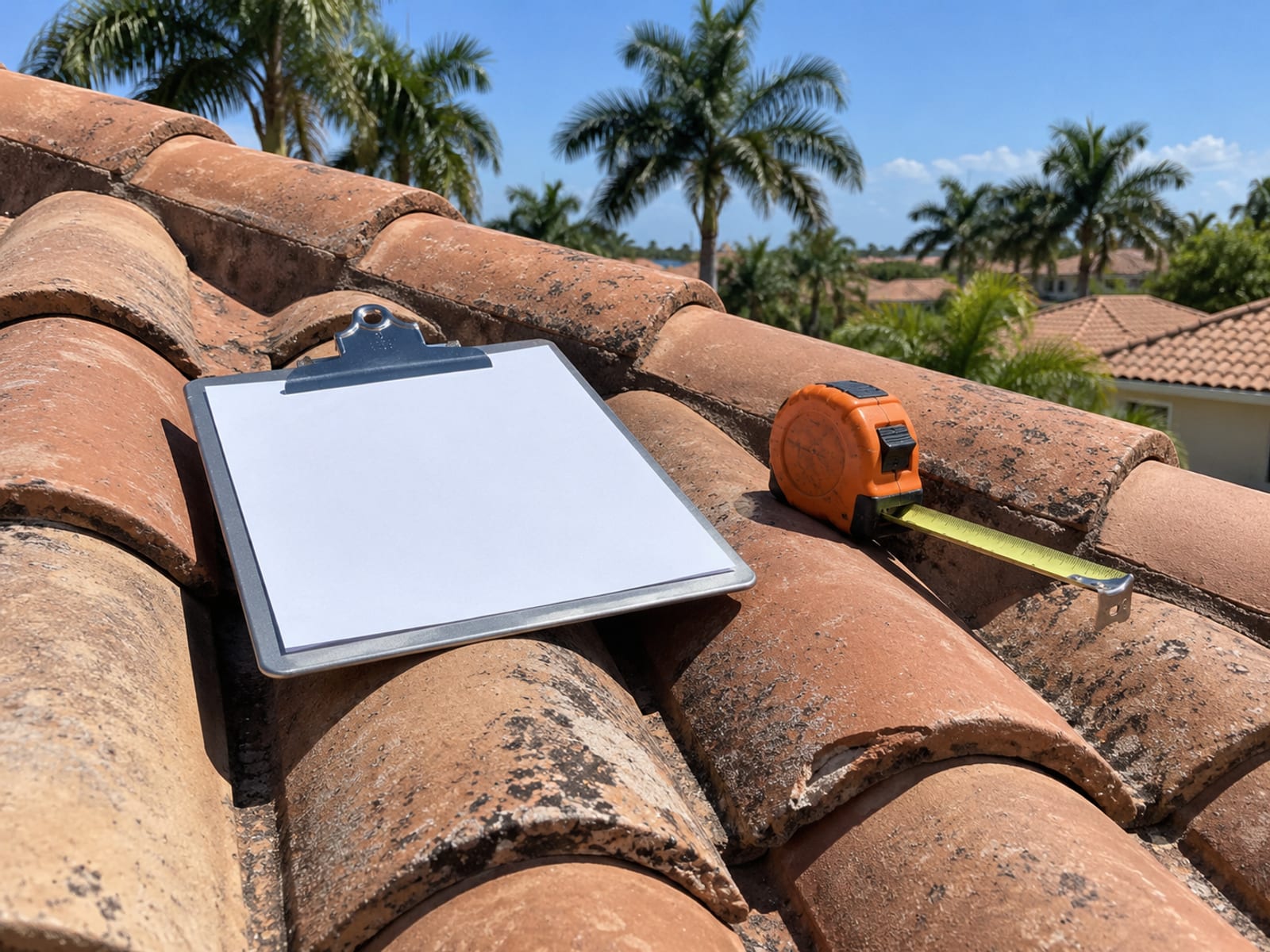
An underwriting inspection is the insurer's own look at the property before it issues or renews a policy. Insurers hire their own inspectors or inspection firms for this, and the company decides who to use and what qualifications they need, according to the Florida Department of Financial Services (DFS) (opens in a new tab). Older homes are often asked for a four-point inspection of the roof, plumbing, electrical wiring and heating and air, and the applicant pays for it. If an inspection like this led to a cancellation, our article on home insurance cancelled after an inspection covers the next steps.
A wind mitigation inspection answers a third question: what features help the home resist hurricane winds. The inspector records roof shape, roof covering, roof deck attachment, roof-to-wall connections and opening protection on the OIR-B1-1802, the Uniform Mitigation Verification Inspection Form, and you send it to your insurer for possible premium credits, according to DFS (opens in a new tab). It can lower a premium, but it isn't a roof-age inspection.
Hover or tap a row to highlight it.
| Inspection | What it answers | Who chooses the inspector |
|---|---|---|
| Statutory roof inspection | How much useful life the roof has left | You, from authorized inspectors the insurer approves |
| Underwriting inspection, including a four-point | Whether the home meets the insurer's underwriting standards | The insurer |
| Wind mitigation inspection | Which features resist hurricane winds, for possible credits | You, using a qualified inspector who completes the OIR-B1-1802 |
What happens if the roof has less than five years of useful life?
The roof-age protection in § 627.7011(5) (opens in a new tab) only applies when the inspection shows at least five years left. Below that, the insurer can apply its own underwriting standards, which may mean requiring replacement before it issues or renews the policy.
Citizens Property Insurance has its own written rule. Citizens requires documentation showing at least five years of remaining useful life for shingle and similar roofs older than 25 years, and for tile, slate, clay, concrete or metal roofs older than 50 years, according to Citizens' inspections page (opens in a new tab). When a roof has less than five years left, the owner must show proof of a full roof replacement before Citizens writes the policy. Citizens also requires a four-point inspection for homes more than 20 years old. The Citizens Property Insurance article covers its eligibility rules.
Will an old roof claim be paid at replacement cost or actual cash value?
It depends on your policy. Replacement cost pays to repair or replace the roof with similar materials, up to your limits, without subtracting for age. Actual cash value is the cost to repair or replace minus depreciation.
DFS gives an example in its Homeowners Insurance Toolkit (opens in a new tab): for a 17-year-old roof with a 20-year life expectancy, you've used 17 of the 20 years, so an actual cash value settlement pays for the remaining three years of value. That's the reason people ask what a 20-year-old roof is worth to an insurer. On a 20-year life expectancy, depreciation can leave little or nothing, so the policy's settlement terms matter more than ever on an older roof.
Even with replacement cost coverage, payment often comes in steps. On a dwelling insured at replacement cost, the insurer must first pay at least the actual cash value of the loss, less the deductible, and then pay the rest as the work is performed and expenses are incurred, under Fla. Stat. § 627.7011(3) (opens in a new tab). Our article on replacement cost vs actual cash value explains the two settlement methods.
Some policies carry an endorsement that settles the roof at actual cash value or uses a roof payment schedule based on age. Those terms come from your policy, not from a state table, so look for them on the declarations page and in the endorsements.
Separate roof deductibles
A Florida personal residential policy can include a separate roof deductible. It can't exceed the lesser of 2% of the dwelling limit or 50% of the cost to replace the roof, it applies only to claims adjusted at replacement cost, and it doesn't apply to roof losses from a hurricane, a tree fall or other hazard that punctures the roof deck, a total loss under the valued policy law or a repair of less than 50% of the roof, under Fla. Stat. § 627.701(10) (opens in a new tab). Once a roof deductible applies, no other deductible can be applied to the same covered peril. The insurer must show the deductible's actual dollar amount on the declarations page or renewal notice.
If a roof deductible applies to a claim, the insurer can limit the roof payment to actual cash value until you show reasonable proof that you paid the deductible, such as a canceled check or a signed financing agreement, under § 627.7011(3) (opens in a new tab).
What is Florida's 25 percent roof rule?
The 25 percent rule is a building code rule, not an insurance rule. Under the Florida Building Code, when more than 25% of a roof or roof section is repaired, replaced or recovered within 12 months, the rest of that roof or section generally has to be brought up to the current code as well.
A 2022 law carved out an exception. If the existing roof or roof section was built, repaired or replaced under the 2007 Florida Building Code or a later edition, only the portion being repaired, replaced or recovered has to meet the current code, even when the work covers 25% or more of the roof, under Fla. Stat. § 553.844(5) (opens in a new tab). Local governments can't amend that exception.
The rule affects the scope of work a permit requires, and that cost can connect to law and ordinance coverage. Before issuing a homeowners policy, an insurer must offer replacement cost coverage that includes costs to meet building laws and ordinances, which may be limited to 25% or 50% of the dwelling limit as you choose, under § 627.7011(1) (opens in a new tab). Whether a claim covers the damage itself still depends on your policy. Our article on whether homeowners insurance covers roof replacement covers the general rules.
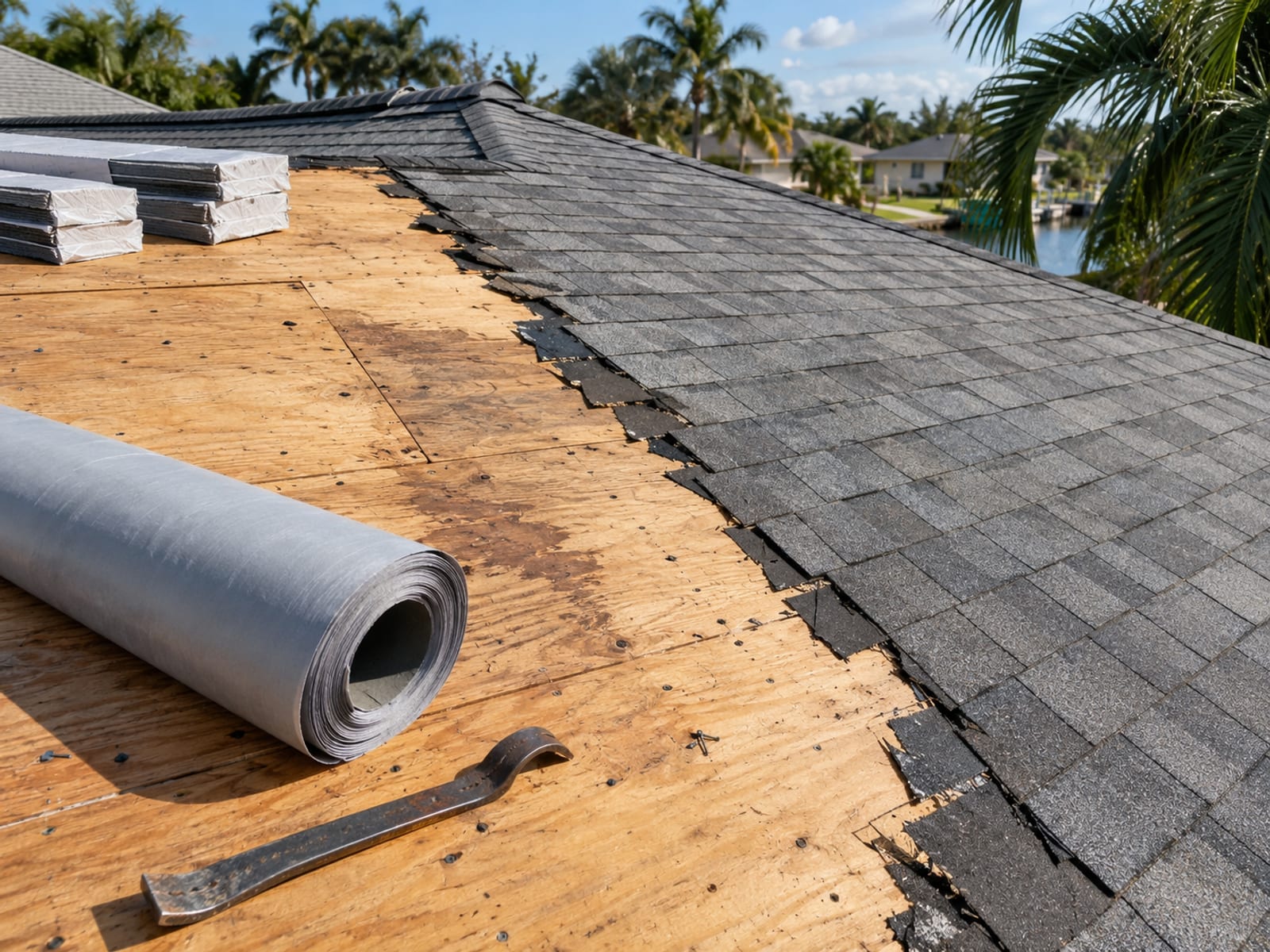
What is the new Florida law about roofs?
Several roof laws passed in quick succession, and each one changed something different:
- Senate Bill 2-D, effective May 26, 2022, created the 15-year and five-year roof inspection rule now in § 627.7011(5) (opens in a new tab), according to the Office of Insurance Regulation's 2023 Annual Report (opens in a new tab). It also restricted contractor solicitations for roof claims, according to DFS's summary of property insurance changes (opens in a new tab).
- Senate Bill 4-D, from the same May 2022 special session, created the 2007-code exception to the 25 percent rule in § 553.844(5) (opens in a new tab).
- Senate Bill 7052, effective July 1, 2023, clarified that once a roof deductible applies, no other deductible applies to the same covered peril.
- House Bill 1611, effective July 1, 2024, added roofing contractors to the inspectors an insurer may approve for roof useful-life inspections, according to DFS's summary of property insurance changes (opens in a new tab).
- House Bill 715, effective May 19, 2025, narrowed when you can cancel a roofing contract without penalty, according to the same DFS summary.
What should you do after a roof-related non-renewal?
Start with the notice. For a residential property policy, the insurer must give at least 120 days' written notice of a non-renewal, with the reason, under Fla. Stat. § 627.4133 (opens in a new tab). That window gives you time to act.
- Ask the insurer for its reason and the underwriting standard it used, in writing.
- If the reason is roof age alone and the roof is 15 or older, get an inspection from an authorized inspector the insurer approves.
- Send the inspection report, permits and replacement records to the insurer and ask it to reconsider.
- Contact another Florida agency to shop the home with other insurers.
- Ask whether the home qualifies for Citizens or a surplus lines policy if private insurers decline.
- Confirm the new policy starts on or before the day the old one ends.
If you think the insurer refused solely because of roof age after a passing inspection, contact the DFS Division of Consumer Services through its Insurance Consumer Helpline (opens in a new tab) at 1-877-693-5236. The Florida homeowners insurance article covers renewals, rates and the wider market.
What roof offers should you avoid?
Florida restricts how roofing contractors can pitch insurance work. A contractor can't offer you a rebate, gift, gift card, cash, coupon, deductible waiver or anything else of value in exchange for inspecting your roof, and contractors can't submit a claim directly to your insurer on your behalf, according to the DFS contractor and residential property FAQ (opens in a new tab). You're responsible for the deductible, and a contractor can't waive it, rebate it or offer free services to make up for it.
Roofing contracts must include a notice about those rules. If the notice is missing, you can void the contract within 10 days after signing it, according to DFS. Separately, since May 19, 2025, the 10-day right to cancel a roofing contract without penalty applies only when the contract is signed within 180 days of an event covered by a governor's state of emergency, for a home inside the declared area, according to DFS's summary of House Bill 715 (opens in a new tab).
Check any roofer's license through the Department of Business and Professional Regulation's MyFloridaLicense search (opens in a new tab) and ask for proof of insurance before you sign.

Can My Safe Florida Home help with the roof?
My Safe Florida Home offers free hurricane mitigation inspections and matching grants. For each $1 a homeowner spends on eligible improvements, the program provides $2, up to $10,000, with exceptions for low-income homeowners, according to the DFS mitigation page (opens in a new tab). Eligibility includes a homestead home insured at $700,000 or less, an initial construction permit issued before January 1, 2008, an acceptable hurricane mitigation inspection after July 1, 2008, and access for a final inspection.
Senate Bill 1452, effective June 26, 2026, made clear that roof improvements, including replacing the roof covering, are grant eligible when the final hurricane mitigation inspection identifies them, according to DFS (opens in a new tab). The same law replaced the townhouse category with attached homes of no more than three stories. Funding and program rules can change, so apply through the official program and confirm what your inspection report lists before you start work.
Questions to ask your agent or insurer
- What roof age do you have on file, and how did you calculate it?
- Which authorized inspectors and report formats will you accept?
- Will you accept an inspection showing at least five years of useful life?
- Is the roof covered at replacement cost, actual cash value or a payment schedule?
- Does the declarations page show a separate roof deductible, and what is it in dollars?
- Is law and ordinance coverage included, and at 25% or 50%?
- Does the home qualify for wind mitigation credits, and do you need a new OIR-B1-1802?
- What notice and deadline apply if you non-renew?
If you need an agency to shop the home, Riskado's directory lists insurance agencies across the US, including Florida, by city and by category. Check any agent with the Florida insurance license lookup (opens in a new tab) before you send documents.
Check what you know about Florida roof age and insurance
Frequently asked questions
Who pays for the roof inspection?
You do. Under § 627.7011(5) (opens in a new tab), the inspection for a roof 15 years or older is performed at the homeowner's expense. If the insurer orders its own underwriting inspection, the insurer hires that inspector.
Does a passing inspection guarantee my policy will renew?
No. A report showing five or more years of useful life stops a refusal based solely on roof age, but the insurer can still decline for other underwriting reasons, such as roof damage or another problem with the home.
Can a roofer cover my deductible?
No. A contractor can't waive, pay or rebate your insurance deductible, according to the DFS contractor FAQ (opens in a new tab). The deductible is the policyholder's responsibility.
Does the 25 percent rule mean my insurer must pay for a whole new roof?
No. It's a building code rule about the scope of repair work, not a payment rule. Whether the policy pays for code-required work depends on your law and ordinance coverage and the rest of the policy terms.
Keep the roof file ready
Keep the permit, final inspection and invoices from the last full roof replacement, your most recent wind mitigation form and any roof inspection reports in one place. When a renewal notice mentions the roof, those records answer most of what the insurer will ask, and they give an agent what it needs to shop the home quickly.
Key terms
Tap a term to see what it means.
Authorized inspector. An inspector the insurer approves who holds one of the licenses listed in Florida's roof-age statute, such as a home inspector, building code inspector, contractor, roofing contractor or engineer.
Useful life. How many more years a roof can be expected to perform, as estimated by an inspection.
Actual cash value. The cost to repair or replace damaged property minus depreciation.
Replacement cost. The cost to repair or replace damaged property with similar materials, without subtracting for depreciation.
Depreciation. The reduction in value for age and wear that is subtracted in an actual cash value settlement.
Roof deductible. A separate deductible for roof losses, capped at the lesser of 2% of the dwelling limit or 50% of the roof replacement cost.
Four-point inspection. An inspection of the roof, plumbing, electrical wiring and heating and air on an older home.
Law and ordinance coverage. Coverage for added costs to meet building codes when repairing or rebuilding.
25 percent rule. The Florida Building Code rule on repairing, replacing or recovering more than 25% of a roof or roof section within 12 months.