Massachusetts Homeowners Insurance: What It Costs, What It Covers, and Why Premiums Are Rising
Riskado
No Massachusetts law requires you to buy homeowners insurance, but your mortgage lender can require it as a condition of the loan, according to the Massachusetts Division of Insurance (opens in a new tab) (checked October 1, 2026). A standard policy generally covers the house, other structures, your belongings, additional living expenses, personal liability and medical payments to others, subject to its limits, deductibles and exclusions. Flood and earthquake damage are commonly excluded, and sewer backup may need an endorsement. The average Massachusetts HO-3 premium was $2,134 in 2023, compared with $1,737 countrywide, according to the NAIC 2023 Homeowners Report (opens in a new tab). That is historical statewide data, not a quote for your home.
Key takeaways
- Is it required?No Massachusetts law requires you to buy homeowners insurance, but your mortgage lender can require it as a condition of the loan.
- What a policy coversThe house, other structures, your belongings, additional living expenses, personal liability and medical payments to others.
- Common exclusionsFlood and earthquake damage are commonly excluded, and sewer backup may need an endorsement.
- What it costsThe average Massachusetts HO-3 premium was $2,134 in 2023, compared with $1,737 countrywide.
How much does homeowners insurance cost in Massachusetts?
The most recent national comparison puts Massachusetts above the U.S. average. For owner-occupied HO-3 policies, the most common homeowners form, the average annual premium in 2023 was $2,134 in Massachusetts and $1,737 countrywide, according to the NAIC (opens in a new tab). That is a difference of $397, or about 22.9%.
The Division of Insurance tracks the state market on its own measure. The average traditional homeowners premium rose from $1,818 in 2022 to $2,054 in 2023, according to the Division's 2023 Massachusetts Market for Home Insurance (opens in a new tab) report. The two figures come from different reports with different measures, and both show Massachusetts premiums above $2,000 in 2023.
An average blends every home in the state, from a city two-family to a cottage on Nantucket. Your own premium depends on your home's location, age, construction, condition, coverage amounts, deductibles and claims history. The useful number for you is a quote on your address, with the deductibles and coverages spelled out.
Is homeowners insurance mandatory in Massachusetts?
Not by state law. There is no Massachusetts law requiring you to insure your home, according to the Division of Insurance (opens in a new tab). If you have a mortgage, though, the loan agreement can set insurance as a condition, and that contract is what you have to satisfy before closing or refinancing.
Massachusetts limits what a lender can demand. Under M.G.L. c. 175, § 193E (opens in a new tab), a lender cannot require you to buy insurance through a particular insurance company, agent or broker. A lender also cannot require coverage above the replacement cost of the dwelling, according to the Division of Insurance (opens in a new tab). You choose the insurer and agency; the lender sets the minimum terms the policy has to meet.
If you are buying a home, start the insurance search early. A lapse between policies, or a closing date that arrives before you have a binder, creates problems with the lender that are easier to avoid than fix.

What does a standard homeowners policy cover?
A homeowners package commonly includes six parts, according to the Division of Insurance (opens in a new tab):
- Dwelling coverage for the house itself.
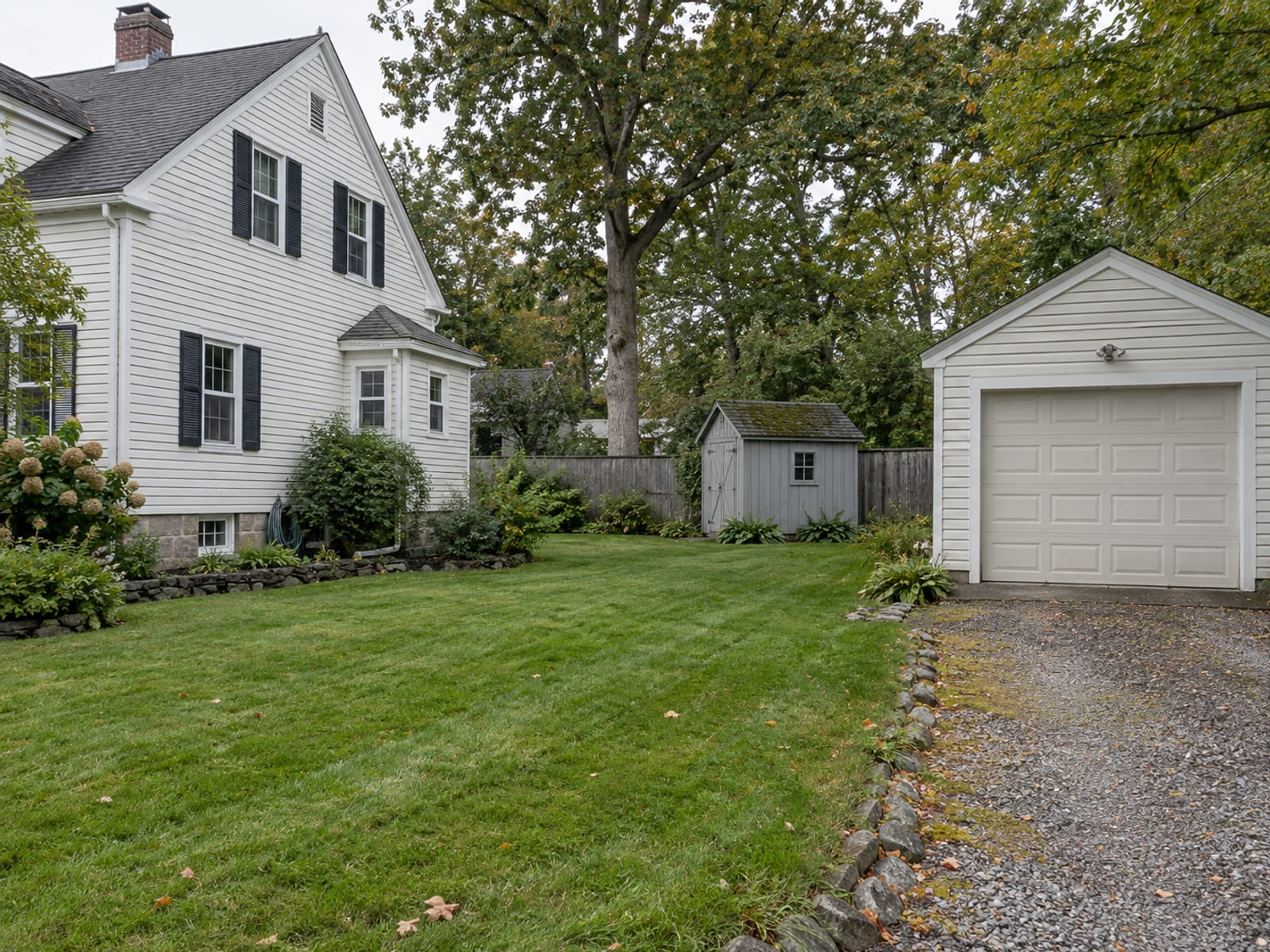
- Other structures coverage for things such as a detached garage or shed.
- Personal property coverage for your household belongings.
- Loss of use, or additional living expenses, when a covered loss makes the home unlivable.
- Personal liability for covered claims that you caused bodily injury or property damage to someone else.
- Medical payments for certain injuries to other people, subject to the policy.
The policy form shapes how each part works. HO-2, HO-3 and HO-5 forms differ in which perils they cover, and the declarations page shows whether the dwelling is settled at replacement cost or actual cash value. Ask your agent which form you are being offered and how losses are valued.
What does homeowners insurance usually exclude?
Common exclusions and limitations, according to the Division's homeowners FAQ (opens in a new tab), include:
- Flood and storm surge. Standard home insurance generally excludes flood damage. Separate flood insurance is available through the NFIP or private insurers. Since January 1, 2026, insurers must include a flood-exclusion notice with home policies issued or renewed, under the Division's Filing Guidance Notice 2025-R (opens in a new tab).
- Earthquake and other earth movement. Standard homeowners insurance does not cover earthquake damage, according to FEMA (opens in a new tab). Coverage may be available separately or by endorsement.
- Wear, deterioration, neglect and poor maintenance.
- Sewer or drain backup, unless the policy includes it or you add an endorsement. Sewer backup coverage does not replace flood insurance; they respond to different events.
- Limits on special property, business property, short-term rentals, vacant homes and secondary residences.
If you run a home business, rent the house out part of the year, or own a seasonal home, ask how the policy treats that use before a claim tests it. Riskado's guide to Massachusetts flood insurance covers the flood side in more detail.
Why are Massachusetts homeowners premiums rising?
The documented increase comes from the Division's 2023 home insurance report (opens in a new tab). Total Massachusetts home insurance premium rose from about $2.978 billion in 2022 to about $3.505 billion in 2023. Traditional homeowners premium rose from about $2.755 billion to about $3.262 billion, and the average traditional homeowners premium rose from $1,818 to $2,054.
Hover or tap a row to highlight it.
| Measure | 2022 | 2023 |
|---|---|---|
| Total home insurance premium | About $2.978 billion | About $3.505 billion |
| Traditional homeowners premium | About $2.755 billion | About $3.262 billion |
| Average traditional homeowners premium | $1,818 | $2,054 |
Rates are based on insurers' projections of future claims and expenses, built from prior experience and loss and expense trends, according to the same report. Insurers file their rates and policy forms with the Division, and the Division's rate filing process (opens in a new tab) runs through the SERFF system.
Renewal changes vary by insurer, territory, policy form, property characteristics and effective date, so one statewide percentage will not explain your bill. If your renewal went up, ask your agency or insurer three questions: which approved filing applies, when it took effect, and which rating factors changed for your home.
What should coastal homeowners ask about wind and named-storm deductibles?
On the coast, the deductible for wind and storm damage can be a percentage of your dwelling coverage rather than a flat dollar amount. The higher your dwelling limit, the larger that dollar amount becomes.
At the Massachusetts FAIR Plan, a mandatory percentage windstorm or hail deductible applies to HO-2, HO-3 and HO-5 policies in Barnstable, Dukes and Nantucket counties, and to other Massachusetts properties within one-half mile of the coast, according to MPIUA's coastal proximity rules (opens in a new tab). The minimum named-storm deductible in MPIUA's producer quick reference (opens in a new tab) ranges from 1% to 5% in the listed coastal territories, depending on:
- Your dwelling (Coverage A) amount
- Whether the home is in Dukes or Nantucket counties
- Whether it is in Barnstable County
- Whether it is within one-half mile of the coast
- Whether it is elsewhere in Massachusetts
MPIUA's named-storm deductible rule (opens in a new tab) also sets fixed-dollar deductibles for some properties more than one-half mile from the coast. Voluntary-market insurers set their own deductible rules. Whatever the source, ask the agency to state the deductible as a dollar figure for your dwelling limit, and to tell you which events trigger it.

What happens if your insurer cancels or nonrenews your policy?
Cancellation during the policy term is limited to specific reasons under M.G.L. c. 175, § 99 (opens in a new tab), according to the Division of Insurance:
- Nonpayment of premium
- Material misrepresentation or fraud
- Conviction of a crime arising from acts that increase the insured hazard
- Willful or reckless acts or omissions that increase the hazard
- Physical changes that make the property uninsurable, including certain prolonged vacancy
- A determination by the Commissioner that continuing the policy would violate the law
For nonpayment, at least 10 days' written notice is required, according to the Division's consumer guide to homeowners insurance (opens in a new tab).
Nonrenewal at the end of the term works differently. Under M.G.L. c. 175, § 193P (opens in a new tab), the insurer must give written notice at least 45 days before the policy expires, and the notice must state the specific reasons. If the notice goes to your agent or broker, that person generally must send you a copy within 15 days. Use those 45 days to start looking for replacement coverage, and keep every notice you receive.
Hover or tap a row to highlight it.
| Event | Period | Source |
|---|---|---|
| Cancellation for nonpayment | At least 10 days' written notice | Division of Insurance consumer guide (opens in a new tab) |
| Nonrenewal | Written notice at least 45 days before the policy expires, with specific reasons | M.G.L. c. 175, § 193P (opens in a new tab) |
| Agent or broker copy of a nonrenewal notice | Generally within 15 days | M.G.L. c. 175, § 193P (opens in a new tab) |
| Insurer response to a Division complaint | Generally 30 days, in writing | Division of Insurance complaint process (opens in a new tab) |
What is the Massachusetts FAIR Plan, and when is it relevant?
The Massachusetts Property Insurance Underwriting Association (MPIUA), called the Massachusetts FAIR Plan, provides basic property insurance for eligible applicants who cannot get coverage in the voluntary market, according to MPIUA (opens in a new tab). It offers programs for homeowners, dwelling fire and commercial property, under the basic property insurance rules in M.G.L. c. 175C, § 1 (opens in a new tab).
FAIR Plan coverage follows its own program rules, forms, limits, exclusions, deductibles and eligibility conditions, and acceptance is not automatic. A licensed producer can confirm whether voluntary coverage is available first, check MPIUA eligibility, and walk you through gaps such as flood, earthquake, sewer backup, liability limits and named-storm deductibles.
How do claims history and CLUE reports affect your policy?
Insurers can ask about prior property or liability losses, and CLUE reports carry a home's property-loss history for insurers reviewing applications, according to the Division's overview of insurance in the residential real estate transaction (opens in a new tab). Underwriting can also weigh location, age, construction, protection class, structure type, condition, vacancy and coastal exposure. A past claim affects underwriting but does not by itself make a home uninsurable; eligibility depends on the insurer's approved rules and the facts. Ask the agency how the insurer uses prior claims and whether it uses credit-related information, and ask for the reason in writing if it declines or rates you up.
What protections apply when you file a claim?
Give your insurer notice right away, protect the property from further damage, document temporary repairs, keep receipts and prepare a list of damaged or stolen property, according to the Division's guide to obtaining payment for your home insurance claim (opens in a new tab).
Under M.G.L. c. 176D, § 3 (opens in a new tab), unfair claim settlement practices include misrepresenting facts or policy terms, failing to respond reasonably promptly, refusing payment without a reasonable investigation, failing to affirm or deny coverage within a reasonable time after proof of loss, failing to settle promptly and fairly when liability is reasonably clear, and failing to explain a denial or compromise offer. Your policy's notice and proof-of-loss provisions set your own deadlines, so read them, and ask the insurer for a written explanation of any delay or denial.
If a dispute continues, contact the agent and insurer first, then file through the Division's complaint process (opens in a new tab) online or with the complaint form (opens in a new tab) by email, mail or fax. Include the policy and claim numbers, names and correspondence. The insurer generally has 30 days to respond in writing. The Division can require corrective action when legal or contractual obligations were not met, but it cannot act as your lawyer, value your claim or order payment when the insurer followed the law and the policy. The complaint process is not for matters in litigation or handled by an attorney.

Questions to ask an insurance agency
Before you renew or switch, verify the agency through the Division's license verification service (opens in a new tab) or the Massachusetts insurance license lookup (opens in a new tab), then ask:
- What policy form is this, and is the dwelling settled at replacement cost or actual cash value?
- What perils are covered for the dwelling and for personal property?
- Are flood, storm surge, earthquake, sewer backup and earth movement excluded?
- Is sewer or drain backup included, and what are its limits?
- What wind, hail or named-storm deductible applies, and what is it in dollars for this house?
- How are detached structures, a home business, short-term rental, seasonal use or a second home treated?
- How are prior claims and CLUE reports used?
- What property conditions could affect eligibility or renewal?
- If voluntary coverage is not available, is MPIUA an option?
Bring the declarations page from your current policy, recent renewal and nonrenewal notices, and basic facts about the home such as age, construction, roof and updates. Riskado's Massachusetts agency directory lists agencies by city and by category.
Check what you know about Massachusetts homeowners insurance
Frequently asked questions
Can my lender make me use its preferred insurance company?
No. M.G.L. c. 175, § 193E (opens in a new tab) prohibits a lender from requiring you to place insurance through a particular insurer, agent or broker. The lender can still set minimum coverage terms in the loan agreement.
Does homeowners insurance cover storm surge on the coast?
Flood and storm-surge damage are generally excluded from standard homeowners policies, according to the Division of Insurance (opens in a new tab), and need separate flood coverage. Ask your agent how wind damage from the same storm would be handled and which deductible would apply.
How much notice do I get before a nonrenewal?
At least 45 days before the policy expires, with the specific reasons stated, under M.G.L. c. 175, § 193P (opens in a new tab). If your agent receives the notice, they generally must send you a copy within 15 days.
Does the FAIR Plan cover everything a regular policy does?
MPIUA provides basic property insurance under its own program forms, limits and deductibles, according to MPIUA (opens in a new tab). Ask a licensed producer to compare its coverage with a voluntary-market policy line by line.
Before you renew or buy
Start with what you already have: the declarations page, any renewal or nonrenewal notice, and your lender's insurance requirement if you have a mortgage. With those, an agency can tell you which policy form you hold, what your deductibles are in dollars, which exclusions matter for your home, and what options exist if your current insurer will not renew.
Terms used in this guide
Tap a term to see what it means.
HO-3. The most common homeowners policy form for owner-occupied homes.
Declarations page. The page of a policy that lists the coverages, limits, deductibles and how losses are valued.
Replacement cost. A settlement method that pays to repair or replace without a deduction for depreciation, subject to the policy.
Actual cash value. A settlement method that pays replacement cost minus depreciation.
Named-storm deductible. A deductible, often a percentage of the dwelling limit, that applies to damage from a named storm.
Nonrenewal. An insurer's decision not to renew a policy at the end of its term.
MPIUA (Massachusetts FAIR Plan). The Massachusetts Property Insurance Underwriting Association, which provides basic property insurance for eligible applicants.
CLUE report. A record of a home's property-loss history that insurers review with applications.