Co-op Insurance in NYC: What the Building Covers, What You Need, and What Boards Require
Riskado
A New York City co-op shareholder usually needs an individual co-op or HO-6-style policy in addition to the building's master policy, according to Triple-I (opens in a new tab) and the New York Department of Financial Services (DFS) (opens in a new tab). The corporation's policy covers the building and common areas, and in some buildings it also covers the original fixtures and finishes in your apartment. Your own policy can cover your belongings, the improvements and fixtures you are responsible for, personal liability, additional living expenses and certain loss assessments, as the policy wording allows. Your proprietary lease, bylaws, house rules, lender instructions and the master-policy description set the actual line, so get those documents before you choose coverage.
Key takeaways
- Two policiesA NYC co-op shareholder usually needs an individual co-op or HO-6-style policy in addition to the building's master policy.
- The master policyThe corporation's policy covers the building and common areas, and in some buildings the original fixtures and finishes in your apartment.
- Your policyIt can cover your belongings, the improvements and fixtures you are responsible for, personal liability, additional living expenses and certain loss assessments, as the policy wording allows.
- Where the line sitsYour proprietary lease, bylaws, house rules, lender instructions and the master-policy description set the actual line.
- First stepGet those documents before you choose coverage.
What do you own when you buy a co-op?
You buy shares in a corporation, and the shares come with a proprietary lease that gives you the right to live in a particular apartment, according to the New York Attorney General (opens in a new tab). The corporation owns the building.
A condominium works differently. A condo buyer owns the apartment as real property plus an undivided interest in the common elements, per the Attorney General's senior housing guide (opens in a new tab). A co-op shareholder does not own the apartment as a separate parcel of real property in the same way, and that difference is why the insurance is split between the corporation and the shareholder.
What does the building's master policy cover?
A master policy protects the building structure and shared areas, such as the roof, basement, elevators, boiler and walkways, along with common-area liability, per Triple-I (opens in a new tab).
Inside your apartment, the boundary varies from building to building. In some buildings the corporation's policy covers the apartment as originally built, including standard fixtures. In others it covers only bare walls, floors and ceilings, which leaves items like cabinets, built-in appliances, plumbing, wiring and bathroom fixtures to the shareholder. No single New York City rule sets this line; your governing documents and the master policy do. Ask the managing agent for the master-policy summary and for the building's description of what is "walls-in" property.
What does your individual co-op or HO-6 policy cover?
DFS (opens in a new tab) describes ISO Form HO-6 as the policy designed for condominium and cooperative apartments, and a DFS opinion (opens in a new tab) says insurers may use variations approved for New York. Depending on the policy and your building's documents, an individual policy can cover:
- Personal property and contents.
- Additions, alterations, improvements and betterments assigned to you.
- Interior walls, fixtures and appliances you are responsible for.
- Personal liability for injuries or property damage that start in your unit.
- Additional living expenses, or loss of use, after a covered loss.
- Certain loss assessments from a covered loss.
Water backup, high-value property and other limited risks may need separate coverage or an endorsement, per Triple-I (opens in a new tab). The issued policy and its endorsements set the covered property, causes of loss, exclusions, settlement method and limits.
Settlement method is worth asking about for each category. DFS (opens in a new tab) explains the difference between replacement cost, which pays the full cost to replace an item, and actual cash value, which subtracts depreciation.
What is loss assessment coverage?
A co-op corporation can charge shareholders an assessment when a building or common-area loss goes beyond the master policy's limits, when the master policy has a deductible passed through to shareholders, or in another situation the governing documents allow. Loss assessment coverage on your policy may reimburse your covered share of an assessment that results from a covered loss. Triple-I (opens in a new tab) gives the example of a lobby fire for which all unit owners are assessed.
Coverage depends on the wording. A policy may require direct physical loss from a covered peril, and it may exclude assessments that come from uncovered causes, government charges or fines. If a large master-policy deductible worries you, ask your agent whether the policy covers an assessment for that deductible and what limit applies.
Who pays after water damage between apartments?
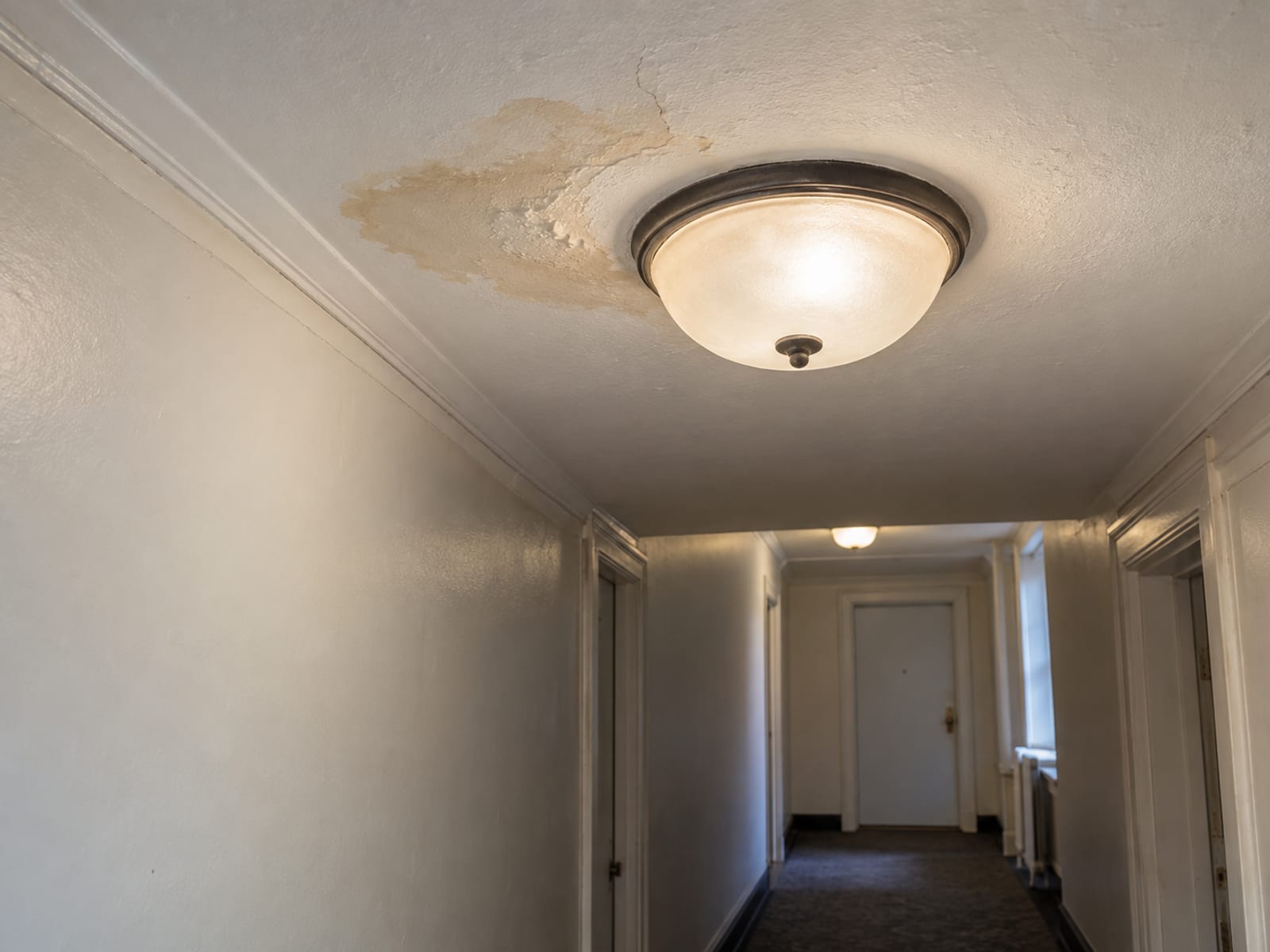
The cause of the loss, the damaged property, the proprietary lease, the building's rules, the master policy, your policy and any negligence all play a part, according to Triple-I (opens in a new tab) and DFS (opens in a new tab). The place where a leak starts does not settle who pays.
The master policy may respond to damage to common building property. Your policy may respond to your belongings, interior elements you are responsible for, improvements, liability or additional living expenses. Because a standard co-op or condo policy may not cover water or sewer backup, those causes may call for separate coverage. If a leak affects more than one apartment, the policies and governing documents have to be read side by side.
Can a NYC co-op board require insurance?
Boards commonly ask shareholders for proof of individual property and liability insurance, and the requirement belongs to the building. It might address:
- A minimum liability limit.
- Personal-property or improvements coverage.
- Coverage for your leasehold interest.
- A certificate of insurance.
- The corporation's or managing agent's status on the policy.
- Notice of cancellation or expiration.
- Insurance for alterations or construction work.
Authority to require shareholder insurance should be specifically provided in the proprietary lease, and a requirement based only on house rules may not be enforceable, according to a 2010 legal commentary in Cooperator News (opens in a new tab). A 2025 New York court decision (opens in a new tab) addressed a proprietary-lease provision on required homeowner's insurance and what follows when a shareholder does not comply. The Attorney General says co-op boards must follow the bylaws, proprietary lease, certificate of incorporation and house rules, per its guide for co-op directors (opens in a new tab).
One building's liability limit is not a citywide rule. Take the exact requirement from your proprietary lease, bylaws, house rules, alteration agreement, board, managing agent or lender.

What documents should you review?
The Attorney General recommends reading the offering plan and governing documents (opens in a new tab) before you buy. For insurance, collect these:
- Proprietary lease.
- Bylaws.
- House rules.
- Offering plan.
- Alteration agreement.
- The board's or managing agent's insurance requirement.
- Master-policy summary or description.
- Current certificate-of-insurance requirements.
- Lender insurance instructions.
- An inventory of your personal property.
- Records of renovations, improvements, fixtures and appliances.
- Your policy's declarations and endorsements.
- Renewal, cancellation and expiration dates.
Documents to gather before you buy or renew
- Building rulesProprietary lease, bylaws, house rules, offering plan and alteration agreement.
- Insurance requirementsThe board's or managing agent's insurance requirement, the master-policy summary or description, current certificate-of-insurance requirements and lender insurance instructions.
- Your belongingsAn inventory of your personal property, plus records of renovations, improvements, fixtures and appliances.
- Your policyYour policy's declarations and endorsements, and the renewal, cancellation and expiration dates.
What happens if coverage lapses?
The consequences depend on your proprietary lease, the board's documents, your lender and the enforcement terms that apply. The 2025 court decision (opens in a new tab) is one example of a lease provision tied to required insurance and the results of falling out of compliance. Read the lease's insurance clause for the notice and cure terms, and ask the managing agent how proof of coverage is tracked and what notice the building expects at renewal or cancellation.
What did New York HO-6 policies average?
New York's average HO-6 premium was $637 in 2023, from total premium of $53,662,399 across 84,181.7 reported exposures, according to the NAIC 2023 Homeowners Report (opens in a new tab). The report also breaks the average out by amount of insurance:
Hover or tap a row to highlight it.
| Amount of insurance | 2023 average premium | Source |
|---|---|---|
| All reported amounts (statewide) | $637 | NAIC 2023 Homeowners Report (opens in a new tab) |
| Under $9,999 | $392 | NAIC 2023 Homeowners Report (opens in a new tab) |
| $10,000 to $14,999 | $491 | NAIC 2023 Homeowners Report (opens in a new tab) |
| $20,000 to $24,999 | $435 | NAIC 2023 Homeowners Report (opens in a new tab) |
| $50,000 to $59,999 | $653 | NAIC 2023 Homeowners Report (opens in a new tab) |
| $100,000 to $124,999 | $815 | NAIC 2023 Homeowners Report (opens in a new tab) |
| $200,000 and over | $1,149 | NAIC 2023 Homeowners Report (opens in a new tab) |
These are historical New York averages, not NYC quotes and not a suggested coverage amount. A licensed agent can price a policy for your apartment.
What should you ask an agent?
Questions drawn from DFS (opens in a new tab) and the NAIC (opens in a new tab):
- What type of policy is this, and is it written for a cooperative apartment?
- Does it cover improvements, betterments, interior walls, fixtures, appliances and built-ins?
- Which causes of loss are covered, and which are excluded?
- Are contents covered at replacement cost or actual cash value?
- Which categories of property have special limits?
- Does it include personal liability and medical payments?
- Does it provide additional living expenses if the apartment becomes unlivable?
- How does loss assessment coverage work, and does it reach a master-policy deductible?
- Are flood, sewer backup, drain backup and water backup covered or excluded?
- What does the board or managing agent need in the certificate wording?
- How are cancellations, nonrenewals and proof-of-coverage requests handled?
- What endorsements exist for high-value property, renovations or a home business?
For a local agent to talk these through with, our directory lists insurance agencies across the US by city and category, including New York.
Check what you know about NYC co-op insurance
Frequently asked questions
Do co-op owners need homeowners insurance?
Usually, a shareholder needs an individual co-op or HO-6-style policy alongside the master policy. The proprietary lease, bylaws, lender and board documents set the requirement for your building.
Does HO-6 mean every policy has the same coverage?
No. DFS (opens in a new tab) identifies ISO HO-6 as the form designed for condominiums and cooperative apartments, and insurers may use variations approved for New York. Compare the issued policy and its endorsements, not the label.
Does the lender require insurance?
A lender may give instructions about insuring the shares and proprietary lease. Ask the lender for them in writing and give a copy to your agent.
Does co-op insurance cover water damage?
It depends on the cause, the damaged property, negligence, the proprietary lease, the master policy and your own policy. Ask your agent how your policy treats a leak that starts in your unit and damages a neighbor's, and whether water backup needs a separate endorsement.
Your next step
Before you buy or renew, read your proprietary lease's insurance clause, ask the managing agent for the master-policy summary, and bring both to a licensed agent.
Terms used in this guide
Tap a term to see what it means.
Proprietary lease. The lease that comes with co-op shares and gives you the right to live in a particular apartment.
Master policy. The corporation's policy on the building structure and shared areas.
HO-6. The ISO form designed for condominium and cooperative apartments; insurers may use variations approved for New York.
Loss assessment. A charge a co-op corporation can pass to shareholders when a loss goes beyond the master policy's limits; your policy may reimburse your covered share.
Betterments and improvements. Additions and alterations to your unit that your individual policy may cover.
Additional living expenses. Coverage for temporary housing costs when a covered loss makes the apartment unlivable.
Replacement cost. A settlement method that pays the full cost to replace an item.
Actual cash value. A settlement method that subtracts depreciation.