New York Flood Insurance: Who Needs It, What It Costs, and What the $250,000 Cap Means
Riskado
Standard New York homeowners and renters policies generally do not cover flood damage, according to the New York Department of Financial Services (opens in a new tab). Flood insurance is a separate policy, most often through FEMA's National Flood Insurance Program (NFIP), with private and excess flood coverage as other routes. A federally backed mortgage requires flood insurance when the property sits in a Special Flood Hazard Area of a participating community, per FEMA (opens in a new tab). For a single-family home, the NFIP Regular Program (opens in a new tab) caps building coverage at $250,000 and contents coverage at $100,000. A new policy has a 30-day waiting period (opens in a new tab) with exceptions, so check your effective FEMA map and ask your lender before a storm is in the forecast.
Key takeaways
- Standard policiesStandard New York homeowners and renters policies generally do not cover flood damage.
- Where it comes fromFlood insurance is a separate policy, most often through FEMA's National Flood Insurance Program, with private and excess flood coverage as other routes.
- Required whenA federally backed mortgage requires it when the property sits in a Special Flood Hazard Area of a participating community.
- NFIP limitsFor a single-family home, building coverage is capped at $250,000 and contents coverage at $100,000.
- Waiting periodA new policy has a 30-day waiting period with exceptions, so check your effective FEMA map and ask your lender before a storm is in the forecast.
Does homeowners or renters insurance cover flood in New York?
Losses from floods or mudslides are generally not provided in standard homeowners or tenant policies, DFS states (opens in a new tab). Flood coverage is generally available through a separate NFIP policy. A water-backup or sewer endorsement can address a different loss, but it does not turn a standard policy into broad flood insurance. If you have one of those endorsements, ask your agent which events it pays for and which it leaves to a flood policy. Wind damage and sewer backup are separate questions from flood, and the policy wording decides each one.
Is flood insurance required for your New York property?
It is required when you own a home or business in a Special Flood Hazard Area, have a government-backed mortgage, and the community participates in the NFIP, according to FEMA (opens in a new tab). A lender can also set its own flood requirement outside a high-risk area. Separately, a prior federal disaster-assistance requirement can attach to a property: if it received certain federal disaster assistance, FEMA says maintaining flood insurance can be required for future eligibility, and the obligation follows the property rather than only the owner.
Flood insurance is available in participating communities whether or not a lender requires it. FEMA (opens in a new tab) describes Zones B, C, and X as lower or moderate risk, not zero risk, so a property outside a high-risk zone can still flood.

How do you check your New York flood zone?
Start with FEMA's Flood Map Service Center and the effective Flood Insurance Rate Map (FIRM) for your property. FEMA explains (opens in a new tab) that these maps show flood zones, floodplain boundaries, and base flood elevations.
In New York City, the city's flood map page (opens in a new tab) points residents to FEMA's Region II Coastal site, FloodHelpNY.org, and flood maps at the borough Department of Buildings offices. FloodHelpNY was created by the Center for New York City Neighborhoods, a city-backed housing organization, as listed on the city's resources page (opens in a new tab).
Preliminary FIRMs and effective FIRMs are different things. NYC's map timeline (opens in a new tab) places preliminary maps in the update and review process, where they can affect planning and building-code information, while the effective FEMA map controls NFIP mapping and mandatory-purchase determinations. Because the map update is still moving, confirm the effective map and your lender's determination for your address.

What does NFIP flood insurance cover, and what are the limits?
Under the April 2024 NFIP Flood Insurance Manual (opens in a new tab), the Regular Program limits are:
Hover or tap a row to highlight it.
| Occupancy | Building limit | Contents limit |
|---|---|---|
| Single-family home | $250,000 | $100,000 |
| Manufactured or mobile home | $250,000 | $100,000 |
| Two-to-four-family building | $250,000 | $100,000 |
| Other residential building | $500,000 | $100,000 |
| Residential condominium building association | Lesser of replacement cost or $250,000 times the number of units | $100,000 |
| Nonresidential building | $500,000 | $500,000 |
Building coverage and contents coverage are separate limits, so a renter, who has no building to insure, looks at contents. A condominium unit owner's coverage also differs from the association's building policy. Landlords look at the building limit for the structure and tenants at contents for their own belongings. A business can insure its building, and its contents, up to the nonresidential limits.
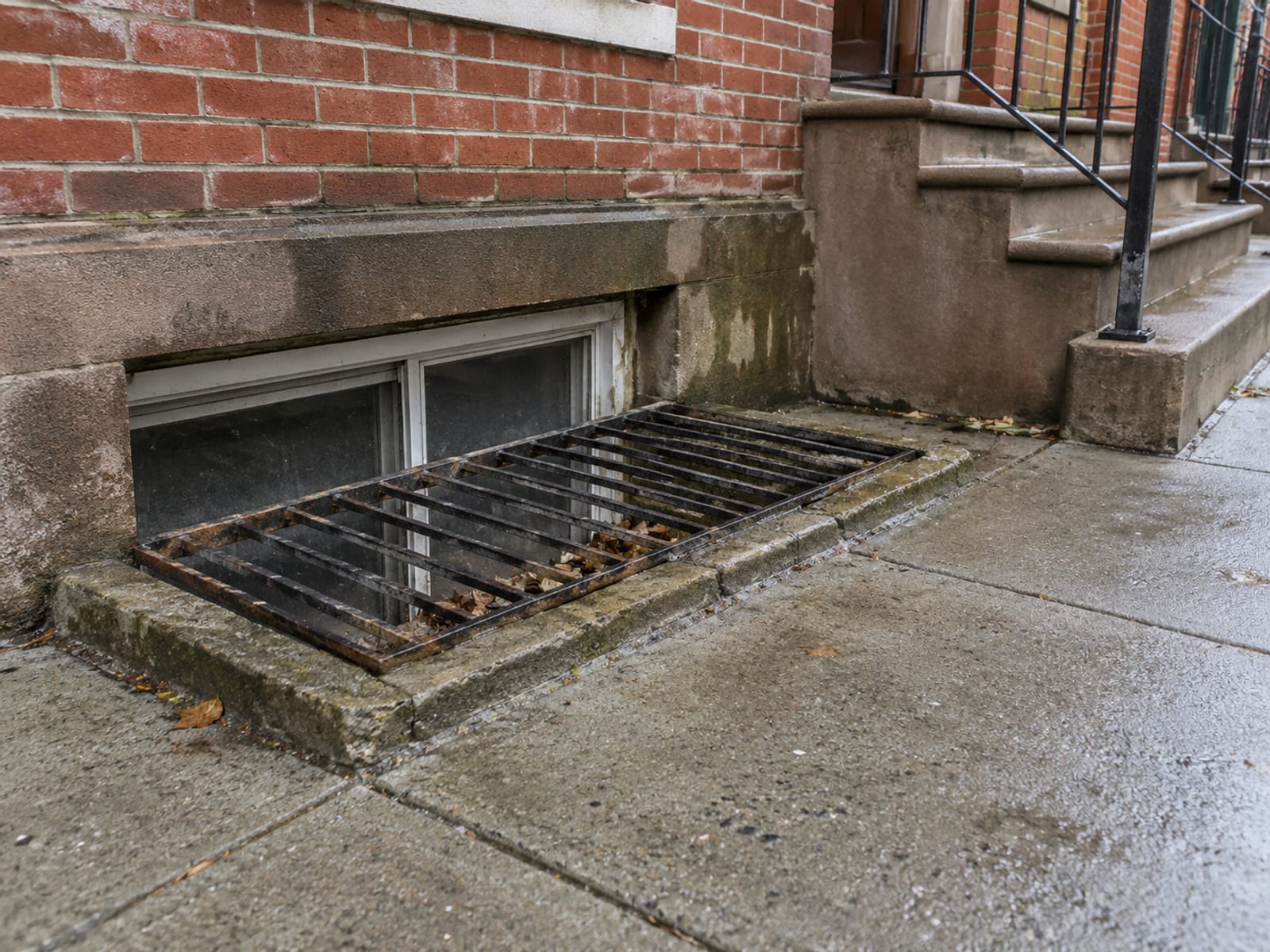
Basements are limited. The NFIP policy separates covered building items from items located below ground level, and many basement improvements, contents, and equipment are restricted or excluded. The Standard Flood Insurance Policy and your policy form control, so ask your agent about basement items such as a furnace, an electrical panel, appliances, and finished walls before you buy.
Why is the NFIP residential building limit $250,000?
The $250,000 figure is the NFIP maximum building limit for specified residential occupancies, including a single-family home and a two-to-four-family building, per the FEMA manual (opens in a new tab). It is not a statement that your loss will equal that amount, and it does not apply to every building: other residential buildings and nonresidential buildings carry a $500,000 building limit in the table above. If your home would cost more than $250,000 to rebuild, ask about excess coverage, covered below.
How much does New York flood insurance cost?
Your premium is set property by property. Risk Rating 2.0 (opens in a new tab) is FEMA's pricing method, and its rating factors include the property's flood risk, distance to water, elevation, building characteristics, and rebuilding cost. FEMA applied it to new policies effective October 1, 2021, and to existing policies as they renewed beginning April 1, 2022. That is why your quote can differ from a neighbor's, even on the same street.
FEMA's New York profile (opens in a new tab), dated March 2021, lists 171,100 NFIP policies in force in the state, an average NFIP claim payout of $55,300 over the prior 10 years, and an average individual-assistance payout of $8,000 over the same period. Those are claim and assistance figures, not premiums. For your premium, ask an NFIP-participating agent for a quote on your property and confirm the rating date.
Hover or tap a row to highlight it.
| Figure | Amount or timing | Qualification | Source |
|---|---|---|---|
| NFIP policies in force in New York | 171,100 | FEMA profile dated March 2021 | FEMA New York profile (opens in a new tab) |
| Average NFIP claim payout in New York | $55,300 | Average over the prior 10 years in the March 2021 profile, not a premium | FEMA New York profile (opens in a new tab) |
| General NFIP waiting period | 30 days | Exceptions apply | floodsmart.gov (opens in a new tab) |
Risk Rating 2.0 phase-in
- October 1, 2021FEMA applied Risk Rating 2.0 to new policies.
- April 1, 2022FEMA applied it to existing policies as they renewed.
What are the NFIP waiting-period rules?
The general waiting period is 30 days after purchase, according to floodsmart.gov (opens in a new tab). The listed exceptions are:
- No waiting period when coverage is bought in connection with making, increasing, extending, or renewing a mortgage.
- No waiting period for a change in coverage made at renewal.
- A one-day waiting period when a property is newly designated in a high-risk flood zone and the policy is bought within the applicable map-revision period.
- A one-day waiting period for flooding caused or worsened by post-wildfire conditions on federal land when the policy is bought within 60 days of the wildfire containment date.
Your transaction facts and the FEMA rules decide whether an exception fits, so ask before you count on one. Because of the 30 days, a policy bought as a storm approaches generally will not respond to that storm. The NFIP renewal page (opens in a new tab) covers renewal, and a lapse can reopen a gap, so put the renewal date in your calendar.
Can private flood insurance provide different or higher limits?
Private flood coverage can be written as primary coverage or as excess coverage above NFIP limits. DFS's Insurance Regulation 41 export-list material (opens in a new tab) identifies flood insurance as a line that can include excess coverage above the maximum limits of the federal program, and primary coverage for property not eligible for it. Private policies can differ from NFIP policies in limits, deductibles, exclusions, covered property, waiting periods, cancellation provisions, claims procedures, and insurer financial protections, so the policy wording controls.
For a business or property that cannot be placed in the traditional market, DFS explains on its small business page (opens in a new tab) that an agent or broker can use an excess-lines insurer or broker. Excess-lines insurers can be non-admitted, and special procedures and disclosures apply.
How do you file a flood claim?
Once it is safe to return, follow this sequence, drawn from FEMA's claim-start (opens in a new tab), damage-documentation (opens in a new tab), and claims checklist (opens in a new tab) pages:
- Report the loss to your flood insurance provider promptly.
- Photograph and video the property before cleanup, including wide views, close-ups, water lines, structural damage, appliances, electronics, serial numbers, and damaged contents.
- Separate damaged property from undamaged property.
- Keep samples of damaged carpet, flooring, drywall, insulation, or blinds when it is safe and practical.
- Save receipts, invoices, repair estimates, contractor documents, and replacement records.
- Prepare an inventory of damaged contents with descriptions, quantity, age, value, make, model, and serial numbers.
- Meet the assigned adjuster and verify the adjuster's identification and Flood Control Number.
- Submit the claim documentation and proof of loss within the deadline; FEMA materials generally identify 60 days after the loss, subject to FEMA rules or an extension.
- Keep a record of communications and copies of every claim document.
If the claim is denied, FEMA has an appeal process (opens in a new tab), generally with an appeal due within 60 days of the denial letter. Exact proof-of-loss requirements and deadlines depend on your Standard Flood Insurance Policy, any FEMA extension, and the type of claim.

What should you ask an agent and a lender?
For the lender:
- Is flood insurance required, and what limits or deductible does the lender require?
- Which map and map date are you using, and is the property in an effective Special Flood Hazard Area?
For the agent:
- Is the coverage NFIP, private primary, or excess, and what building and contents limits apply to this property type?
- How are basement items, below-grade rooms, foundations, utilities, appliances, and improvements treated?
- What definition of flood and which exclusions apply, and is storm surge covered?
- Is sewer backup or sump-pump failure covered, and under which policy?
- What is the waiting period, and does a documented exception apply?
- What factors set the premium under Risk Rating 2.0 or the private policy's rating method?
- What deductibles apply to building and contents coverage?
- What happens at renewal or if the policy lapses?
- Is the property valued at replacement cost or actual cash value?
- Are temporary living expenses, business interruption, vehicles, landscaping, retaining walls, or outdoor property covered?
- Who receives claim payments if a mortgagee is listed?
- Does an excess policy sit above the NFIP limits, and is the insurer admitted in New York or placed through the excess-lines market?
Keep the policy, declarations page, mortgage information, inventory, photographs, receipts, and repair records together in a safe place.
What to keep together
- Policy papersThe policy and the declarations page.
- MortgageYour mortgage information.
- Contents recordAn inventory of belongings, with photographs.
- ReceiptsReceipts and repair records.
- WhereA safe place you can reach after a storm.
Frequently asked questions
Does standard homeowners insurance cover flood in New York?
Generally no. DFS (opens in a new tab) says flood losses are generally excluded from standard homeowners and tenant policies, so look for a separate flood policy.
What is the NFIP commercial limit?
For a nonresidential building, the Regular Program maximum is $500,000 for building coverage and $500,000 for contents coverage, according to the FEMA NFIP Flood Insurance Manual (opens in a new tab). Contents of a nonresidential property can also be insured on their own up to $500,000.
Can a lower-risk zone still flood?
Yes. FEMA (opens in a new tab) describes lower-risk zones as lower risk, not risk-free, and a lender requirement is a separate question from whether you can buy a policy.
Does NFIP cover every basement item?
No. Basement and below-grade coverage has specific limitations and exclusions in the NFIP manual (opens in a new tab), so ask about each item you want protected.
Your next step
Your next steps are to check your effective map, ask your lender what it requires, and ask an agent for NFIP and private options in writing so you can compare limits, exclusions, and the start date.
Check what you know about New York flood insurance
Terms used in this guide
Tap a term to see what it means.
NFIP. The National Flood Insurance Program, FEMA's flood insurance program.
Special Flood Hazard Area. A high-risk flood zone where a federally backed mortgage generally requires flood insurance in a participating community.
Flood Insurance Rate Map (FIRM). A FEMA map showing flood zones, floodplain boundaries, and base flood elevations.
Risk Rating 2.0. FEMA's pricing method, which uses property-specific rating factors.
Excess flood insurance. Private coverage written above the NFIP limits.
Proof of loss. The claim documentation submitted to the flood insurer within the deadline.
Waiting period. The time after purchase before a new NFIP policy takes effect, generally 30 days.