South Carolina Flood Insurance: Flood Zones, Coastal Counties, What NFIP Coverage Costs and Whether Renters Can Buy It
Riskado
Standard South Carolina homeowners and renters policies don't cover flood damage, according to the South Carolina Department of Insurance (opens in a new tab) (SCDOI). Flood insurance is a separate policy, sold through the National Flood Insurance Program (NFIP) and by private insurers. If a building with a federally backed mortgage sits in a FEMA Special Flood Hazard Area, the lender must require flood insurance, and a lender can also require it in other zones. NFIP residential policies cover up to $250,000 for the building and up to $100,000 for contents, and renters can buy contents-only coverage, according to FloodSmart (opens in a new tab). Most new policies start after a 30-day waiting period, with a few exceptions.
Key takeaways
- Separate policyHomeowners and renters policies don't cover flood; flood insurance comes from the NFIP or a private insurer.
- Lender ruleA federally backed mortgage on a building in a high-risk A or V zone requires flood insurance, and a lender can require it elsewhere.
- NFIP limitsUp to $250,000 for a home's building and up to $100,000 for contents.
- RentersA renter can buy contents-only flood coverage without the landlord.
- TimingA new policy usually takes effect 30 days after purchase.
Does homeowners or renters insurance cover flood in South Carolina?
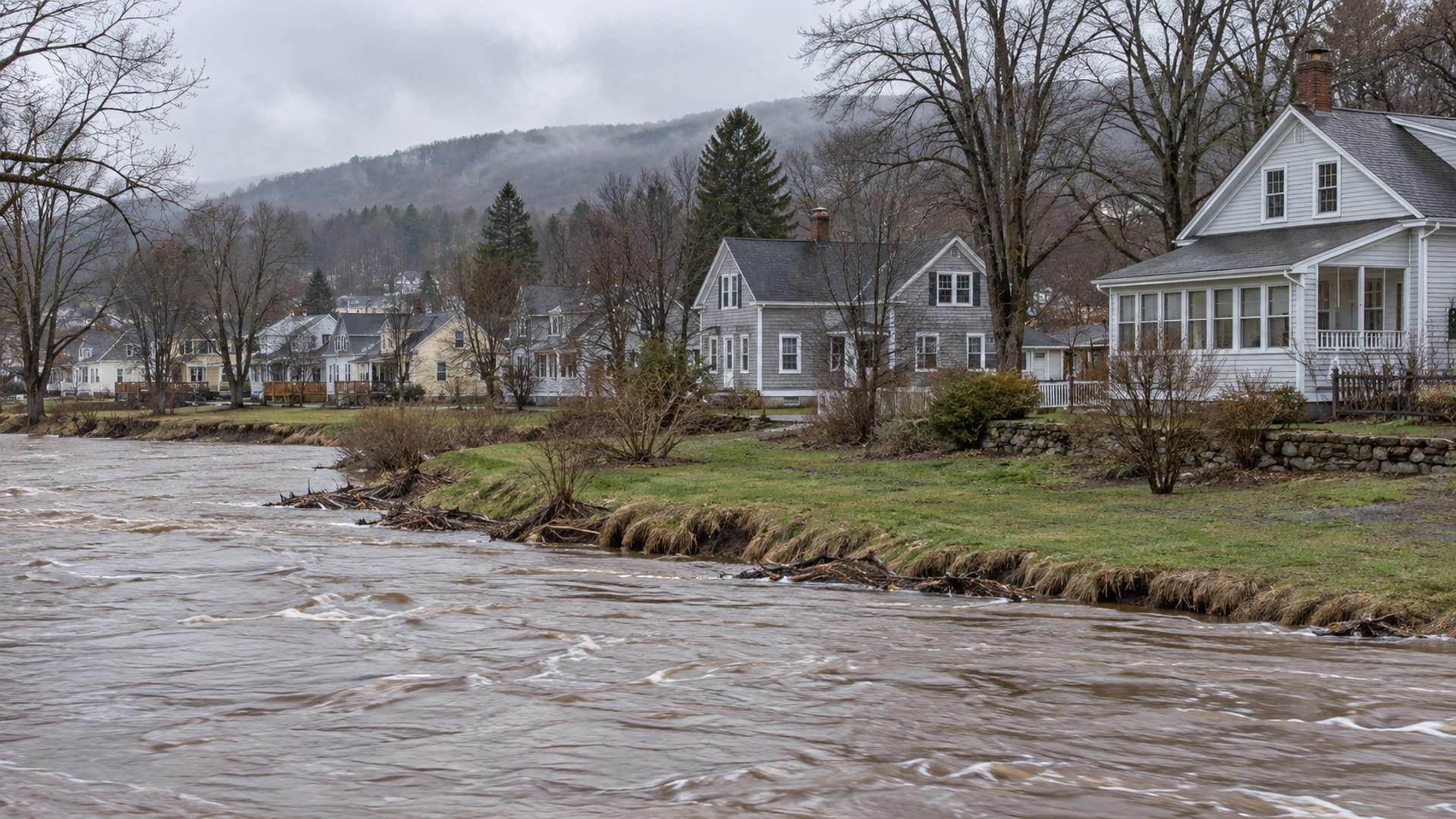
Water that comes in from street flooding, an overflowing creek, river or stream, or a storm surge is generally a flood insurance loss, not a homeowners or renters loss, according to SCDOI's flood insurance page (opens in a new tab). The same exclusion appears in the department's guides to basic homeowners insurance (opens in a new tab) and renters insurance (opens in a new tab), and flood coverage is available from the NFIP and a few private insurers. Our article on South Carolina homeowners insurance covers what the home policy itself pays for.
After a hurricane or tropical storm, one event can cause several kinds of damage. Flood insurance handles rising water and storm surge. Wind and hail fall under the homeowners or commercial policy, or under a South Carolina Wind and Hail Underwriting Association policy for eligible coastal property, according to SCDOI's pre-disaster planning guide (opens in a new tab). Ask your agent which policy would respond to roof damage, wind-driven rain and rising water before storm season, not after.
When does a South Carolina lender require flood insurance?
The federal rule turns on two facts: where the building sits and who backs the loan. In a community that participates in the NFIP, flood insurance is mandatory for a federally backed mortgage on a building in a high-risk zone, meaning the zones that start with A or V, according to FloodSmart's flood zone page (opens in a new tab). The requirement attaches to the building that secures the loan, not to every property in the county.
Outside a Special Flood Hazard Area, federal law doesn't automatically require a policy, but your lender can still require one under its own underwriting rules. If you're buying, ask the lender early for its written flood determination, whether it wants building coverage only or contents as well, and whether it accepts a private policy. A purchase tied to a new or refinanced mortgage also changes the timing, because that policy skips the usual 30-day wait.
How do you check a South Carolina flood zone by address?
Start with FEMA's Flood Map Service Center (opens in a new tab), which shows the effective Flood Insurance Rate Map (FIRM) for an address. The Map Service Center is the primary source for effective FIRMs in South Carolina, according to the South Carolina Department of Natural Resources (opens in a new tab) (SCDNR), and the state's IMPACT viewer lets you search by address to see your flood zone and, where they exist, compare preliminary maps with the effective ones.
Each participating community also keeps a paper copy of its FIRMs in the local floodplain manager's office, and that office is the right place for questions about a single parcel. Maps change as development, drainage, terrain and coastal conditions change, so an effective map and a preliminary map can show different zones for the same lot during an update. If your property sits near a zone line or a map revision is under way, ask the floodplain manager which map your lender and insurer will use.
What do flood zones AE, VE and X mean?
Most South Carolina addresses fall into one of a few zone families on a FIRM, and the zone decides whether the federal lender rule applies, according to SCDNR's floodplain management quick guide (opens in a new tab) and FloodSmart (opens in a new tab).
Hover or tap a row to highlight it.
| Zone | What it means | Federal lender rule |
|---|---|---|
| AE | High-risk 1% annual-chance floodplain with a mapped Base Flood Elevation | Applies to federally backed mortgages in participating communities |
| VE | Coastal high-hazard area with a 1% or greater annual flood chance plus wave hazards | Applies to federally backed mortgages in participating communities |
| Shaded X | Moderate risk, usually between the 100-year and 500-year flood limits | Doesn't apply automatically; a lender can still require coverage |
| Unshaded X | Lower mapped risk | Doesn't apply automatically; a lender can still require coverage |
Zone X doesn't mean a property can't flood. From 2014 through 2024, almost one-third of NFIP claims came from outside high-risk areas, according to FEMA's flood insurance overview for agents (opens in a new tab). The zone also stopped being the main factor in price once Risk Rating 2.0 took over, so a Zone X quote still depends on the building itself.
Which South Carolina coastal counties face the most flood exposure?
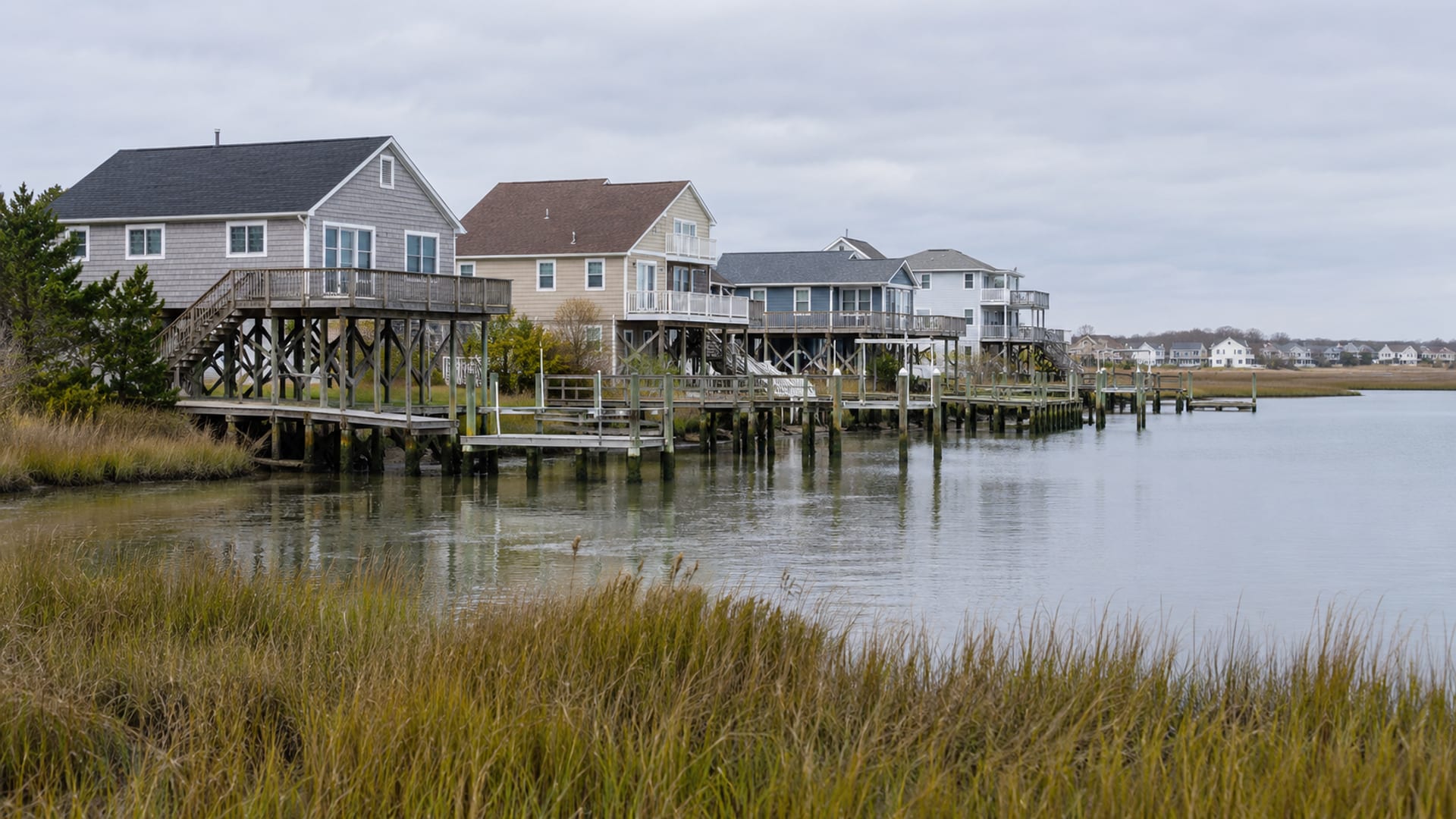
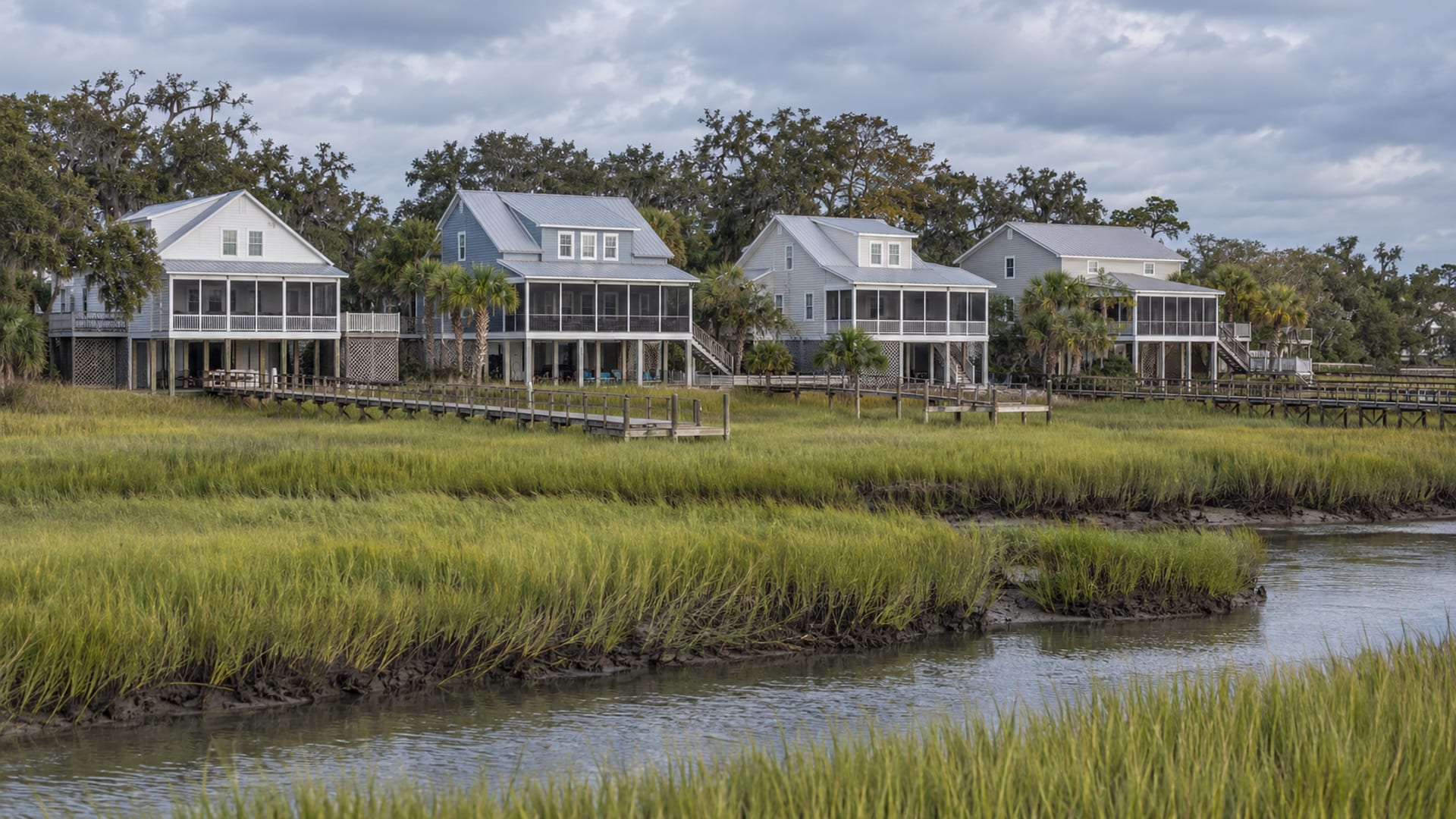
South Carolina's coastal zone covers eight counties under S.C. Code § 48-39-10 (opens in a new tab): Beaufort, Berkeley, Charleston, Colleton, Dorchester, Georgetown, Horry and Jasper. In those counties, 396,837 people, about 29% of the coastal population, live in the designated 100-year floodplain, along with 9,800 businesses and 79 critical facilities such as schools, fire stations and medical facilities, according to the South Carolina Department of Environmental Services coastal assessment for 2026 to 2030 (opens in a new tab). Flood risk on the coast comes from tidal flooding, storm surge, wave action and erosion, and from river systems that coastal conditions affect.
A county total doesn't tell you about one lot, and two houses on the same street can sit in different zones. Check the specific address in the Map Service Center and ask the county or town floodplain manager about the parcel. Inland counties face flood risk too: river overflow and heavy rain cause flooding well away from the beach, and flooding can happen outside mapped high-risk zones, according to SCDOI (opens in a new tab).
What does NFIP flood insurance cover?
An NFIP policy has two separate parts. Building coverage pays for direct flood damage to the structure, including electrical and plumbing systems, furnaces, water heaters, built-in appliances, foundation walls, anchorage systems, staircases, certain detached garages, fuel tanks and specified pumps and equipment. Contents coverage pays for belongings such as clothing, furniture, electronics, curtains, washers and dryers, portable air conditioners and certain carpets, with items like original artwork and furs limited to $2,500. Building and contents are bought separately and carry separate deductibles, according to FloodSmart (opens in a new tab).
Hover or tap a row to highlight it.
| Policy type | Building coverage | Contents coverage |
|---|---|---|
| Residential (homeowners, condo and townhouse owners) | Up to $250,000 | Up to $100,000 |
| Renters | Not available (the landlord insures the building) | Up to $100,000 |
| Commercial | Up to $500,000 | Up to $500,000 |
Those are the NFIP maximums. If a home costs more than $250,000 to rebuild, or a business needs more than $500,000 for its building or its contents, private and excess flood coverage can fill the gap.
What does NFIP exclude or limit?
Some items stay outside an NFIP policy whatever caused the flood, according to FloodSmart (opens in a new tab):
- Currency, precious metals, stock certificates and similar papers.
- Cars and most self-propelled vehicles, including their parts.
- Personal property kept in a basement.
- Property outside the insured building, such as plantings, septic systems, decks, patios, fences and swimming pools.
- Temporary housing and additional living expenses while the home is repaired.
- Financial losses from business interruption.
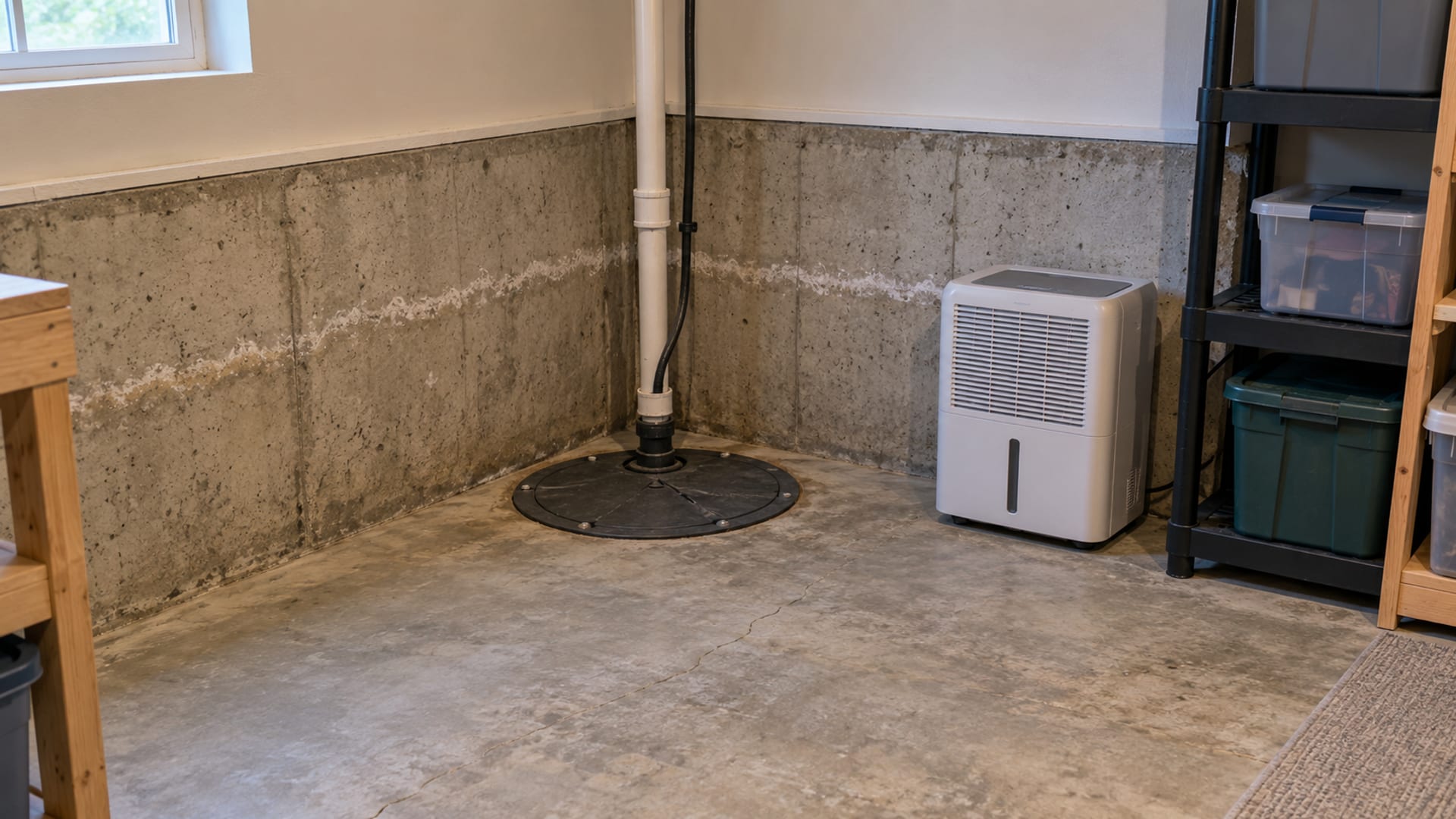
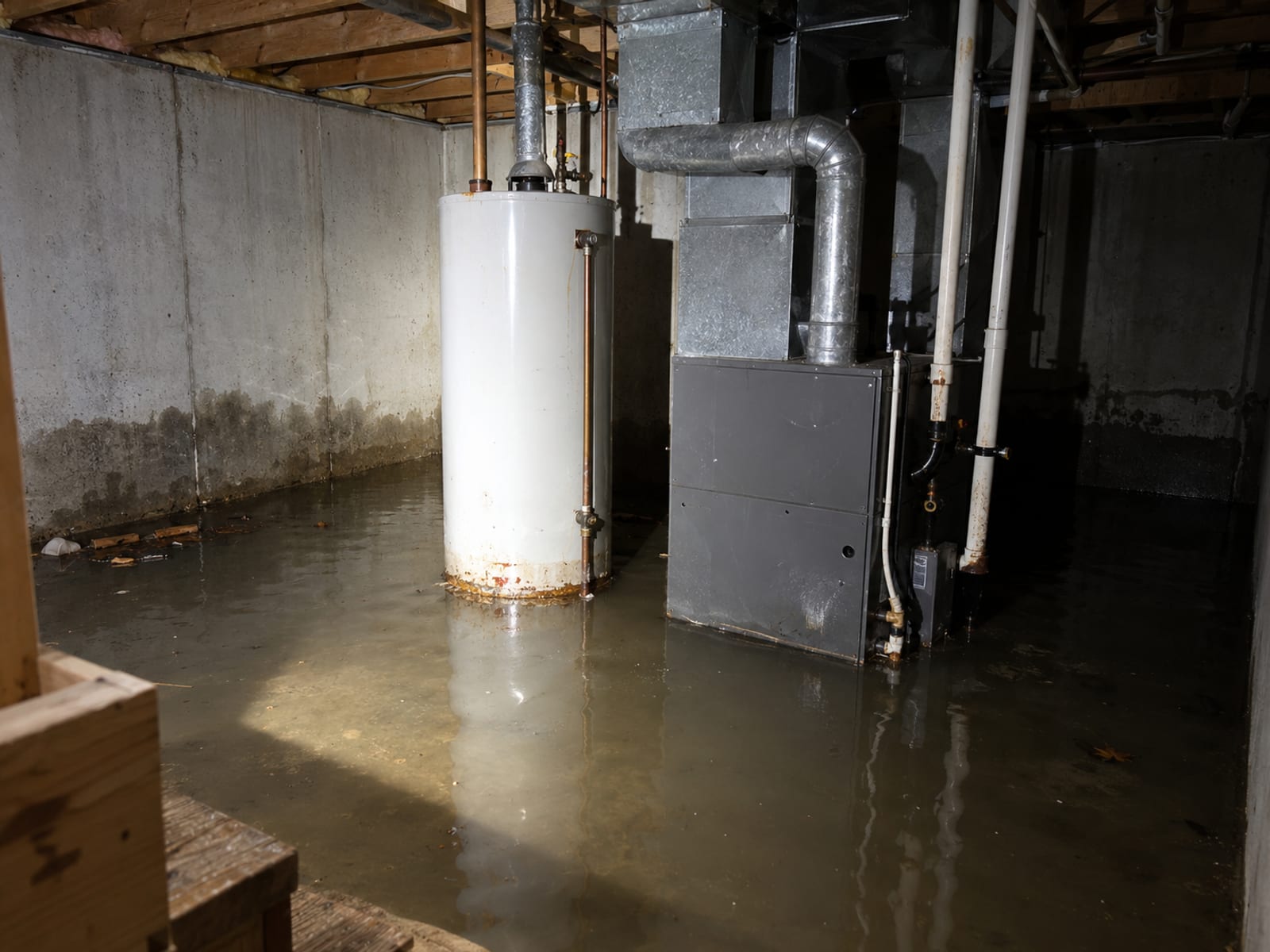
Basements get narrow coverage. The NFIP treats any area with a floor below ground level on all sides as a basement, and building coverage there is limited to listed items such as central air conditioners, furnaces, water heaters, sump pumps, fuel tanks, electrical outlets and drywall, plus cleanup, according to FEMA's basement coverage fact sheet (opens in a new tab). If a hotel stay or lost business income matters to you, ask whether a private flood policy offers that coverage.
How much does South Carolina flood insurance cost?
Your premium depends on the property, not on a statewide average. Under Risk Rating 2.0, which has priced new NFIP policies effective on or after October 1, 2021 and renewing policies from April 1, 2022, FEMA rates each building on how often it floods, the types of flooding it faces (river overflow, storm surge, coastal erosion and heavy rainfall), how close it is to flood sources, and building details such as first-floor height and the cost to rebuild, according to FEMA's Risk Rating 2.0 fact sheet (opens in a new tab).
For a rough sense of scale, NFIP coverage in high-risk areas typically runs around $700 a year, according to SCDOI's flood insurance FAQ (opens in a new tab). That's a general high-risk figure, not a South Carolina average or a quote. FEMA's South Carolina Risk Rating 2.0 profile (opens in a new tab), using March 2021 data, counted 208,600 NFIP policies in force in the state and 1.7 million properties without one. It put the average NFIP claim payout in South Carolina over the prior 10 years at $27,100, compared with $3,600 for the average individual assistance payment.
The way to get a real number is a quote for your address, with the building details, the coverage amounts you want and any lender requirement in hand.
How do CRS discounts work in South Carolina?
Communities in FEMA's Community Rating System (CRS) earn flood insurance discounts for their residents by doing floodplain management work beyond the minimum, and the discount depends on the community's class. In FEMA's CRS table effective October 1, 2022 (opens in a new tab), Charleston County and Folly Beach held Class 3, the best class among the South Carolina communities listed, worth 35% off for properties in a Special Flood Hazard Area and 10% outside one.
Hover or tap a row to highlight it.
| Class | Communities | Discount in an SFHA | Discount outside an SFHA |
|---|---|---|---|
| 3 | Charleston County, Folly Beach | 35% | 10% |
| 5 | Beaufort County, Greenville (city), Hilton Head Island, Isle of Palms, Kiawah Island, Myrtle Beach | 25% | 10% |
| 6 | Awendaw, Beaufort (city), Charleston (city), Edisto Beach, Florence (city), Meggett, Mount Pleasant | 20% | 10% |
| 6 | Hollywood, McClellanville | 20% | 15% |
| 7 | Georgetown (city), Georgetown County, Greenville County, Hanahan, Horry County, Lexington County, North Charleston | 15% | 5% |
| 8 | Berkeley County, Colleton County | 10% | 5% |
| 9 | Aiken County, Cayce, Florence County, Kershaw County | 5% | 5% |
Classes change as communities are re-rated, so ask your agent or the local floodplain manager for the current class before you count on a discount.
Can renters buy flood insurance in South Carolina?
Yes. A renter can buy an NFIP policy without the landlord buying anything. It's contents-only, covering belongings inside the rented home such as furniture, clothing, televisions, computers, rugs and some artwork, up to $100,000, according to FloodSmart (opens in a new tab). The renter's policy doesn't insure the building, which is the landlord's to insure, and the same NFIP exclusions apply, including belongings kept in a basement, vehicles and temporary housing.
When you ask for a quote, give the rental address and ask about the deductible, any sublimits, basement restrictions and the effective date. A home inventory with photos makes a contents claim easier to document. Our article on South Carolina renters insurance covers what a regular renters policy pays for.
How long is the NFIP waiting period?
Coverage normally takes effect 30 days after you buy it, according to FloodSmart (opens in a new tab), with four exceptions:
- No wait when you buy while getting, increasing, extending or renewing a mortgage.
- No wait when you change your coverage at renewal.
- A one-day wait when your property is newly mapped into a high-risk zone and you buy within 12 months of the map update.
- A one-day wait when flooding is caused or worsened by a wildfire on federal land and you buy within 60 days of the fire's containment.
For hurricane season, that means a policy bought once a storm is in the forecast won't take effect for 30 days unless an exception applies. Buy well ahead, and ask your agent for the effective date in writing.
What must a South Carolina home seller disclose about flooding?
Most sales of homes with one to four dwelling units require a written disclosure statement on the form the Real Estate Commission prescribes, under S.C. Code § 27-50-40 (opens in a new tab). The rule covers sales, exchanges, installment land sales and leases with an option to buy, and S.C. Code § 27-50-30 (opens in a new tab) exempts certain transfers, including court-ordered and foreclosure transfers, transfers between co-owners or to a spouse or close family member, and the first sale of a never-occupied home.
The current form, set out in S.C. Code Regs. 105-14 (opens in a new tab) and in effect since May 24, 2024, asks the owner about flooding during their ownership, flood zones and flood risk, whether the property carries flood insurance, flood insurance claims, flood repairs not filed with insurance, and whether federal flood disaster assistance was received. The completed, signed statement goes to the buyer before the contract is formed. If you're buying, read those answers next to the FEMA map result before you sign.
How do private and excess flood insurance differ from the NFIP?
South Carolina's Private Flood Insurance Act, summarized on SCDOI's legislative agenda page (opens in a new tab), recognizes two kinds of private policy. Standard flood insurance must be at least equal, as a whole, to an NFIP standard policy, with cancellation terms at least as restrictive; nonstandard flood insurance can supplement an NFIP policy or use a broader definition of flood. A private flood insurer must give written notice 10 days before canceling for nonpayment and 45 days before canceling or nonrenewing for any other reason.
Excess flood coverage sits on top of a standard flood policy and pays above its limits, according to SCDOI (opens in a new tab). It's optional, and like any private policy, its limits, deductibles, waiting period and living-expense terms come from the policy itself. If a lender is involved, ask whether it accepts the private policy before you drop an NFIP one.
How do you file a flood claim?
Report an NFIP claim to the agent or insurance company that services your policy, according to SCDOI (opens in a new tab); a private flood policyholder contacts the private insurer directly. Before and during cleanup:
- Photograph and video the damage.
- Make safe, temporary repairs to prevent further damage, and keep the receipts.
- Keep an inventory of damaged belongings.
- Save the policy, the declarations page, your flood map result and any lender determination.
If wind and flood both hit the property, you may have two claims under two policies. Report each one promptly and tell each insurer about the other, so the damage is sorted by cause.
How do you check an agent or file a complaint?
Use the South Carolina insurance license lookup (opens in a new tab) to confirm an agent, also called a producer, is licensed before you share documents. If a claim or policy problem isn't resolved with the insurer, SCDOI's Office of Consumer Services (opens in a new tab) takes complaints about companies, agents, coverage, claims, premiums, cancellations and nonrenewals. Give the insurer a chance to fix it first, and keep the policy number, claim number, date of loss and every letter.
Riskado's directory lists insurance agencies across South Carolina by city and category, and our article on how to choose an insurance agent covers what to ask before you hire one.
Questions to ask your agent
- Is this an NFIP policy, a private policy or excess flood coverage?
- Does my community participate in the NFIP?
- Do I need building coverage, contents coverage or both?
- What are the building and contents limits?
- What deductibles and exclusions apply?
- How are basements, crawlspaces, detached structures, decks, vehicles and outside property treated?
- What is the effective date, and does an exception to the waiting period apply?
- Does the policy cover temporary housing or business interruption?
- Will my lender accept this policy?
- Which policy handles wind, storm surge and rising water?
- How do I report a claim?
Check what you know about South Carolina flood insurance
Frequently asked questions
What happens if my NFIP policy expires?
An NFIP policy lasts one year. Coverage stays good for 30 days after it expires, and claims in that grace period are paid as long as you renew and pay the full premium by the end of it, according to FloodSmart (opens in a new tab).
Is flood insurance worth asking about outside a high-risk zone?
One inch of water can cause up to $25,000 in damage, and FEMA grants cover only a small part of flood costs, according to SCDOI (opens in a new tab). Ask an agent to quote a moderate- or low-risk address before you decide.
Does flood insurance cover a sewer backup?
It depends on the cause. An NFIP policy covers water damage from a sewer that backed up during a heavy rainstorm, but not a backup caused by clogged pipes, according to FloodSmart (opens in a new tab). For a backup from clogged pipes, ask your homeowners agent how the home policy treats it.
Before the next storm season
Look up your address in FEMA's Map Service Center and SCDNR's viewer, then ask your lender whether flood insurance is required and your agent what it would cost. Keep the 30-day waiting period in mind, buy contents coverage if you rent, and sort out which policy handles wind and which handles water before a storm is in the forecast.
Key terms
Tap a term to see what it means.
NFIP. The National Flood Insurance Program, the federal program that sells flood insurance through agents and insurers.
Special Flood Hazard Area (SFHA). A high-risk flood area on a FEMA map, shown as zones that start with A or V.
FIRM. A Flood Insurance Rate Map, FEMA's official map of flood zones for a community.
Base Flood Elevation. The height floodwater is expected to reach in a 1% annual-chance flood, mapped in zones like AE.
Building coverage. The part of a flood policy that pays for damage to the structure and its built-in systems.
Contents coverage. The part of a flood policy that pays for belongings, the only part a renter can buy.
Risk Rating 2.0. FEMA's pricing method that rates each building on its own flood risk and rebuilding cost.
Community Rating System (CRS). A FEMA program that gives flood insurance discounts in communities that manage floodplains beyond the minimum.
Excess flood coverage. A private policy that pays above the limits of a standard flood policy.