Pennsylvania Flood Insurance: What It Costs, When You Need It, and the Flood Disclosure at Sale
Riskado
Flood insurance in Pennsylvania has no single statewide price. National Flood Insurance Program (NFIP) premiums are set for each property under FEMA's Risk Rating 2.0 method, using factors such as how often the area floods, the type of flooding, distance to water, elevation and the cost to rebuild, according to FEMA's NFIP coverage page (opens in a new tab). For scale, FEMA's April 2025 Pennsylvania profile (opens in a new tab) counted 51,600 NFIP policies in force and an average claim payout of $27,600 over the prior 10 years. Standard homeowners and renters policies do not cover flood damage, per the Pennsylvania Insurance Department (opens in a new tab). Lenders on federally backed mortgages require flood coverage when the building sits in a Special Flood Hazard Area, and NFIP residential policies top out at $250,000 for the building and $100,000 for contents.
Key takeaways
- PricingNFIP premiums are set for each property under FEMA's Risk Rating 2.0 method, so there is no single statewide price.
- ScaleFEMA's April 2025 profile counted 51,600 NFIP policies in force in Pennsylvania and an average claim payout of $27,600 over the prior 10 years.
- Home and renters policiesStandard homeowners and renters policies do not cover flood damage.
- MortgagesLenders on federally backed mortgages require flood coverage when the building sits in a Special Flood Hazard Area.
- NFIP limitsResidential policies top out at $250,000 for the building and $100,000 for contents.
If you are buying a home, renewing a policy or trying to work out whether a property still fits your budget, the steps below follow the order these decisions usually come up.
How much does NFIP flood insurance cost in Pennsylvania?
Your price depends on your building, not on a statewide average. Under Risk Rating 2.0, FEMA replaced older zone-based pricing with property-specific rates meant to reflect each building's own flood risk. Most policies are subject to an annual increase cap of 18%, and rates can stop rising once a policy reaches its full-risk rate, according to FEMA's Pennsylvania profile (opens in a new tab) and FEMA's Risk Rating 2.0 guidance (opens in a new tab).
The April 2025 profile also shows how the change landed on Pennsylvania's 51,600 policies:
Hover or tap a row to highlight it.
| Change under Risk Rating 2.0 | Policies | Share |
|---|---|---|
| Immediate decrease | 15,573 | About 30% |
| Increase of $0 to $10 a month | 28,621 | About 56% |
| Increase of $10 to $20 a month | 3,838 | About 7% |
| Increase of more than $20 a month | 3,526 | About 7% |
Source: FEMA Pennsylvania Risk Rating 2.0 profile (opens in a new tab), April 2025.
The same profile puts the average NFIP claim payout in Pennsylvania at $27,600 over the prior 10 years, compared with an average individual-assistance payout of $3,000 over the same period. For your own number, get a quote for the specific property and confirm what it includes: the premium, fees and assessments, the deductible for building and for contents, the limits, and the effective date. Private flood prices vary by insurer and property as well.
Does homeowners or renters insurance cover flood damage?
No, not under a standard policy. Standard homeowners and renters policies do not cover damage resulting from a flood, and flood is one of the common homeowners exclusions, according to the Pennsylvania Insurance Department homeowners page (opens in a new tab). Flood coverage comes from a separate policy: an NFIP policy, a private flood policy, or surplus-lines coverage. The exact definition of "flood" and the exclusions in that policy decide how a claim is handled.
Flooding is not limited to riverbanks. Destructive flooding has hit all 67 Pennsylvania counties, and more than 40% of flood claims come from outside high-risk areas, according to the Pennsylvania Insurance Department (opens in a new tab). Renters can buy contents-only flood coverage where they are eligible. Flood coverage is also separate from sewer backup or other water damage, so ask your agent which policy would respond to each.
Do you need flood insurance for a Pennsylvania mortgage?
Pennsylvania has no universal state rule requiring flood insurance. The requirement comes from federal law: when a federally backed mortgage is secured by a building in a Special Flood Hazard Area, flood insurance is mandatory, according to FEMA's mandatory purchase guide (opens in a new tab). Special Flood Hazard Areas are the zones beginning with A or V on the Flood Insurance Rate Map. The required amount is generally the loan amount, excluding land value, or the maximum NFIP coverage available, whichever is less.
Your lender can go further. A lender may require flood insurance for property outside a Special Flood Hazard Area, and may require it when a floodplain touches the property even if the building itself sits outside the mapped area, according to Ready PA (opens in a new tab). Ask your lender early in a purchase for its flood determination and whether it accepts private or surplus-lines policies.
How do you check a Pennsylvania flood zone?
The FEMA Flood Map Service Center lets you search by address and pull up effective, preliminary and historic flood maps, according to FEMA's map training guidance (opens in a new tab). The current effective Flood Insurance Rate Map controls the formal zone determination unless a later map or official determination applies.
- Search the property address in the FEMA Map Service Center.
- Open the effective map panel and the Flood Insurance Study, if one is available.
- Write down the zone, panel number, community and effective date.
- Check whether a preliminary map shows a change on the way.
- Ask your lender which flood determination it used.
- Use Pennsylvania's Flood Risk Tool and PEMA's flooding and floodplain resources (opens in a new tab) for local context, including whether the community participates in the NFIP.
- If the map looks wrong, ask about FEMA's Letter of Map Amendment or Letter of Map Revision process.
Flood map updates are under way across Pennsylvania and can change both flood risk and insurance requirements, per Ready PA (opens in a new tab).
What does NFIP flood insurance cover, and what are the limits?
NFIP building and contents coverage are bought separately, with these maximums for most policies, according to FEMA's NFIP coverage page (opens in a new tab):
Hover or tap a row to highlight it.
| Type of property | Building limit | Contents limit |
|---|---|---|
| Single-family home | $250,000 | $100,000 |
| Two-to-four-family building | $250,000 | $100,000 |
| Residential condominium unit | $250,000 | $100,000 |
| Other residential building | $500,000 | $100,000 |
| Nonresidential (business) building | $500,000 | $500,000 |
Renters cannot insure the building they rent, but eligible renters can get up to $100,000 in contents coverage, per the FEMA NFIP answers brochure (opens in a new tab).
The $250,000 residential building cap is the maximum set for the standard NFIP residential building category. It is a ceiling on what the program will insure, not an estimate of a home's value or a promise that a loss will be paid to the limit. If rebuilding your home would cost more, ask about private or excess coverage. Also ask how contents are valued, since the payment basis, such as actual cash value, affects what you receive.
Does NFIP cover basements?
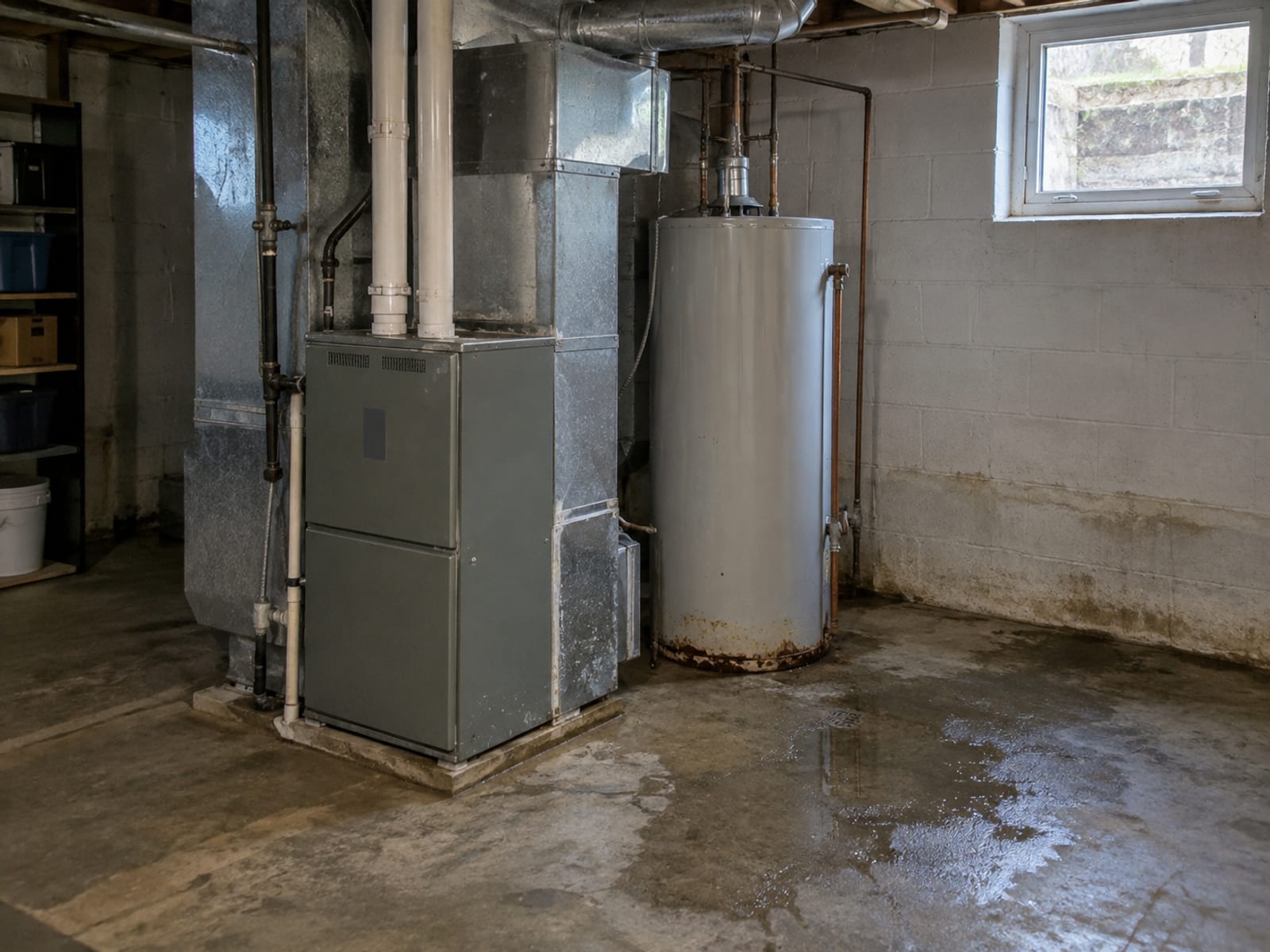
Only in part. NFIP coverage limits basement improvements, personal property in a basement, and certain items below the lowest elevated floor, according to the FEMA NFIP claims manual (opens in a new tab). What is covered depends on how the Standard Flood Insurance Policy defines a basement and on the specific item. If your furnace, water heater, freezer or finished space is below grade, ask your agent to go through each item before a flood, not after.
How long before a new flood policy starts?
An NFIP policy usually takes effect 30 days after purchase, according to FEMA's Flood Insurance 101 (opens in a new tab). Exceptions include:
- A purchase tied to making, increasing, extending or renewing a mortgage loan.
- Additional coverage chosen as an option on a renewal bill.
- A building newly mapped into a Special Flood Hazard Area, when the policy is bought within 13 months after the map revision.
- Flooding on burned federal land, when the policy is bought within 60 days of the fire containment date, which carries a one-day waiting period subject to a determination at claim time.
Buying a policy once flooding has started does not cover that flood, under FEMA's flood-in-progress rule (opens in a new tab). Missing a renewal can leave the same kind of gap, so ask your agent what happens if a renewal payment is late.
Can private or excess flood insurance give you more coverage?
Pennsylvania homeowners have three broad routes: NFIP coverage, private flood insurance from a commercial insurer, and surplus-lines flood insurance for specialty or high-risk properties. Private flood insurance may offer higher limits and features beyond NFIP coverage, and excess flood insurance covers losses above primary NFIP or private limits, according to the Pennsylvania Insurance Department (opens in a new tab). The Department keeps a listing of privately licensed flood insurers (opens in a new tab).
Private policies differ from one another on eligibility, cancellation, renewal, exclusions, deductibles, basement coverage, replacement cost, temporary living expenses and business interruption. Surplus-lines insurance carries different consumer protections than admitted insurance and is not backed by the state guaranty fund in the same way. Lender acceptance of surplus-lines policies varies, per the Pennsylvania homeowners insurance guide (opens in a new tab), so confirm it before you buy.
What must a Pennsylvania seller disclose about flooding?
Under the Real Estate Seller Disclosure Law, Title 68 Chapter 73 (opens in a new tab), a seller must disclose known material defects on the property disclosure statement, and the buyer must receive it before both sides sign the agreement of sale. The statement covers basements and crawl spaces; soils, drainage, boundaries and sinkholes; the condition and location of stormwater facilities, if known, including who maintains them; and other known material defects.
The current law has no general requirement for a seller to state whether a lender will require flood insurance or to give a separate flood-insurance notice. A proposed bill, HB 1704 (opens in a new tab), would add flood risk factors, known flood-damage history with estimated dates, an Insurance Department flood-information website and a written flood-insurance notice. It passed the House, went to the Senate Banking and Insurance Committee, and was laid on the table on February 3, 2026, so it is not law. If you are buying, read the disclosure statement closely for basement, drainage and stormwater entries, ask the seller directly about past flooding, and check the flood map yourself.
How do you file a flood claim?
Report the loss promptly to the insurer or agent that handles your NFIP policy, and keep evidence before you throw out or move damaged things when you reasonably can. The FEMA NFIP claims manual (opens in a new tab) calls for:
- Photos of building and contents damage.
- A written inventory of damaged belongings, with bills and receipts.
- Repair estimates for the building.
- The date and time of the loss and how it happened.
- Your interest in the property, other insurance, and any mortgage holders or lienholders.
- How the building was occupied and used at the time.
- A signed and sworn proof of loss.
The proof of loss is separate from your first notice of the claim, and it generally must be submitted within 60 days after the loss, subject to FEMA extensions or policy terms. Mark that date as soon as you report the claim.
Questions to ask your agent and lender
- Is this policy NFIP, private admitted or surplus lines, and is the insurer licensed in Pennsylvania?
- What are the building and contents limits, and the deductible for each?
- When does coverage start, and does a waiting-period exception apply?
- Which basement items at this property are covered?
- Are contents paid at actual cash value or another basis?
- Are temporary living expenses or business interruption covered?
- Are sewer backup, groundwater, seepage or mold excluded?
- Does my lender accept this policy, and what flood determination did it use?
- Is excess coverage available above the NFIP limits?
- What map, elevation, construction and prior-loss data were used to price this policy?
Riskado's directory lists insurance agencies across Pennsylvania and the rest of the US, by city and by category, if you want to compare flood options with someone local.
Check what you know about Pennsylvania flood insurance
Frequently asked questions
Is flood insurance required in Pennsylvania?
Not by state law for every property. Federal rules require it for a federally backed mortgage on a building in a Special Flood Hazard Area, and a lender can require it in other cases.
Can a home outside a high-risk flood zone flood?
Yes. More than 40% of flood claims come from outside high-risk areas, and destructive flooding has occurred in all 67 Pennsylvania counties.
Why is NFIP building coverage capped at $250,000?
That is the program's maximum for the standard residential building category. If your rebuilding cost is higher, private or excess flood coverage may provide more.
Can I buy flood insurance when a storm is on the way?
You can buy it, but an NFIP policy usually takes 30 days to start unless an exception applies. A flood already in progress is not covered by a policy bought after it began.
Terms used in this guide
Tap a term to see what it means.
National Flood Insurance Program (NFIP). The federal program run by FEMA that sells flood insurance through insurers and agents.
Risk Rating 2.0. FEMA's method for setting a flood premium for each property based on its own flood risk.
Special Flood Hazard Area. A high-risk flood zone on the Flood Insurance Rate Map, beginning with A or V.
Flood Insurance Rate Map. The FEMA map that sets a property's formal flood zone.
Private flood insurance. Flood coverage from a commercial insurer rather than the NFIP.
Surplus lines. Specialty coverage with different consumer protections from admitted insurance.
Excess flood insurance. Coverage for losses above primary NFIP or private limits.
Proof of loss. A signed and sworn statement of the amount claimed, generally due within 60 days after the loss.
Waiting period. The time before a new flood policy takes effect, usually 30 days for NFIP.