Rhode Island Flood Insurance: Who Needs It, What It Costs, and How to Check Your Flood Zone
Riskado
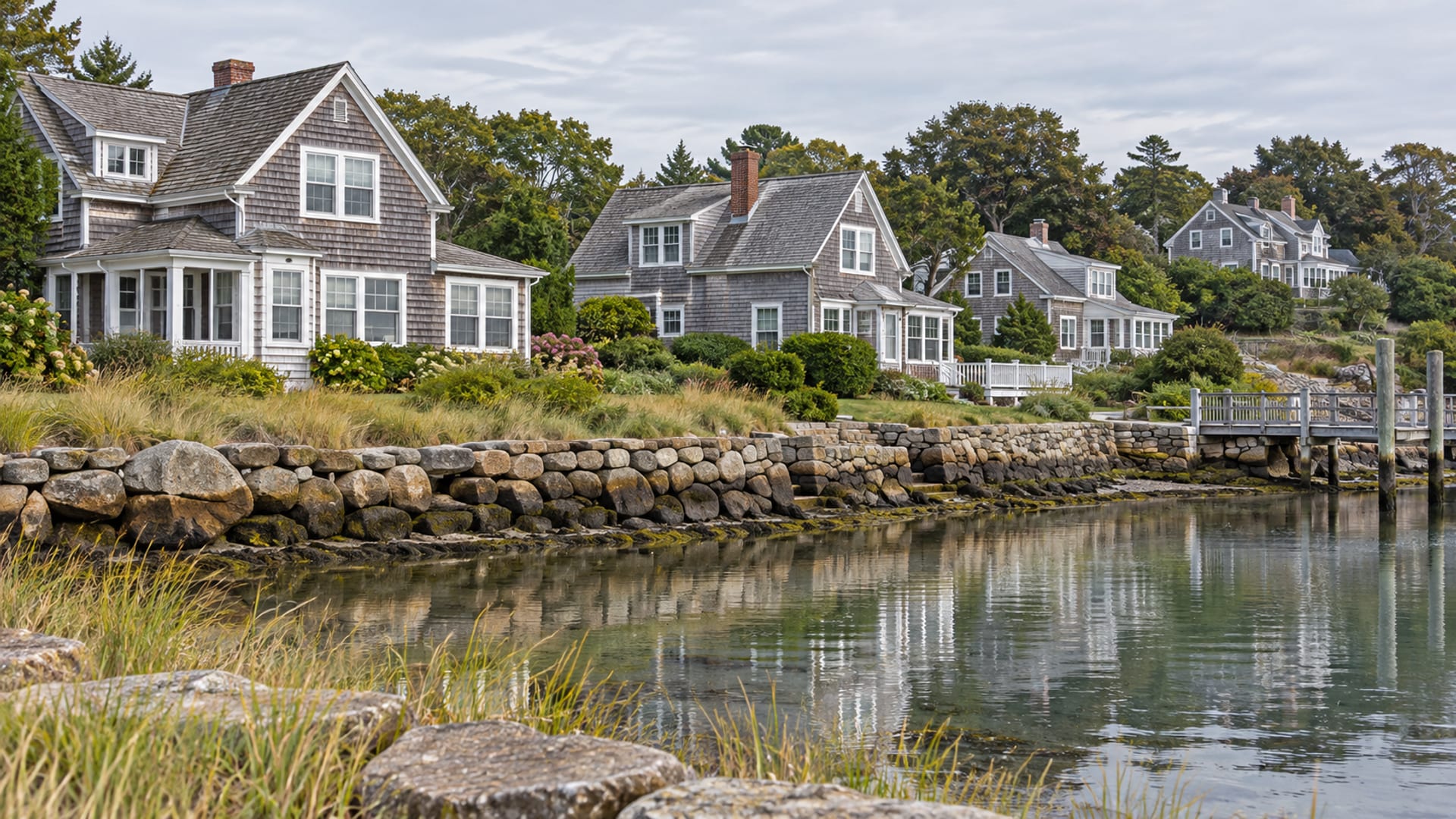
Rhode Island has no state law requiring homeowners or renters to buy flood insurance, but standard homeowners insurance does not cover flood damage, according to the Rhode Island Department of Business Regulation (DBR) (opens in a new tab). If your building is in a FEMA Special Flood Hazard Area and has a government-backed mortgage, flood insurance is required, and a lender can require it in other zones too, according to FloodSmart (opens in a new tab). You can check an address on FEMA's flood map and RIEMA's state mapping tool. National Flood Insurance Program (NFIP) policies cover buildings and contents separately, have maximum limits, restrict basement coverage and usually start after a 30-day wait. Premiums are set property by property.
Key takeaways
- State lawRhode Island has no state law requiring homeowners or renters to buy flood insurance.
- Homeowners policiesStandard homeowners insurance does not cover flood damage.
- When it is requiredA building in a FEMA Special Flood Hazard Area with a government-backed mortgage, and a lender can require it in other zones too.
- Checking your zoneLook up the address on FEMA's flood map and RIEMA's state mapping tool.
- NFIP policiesBuildings and contents are covered separately, with maximum limits, restricted basement coverage and usually a 30-day wait.
- PricePremiums are set property by property.
Whether you're buying a house before closing, answering a mortgage notice, renting an apartment or protecting a shop's inventory, the steps are similar: find out whether the coverage is required, check the flood zone, and know what a policy will pay before you talk to an agent.
Does homeowners or renters insurance cover flooding?
No. Standard homeowners insurance does not cover flood damage, according to the DBR (opens in a new tab). Flood coverage is a separate policy, available through the NFIP or from a private insurer.
Renters face the same gap. Standard renters insurance generally does not protect your belongings against flood, and your landlord's building policy doesn't cover your personal property either. NFIP contents coverage is available to renters, according to the DBR's flood questions guide (opens in a new tab), so a renter can insure belongings without insuring the building.
When is flood insurance required in Rhode Island?
The requirement comes from your mortgage, not from state law. Flood insurance is required when a home or business is in a Special Flood Hazard Area (SFHA) and has a government-backed mortgage, according to FloodSmart (opens in a new tab). The federal mandatory-purchase rule applies to federally regulated, supervised or insured lenders and federally related mortgage loans.
The federal requirement applies to the building and doesn't automatically include contents. The required amount is generally the lesser of the loan amount, the maximum NFIP coverage available or the building's insurable value excluding land, according to FEMA (opens in a new tab).
A lender can also require flood insurance when the property is outside a high-risk zone, according to FEMA (opens in a new tab). That means your loan agreement can ask for more than the federal rule does. Ask your lender which flood-zone determination it is using, whether the loan requires coverage, and what limits it needs. Owning a home outright removes the lender requirement but not the flood risk, so the coverage decision becomes yours.

How do you check your Rhode Island flood zone?
FEMA's Flood Map Service Center is the official public source for NFIP flood-hazard information, according to FEMA (opens in a new tab). To look up a property:
- Search the street address on FEMA's flood map lookup (opens in a new tab).
- Open the effective Flood Insurance Rate Map (FIRM) or a FIRMette, a printable section of the map.
- Write down the map panel, effective date, flood zone and any Base Flood Elevation shown.
- Compare where the building sits, not just the parcel boundary, with the mapped zone.
- Check the RIEMA Rhode Island floodplain mapping tool (opens in a new tab) as a state reference.
- If the result affects a mortgage or insurance decision, confirm the official effective FIRM and any Letter of Map Change.
- If you have a mortgage, ask the lender or agent for the lender's formal flood-zone determination.
RIEMA's tool is intended for reference and directs users to the official FEMA maps, according to Rhode Island's coastal flood zone guidance (opens in a new tab). FIRMs show SFHAs, lower-risk areas, flood zones and, where available, base flood elevations.
What the flood zone letters mean
Zones that start with A or V, such as A, AE, AH, AO, V and VE, are the high-risk Special Flood Hazard Areas, according to FEMA (opens in a new tab). Shaded and unshaded Zone X areas sit outside the SFHA. If your map shows a zone you don't recognize, ask your agent or lender what it means for the coverage requirement on that structure.
A zone outside the SFHA doesn't mean a property can't flood; lower-risk areas can still flood, according to the DBR (opens in a new tab). Under Risk Rating 2.0, the zone alone also no longer sets the NFIP premium.
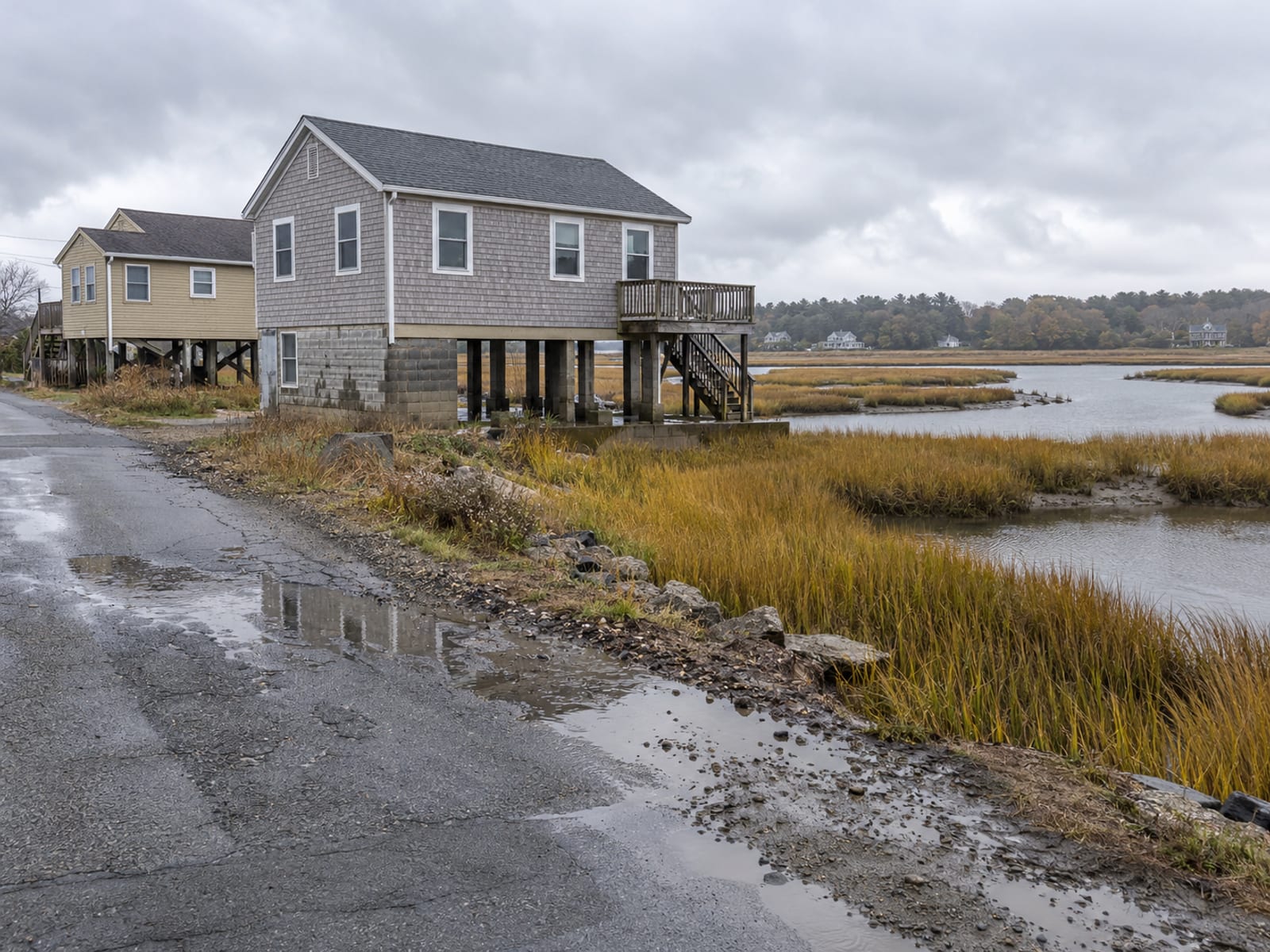
What does NFIP flood insurance cover?
NFIP policies split coverage into two parts: building coverage for the structure and contents coverage for belongings. You buy them separately. The Regular Program maximums, from FEMA's April 2024 NFIP Flood Insurance Manual as summarized on FloodSmart for agents (opens in a new tab), are:
Hover or tap a row to highlight it.
| Occupancy | Building coverage | Contents coverage |
|---|---|---|
| Single-family home | $250,000 | $100,000 |
| Residential manufactured or mobile home | $250,000 | $100,000 |
| Residential condominium unit | $250,000 | $100,000 |
| Two-to-four-family building | $250,000 | $100,000 |
| Other residential building | $500,000 | $100,000 |
| Nonresidential building | $500,000 | $500,000 |
| Nonresidential manufactured or mobile building | $500,000 | $500,000 |
These are caps, not payouts. What a claim pays also depends on the amount you bought, the deductible, the covered loss and whether the policy pays replacement cost or actual cash value. A business owner can insure the building and, separately, inventory, equipment and other contents under the nonresidential limits.
Basement limits
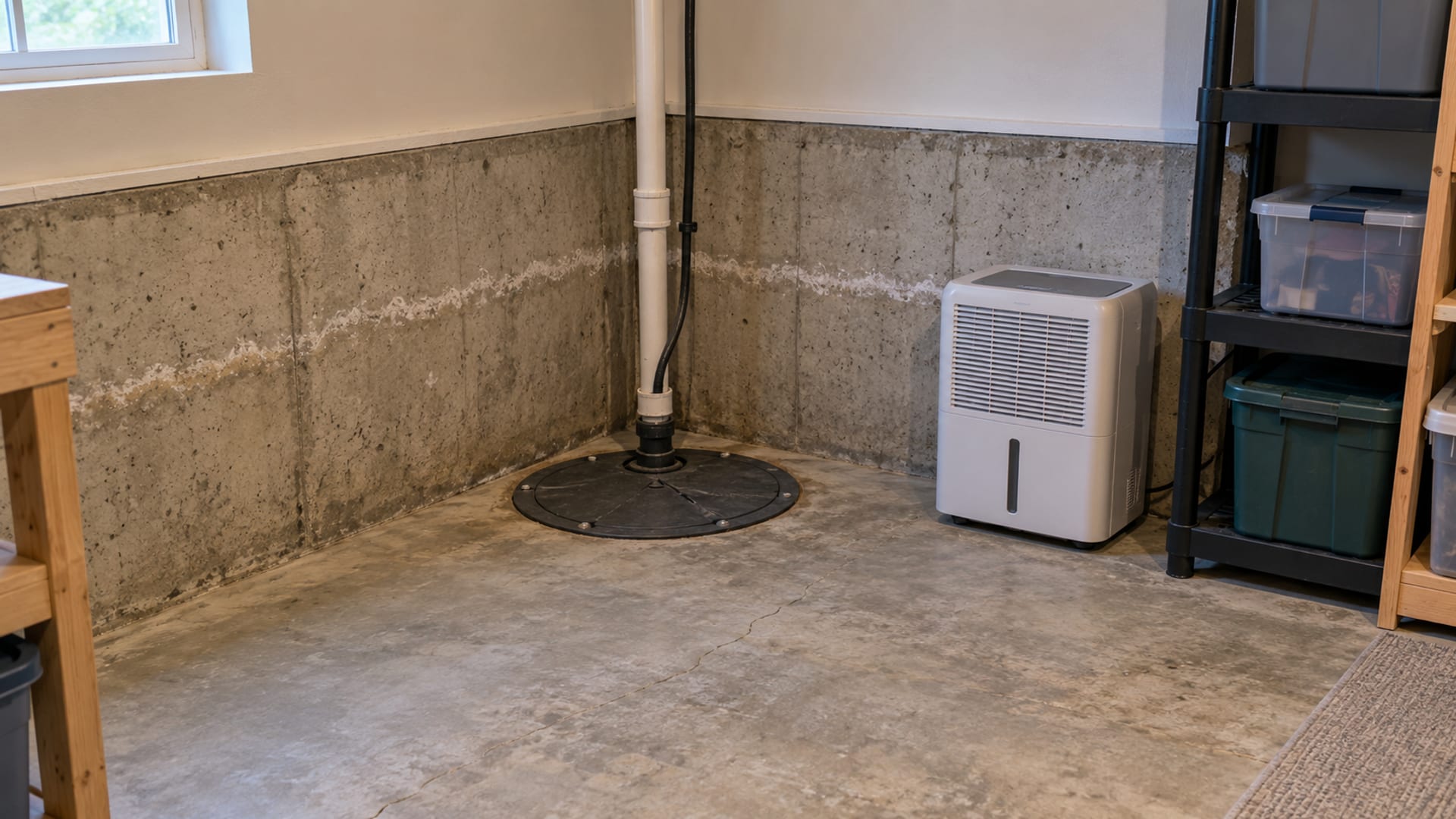
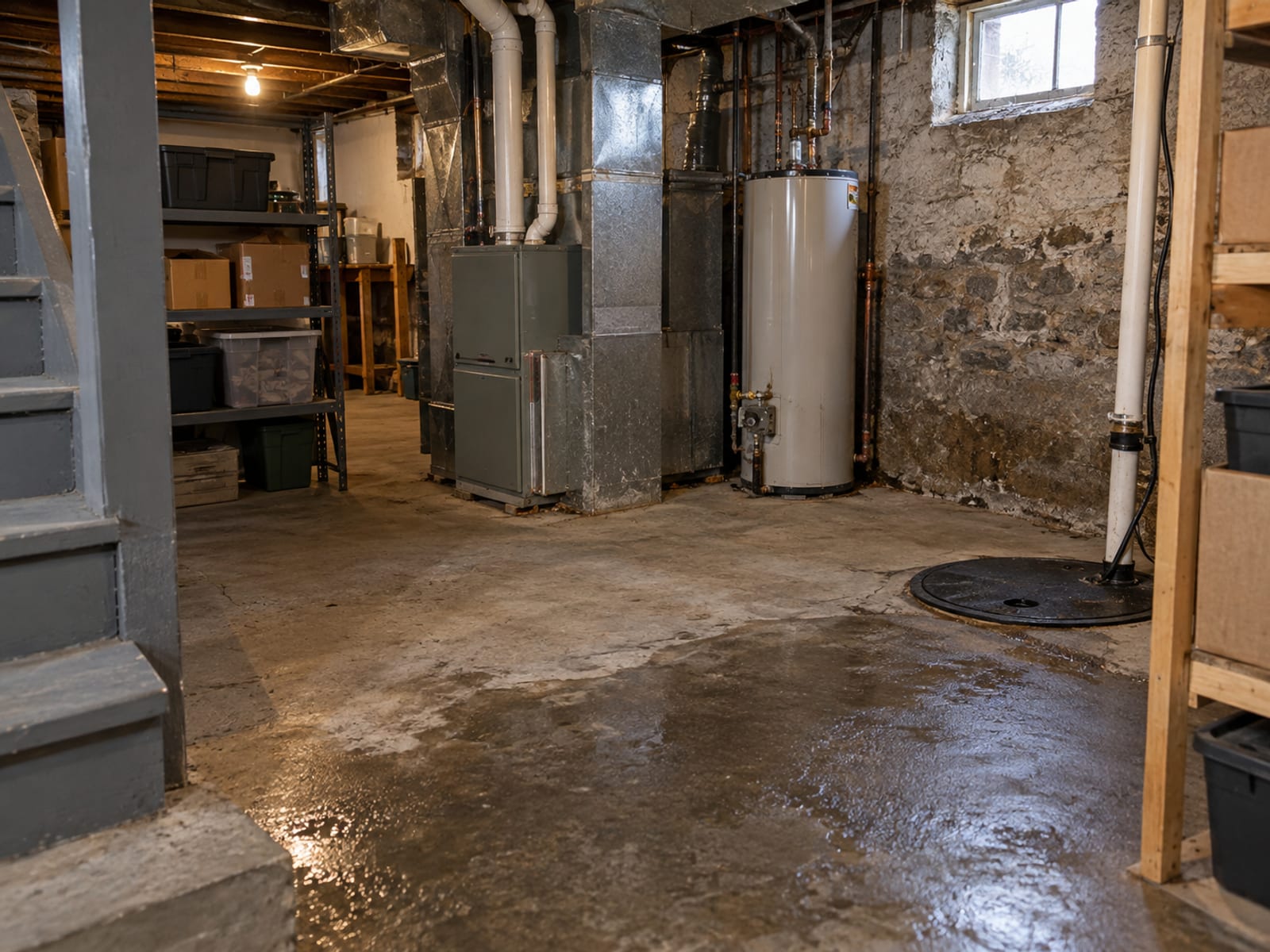
Basement coverage is limited under NFIP rules, according to FEMA (opens in a new tab). Certain installed building items may be covered, including some furnaces, water heaters, sump pumps, electrical equipment, central air-conditioning equipment and structural parts. Personal property stored in a basement and other basement items are restricted or excluded. If you have a basement, crawlspace or finished lower level, ask your agent exactly which items in it the policy would cover.
When does flood coverage start?
A new NFIP policy, or an endorsement that adds or increases coverage, generally takes effect after a 30-day waiting period, according to FEMA's NFIP manual (opens in a new tab). Damage that happens before the effective date, or during a flood already in progress, isn't covered. Buying a policy once a storm is in the forecast is too late.
FEMA lists three exceptions:
- Loan transactions: no waiting period for qualifying coverage connected with making, increasing, extending or renewing a loan secured by the property, when application and payment conditions are met. Coverage starts at loan closing.
- Newly mapped properties: a one-day wait during the first 13 months after a map revision newly places a building in an SFHA.
- Post-wildfire flooding: a one-day wait for qualifying flood damage to private property caused or worsened by post-wildfire conditions on federal land, when the policy is bought by the deadline.
If you're buying a home, ask your lender and agent to line up the flood policy with the closing date.
How much does flood insurance cost in Rhode Island?
NFIP premiums are unique to each property. They depend on where and how the building is built, what it would cost to replace, the coverage you choose and your deductible, according to FloodSmart (opens in a new tab). Risk Rating 2.0, FEMA's pricing method, considers factors including:
- Distance to flooding sources and ground elevation
- Community and CRS characteristics
- Occupancy, foundation type, first-floor height and number of floors
- Unit location, construction type and flood openings
- Machinery and equipment
- Replacement cost, coverage limits and deductibles
FEMA's April 2025 Rhode Island profile (opens in a new tab) gives a statewide view. About 12,000 NFIP policies were in force in Rhode Island, while about 400,000 properties had no NFIP policy. Over the previous 10 years, the average NFIP claim payout in Rhode Island was $27,000, compared with an average FEMA Individual Assistance payout of $2,200. Disaster assistance and insurance aren't the same thing, and the gap between those two averages is large.
Hover or tap a row to highlight it.
| Measure | Figure | Source |
|---|---|---|
| NFIP policies in force | About 12,000 | FEMA Rhode Island profile, April 2025 (opens in a new tab) |
| Properties with no NFIP policy | About 400,000 | FEMA Rhode Island profile, April 2025 (opens in a new tab) |
| Average NFIP claim payout, previous 10 years | $27,000 | FEMA Rhode Island profile, April 2025 (opens in a new tab) |
| Average FEMA Individual Assistance payout, previous 10 years | $2,200 | FEMA Rhode Island profile, April 2025 (opens in a new tab) |
| General waiting period for a new NFIP policy | 30 days | FEMA NFIP manual (opens in a new tab) |
For a price on your property, ask an agent or NFIP provider for a quote and note the quote date, policy form, limits, deductible, fees, surcharges and discounts.
Does your community get a flood insurance discount?
Communities in FEMA's Community Rating System (CRS) earn discounts on eligible NFIP policies, regardless of flood zone, according to FloodSmart (opens in a new tab). FEMA's April 2025 CRS list (opens in a new tab) shows these Rhode Island communities:
Hover or tap a row to highlight it.
| Community | CRS class | Discount |
|---|---|---|
| Bristol | 7 | 15% |
| Charlestown | 6 | 20% |
| East Providence | 8 | 10% |
| Middletown | 7 | 15% |
| Narragansett | 7 | 15% |
| New Shoreham | 8 | 10% |
| Newport | 7 | 15% |
| North Kingstown | 9 | 5% |
| Pawtucket | 8 | 10% |
| Warwick | 9 | 5% |
| Westerly | 7 | 15% |
The discount you receive depends on the community's current CRS status and your policy. Whether your town participates in the NFIP at all is listed in FEMA's Rhode Island Community Status Book (opens in a new tab). Ask your agent to confirm both on your quote.
Private and excess flood insurance
Rhode Island consumers may be able to buy flood insurance from a private insurer as well as through the NFIP, according to the DBR (opens in a new tab). Private policies can have different eligibility rules, limits, exclusions, deductibles, waiting periods, claim procedures and renewal terms.
If your property is worth more than the NFIP maximums, supplemental or excess private flood insurance may be available above them, according to FEMA (opens in a new tab). Excess coverage is a separate policy and doesn't change the NFIP limits or terms. When you compare a private quote, ask whether it is primary or excess coverage, whether it can be renewed, whether your lender will accept it, and how its exclusions and basement terms compare with the NFIP form.
How to file a flood claim
After a flood, FloodSmart's claims checklist (opens in a new tab) lays out the steps:
- Report the loss to your insurance provider as soon as you can.
- Once it's safe to return, photograph and video the property and belongings before cleanup, including water lines, structural damage, damaged items and serial, make and model numbers.
- Separate damaged from undamaged property.
- Keep samples of damaged carpet, flooring, drywall or blinds where practical.
- Keep repair receipts, invoices, estimates, replacement receipts and inventories.
- Don't throw out damaged property before inspection unless it's a health hazard or local law requires disposal.
- Check the adjuster's government-issued ID and Flood Control Number.
- Submit required documents and the proof of loss within 60 days of the flood, or within the timeframe the adjuster or insurer gives you.
- Keep your claim records after settlement.
If your claim is denied, you can appeal to FEMA within 60 days of receiving the insurer's denial letter. A proof of loss may ask for the date and cause of loss, your ownership interest, other insurance, building details, repair estimates, mortgage company information, occupancy and an inventory of damaged belongings, according to the NFIP claims manual (opens in a new tab). Keeping an inventory and photos before a flood makes that much easier.
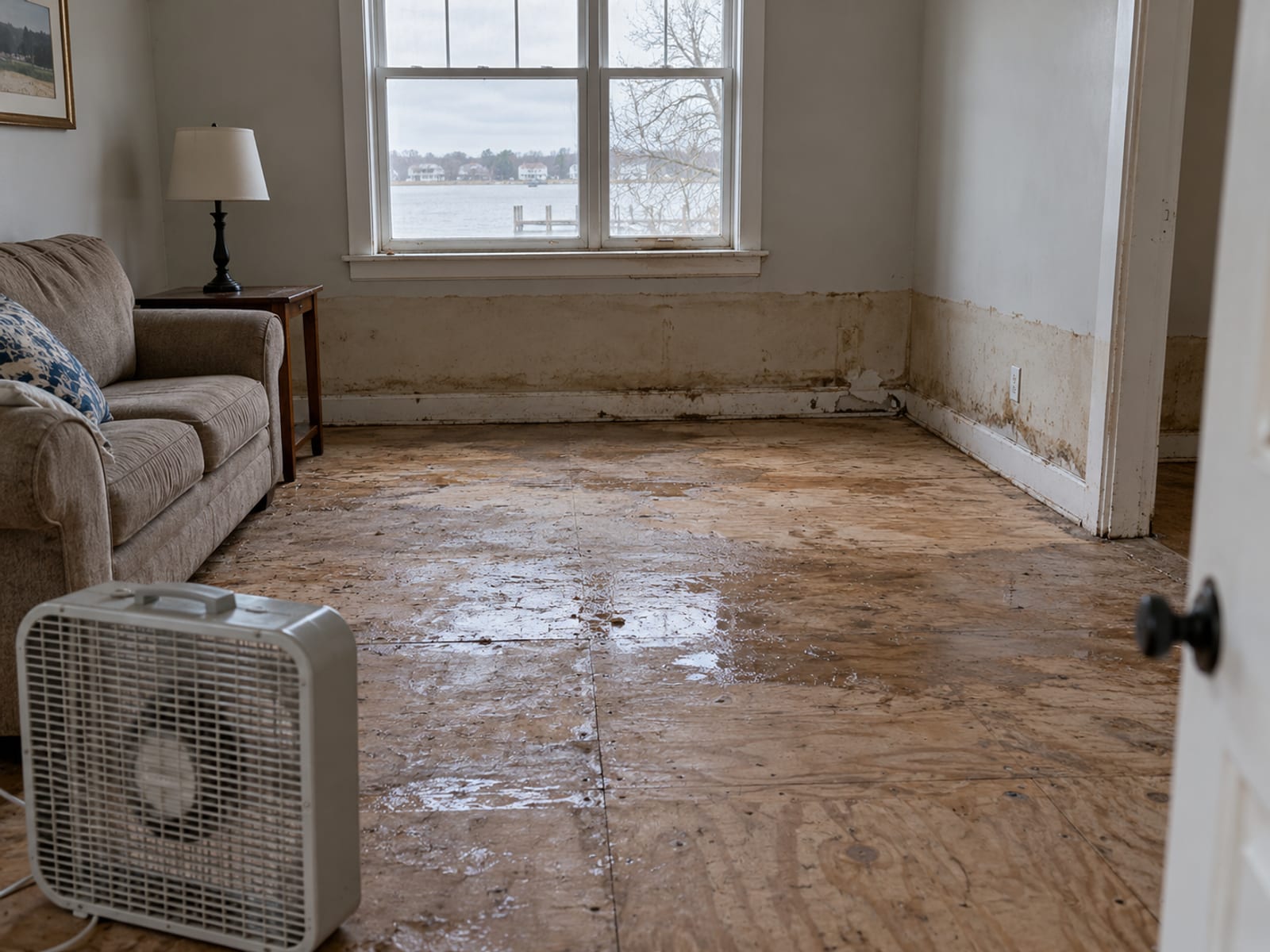
Questions to ask an agent or lender
Bring your flood zone, map panel date and loan details, and ask:
- Is the building in an SFHA on the effective FEMA map, and which determination is the lender using?
- Does my loan require flood insurance even outside an SFHA, and at what limits?
- What are the NFIP maximums for this occupancy, and how much building and contents coverage am I buying?
- What basement items are covered or excluded?
- What waiting period applies, and does a mortgage-related exception apply?
- Is this quote NFIP or private, and will my lender accept a private policy?
- What exclusions apply to storm surge, river flooding, heavy rain, sewer backup, mold, vehicles and business interruption?
- Does my community participate in CRS, and which discounts, fees, surcharges and deductibles appear on the quote?
- What are the deadlines for reporting a loss and submitting proof of loss?
- What happens if the policy lapses or is renewed late?
Check what you know about Rhode Island flood insurance
Frequently asked questions
Is flood insurance required if I own my Rhode Island home outright?
No state law requires it, according to the DBR (opens in a new tab). The federal requirement is tied to government-backed mortgages, so without a loan the decision rests on your own flood exposure.
Can I buy flood insurance right before a storm hits?
You can buy it, but a new NFIP policy generally won't cover that storm. The standard 30-day waiting period applies, and losses already in progress aren't covered under FEMA rules (opens in a new tab).
Does my CRS discount depend on my flood zone?
No. CRS discounts apply to eligible policies in participating communities regardless of flood zone, according to FloodSmart (opens in a new tab). Rhode Island discounts range from 5% to 20% on FEMA's April 2025 list.
Can a Rhode Island business insure its inventory against flood?
Yes. NFIP nonresidential policies offer up to $500,000 in building coverage and $500,000 in contents coverage, according to FloodSmart for agents (opens in a new tab). Private excess coverage may be available above those limits.
Where to start
Look up the address on FEMA's map, note the zone and panel date, and check RIEMA's tool for a state view. If there's a mortgage, get the lender's determination and required limits in writing. Then ask a licensed agent for NFIP and private quotes on building and contents separately, and set the start date at least 30 days before you need the coverage, unless a closing exception applies.
Terms used in this guide
Tap a term to see what it means.
NFIP. The National Flood Insurance Program, which sells flood policies with separate building and contents coverage.
Special Flood Hazard Area (SFHA). A high-risk flood zone on FEMA's map, with zone names that start with A or V.
FIRM. A Flood Insurance Rate Map, the effective FEMA map that shows flood zones and base flood elevations.
FIRMette. A printable section of a Flood Insurance Rate Map.
Base Flood Elevation. A figure FIRMs show for mapped areas where one is available; write it down when you look up a property.
Risk Rating 2.0. FEMA's pricing method, which sets each NFIP premium property by property.
Community Rating System (CRS). FEMA's program that gives eligible NFIP policies a discount in participating communities.
Proof of loss. The claim document that may ask for the date and cause of loss, ownership, repair estimates and an inventory, generally due within 60 days of the flood.
Excess flood insurance. A separate private policy that sits above the NFIP maximums.