DC Homeowners and Condo Insurance: What It Costs, What It Covers, and What the Condo Act Requires
Riskado
DC does not require every homeowner to carry homeowners insurance, but a mortgage lender commonly makes property insurance a condition of the loan, and a lender can buy coverage for you if you let it lapse (DISB force-placed insurance FAQ (opens in a new tab)). A standard HO-3 policy combines dwelling, other structures, personal property, loss of use, personal liability and medical payments coverage, while flood and many sewer backup losses need separate treatment. Condo owners have a second document to compare: the association's master policy. Under DC Code § 42-1903.10 (opens in a new tab), the association insures the common elements and common-element liability, and each unit owner must carry condominium owner coverage, subject to the statute and the building's governing documents. The premium averages that follow are dated market figures, not quotes.
Key takeaways
- Is it requiredDC sets no universal homeowners insurance mandate, but a mortgage lender commonly requires it as a loan condition.
- What HO-3 coversDwelling, other structures, personal property, loss of use, personal liability and medical payments.
- What it leaves outFlood is not covered by a typical policy, and sewer backup depends on the policy or an endorsement.
- Condo ownersThe association insures common elements; each owner must carry at least $10,000 of dwelling and $300,000 of liability coverage, where reasonably available.
What homeowners and condo insurance cost in DC
DC's average HO-3 homeowners premium was $1,384 in 2022, and the average HO-6 condo unit owner premium was $405, according to the NAIC 2022 Homeowners Report (opens in a new tab). Both sit below the national averages for the same year: $1,569 for HO-3 and $539 for HO-6. That puts DC $185 under the national HO-3 average and $134 under the national HO-6 average.
Hover or tap a row to highlight it.
| Policy form | DC average | National average |
|---|---|---|
| HO-3 owner-occupied home | $1,384 | $1,569 |
| HO-6 condo or co-op unit owner | $405 | $539 |
These are aggregate 2022 averages by policy form, not a price for a particular house or unit. The NAIC notes that state comparisons vary with coverage amounts, underwriting costs, repair costs, state laws and market conditions (NAIC report release (opens in a new tab)). Your own premium depends on the home's construction and rebuilding cost, the deductible and coverage you choose, the property's condition and your claims history. To work out the dwelling limit itself, see how much homeowners insurance you need.
Is homeowners insurance required in DC?
DC law sets no universal requirement that every homeowner buy homeowners insurance. The requirement usually comes from your mortgage. A lender may require homeowners insurance, and if you do not keep the coverage the mortgage agreement calls for, fail to send proof, let it expire or carry less than the loan terms require, the lender may buy force-placed insurance, according to DISB (opens in a new tab). DISB adds that the same requirement may apply to cash-out refinances and home equity lines of credit.
Force-placed insurance is coverage the lender buys to protect its own interest, and it may not give you the same protection as a policy you choose yourself. Read the insurance section of your loan agreement, and ask the lender exactly what proof and coverage terms it needs and when.

What a standard HO-3 policy covers
A homeowners policy is a package that commonly contains six coverages, according to the DISB consumer's guide to home insurance (opens in a new tab):
- Dwelling. The house itself.
- Other structures. Structures on the property that are not attached to the house.
- Personal property. Your belongings.
- Loss of use, or additional living expenses. Extra costs of living elsewhere while a covered loss is repaired.
- Personal liability. Covered claims that you injured someone or damaged their property.
- Medical payments. Certain medical bills for people hurt on your property.
HO-3 is the dominant form for owner-occupied homes. It generally gives broad coverage for the building and named-peril coverage for personal property (NAIC (opens in a new tab)). The exact covered perils, limits, valuation method, deductibles and exclusions are set by your policy, and the declarations page lists them.
What a homeowners policy leaves out
Flooding is not covered by a typical homeowners policy, according to DISB (opens in a new tab). Flood coverage comes from a separate policy through the National Flood Insurance Program (NFIP) or a private insurer, and our guide to DC flood insurance covers how that works. Other common exclusions or separate coverage subjects include (DISB consumer guide (opens in a new tab)):
- Earth movement, depending on the policy wording.
- Sewer or drain backup, unless the policy or an endorsement covers it.
- Maintenance problems, wear and tear and neglect.
- Certain mold or water losses, depending on what started the damage and the policy language.
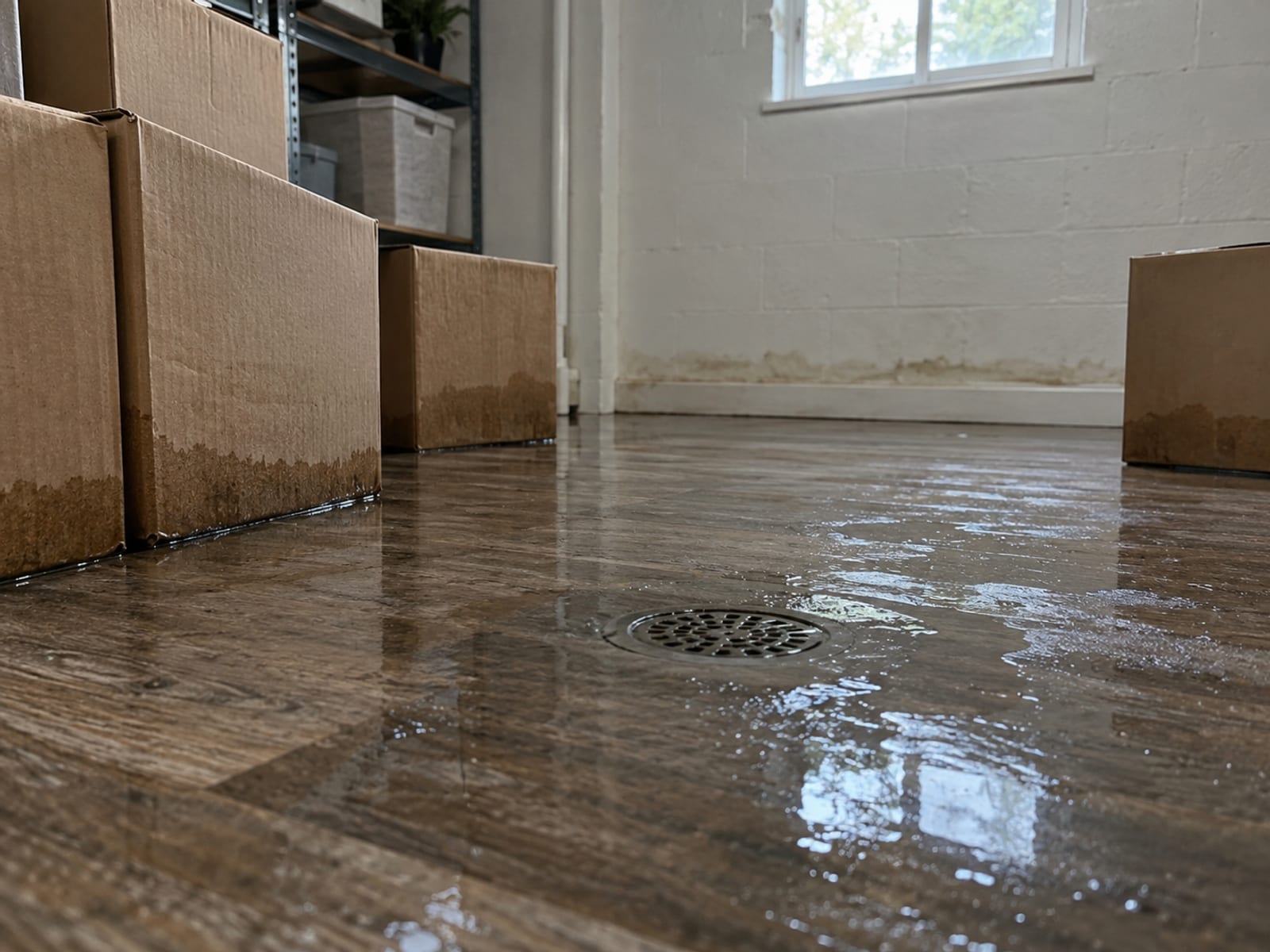
Water is where these lines matter most. A sudden pipe burst, a slow leak, sewer backup and rising floodwater can each be treated differently. When flooding causes a sewer or drain backup, the NFIP addresses that loss under the Standard Flood Insurance Policy (FEMA NFIP claims manual (opens in a new tab)). Ask whether water backup coverage is included, excluded or available by endorsement.
What the DC Condominium Act requires of the association
DC Code § 42-1903.10 (opens in a new tab) sets the insurance a condo association must carry, unless the condominium instruments expressly provide otherwise and to the extent the coverage is reasonably available:
- Property insurance on the common elements against all risks of direct physical loss commonly insured against, with total insurance after deductibles of at least 90% of replacement cost at purchase and at each renewal.
- Liability insurance, including medical payments, for commonly insured death, bodily injury or property damage arising from the use, ownership or maintenance of the common elements.
When the units have horizontal boundaries described in the condominium instruments, the association's property insurance must include the units to the extent reasonably available. It does not have to cover an improvement or betterment the owner installed. The association policy must also treat unit owners as insureds for liability tied to their interest in the common elements or their membership, waive subrogation against owners and their households as the statute describes, and be primary when it and an owner's policy cover the same risk.
The master policy's insurer may not cancel or refuse to renew it until 30 days after notice is mailed to the association, unit owners and mortgagees (§ 42-1903.10 (opens in a new tab)).
Hover or tap a row to highlight it.
| Rule | What the statute says | Section |
|---|---|---|
| Association property insurance | Common elements, at least 90% of replacement cost after deductibles | § 42-1903.10 (opens in a new tab) |
| Association liability insurance | Common-element death, bodily injury or property damage, including medical payments | § 42-1903.10 (opens in a new tab) |
| Owner dwelling coverage minimum | $10,000, to the extent reasonably available | § 42-1903.10(d-1) (opens in a new tab) |
| Owner personal liability minimum | $300,000, to the extent reasonably available | § 42-1903.10(d-1) (opens in a new tab) |
| Unit-originated deductible | Owner may owe up to $5,000 if the bylaws are silent and notice was given | § 42-1903.10(j) (opens in a new tab) |
| Master policy cancellation notice | 30 days after notice is mailed | § 42-1903.10(h) (opens in a new tab) |
What an HO-6 policy should address
Each DC unit owner must buy condominium owner insurance with at least $10,000 of dwelling property coverage and at least $300,000 of personal liability coverage, to the extent reasonably available, and the executive board may raise those minimums at a properly noticed meeting (DC Code § 42-1903.10(d-1) (opens in a new tab)). Those are floors set by statute, not a recommendation for your unit.
An HO-6 policy covers the owner's interests that the master policy leaves out. That commonly includes:
- Personal property inside the unit.
- Interior parts of the unit that the governing documents or master policy leave to the owner.
- Improvements and betterments you installed, such as upgraded flooring or cabinets.
- Personal liability, and medical payments where included.
- Loss assessment coverage, subject to the policy's terms.
- Additional living expenses after a covered loss.
- Endorsements such as water backup, subject to the policy.
The line between the two policies differs from building to building. Compare the declaration, the bylaws, the master policy, the certificate of insurance and your HO-6 policy together, and ask the association or its manager for the master policy's declarations page and deductible.

Who pays the condo deductible
The bylaws must state the coverage, the limits and who is responsible for deductibles, under DC Code § 42-1903.10 (opens in a new tab). When the damage starts in the common elements, the association's deductible is a common expense unless the condominium instruments say otherwise.
When the damage starts in a unit and the bylaws do not assign the deductible, the owner of that unit is responsible for the association's property insurance deductible up to $5,000, as long as the association told owners about this responsibility before the damage happened. That amount is assessed against the owner's unit. Ask your agent whether loss assessment coverage on your HO-6 policy would respond to a charge like this, and up to what amount.
Rowhouses, shared walls and a neighbor's loss
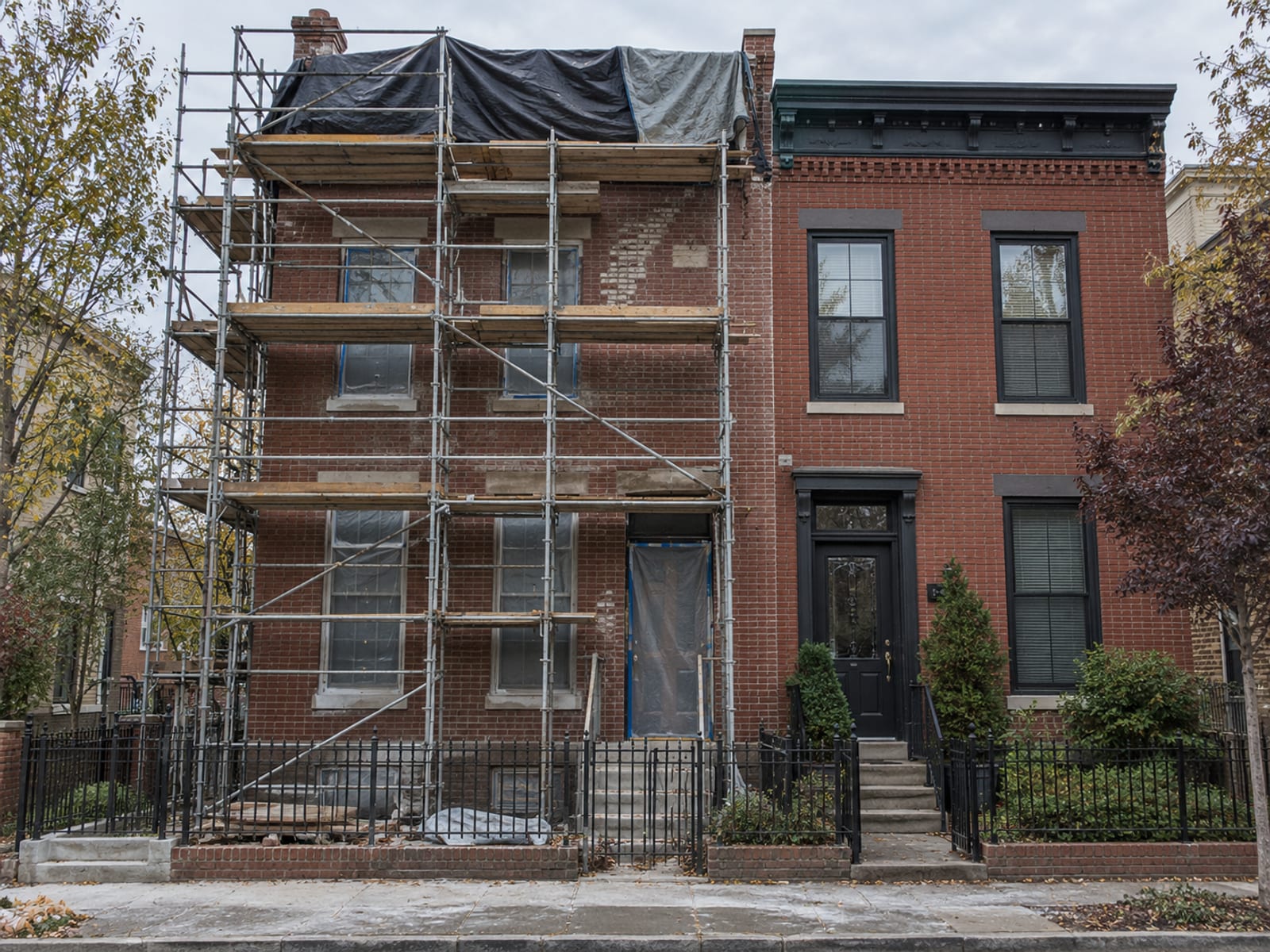
In an attached rowhouse, a fire or leak can cross a party wall. Who pays depends on what caused the loss, who owns and maintains the damaged part of the building, the policies involved, negligence and other liability rules, and each policy's exclusions and subrogation terms. A neighbor's insurer does not pay automatically, and neither does yours.
If a loss reaches your home from next door:
- Report it to your own insurer promptly.
- Tell the neighboring owner, or the association, when that applies.
- Keep photos, repair records, contractor reports and messages.
- Ask your insurer which part of the policy applies and whether it plans to pursue subrogation against another party.
For a disputed case, ask your insurer or a DC property attorney how your ownership documents, the cause of loss and the policies apply.
Why DC premiums change
DC does not set the homeowners rates insurers charge. Insurers file rates with DISB along with supporting analysis, and DISB reviews the filings, may ask for more information and may require changes when a filing does not comply with District law (DISB on rate filings (opens in a new tab)). Rates must be adequate, not excessive and not unfairly discriminatory, based on sound actuarial principles and reasonably related to costs.
Insurers may weigh several rating factors. DC allows a credit-based insurance score as one factor in homeowners premiums, and that score is not the same as a regular credit score (DISB on credit-based insurance scores (opens in a new tab)). If your premium rises, ask the agency whether a credit-based insurance score or a claims history report was used, request any adverse action information you are owed, and check your application for errors.
Cancellation, nonrenewal and claims
An insurer may not refuse to renew a homeowners policy solely because of claim or loss frequency unless there have been two or more claims in the most recent three-year experience period, according to DISB Bulletin 24-IB-003-05/31 (opens in a new tab), issued May 31, 2024. The same bulletin says a first weather-related claim cannot be used for a significant premium increase, rating-class change or surcharge contrary to the applicable unfair trade practices rule.
Claim handling has its own standard. DC Code § 31-2231.17 (opens in a new tab) treats these as unfair claim settlement practices when they happen often enough to be a general business practice:
- Misrepresenting material policy or claim facts.
- Refusing to pay arbitrarily or capriciously.
- Failing to acknowledge claim communications reasonably promptly.
- Failing to investigate under reasonable standards, or refusing to pay without a reasonable investigation.
- Failing to affirm or deny coverage within a reasonable time after proof of loss or investigation.
- Failing to settle promptly when liability is reasonably clear.
- Failing to explain a denial promptly and reasonably.
- Unreasonably delaying payment or duplicating proof-of-loss verification.
The statute authorizes a penalty of up to $1,000 for each violation of subsection (a). If you receive a cancellation or nonrenewal notice, read it closely, ask the insurer in writing for the specific reason, and contact DISB promptly if the notice looks improper.
If private insurers decline your property
The District of Columbia Property Insurance Facility is the District's FAIR plan, a residual market for qualified property that cannot get insurance through the normal market. The DC Code says the insurance placement chapter exists to make basic property insurance and homeowners insurance available and to spread that coverage fairly among insurers (DC Code § 31-5001 (opens in a new tab)). The Facility offers homeowners, dwelling and commercial property insurance for qualified properties (DISB report on the Facility (opens in a new tab)). Coverage is generally more limited than an ordinary-market policy, and eligibility and underwriting standards apply, so ask an agency to compare what a Facility policy includes with what your lender requires.
How to check an agent and file a complaint
A person must hold a DC license before selling, soliciting or negotiating insurance in the District (DC Code § 31-1131.03 (opens in a new tab)). Confirm an agent or agency with the DC insurance license lookup (opens in a new tab), which DISB's license verification page (opens in a new tab) also points to; choose the jurisdiction and licensee type, then search by name or license number.
DISB accepts complaints about coverage, claims, premiums, sales misrepresentation, cancellations, refunds and insurance producers. Ask the company for a response first, then file through the DISB complaint process (opens in a new tab) with your supporting documents.
Questions to ask an agency, and what to bring
Gather these before you ask for a comparison:
- The current declarations page, the full policy and its endorsements.
- Your lender's insurance requirements.
- For a condo, the declaration, bylaws, master policy declarations page, certificate of insurance, deductible schedule and any association insurance notices.
- An inventory of personal property with receipts, photos, appraisals and serial numbers.
Then ask:
- Is this an HO-3, HO-5, HO-6, dwelling fire or another policy form?
- What property, perils and exclusions apply?
- Is the dwelling valued at replacement cost, actual cash value or another method, and how are belongings valued?
- What does the policy exclude for flood, earth movement, seepage, sewer backup, maintenance or wear and tear?
- Is water backup coverage included, excluded or available by endorsement, and what separate flood coverage would I need?
- For a condo, what does the master policy cover, and what does my HO-6 policy need to address?
- Are owner-installed improvements, flooring, cabinets, fixtures and interior walls on the association's policy or mine?
- What do the declaration and bylaws say about deductibles and loss assessment?
- How does the policy handle a loss that starts in a neighboring rowhouse or a common element?
- What claims history, credit-based insurance score, inspection or roof information will be used?
- What proof does my lender need, and what are the cancellation and nonrenewal provisions?
- Is the producer or agency licensed in DC, and who handles claims and complaints?
Check what you know about DC homeowners and condo insurance
Frequently asked questions
Does homeowners insurance cover sewer backup?
It depends on the policy and its endorsements, according to the DISB consumer guide (opens in a new tab). Do not assume it is included; ask whether water backup coverage is part of the policy or available as an endorsement.
What does a DC condo association insure?
Subject to the condominium instruments and reasonable availability, the association insures the common elements against direct physical loss and carries liability insurance, including medical payments, for common-element risks (DC Code § 42-1903.10 (opens in a new tab)). In buildings with horizontal unit boundaries, its property insurance also includes the units, except owner-installed improvements.
Can an insurer refuse to renew after one weather-related claim?
Claim or loss frequency alone cannot support nonrenewal unless there have been at least two claims in the most recent three-year experience period, according to DISB's May 31, 2024 bulletin (opens in a new tab). Contact DISB if a notice seems to conflict with that rule.
What if no private insurer will cover my home?
The District of Columbia Property Insurance Facility operates as DC's FAIR plan for qualified properties that cannot get essential property insurance in the normal market (DISB report (opens in a new tab)). Its coverage is generally more limited, and eligibility standards apply.
Your next step
Pull together your declarations page, your lender's requirements and, for a condo, the bylaws and master policy, then take the questions above to a licensed agency. Riskado's directory lists insurance agencies in the District of Columbia by category. If you rent rather than own, see DC renters insurance, and if you are comparing across the region, see Maryland homeowners insurance and Virginia homeowners insurance.
Key terms
Tap a term to see what it means.
HO-3. The most common homeowners policy form for owner-occupied homes, with broad building coverage and named-peril personal property coverage.
HO-6. The condominium or co-op unit owner policy, covering the owner's interests that the association's master policy leaves out.
Master policy. The condo association's insurance on the common elements and common-element liability.
Common elements. The parts of a condominium owned in common, outside the individual units.
Improvements and betterments. Upgrades a unit owner installs, such as new flooring or cabinets.
Loss assessment. A charge the association passes to unit owners for a shared loss or deductible.
Force-placed insurance. Coverage a lender buys when required homeowners insurance is missing, lapsed or inadequate.
FAIR plan. A residual market that offers property insurance to qualified properties the normal market declines.