Do You Need Flood Insurance in DC? Flood Zones, Lender Rules and What Coverage Costs
Riskado
Flood insurance is not required for every property in DC. A federally regulated lender generally must require it when the building securing the loan is in a FEMA Special Flood Hazard Area (SFHA), and any lender can make it a loan condition in other zones (FEMA Flood Insurance 101 (opens in a new tab)). Standard homeowners and renters policies do not cover flood, according to the DC Department of Insurance, Securities and Banking (DISB) (opens in a new tab). Check the address in FEMA's Flood Map Service Center (opens in a new tab) and DOEE's DC Flood Risk Tool (opens in a new tab), then go over building, contents, basement, sewer-backup, waiting-period and lender requirements with a licensed agent. A National Flood Insurance Program (NFIP) policy has its own limits and pricing, separate from your homeowners or renters policy.
Key takeaways
- No blanket ruleFlood insurance is not required for every property in DC.
- Lender requirementA federally regulated lender generally must require it when the building securing the loan is in a FEMA SFHA, and any lender can require it in other zones.
- Standard policiesHomeowners and renters policies do not cover flood.
- Two mapsCheck the address in FEMA's Flood Map Service Center and DOEE's DC Flood Risk Tool.
- Separate policyAn NFIP policy has its own limits and pricing.
Do you need flood insurance in DC?
The answer depends on which of three kinds of requirement applies to you. Federal rules set the first one: when a building in an SFHA secures a loan from a federally regulated, supervised or insured lender, and the community participates in the NFIP, the lender generally must require flood insurance (FEMA NFIP Flood Insurance Manual (opens in a new tab)). The second is the lender's own choice, since a lender can require flood coverage as a loan condition outside an SFHA too. Everything else is optional coverage that you decide on.
The District adds no blanket purchase rule on top of that. Flood insurance is not universally required in DC, while many high-risk properties with federally regulated mortgages must carry it, according to DISB's flood insurance FAQs (opens in a new tab). Renters, condo owners without a mortgage and owners who paid cash make the call themselves, and the building's actual flood exposure is the most useful guide to that call.
Does homeowners or renters insurance cover flood in DC?
No. Standard homeowners and renters policies do not cover flood loss, and a water-backup or sump-pump endorsement does not turn the policy into flood insurance, according to DISB's consumer guide on flood insurance (opens in a new tab). DC law makes insurers say so in writing: homeowners and renters insurers must give applicants and policyholders a notice that the standard policy does not cover flood losses and that separate flood coverage may be available through the NFIP or other sources (DC Code § 31-2502.28a (opens in a new tab)).
Sewer backup sits between the two. Water that backs up through a drain or sewer may be covered under a sewer-backup endorsement, subject to its terms, while floodwater that enters from outside is treated as flood (DISB coverage guidance (opens in a new tab)). The cause of the water decides which policy, if any, responds. Our guide to whether homeowners insurance covers water damage walks through those causes, and the guides to DC homeowners and condo insurance and DC renters insurance cover the rest of each policy.
How to check a DC flood zone by address
Check two maps, because they answer different questions.
- FEMA's Flood Map Service Center (opens in a new tab). Search the property address to see the effective Flood Insurance Rate Map (FIRM), the flood zone and related map information. This is the map that drives lender decisions.
- DOEE's DC Flood Risk Tool (opens in a new tab). Search the same address and turn on the layers you need: the FEMA FIRM, the DC Integrated Flood Model, storm surge, sea-level rise and infrastructure.
Save or print what you find, with the date. Floodplain boundaries are updated periodically, and the DC Department of Energy and Environment (DOEE) sends written notice to affected District residents when flood-risk maps change (DOEE flood risk maps (opens in a new tab)).

Can a DC property outside a high-risk zone still flood?
Yes. FEMA's traditional maps show flooding along coastlines, major rivers and streams, but they do not show all of the flooding caused by heavy rain and overwhelmed stormwater systems, according to DOEE's Integrated Flood Model page (opens in a new tab). DOEE's Integrated Flood Model covers that interior flooding, and its modeled events reach well away from the Potomac and the Anacostia, with examples in Federal Triangle, Bloomingdale, LeDroit Park, Cleveland Park and Rhode Island Avenue NE.
Flooding in the District comes in several forms:
- River flooding from the Potomac and Anacostia rivers and from the streams that feed them.
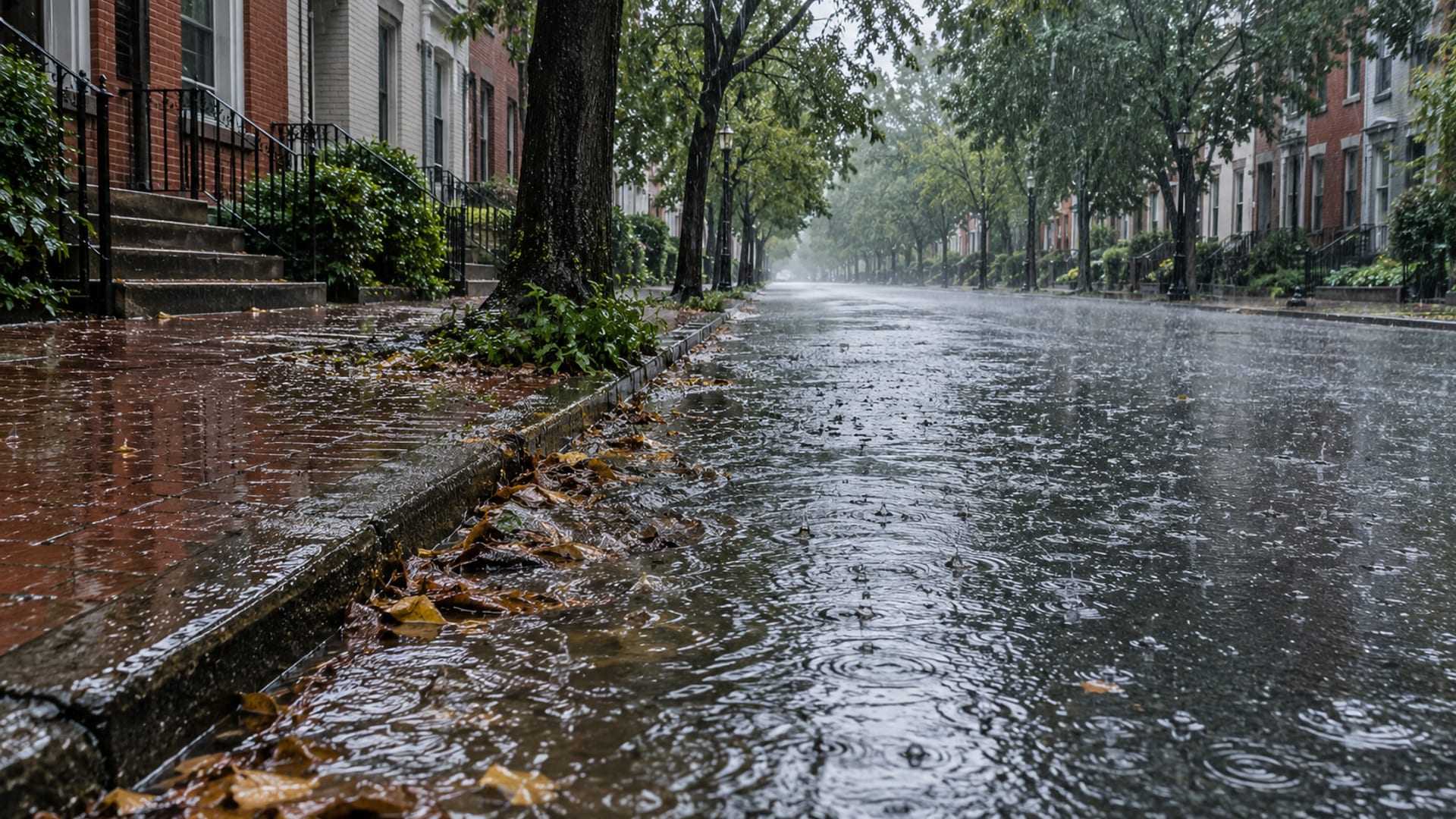
- Stormwater or interior flooding, when heavy rain overwhelms drainage systems away from the major rivers.
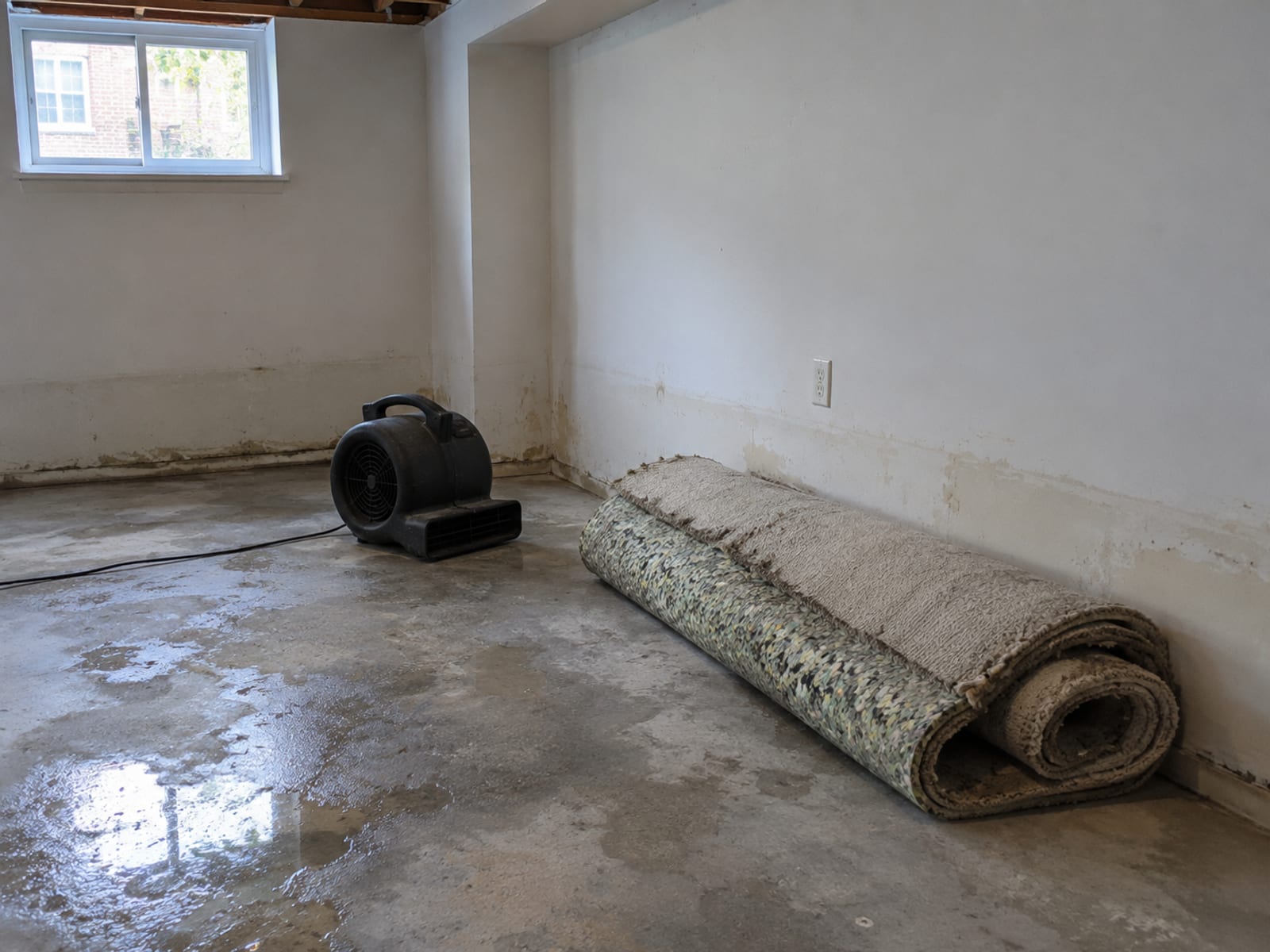
- Basement flooding, when water reaches a lower level through outside flooding, drainage problems, sewer backup or a failed sump pump.
- Storm surge and sea-level rise, which appear as layers in DOEE's flood-risk tools for the locations they affect.
A low-risk result on FEMA's map is not a finding that the building cannot flood. If the home has a basement, a history of water in the lower level, or sits in an area the Integrated Flood Model shows, raise that exposure with an agent whether or not a lender requires coverage.
What changed on the Watts Branch flood maps
The Watts Branch flood maps officially changed on October 29, 2024, through a FEMA Letter of Map Revision (LOMR) based on improved topographic and hydraulic data, according to DOEE's Watts Branch maps page (opens in a new tab). A map revision can move a building into or out of an SFHA, and that can change whether a lender requires flood insurance.
If you own or are buying near Watts Branch, look the address up again on the current effective map rather than relying on an older printout, an old listing or a preliminary map. A building newly mapped into an SFHA can qualify for a one-day waiting period when coverage is bought within the applicable map-update period.
When a mortgage lender requires flood insurance
The federal mandatory purchase requirement generally applies when all three of these are true (FEMA NFIP Flood Insurance Manual (opens in a new tab)):
- The building securing the loan is in an SFHA.
- The community participates in the NFIP.
- The loan is made, increased, extended or renewed by a federally regulated, supervised or insured lender, or is subject to other federal lending requirements.
When the rule applies, the required building coverage is the loan amount, excluding land value, or the maximum NFIP coverage available, whichever is less. A lender can also require flood insurance as a loan condition outside an SFHA. Either way, ask the lender for its flood determination, the coverage amount it requires and the date it needs proof of coverage before closing.
What NFIP flood insurance covers
An NFIP policy splits coverage into building and contents, each with its own limit. FEMA's April 2024 manual lists these Regular Program maximums (FEMA NFIP Flood Insurance Manual (opens in a new tab)):
Hover or tap a row to highlight it.
| Occupancy | Building limit | Contents limit |
|---|---|---|
| Single-family dwelling | $250,000 | $100,000 |
| Residential condominium unit | $250,000 | $100,000 |
| Two-to-four-family building | $250,000 | $100,000 |
| Other residential building | $500,000 | $100,000 |
| Non-residential building | $500,000 | $500,000 |
| Non-residential unit | No building coverage | $500,000 |
These limits are caps, not estimates of what a building costs to repair. A renter's belongings need contents coverage of their own, because a landlord's building coverage is written for the building.
Condos have two layers. An eligible residential condominium association can insure the building with a Residential Condominium Building Association Policy (RCBAP). RCBAP building coverage is limited to the lesser of the building's replacement cost or $250,000 times the number of units, and it can include certain structural elements and commonly owned building property; contents coverage for commonly owned property is separate (FEMA condominium association brochure (opens in a new tab)). Ask the association whether it carries an RCBAP and what it includes, then compare your unit improvements and personal property with your own unit coverage.
What flood insurance leaves out or limits
NFIP coverage carries these exclusions and limits (FEMA NFIP Flood Insurance Manual (opens in a new tab); FloodSmart: Start a Claim (opens in a new tab)):
- Basement coverage is limited to specified building items and contents.
- There is no general coverage for additional living expenses, such as a hotel while repairs are made.
- Many outdoor items are not covered, such as landscaping, fences, pools and certain structures.
- Most vehicles are not covered.
- Business interruption is not covered.
- Sewer backup is covered only when its cause meets the policy's definition of a flood.
- Personal property is generally paid at actual cash value.
If the home has a basement, ask the agent in writing how the policy treats finished walls, flooring, appliances, utilities and personal property below ground level, and what other policy, if any, would pay for temporary housing.

How long before a new flood policy starts
A new NFIP policy generally takes effect 30 days after purchase. FEMA lists these exceptions (FloodSmart: Buy a Flood Insurance Policy (opens in a new tab)):
- No waiting period when coverage is bought in connection with making, increasing, extending or renewing a mortgage.
- No waiting period for a coverage change made at renewal.
- A one-day wait when a property is newly designated in an SFHA and coverage is bought within the applicable map-update period.
- A one-day wait when a flood is caused or worsened by wildfire on federal land and coverage is bought within 60 days of the fire's containment date.
The policy and the circumstances of the purchase set the effective date. Without a mortgage closing, the 30 days run from purchase, so a policy bought once heavy rain is in the forecast is unlikely to be in force when it arrives. Confirm the effective date on the declarations page.
What flood insurance costs in DC
The average flood policy costs $600 to $700 a year, according to DISB's flood insurance FAQs (opens in a new tab). DISB gives no year for that average, so read it as an older figure, not a current quote.
FEMA's April 2025 District profile gives these figures (FEMA DC Risk Rating 2.0 profile (opens in a new tab)):
- 2,400 NFIP policies in force in DC.
- 282,000 DC properties not covered by an NFIP policy.
- An $11,200 average NFIP claim payout in DC over the prior 10 years.
The same profile shows how Risk Rating 2.0 changed DC premiums: 1,737 policies had average decreases of $0 to $10 a month, 582 had average increases of $0 to $10 a month, 42 had average increases of $10 to $20 a month, and 35 had average increases of more than $20 a month.
Risk Rating 2.0 prices each policy with property-specific flood-risk information and modern modeling rather than relying mainly on older rating categories (FEMA Flood Insurance 101 (opens in a new tab)). The District figures describe existing policies, not a premium for any one building. The price that applies to you is the quote for your property, so ask which map and building characteristics drive it.
Private and excess flood insurance
Flood insurance is available through the NFIP or directly from some private insurers, and private flood insurers may offer higher limits than the NFIP, according to DISB's consumer guide on flood insurance (opens in a new tab). Excess flood coverage sits above an NFIP limit. It is a separate policy with its own eligibility, underwriting and terms, and it has to coordinate with the policy beneath it (FEMA proposal on NFIP limits (opens in a new tab)).
Keep five things apart when you compare quotes: an NFIP policy, a private primary flood policy, private excess flood coverage above an NFIP limit, your ordinary homeowners, renters or commercial policy, and a sewer-backup or water-backup endorsement. If a lender requires flood insurance, ask whether it accepts a private policy before you buy one.
What DC disclosure rules say about flood
DC's seller-disclosure law applies to sales and other covered transfers of one-to-four-unit residential property when the buyer states in writing an intent to live there (DC Code, Title 42, Chapter 13 (opens in a new tab)). The seller must give a signed disclosure statement before or when the buyer signs the purchase agreement, and it covers actually known defects and the condition of systems including the roof, walls, floors, foundation and basement. The law has no separate item labeled flood history; a known basement, foundation or water problem comes in through those physical-condition items.
For renters, DC Code § 42-3502.22 (opens in a new tab) deals with rent, pending petitions and related rental documents. If flood history matters to you before you sign a lease, ask the landlord about past water in the unit and the building, and plan contents coverage for your own belongings.
The District's flood-specific notice comes from insurers. The flood-exclusion notice in § 31-2502.28a (opens in a new tab) was added by DC Law 20-18 in 2013, and it goes to homeowners and renters applicants and policyholders.
How to file a flood claim in DC
FEMA's NFIP claims checklist (opens in a new tab) sets out the order:
- Put safety first, and do not go back into an unsafe building.
- Report the claim promptly to your agent or insurer, with the policy number if you have it.
- Find out whether the policy includes building coverage, contents coverage or both.
- Photograph and video the damage before you throw anything away, when it is safe.
- Make an itemized contents list with descriptions, values, age, quantity and serial numbers where you have them.
- Keep a log of conversations with insurers, adjusters, contractors and cleaners.
- Check the adjuster's government identification and Flood Control Number.
- Ask about covered cleanup, repairs and possible advance payments.
- Keep receipts, estimates, invoices, canceled checks and other repair records.
Report the loss promptly and submit a sworn Proof of Loss, according to DISB's flood insurance FAQs (opens in a new tab).
From a flood to a filed claim
- Stay safeDo not go back into an unsafe building.
- Report itReport the claim promptly to your agent or insurer, with the policy number if you have it.
- Document itPhotograph and video the damage, and make an itemized contents list.
- Meet the adjusterCheck the adjuster's government identification and Flood Control Number, and ask about cleanup, repairs and advance payments.
- Prove the lossSubmit a sworn Proof of Loss and keep receipts, estimates and repair records.
Questions to ask your lender or agent
- What FEMA flood zone applies to the building address, and which map date did you use?
- Does the lender require flood insurance, and what coverage amount does it require?
- Does the policy cover the building, the contents or both?
- What are the separate building and contents deductibles?
- Which basement items are covered, and how are finished walls, flooring, appliances and utilities treated?
- Does the policy cover sewer backup or sump-pump overflow, or only floodwater?
- Is there any coverage for temporary housing, business interruption, vehicles, landscaping or outdoor property?
- Does the condo association carry an RCBAP, and which parts of the unit and its improvements does it address?
- Is private or excess flood coverage available, and would my lender accept it?
- What is the effective date, and does a waiting-period exception apply?
- Which map or property characteristics affect the premium?
- What records should I keep before a loss, and what must I submit after a flood?
- How does the policy handle a lapse or a renewal?
Check what you know about flood insurance in DC
Frequently asked questions
Do DC residents get a Community Rating System discount?
The District did not participate in FEMA's Community Rating System as of October 1, 2020, according to FEMA's April 2025 DC profile (opens in a new tab). The CRS discounts of up to 45% that apply in participating communities (FEMA CRS brochure (opens in a new tab)) do not set a DC discount.
Does RiverSmart Homes lower a flood premium?
RiverSmart Homes (opens in a new tab) is a DOEE program that helps participating homeowners evaluate and install eligible stormwater-management features. It is an environmental program, separate from NFIP pricing, and it does not replace flood insurance.
Can DISB help if my flood claim is disputed?
Yes. DC residents can contact DISB for help with insurance questions, complaints or concerns about how a claim was handled, according to the DISB Storm Recovery Center (opens in a new tab). Keep your claim log, photos and Proof of Loss ready when you call.
Where can I find an agency that sells NFIP flood policies?
FEMA keeps a flood insurance agencies (opens in a new tab) page that can be filtered to DC. NFIP policies are sold through participating insurers and agents, so ask any agency whether it writes NFIP, private or excess flood coverage.
Your next step
Look the address up on both maps, get the lender's requirement in writing if you have a mortgage, and take the questions above to a licensed agency. Riskado's directory lists insurance agencies in DC, and the DC insurance license lookup (opens in a new tab) confirms an agent's license before you rely on a quote.
Terms used in this guide
Tap a term to see what it means.
Special Flood Hazard Area (SFHA). The high-risk flood area on FEMA's maps, where federally regulated mortgages generally require flood insurance.
National Flood Insurance Program (NFIP). The federal flood insurance program run by FEMA and sold through participating insurers and agents.
Flood Insurance Rate Map (FIRM). FEMA's official flood map for a community, used for mandatory purchase decisions.
Integrated Flood Model. DOEE's model of stormwater and interior flooding across the District, beyond FEMA's river and coastal maps.
Letter of Map Revision (LOMR). A FEMA revision to an effective flood map, such as the October 29, 2024 Watts Branch update.
Residential Condominium Building Association Policy (RCBAP). An NFIP policy that an eligible condominium association buys for the building.
Risk Rating 2.0. FEMA's pricing method that uses property-specific flood-risk information.
Proof of Loss. The sworn statement a policyholder submits to support a flood claim.
Excess flood insurance. A separate policy for losses above an NFIP limit.