Home Warranty vs Home Insurance: What Each Covers and Whether You Need Both
Riskado
A home warranty and homeowners insurance are different products, and one does not replace the other. Homeowners insurance pays for covered damage to the house and your belongings, plus personal liability, according to the NAIC (opens in a new tab). A home warranty is a service contract for repairing or replacing listed appliances and systems, per the FTC (opens in a new tab). Mortgage lenders require homeowners insurance while the loan is open; a home warranty is optional unless your contract or transaction says otherwise. The exact policy or contract language controls in both cases.
Key takeaways
- Homeowners insurancePays for covered damage to the house and your belongings, plus personal liability, and a mortgage lender requires it while the loan is open.
- Home warrantyA service contract for repairing or replacing listed appliances and systems, and optional unless your contract or transaction says otherwise.
- One does not replace the otherThey respond to different events, and the exact policy or contract language controls in both cases.
What is the difference between a home warranty and homeowners insurance?
Insurance responds to events. A homeowners policy pays for damage from the causes of loss it names, such as fire, theft or a storm, after you meet the deductible. It is not a maintenance contract, and the NAIC's consumer guide (opens in a new tab) says ordinary wear and tear is not paid.
A service contract responds to breakdowns. You pay for the contract, and when a listed item fails, the company sends or approves a contractor to repair or replace it, usually for a service fee each visit. California's Department of Insurance says these home protection contracts (opens in a new tab) are not insurance policies.
That is why the two sit side by side without overlapping much. One protects the house and your property from covered events, and the other pays for repairs to worn-out systems that insurance leaves out. Contract forms are not standardized, so two warranty plans with the same name can cover different things.
Hover or tap a row to highlight it.
| Homeowners insurance | Home warranty | |
|---|---|---|
| What it is | A policy that pays for damage from the causes of loss it names | A service contract for repairing or replacing listed items |
| Responds to | Events such as fire, theft or a storm, after the deductible | Breakdowns of listed appliances and systems, usually for a service fee each visit |
| Ordinary wear and tear | Not paid | Can be covered when the item is listed and no exclusion or limit applies |
| Required by a mortgage lender | Yes, while the loan is outstanding | Not the standard requirement |
| Source | NAIC (opens in a new tab) | FTC (opens in a new tab) |
Which product handles which problem?
Matching the event to the document is the fastest way to see which one applies. These are the examples the regulators use, and your policy and contract wording decide the final answer:
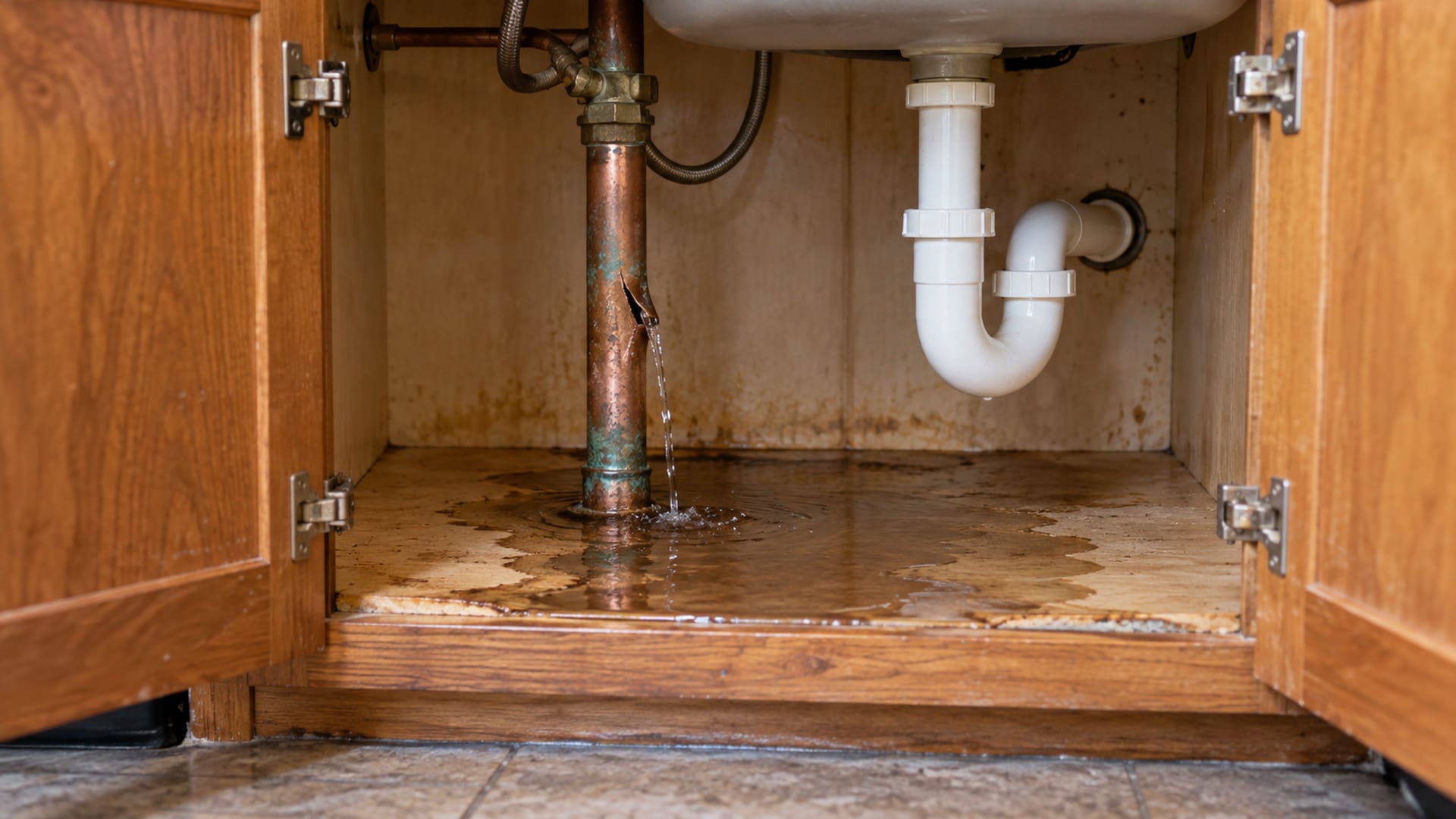
- Burst pipe. A warranty can cover repair or replacement of a listed plumbing component when the contract applies. Homeowners insurance can cover the resulting damage to covered walls, floors or belongings when the policy covers the cause. California uses a similar example of a failed water heater and the wall damage it leaves behind, in its homeowners and renters guide (opens in a new tab).
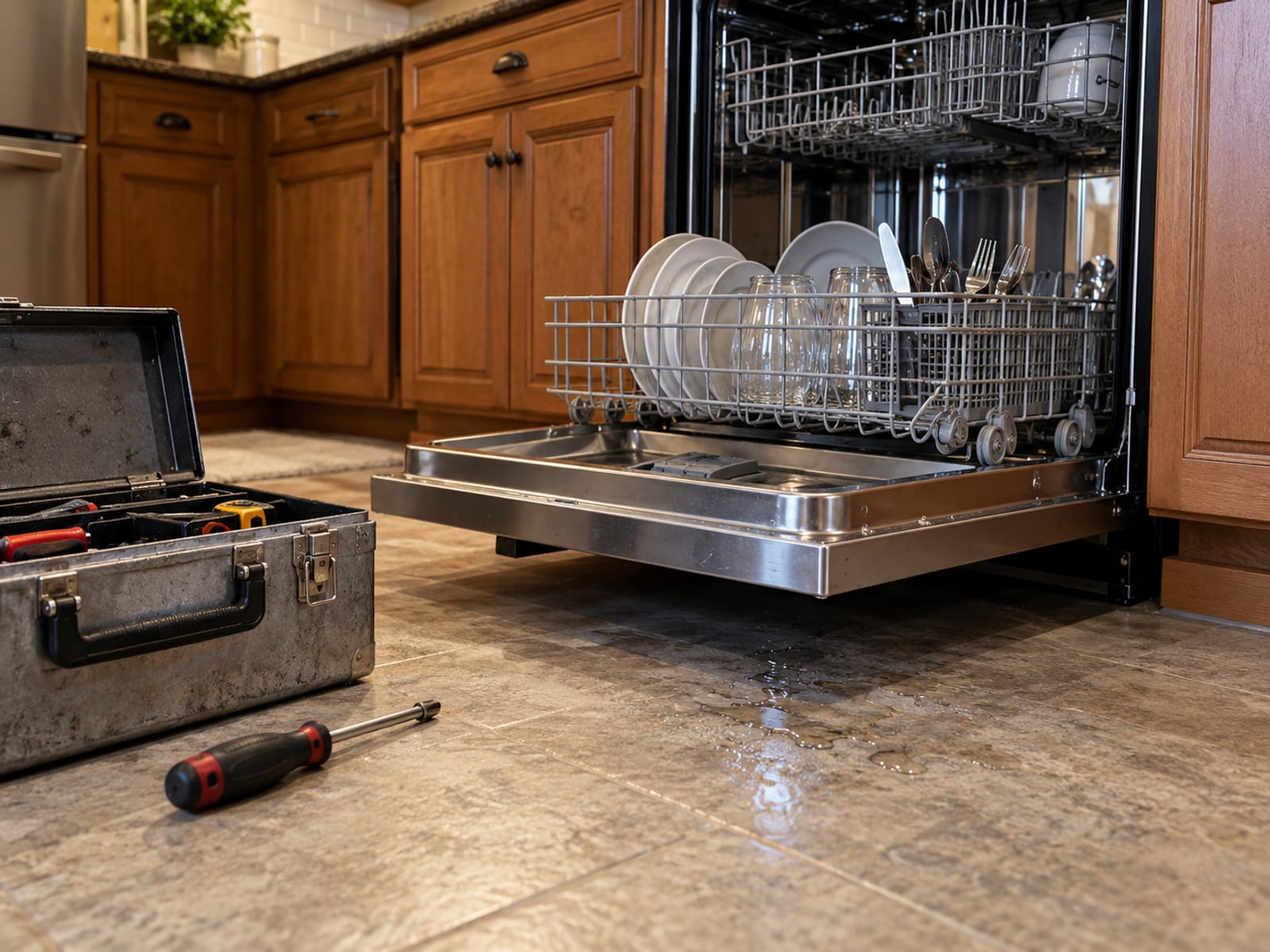
- Appliance failing from age. A service contract can cover an appliance that is listed in it and not blocked by an exclusion or limit. Standard homeowners insurance does not pay for routine wear and tear.
- Storm damage. Homeowners insurance can cover storm damage when the policy names that cause and no exclusion applies. A home warranty addresses listed breakdowns, not broad storm damage to the house.
- Fire or theft. These are what homeowners insurance is built for, when the policy covers them. They are not the normal job of a warranty.
- Flood or earthquake. Standard homeowners policies commonly exclude both, per the CFPB (opens in a new tab), and separate coverage may be needed. A warranty does not fill that gap.
What does homeowners insurance usually cover?
A standard homeowners policy has several parts, according to the NAIC and the Insurance Information Institute (opens in a new tab):
- Dwelling: the house and attached structures.
- Other structures: detached garages, sheds and fences.
- Personal property: your household belongings.
- Loss of use: additional living expenses when a covered loss makes the home unlivable.
- Personal liability: covered claims for injury to someone else or damage to their property.
- Medical payments: in the circumstances the policy describes.
Every one of these applies only within the policy's causes of loss, conditions, limits and deductibles. Replacement cost and actual cash value also affect how a claim is paid, which is worth asking an agency about before you buy.

What does a home warranty usually cover?
A home warranty is commonly a service contract that can repair or replace listed items such as dishwashers, air-conditioning and heating systems, plumbing, electrical systems, refrigerators, washers and dryers, per the FTC (opens in a new tab). Which of those your plan includes depends on the contract.
A typical claim runs in six steps:
- You report the problem to the warranty company.
- The company assigns or approves a contractor.
- You may pay a service fee.
- The contractor diagnoses the problem.
- The company repairs, replaces or denies the claim under the contract.
- Payment can be capped by component limits, annual limits, exclusions or consequential-damage terms.
California requires these contracts to state the covered components, exclusions, limits, duration, fees and service conditions, and its guidance says service must start within 48 hours of a request, according to the California Department of Insurance (opens in a new tab). Rules differ by state, so check the regulator where the property sits.
What does each product exclude?
Homeowners policies commonly exclude flood, earthquake, routine wear and tear, deterioration, maintenance problems and termites or other infestations. They also limit coverage for certain high-value items and home-business property, per the NAIC (opens in a new tab).
Home warranties carry their own list, which the FTC recommends checking:
- Overlap with a manufacturer warranty you already have.
- Which appliances, parts and components are included.
- Whether accidental damage is covered.
- Whether pre-existing conditions are excluded.
- Maintenance or inspection requirements.
- Service fees, deductibles and dollar caps by component or claim.
- Refund and fee terms if you cancel.
- Repair timing and the company's contractor network.
- Whether the company can replace an item instead of repairing it.
- Whether consequential damage is excluded.
A builder warranty on new construction is a separate thing from a service contract on an existing home. The difference is laid out in the FTC's guide to new-home warranties (opens in a new tab).
Does a lender require either one?
A mortgage lender requires homeowners insurance while the loan is outstanding, because the house secures the loan, according to the CFPB (opens in a new tab) (page reviewed August 14, 2024). The premium is often paid through escrow with your mortgage payment. A home warranty is not the standard mortgage requirement. A state can require or provide separate protections for new-home construction, which is different from requiring every homeowner to buy a private service contract.
At a closing, a warranty may be part of the offer. California's guidance says sellers or agents often pay for them and that you can choose your own warranty company. The closing documents should show who pays, the term, the company, the covered property, cancellation rules and service fees.

What happens if homeowners insurance lapses?
If required insurance is not kept in force, the lender can buy a policy and charge you for it, per the CFPB. That lender-placed policy can protect only the lender, and it can cost more than a policy you choose. So, a lapse can leave you paying more for less personal protection. If a payment is late or a renewal is unclear, call your agency before the lapse date.
Who regulates home warranties, and where do complaints go?
Each state decides how home warranty contracts are regulated and which agency handles complaints about them, so check with the regulator where the property sits. In some states the insurance department oversees these contracts, as California's does in the guidance cited above; elsewhere a complaint about a warranty company may go to a consumer protection agency instead. For example, Connecticut regulates home warranty contracts under Conn. Gen. Stat. § 38a-320 (opens in a new tab), as described in Insurance Department Bulletin PC-45-03 (opens in a new tab), and sends warranty-company complaints to its Department of Consumer Protection; our Connecticut homeowners insurance guide covers that state's home coverage in full.
Complaints go to different agencies depending on the product:
- Homeowners insurance: your state insurance department (opens in a new tab) takes questions and complaints about insurers, including disagreements over a damage estimate.
- Warranty company or other consumer contract: the agency with jurisdiction in your state, which may be the insurance department or a consumer protection agency. Include the contract, receipts, repair orders and correspondence.
Contact the company first and keep the written contract and claim record, then file with the agency that has jurisdiction.
Hover or tap a row to highlight it.
| Product | Start with | Then file with |
|---|---|---|
| Homeowners insurance | The dispute procedure in your policy | Your state insurance department (opens in a new tab) |
| Warranty company or other consumer contract | The company, with the written contract and claim record | The agency with jurisdiction in your state, which may be the insurance department or a consumer protection agency |
What should you ask before signing?
For a home warranty, ask the company:
- Which appliances, systems, parts and components are covered?
- Which exclusions apply, and are pre-existing conditions excluded?
- Does the contract require maintenance records or inspections, and must items be working when coverage starts?
- What service fee applies to each visit?
- Are there component, annual, labor, diagnostic or replacement limits?
- Does the company choose the contractor, and can you use your own?
- What happens if the contractor cannot repair the item?
- Is consequential damage covered?
- What is the term, and how do renewal and cancellation work, including any refund and fees?
- Is a manufacturer or builder warranty still active?
- Who pays at closing?
- Which agency handles complaints in the property's state?
For homeowners insurance, ask an agency:
- Which perils are covered, and which exclusions apply?
- How are dwelling, personal property, liability and loss-of-use coverage set?
- Is payment at replacement cost or actual cash value?
- What deductible applies?
- Are flood, earthquake, sewer backup, home business or high-value property handled separately?
- What duties apply after a loss?
When a problem happens, work through the same order: identify the event, read the policy's covered-peril and exclusion sections, check the warranty's component list and wear-and-tear language, then look at deductibles, fees, limits and contractor rules. Keep photos, receipts, estimates, contracts and correspondence.

Check what you know about home warranties and homeowners insurance
Home warranty vs home insurance FAQ
Do I need a home warranty if I have homeowners insurance?
A home warranty is optional unless your contract or transaction requires it, and a lender's requirement is homeowners insurance. The two cover different events, so the choice depends on whether you want a service contract for appliance and system breakdowns, with its fees and limits.
Does homeowners insurance cover a broken appliance?
Not when the appliance simply wears out, because the NAIC (opens in a new tab) describes homeowners insurance as protection against covered perils and not a maintenance contract. A covered event, such as a fire, is judged under the policy's peril and exclusion terms.
What are the downsides to check in a home warranty?
Service fees, dollar limits, exclusions, pre-existing-condition language, maintenance requirements, contractor-network rules and cancellation terms, all listed by the FTC (opens in a new tab). The written contract decides each one.
Who should I contact after a denied claim?
Start with the dispute procedure in your policy or contract. Insurance complaints go to your state insurance department (opens in a new tab), and complaints about a warranty company or other consumer contract go to the agency with jurisdiction in your state, which may be the insurance department or a consumer protection agency.
Your next step
Bring your policy, any warranty contract and the questions above to a licensed agency, and confirm the agent or agency with your state insurance department's license lookup (opens in a new tab) before you rely on advice or buy coverage. Ask which events your homeowners policy pays for, what it leaves out, and how it matches what your lender requires.
Terms used in this guide
Tap a term to see what it means.
Home warranty. A service contract for repairing or replacing listed appliances and systems.
Homeowners insurance. A policy that pays for covered damage to the house and belongings and for covered personal liability claims.
Peril. A cause of loss, such as fire, theft or a storm, that a homeowners policy names.
Exclusion. A cause of loss, item or situation a policy or contract does not pay for.
Deductible. The amount you pay toward a covered loss before the insurer pays.
Service fee. The charge you may pay each time a warranty contractor visits.
Escrow. An account your lender uses to pay the homeowners insurance premium with your mortgage payment.
Lender-placed policy. A policy the lender buys and charges you for when required insurance lapses.