Maryland Renters Insurance: What It Costs, What It Covers, and What Maryland Law Says About Landlords Requiring It
Riskado
Maryland renters insurance is an HO-4 tenant policy that covers your personal belongings, your liability if you injure someone or damage their property, medical payments to others, and extra living costs if a covered loss makes your rental unlivable. It does not insure the landlord's building, and flood damage is generally excluded. Maryland Real Property Article § 8-208 (opens in a new tab), the lease statute, sets no general statewide renters insurance mandate. Your lease can still carry its own insurance terms, and a landlord may require a property damage liability waiver (PDLW) or charge a PDLW fee, according to the Maryland Insurance Administration (opens in a new tab). Before you sign, read the lease and find out which one it asks for.
Key takeaways
- What it coversAn HO-4 tenant policy covers your personal belongings, your liability, medical payments to others, and extra living costs if a covered loss makes your rental unlivable.
- What it leaves outIt does not insure the landlord's building, and flood damage is generally excluded.
- State lawMaryland Real Property Article § 8-208 (opens in a new tab) sets no general statewide renters insurance mandate.
- Your leaseA lease can carry its own insurance terms, and a landlord may require a property damage liability waiver (PDLW) or charge a PDLW fee.
- Before you signRead the lease and find out which one it asks for.
Do you need renters insurance in Maryland?
The answer comes from your lease, not from a state law. Section 8-208 lists what a written Maryland lease must contain and which provisions it cannot include, and a general requirement that every tenant carry renters insurance is not among them. A bill that would have created one, HB 564 from the 2024 session (opens in a new tab), stayed in the House after a hearing and was not enacted.
That leaves the lease as the place to look. If a property manager asks for proof of insurance, ask them to point to the clause and tell you exactly what it requires. A renters policy and a PDLW are different products, and paying for one does not give you the other.
What does Maryland renters insurance cover?
A renters policy has four main jobs, according to the Maryland Insurance Administration's renters guide (opens in a new tab):
- Personal property. Your furniture, clothing, electronics, and other household contents, up to the policy limit.
- Liability. Protection if you are responsible for injuring someone or damaging their property.
- Medical payments to others. Payment toward a guest's medical bills after an injury, within the policy terms.
- Additional living expenses. Costs such as a hotel or meals out while a covered loss keeps you out of your home.
Many policies also cover your belongings when they are stolen from your car or damaged away from your apartment, the same MIA guide says. Ask whether yours does, and whether a lower limit applies to property away from home.

What renters insurance usually leaves out
Every policy covers a set of causes of loss, called perils, and excludes others. Some Maryland renters policies list only a limited number of named perils, and a loss caused by a peril that is excluded or simply not listed may not be paid, according to the MIA renters guide (opens in a new tab). The practical step is to ask the insurer for the list of covered perils and the exclusions page before you buy.
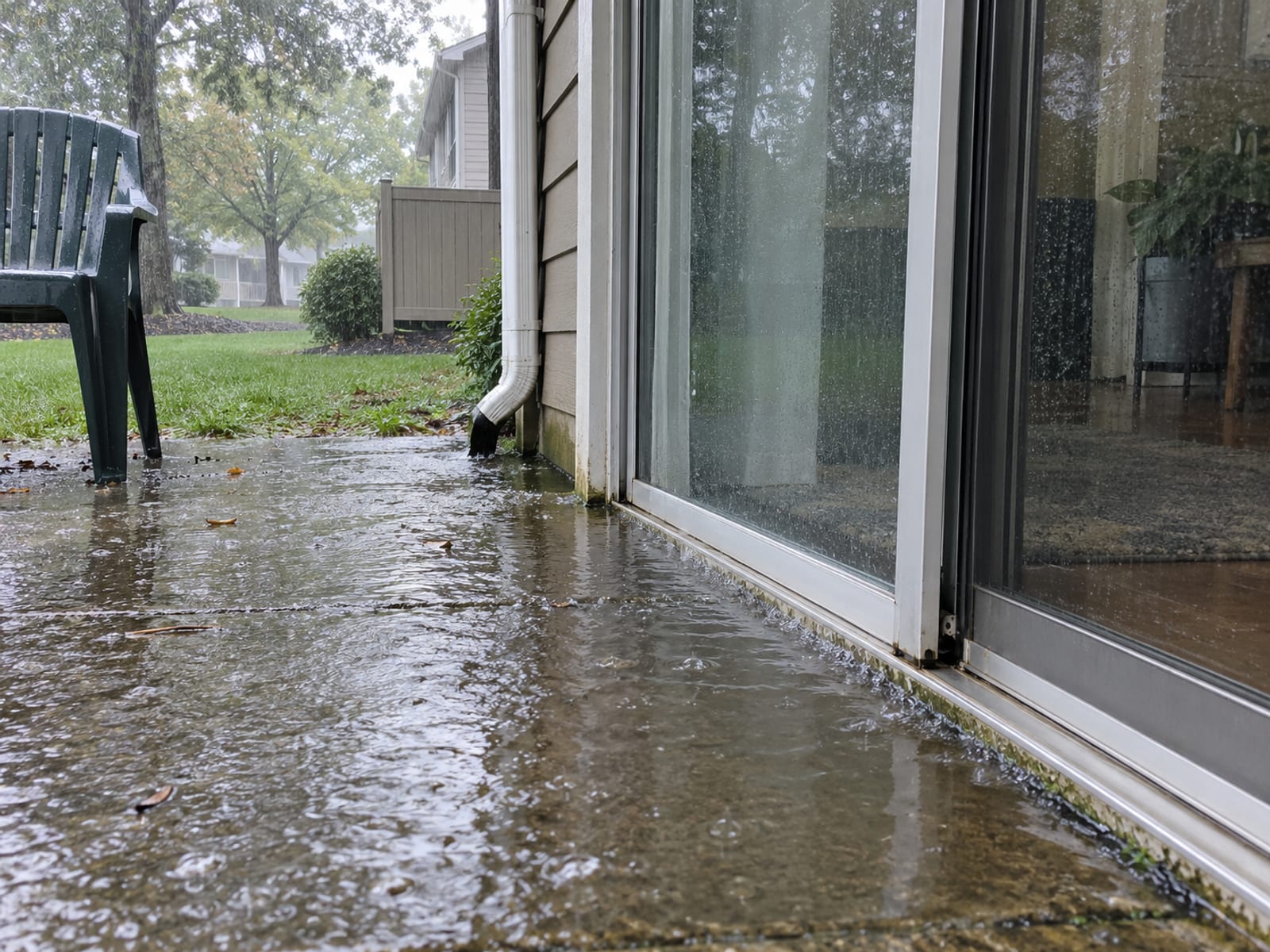
Flood is the big one. Standard renters policies generally exclude flood damage, and flood coverage is a separate purchase, according to MIA's renters webinar for senior living (opens in a new tab) and its flood insurance basics (opens in a new tab). Water from a burst pipe and water backing up through a drain are different questions from flood, so ask about water backup, sewer backup, mold, and earthquake separately.
Roommates are the other gap. Your policy covers your roommate's belongings only if the policy treats that person as an insured or extends coverage another way. Ask the insurer who counts as an insured before you assume a shared policy protects everyone.
Does your landlord's insurance cover your belongings?
Generally, no. A landlord's policy addresses the building and the landlord's own interests, according to the MIA renters guide (opens in a new tab). It does not replace your furniture, clothes, or laptop, and it does not give you personal liability coverage.
That matters most after a fire or flood. A renters policy may pay for your property and your temporary housing after a covered loss. Whether a landlord owes you anything for belongings or a hotel stay depends on the lease, the cause of the loss, any negligence, and the policies involved. If you are dealing with a loss right now, call your own insurer first and ask the landlord in writing what their policy will and will not handle.
Can a Maryland lease require insurance or charge a PDLW?
A lease can include insurance-related terms, and MIA says a landlord or property manager may require a PDLW or include a PDLW fee as part of rent, according to its renters insurance page (opens in a new tab). A PDLW is not renters insurance. It generally addresses damage to the landlord's building and typically does not cover your belongings.
Proposed rules on whether a landlord can demand a particular insurer, name itself on your policy, or buy a policy and bill you for it appeared in HB 564, which was not enacted. Its record displayed an October 1, 2024 effective date, but the bill never moved past the House, according to the General Assembly's bill page (opens in a new tab). Current § 8-208 does not contain those provisions, so the lease language is what governs your situation. If a term is unclear, ask the landlord to put the answer in writing.
How much does renters insurance cost in Maryland?
Maryland HO-4 policies averaged $180 a year in 2023 across all coverage amounts, according to the NAIC 2023 Homeowners Report (opens in a new tab). That is a statewide average, not a quote. The NAIC groups premiums by how much property the policy insures, and the average climbs as the limit rises:
Hover or tap a row to highlight it.
| Amount of insurance (Maryland HO-4, 2023) | Average annual premium |
|---|---|
| Under $10,000 | $115 |
| $20,000 to $24,999 | $166 |
| $30,000 to $34,999 | $202 |
| $50,000 to $59,999 | $265 |
| $100,000 to $124,999 | $431 |
| All Maryland HO-4 policies | $180 |
Source: NAIC 2023 Homeowners Report (opens in a new tab), Maryland table.
For a local view, the MIA Renters Insurance Rate Guide (opens in a new tab) from August 2026 shows insurer-specific premiums for set scenarios in ZIP codes across Baltimore City, Baltimore County, Silver Spring, Annapolis, Columbia, and other Maryland locations. The scenarios use $50,000 or $75,000 in contents coverage, a $500 deductible, and stated liability, construction, and ZIP-specific assumptions. They show how much location and chosen limits move a price, but they are examples, not county averages or recommendations.
Your own price depends on where you live, how much property you insure, your deductible, whether contents are valued at replacement cost or actual cash value, and the insurer's underwriting. Before you settle on a coverage amount, add up what it would cost to replace what you own.
Replacement cost, actual cash value, and high-value items
How a policy values your belongings changes what you get paid. Actual cash value (ACV) pays what an item was worth after depreciation for age and condition. Replacement cost pays what it costs to replace the item without that same depreciation deduction, subject to the policy's limits, deductible, and claim steps, according to MIA's renters webinar (opens in a new tab). On an ACV policy, a five-year-old couch pays less than the price of a new one.
The comparison worksheet in the MIA rate guide (opens in a new tab) asks you to note whether contents coverage is replacement cost or ACV and which exceptions apply. Ask whether replacement cost is paid right away or only after you replace the item.
Jewelry, antiques, art, memorabilia, and collections often carry lower limits inside a standard policy, and extra coverage for special items is available, according to the NAIC's guide to homeowners and renters policies (opens in a new tab). If you own an engagement ring, a good bicycle, or camera gear, ask what the limit is for that category and what scheduling the item would cost.
Students, dorms, roommates, and shared housing
A student living in a dorm may still have belongings covered under a parent's homeowners policy, but the parent should confirm it, according to MIA's page for young adults (opens in a new tab). A student renting off campus probably is not covered by the parent's policy and may need a renters policy of their own.
For an off-campus apartment with roommates, MIA's college insurance advisory (opens in a new tab) says roommates may be able to buy a policy together, while separate policies for adult tenants may make more sense depending on the policy. Ask the insurer who counts as an insured before you decide.
What to prepare before you ever file a claim
A good claim starts before the loss. An inventory, photos, and proof of ownership help produce an accurate, detailed claim, according to the MIA renters guide (opens in a new tab). Walk through each room with your phone, photograph closets and drawers, and save receipts for larger purchases somewhere outside the apartment, such as cloud storage or email.
After a loss, notify your insurer promptly using the method your policy lists, protect your property from more damage when it is safe, document what happened, and keep damaged items when practical. Your policy sets its own deadlines for notice and proof of loss, so read those sections and keep your declarations page handy.
Maryland law also sets standards for how insurers handle claims. Insurance Article § 27-304 (opens in a new tab) treats certain practices as unfair claim settlement when an insurer does them often enough to show a general business practice. These include failing to act with reasonable promptness, refusing to pay without a reasonable investigation, failing to affirm or deny coverage within a reasonable time after proof of loss is complete, and failing to promptly explain a denial or a compromise offer. The section does not set a single payment deadline for every renters claim, so if a claim stalls, ask the insurer in writing for a timeline and keep a record of every contact.
How to check an agent or insurer and file a complaint
Before you buy, look up both the insurer and the agent in the MIA Company and Producer Search (opens in a new tab). It shows whether a company is licensed in Maryland, which lines of insurance it can write, and the status of producers and producer firms, and MIA updates it weekly.
If you have a problem with a renters claim or policy, file through the MIA complaint portal (opens in a new tab), where you can attach supporting documents. You can also call the Property and Casualty Consumer Complaints Unit at 410-468-2340 or 1-800-492-6116, according to MIA's contact list (opens in a new tab).
Questions to ask before you buy or renew
These questions come from MIA's renters materials and the NAIC's annual insurance checkup (opens in a new tab), and they work for a first policy or a renewal:
- Which perils does the policy cover, and what does it exclude?
- Is contents coverage replacement cost or ACV, and what exceptions apply?
- What deductible applies, and are there separate storm, hurricane, or water backup deductibles?
- What limits apply to jewelry, art, electronics, bicycles, and collections?
- Are my belongings covered away from the rental?
- Is my roommate, partner, or spouse an insured under this policy?
- Are flood, sewer backup, mold, earthquake, or maintenance-related losses covered?
- How are additional living expenses paid, and for how long?
- What proof will you need after a loss?
- Is the insurer licensed in Maryland, and what is the producer's license status?
- How long could a prior claim affect my renewal or underwriting?
Check what you know about Maryland renters insurance
If you would rather work through these with a person, Riskado's directory lists insurance agencies across Maryland, organized by city and by category, so you can find a local office that writes renters coverage.
Maryland renters insurance FAQ
Can my Maryland landlord buy a renters policy for me and add it to my rent?
Current § 8-208 (opens in a new tab) does not address landlord-placed renters policies. HB 564 would have set rules on this, but it was not enacted. Check your lease for any such term, and ask the landlord to explain in writing what you are being charged for and what it covers.
Is a PDLW fee the same as renters insurance?
No. A PDLW generally covers damage to the landlord's building and typically does not cover your belongings, according to MIA (opens in a new tab). If you pay a PDLW fee and want your property protected, you still need a renters policy.
How much contents coverage should I buy?
Base it on what it would cost to replace your belongings, which an inventory will show. In 2023, Maryland HO-4 premiums ran from an average of $115 for under $10,000 of coverage to $265 for $50,000 to $59,999, according to the NAIC (opens in a new tab).
Will a renters claim affect my future premiums?
It can. A prior claim may affect underwriting or renewal, so ask the insurer how long a claim stays on your record before you file a small one.
Does a renters policy pay for a hotel after an apartment fire?
Additional living expenses coverage pays for costs such as temporary housing when a covered loss makes your home unlivable, according to the MIA renters guide (opens in a new tab). Keep every receipt and ask your insurer about the dollar limit and time limit on that coverage.
Your next step
Start with the lease. Find the insurance clause, confirm whether it asks for renters insurance, a PDLW, or a fee, and then price a policy based on what you actually own. Check the insurer and agent through MIA before you pay, and keep your inventory and declarations page where you can reach them after a loss.
Terms used in this guide
Tap a term to see what it means.
HO-4. The tenant policy form, often called renters insurance, that covers personal belongings, liability, medical payments to others and additional living expenses.
Property damage liability waiver (PDLW). A product a landlord may require or charge for that generally addresses damage to the landlord's building and typically does not cover your belongings.
Peril. A cause of loss, such as fire or theft, that a policy covers or excludes.
Actual cash value (ACV). Payment for what an item was worth after depreciation for age and condition.
Replacement cost. Payment for what it costs to replace an item without the depreciation deduction, subject to the policy's limits, deductible and claim steps.
Additional living expenses. Costs such as a hotel or meals out while a covered loss keeps you out of your home.
Declarations page. The page of a policy that lists the coverages, limits and deductibles.